
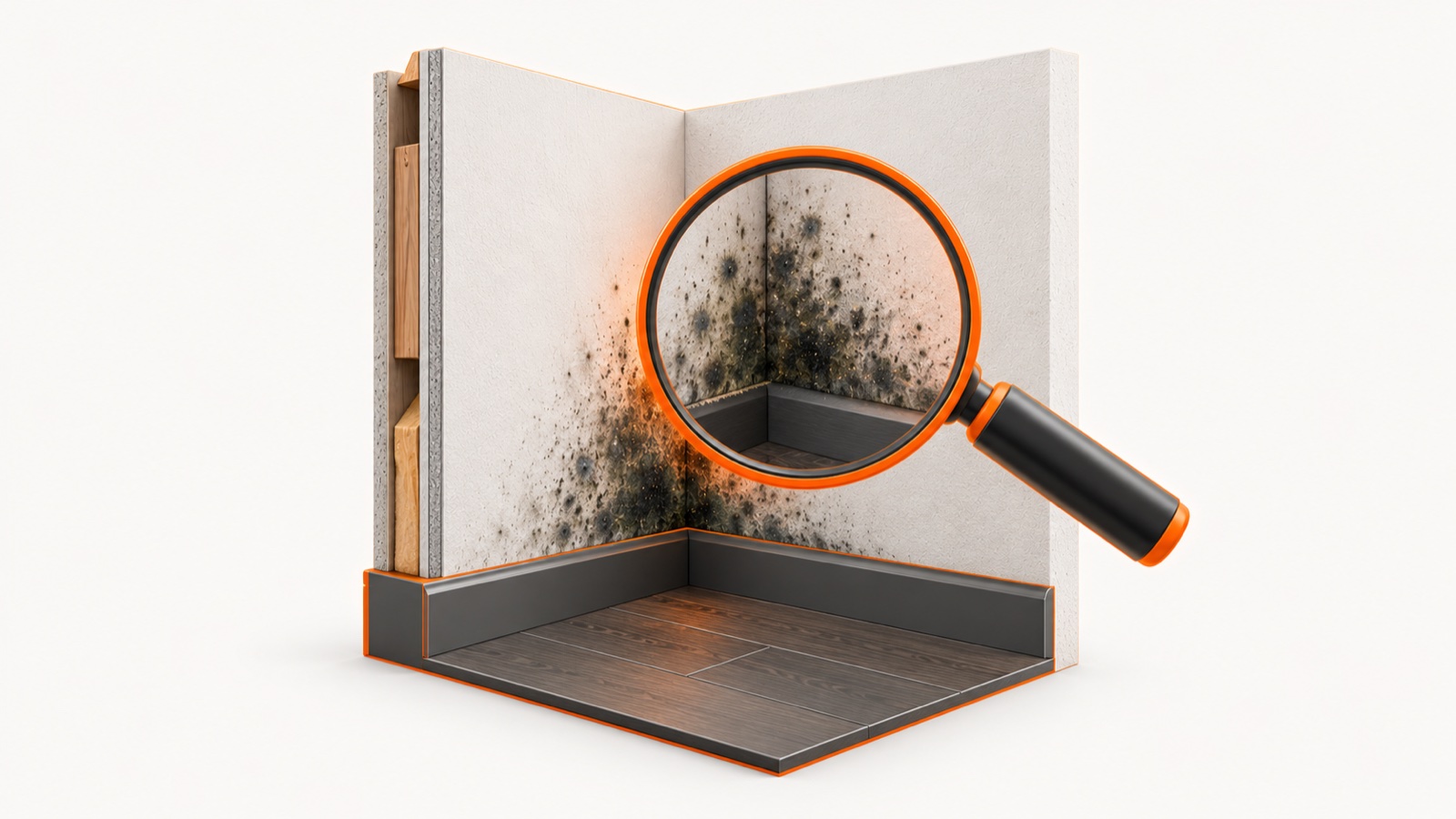
Observation Is Not Identification
You cannot identify black mold by sight, because dark spots, staining, soot, dirt and mineral deposits overlap in appearance, and CDC guidance says color does not indicate whether mold is more or less dangerous. A camera or visual inspection can record what is visible, but it cannot establish the material or organism with certainty.
Do not label a patch Stachybotrys chartarum, "toxic mold," or any other species from color or texture. The CDC says it is generally unnecessary to determine the type of mold in a home because indoor growth and the moisture problem should be addressed regardless of species.
What Appearance and Odor Can Tell You
Color, texture, and odor can help describe a condition and locate a moisture problem. They are not diagnostic tests. The same mold species can vary in appearance, different species can look alike, and non-mold materials can resemble growth.
A musty odor can justify investigating dampness, but it does not prove where mold is growing, identify a species, or quantify exposure. Do not use a wipe, touch, smell, or home photo test to make those conclusions.
What Guides the Next Step
Focus on the water source, affected material, visible extent, and whether the situation involves sewage, flooding, HVAC equipment, electrical hazards, or inaccessible areas. Correcting moisture is essential to prevent recurrence.
EPA guidance says many small areas, under about 10 square feet, can often be handled by a homeowner who can do the work safely and follows the agency's cleanup guidance. Extensive growth, significant water damage, contaminated water, and HVAC concerns call for additional precautions or experienced professional help.
Testing Has Specific, Limited Uses
CDC does not recommend routine home mold testing. Short-term samples cannot be converted into a health-risk score, and there are no health-based indoor mold standards for interpreting a result that way.
If a legal, building, remediation, or other decision genuinely requires sampling, use a qualified professional to define the question, choose the method, document the site, and explain the limitations before testing begins.
When Professional Help Makes Sense
Use an experienced building or remediation professional when the extent is uncertain, materials remain wet, the source is hidden, the affected area is large, water was contaminated, or the concern involves HVAC equipment. A visual web tool cannot clear a building for occupancy.
If you have symptoms or health concerns, speak with a qualified healthcare professional. Building observations cannot diagnose the cause of a symptom.
Sources: CDC mold guidance, CDC/NIOSH testing and remediation guidance, and EPA mold cleanup guidance.
Frequently asked questions
Can appearance identify black mold?
No. Color, texture, odor, and a photo cannot confirm that a patch is mold, identify its species, or determine whether it presents a health risk. They can only document a visible condition that may deserve moisture and building evaluation.
Is dark growth more dangerous than growth of another color?
Not necessarily. CDC guidance says mold color does not indicate whether it is more or less dangerous. The practical priorities are correcting moisture and addressing indoor growth safely, regardless of color.
Should I wipe or disturb a patch to identify it?
No wipe or touch test can identify mold or species, and disturbing unknown material is unnecessary. Document the condition without close contact and investigate the moisture source.
Is a laboratory test always required?
No. CDC does not recommend routine home mold testing, and species identification is usually unnecessary when visible indoor growth and a moisture problem already need attention. A qualified professional can design testing when a specific decision requires it.
What should I do about an unidentified dark patch?
Address the water or humidity source, assess the affected material and extent, and follow EPA cleanup guidance. Use an experienced professional for extensive damage, contaminated water, HVAC concerns, or situations that cannot be handled safely.