The 10-Second Answer
Concrobium Mold Control wins if your goal is killing mold and keeping it from coming back. RMR-86 wins if your goal is making an ugly stain disappear fast. Treating them as rivals is the mistake most buyers make. One kills. One erases.
For most homes the order looks like this: fix the moisture, kill the mold with Concrobium, and bring in RMR-86 only if a stain remains on a surface that can handle bleach chemistry. Here's the side-by-side.
| Round | Concrobium Mold Control | RMR-86 |
|---|---|---|
| The job | Kills mold and helps block regrowth | Removes the stain mold leaves behind |
| Chemistry | Bleach-free solution that dries into a spore-crushing film | Sodium hypochlorite, the same active chemical as household bleach |
| Porous surfaces (wood, drywall) | Yes. Safe on wood, drywall, concrete, fabric | Risky. Lightens the stain, adds moisture, leaves roots alive |
| Residual protection | Yes. The dried film resists new growth | None. Nothing protective stays behind |
| Speed of visible results | Slow. Stains often remain after the mold is dead | Fast. Stains fade in seconds to minutes |
| Fumes | Low odor, bleach-free | Strong bleach fumes. Needs real ventilation |
| Price band | Standard hardware-store spray price | Premium. Usually the pricier bottle |
Every row traces back to one fact. Concrobium is a killer. RMR-86 is an eraser.
What Each Product Actually Is
Concrobium Mold Control
Concrobium Mold Control is a bleach-free, EPA-registered mold killer. The liquid looks and smells close to plain water. The work happens as it dries: it sets into a thin film that crushes mold spores against the surface, then stays behind as a barrier that resists new growth.
Because there's no bleach or ammonia in the bottle, it's safe on porous and semi-porous materials: wood framing, drywall, concrete, even fabric. That matters, since those are exactly the surfaces where mold does the most damage. We put it through its paces in our full Concrobium Mold Control review.
Its weakness is cosmetic. Concrobium kills the colony but doesn't strip out the dark pigment mold leaves in a surface. The patch can be completely dead and still look dirty.
RMR-86 Instant Mold Stain Remover
RMR-86 comes from the professional remediation world. It's a sodium hypochlorite formula, the same active chemical family as household bleach, blended to work fast. Spray it on a moldy stain and the dark color starts vanishing in seconds. Pros use it to make attics, crawl spaces, and basements look clean after a remediation job or before a sale.
Read the label closely, though. RMR-86 is sold as a stain remover. Its job is appearance. It leaves no protective layer, and its bleach chemistry runs into the usual trouble on porous materials. The company itself sells a separate product, RMR-141, for the disinfecting step. Our RMR-86 review covers what it does well and where it gets misused.
Stain Removal vs. Mold Killing: The Core Difference
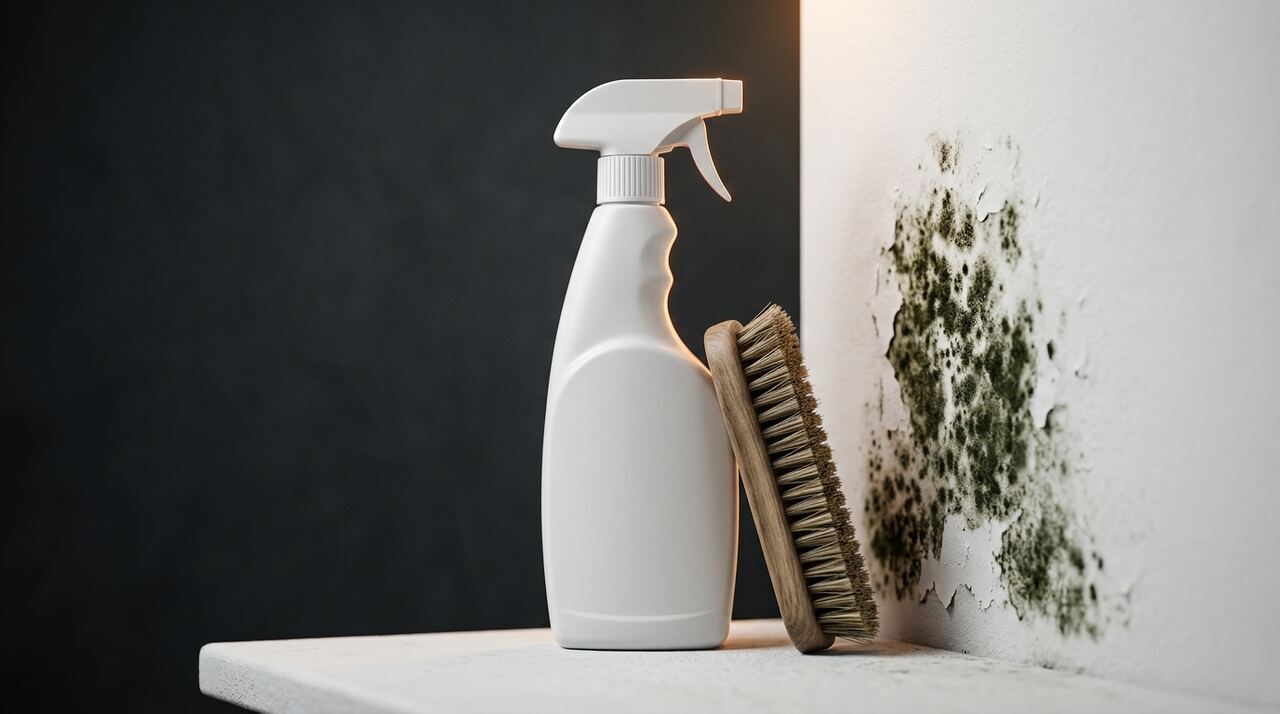
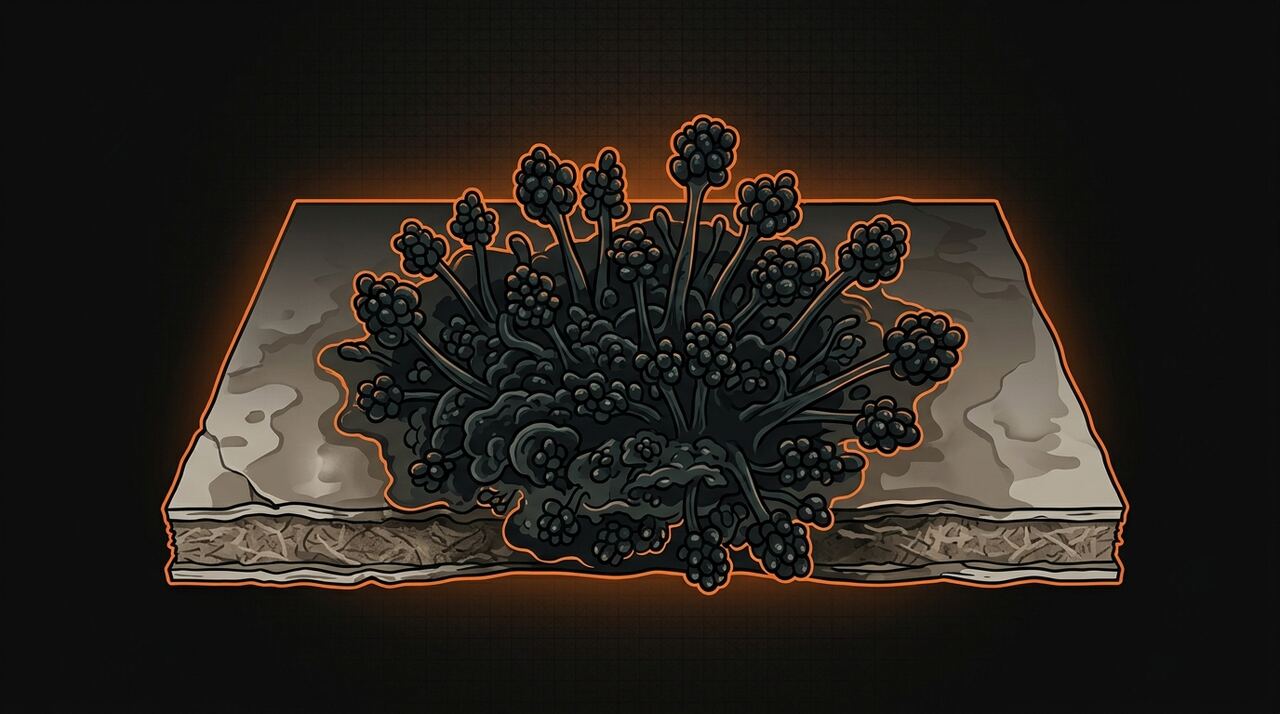
A mold patch has three parts. There's the visible growth on top, the root structure (called hyphae) pushed down into the material, and the stain the colony leaves in the surface itself.
A stain remover attacks the third part only. The bleaching reaction destroys the pigment, the dark color disappears, and your eye reads the surface as clean. That tells you nothing about the roots underneath. "Looks gone" and "is gone" are two different test results.
On hard, nonporous surfaces like glazed tile, glass, and metal, the difference barely matters. Mold can't sink roots into glass. Clean off the growth and the problem ends.
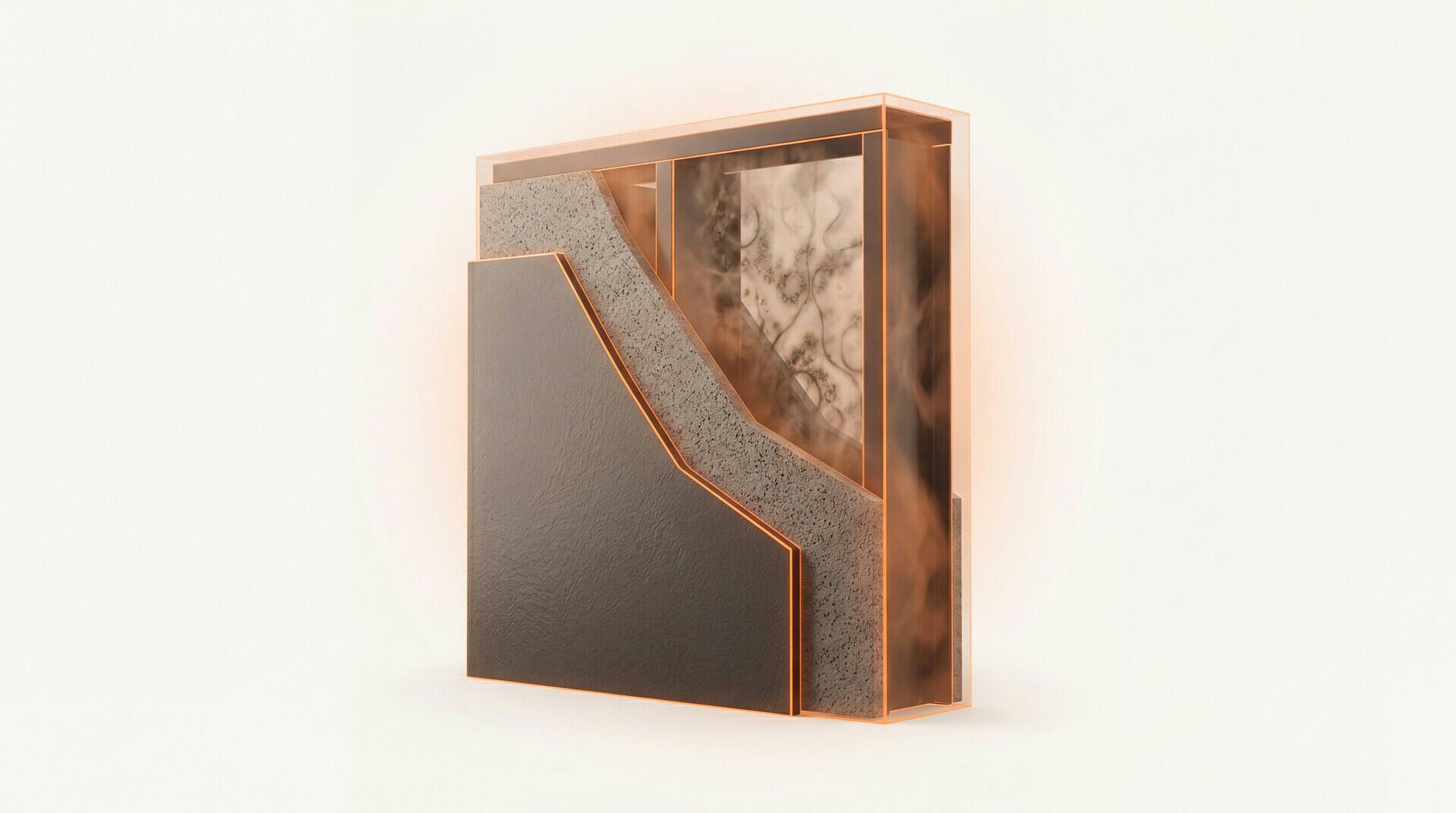
Porous surfaces are a different story. Sodium hypochlorite, the active chemical in RMR-86 and in regular bleach, mostly stays on the surface of wood and drywall. The water carrying it soaks deeper. So the chlorine bleaches the top while the moisture feeds the roots below, and the patch often comes back. That failure pattern is the whole reason our does bleach kill mold guide exists.
It cuts the other way too. Concrobium can kill a colony completely while the stain stays put. And the EPA notes that dead mold can still trigger allergic reactions, so wiping up or HEPA vacuuming the dead growth still matters. A white surface isn't the goal. A dry, dead, clean surface is.
Which to Use, Scenario by Scenario
Bathroom tile and grout
Glazed tile is nonporous, so this is the one arena where both products do honest work. Active, fuzzy growth: spray Concrobium or 3% hydrogen peroxide, wait 10 minutes, scrub, wipe. Gray or black shadows left in the grout lines after cleaning: that's stain, and RMR-86 erases it well. Run the exhaust fan and crack a window while you work. If mold keeps returning along the caulk, the caulk itself is colonized. Cut it out and re-caulk instead of bleaching it every month.
A drywall patch
For surface mold on painted drywall covering less than 10 square feet, Concrobium plus a gentle wipe is the move. If the mold has pushed through the paper face, or the wall is soft or water-stained, cleaning won't save it. Cut out the section and replace it. Our mold on drywall guide shows how to tell the difference. Don't soak bare drywall with RMR-86. The spray's water drives inward, the paper stays damp, and you've watered the problem you were trying to erase.
Wood framing, studs, and attic sheathing
Concrobium first, always. Vacuum loose growth with a HEPA vacuum, spray the framing, and let the film set. If a dark shadow remains and appearance matters (the framing stays exposed, or a home sale is coming), RMR-86 will pull the stain out of bare wood after everything is dead and dry. One warning: erasing attic stains to pass a buyer's eye test without fixing the roof leak or ventilation fixes nothing. An inspector's moisture meter doesn't care what color the wood is.
After a flood
Post-flood cleanup runs on FEMA and EPA rules, not spray bottles. Anything porous that soaked through (carpet pad, insulation, saturated drywall) gets bagged and discarded. Dry the structure fast: mold can establish within 24 to 48 hours. Once the framing is dry, Concrobium is the right treatment for what stays. RMR-86 has no role while materials are wet. And if the affected area is larger than 10 square feet, hire a qualified mold remediation professional. Look for firms that follow the IICRC S520 standard; ACAC or RIA credentials and state licenses count too.
Before painting
Never paint over live mold. The colony keeps working behind the film and the paint fails. Kill the growth first, let the surface dry, then deal with the shadow. On sealed, hard surfaces RMR-86 can clear the stain so it doesn't ghost through your topcoat. On drywall, skip the bleach soak and cover the dead, cleaned stain with a stain-blocking primer such as Zinsser BIN instead. The full prep sequence lives in our how to get rid of mold guide.
Using Both: The Right Order
Plenty of jobs call for both products. The sequence is what keeps you safe and keeps the mold from returning.
- Fix the moisture first. Find the leak, get indoor humidity below 50 percent, get air moving. Skip this step and any product you buy becomes a subscription, because mold can re-establish on a damp surface within 24 to 48 hours.
- Kill with Concrobium. Spray the whole affected area, let it dry on its own, then wipe or HEPA vacuum the dead growth. For ruined porous material, cutting it out replaces this step.
- Reassess. If the surface looks fine, stop here. The dried Concrobium film is doing useful work. Leave it alone.
- Spot-treat the stain. If a dark shadow still bothers you on grout, sealed tile, or bare structural wood, apply RMR-86 to that spot only. Ventilate hard, follow the label's rinse directions, and let everything dry.
- Re-apply Concrobium to the treated spot. The bleach step stripped the protective film along with the stain, so the last coat on the surface should be the one that resists regrowth.
Two things you never do. Never mix the two products in a bottle or layer them wet on wet; let each dry fully. And never let RMR-86, or any bleach product, contact ammonia or acid cleaners. That combination releases toxic gas. Where white vinegar and 3% hydrogen peroxide fit into the lineup is covered in our mold cleaning products roundup.
Safety Notes
Treat both products as mold work, because that's what it is. Disturbing a colony throws spores into the air no matter what's in your sprayer.
- Wear protection with either product. N95 mask, rubber gloves, and eye protection for any mold cleanup.
- RMR-86 needs ventilation. Open windows, run a fan, and step out for fresh air breaks. The fumes are real bleach fumes.
- Keep RMR-86 off skin and fabric. It bleaches clothing on contact and can lighten wood beyond the stain. Test a hidden spot first.
- Never mix bleach chemistry with ammonia or acids. Bleach plus ammonia creates chloramine gas, which is dangerous to breathe. Keep RMR-86 away from other cleaners entirely.
- Concrobium is low-odor, not a free pass. Same mask, same gloves. Let it dry undisturbed so the film can form.
- Mind the size rule. For any area larger than 10 square feet, hire a qualified mold remediation professional. Look for firms that follow the IICRC S520 standard; ACAC or RIA credentials and state licenses count too.
The CDC links mold exposure to stuffy nose, wheezing, and itchy or red eyes, with stronger reactions in people who have asthma or mold allergies. If symptoms track with time spent in a moldy room, talk to a licensed physician.
Frequently asked questions
Is Concrobium or RMR-86 better at killing mold?
Concrobium Mold Control is the killer of the two. It's EPA-registered against mold, works on porous surfaces like wood and drywall, and dries into a film that resists regrowth. RMR-86 is sold as a stain remover. It makes mold marks vanish fast but isn't designed to solve the underlying growth. If you can only buy one product for an active mold problem, buy Concrobium.
Does RMR-86 actually kill mold?
RMR-86 is labeled and sold as a mold stain remover, not a mold killer. Its sodium hypochlorite formula destroys the dark pigment so the surface looks clean within seconds, but it leaves no lasting protection, and bleach chemistry struggles to reach roots in porous material. The same company sells a separate disinfectant, RMR-141, for the killing step. Treat RMR-86 as a cosmetic tool.
Can I use RMR-86 on drywall or wood?
On bare drywall, don't. The spray's water soaks into the paper and gypsum, the surface lightens while moisture stays inside, and the mold often returns. On wood it works as a stain remover: pros use it on attic sheathing and framing. Use it on wood only after the mold is dead and the moisture problem is fixed, then let the wood dry fully.
Can I use Concrobium and RMR-86 together?
Yes, in sequence, never mixed. Fix the moisture, treat with Concrobium, let it dry, and remove the dead growth. If a stain remains on grout, sealed tile, or bare wood, spot-treat with RMR-86, rinse per the label, and dry. Then re-apply Concrobium, since the bleach step strips its protective film. Never combine them in one bottle or apply one over the other while wet.
Why did mold come back after I used RMR-86?
Because the stain was removed but the colony and its moisture source were not. RMR-86 bleaches pigment at the surface while the water it rides in can soak deeper and feed the roots, especially in wood and drywall. Fix the leak or humidity first, then kill and remove the growth using the steps in our how to get rid of mold guide. Then worry about how the surface looks.
Sources
Every claim on this page traces to one of these. Links open the primary document.