The verdict
RMR-86 Instant Mold and Mildew Stain Remover does one job at a speed nothing else on the shelf matches. Spray it on a black-stained board and the stain starts fading before you finish spraying the next one. Most surfaces need zero scrubbing. That part of the hype is real, and it's why remediation crews keep a bottle on the truck for the final appearance pass.
Here's the part the glowing reviews skip. RMR-86 is a stain remover. The name says it, the label says it, and the chemistry confirms it. Its active ingredient is sodium hypochlorite, the same chemical that does the work in household bleach. It strips the dark color out of mold staining on contact. It doesn't pull roots out of wood, it leaves no protection behind, and it does nothing about the moisture that grew the colony in the first place.
Our rating: 3.5 / 5. Best in class at stain removal. Wrong tool as your only mold treatment, especially on porous surfaces like framing lumber and drywall.
Pros: Erases mold and mildew stains in seconds. Little to no scrubbing on most surfaces. Easy to find at hardware stores and online. The standard pro pick for making remediated framing look clean again.
Cons: Bleach chemistry with bleach problems. No root kill in porous material. No residual barrier, so regrowth starts whenever moisture returns. Harsh fumes that demand serious ventilation. Hard on skin, metal, and anything with color. Useless against the water problem that caused the mold.
Bottom line: buy it for stains, never as your only mold treatment. The fix is a sequence: stop the water, treat the growth, then clean up the look. RMR-86 lives in that last step. For the treatment step, a dedicated killer with residual protection like Concrobium Mold Control is the better tool, and our step by step mold removal guide walks the whole sequence. See where RMR-86 lands in our best mold removal products ranking.
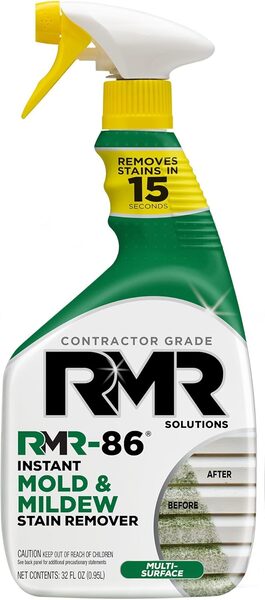
RMR-86 Instant Mold & Mildew Stain Remover
The fastest stain remover on the shelf, usually no scrubbing. Use it for cosmetic staining after the mold is treated and the moisture is fixed. Bleach chemistry, so ventilate and glove up.
Mold Scanner AI may earn a commission from purchases made through links on this page. It never changes what we recommend or the price you pay.
What RMR-86 actually is
RMR Brands sells RMR-86 as an "Instant Mold and Mildew Stain Remover." Read the label name slowly. The product promises to remove stains, and that's exactly what the chemistry delivers.
The safety data sheet lists sodium hypochlorite as the active ingredient. That's the same compound in laundry bleach, blended here with surfactants that help the spray spread across a surface and cling to it. Sodium hypochlorite is an oxidizer. When it hits the dark pigments mold leaves in and on a surface, it breaks those pigment molecules apart. The color collapses at the molecular level, which is why the black vanishes while you watch.
An oxidizer that strong also kills mold cells it touches. So on a hard, sealed surface, RMR-86 destroys the surface growth along with the stain. The trouble starts on porous material. Our full guide on whether bleach kills mold covers the chemistry in detail, but here's the short version.
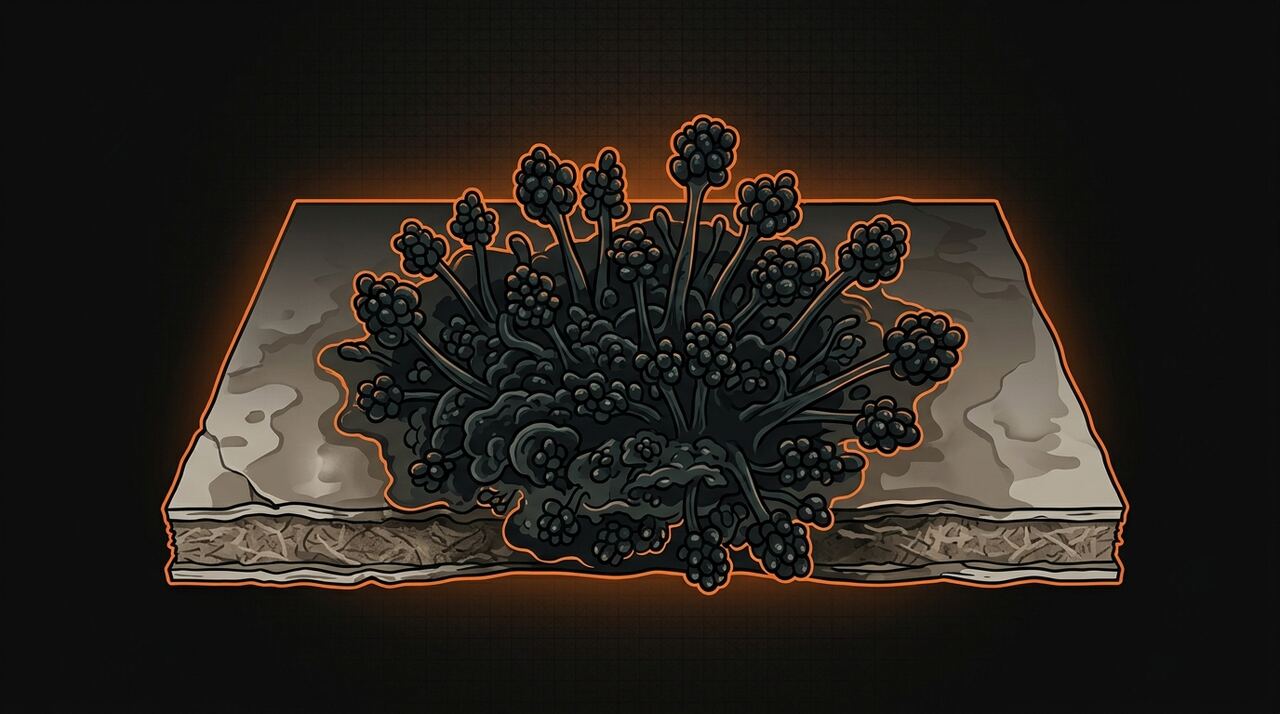
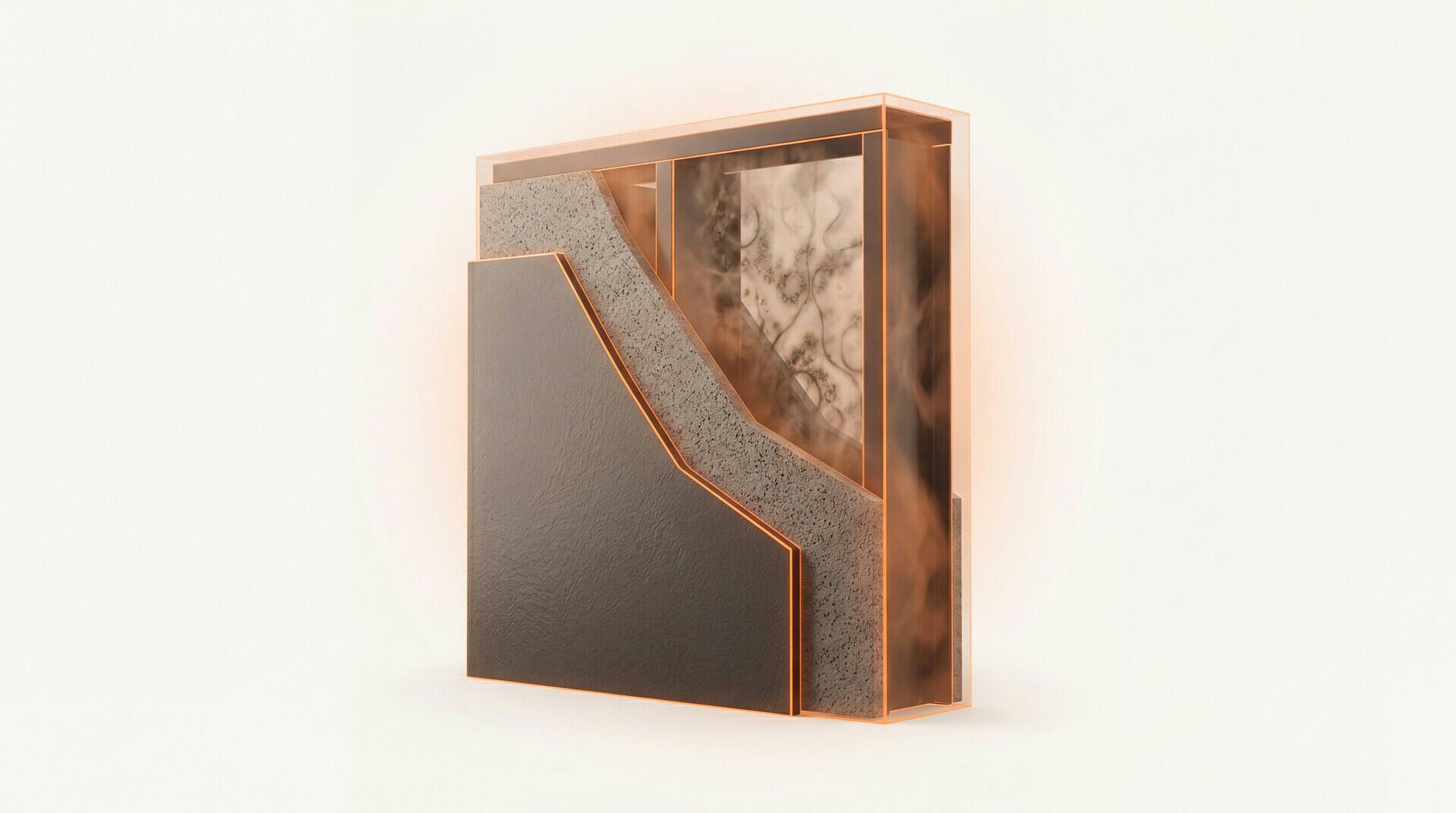
Wood, drywall, grout, and bare concrete all drink liquids. Mold growing on them sends root structures, called hyphae, down into the pores. Chlorine doesn't follow them. It reacts with the surface layer and gets used up there, while the water in the spray keeps soaking downward, straight to the roots the chlorine missed. You end up with a clean-looking surface and a watered colony underneath it. That's the documented failure mode of every bleach-based product on porous surfaces, and RMR-86 is no exception.
What it does brilliantly
Credit where it's earned. As a stain remover, RMR-86 is the best-known product in its class for good reason.
It's fast. Stains fade in seconds to a few minutes. Compare that with 3% hydrogen peroxide, which needs a 10 minute dwell plus a scrub, or white vinegar, which needs an hour and still leaves shadows. RMR-86 usually needs neither a brush nor patience.
It covers ground. Loaded into a pump sprayer, it moves across long runs of stained sheathing or joists quickly. That matters in attics and crawl spaces where nobody wants to spend an extra hour on their knees.
It handles the ugly jobs. Attic roof sheathing streaked black from years of condensation. Crawl space joists. Stained exterior concrete and vinyl siding. Fence boards. Grout lines that survived the mold but kept the shadow. On surfaces like these, the visual change is dramatic and immediate.
This is why pros carry it. On a professional job, the remediation happens first: containment, removal of damaged material, HEPA vacuuming, drying. What's left is sound wood with dark staining locked in the grain. The crew sprays that staining so the finished job looks as clean as it tests. The product's role there is appearance. The mold work already happened. Homeowners get into trouble when they run that play backwards: spray the stain, skip the remediation, call it fixed.
If you want one product for the honest appearance job, this is it. Our mold cleaning products roundup ranks it as the stain specialist alongside the dedicated killers.
Does RMR-86 kill mold?
RMR-86 doesn't kill mold. It's a sodium hypochlorite (bleach) stain remover, so it lifts the black discoloration off the surface in seconds and leaves the roots inside wood and drywall alive. The stain goes. The colony stays. It comes back the moment moisture returns.
It doesn't kill roots in porous material. On wood and drywall, the hyphae sit below the reach of the chlorine. The visible stain disappears while living mold stays inside the material. A week of damp weather later, the colony is rebuilding on a surface you believed was fixed.
It doesn't prevent regrowth. Sodium hypochlorite breaks down fast after application. Once the surface dries, nothing stays behind on guard. Mold can re-establish on damp material within 24 to 48 hours. Compare that with a product that dries into a protective film and keeps working after the job is done.
It can't replace removal. The EPA's cleanup guidance notes that dead mold can still cause allergic reactions in some people, so mold has to be removed, killing it isn't enough. A bleached stain is a cosmetic result. The mold material can still be sitting in the surface. For drywall that's stained through the paper face, no spray rescues it: cut out the section and replace it. Our guide to mold on drywall shows where the cut lines go.
It can't fix moisture. The EPA is blunt on this point: clean up the mold without fixing the water problem and the mold comes back. Find the leak, the condensation, or the humidity source first. Keep indoor humidity below 50 percent. No spray substitutes for that.
It can hide the evidence. A freshly whitened joist looks solved. If the leak is still active, the colony rebuilds out of sight while the surface stays deceptively bright. Erasing the stain without fixing the cause also erases your best early-warning marker.
Size limits still apply. For mold covering more than 10 square feet, the EPA says skip the DIY entirely: hire a qualified mold remediation professional. Look for firms that follow the IICRC S520 standard; ACAC or RIA credentials and state licenses count too.
How to use RMR-86 safely
Used in the right spot, for the right job, RMR-86 is manageable. Treat it with the same respect you'd give straight bleach, because chemically that's what you're spraying.
Pick the right surfaces. Sealed or non-porous materials handle it best: tile, tubs, vinyl siding, sealed concrete, glass. Bare wood only for cosmetic staining after the mold itself has been treated. Skip drywall that's stained through, fabrics, carpet, and anything with color you care about. It's a bleach. It whitens whatever it touches, so test a hidden spot first.
Ventilate hard. Open every window you can. Set a fan blowing air out, away from you. Never work in a closed crawl space or attic without forced airflow. The mist and fumes are the dangerous part of this product.
Wear real protection. Chemical-resistant gloves, sealed goggles rather than glasses, and long sleeves. A paper dust mask stops particles, never chlorine fumes, so for enclosed spaces use a respirator rated for the job or stay out of the job entirely.
Never mix it with anything. Sodium hypochlorite plus ammonia, which hides in many glass cleaners, makes chloramine gas. Plus acids, like vinegar or some toilet bowl cleaners, it makes chlorine gas. Both are dangerous to breathe. Use it alone, rinse the area before applying any other product, and never load a different chemical into the same sprayer.
Keep it out of HVAC. Never spray or fog RMR-86 into ducts, air handlers, or around return vents. The blower spreads corrosive mist and fumes through every room in the house. Mold inside a duct system is a job for a pro, full stop.
Dry the area fast. The spray adds water to the surface, and water is what mold wanted all along. Run fans until everything is fully dry, then keep the space dry. Wipe down metal fasteners and hardware afterward, since chlorine residue corrodes them.
Keep kids and pets away until the area is dry and aired out.
RMR-86 vs Concrobium
These two get cross-shopped constantly, and they shouldn't be, because they do opposite jobs.
RMR-86 is the appearance tool. Bleach chemistry, instant results on stains, no residual protection, harsh fumes. It wins when the mold problem is already handled and dark staining is what's left: pre-sale cleanups, post-remediation framing, stained exterior concrete and siding.
Concrobium Mold Control is the treatment tool. No bleach, no fumes. You spray it on, let it dry, and the drying film crushes mold at the root, then stays on the surface as a barrier against regrowth. It wins on porous surfaces, in living spaces, and any time you need the mold dead rather than invisible. What it won't do is erase a deep black stain. Surfaces often stay discolored even after the mold is dead, which is exactly the gap RMR-86 fills. Read our full Concrobium Mold Control review for the details.
Most real jobs use both, in order. Fix the leak. Treat with Concrobium and let it dry. Then, if the leftover staining bothers you and the surface can take it, hit the marks with RMR-86, ventilated and gloved. We break the matchup down surface by surface in Concrobium vs RMR-86.
And if you're staring at black growth right now and don't yet know what you're dealing with, start with our complete mold removal guide before buying either bottle.
Frequently asked questions
Can RMR-86 be used indoors?
Yes, with ventilation and protection, and with realistic expectations about what it accomplishes. It is a bleach-chemistry product, so indoor use means opening windows, running a fan that exhausts outside, wearing gloves and eye protection, and keeping other people and pets out of the room while you work and while it dries. Never mix it with ammonia or with any other cleaner. Keep it off fabric, off colored grout, off metal fixtures, and off anything you cannot afford to lighten. The bigger point for indoor use is what it is doing: on interior porous surfaces such as drywall paper, bare wood, grout, and caulk, it lifts the stain without ending the growth underneath, so treat it as the cosmetic step after the moisture is fixed and the mold itself has been dealt with.
What are the ingredients in RMR-86?
The safety data sheet lists sodium hypochlorite as the active ingredient, the same compound that does the work in household laundry bleach. The rest of the formula is water plus surfactants, which are there to make the spray spread across a surface and cling to it instead of running straight off. That is the whole story, and it explains everything the product does and does not do: sodium hypochlorite is an oxidizer, so it strips the dark color out of staining on contact, and it does not travel into porous material to reach roots or leave anything behind that prevents regrowth. If you want the full breakdown, read the sections above on what RMR-86 actually is and whether it kills mold.
Does RMR-86 kill mold or only remove the stain?
RMR-86 removes stains. Its active ingredient is sodium hypochlorite, the chemical that powers household bleach. It kills surface growth it touches on hard, sealed materials, but on porous surfaces like wood and drywall the roots survive below the reach of the chlorine. The stain disappears fast. The colony often doesn't.
Is RMR-86 the same thing as bleach?
Chemically they're close family. RMR-86's safety data sheet lists sodium hypochlorite, the active ingredient in household bleach, blended with surfactants that help the spray spread and cling to surfaces. That's why it works so fast on stains, and why it carries the same warnings: harsh fumes, skin and eye risks, and a hard ban on mixing it with ammonia or acids.
Why did mold come back after I used RMR-86?
Two reasons. First, on porous material the chlorine stays near the surface while the roots survive deeper in the wood or drywall. Second, the moisture that grew the colony is still there, and the spray added more water on top. Mold can re-establish on damp material within 24 to 48 hours. Fix the leak or humidity first, then treat the mold, then handle stains.
Can you use RMR-86 on drywall or wood?
On wood, only for leftover cosmetic staining after the mold itself has been treated, with strong ventilation and gloves. On drywall, almost never. If mold has come through the paper face, the gypsum inside is colonized and no spray reaches it. Cut out the damaged section plus a margin beyond visible growth and replace it. Sealed, painted surfaces in good shape tolerate it better.
What should you never mix with RMR-86?
Everything. Use it alone. Mixed with ammonia, which hides in many glass cleaners, it produces chloramine gas. Mixed with acids like vinegar or some toilet bowl cleaners, it releases chlorine gas. Both are dangerous to breathe. Never combine it with other mold products in one sprayer, and rinse surfaces before applying anything else.
Does RMR-86 need to be rinsed off?
For the stain removal itself, RMR-86 is sprayed on and left to work, usually with no scrubbing. You do need to rinse the surface before you apply any other product. RMR-86 is a sodium hypochlorite formula: mixed with ammonia based cleaners it makes chloramine gas, and mixed with acids like vinegar it makes chlorine gas. Use it alone, rinse before anything else goes on, and never load a different chemical into the same sprayer.
Sources
Every claim on this page traces to one of these. Links open the primary document.