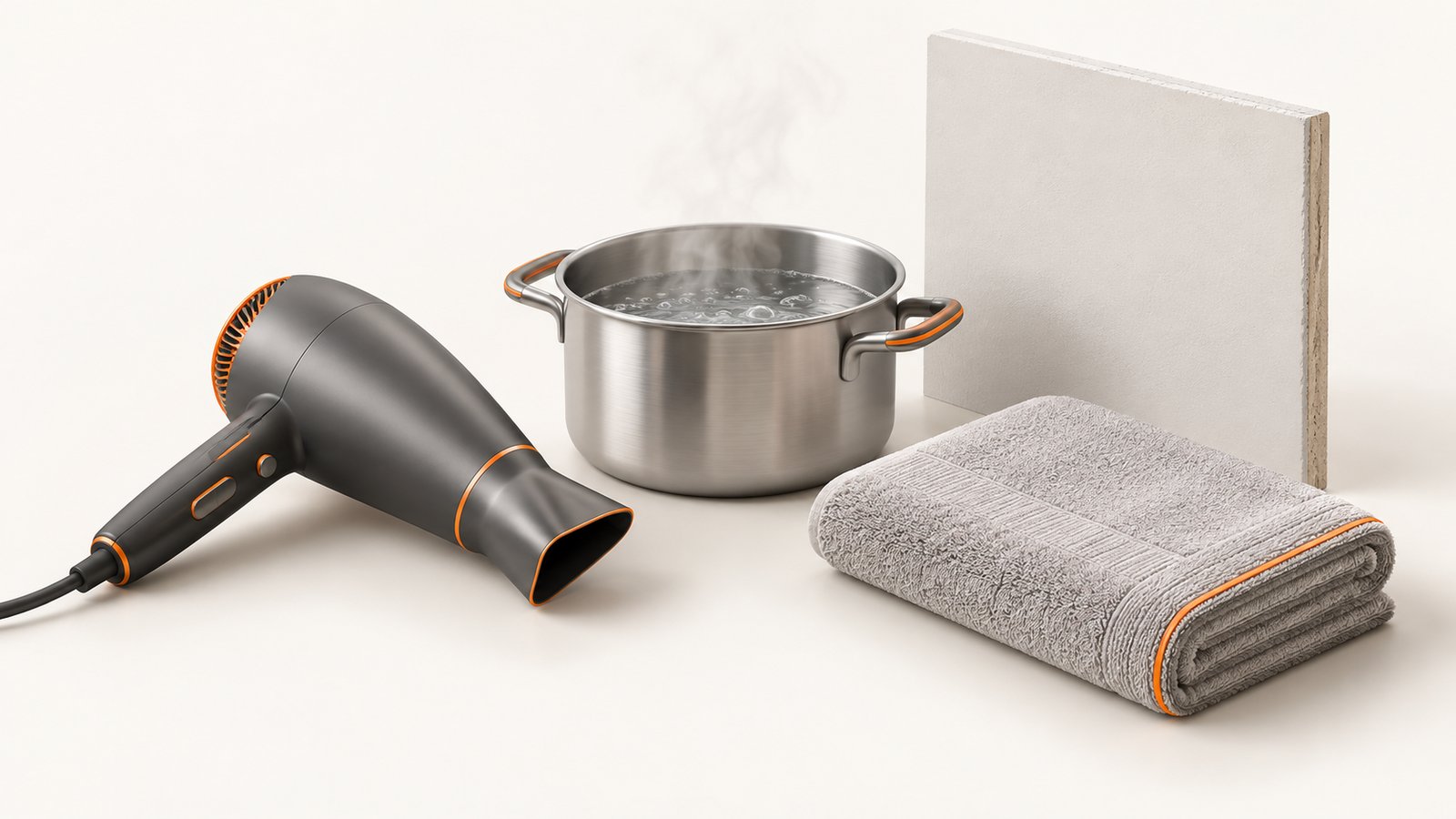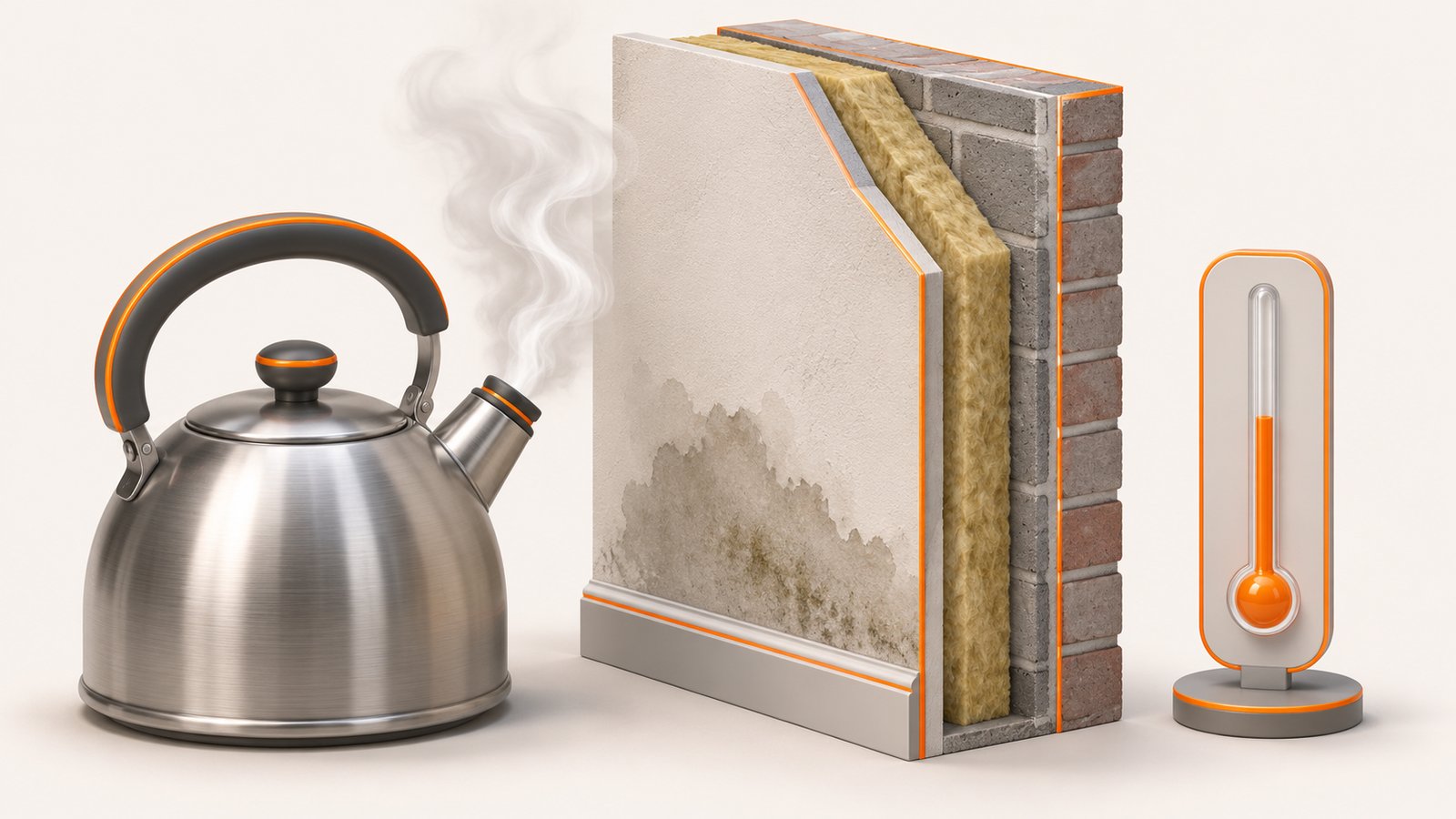
Will Boiling Water Kill Mold?
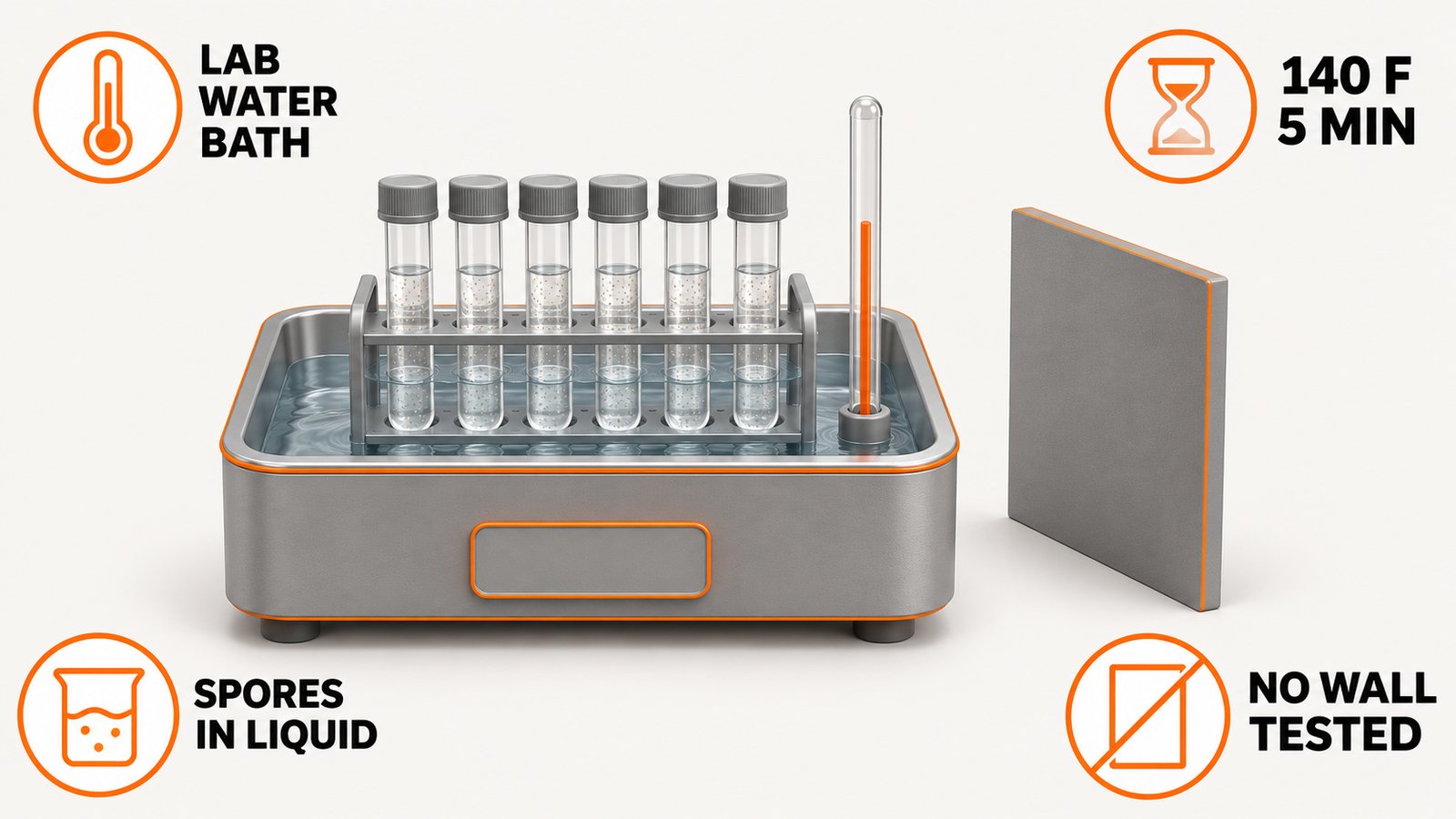
In a lab, yes. The best figures we could verify come from an early food-science paper by G. I. Wallace and F. W. Tanner of the University of Illinois, in the Proceedings of the Society for Experimental Biology and Medicine. Our does heat kill mold page walks through its numbers. The short version for a water question:
At 140 degrees F (60 C), the paper reports earlier work by other researchers in which none of the organisms in one set of tests survived 5 minutes. The authors write that 60 C for 5 minutes is usually sufficient, with exceptions: some Aspergillus niger resisted 10 minutes and Oidium lactis survived 30. At 122 degrees F (50 C), that earlier work held pure cultures for an hour, and all but four of the molds studied survived. It also cites an older bread study in which flasks of mold suspension were slowly heated from 68 to 212 degrees F, the boiling point of water, over 35 minutes. No molds survived.
Three limits apply. The spores sat in liquid inside sealed tubes or flasks. They were held at a measured temperature for minutes. And the paper tests no wall, no fabric and no poured water. The EPA cleanup pages and the CDC guide we read say to use water and detergent, scrub, and dry. They do not mention hot or boiling water.
Does Hot Water Kill Mold in the Wash?
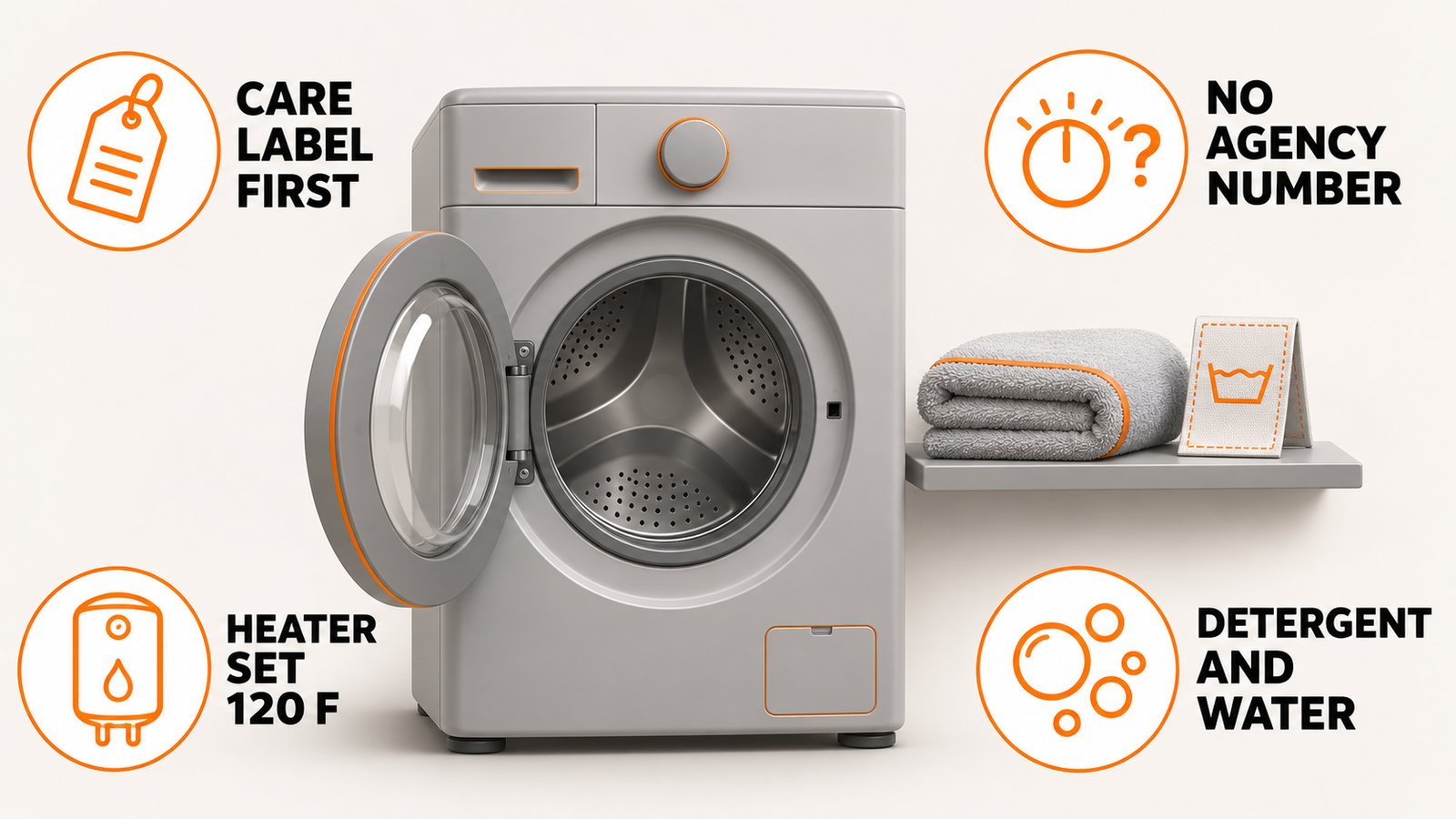
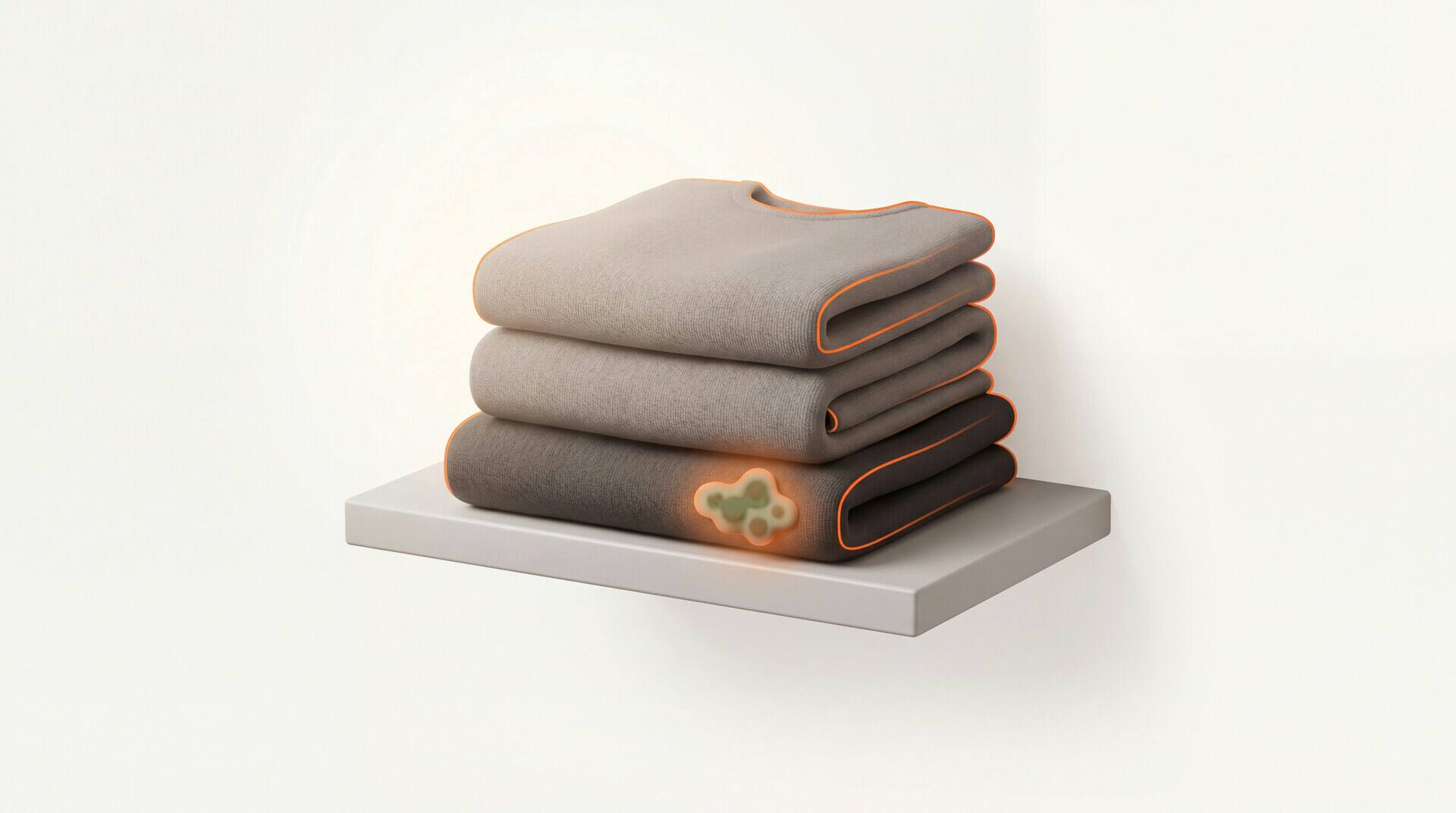
Laundry is where a hot-water question makes sense, because fabric can be washed and dried. The agencies we read still give no wash temperature for mold. The CDC's guide to mold cleanup after disasters says to clean with water and a detergent, remove all the mold you can see, and dry right away. For water-damaged drapes, the EPA's mold course says to follow the manufacturer's laundering or cleaning instructions.
Here is why we would not count on hot water from the faucet to do the killing. University of Utah Health says water from a heater nobody has turned down comes out at about 146 degrees F, and both Utah Health and San Diego Fire-Rescue say to set a water heater no higher than 120 degrees F. The earlier work the paper reports found that all but four molds survived an hour at 122 degrees F. Putting those together is our reading, not a finding from any one source: water at a recommended heater setting sits at or below that temperature.
A washing machine is a different setup, and we found no source that says what temperature its hot cycle holds or for how long. Check the care label, wash, then dry the clothes completely. Our mold on clothes and mold smell out of clothes guides cover the steps. If a musty smell lingers, we would treat the job as unfinished.
Does Boiling Water Kill Mold on a Wall?
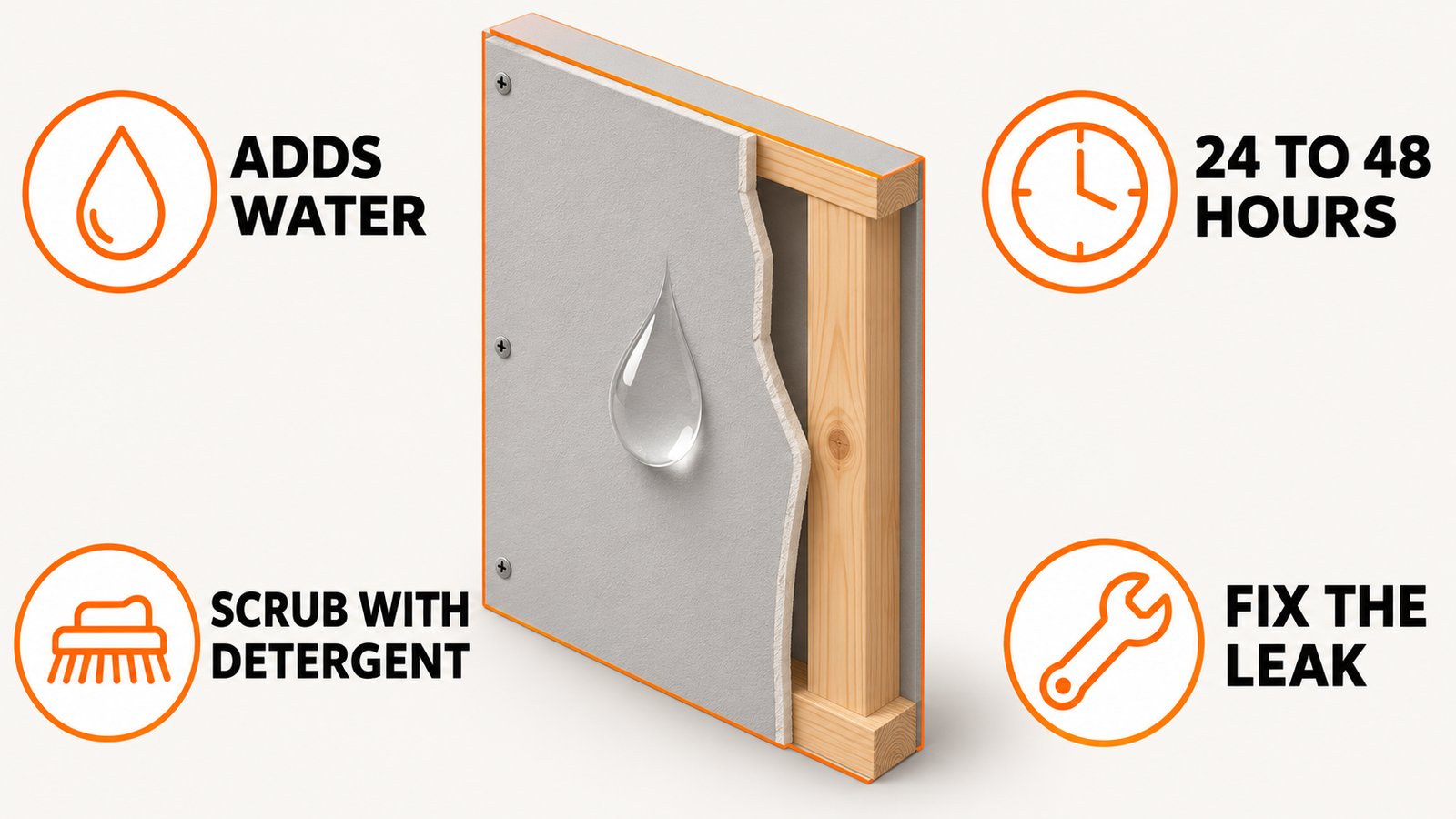
We found no source that tests boiling water on a wall, so we cannot give you a result. What the sources do say points away from it.
Water is the problem. The EPA's Brief Guide says none of the many types of mold will grow without water or moisture, and that if wet or damp areas are dried 24 to 48 hours after a leak or spill, in most cases mold will not grow. Pouring water on a moldy wall puts liquid where the EPA wants it gone.
Porous materials hold it. The EPA says absorbent or porous materials, such as ceiling tiles and carpet, may have to be thrown away if they become moldy. Its mold course says drywall may be dried in place if there is no obvious swelling and the seams are intact. Otherwise it has to be removed. See mold on drywall.
Wood has a moisture line. The USDA Forest Products Laboratory's Wood Handbook says serious decay occurs only when wood moisture content is above the fiber saturation point, which averages 30 percent. Dry wood gets there when water reaches it as rain, condensation or wet ground. We found no test of boiling water on framing, but liquid water is what moves wood toward that line, and we would not add any. See mold on wood.
Scrubbing removes it. The EPA's mold course says mold can generally be removed from hard surfaces by wiping or scrubbing with water and detergent, then drying quickly and thoroughly. Steam raises the same questions; see does steam kill mold.
Does Hot Water Kill Mold on Dishes and Drains?
We found no EPA, CDC or university source that tests boiling water on a moldy dish or in a drain, so we give no result for either.
Dishes and containers. An item that sits fully under hot water for the whole time is the closest match to the lab tubes. For moldy food, the USDA's Food Safety and Inspection Service has a page, Molds on Food: Are They Dangerous?, and we make no claim here about whether any food is safe to eat. For a dishwasher, our mold in the dishwasher guide explains why a hotter cycle did not clear fungi in the surveys it covers.
Drains. A dark film at the inner lip of a drain may not be mold at all, and a photo cannot settle it, as our mold in drain pipes guide explains. A kettle poured down a drain also puts scalding water inches from your face, and we found no source on whether boiling water suits every drain pipe. That guide suggests scrubbing the removable strainer and stopper in warm water with dish detergent.
Is Pouring Boiling Water on Mold Safe?
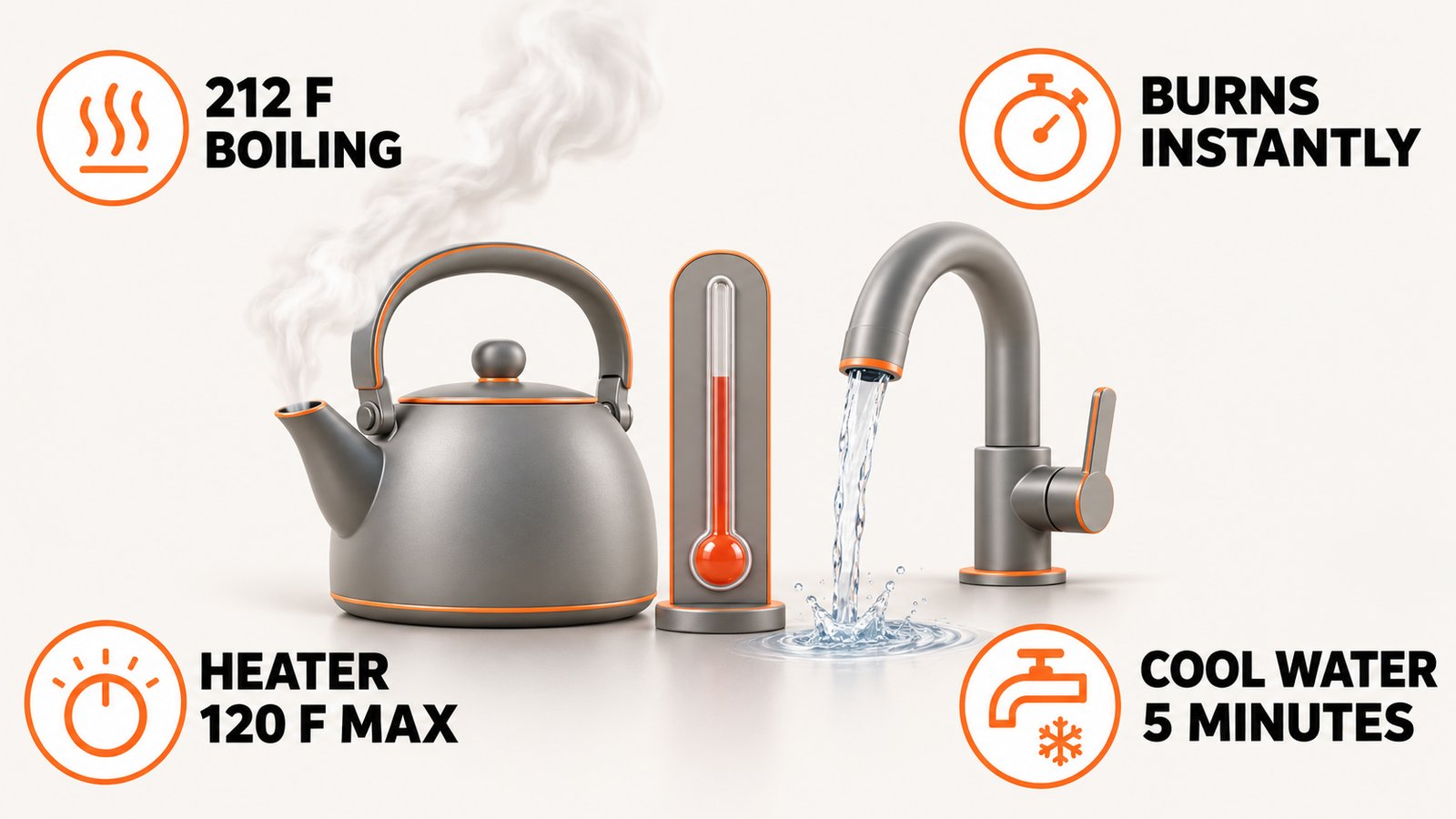
Boiling water is a burn risk before it is a cleaning tool. University of Utah Health says a burn happens instantly at boiling temperature, 212 degrees F.
San Diego Fire-Rescue says people of all ages can be burned by liquid at 140 degrees F in as few as thirty seconds, and a young child in five seconds at 140 degrees F or one second at 160 degrees F. Its carrying advice applies to a pot of hot water: check that children and obstacles are out of your path first, and turn pot handles to the back of the stove.
If someone is scalded, the two sources differ slightly. San Diego Fire-Rescue says to treat a minor burn right away with cool running water for 3 to 5 minutes, with no ice, butter or lotions, then a sterile bandage. University of Utah Health says to keep the burn in cool, not cold, water for at least five minutes, wash it gently, and cover it loosely with clean, dry gauze. Both say to get medical help if the burn is serious. This is first-aid information from public safety sources, not medical advice.
What Works Better Than Boiling Water on Mold?
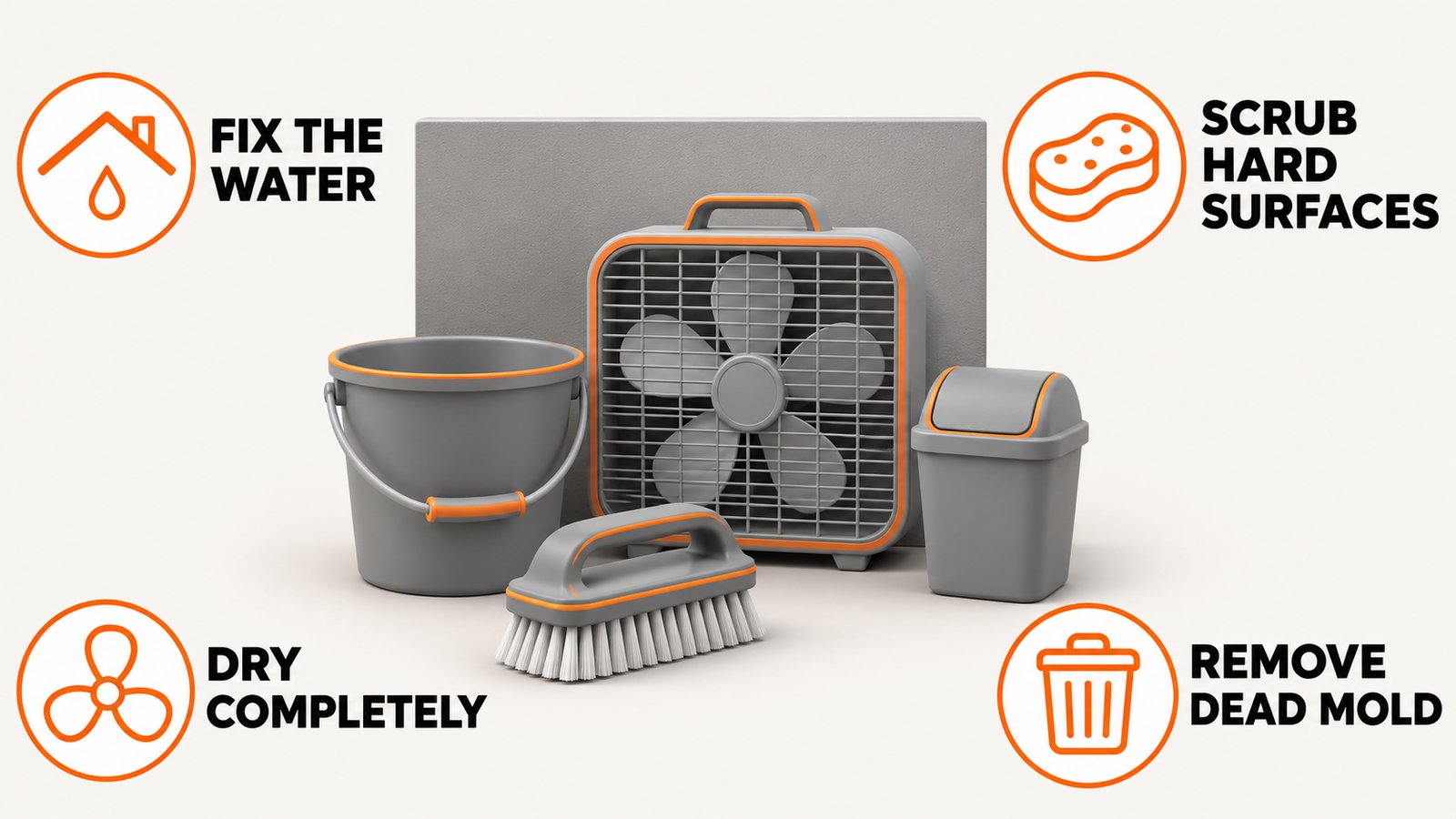
The EPA's steps are plain, and none of them needs a kettle:
- Fix plumbing leaks and other water problems. The Brief Guide says that if you clean up the mold but do not fix the water problem, then, most likely, the mold problem will come back.
- Protect yourself. The EPA says you may want to wear an N-95 respirator, and that long gloves and goggles without vent holes are recommended.
- Scrub mold off hard surfaces with detergent and water, and dry completely.
- Absorbent or porous materials that are moldy may have to be thrown away.
Killing is not the goal. The EPA says dead mold may still cause allergic reactions in some people, so it is not enough to simply kill the mold. It must also be removed. Compare cleaners in mold cleaning products, does vinegar kill mold and does bleach kill mold, and see how to get rid of mold for the routine. For moisture, the EPA advises keeping indoor humidity below 60 percent, ideally between 30 and 50 percent. Our humidity risk calculator turns a meter reading into a plain risk picture.
When to Call a Pro
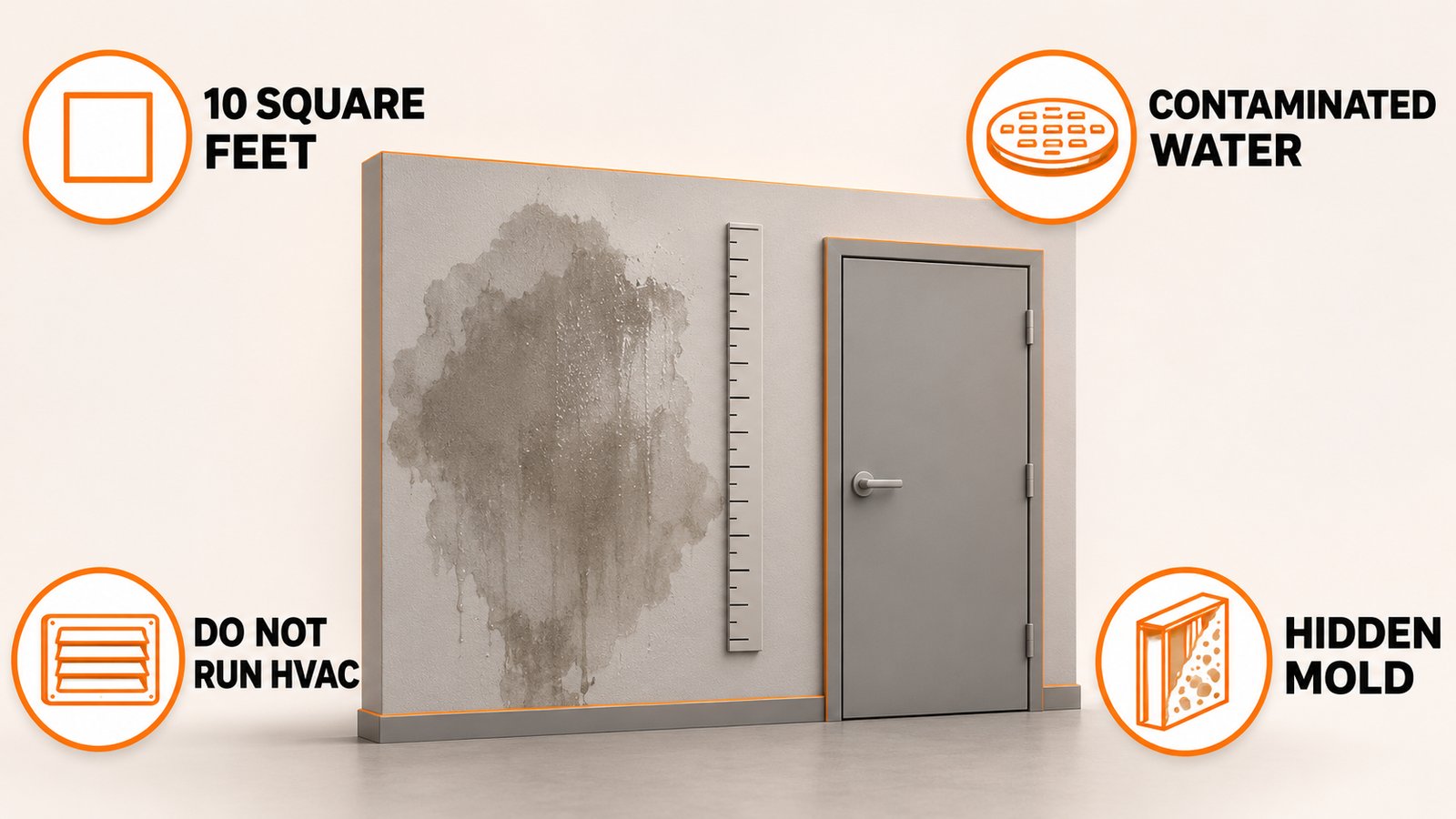
The EPA says a moldy patch under about 10 square feet (roughly 3 feet by 3 feet) is, in most cases, a job you can handle yourself. Past that size, or after a lot of water damage, it points to its guide for larger jobs, and we suggest a professional. The EPA's own "call in a professional" is for sewage or other contaminated water. If the HVAC system may be contaminated, it says not to run it. If you have health concerns, it says to consult a health professional before starting cleanup.
The EPA says you may suspect hidden mold if a building smells moldy but you cannot see the source, or if you know there has been water damage and residents are reporting health problems. It says to consider hiring an experienced professional. See mold removal.
Frequently asked questions
Does boiling water kill mold?
In a lab, heat can: an early paper describes mold suspensions slowly heated to 212 degrees F (100 C) with no survivors. We found no source that tests boiling water poured on a wall, floor or drain. It also adds moisture and can scald you, and the EPA says dead mold may still cause allergic reactions in some people.
Will boiling water kill mold on a wall?
We found no source that tests it. The EPA says mold needs water to grow and that hard surfaces should be scrubbed with detergent and water, then dried completely. Adding water to drywall or wood is the opposite of that.
Does hot water kill mold on clothes?
The agencies we read give no wash temperature for mold. The CDC says to clean with water and detergent and dry right away. Check the care label, wash, and dry the clothes completely.
Does boiling hot water kill mold spores?
In lab work reported in an early paper, no organism in one test survived 5 minutes at 140 degrees F (60 C), and at 122 degrees F (50 C) all but four of the molds studied survived an hour. Those were spores in liquid, so they are not a rule for a poured kettle.
Does boiling water kill mold in a drain?
We found no EPA, CDC or university source that tests it. A dark film in a drain may not be mold, and a poured kettle risks a scalding splash.
Is it safe to pour boiling water on mold?
It carries a real burn risk. University of Utah Health says a burn happens instantly at boiling temperature, and San Diego Fire-Rescue says liquid at 140 degrees F can burn people of all ages in as few as thirty seconds.
If hot water kills the mold, do I still need to clean it up?
Yes. The EPA says dead mold may still cause allergic reactions in some people, so it is not enough to simply kill the mold. It must also be removed, and the moisture source fixed.
Sources
Every claim on this page traces to one of these. Links open the primary document.