The verdict: strong cleaner, narrow lane
Our rating: 3.5 / 5. Mold Armor earns a spot under the sink for one job: fast cleanup of visible mold on hard, non-porous surfaces. Tile, tubs, shower glass, vinyl siding. On those surfaces it works in minutes, and the stain removal is real.
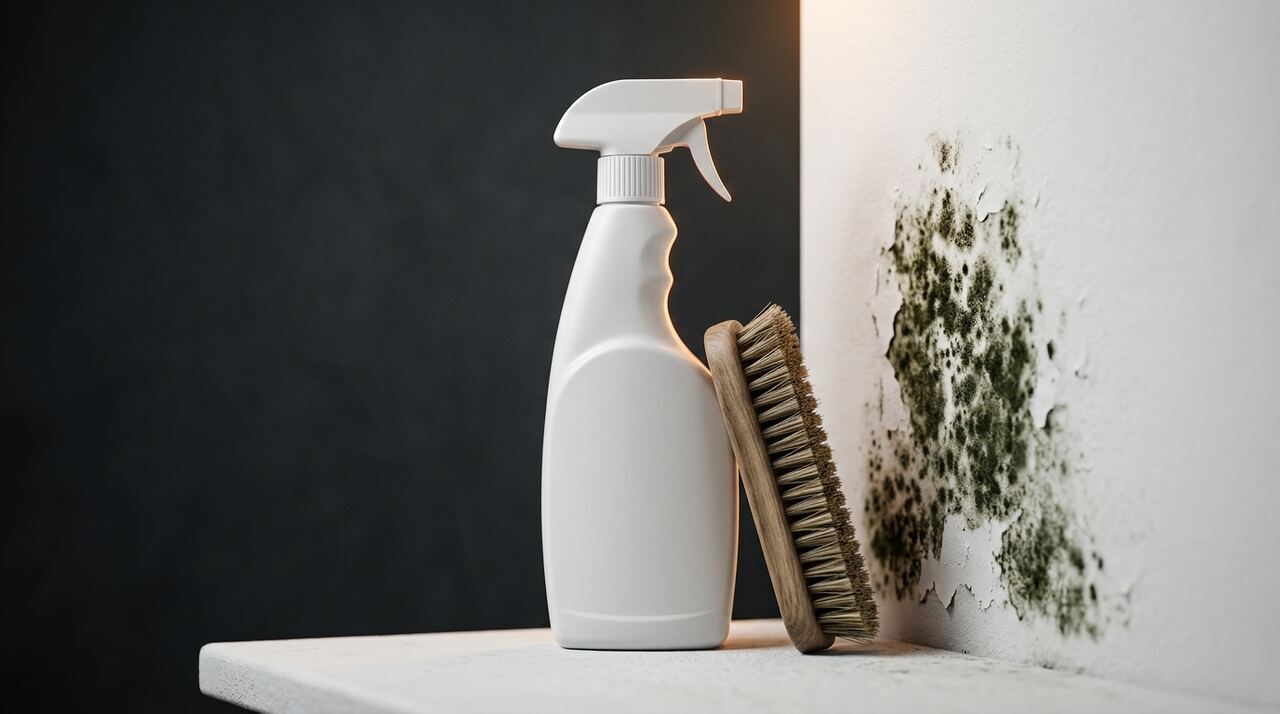
The rating stops at 3.5 because of what the bottle doesn't say loudly enough. The flagship formula is bleach chemistry. On porous materials like drywall and bare wood, bleach fails in a predictable way: the chlorine stays near the surface while the water soaks deeper and feeds the mold's roots. The patch looks gone because the stain is gone. A few weeks later it's back.
This review is based on the product label, the safety data sheet, and EPA mold cleanup guidance. We don't stage before-and-after photo tests, and we don't invent results. We read what the chemistry can and can't do, then check it against federal guidance on how mold grows and how it should be removed.
The short version: buy it for the bathroom tile and the siding. Don't make it your whole mold plan. To see how it ranks against every other option, start with our mold cleaning products guide. Compare it against every pick in our best mold removal products ranking.
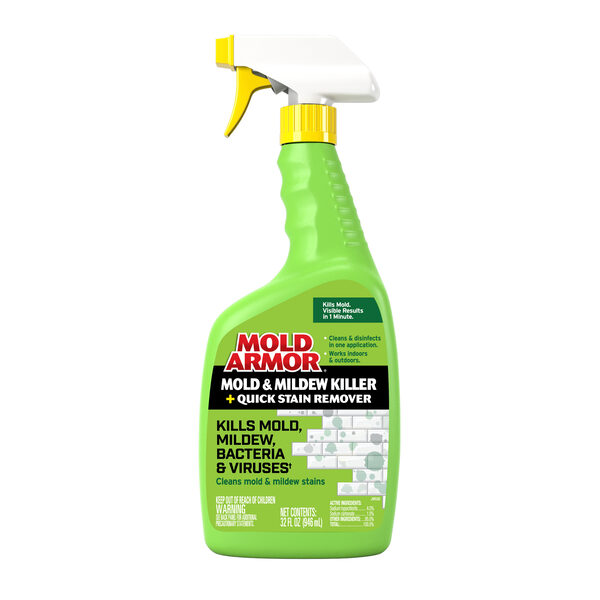
Mold Armor Mold & Mildew Killer + Quick Stain Remover
Bleach-based and fast on tile, tubs, glass, and siding. Read the label, ventilate hard, and never mix it with other cleaners. Not for porous drywall or bare wood.
Mold Scanner AI may earn a commission from purchases made through links on this page. It never changes what we recommend or the price you pay.
What Mold Armor is
Mold Armor is a product line, not a single bottle. The brand belongs to W.M. Barr, the company behind several hardware store cleaning staples. The line covers indoor mold and mildew sprays, exterior house and deck washes, and a prevention spray called Mold Blocker.
The flagship is the one most people mean when they say Mold Armor: the Mold and Mildew Killer + Quick Stain Remover. Its active ingredient is sodium hypochlorite. That's the same active ingredient as household bleach. The label and the safety data sheet both confirm it, and the warnings on the bottle read like bleach warnings because that's what the chemistry is.
Sodium hypochlorite does two things at once. It kills mold growth sitting on top of a surface, and it strips the dark pigment out of the stain. That double action is why the results look so dramatic. You spray, you wait a few minutes, and the black film on a grout line fades in front of you.
The Mold Blocker spray plays a different position. It goes on clean, dry surfaces and is meant to slow new growth. As a thin extra layer of protection it can help. Treat it as a supplement to moisture control, never a replacement. No spray beats a leaking pipe or a bathroom with no exhaust fan.
A few products in the line use different chemistry from the flagship. Read the label on the exact bottle in your hand before you plan a job around it.
Where Mold Armor works well
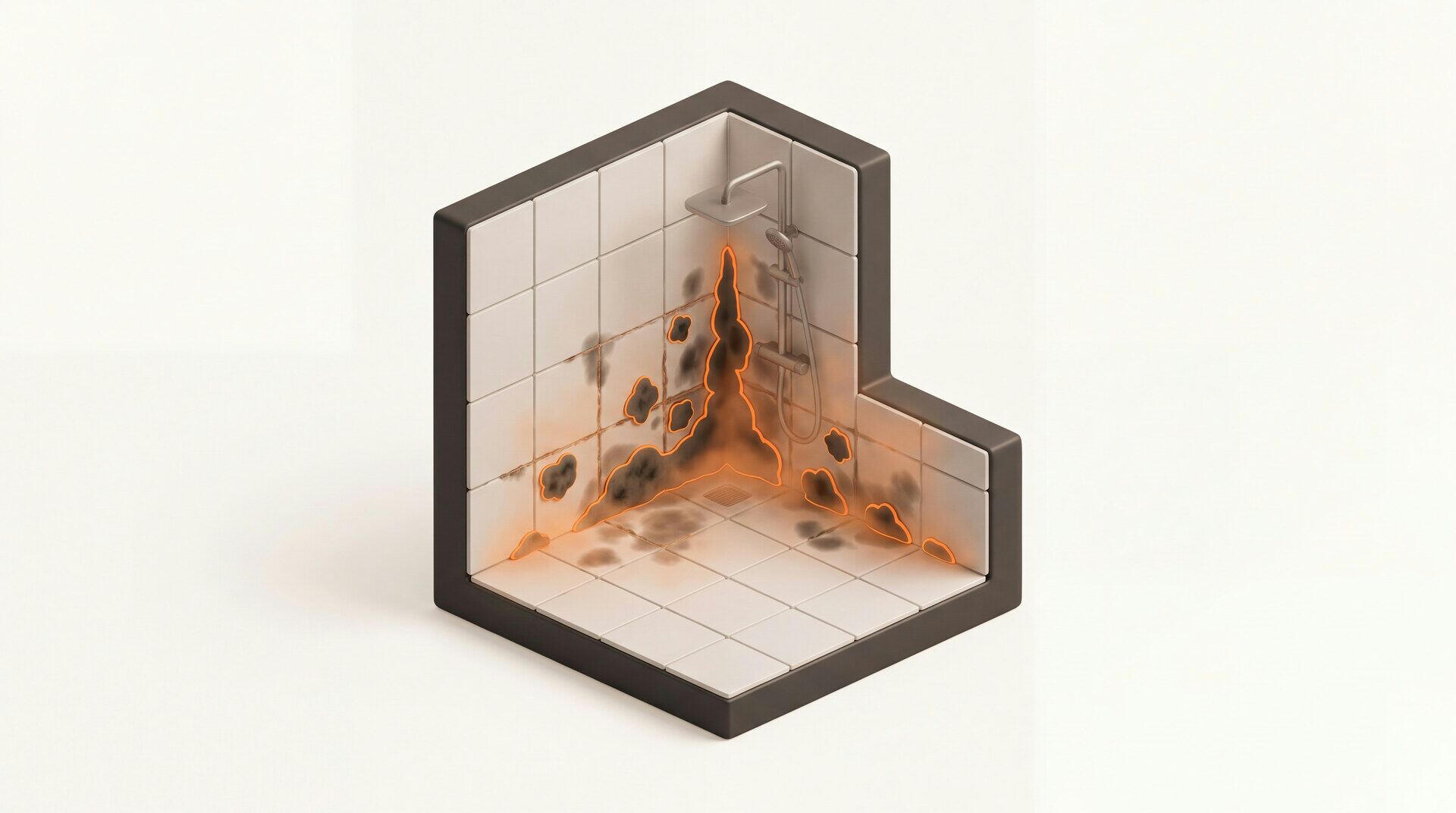
Bathroom hard surfaces are the home turf. Ceramic tile, porcelain tubs, shower glass, sinks, and sealed grout lines. These surfaces are non-porous, so the mold colony lives right on top where the chlorine can reach it. Spray, wait, scrub lightly, rinse well. The stain lifts and the surface growth dies. If you're staring at dark spots around the tub and aren't sure what they are, our guide to black mold in the bathroom walks through the visual checks first.
Exterior siding is the other strong lane. Mold Armor's house wash products are made for vinyl siding, fences, and patio surfaces. Outdoors, the two biggest bleach problems shrink: fumes disperse in open air, and you can rinse everything with a hose. Green and black streaks on shaded siding respond fast.
The third honest use is speed. When a landlord walkthrough is tomorrow and the shower corner looks rough, a bleach-based cleaner delivers a visible result in minutes. Be clear with yourself about what happened, though. You cleaned a surface and erased a stain. You didn't treat anything below it, and you didn't touch the moisture that caused it.
One more note before you spray: the visible patch is usually the easy part. The exhaust fan housing, the caulk line, and the cabinet under the sink hold moisture far longer than the tile does. Our guide to where bathroom mold hides covers the spots most people miss.
Where Mold Armor backfires
Porous and semi-porous materials are where bleach products go wrong. Drywall, bare wood, ceiling tiles, carpet. The problem is physics, not effort.
Mold on porous material doesn't sit on the surface. It anchors root structures called hyphae down into the material itself. Bleach is mostly water. When you spray it on drywall, the chlorine stays near the surface and breaks down quickly. The water keeps going. It soaks into the exact layer where the roots live and hands them the one thing they need: moisture.
The result is a frustrating loop. The surface looks clean because the stain got bleached out. The colony underneath survives, drinks the water you gave it, and pushes back through within weeks. Many homeowners repeat this cycle several times before realizing the product never reached the problem. We break down the full chemistry in plain language in does bleach kill mold.
EPA cleanup guidance centers on two moves: fix the moisture, and remove mold from porous materials instead of trying to kill it in place. Drywall where mold has grown through the paper backing gets cut out (plus 12 inches beyond visible growth) and replaced. No spray changes that, including this one.
For porous and semi-porous surfaces, better tools exist. Concrobium Mold Control dries into a film that keeps working. 3% hydrogen peroxide kills surface growth without the fume problem. White vinegar soaks in further than bleach does. The full decision tree, surface by surface, lives in our how to get rid of mold guide.
And know where DIY stops. The EPA draws the line at 10 square feet. Past that, hire a qualified mold remediation professional. Look for firms that follow the IICRC S520 standard; ACAC or RIA credentials and state licenses count too.
Safety: read the label first
Treat the flagship like bleach, because chemically that's what it is. Five rules.
Ventilate before you spray. Open the window, run the exhaust fan, and prop the bathroom door. Chlorine fumes build fast in small closed rooms, and they irritate eyes and airways. If your eyes burn or you start coughing, step out and let the room air out before you continue.
Cover your hands and eyes. Rubber gloves and goggles, every time. Sodium hypochlorite irritates skin and can injure eyes on contact. An N95 mask helps with the mold spores you stir up while scrubbing, but it does not filter chlorine fumes. Ventilation handles the fumes.
Never mix it with ammonia or acids. This is the rule that causes real injuries when people skip it. Bleach plus ammonia (found in many glass and floor cleaners) makes chloramine gas. Bleach plus acids (vinegar, some toilet bowl cleaners, rust removers) releases chlorine gas. Both are dangerous within minutes in a closed bathroom. Use one product at a time and rinse well before switching.
Protect what it touches. It will bleach your clothes, the bath mat, and the towel hanging too close. Move fabrics out of range, wear old clothes, and rinse any surface that hands, food, or pets touch.
Keep kids and pets out until the surface is rinsed and dry and the room has aired out. Store the bottle capped and out of reach.
Mold Armor vs Concrobium
These two products represent opposite philosophies, and picking between them mostly means picking a philosophy.
Mold Armor is kill and stain-lift. The chlorine destroys surface growth and erases the dark stain in minutes. The result is instant and visible. Nothing stays behind to prevent regrowth, and on porous material the water content works against you.
Concrobium is kill and encapsulate. It's a bleach-free solution that dries into a thin film. The film crushes mold at the root level as it tightens, then stays on the surface as a barrier against new growth. No fumes. The trade-offs run the other way: it needs hours to dry, and it does little for dark staining. Dead mold often keeps its color.
So the honest match-up looks like this. For glazed tile, tubs, glass, and vinyl siding where you want the stain gone today, Mold Armor wins. For wood framing, concrete basement walls, attic sheathing, and any household where fumes are a problem, Concrobium wins, and it's the safer default for most indoor jobs. Our full Concrobium Mold Control review (it scored 4.5 out of 5) explains how the film works.
Plenty of homes end up with both under the sink: one for the shower glass, one for everything else. For the complete head-to-head with a surface-by-surface breakdown, see Concrobium vs Mold Armor.
Whichever bottle you pick, the sequence stays the same. Fix the water first. Then clean. Then keep indoor humidity between 30 and 50 percent so the problem doesn't restart. Mold can re-establish on a damp surface within 24 to 48 hours.
Frequently asked questions
Does Mold Armor actually kill mold?
On hard, non-porous surfaces, yes. The sodium hypochlorite kills surface growth on contact and removes the dark stain at the same time. On porous materials like drywall and bare wood, it only reaches the surface layer. The roots underneath survive, and the water in the spray feeds them. That's why bleached patches often grow back within weeks. Treat it as a hard-surface cleaner, never as a whole-house mold fix.
Is Mold Armor the same as bleach?
The flagship Mold and Mildew Killer + Quick Stain Remover is built on sodium hypochlorite, the same active ingredient as household bleach. The label and the safety data sheet both confirm it, which is why the bottle carries bleach-style warnings. A few products in the Mold Armor line use different chemistry, so read the label on your exact bottle. Handle the flagship with the same care you'd give straight bleach.
Can I use Mold Armor on drywall or wood?
Not as the only treatment. On porous materials, the chlorine stays near the surface while the water soaks in and feeds the mold roots, so the colony usually comes back. For wood, remove visible growth and follow with Concrobium or 3% hydrogen peroxide. Drywall where mold has grown through the paper backing should be cut out and replaced. For anything larger than 10 square feet, hire a qualified mold remediation professional.
Is Mold Armor safe to use indoors?
It's manageable for small bathroom jobs when you follow the label. Open a window, run the exhaust fan, and wear rubber gloves and eye protection. Never mix it with ammonia or with acids like vinegar. Those combinations release dangerous gases. Keep kids and pets out of the room until surfaces are rinsed and dry and the air has cleared. If fumes are a concern, use a bleach-free product like Concrobium instead.
Which is better: Mold Armor or Concrobium?
It depends on the surface. Mold Armor wins on glazed tile, tubs, glass, and vinyl siding where you want stains gone fast. Concrobium wins on wood, concrete, and anywhere fumes are a problem, because it dries into a film that keeps protecting the surface after the job is done. For most indoor mold work, Concrobium is the safer default. Neither product fixes the moisture problem that caused the mold.
Do you have to rinse off Mold Armor?
On hard, non-porous surfaces the routine is spray, wait, scrub lightly, then rinse well. Outdoors on vinyl siding, fences and patios you can rinse everything down with a hose, which is part of why the bleach based formula is easier to live with outside: the fumes disperse in open air. Indoors, ventilate the room and wear gloves.
Sources
Every claim on this page traces to one of these. Links open the primary document.