
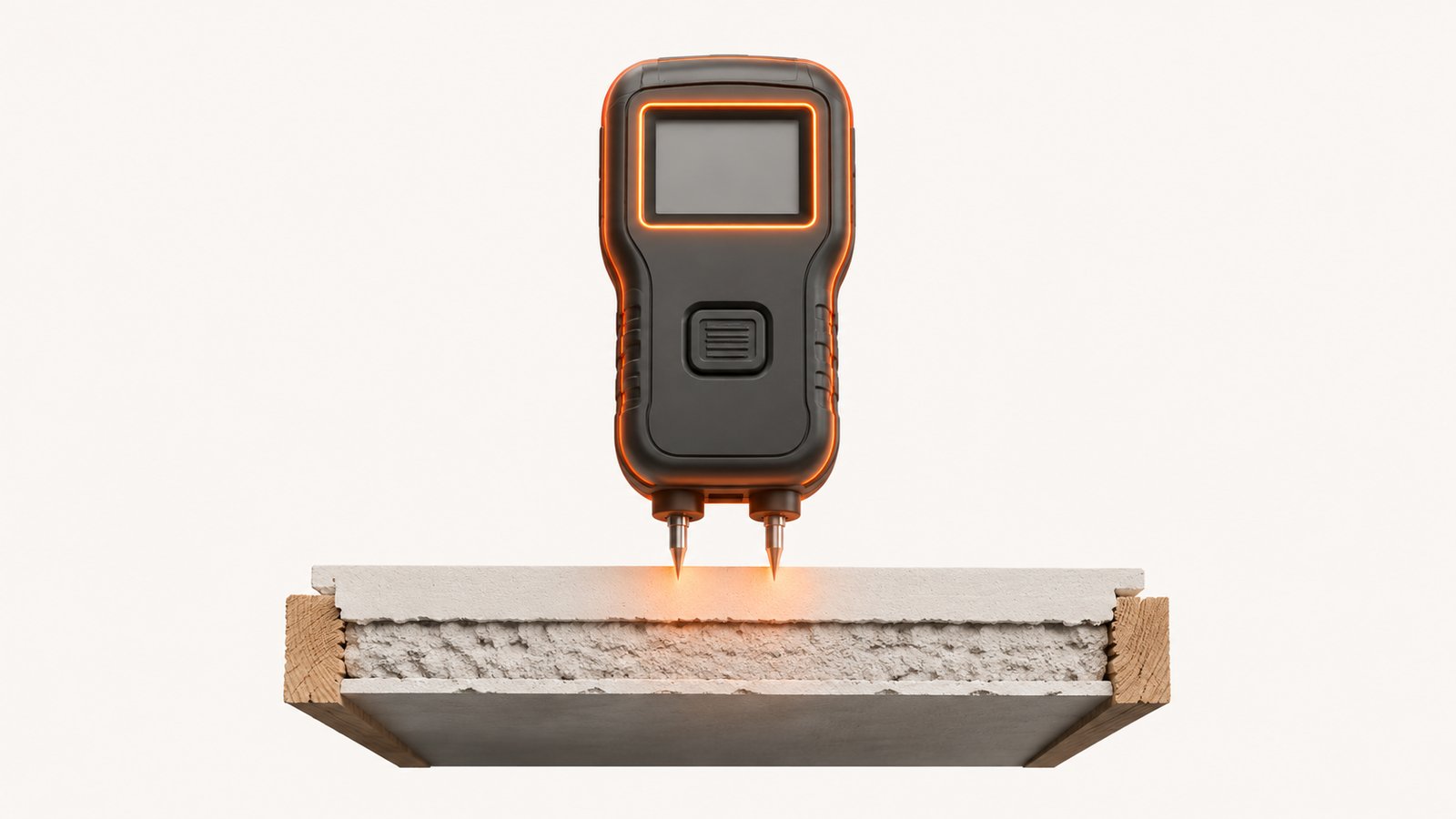
What a Mold Detector Actually Detects
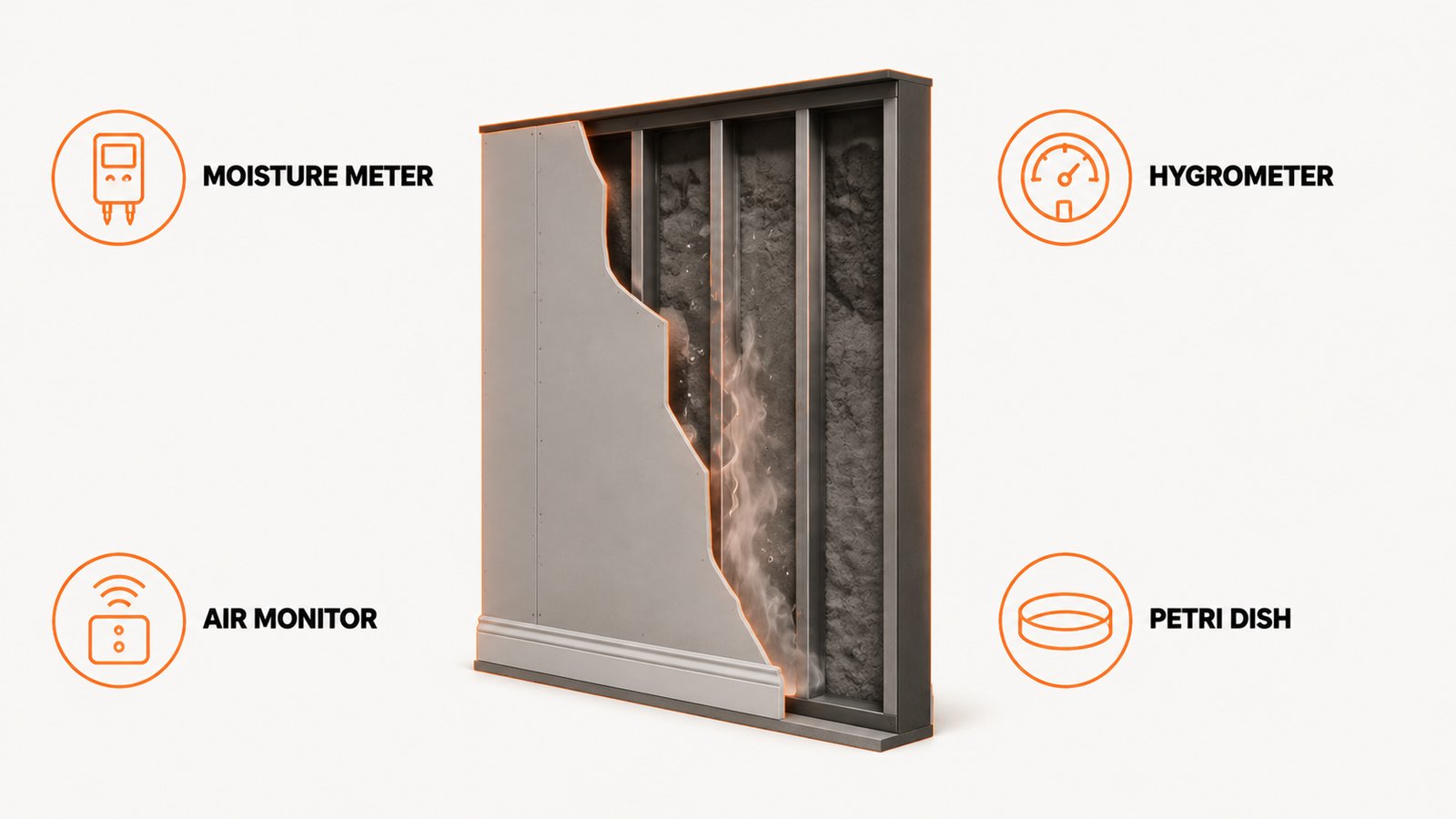
The phrase is misleading, and knowing why saves you money. No consumer product sniffs the air, names Stachybotrys chartarum, and tells you where it is growing. What gets sold as a mold detector is one of four different instruments, each measuring something else entirely:
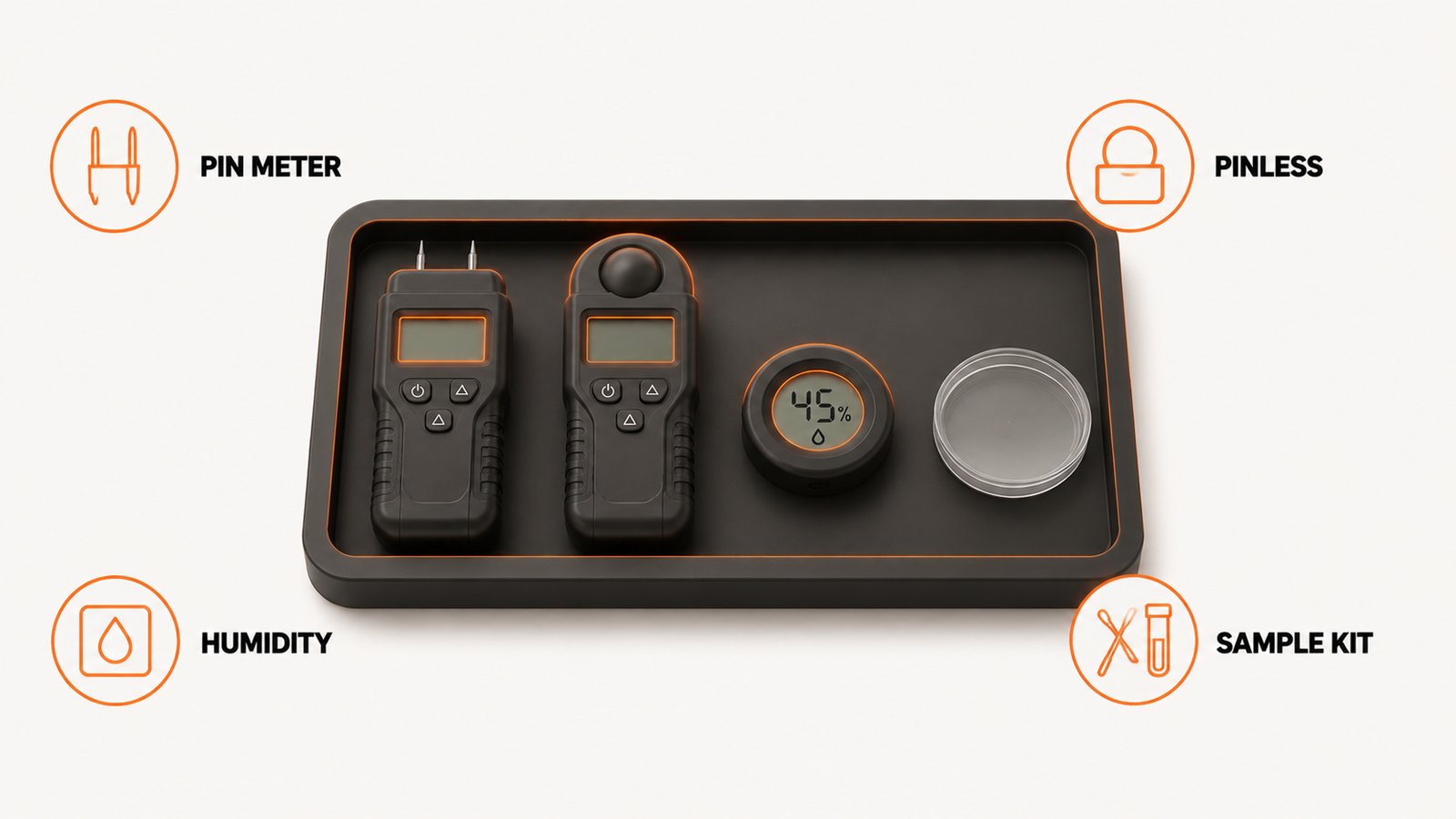
- Moisture meters read how wet a building material is. Mold needs water, so a wet wall is the most useful signal a homeowner can measure.
- Hygrometers read relative humidity in the room air. The EPA tells homeowners to keep indoor humidity below 60 percent and ideally between 30 and 50 percent, and says outright that relative humidity can be measured with an inexpensive moisture or humidity meter.
- Indoor air quality monitors turn humidity and temperature history into a mold risk score. They flag conditions, not colonies.
- DIY petri dish test kits settle airborne particles onto a growth medium. They prove spores are present. Spores are always present.
A camera sits in a fifth category. Photo screening looks at the surface you can already see and tells you whether it reads as growth or as something that only looks like it. That is the step most people skip, and it is why so many meters get bought to chase a stain that was never mold. Our guide to telling mold from a photo walks through the visual tells.
The EPA is blunt about the limits of testing. In its guidance, if visible mold growth is present, sampling is unnecessary, and because no EPA or other federal limits have been set for mold or mold spores, sampling cannot check a building against a federal standard. You are not buying a verdict. You are buying a way to find water.
The 6 Best Mold Detectors, at a Glance
| Tool | What it measures | Price | Rating | Best for |
|---|---|---|---|---|
| Mold Scanner AI | Visible surface, from a photo | Free to join | Not rated on Amazon | Deciding whether the stain is worth chasing |
| General Tools MMD4E | Moisture content, pin probe | $37.70 | 4.5/5 from 15,195 | Exact readings in wood and drywall |
| Klein Tools ET140 | Moisture content, pinless | $49.97 | 4.5/5 from 6,206 | Sweeping a wall without leaving holes |
| Govee Indoor Hygrometer | Relative humidity, temperature | $24.99 for two | 4.5/5 from 48,272 | Watching a basement or closet over weeks |
| Airthings Wave Mini | Humidity, temperature, airborne chemicals, mold risk | $89.99 | 4.0/5 from 1,121 | A standing mold risk score per room |
| Mold Armor DIY Test Kit | Whether spores grow on a petri dish | $9.98 | 4.0/5 from 9,010 | A cheap sample you can mail for lab analysis |
Prices and ratings read off live Amazon product pages on September 2, 2026. They move. Confirm before you order.
The 6 Mold Detectors, Ranked
Heads up: the Amazon links below are affiliate links, and buying through them may earn Mold Scanner AI a small commission at no extra cost to you.
Mold Scanner AI, the photo-based mold detector
Free to join, no hardware to buy, and it settles the question every other tool here assumes you already answered: is that patch mold, or soap scum, efflorescence, or an old water stain. Photograph the surface, get an AI-assisted visual screening result back. The paid app carries 266 guided photo prompts across 19 rooms, 38 in Quick and 129 in Standard, so you sweep a house in a fixed order instead of guessing. Processing time varies. It reads visible surfaces only, so it cannot see inside a wall cavity, name a species, or confirm active growth, and it makes no health claims. Use it to decide where to point the meter.
General Tools MMD4E Moisture Meter
Listed at $37.70 on Amazon, 4.5 out of 5 stars from 15,195 ratings, the deepest review history of any tool here. Two stainless steel pins push into the surface and read moisture content directly, 5 to 50 percent on wood and 1.5 to 33 percent on building materials such as drywall and concrete, on a backlit display. Pins leave two small holes per reading, which is nothing on a baseboard and a problem on finished cabinetry. The honest caveat: it reads only the material between the two pins, so a single reading means little. You take a dozen and compare.
Klein Tools ET140 Pinless Moisture Meter
Listed at $49.97 on Amazon, 4.5 out of 5 stars from 6,206 ratings. It reads relative moisture to three quarters of an inch below the surface using an electromagnetic field, so you slide it across a painted wall and watch a nine-bar LED scale climb without leaving a mark. The honest caveat: Klein calibrates it for drywall, masonry, hardwood, and softwood only, the readings are relative rather than an absolute percentage, and a metal stud or foil-backed insulation behind the drywall can push the number up on its own.
Govee Indoor Hygrometer Thermometer, 2 Pack
Listed at $24.99 for a two pack on Amazon and discounted to $22.49 on a limited time deal the day we checked, 4.5 out of 5 stars from 48,272 ratings, by far the widest-reviewed product here. A Swiss-made sensor reads humidity to within about 3 percent and temperature to within about half a degree Fahrenheit, and pushes a phone alert when a room crosses a threshold you set. Set it at 60 percent and you are policing the exact line the EPA draws. Twenty days of readings stay in the app and export to a spreadsheet, which matters when you are documenting a damp rental. The honest caveat: it tells you a room is humid, never where the water is.
Airthings Wave Mini Indoor Air Quality Monitor
Listed at $89.99 on Amazon, 4.0 out of 5 stars from 1,121 ratings. It runs on three AA batteries, sits on a shelf, and tracks humidity, temperature, and airborne chemicals continuously, then turns the humidity and temperature history into a mold risk indicator in the Airthings app. The honest caveat: that figure is a model built from conditions, not a measurement of mold, and this is the lowest-rated pick here. We compare it with the photo approach in Mold Scanner vs Airthings.
Mold Armor Do It Yourself Mold Test Kit
Listed at $9.98 on Amazon, 4.0 out of 5 stars from 9,010 ratings. One petri dish, one swab, and a growth medium, usable three ways: an air settle test, a heating and cooling register test, and a surface swab where growth is visible. Something can appear in as little as 48 hours, and you can pay extra to mail the dish to a lab. The honest caveat, and it is the big one: spores are in every building on Earth, so a dish that grows something proves almost nothing by itself. Use it as a surface swab on a specific stain. Our Mold Armor test kit review covers the failure modes, and mold testing kits compares it against lab-analyzed alternatives.
Affiliate disclosure: the Amazon links above are affiliate links. If you buy through them, Mold Scanner AI may earn a small commission at no extra cost to you. We read stock status, price, star rating, and rating count off the live Amazon product page for every pick on September 2, 2026. Those numbers change. Confirm before you order.
How to Sweep a Room With a Moisture Meter
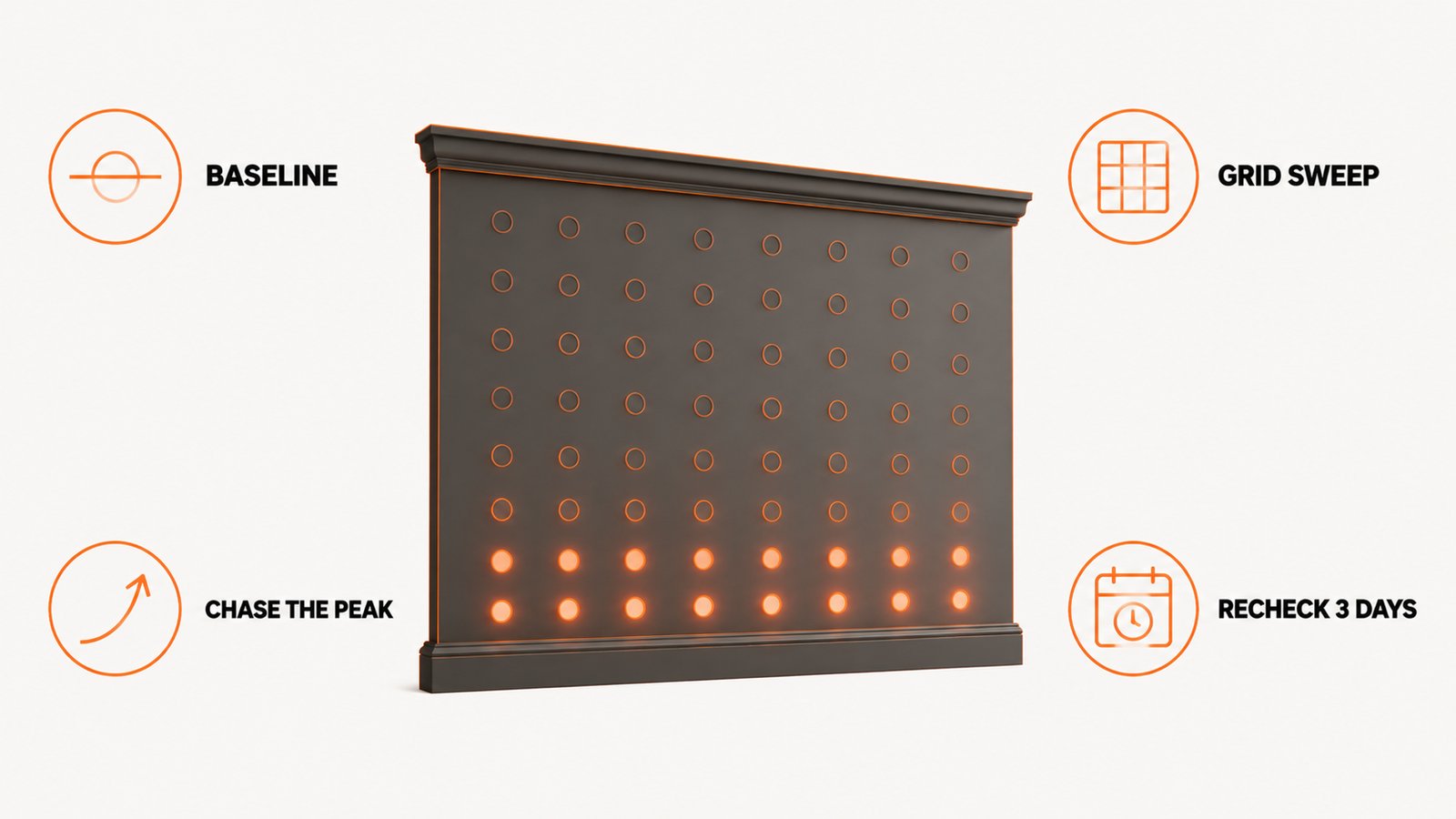
A moisture meter is only as good as the sweep pattern you use it in. One reading tells you nothing, because you have no idea what normal looks like in your own house. Here is the professional routine, stripped down.
- Take a baseline first. Read an interior wall on the far side of the house, away from plumbing, at knee height. That number is your dry reference.
- Grid the suspect wall. Read every 12 inches across and every 12 inches up, starting at the floor line. Water runs down and wicks sideways, so the wet zone is almost always wider at the bottom.
- Chase the number, not the stain. Keep moving toward the higher readings until they stop rising. The peak is usually within a foot or two of the leak, not the middle of the discoloration.
- Read the same points again in three days. A falling number means a one-time spill that is drying. A number that holds or climbs means an active source, which is what justifies opening the wall.
- Check the floor at the base of the wall. Baseboards, subfloor edges, and the bottom plate hold water long after the drywall face feels dry.
Two numbers matter more than any absolute threshold: the gap between your dry reference and your worst reading, and whether that gap is shrinking. Wood species and meter calibration both shift where the danger line sits, which is why your own dry baseline beats a number off the internet.
Timing is the part people underestimate. The EPA advises drying water-damaged areas and items within 24 to 48 hours to prevent mold growth, and how fast mold grows covers what happens past that window. A wall still wet a week after a leak is telling you the drying failed. If the readings are high and you can see nothing, the growth may be on the cavity side of the drywall, which mold behind walls covers, and a moisture meter comparison goes deeper on pin against pinless.
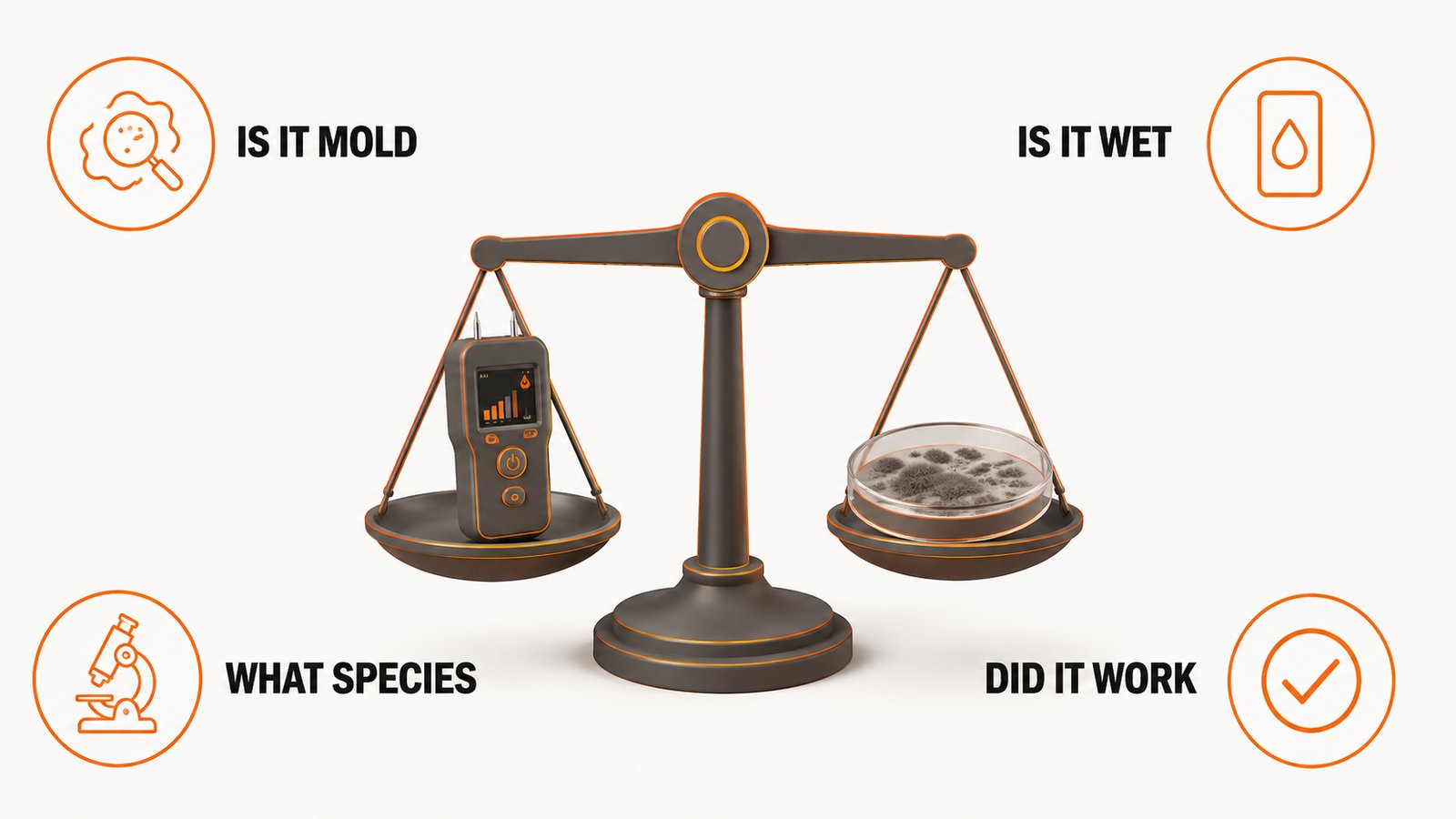
Mold Detector vs Mold Test Kit
These tools answer different questions, and buying the wrong one is the most common mistake in this category.
| Question you actually have | Tool that answers it | Why |
|---|---|---|
| Is this dark patch mold or just a stain? | Photo screening, then a surface swab | A photo settles most cases for free. A swab gives a lab something physical. |
| Is there water in this wall right now? | Moisture meter | The only tool that reads the condition mold depends on. |
| Why does this room keep going musty? | Hygrometer or air quality monitor | Humidity above 60 percent sustains growth with no leak at all. |
| How bad is it, and what species? | Lab-analyzed sampling by a professional | A settle plate on a kitchen counter cannot answer this. |
| Did the cleanup work? | Independent post-remediation verification | The EPA notes surface sampling can check whether an area was adequately cleaned. |
Notice what is missing: any device that names a species from across the room. Sampling that produces a defensible species count runs on a calibrated pump and a lab, which is what professional mold testing buys, and mold inspection cost covers the price. A cheap gadget is not a shortcut to that.
The sequence that wastes the least money: identify the stain from a photo, meter the surface around it if it reads as growth, then find the water if the meter is wet. Only then does sampling add anything, and by that point you usually know enough to skip it. How to test for mold lays out the full order.
When to Stop Testing and Call a Pro
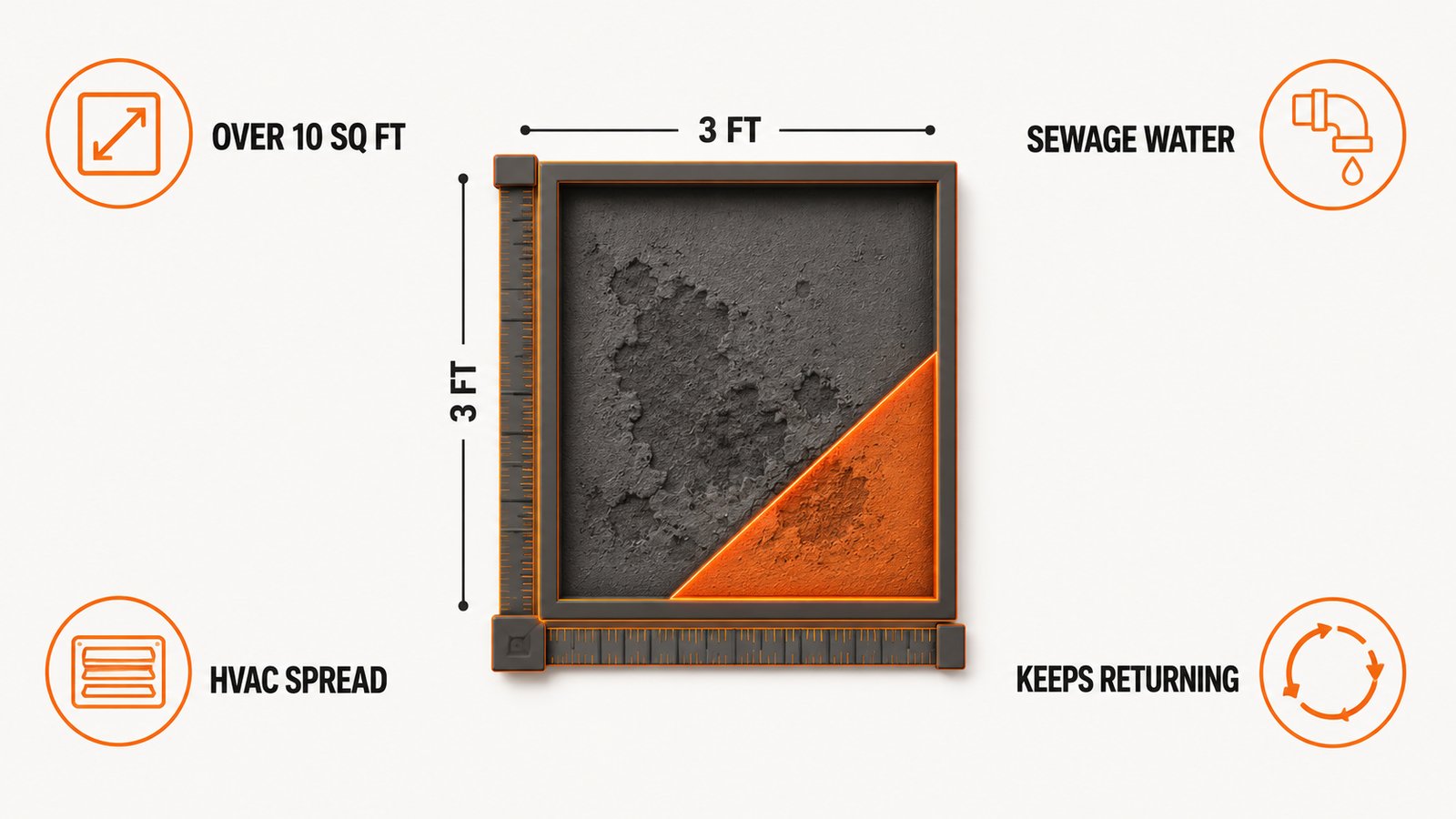
Detection tools have a ceiling. Past it, a homeowner is paying to confirm something a professional has to stand in the room to scope. Hire someone when any of these is true.
- The affected area is larger than about 10 square feet. That is the EPA's own line, roughly a 3 foot by 3 foot patch. Below it, most people can handle the cleanup themselves.
- The water came from sewage or floodwater. Contamination is the issue, not the mold, and no meter reading changes that call.
- Your meter is wet and the source is not obvious. Water travels along framing and pipe runs, so a wet bedroom reading can start at a roof valley two rooms over.
- The mold is inside the heating and cooling system. Ductwork spreads spores house-wide and needs someone who can open and clean it.
- It keeps coming back after cleaning. Regrowth in the same spot means the moisture source is still running. Cleaning it again is the definition of wasted effort.
- Anyone in the household is immune-compromised or has chronic lung disease. The CDC notes people in those groups may get lung infections from mold. That is a call for a physician and a professional.
When you hire, keep testing and remediation in separate hands. A company that both tests and sells the cleanup has an obvious reason to find something. Mold inspection covers what an independent visit includes, and mold remediation covers the cleanup itself.
While you wait, ventilate the room, keep humidity down, and wear an N95 respirator, gloves, and eye protection near disturbed growth. This page gives cleaning and protective-equipment guidance only, not medical advice. A dehumidifier holding a basement under 60 percent is often the highest-value purchase in this category, ahead of any detector.
Frequently asked questions
Is there a device that actually detects mold in the air?
Not in the way the name suggests. No consumer device identifies mold species in room air in real time. Products sold as mold detectors measure moisture in materials, humidity in air, or airborne chemical levels, and some turn humidity history into a risk score. Sampling that produces a species count needs a calibrated pump and a laboratory.
What is the best mold detector for a homeowner?
For most homes it is a moisture meter paired with free photo screening, because together they answer the two questions that matter: is this actually mold, and is the material behind it wet. The General Tools MMD4E at $37.70 and the Klein Tools ET140 at $49.97 are the two we would buy.
Do mold detectors work through walls?
Not directly. A pinless meter such as the Klein ET140 reads to about three quarters of an inch below the surface, which covers drywall and a little behind it, but nothing reads a stud cavity from outside. High moisture with no visible cause is the practical signal, and confirming it means an inspection camera or a small hole.
Are DIY mold test kits worth buying?
As a surface swab on a specific stain, or as a cheap way to get a physical sample to a lab, yes. As an air test they are close to useless alone, because spores are present in every building and a dish left on a counter will grow something. The EPA states that if visible mold growth is present, sampling is unnecessary.
What humidity level should I keep a room at to prevent mold?
The EPA advises keeping indoor relative humidity below 60 percent, ideally between 30 and 50 percent. That is the number a hygrometer exists to hold you to. Above 60 percent, mold can grow with no leak involved, which is why basements and closets go musty with no visible water event.
Can a mold detector tell me if the mold is dangerous?
No, and no consumer product should claim to. Species identification requires a laboratory and health assessment requires a physician. Detection tools tell you where water and growth are. This page is educational content and does not offer medical advice.
How much should I spend on mold detection before hiring someone?
Under $100 covers the useful ground: a moisture meter and a hygrometer. Past that, the money is better spent on an independent inspection, especially once the affected area passes the EPA's 10 square foot line.
Sources
Every claim on this page traces to one of these. Links open the primary document.