What the Mold Armor test kit is
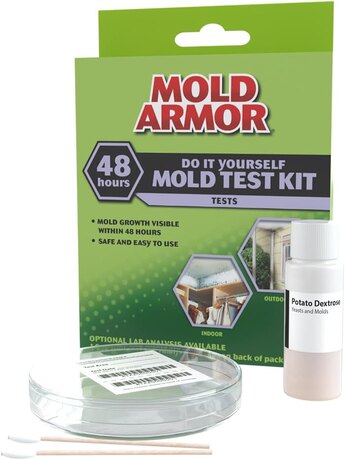
The Mold Armor Do It Yourself Mold Test Kit, model FG500, is a settle-plate test. That is the oldest and simplest microbiology method there is: you put a nutrient gel in a dish, leave the dish open so whatever is in the air lands on it, close it, and wait for colonies to appear. Mold Armor is a brand of Barr Ingredients, based in Memphis, Tennessee, and this kit has been on hardware store shelves for well over a decade.
The company describes it plainly enough. It tests for the presence of mold, with visible results in as little as 48 hours, using three methods, with an optional mail-in analysis to determine the mold type for an additional fee. Every part of that sentence is true. The trouble is what people assume it means.
Here is the distinction that decides whether this kit is worth your money. There is a difference between presence and amount. This kit answers presence, and presence is the question you already know the answer to. Mold spores exist in essentially every home, in every breath of outdoor air, and on most surfaces. A dish left open will nearly always grow something. What actually matters is whether the level inside your home is unusual compared with outside, and this kit has no mechanism for answering that.
What is in the box
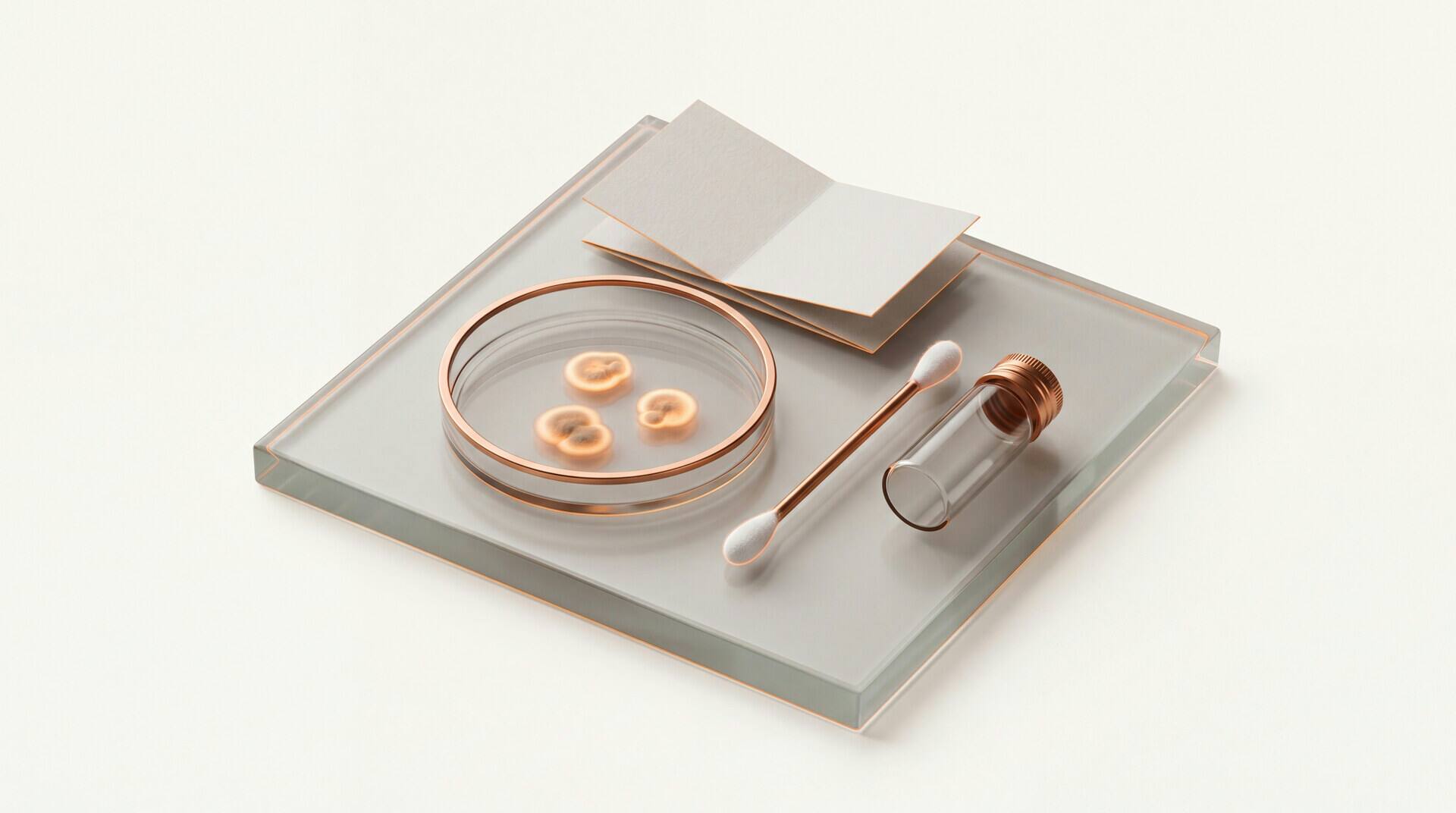
- One petri dish with a lid and a label for writing the test date and location.
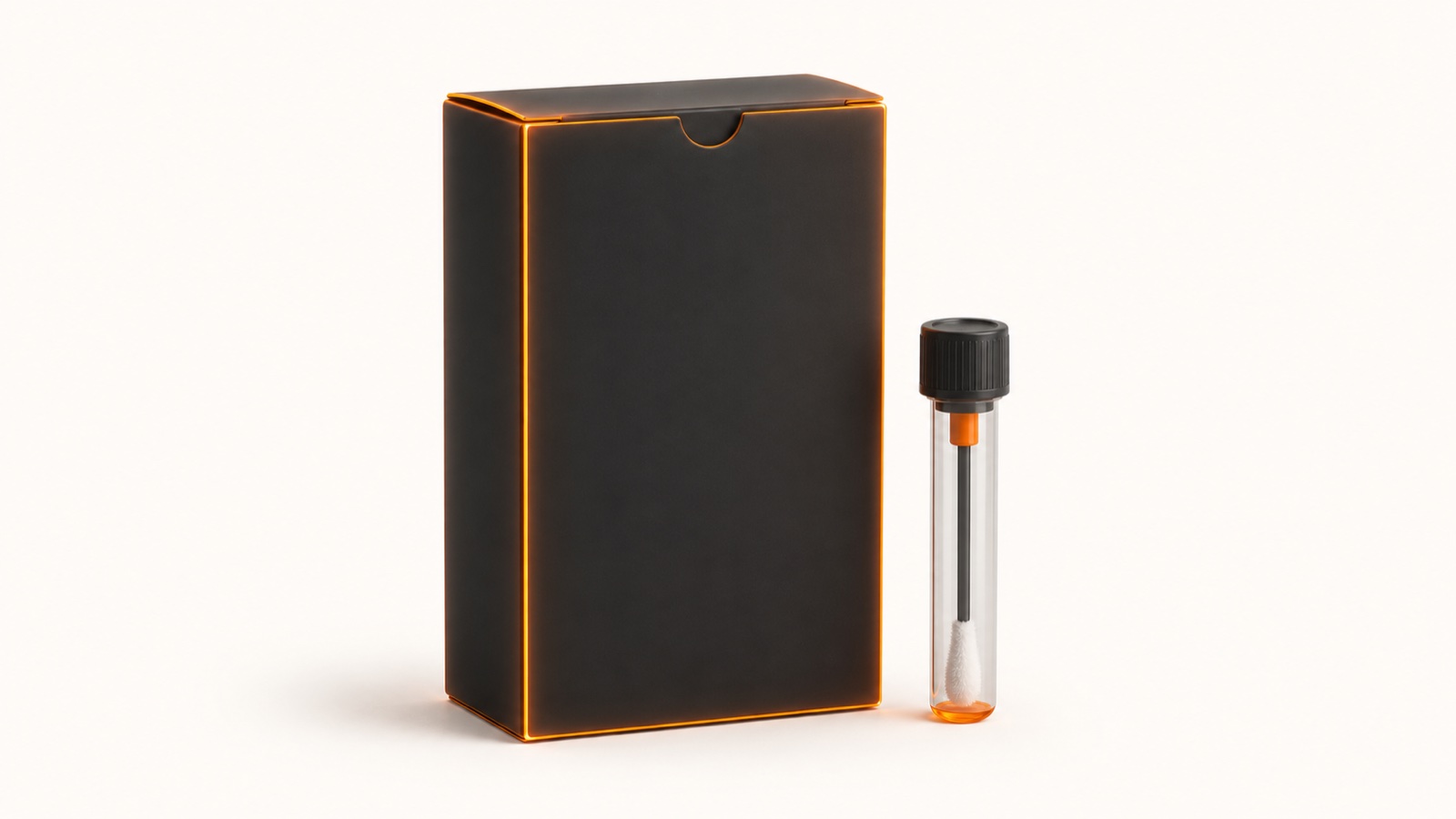
- One sterile swab for the surface sampling method.
- One small bottle of potato dextrose growth medium, the nutrient gel that yeasts and molds will grow on.
- Instructions printed on the packaging, including the mail-in lab details.
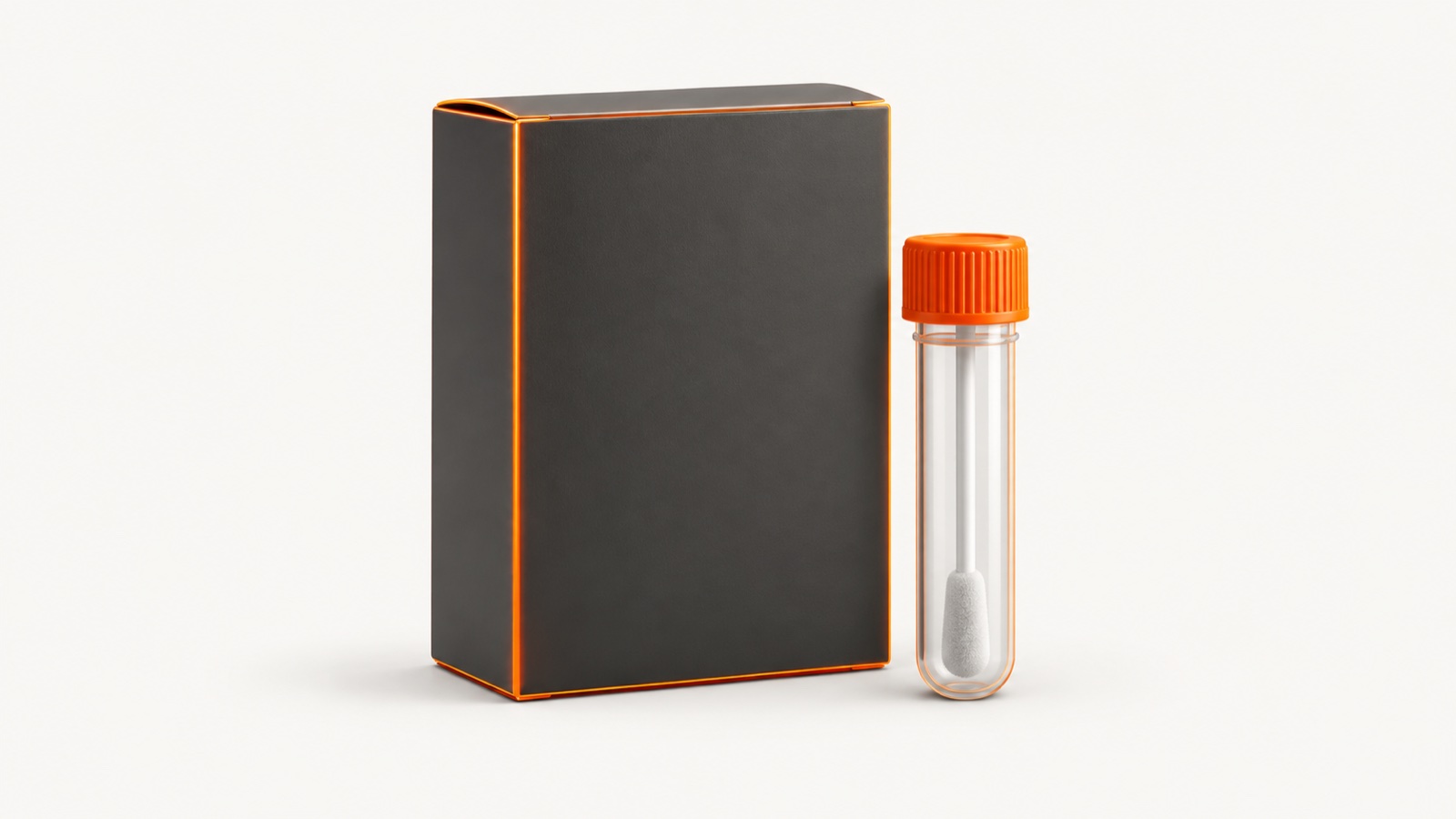
That is the entire kit. There is no pump, no air sampling cassette, no prepaid return mailer, and no lab fee included. It is also worth stating clearly because it catches people out: one kit is one sample. If you want to test a basement, a bathroom, and a bedroom, that is three kits, and if you also want an outdoor comparison sample, which you should, that is four.
The three test methods, step by step
All three methods start the same way. You pour the growth medium into the petri dish and let it gel on a level surface. Follow the instructions on the pack, since they carry the authoritative timings.
1. Indoor air quality method
Once the medium has set, you leave the dish open in the room for about an hour, then close it and set it aside to incubate. This is the method most buyers use, and it is the one with the weakest output, because an hour of passive settling in one room tells you nothing about volume or rate.
2. Air conditioning and heating method
You tape the open dish to a supply vent and run the system fan on high for roughly ten minutes, so the airflow drives particles onto the medium. This is the most interesting of the three, because a duct system moves air through the entire house and a genuinely contaminated system tends to produce heavier growth than a room-air plate.
3. Surface sampling method
If you can see growth, you swab it and transfer the swab to the medium. This is the method the kit is genuinely good at, because you are no longer asking whether mold exists somewhere in the air. You are asking what that specific patch is, which is a question a plate can meaningfully answer, especially if you then pay for identification.
After any method, you close the dish and wait. Growth is visible in as little as 48 hours, and Mold Armor advises checking again at 72 and 96 hours since some molds are slow. For the wider picture on sampling approaches, see our guide to how to test for mold.
Pricing and the $40 nobody mentions
| Item | Cost | What you get |
|---|---|---|
| FG500 kit | About $10 | One dish, one swab, growth medium, one sample |
| Optional mail-in lab analysis | $40 | Identification of the mold type, results within three weeks |
| Realistic cost to identify one sample | About $50 | Kit plus lab fee, roughly a month from start to answer |
| Testing three rooms plus an outdoor control | About $40 in kits alone | Four dishes, still with no spore counts |
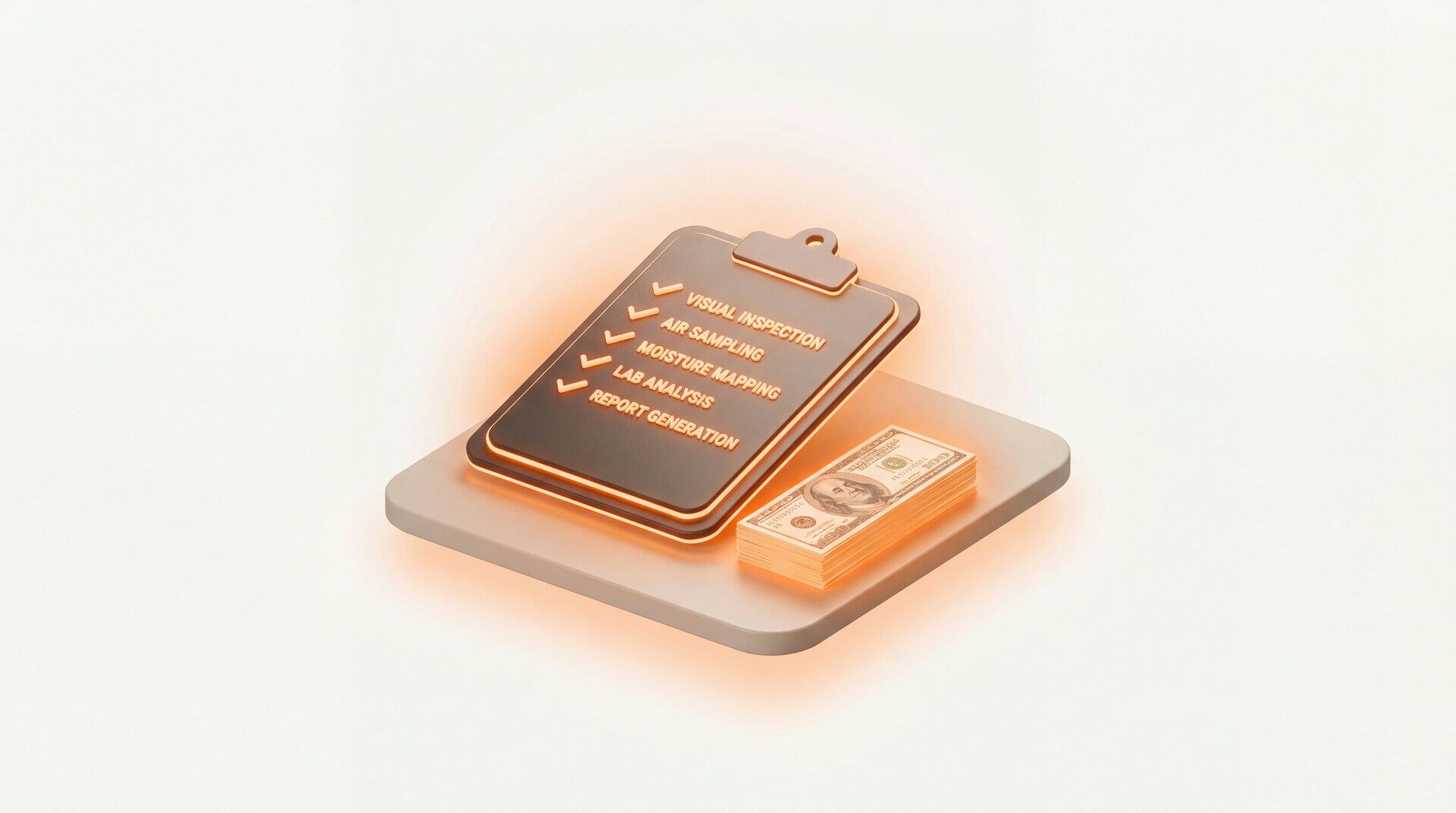
The sticker price is the seductive part and the lab fee is the real story. Mold Armor prices the mail-in analysis at $40, which is four times the price of the kit itself, and states results arrive within three weeks. So the $10 test that promised answers in 48 hours becomes a $50 test that takes about a month if you want to know what actually grew.
Run that math against the alternatives before you buy. Once you are at $50 per identified sample with no counts and no baseline, kits that include accredited lab analysis in the purchase price start to look like the cheaper way to get an answer you can use, not the expensive one. Prices change at every retailer, so confirm current numbers before you spend.
What the result actually means
Split this into two honest halves.
What the kit does reliably
It grows mold. Potato dextrose agar is a real growth medium used in real labs, and if viable spores land on it in a warm room, colonies appear. The kit is not fake, and the 48 hour claim holds up. If you swab a visible patch, the dish will show you that patch is alive and growing.
What the result cannot tell you
- There is no measured air volume. A professional air test pulls a known number of liters of air through a cassette, which is what turns a result into a number per cubic meter. A settle plate just collects whatever drifts down, so heavy particles are over-represented and light ones under-represented.
- There is no spore count. You get colonies, not counts. Two colonies from a heavily contaminated room and twelve from a clean one is an entirely possible outcome depending on air movement during the hour you sampled.
- There is no outdoor control. This is the big one. Without a plate exposed outside your home on the same day, you have no baseline. The whole discipline of indoor air comparison rests on that side by side reading, and the kit does not prompt you to take one.
- Growth is the expected result. Because spores are normal indoors, a plate that grows something is not evidence of a problem. People read fuzz on a dish as a verdict, and it is not one.
- It only sees what was there at the time. The manufacturer states this itself: the kit can only detect airborne or surface mold spores present in the area tested at the time of testing.
The federal guidance lands in the same place. The EPA says that in most cases, if visible mold growth is present, sampling is unnecessary, and that sampling should be conducted by professionals who have specific experience in designing sampling protocols and interpreting results. It also states that standards or threshold limit values for airborne concentrations of mold have not been set. There is no official pass or fail line, so no home kit can give you one.
Pros
- It is genuinely cheap. About $10 is low enough that curiosity alone can justify it, which is a real category advantage.
- You can have it today. It is stocked at most large hardware, home improvement, and grocery chains, so there is no shipping wait.
- Three methods in one box. Room air, HVAC vent, and surface swab from a single kit gives you options, and the HVAC method in particular is not offered by most cheap competitors.
- The surface swab is a legitimate use. If you can see a patch and want to confirm it is a living mold rather than a stain or residue, this is a reasonable ten dollar way to do it.
- Fast at-home signal. Visible growth in 48 hours with no mailing, no waiting on a lab, and nothing to schedule.
- The manufacturer states its own limits. The product pages say plainly that it only detects spores present at the time of testing and that a certified mold specialist should be consulted if symptoms persist. Plenty of products in this category are less forthcoming.
- A real growth medium. Potato dextrose is what a lab would use, not a novelty.
Cons and limitations
- A positive result is close to meaningless on its own. Spores are everywhere, so nearly every plate grows something. The single most common outcome of buying this kit is a frightening looking dish that proves nothing.
- No outdoor control, and no prompt to take one. Without a same-day outdoor comparison, an indoor plate has no ruler to be measured against.
- No counts, no volume, no numbers. Nothing here is comparable between rooms, between homes, or between before and after a cleanup.
- The lab fee is four times the kit price. $40 for identification, on top of the $10 kit, changes the value calculation completely.
- Up to three weeks for lab results. If you are trying to make a decision about a lease, a purchase, or a repair, that timeline is often too slow to matter.
- One kit, one sample. Testing a whole home properly means buying several, at which point the total cost approaches products that do far more.
- It cannot see hidden growth. Wall cavities, subfloor, and the interior of duct runs are where the expensive problems live, and a settle plate will not find them.
- Contamination is easy. Touching the medium, letting the dish sit open while you find the tape, or setting it near an open window all corrupt the sample, and nothing will tell you that happened.
- It does not find the cause. Mold is a moisture problem wearing a costume. This kit says nothing about the leak, the humidity, or the condensation feeding it.
Who it is for
Buy it if
- You can see a specific patch and want a cheap way to confirm it is living mold rather than a stain, using the swab method.
- You suspect your HVAC system specifically, and want a low-cost first look using the vent method before deciding whether to pay for duct inspection.
- You are curious, ten dollars is genuinely disposable to you, and you understand going in that a positive plate is not a diagnosis.
- You want to run a rough before and after on a specific surface you have cleaned, sampling the same spot the same way both times.
Skip this product if
- You can already see the mold. The EPA is direct about this: if visible growth is present, sampling is usually unnecessary. Spend the ten dollars on an N95 and gloves, fix the moisture, and clean the surface. Confirming what your eyes already told you is the most common waste of money in this category.
- You need evidence for a dispute. For a landlord disagreement, an insurance claim, or a property sale, a self-poured dish carries close to no weight. Get a professional whose report carries their license and their name. Nothing here is legal advice, but a plate is easy to challenge.
- You want numbers you can act on. No counts, no volume, no baseline. If the point is to compare rooms or verify a cleanup, this kit structurally cannot do it.
- You think the problem is inside a wall or the subfloor. Wrong instrument entirely. That is a moisture meter, a thermal camera, or someone opening the assembly.
- You are hoping for a document that says your home is safe. No home kit provides one, and there is no federal threshold for it to be measured against.
- You are shopping on price alone and would resent the $40. If identification matters to you, budget the full amount now or buy a kit that includes lab analysis in the price.
How it compares to the alternatives
Mold Armor vs a lab-analyzed air sampling kit
Not a close contest on capability. A spore-trap kit pulls a measured volume of air through a cassette, a microbiologist counts and classifies what is trapped, and your indoor result is compared against an outdoor control from the same property. That produces the thing Mold Armor cannot: a number with a baseline. It costs roughly twenty times more. Our GOT MOLD? test kit review covers what that upgrade actually buys, and whether it is worth it for your situation.
Mold Armor vs a rapid surface screening test
A rapid swab test reads in minutes with no lab and no incubation, which suits people who want an answer today about one spot. Mold Armor takes two to four days for the same kind of single-spot question, but it grows a physical culture you can then mail in for identification. Faster versus more mailable, at similar prices.
Mold Armor vs an ERMI dust test
Completely different questions. An ERMI test analyzes settled dust by DNA and speaks to a home's accumulated history rather than what is in the air right now. It costs far more and is widely debated as a consumer decision tool, but it returns a structured result. Mold Armor returns a dish.
Mold Armor vs a professional inspection
A professional brings moisture meters, thermal cameras, the ability to open up an assembly, and years of pattern recognition about where water travels in a house built like yours. They find the source. This kit grows a sample. Those are different stages of the same problem. See what a mold inspection costs to weigh the decision, and if you do hire someone, look for a professional who follows the ANSI/IICRC S520 standard. ACAC or RIA credentials and a state license count too.
Our take: this kit is best understood as a ten dollar magnifying glass, not a test. It is a fine thing to own if you want to look at something specific. It is the wrong thing to buy if you want to be told what to do. For the full category, see our best mold test kits guide.
How to use it without wasting the dish
Follow the instructions printed on the pack, which are authoritative. These are the failure modes worth avoiding on top of that:
- Step 1: Buy two, not one. Run the second dish outdoors on the same day, using the same method and the same exposure time. That outdoor plate is your baseline, and it is the single change that makes this kit meaningfully more useful. If both plates look similar, your indoor reading is unremarkable.
- Step 2: Let the medium gel completely on a level surface before exposing anything. A tilted or unset dish produces an uneven layer and a messy result.
- Step 3: Do not touch the medium. Fingers carry plenty of their own microbes. Handle the dish by the edges and keep the lid face down while it is off.
- Step 4: Pick the right method for your question. Visible patch means swab it. Suspect ductwork means the vent method. Vague worry about a room is the weakest use of the kit, and the one most likely to leave you no wiser.
- Step 5: Write down the conditions. Date, room, exposure time, weather, and whether the HVAC was running. Without that, a second test later is not comparable to the first.
- Step 6: Check at 48, 72, and 96 hours. Slow growing molds show up late, and reading the plate once at 48 hours can undercount what is there.
- Step 7: Do not open the dish once it has grown. A grown culture is a concentrated pile of spores. Keep the lid on, and if you are disposing of it, bag it first.
- Step 8: Decide about the $40 before you start. Identification only helps if it would change what you do next. For a small area of household mold, the cleanup approach is the same either way: fix the moisture first, then clean or remove the affected material wearing an N95 and gloves.
Wear an N95 and gloves any time you disturb a suspected growth area to take a swab. Disturbing mold makes it airborne, which is worth avoiding both for your lungs and for the honesty of the sample. Our how to get rid of mold guide covers the cleanup side.
Our verdict and rating
2.5 out of 5.
The Mold Armor kit is not a scam and it is not broken. It contains a real growth medium, it grows mold in the time it promises, and the manufacturer is upfront that it only detects what was present when you sampled. At about $10 it is the cheapest way to put a physical culture in front of your own eyes, and the surface swab and HVAC vent methods are legitimately useful for narrow, specific questions.
The rating is held down by a structural problem the product cannot solve at this price. A settle plate with no measured air volume, no spore count, and no outdoor control does not produce a result you can act on. Because spores are normal in indoor air, nearly every plate grows something, so the most likely thing you buy for ten dollars is an alarming photograph and no new information. And the $40 identification fee, at four times the kit price with up to a three week wait, quietly moves this into the price band of kits that include accredited analysis and return actual counts.
What buyers say: on Amazon the kit holds 4.0 out of 5 across 8,973 ratings, which is a large and long-running sample. The spread is the interesting part: about 57 percent five star, 16 percent four star, 11 percent three star, 5 percent two star, and 11 percent one star. That shape fits the product exactly. People who used it to check one visible spot, or who simply wanted to see something grow, got what they paid for. The one star cluster tends to come from people who expected a verdict about their home and received a fuzzy dish, or who found the mail-in analysis slow or hard to interpret. Which group you land in is decided before you buy, by what you expected the kit to do.
Bottom line: buy it if you have a specific spot and a specific question, or if ten dollars of curiosity is the whole budget. Do not buy it to decide whether your home has a mold problem, to compare rooms, to verify a cleanup, or to prove anything to anyone. For those jobs, either fix the moisture you already know about or step up to a kit with counts and an outdoor control.
For how this kit ranks against every other testing option, see our best mold test kits guide, and the master Best Mold Products hub for every category we cover. Looking for the Mold Armor cleaning products instead? That is our separate Mold Armor cleaner review.
Screen visible surfaces with Mold Scanner AI
Here is the thing that decides whether your ten dollars was well spent, and it happens before you pour the medium: do you know what you are sampling?
This kit is at its best pointed at something specific. A patch on the caulk line. A stain behind the vanity. A vent you have suspected for months. It is at its worst as a general question about a room, because a room-air plate in a normal home and a room-air plate in a problem home can look uncomfortably similar.
Mold Scanner AI provides AI-assisted visual screening for visible surfaces. It offers 266 guided photo prompts across 19 rooms, with 38 in Quick and 129 in Standard. Processing time varies, and the app does not replace physical sampling or a licensed inspection.
Find the candidate first, then swab it. Used in that order, ten dollars buys you something. Used in the other order, you are growing fuzz and guessing.
Frequently asked questions
How much does the Mold Armor test kit cost?
The FG500 kit listed at $9.98 on Amazon at the time of writing, and it is stocked at most large hardware and grocery retailers at a similar price. The number that surprises people is the optional lab analysis, which Mold Armor prices at $40. If you want the mold identified rather than just grown, the real cost of this kit is about $50, not $10. Prices change, so check the current listing before you buy.
Is the Mold Armor mold test kit accurate?
It accurately does what it claims, which is grow whatever landed on the dish. What it cannot do is tell you whether the amount is normal. There is no measured air volume, no spore count, and no outdoor control sample to compare against. Mold spores are a normal part of indoor air, so a dish that grows colonies is expected in a healthy home as well as a moldy one. Treat a positive plate as a reason to look closer, not as proof of a problem.
How long does the Mold Armor test take?
Growth is visible in as little as 48 hours, and Mold Armor recommends checking again at 72 and 96 hours because some molds grow slowly. If you send the dish in for identification, the company states lab results arrive within three weeks. So the at-home answer is two to four days and the species answer is up to a month.
What is in the Mold Armor test kit?
One petri dish, a swab, and a small bottle of potato dextrose growth medium, which is the nutrient gel that mold and yeast will grow on. That is the whole box. There is no pump, no cassette, no prepaid mailer, and no lab fee included. One kit means one sample, so testing three rooms means buying three kits.
Does a positive Mold Armor result mean I have a mold problem?
Not on its own. Mold spores are present in essentially all indoor air, so an open dish will usually grow something wherever you put it. Without an outdoor control sample taken the same day, there is no baseline to say whether your indoor growth is high, normal, or low. The useful signals are the things you can observe directly: visible growth, a musty smell, staining, or a known water leak.
What are the three Mold Armor test methods?
First, the indoor air quality method, where you pour the growth medium into the dish, let it gel on a level surface, then expose the open dish to room air for about an hour. Second, the air conditioning and heating method, where you tape the open dish to a supply vent and run the system fan on high for about ten minutes. Third, the surface method, where you swab visible growth and transfer it to the medium. In all three cases you then close the dish and wait at least 48 hours.
Is the Mold Armor kit better than a lab air test?
No, and they are not really the same category. A lab air test pulls a measured volume of air through a cassette, has a microbiologist count and classify the spores, and compares your indoor result against an outdoor control. That produces numbers you can act on. The Mold Armor kit produces a dish with fuzz on it. The lab kit costs roughly twenty times more, and if a decision or money is riding on the answer, that gap is worth paying. See our GOT MOLD? review for that comparison in detail.
Should I use the $40 mail-in lab analysis?
Only if knowing the species would change what you do next, which for most homeowners it does not. The cleanup approach for a small area of household mold is the same regardless of the name on the report: fix the moisture, then clean or remove the material, wearing an N95 and gloves. If you want detailed identification, kits that include accredited lab analysis in the purchase price cover the fee and the shipping for you and return a report with actual counts.
Can the Mold Armor kit find mold hidden inside a wall?
No. It samples the air in front of the dish or the surface you swab. A colony sealed inside a wall cavity, under flooring, or deep in a duct run will not generally reach the plate. Hidden mold is found by tracing moisture, using meters and cameras, or opening the assembly, and that is professional work.
Does the EPA recommend DIY mold testing?
The EPA states that in most cases, if visible mold growth is present, sampling is unnecessary, and that sampling should be conducted by professionals who have specific experience in designing mold sampling protocols, sampling methods, and interpreting results. It also notes that standards or threshold limit values for airborne concentrations of mold have not been set. That last point is the one worth remembering, because it means no home kit can hand you a pass or fail line.
Sources
Every claim on this page traces to one of these. Links open the primary document.