Under the kitchen sink: the #1 kitchen mold spot
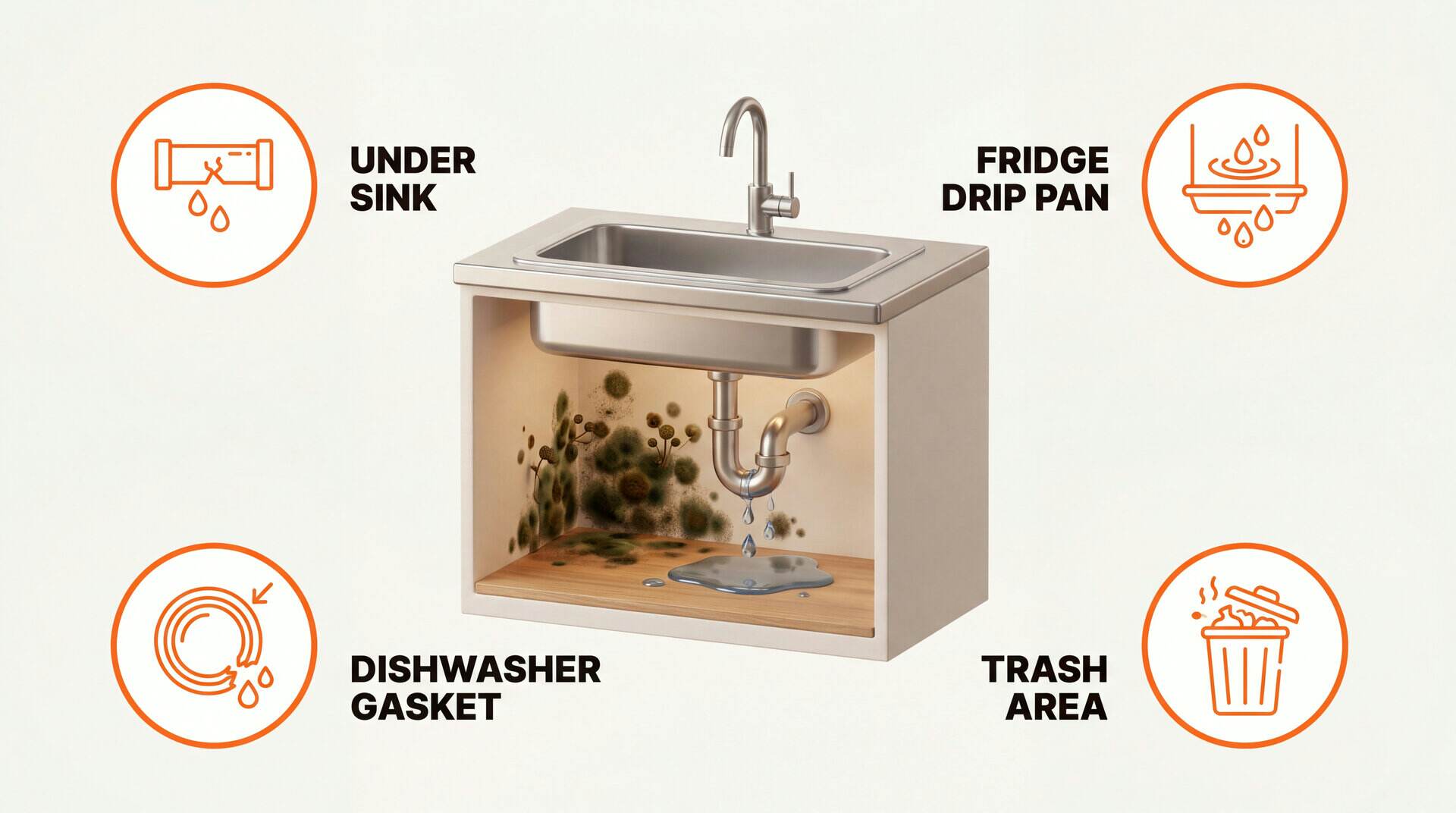
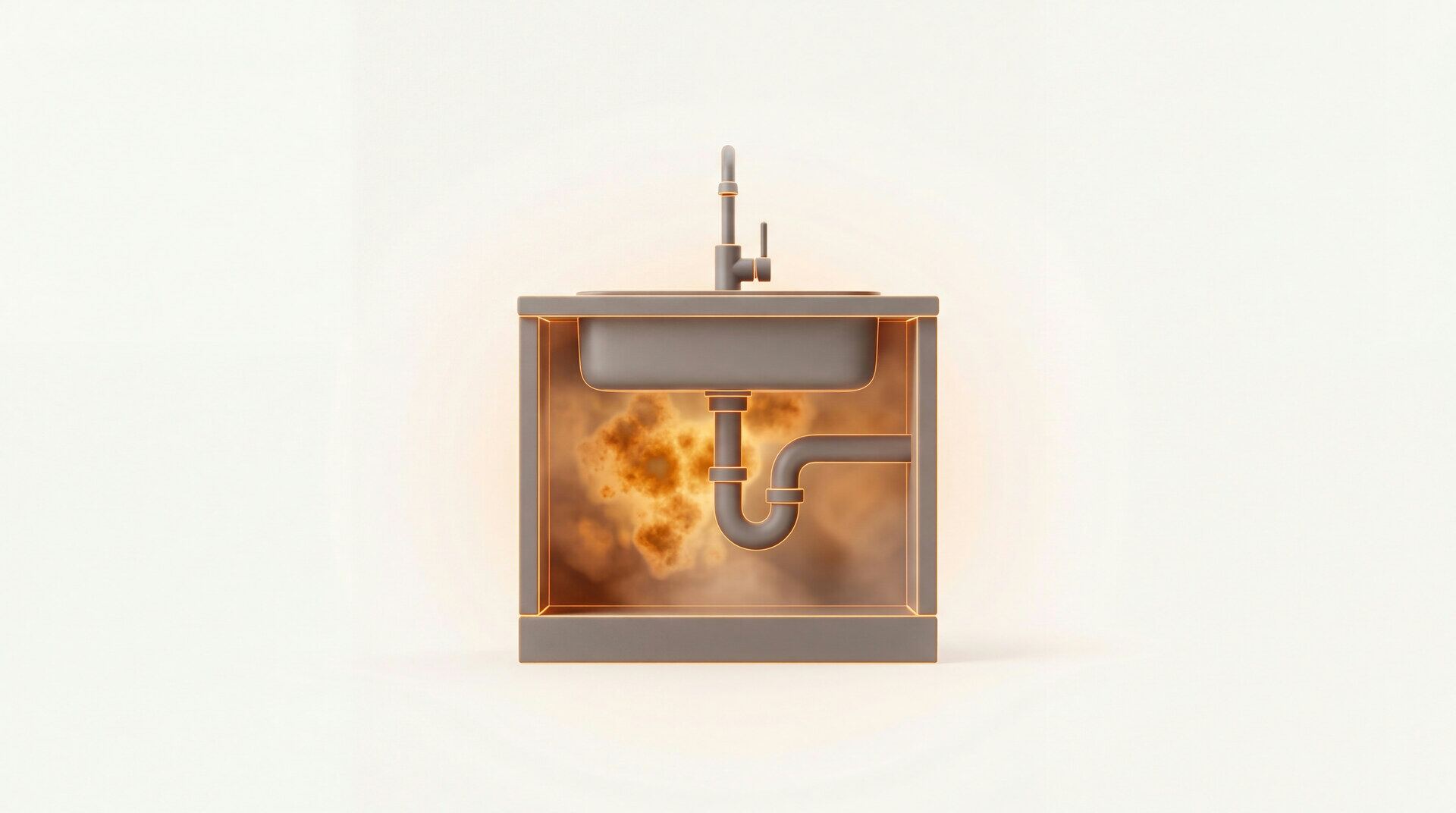
The cabinet under your kitchen sink is the most common place for kitchen mold. It checks every box: enclosed space, zero airflow, water supply lines, drain pipes, and often a garbage disposal connection. Any of these can develop a slow leak that drips onto particleboard or MDF cabinet bottoms for weeks before you notice.
Open your sink cabinet right now and look at the bottom. If you see warping, discoloration, soft spots, or a musty smell, you likely have mold. Check where the pipes go through the cabinet back wall. That gap often has no caulk, allowing moisture from the wall cavity to enter.
How to fix it: Repair any leaks first. Remove everything from the cabinet. If the bottom is particleboard and it is soft or swollen, it needs to be replaced. Clean hard surfaces with hydrogen peroxide. Let the cabinet dry completely with the doors open for 24 hours. Line the bottom with a waterproof shelf liner after. Check under the sink monthly.
Refrigerator: drip pan, gasket, and water line
Drip pan: Every refrigerator has a drip pan underneath that catches condensation from the defrost cycle. Most people never clean it. That standing water grows mold, and the warm air from the compressor fan blows mold spores into your kitchen. Pull the fridge out, find the pan (usually accessible from the front bottom or rear), remove it, scrub with hydrogen peroxide, and replace. Do this every 3 months.
Door gasket: The rubber seal around your fridge door traps crumbs and moisture in its folds. Peel back the gasket and look inside. Black spots in the folds are mold. Clean with a toothbrush dipped in a baking soda and water paste. Wipe dry. A worn gasket that does not seal properly lets warm, humid air into the fridge constantly, creating condensation inside.
Water line: If your fridge has an ice maker or water dispenser, there is a water supply line running to the back. Check the connection point for drips. Even a tiny drip creates a wet spot on the floor behind the fridge where mold grows unseen for months.
Dishwasher seal and interior
The rubber door gasket on your dishwasher is a mold magnet. It stays wet between cycles, and food particles collect in the folds. Pull back the gasket along the bottom of the door and look. Black or pink growth is mold or bacteria.
The dishwasher filter at the bottom of the tub also collects food debris and stays wet. Remove the filter (check your manual for how), clean it with a brush under running water, and replace. The spray arm holes can clog with mineral deposits and food, creating standing water pockets where mold grows.
Monthly maintenance: Run an empty hot cycle with 2 cups of white vinegar placed in a bowl on the top rack. This cleans the interior, dissolves mineral deposits, and kills mold. Leave the door cracked open after every cycle to let the interior dry. A closed, wet dishwasher is a mold incubator.
Other kitchen mold hotspots
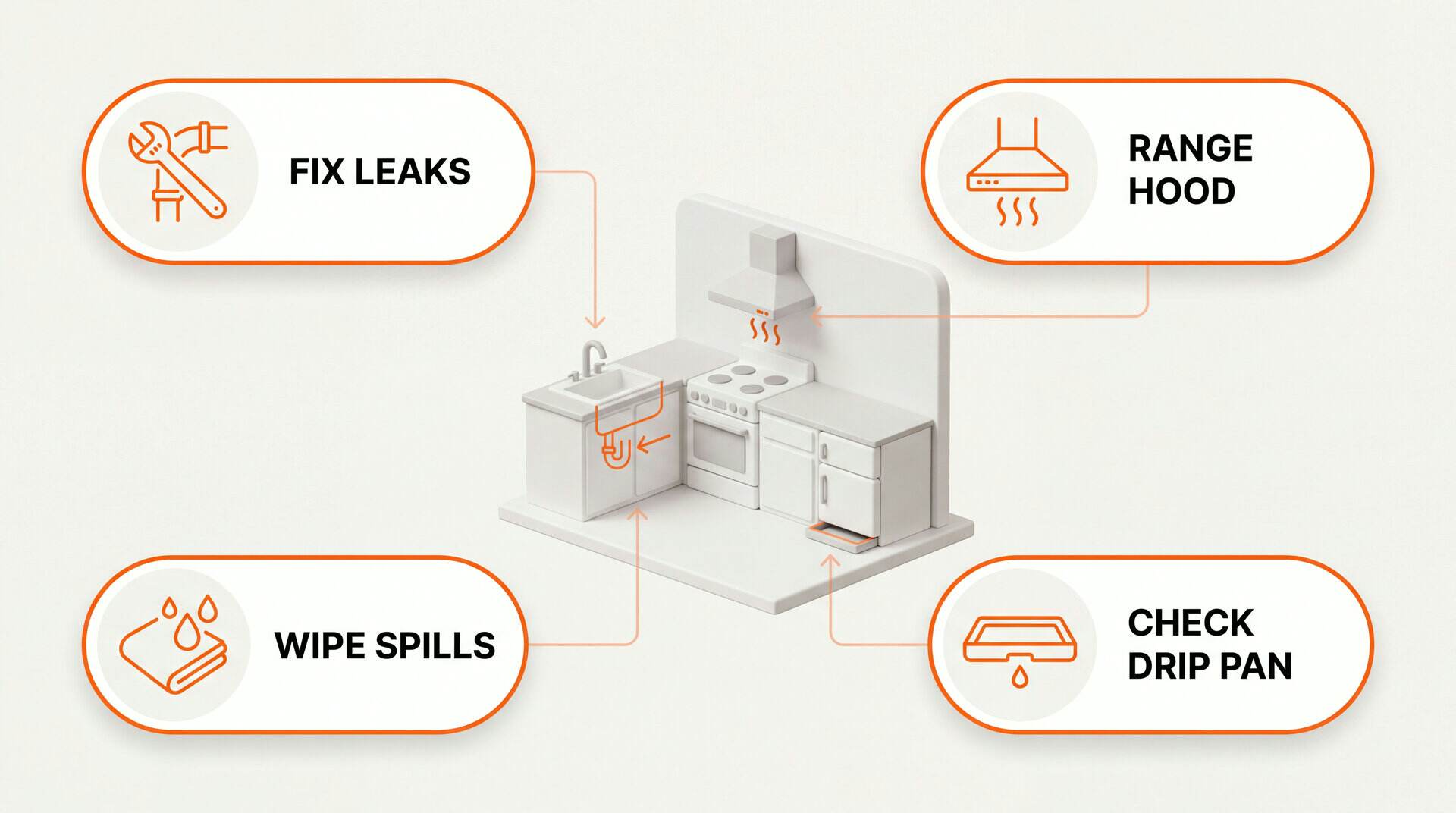
Behind the stove: Grease, food spills, and moisture from cooking collect on the wall and floor behind your stove. Pull it out once a year and clean.
Window sill above the sink: Steam from washing dishes condenses on the cold window glass and drips onto the sill. Wipe the sill dry after doing dishes. Check for peeling paint or soft wood, which signals moisture damage.
Trash can area: Spills and food waste create moisture on the floor and inside the cabinet. Clean the area weekly and use a trash can with a lid.
Cutting board storage: Wet cutting boards stored upright in a dark cabinet grow mold on the edges. Dry boards completely before storing. Stand them up so air circulates around all sides.
Spice cabinet above the stove: Steam rises from cooking and enters the cabinet above. That heat and moisture creates condensation inside. Check the bottom of this cabinet for warping or mold growth.
Frequently asked questions
Where does mold hide in a kitchen?
The most common kitchen mold spots are under the sink (leaking pipes and damp cabinet wood), behind the refrigerator (drip pan and water line), inside the dishwasher door seal, around the fridge door gasket, and under the stove where spills collect. These areas stay dark and damp, which is exactly what mold needs to grow.
Is mold under the kitchen sink dangerous?
Yes. The enclosed cabinet under your sink traps moisture from leaks, condensation, and splashes. Mold growing on damp particleboard or MDF releases spores into the kitchen air every time you open the cabinet door. Common kitchen molds include Aspergillus and Penicillium, which can trigger allergies and respiratory problems.
How do I clean mold from a fridge drip pan?
Pull the refrigerator away from the wall. Locate the drip pan underneath (usually accessible from the front or back). Remove it carefully since it may contain standing water with mold. Scrub with hydrogen peroxide and a stiff brush. Rinse, dry completely, and replace. Clean the drip pan every 3 months to prevent mold from returning.
Can mold grow inside a dishwasher?
Yes. The rubber door gasket on your dishwasher stays wet between cycles. Mold grows in the folds of that gasket where food particles and moisture collect. The bottom of the door, the filter, and the spray arm holes are also common spots. Run an empty hot cycle with 2 cups of white vinegar monthly to prevent buildup.
Sources
Every claim on this page traces to one of these. Links open the primary document.