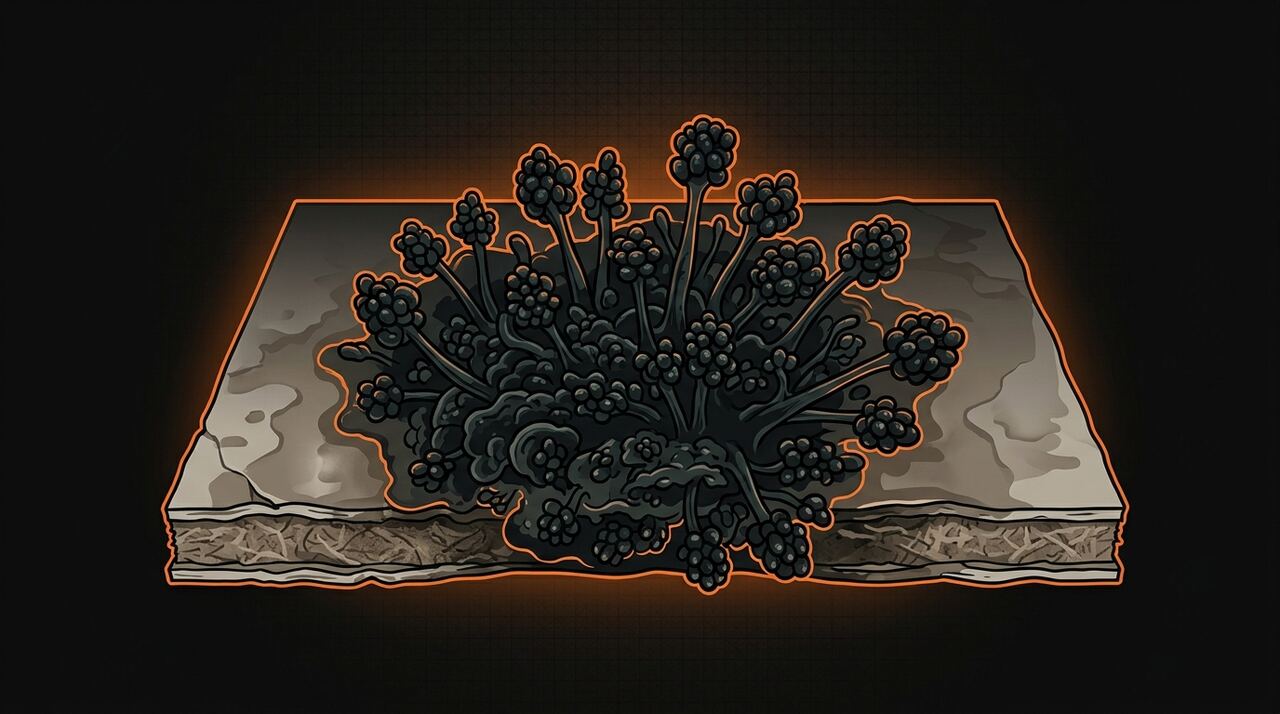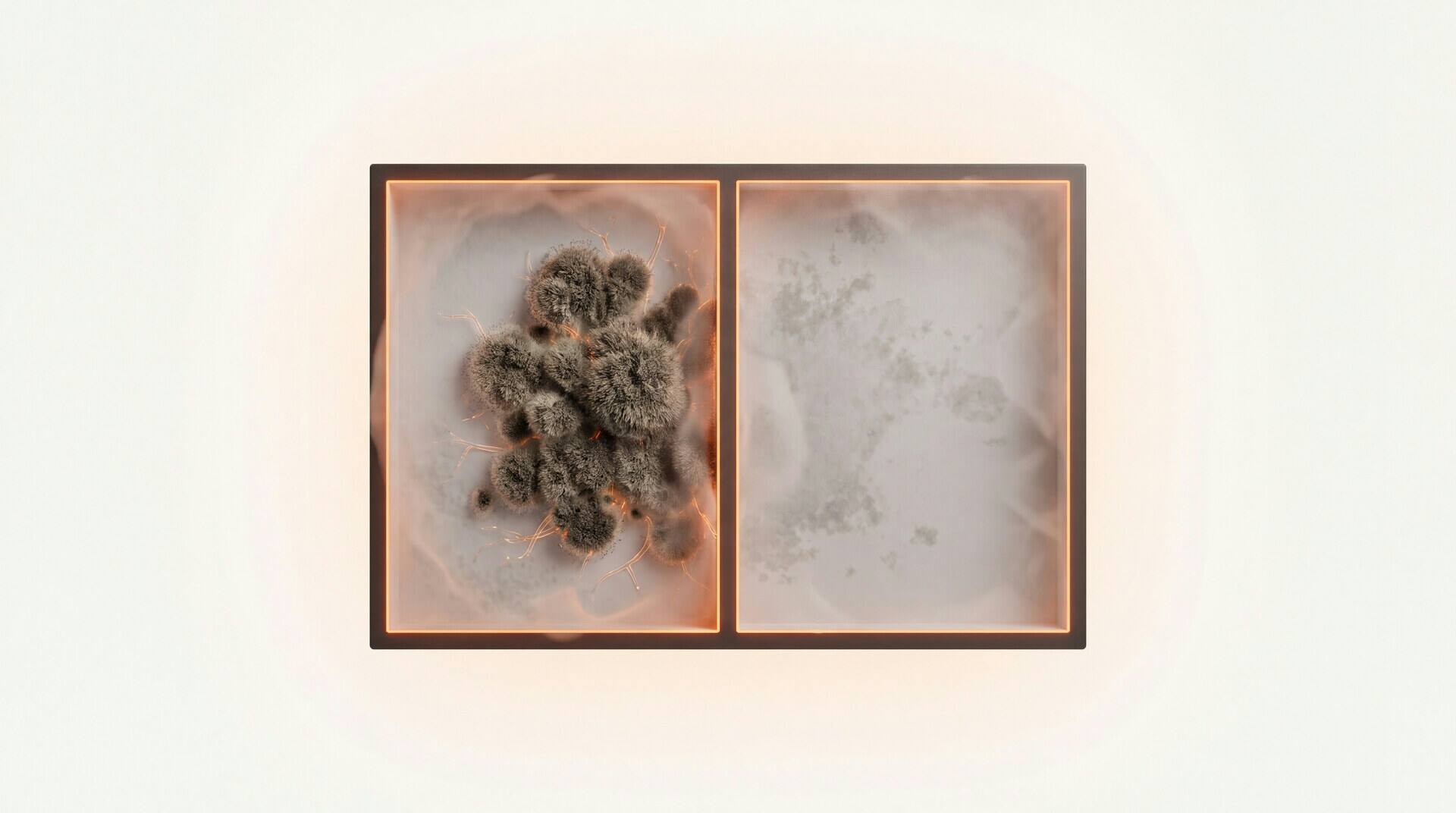
Does Lysol kill mold?
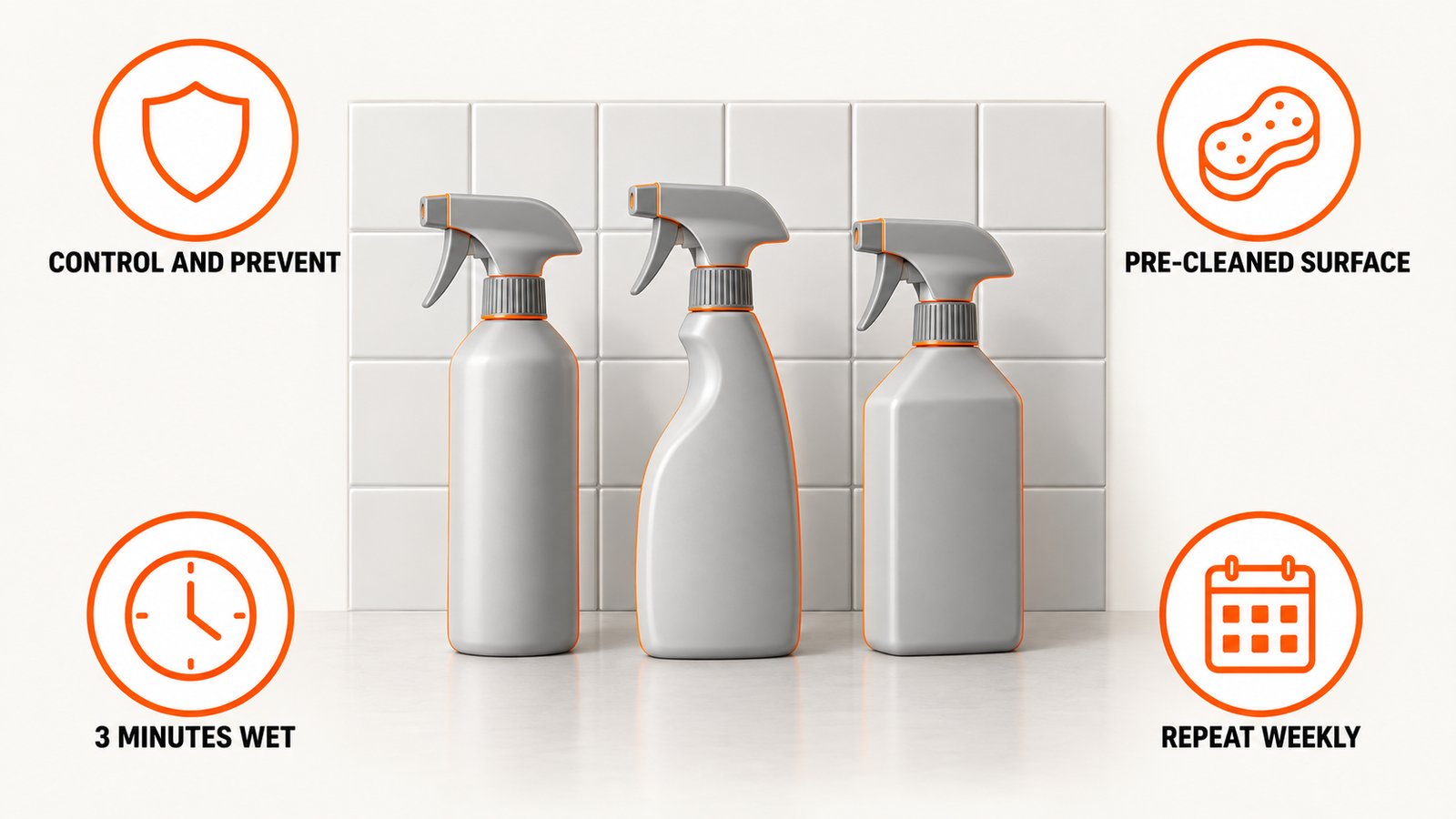
It depends on which Lysol you mean, and the labels are more careful than the ads. Lysol sells disinfectant sprays, wipes, bathroom cleaners and all-purpose cleaners, and each page on lysol.com carries its own wording. On the pages we read, the mold language is "control and prevent" or "control the growth," and it comes with directions: apply to a pre-cleaned surface, keep it wet for 3 minutes, let it air dry, and repeat weekly.
That is not the same sentence as "kills mold." The same pages do say "kills 99.9% of viruses and bacteria," but that claim is about germs, not mold. We did not find the words "kills mold" on any Lysol page we read. So the honest answer is that Lysol labels claim help with controlling mold and mildew growth on cleaned surfaces. They do not promise to wipe out a colony that is already growing.
| Product | Mold wording on the page | Directions for mold |
|---|---|---|
| Disinfectant Spray | "Helps to control and prevent mold and mildew" | Apply to a pre-cleaned surface, keep wet 3 minutes, air dry, repeat weekly |
| Power Bathroom Cleaner (trigger) | "To Control the Growth of Mold and Mildew" | Spray 6 to 8 inches from a pre-cleaned surface, keep wet 3 minutes, air dry, repeat weekly, rinse tub and shower surfaces |
| Power Bathroom Cleaner (foam aerosol) | "Tough on Mold & Mildew" in the headline, "control the growth" in the directions | Apply to a pre-cleaned surface, keep wet 3 minutes before wiping, repeat weekly |
| Disinfecting Wipes | No mold or mildew claim on the page | None listed for mold |
Compare that with what the EPA says about killing mold in general. Its guide calls routine use of a biocide such as chlorine bleach "not recommended" during cleanup, and adds that "it is not enough to simply kill the mold, it must also be removed." Our guide to whether bleach kills mold covers that side in detail.
Does Lysol spray kill mold?
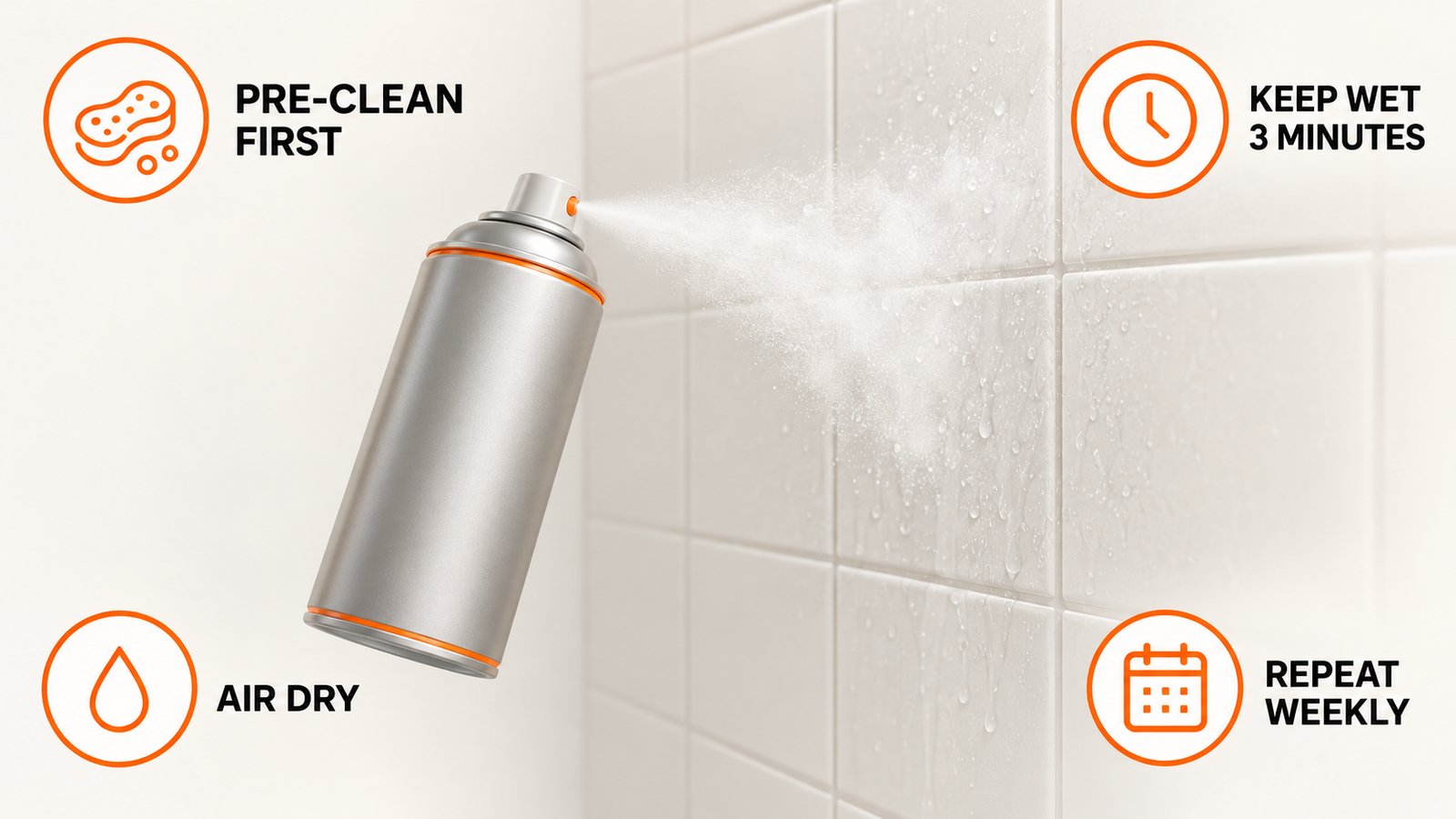
The Lysol Disinfectant Spray page lists the feature line "Helps to control and prevent mold and mildew." The directions under it read: "Apply to pre-cleaned surface. Allow to remain wet for 3 minutes. Let air dry. Repeat applications in weekly intervals or when mold and mildew growth appears."
Two details matter. First, the surface is supposed to be pre-cleaned. A spray that works as a follow-up step is not a spray you point at a fuzzy patch and walk away from. Second, the schedule is weekly. A product you have to reapply every week is a product that holds growth back, not one that ends the problem. If the damp comes back, so does the mold.
The page also lists where the spray can go: sinks, bath tubs, showers, toilet seats, door knobs, couches, mattresses and pet beds. That list is for the spray's disinfecting and sanitizing uses. The mold directions do not give a separate list of surfaces, so treat the mold step the way the EPA treats cleanup: hard surfaces get scrubbed with detergent and water and dried, and soft or porous materials are a different job. The EPA says porous materials such as ceiling tiles and carpet "may have to be thrown away if they become moldy," because mold can fill in the spaces inside them.
If you want to compare it with a household option, see whether vinegar kills mold and the roundup of mold cleaning products.
What happened to Lysol mold and mildew cleaner?
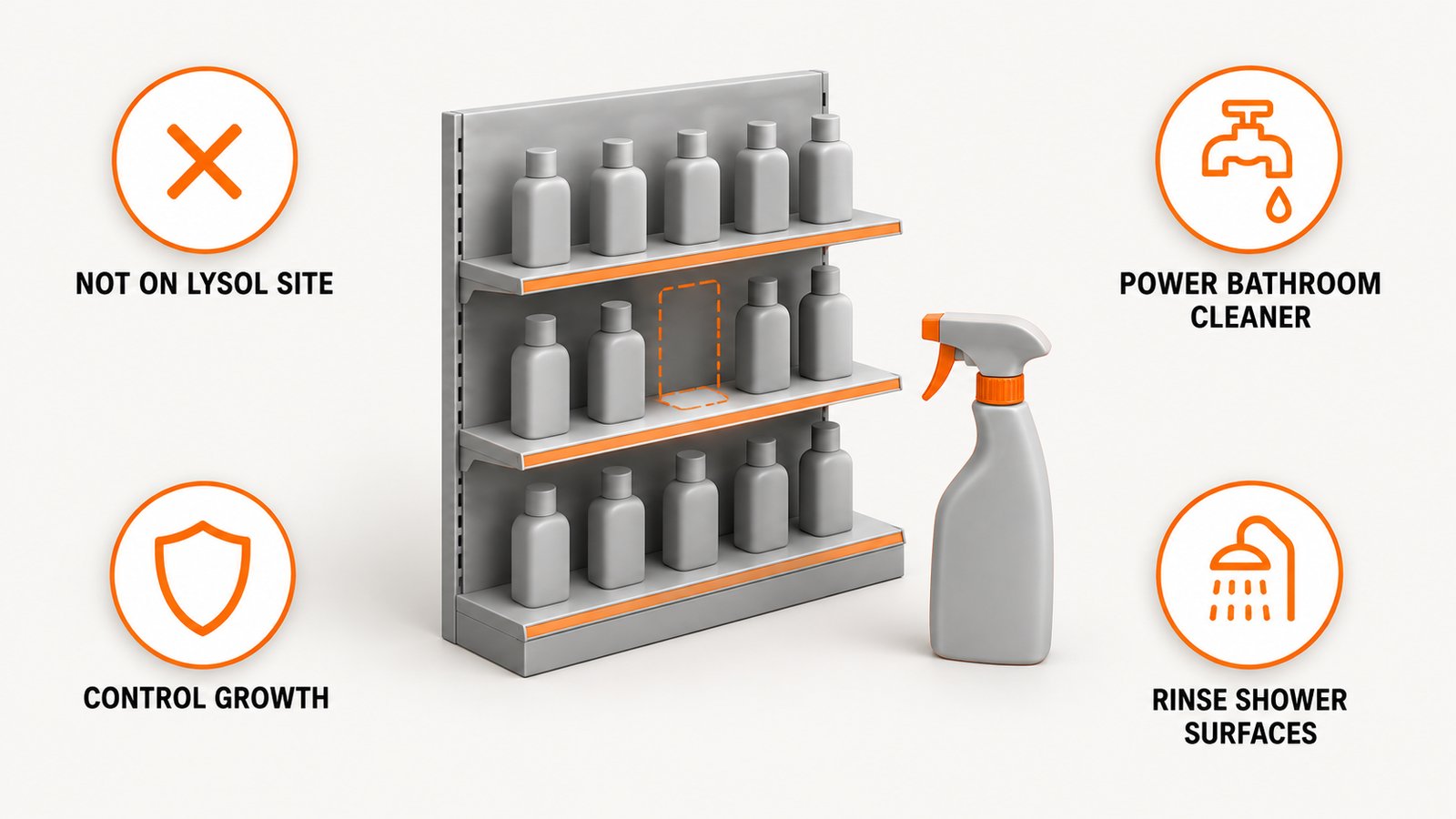
Many people search for "Lysol Mold and Mildew" because they remember the bleach-based Mold & Mildew Blaster, but we could not find it on lysol.com, where the Lysol product index lists disinfectant sprays, wipes, multi-purpose cleaners, air sanitizers, laundry sanitizers and toilet and bathroom cleaners, and the Blaster is not among them, and a direct guess at its old page address returned "not found." We can't tell you why it is gone, only that Lysol's own site does not sell it now, so we are leaving its claims out because we couldn't read its label.
The closest current products are the bathroom cleaners that still carry mold and mildew directions:
- Lysol Power Bathroom Cleaner, 32 oz trigger. Use on shower doors, tubs, glazed ceramic tile, vanity tops, sinks and chrome fixtures. The mold step says to spray 6 to 8 inches from a pre-cleaned surface, keep it wet for 3 minutes, let it air dry, repeat weekly, and rinse bathtub and shower surfaces with water afterward.
- Lysol Power Bathroom Cleaner, 22 oz foam aerosol. The headline says "Tough on Mold & Mildew." The directions say to "control the growth of mold and mildew" on a pre-cleaned surface, keep it wet for 3 minutes before wiping, and repeat weekly. Listed surfaces are bathtubs, shower doors, glazed ceramic tile, sinks and chrome fixtures.
Notice the gap between the headline and the directions. "Tough on" is marketing. "Control the growth" is the instruction. If you are choosing for a shower, our pages on mold in the shower and the best mold remover for shower compare more options, and mold on grout explains why grout is harder than glazed tile.
We did not find an EPA registration number we could confirm for these products, so we are not quoting one. The EPA's Pesticide Product Label System is where you would look it up, using the registration number printed on your own bottle.
Will Lysol wipes kill mold?
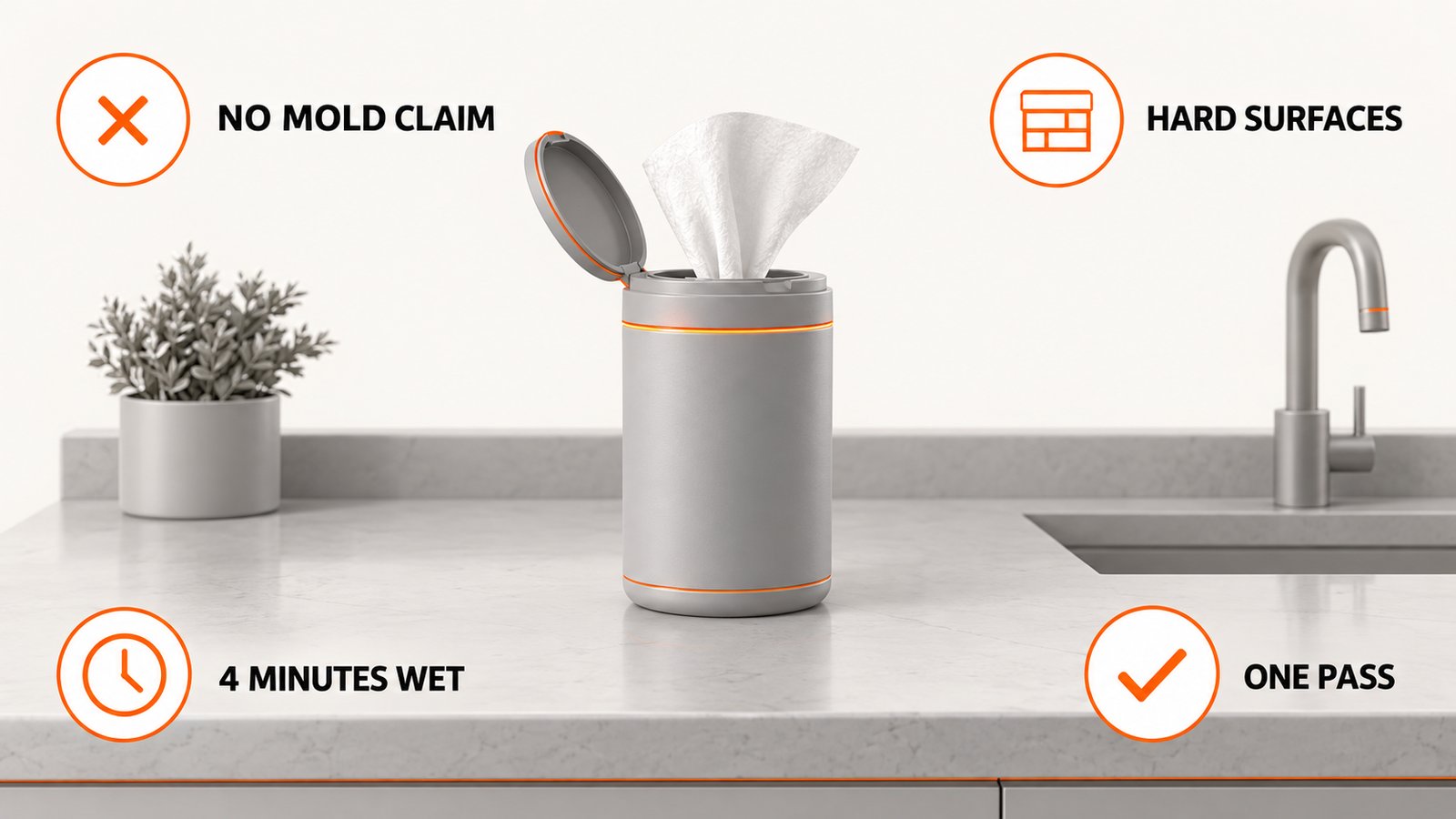
On the Lysol Disinfecting Wipes page we read, the claims are about viruses and bacteria and about "hard, non-porous surfaces including electronics." There is no mold or mildew claim and no mold directions. The disinfect step is to keep the surface wet for 4 minutes, and the "clean and remove allergens" step is to use a fresh wipe.
So the answer for wipes is that nothing on the page says they kill or control mold. A wipe can still lift light surface growth physically, the same way detergent and water do, and the EPA does say to scrub mold off hard surfaces with detergent and water and dry them completely. Just don't count on the disinfectant to do more than that. Toss the wipe after one pass so you don't drag spores to a clean spot.
Does Lysol kill black mold?
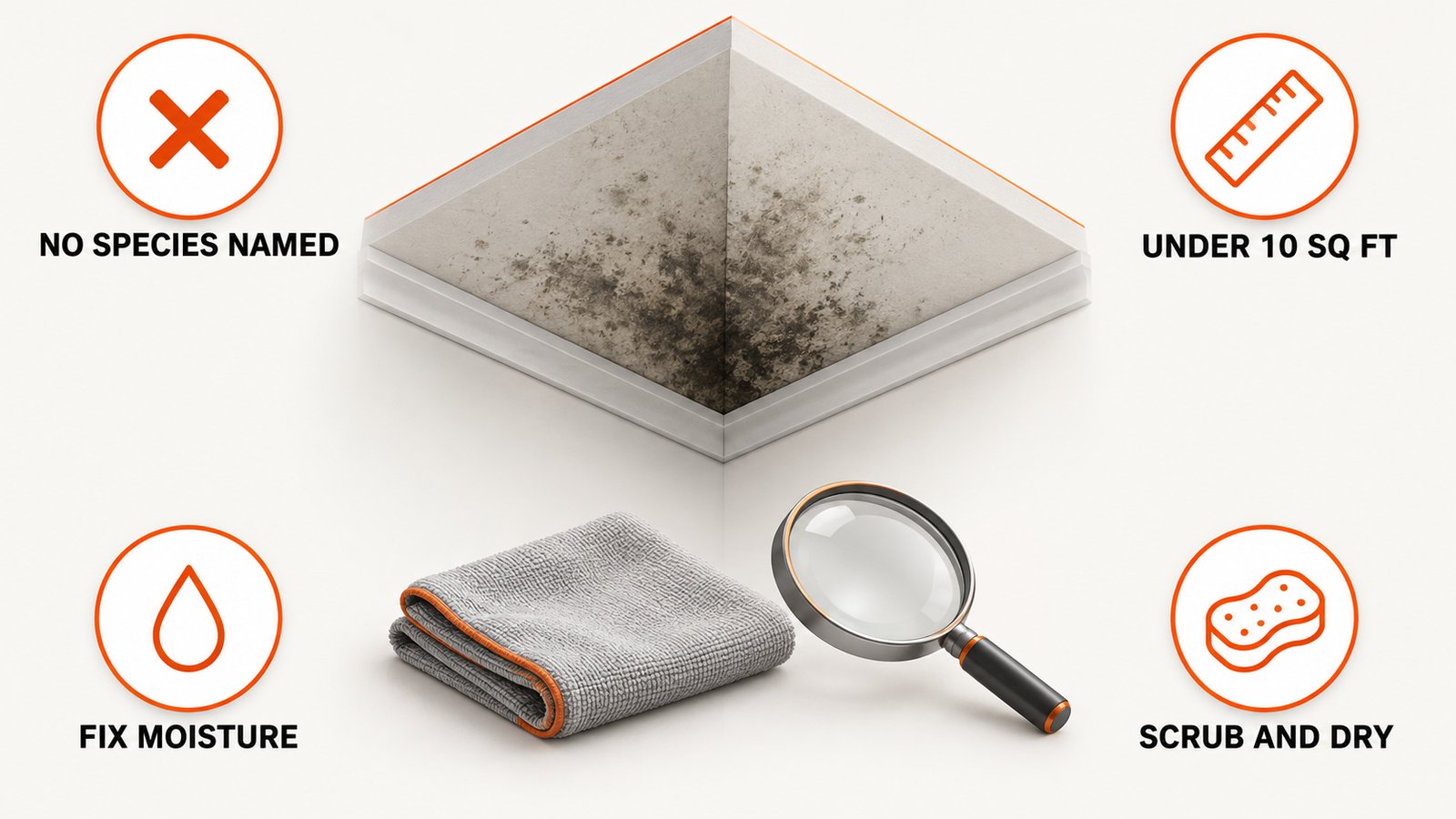
None of the Lysol pages we read name black mold, or any species of mold. The wording is the same general "mold and mildew" for every product. That means there is no label support for a claim that Lysol kills black mold in particular.
A dark color alone does not tell you what a growth is. Color can't identify a species, and the EPA does not suggest that you need to know the type to clean it up. What matters more is how much there is and what it is growing on. The EPA says that if the moldy area is less than about 10 square feet, in most cases you can handle the job yourself. If it covers more than that, or came from heavy water damage, it points you to its guidance for larger jobs and to professionals. Read more in our black mold guide and black mold vs mildew.
How to clean mold safely, with or without Lysol
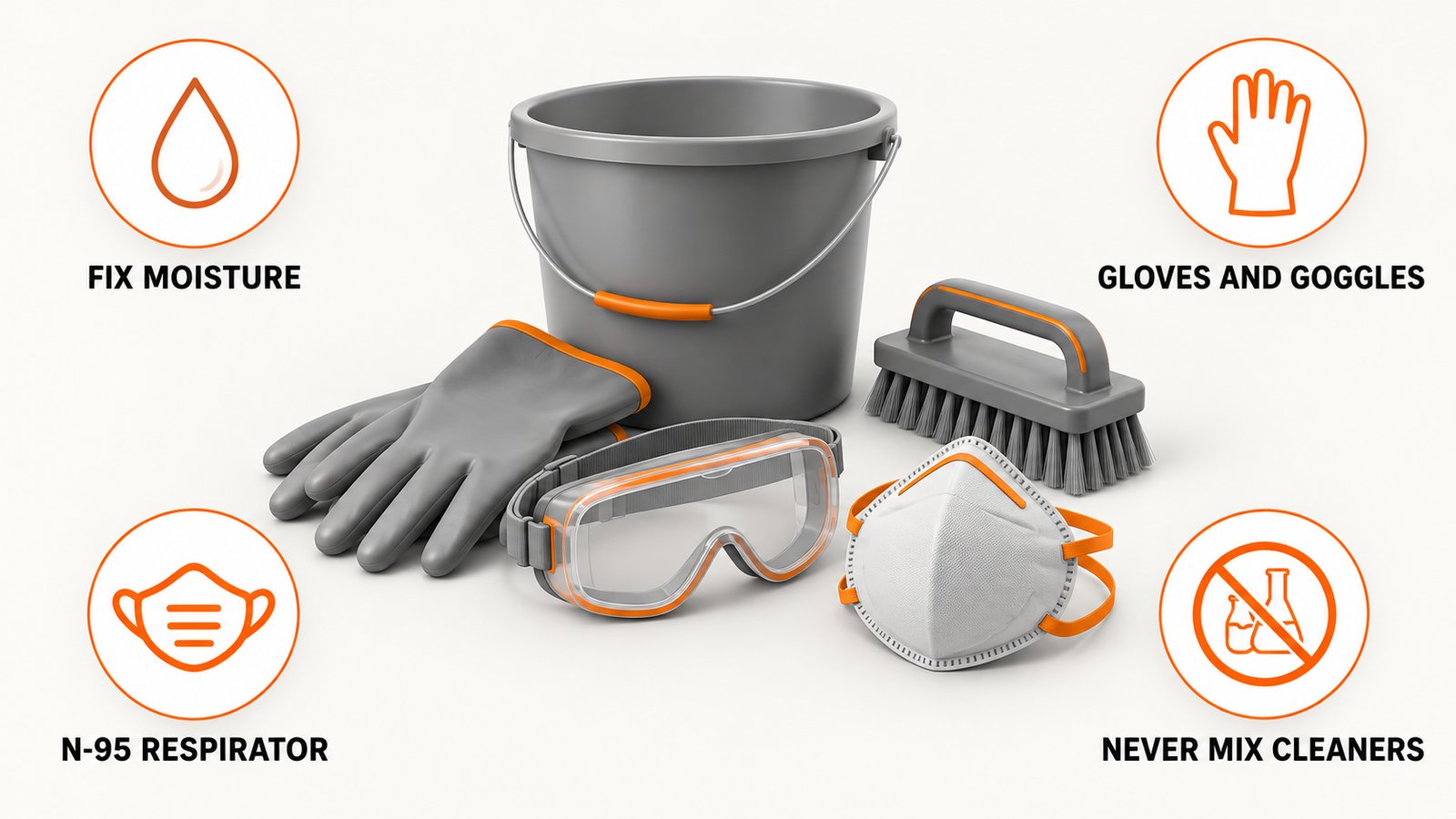
The EPA's first rule is simple: "The key to mold control is moisture control." If a leak or humidity keeps feeding the spot, no spray fixes it. Find the water, fix it, and dry wet areas within 24 to 48 hours. A dehumidifier and a good exhaust fan help in a bathroom.
Steps for a small hard surface
- Fix the moisture source first.
- Put on protective gear. The EPA lists gloves (natural rubber, neoprene, nitrile, polyurethane or PVC), goggles without ventilation holes, and an N-95 respirator.
- Scrub the mold off with detergent and water, and dry the surface completely.
- If you want to use a Lysol product afterward, read the label, apply it to the cleaned surface, keep it wet for the stated 3 minutes, and let it air dry.
- Watch the spot. If growth comes back, the moisture problem is still there.
Never mix cleaners
The CDC's chlorine fact sheet says that household chlorine bleach can release chlorine gas if it is mixed with certain other cleaning products, and its direct warning is "Do not mix household cleaners!" The EPA adds that you should never mix chlorine bleach solution with other cleaning solutions or detergents that contain ammonia, because toxic fumes could be produced. Use one product at a time, rinse between products, and keep the room ventilated. Check each label for bleach before you combine anything, and when in doubt, don't combine.
When Lysol is the wrong tool
Soft or porous materials like carpet and ceiling tile may need to be thrown away, according to the EPA. Drywall that stays soft or crumbly usually needs to come out, not get sprayed; see mold on drywall. Painting over a spot is a separate question, covered in can you paint over mold. For jobs over about 10 square feet, or if you suspect hidden mold, the EPA suggests consulting its guidance for large jobs or an experienced professional. Our overview of mold removal explains the options.
If you aren't sure whether what you see is mold, mildew or plain dirt, mold vs mildew explains the visual differences. The Mold Scanner app is built for that first look: photograph the surface and get an AI-assisted visual screening of what is visible in the frame. Processing time varies, and it is a screening, not an inspection.
Frequently asked questions
Will Lysol kill mold?
Not by its own wording. The Lysol pages we read say the sprays and bathroom cleaners help control and prevent mold and mildew growth when applied to a pre-cleaned surface and kept wet for 3 minutes. We did not find the words kills mold on any of them. Clean the surface and fix the moisture first.
Can Lysol spray kill mold spores?
The Lysol Disinfectant Spray page makes no claim about spores. Its mold wording is helps to control and prevent mold and mildew. Spores are everywhere indoors, and the EPA says a background level will remain. They will not grow if the moisture problem is resolved.
Will Lysol wipes kill mold?
The Lysol Disinfecting Wipes page lists virus and bacteria claims and does not mention mold or mildew. A wipe can physically lift light growth from a hard surface, but the page does not say the wipes kill or control mold.
Can I mix Lysol with other cleaners?
No. The CDC says household chlorine bleach can release chlorine gas if mixed with certain other cleaning products and warns not to mix household cleaners. The EPA says never to mix chlorine bleach with products that contain ammonia. Use one product at a time and rinse between them.
Is Lysol Mold and Mildew Blaster still sold?
We could not find it on lysol.com. The current Lysol product pages list sprays, wipes, multi-purpose cleaners, and toilet and bathroom cleaners, and a direct guess at the old Blaster page returned not found. We did not read its label, so we make no claims about it.
Is Lysol or bleach better for mold?
Neither label promises to kill existing mold on its own. The EPA says routine use of biocides such as chlorine bleach is not recommended during mold cleanup, and that scrubbing hard surfaces with detergent and water, then drying them, is the core step. See our page on whether bleach kills mold for more.
Can Lysol fix mold on drywall or wood?
Neither label promises to kill existing mold on its own. The EPA says routine use of biocides such as chlorine bleach is not recommended during mold cleanup, and that scrubbing hard surfaces with detergent and water, then drying them, is the core step. See our page on whether bleach kills mold for more.
Sources
Every claim on this page traces to one of these. Links open the primary document.