What mold resistant caulk actually does
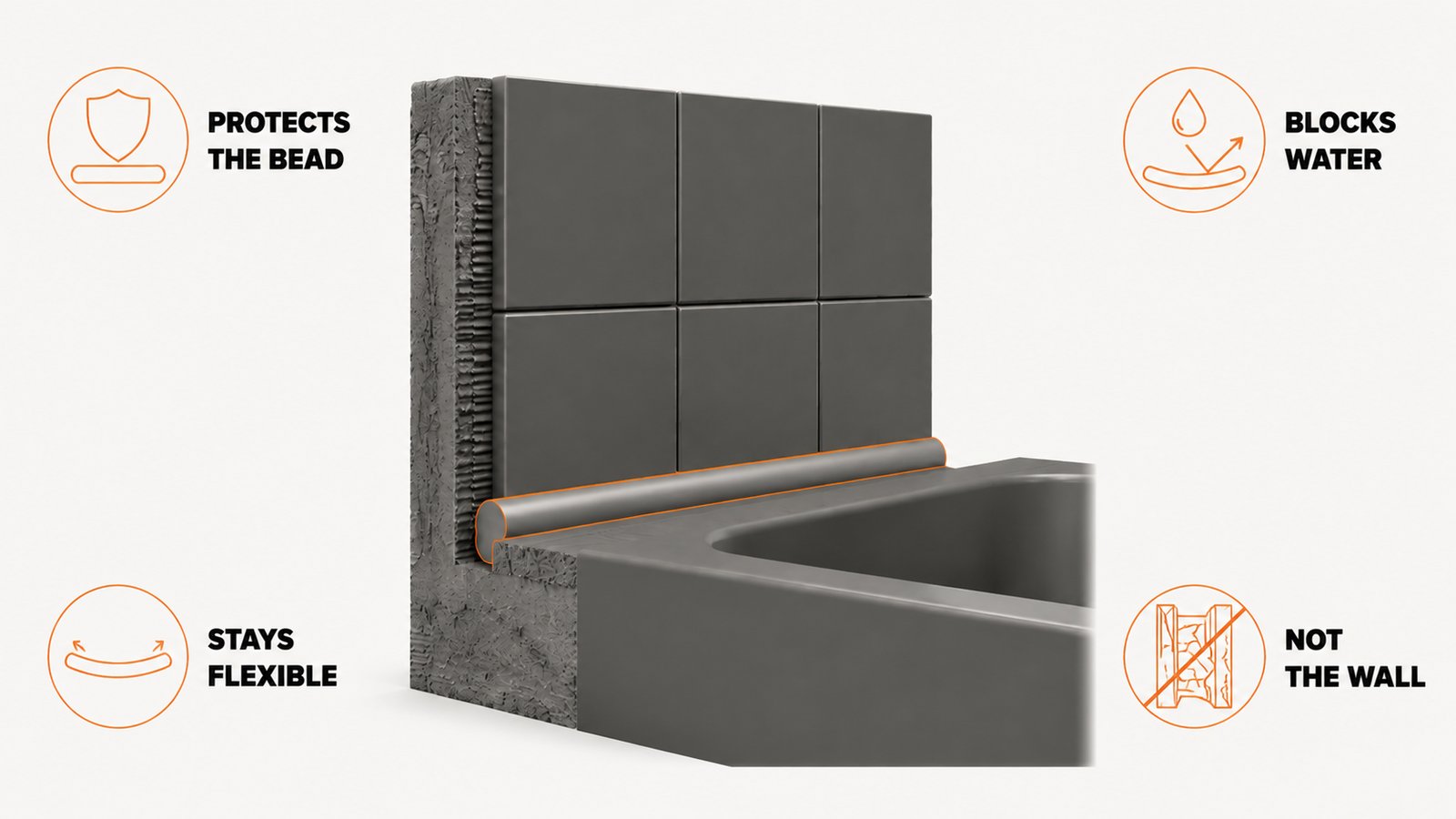
A mold resistant sealant carries a fungicide in the formulation so the cured bead resists growth. That is the whole claim, and the regulation behind it sets the honest boundary.
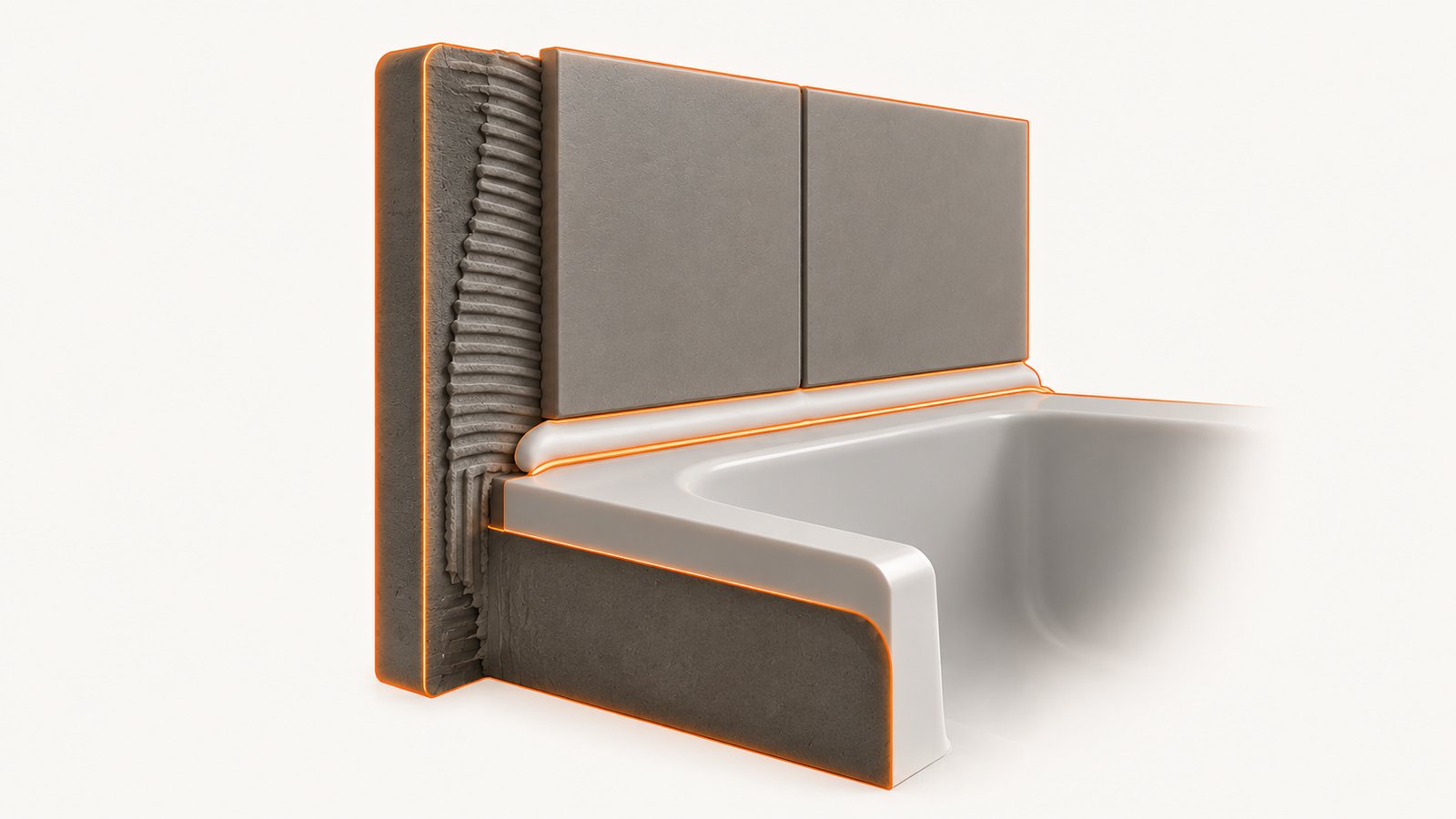
Federal rules at 40 CFR 152.25 exempt treated articles from pesticide registration: an article treated with, or containing, a pesticide to protect the article itself, with paint treated to protect the paint coating as the worked example. A mold-resistant caulk sits in that category. It is protecting the caulk, not your bathroom.
Three consequences follow.
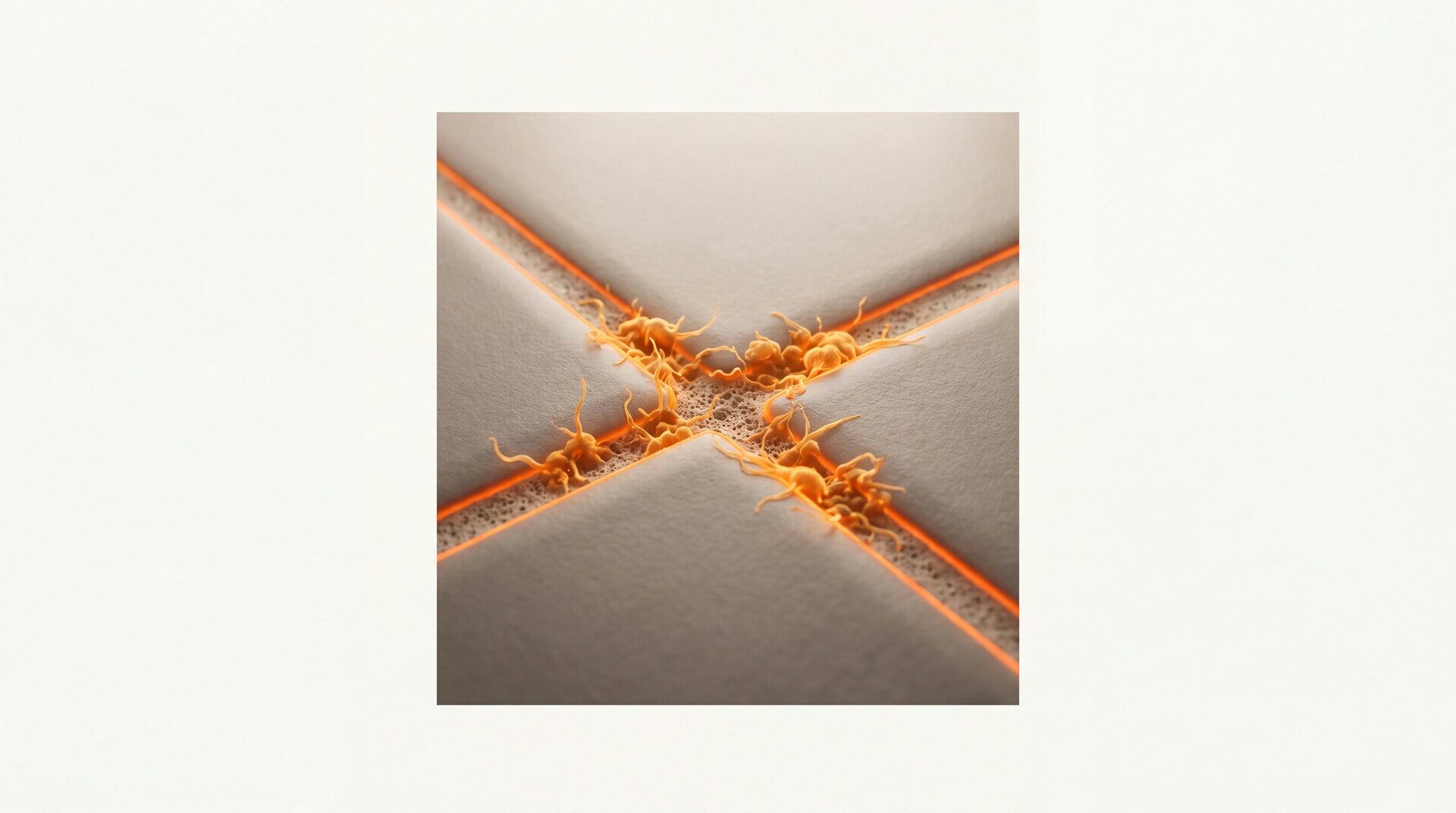
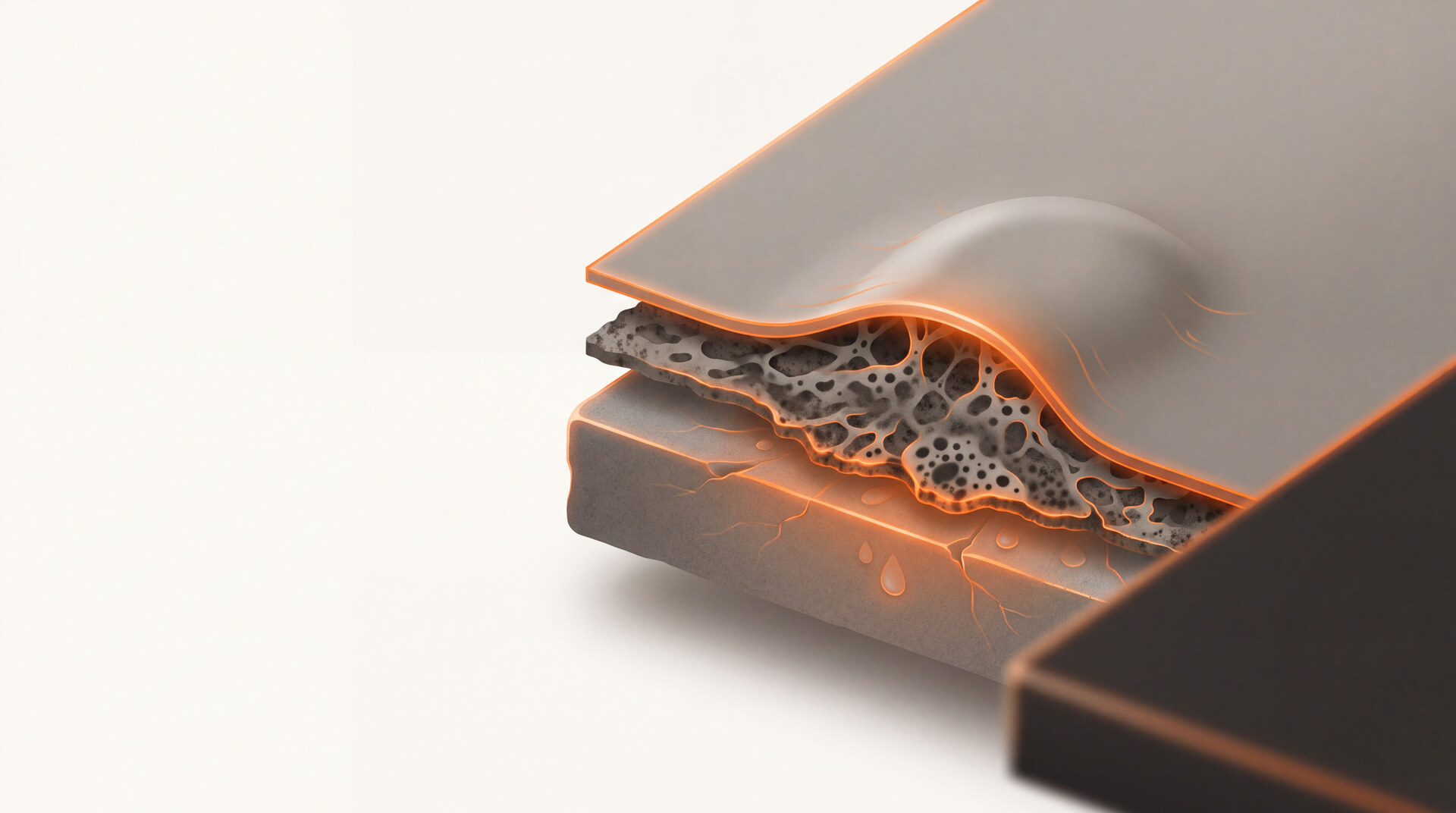
It does not kill what is already there. Sealing over a moldy joint traps growth under the new bead, which is why the black line reappears through fresh white caulk within weeks.
It does not protect the tile, the grout, or the ceiling. The fungicide is in the bead, so adjacent surfaces are unprotected, which is why grout often goes first while the caulk still looks perfect.
It does not last forever. Soap residue, hard-water film, and abrasive cleaners all shorten it by giving growth something to sit on above the treated surface.
What it does do is buy years of a clean-looking joint in a room that gets wet twice a day, and keep water off the substrate behind the tile. The background is on mold on caulk.
Silicone or siliconized acrylic latex

100 percent silicone is the wet-room default. Permanently flexible, fully waterproof once cured, and it holds up to constant wetting better than anything else here. Two real drawbacks: it does not take paint, and it is less forgiving to tool and clean up.
Siliconized acrylic latex is easier in every way that is not performance. It tools smoothly, cleans up with water, and most versions take paint. In exchange it is less flexible and tends to shrink away sooner in a joint that gets soaked daily.
The rule: silicone anywhere that gets direct water, meaning the tub or shower joint, the sink rim, and the base of a faucet. Siliconized acrylic where you need to paint over the bead.
Format matters. A cartridge and a caulk gun give a controlled continuous bead, which is what makes the joint last. A squeeze tube is right for a short repair and wrong for a whole tub. On color, white shows a problem early and clear hides a failing bead for months.
The 5 best mold resistant caulks, at a glance
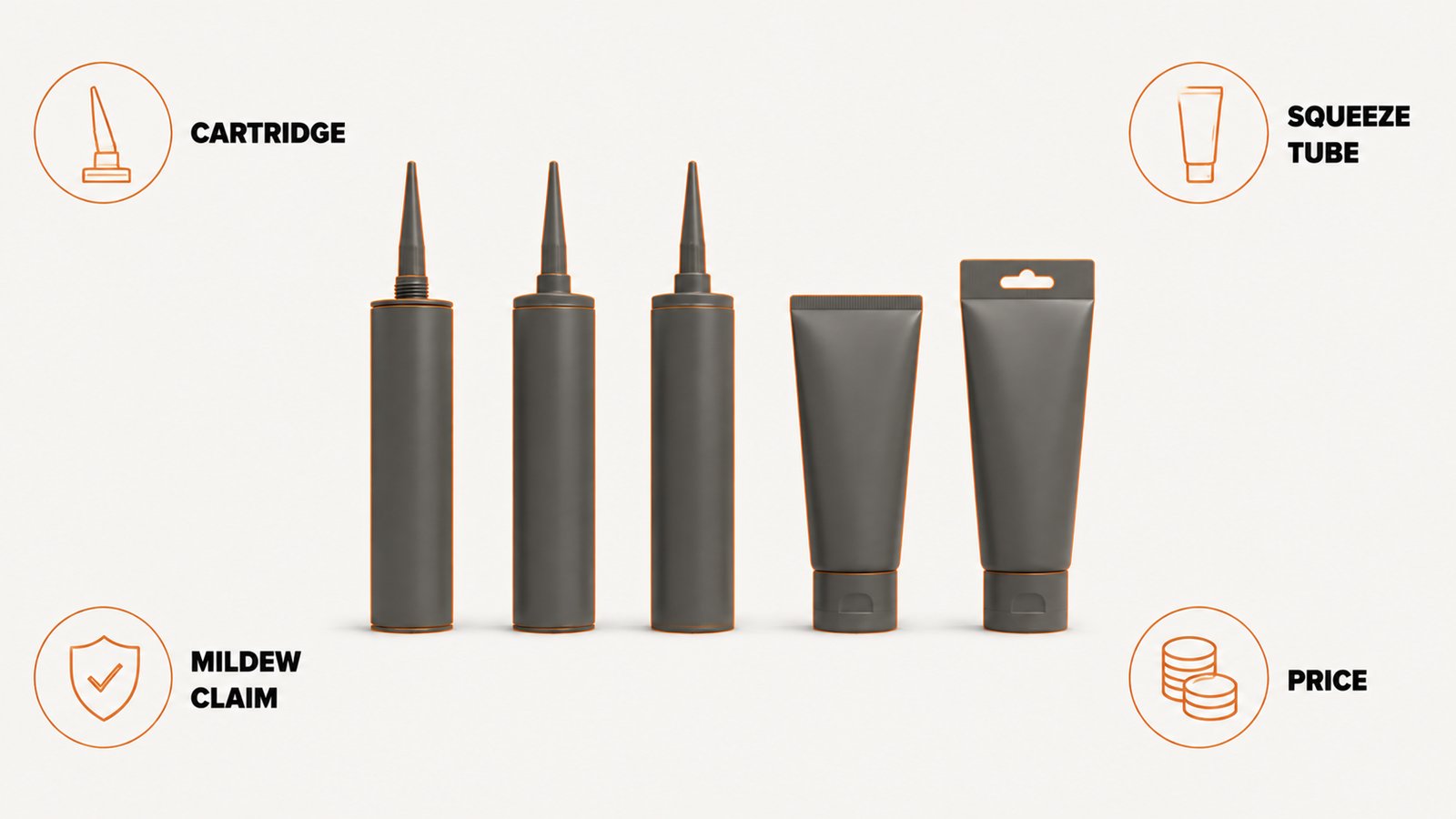
| Product | Type | Price | Rating | Best for |
|---|---|---|---|---|
| GE Advanced Silicone, white cartridge | 100 percent silicone | $10.97 | 4.5/5 from 2,241 ratings | Best overall for a tub or shower joint |
| GE Supreme Silicone, white cartridge | 100 percent silicone | $11.99 | 4.6/5 from 1,056 ratings | Best rated, stronger stated adhesion |
| Gorilla 100% Silicone, white cartridge | 100 percent silicone | $9.84 | 4.5/5 from 539 ratings | Clearest mildew claim on the listing itself |
| GE Advanced Silicone, clear squeeze tube | 100 percent silicone | $7.97 | 4.6/5 from 4,354 ratings | Small repairs, no gun needed, deepest review history |
| DAP Kwik Seal Ultra, white | Siliconized acrylic latex | $8.76 | 4.2/5 from 658 ratings | Easy tooling, but read the caveat below |
Every price, rating, review count and stock status above was read off the live Amazon product page the week of publication, and all five showed an active add-to-cart button. These change, so confirm before you order.
The 5 picks, ranked
Heads up: the Amazon links below are affiliate links, and buying through them may earn Mold Scanner AI a small commission at no extra cost to you.
GE Advanced Silicone Caulk for Kitchen & Bathroom, White, 10 fl oz
Listed at $10.97, 4.5 out of 5 stars from 2,241 ratings, in stock with an active buy box. A 100 percent silicone cartridge for a caulk gun, which is the right format for a full tub or shower run. Its listing claims a permanently flexible, fully waterproof seal that is shrink and crack proof, with 5X stronger adhesion, water ready in about half an hour. GE's copy for the Advanced line describes 10-year mold-free product protection with a footnote, so read the manufacturer's terms rather than treating it as absolute. The caveat that applies to every silicone here: not paintable.
GE Supreme Silicone Caulk for Kitchen & Bathroom, White, 10 fl oz
Listed at $11.99, 4.6 out of 5 stars from 1,056 ratings, the highest rating of the three cartridges here, in stock with an active buy box. Same chemistry as the Advanced line, with the listing claiming 7X stronger adhesion rather than 5X and the same waterproof, shrink and crack proof description, for about a dollar more per cartridge. Whether that adhesion difference matters on a bathtub joint is unproven from a listing alone, so treat this and the Advanced as a coin flip weighted by price and stock.
Gorilla 100% Silicone Caulk, Kitchen & Bath Sealant, White, 10 oz
Listed at $9.84, 4.5 out of 5 stars from 539 ratings, the cheapest cartridge here, in stock with an active buy box. Of the five, its bullets state the mildew claim most directly: long-lasting mold resistant, formulated to resist mold and mildew after curing, easy to clean with soap and water, 30-minute water-ready, full cure in 24 hours. The honest caveat is review depth, 539 ratings against 2,241 for the GE Advanced cartridge.
GE Advanced Silicone Caulk, Clear, 2.8 fl oz Squeeze Tube
Listed at $7.97, 4.6 out of 5 stars from 4,354 ratings, by far the deepest review history on this page, in stock with an active buy box. A squeeze tube needs no caulk gun, which makes it the right buy for one joint, a sink rim, or a repair rather than a whole bathroom. Its listing content is where GE states 10-year mold-free product protection with a footnote. Two caveats: clear hides a failing bead, and a squeeze tube makes an even bead over a long run much harder.
DAP Kwik Seal Ultra Kitchen and Bath Siliconized Sealant, White, 10.1 oz
Listed at $8.76, 4.2 out of 5 stars from 658 ratings, in stock with an active buy box. A siliconized acrylic latex rather than a pure silicone, so it tools and cleans up far more easily. Its listing claims a 100 percent waterproof seal, a crackproof film, an ultra-hydrophobic formula that repels water, dirt, soap scum and stains, and a water-ready time of about four hours. The caveat that decides its ranking: unlike the four silicones above, the bullets state no mold or mildew resistance claim at all, and the listing says it is not paintable, which removes the usual reason to pick an acrylic.
Affiliate disclosure: the Amazon links above are affiliate links. If you buy through them, Mold Scanner AI may earn a small commission at no extra cost to you. We read the title, price, star rating, review count, stock status and feature bullets off each live Amazon product page the week of publication, and every claim attributed to a product above came from that listing rather than from our own testing. Listings change, so confirm before you order.
How to recaulk a shower so it lasts
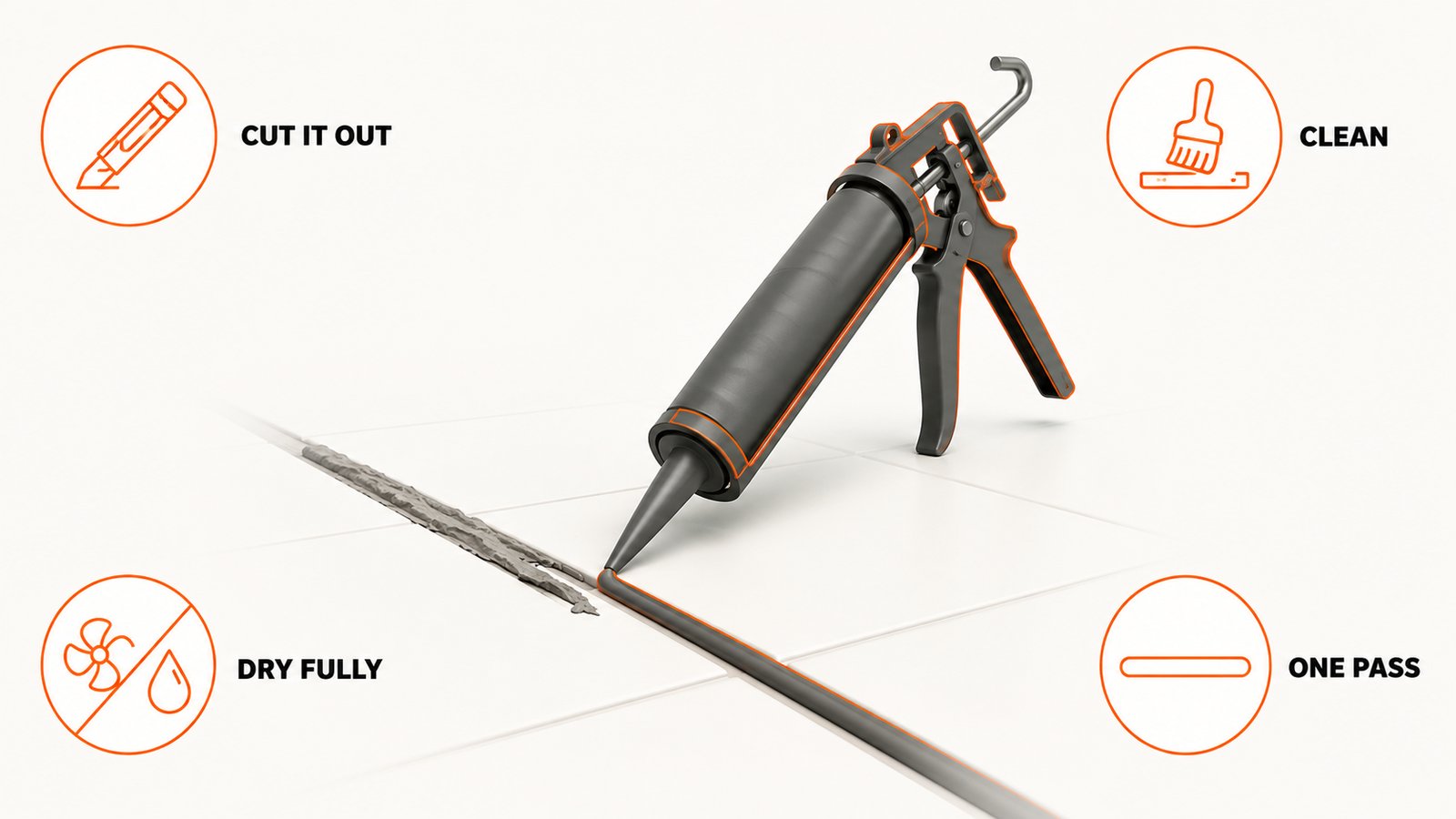
The product is a fifth of the outcome. Preparation is the rest.
1. Remove every bit of the old bead. Score both edges with a utility blade, pull the bead out in one piece where you can, then scrape the residue. Silicone will not bond to old silicone, so anything left is a future gap.
2. Clean the open joint. EPA's instruction for hard surfaces is to clean with water and detergent and dry completely. Get soap film and hard-water residue out of the channel as well as visible growth.
3. Dry it completely. This is the step that decides everything. A joint that looks dry can still hold water in the gap behind the tile. Do not shower in that room for a day beforehand, run the fan, and use a hairdryer on low along the channel if you need to.
4. Check the substrate. Press the board behind the tile at the corners. Soft, spongy, or moving means water already got past, and a new bead just hides it. See mold behind walls.
5. Lay one continuous bead in a single pass. Cut the nozzle small, keep constant pressure and a steady speed, and tool it once.
6. Respect the cure time. Water-ready is not fully cured. Keep water off it for as long as the label says, usually a day.
7. Fix the ventilation. A bathroom that stays wet for hours kills any bead eventually. The fan capacity and run time are covered on mold on a bathroom ceiling.
Why caulk goes black and what it means
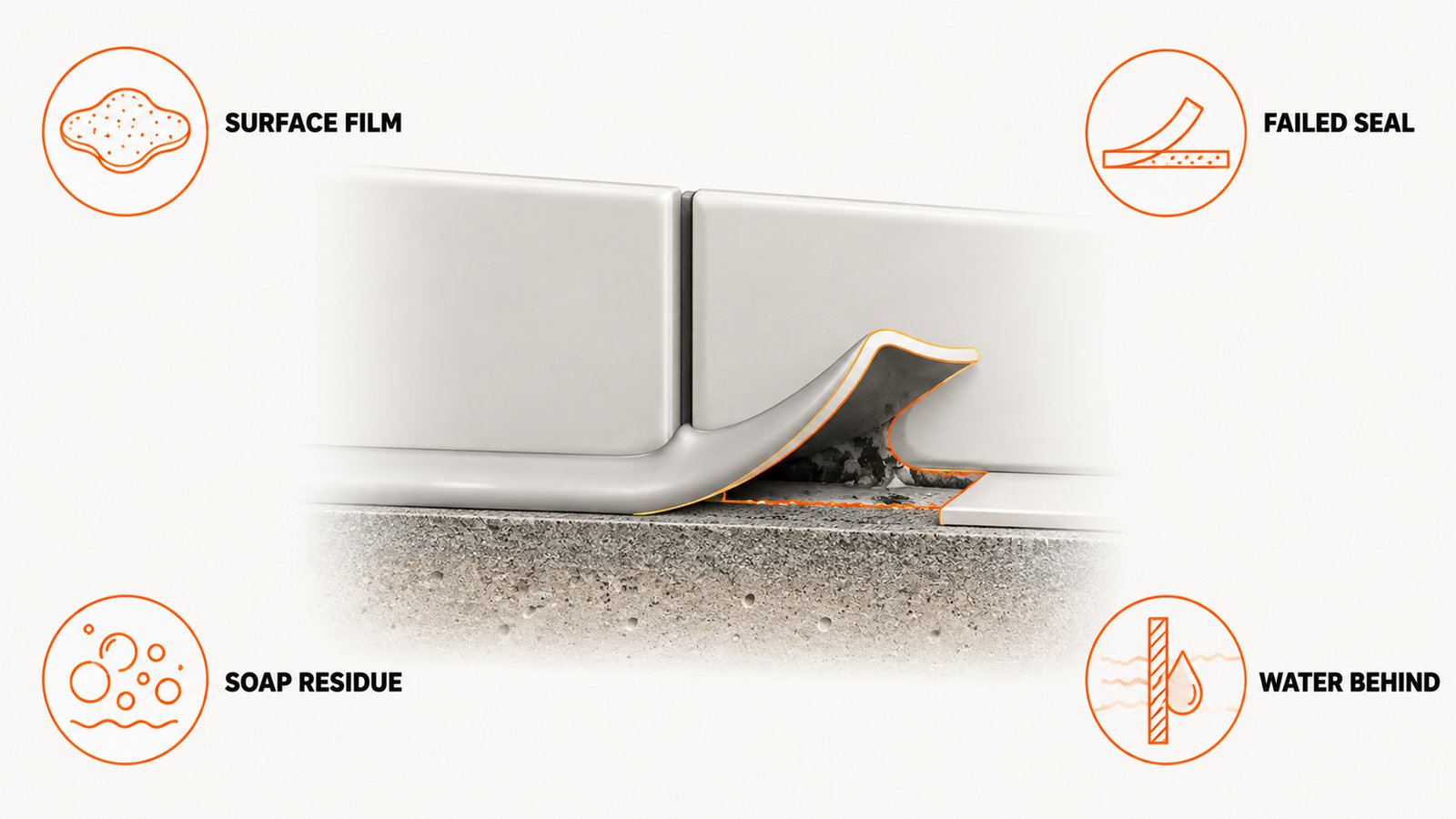
A black line along a joint is one of four things, and they need different responses.
Surface film on top of the bead. Soap scum and body oils build a layer that growth colonizes, sitting above the treated silicone rather than in it. It wipes off and returns, and the fix is cleaning frequency rather than a new product.
Growth under a failed bead. If the caulk has lifted along its edge, water gets behind it and cannot dry. What you see through translucent silicone is growth in the gap, and no cleaner reaches it. That bead comes out.
Residue mistaken for growth. A gray-brown line that is chalky rather than fuzzy is mineral and soap deposit. An acid cleaner shifts it, a fungicide does nothing.
Water behind the tile. The worst case. If the bead keeps failing in the same place, or the wall sounds hollow when tapped, water is getting past the tile and the joint is a symptom.
EPA's method for hard surfaces is water and detergent, then dry completely, and it notes that dead mold may still cause allergic reactions in some people, so it is not enough to simply kill the mold, it must also be removed. Bleach disappoints here for the same reason it disappoints elsewhere, set out on does bleach kill mold. A pink or orange film in the same joint is usually bacterial rather than fungal, covered on pink mold in a shower.
When to call a professional
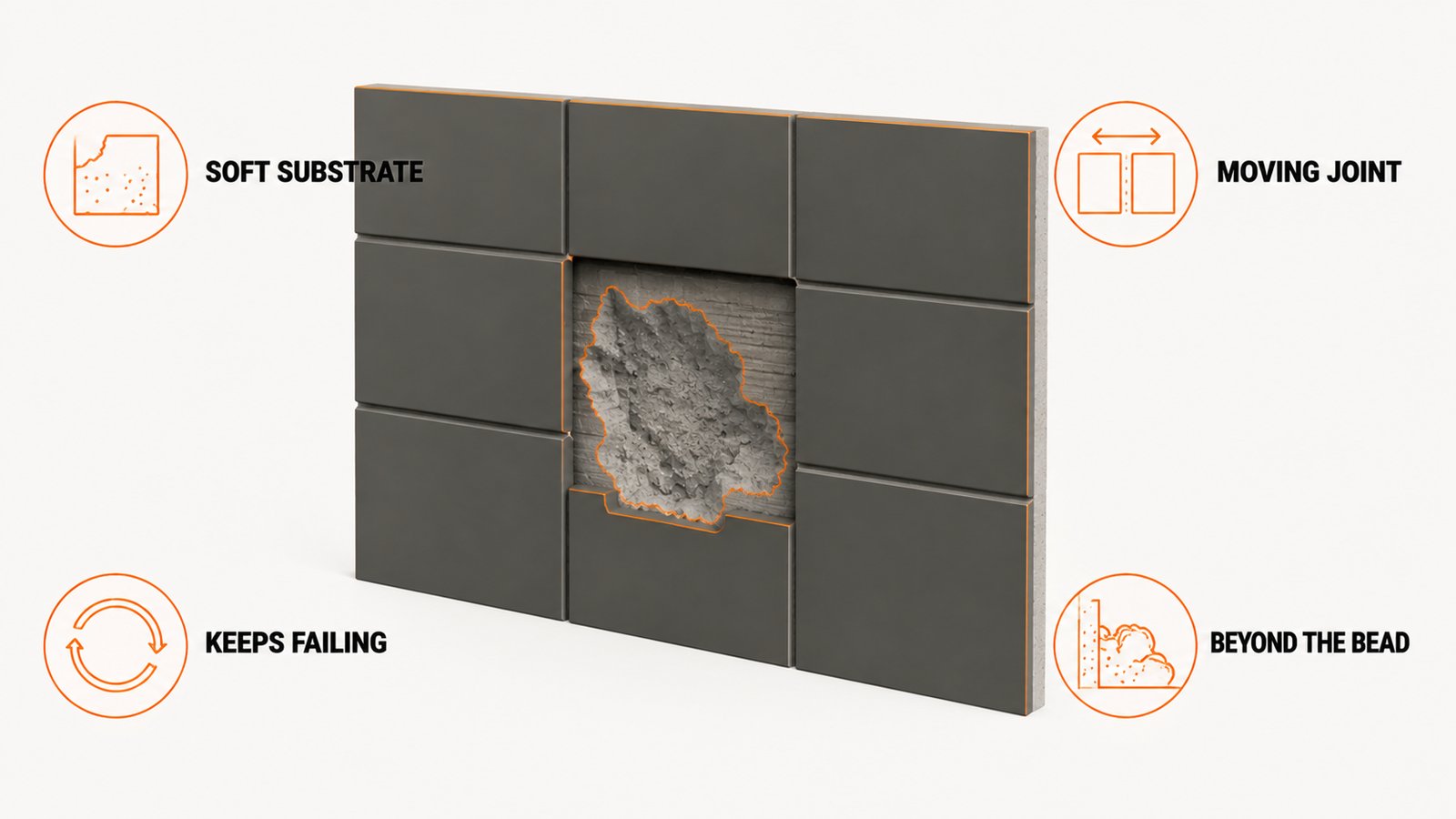
Recaulking is a do-it-yourself job. What sits behind it sometimes is not. Call a qualified professional when:
- The substrate is soft. Board that gives under pressure at the tub edge or the shower corner is water-damaged and needs replacing, not sealing.
- The joint keeps failing in the same spot. A bead that separates within months means the joint moves more than the sealant can absorb, or water is arriving from behind.
- Growth extends past the bead onto the wall, ceiling, or floor. EPA's guide is that under about 10 square feet is usually a do-it-yourself job.
- There is a stain on the ceiling below an upstairs bathroom. That is water through the floor, a plumbing question before it is a sealant one.
- Tile is loose or grout is crumbling across a wide area. The wall assembly is the job and the caulk is cosmetic.
Look for firms that follow the ANSI and IICRC S520 standard, and get a written scope covering the moisture repair, removal, drying, and verification before anyone starts. Pricing is on mold remediation cost, and the general cleanup order is on how to get rid of mold.
The surfaces either side of the bead behave differently: see grout and the wider shower. If you are painting afterward, the coating equivalent is best mold-resistant paints.
Frequently asked questions
Does mold resistant caulk actually work?
It works on the bead, which is what the claim covers. Federal rules at 40 CFR 152.25 exempt treated articles from pesticide registration, defined as an article treated with or containing a pesticide to protect the article itself. The fungicide protects the cured sealant film. It does nothing for the tile, the grout, or the wall behind, and kills nothing already present when you apply it.
Should you use silicone or acrylic caulk in a bathroom?
Silicone anywhere that gets direct water: the tub or shower joint, the sink rim, the base of a faucet. It stays permanently flexible and is fully waterproof once cured. Siliconized acrylic latex tools and cleans up more easily and usually takes paint, but it is less flexible and shrinks away sooner in a joint soaked daily.
Can you caulk over existing moldy caulk?
No. Silicone does not bond to old silicone, so a new bead over an old one separates, and sealing over growth traps it, which is why the black line reappears through fresh white sealant within weeks. Score both edges with a blade, pull the old bead out, scrape the residue, clean the channel, and dry it completely first.
How long does mold resistant caulk last?
Manufacturer protection claims run for a stated period with their own terms attached, and GE's copy for its Advanced silicone line describes 10-year mold-free product protection with a footnote. In practice the bead lasts as long as the preparation and the room allow, and soap film, hard-water residue and abrasive cleaners all shorten it.
Why does my caulk turn black again so fast?
Usually one of four things. Soap and body-oil film builds on top of the bead and gets colonized. The bead has lifted somewhere and water is trapped behind it. The dark line is hard-water and soap deposit rather than growth. Or water is getting behind the tile, in which case the joint is a symptom.
How long should caulk dry before a shower?
Longer than the water-ready time on the label. Several of these claim water resistance in about 30 minutes, but a full cure is typically 24 hours. The more important wait is before you apply: the joint has to be completely dry, which usually means not using the shower for a day.
What should you clean a moldy joint with before recaulking?
EPA's method for hard surfaces is to clean with water and detergent and dry completely. That handles the visible material and the soap and mineral film in the channel. EPA also notes that dead mold may still cause allergic reactions in some people, so it is not enough to simply kill the mold, it must also be removed.
Sources
Every claim on this page traces to one of these. Links open the primary document.