What Is the Difference Between Mold and Wood Rot?
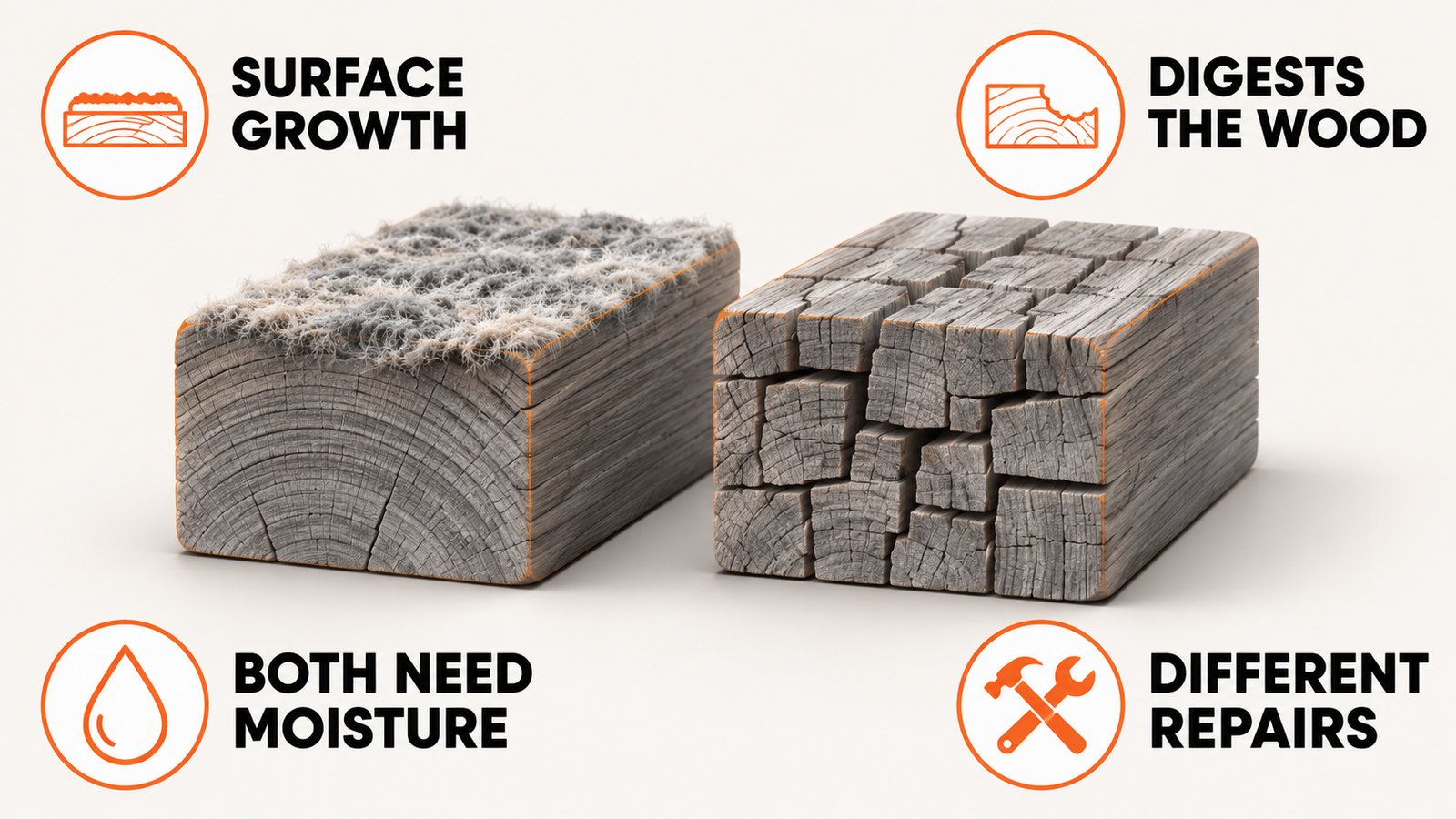
Both are fungi. The USDA Forest Products Laboratory says molds, most sapwood stains and decay are all caused by fungi, which are microscopic thread-like organisms that need organic material, mild temperatures, moisture and air. So the real question is what kind of fungus it is and what it is doing to the wood. Our page on whether mold is a fungus covers the basics.
| Question | Mold and stain fungi | Decay (rot) fungi |
|---|---|---|
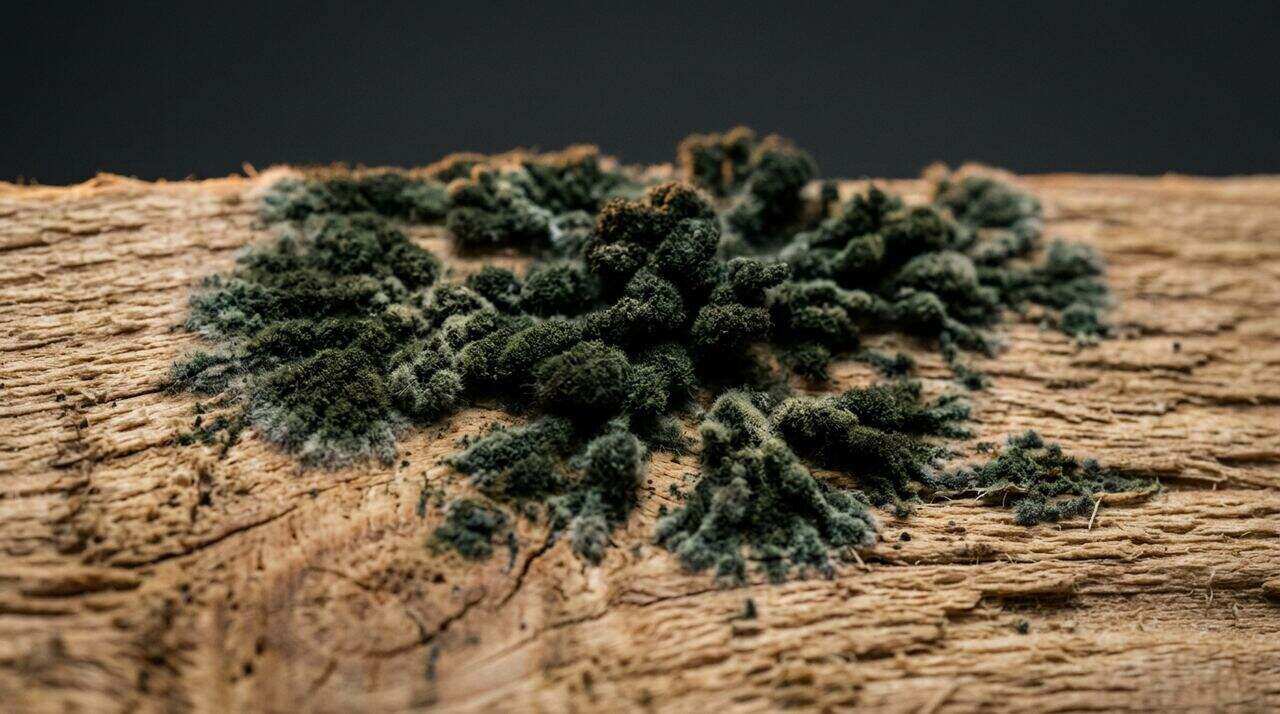
| What you see | Fuzzy or powdery surface growth, light shades to black. Green and yellowish hues are common | Fan-shaped patches, strands, or mushrooms, brackets and crusts. The wood itself changes color and shape |
| What it does | Affects strength only slightly. Mostly an appearance problem | Uses the wood's own cell wall as food. Strength drops |
| Moisture it needs | Humid air can be enough for some molds | Serious decay needs wood above the fiber saturation point, which averages 30% moisture content |
| First response | Clean, dry and fix the water (EPA) | Have a qualified person look at the wood |
The Laboratory also notes that soft-rot fungi are more closely related to the molds than the fungi behind brown and white rot, so the labels overlap more than they seem to.
Wood Rot vs Mold: What Each One Does to the Wood
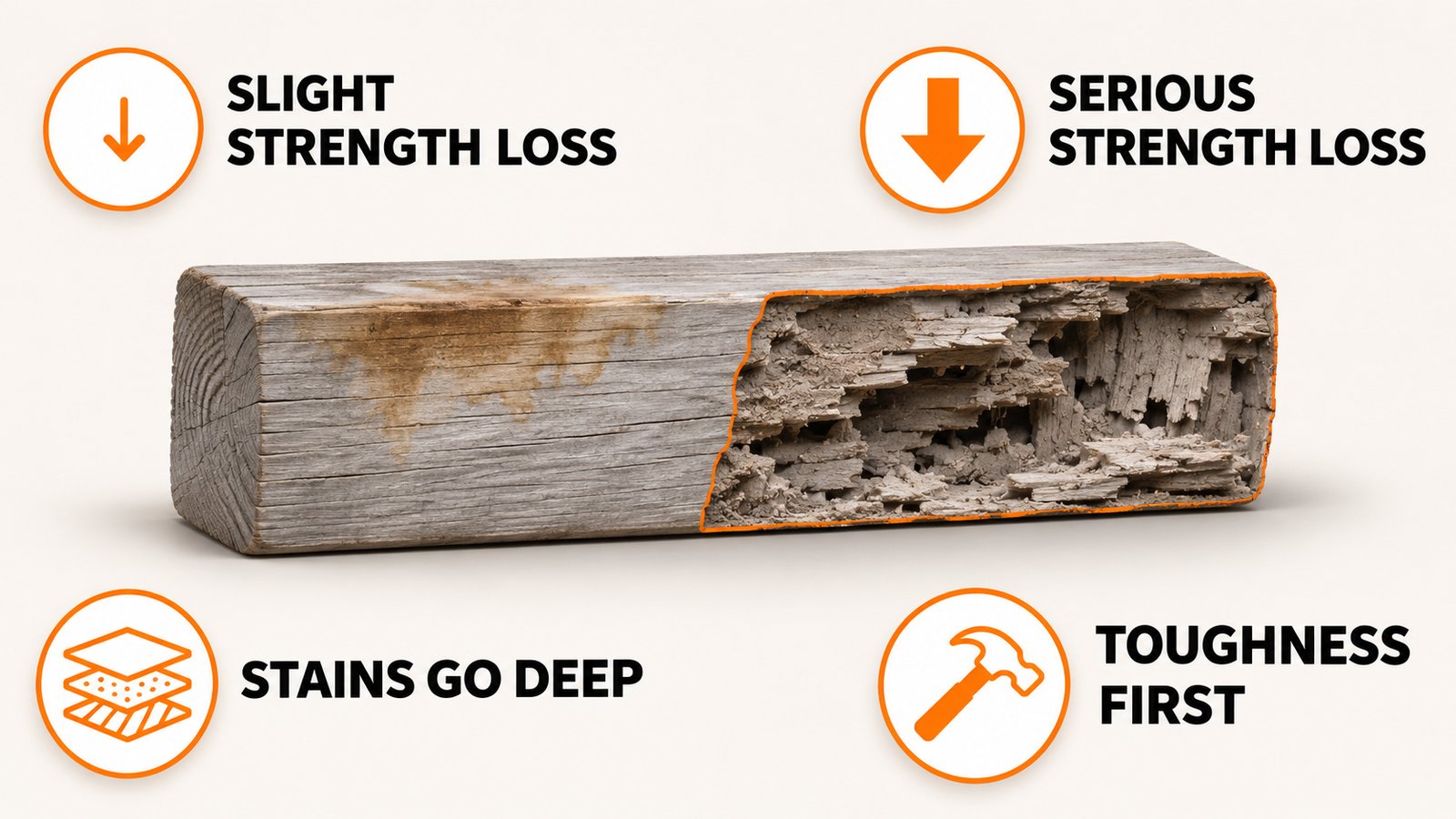
What mold does. The Forest Products Laboratory says stain and mold fungi affect the strength of wood only slightly. Their greatest effect is on appearance and on toughness, which is how well wood takes an impact. On softwoods, surface growth can often be brushed or surfaced off. Blue stain is different: it goes into the sapwood and cannot be surfaced off. Mold and stain also make wood more absorbent and wettable, which can lead to later colonization by decay fungi, and early decay may sit unseen in discolored areas.
What rot does. Decay fungi send microscopic strands through the wood and use its structural chemicals as food. The Handbook says decay first affects toughness, then bending strength, and eventually all strength properties. By 10% weight loss, most strength losses may be expected to exceed 50%, and decay at that stage is detectable only under a microscope. It says it may be assumed that wood with visible decay has been greatly reduced in all strength values. That is a statement about decayed wood in general, not a verdict on any one board in your house.
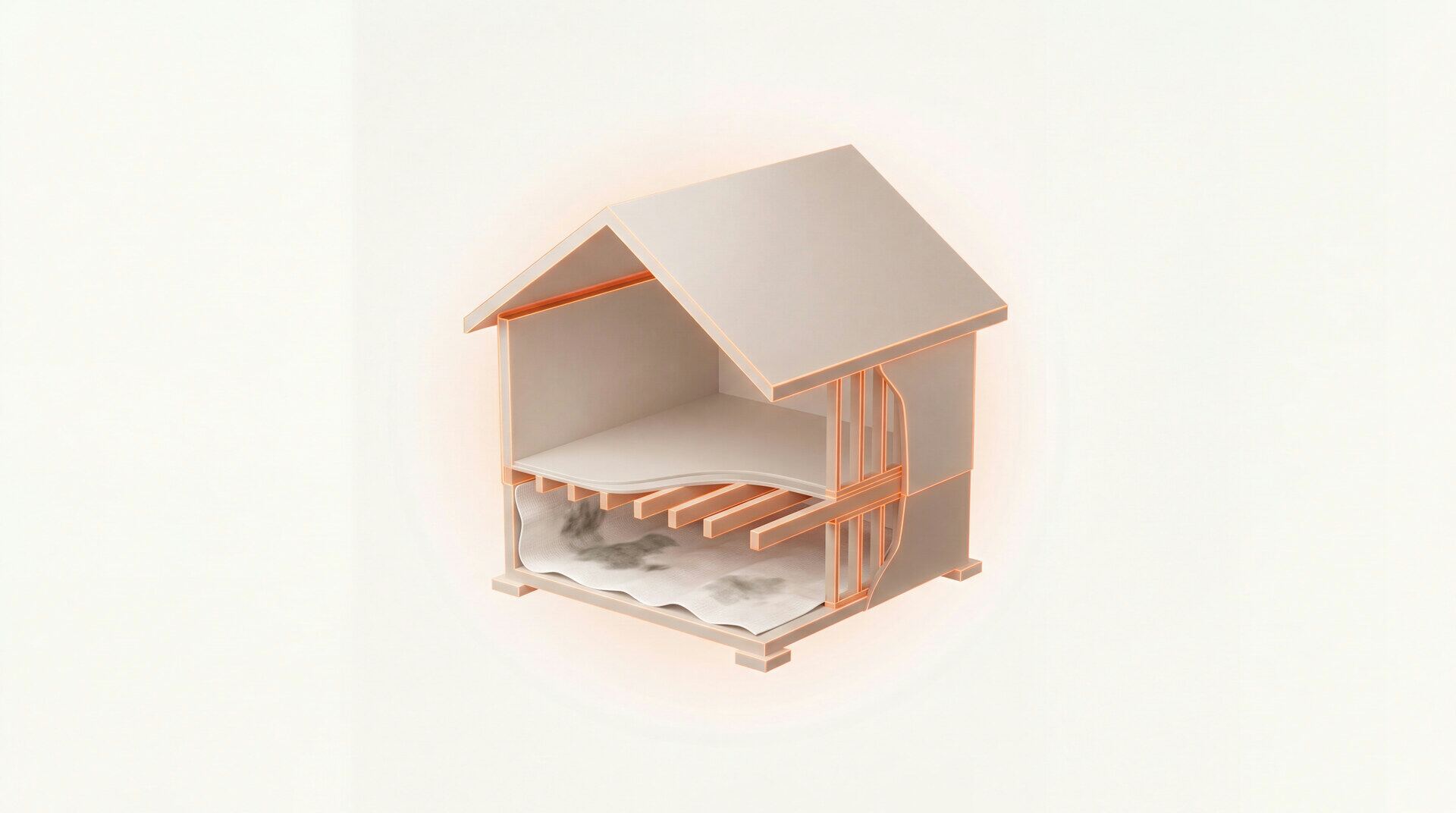
The wider view. The EPA's course notes that a roof left leaking long enough can let molds weaken floors and walls by feeding on wet wood, and says to consult a structural engineer or other qualified professional when mold is suspected of damaging a structure. The sources agree that long-running moisture is the danger. A surface patch is a cleaning job. Damage under the surface is for someone qualified to judge.
Dry Rot vs Mold
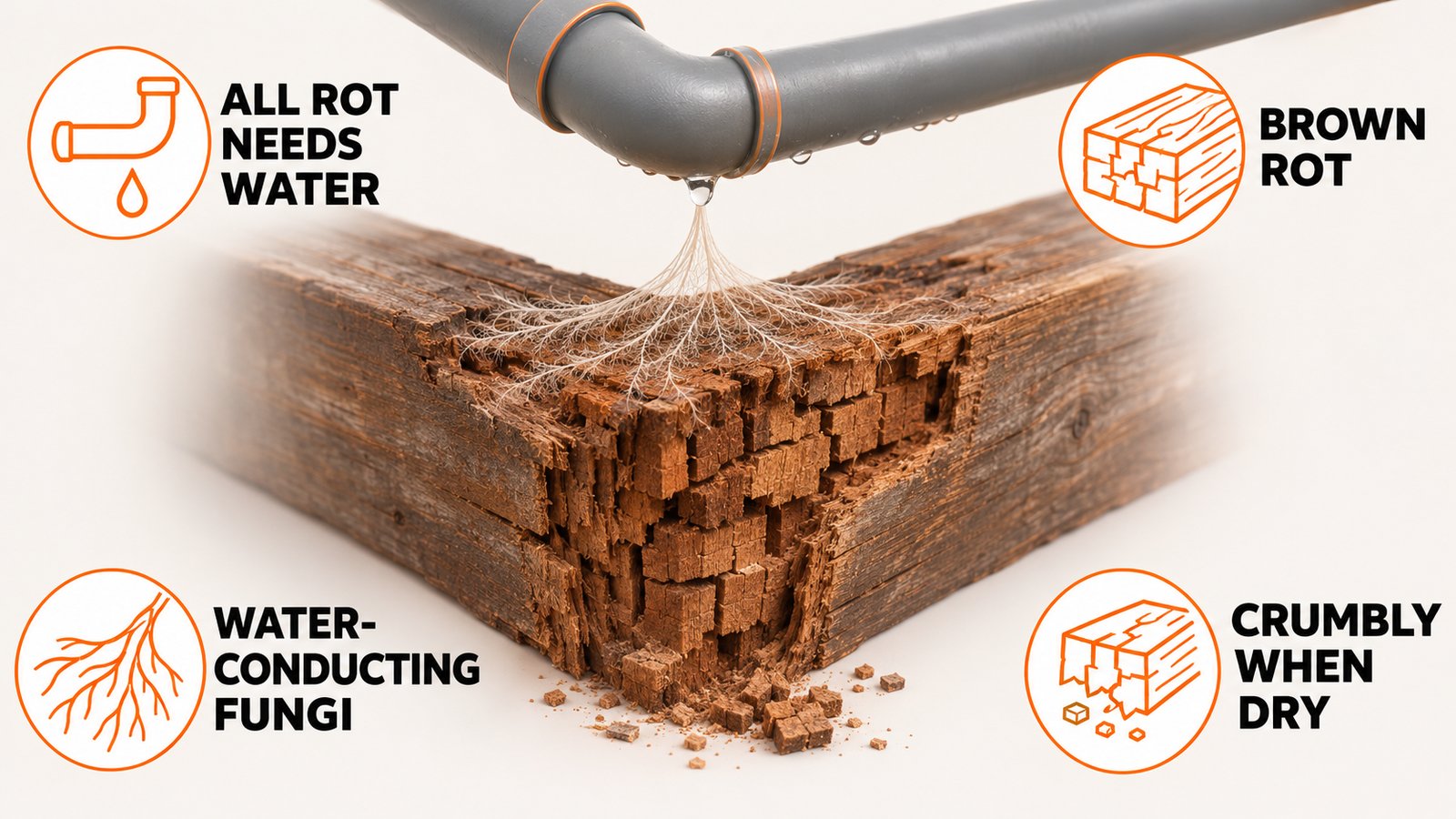
People say "dry rot" for crumbly, brown, dry-looking decay. The Forest Products Laboratory says brown, crumbly rot in the dry condition is sometimes called dry rot, but the term is incorrect, because wood must have available moisture for decay, although it may become dry later.
There is one real wrinkle. Some brown-rot fungi form water-conducting strands that can carry water, usually from the soil, into buildings or lumber piles, where they moisten and decay wood that would otherwise be dry. The Handbook calls these water-conducting fungi and says that name describes the situation better, because these fungi, like the others, must have water.
So dry rot vs mold is not a wet problem against a dry one. Both started with water. If you find crumbly wood that looks dry, ask where the water came from, now or in the past. See mold in a crawl space and mold behind walls for where hidden moisture shows up.
How to Tell Mold From Wood Rot
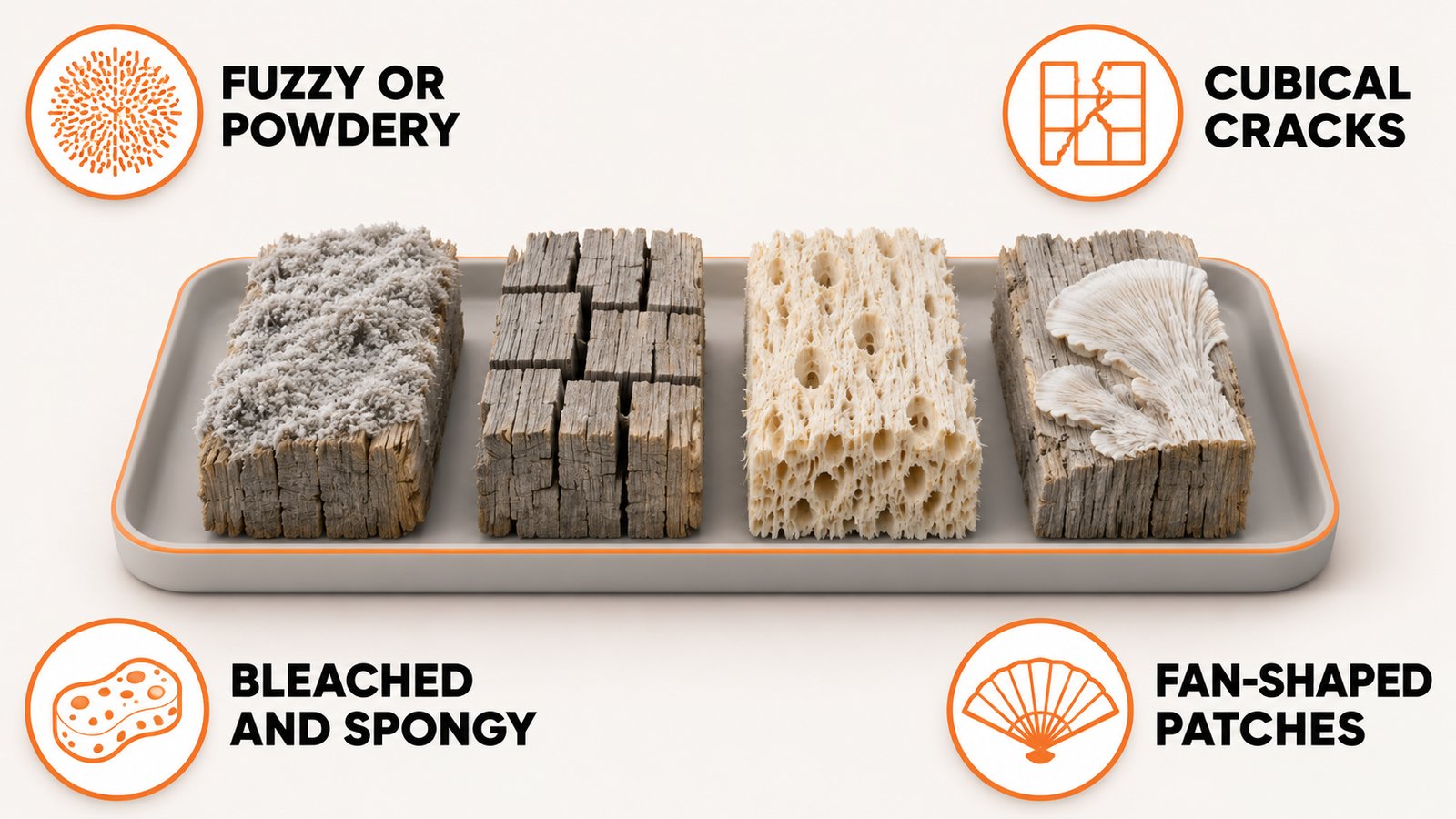
A careful look sorts many cases. It cannot rule out decay under a stain, since the Handbook says early decay can be inconspicuous. Work through these in order.
- Look at the surface. Fuzzy or powdery growth that sits on top fits mold. Fan-shaped patches, strands, root-like threads, mushrooms, brackets or crusts fit decay. The Handbook says they are usually white or brown but can be yellow or orange.
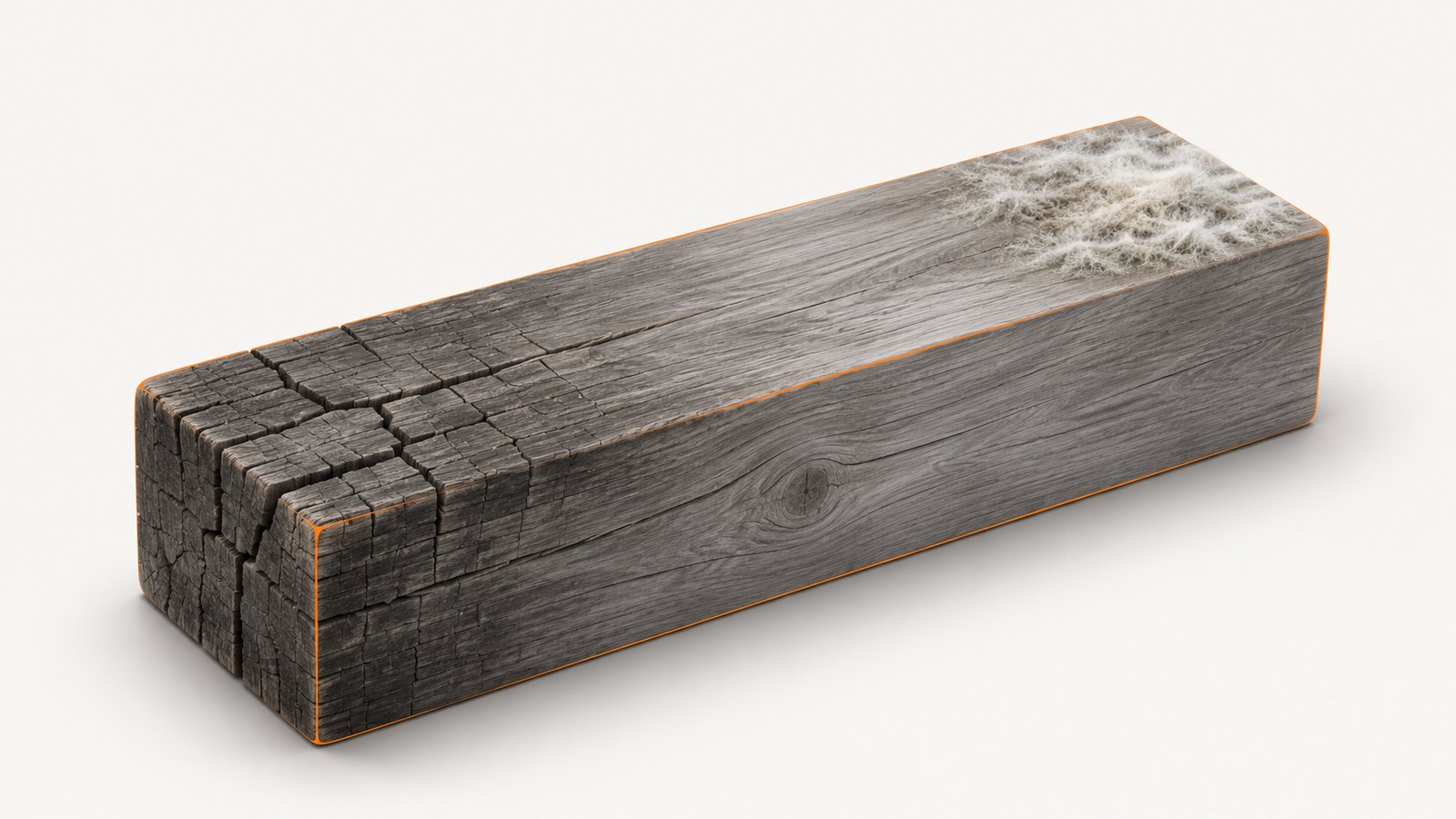
- Look at the wood. Brown rot makes wood browner, and it can crack across the grain into cube-like pieces, shrink, and crush to powder. White rot can leave wood bleached and spongy, keeping its outer size. Soft rot is shallow, soft when wet and firm just beneath.
- Check with gloves, goggles and an N-95 respirator on. Wipe one small spot. If the color comes off and the wood underneath looks smooth and normal, it was surface growth. Stain that stays went deeper. Our mold on wood guide goes through both cases.
- Press lightly. The same guide uses a screwdriver tip as a rough check: if it sinks in or the fibers crumble, the wood is past a cleaning job. Use that on a shelf or trim, never as a test of framing. If framing, joists, a subfloor or a deck feels soft, stop and have a qualified person look.
- Ask about water. A leak or a wet crawl space near the spot matters more than the color.
None of this names a species. Mold Scanner AI gives an AI-assisted visual screening of a photo that can help tell whether a spot looks like mold and what to do next. It does not identify the type of mold, and it cannot tell you whether wood is sound.
How Much Moisture Do Mold and Wood Rot Need?
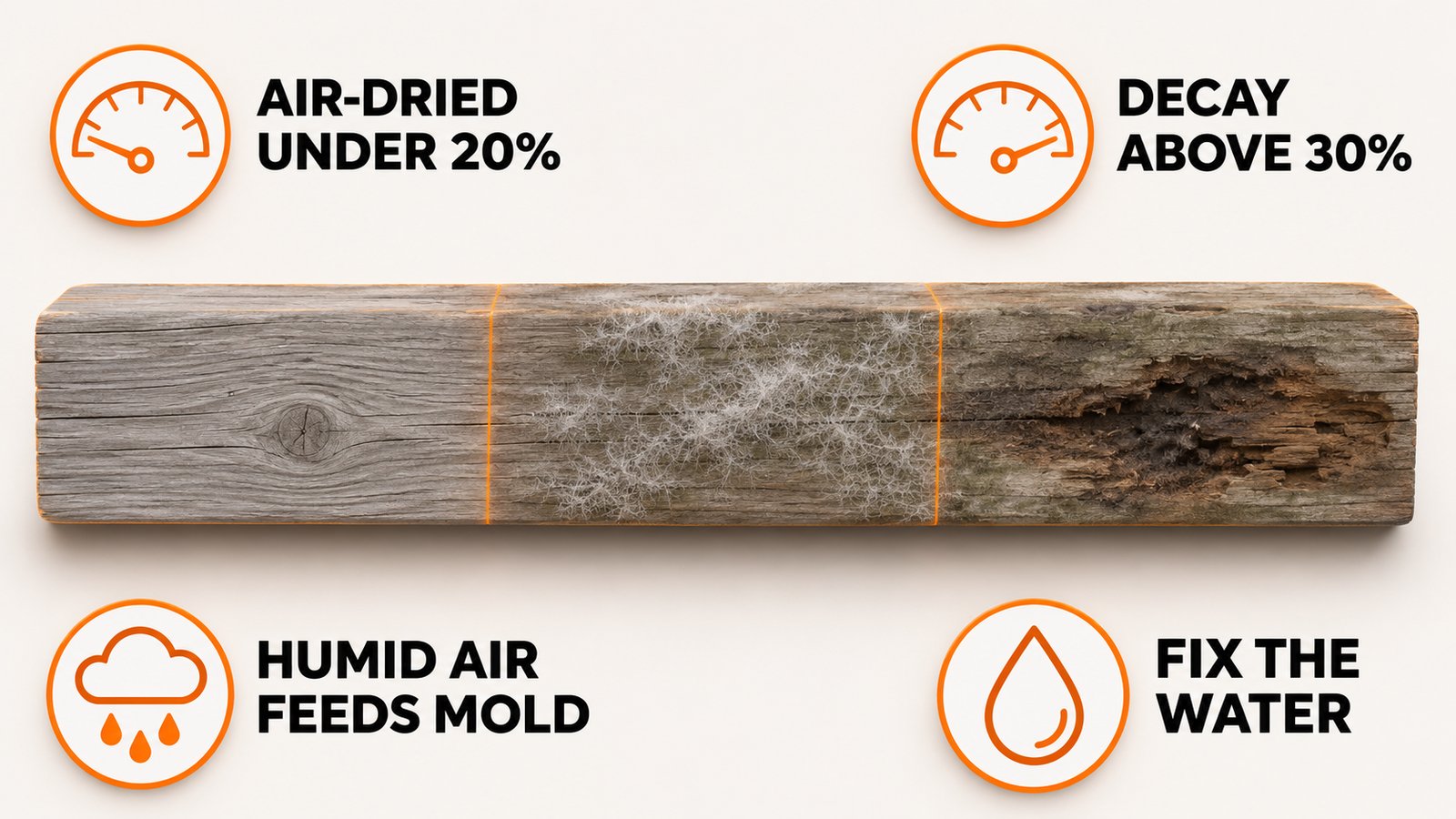
The Handbook gives numbers. Serious decay occurs only when the moisture content of the wood is above the fiber saturation point, which averages 30%. Wood reaches that only when rain, condensation or wet ground gets to it. By itself, the water vapor in humid air will not wet wood enough to support significant decay, but it will let some mold fungi develop. Fully air-dried wood usually does not exceed 20% moisture content, which the Handbook calls a reasonable margin of safety. Wood will not decay while it is kept air dry, and decay that is already there will not progress.
A reasonable reading, not a measurement of your wood: mold on wood in a humid but dry space points to humidity, while mold on soft wood points to liquid water that has been there a while. The EPA advises keeping indoor humidity below 60%, ideally between 30% and 50%, and says wet materials dried within 24 to 48 hours will in most cases not grow mold. See how to prevent mold, the dehumidifier guide and the humidity risk calculator.
What It Means for the Repair

If it is surface mold, the EPA steps apply. Fix the water problem first. Scrub mold off hard surfaces with detergent and water and dry completely. The EPA says you may want to wear an N-95 respirator, and it recommends long gloves and goggles without vent holes. Do not paint or caulk over moldy surfaces. A biocide such as bleach is not recommended as a routine practice, and dead mold can still cause allergic reactions, so it has to be removed, not just killed. The wood-specific steps, including when sanding makes sense, are in our mold on wood guide, and how to get rid of mold covers other surfaces.
If it may be rot, cleaning is the wrong first step. Cleaning does not give strength back. The Handbook says drying stops decay from progressing, but it does not say the piece is sound afterward. That judgment belongs to a qualified person, such as a licensed contractor, or a structural engineer as the EPA suggests when a structure may be affected.
When to Call a Pro
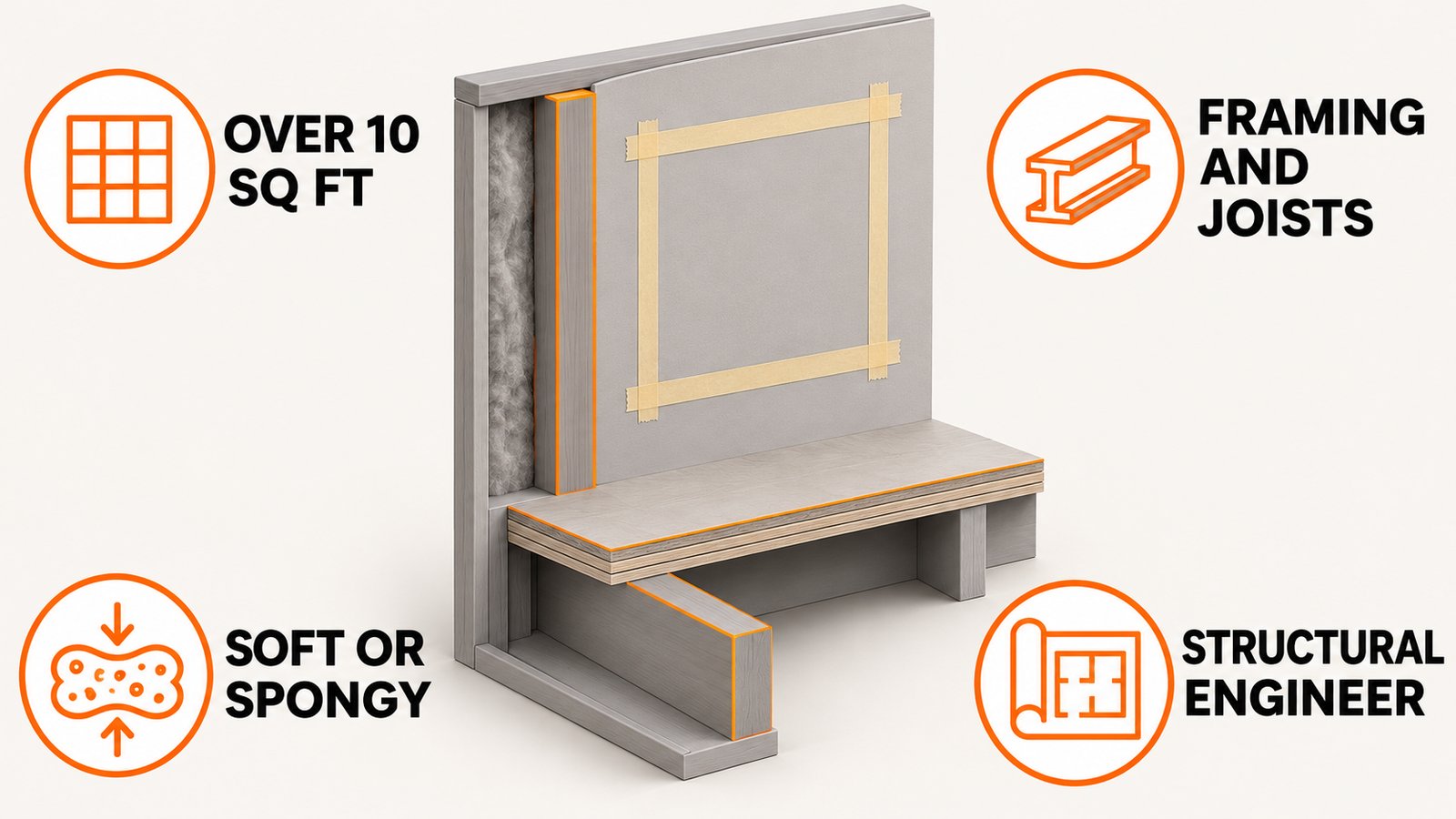
- The mold covers more than about 10 square feet, roughly a 3-foot by 3-foot patch. Past that size the EPA points to its guide for larger jobs, and we suggest a professional.
- The wood is framing, joists, a subfloor or a deck and it feels soft, crumbles, or has cube-shaped cracks.
- Mold is suspected of damaging the structure. The EPA says to consult a structural engineer or other professional with relevant expertise.
- Sewage or other contaminated water was involved. The EPA says to call a professional experienced with contaminated water.
- You can smell mold but cannot find it. Hidden growth can be behind drywall, paneling or under flooring, and the EPA says to use caution when an investigation means disturbing possible mold growth. See mold under flooring.
For mold work, the EPA says to hire someone with mold experience and check references. Our pages on mold remediation, mold inspection and remediation certification explain what to look for. For rot or structural questions, a licensed contractor or structural engineer is the right call. This page cannot say whether any piece of wood is safe to rely on.
Frequently asked questions
Is wood rot a type of mold?
No. Both are caused by fungi, but they are different jobs. The USDA Forest Products Laboratory separates mold and stain, which are mostly surface or sapwood problems, from decay, which breaks down the wood itself. It notes that soft-rot fungi are more closely related to the molds than the fungi behind brown and white rot.
Can mold turn into wood rot?
Mold does not turn into rot, but the two can show up together. The Forest Products Laboratory says mold and stain fungi can make wood more absorbent and wettable, which can lead to later colonization by decay fungi, and that early decay may be present in discolored areas.
Is dry rot worse than mold?
"Dry rot" is brown rot found in a dry state, and the Forest Products Laboratory calls the name incorrect, since decay always needs moisture. For wood strength, decay is the bigger problem, because mold affects strength only slightly.
How wet does wood have to be to rot?
The Forest Products Laboratory says serious decay occurs only above the fiber saturation point, which averages 30% moisture content. Fully air-dried wood usually does not exceed 20%. Humid air alone will not support significant decay, though it can support some mold.
Can I just paint over it or seal it?
Not mold. The EPA says not to paint or caulk moldy surfaces, because paint over mold is likely to peel. Clean and dry first. If the wood may be rotten, sealing it does not tell anyone whether it is sound, so have it checked.
How big can a patch be before I call someone?
The EPA says a patch under about 10 square feet, roughly 3 feet by 3 feet, is in most cases a job you can handle yourself. Past that, it points to its guide for larger jobs, and that is where we suggest a professional. Suspected structural damage, contaminated water or hidden mold are reasons to call at any size.
Sources
Every claim on this page traces to one of these. Links open the primary document.