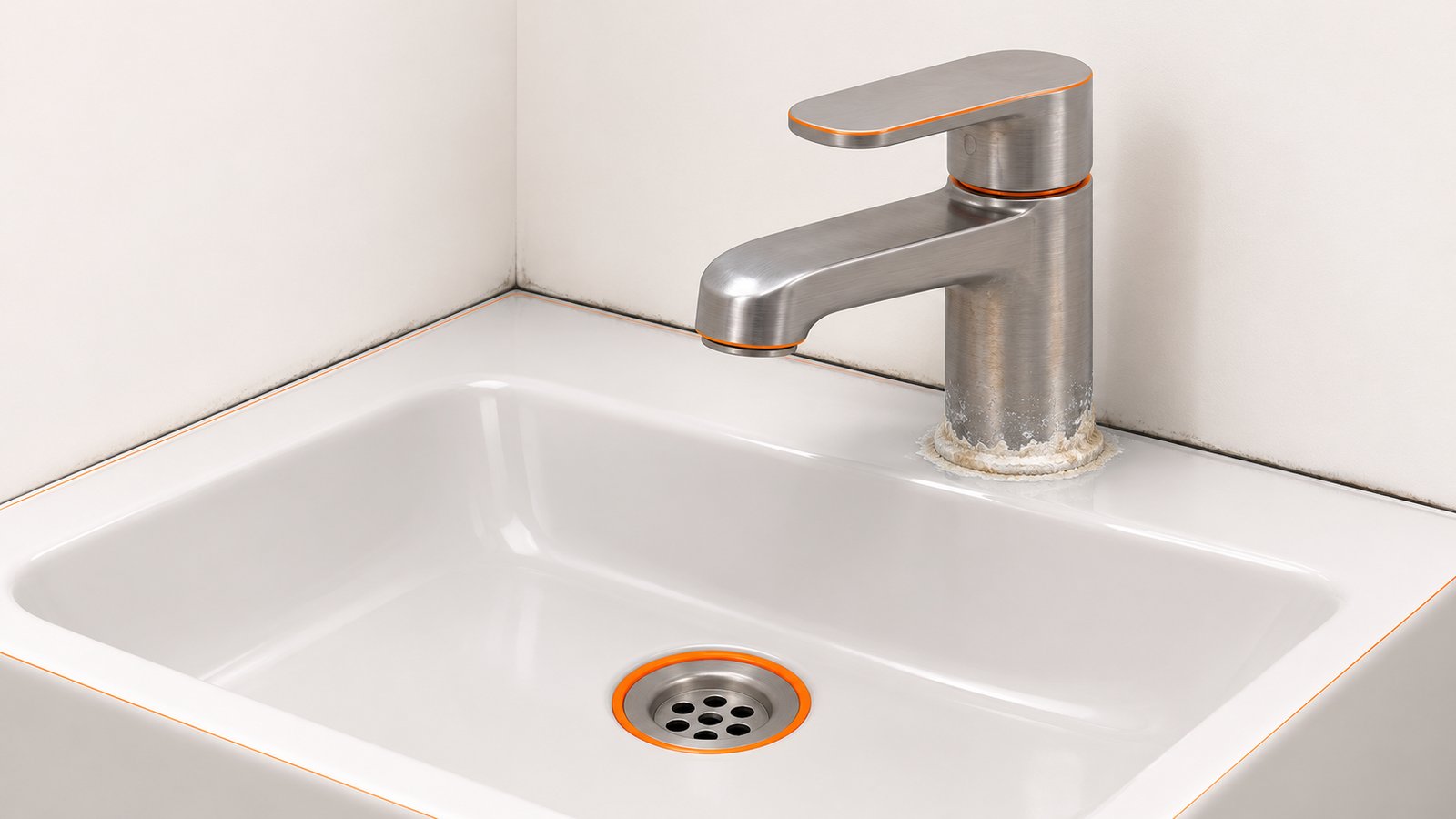
Mold vs Rust: The Quick Side-by-Side
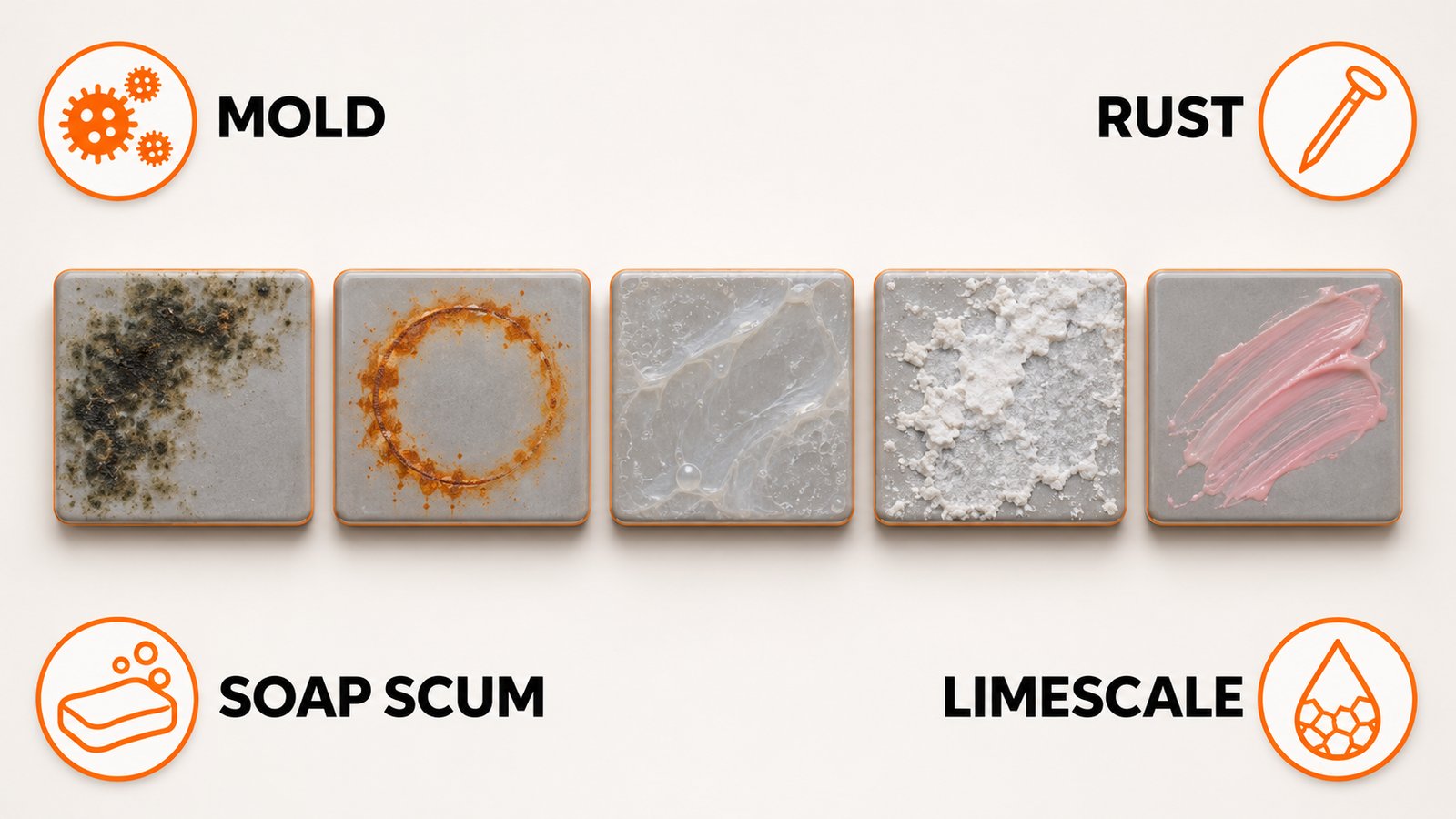
These are common patterns, not a test. Color alone never tells you what a spot is, and the EPA notes that molds come in many colors. What the deposit is made of and where it sits help more.
| Deposit | What it is | Where it tends to sit |
|---|---|---|
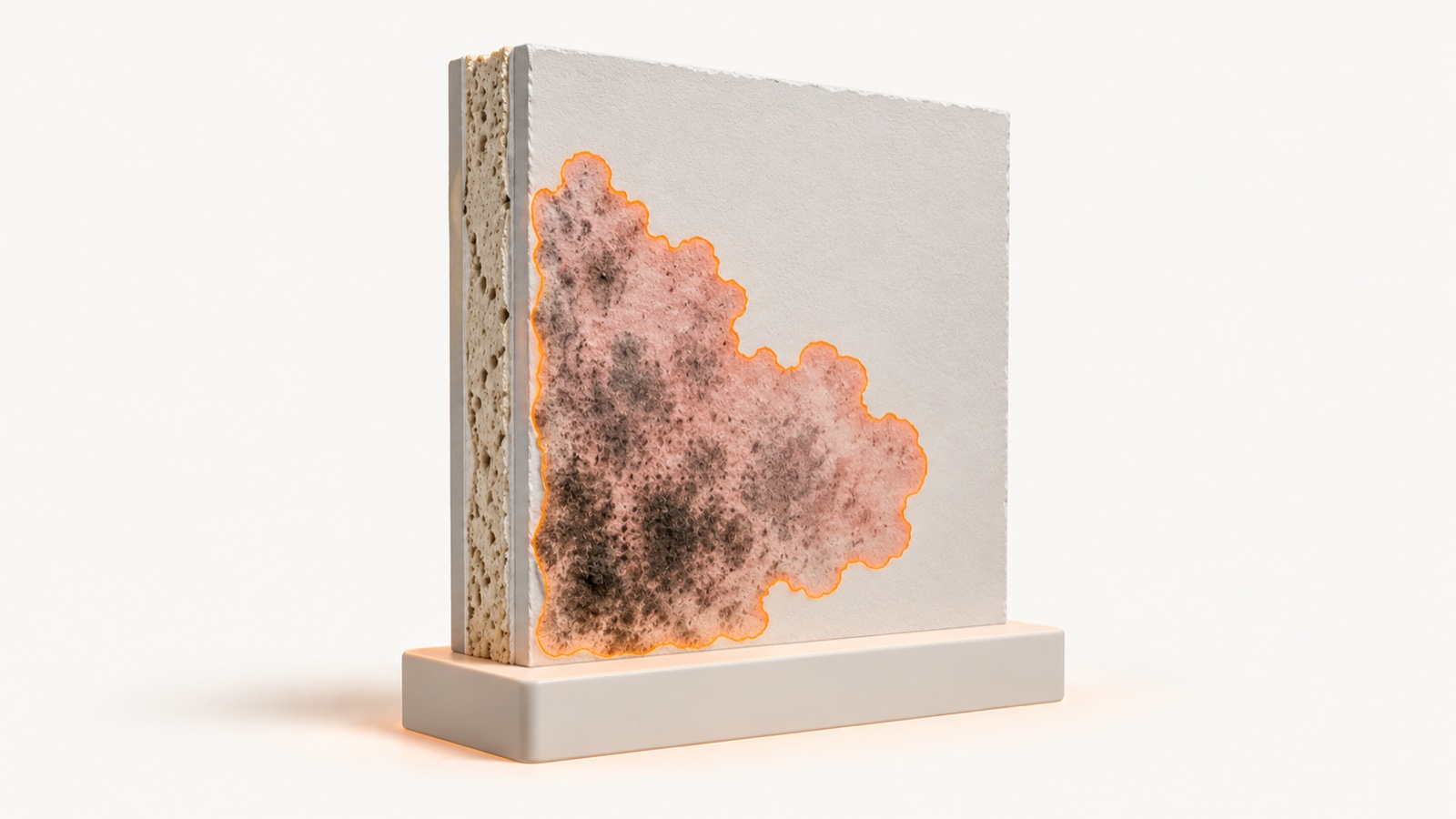
| Mold | A living growth. The EPA says none of the many types will grow without water or moisture. | Spots that stay damp: caulk lines, grout, ceiling corners, behind fixtures. |
| Rust | An iron stain. The EPA lists reddish or orange staining as an effect of iron. | Next to metal: drain rings, screws, steel cans, pipes, or where iron-rich water runs. |
| Soap scum | The USGS says soap reacts with the calcium in hard water to form it. | Glass, tile and tubs, anywhere soapy water runs and dries. |
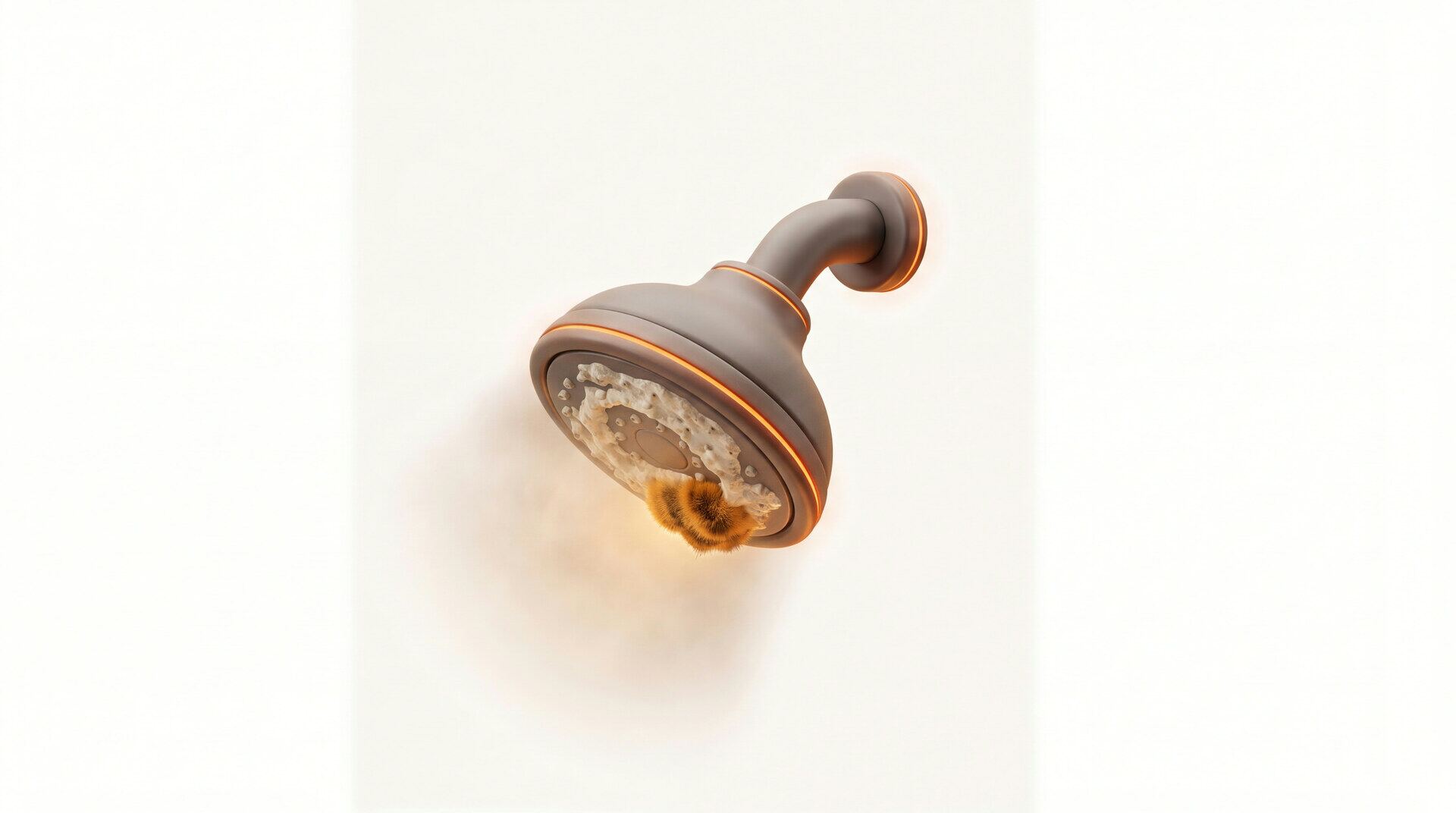
| Limescale | Calcium carbonate scale left by hard water, per the USGS. | Faucet bases, showerheads, glass, water-line rings. |
| Pink film | A water utility names a red or pink bacterium, Serratia marcescens, as the most common cause. | Drains, shower corners, toilet bowls, wet soap dishes. |
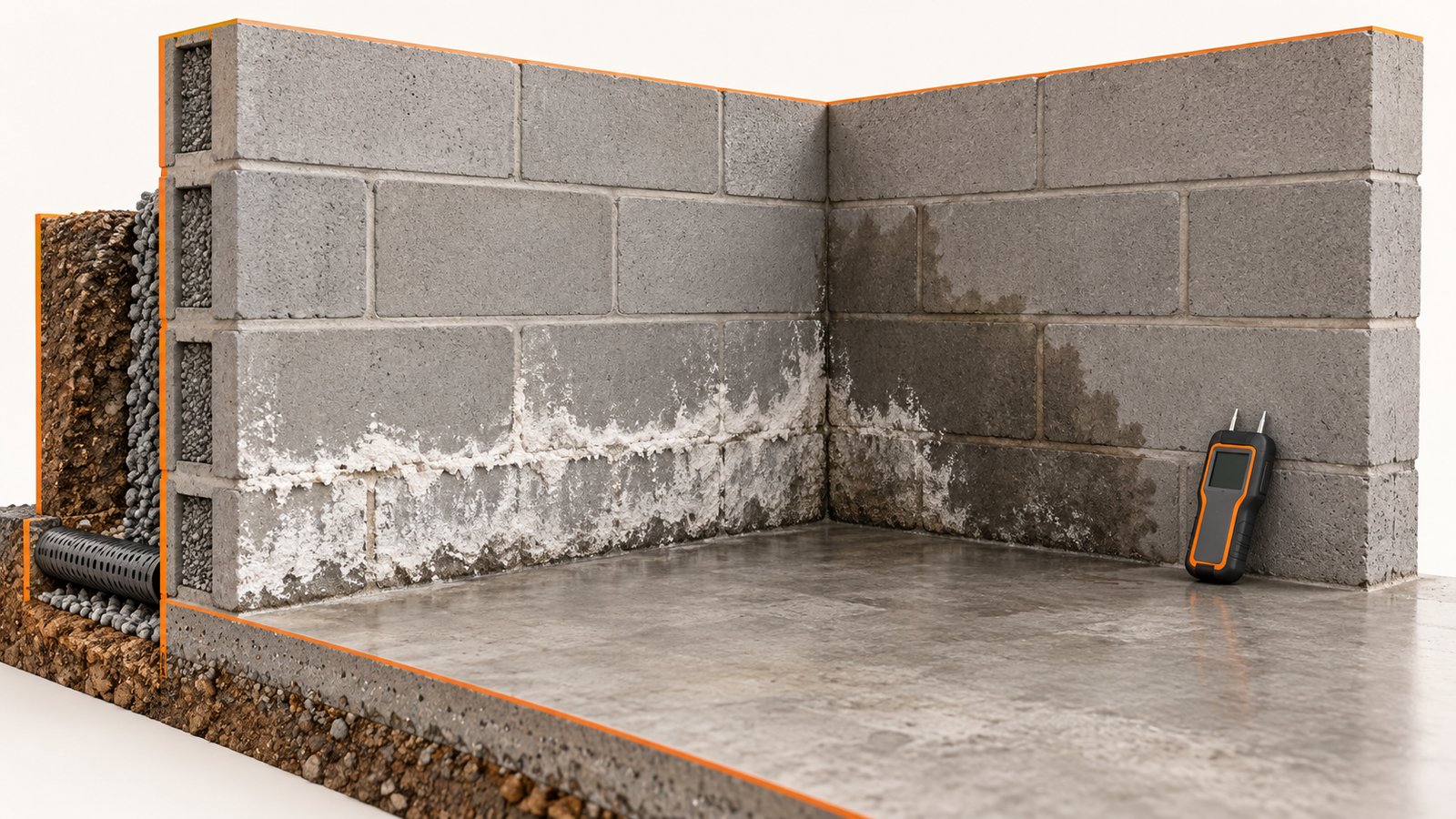
Mildew is a kind of mold, so it falls under the first row. Our mold vs mildew page covers that word. For masonry, where the white crust is a salt, see efflorescence vs mold.
Is It Mold or Rust?
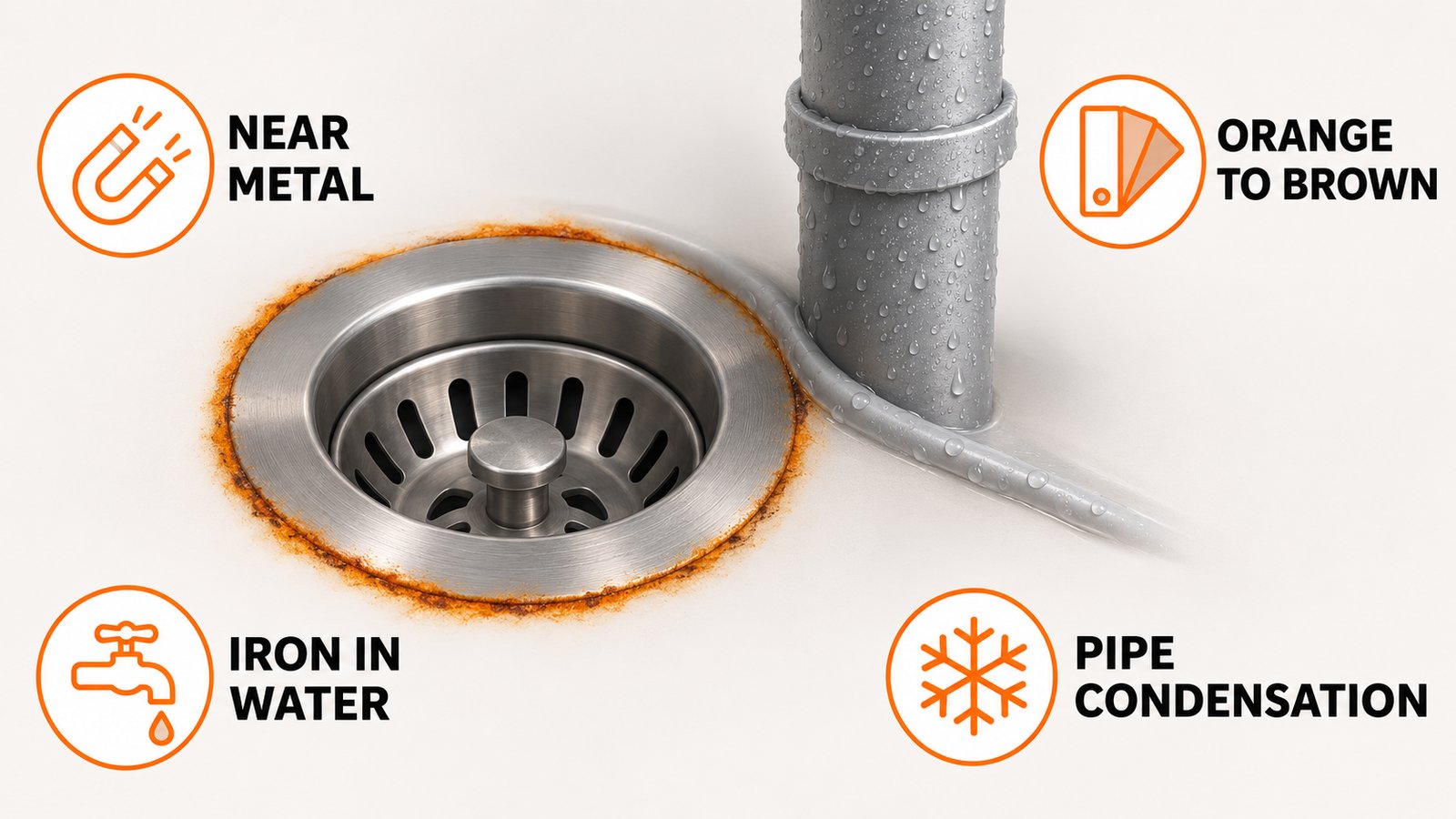
Rust is the easier one to rule in. The Natural Stone Institute describes iron or rust stains as orange to brown and says they follow the shape of the object that caused them, such as nails, bolts, screws, cans and metal furniture. If your orange mark has the outline of a drain ring or a razor dish, think rust first.
Rust can also come from the water. The EPA lists iron in drinking water with a rusty color, sediment and reddish or orange staining. The EPA treats iron as an appearance issue at the levels it sets, not a health threat. A stain at every faucet points to the water supply. A stain at one spot beside metal points to that metal.
Dark stains need the same care. The EPA lists manganese in water with black to brown color and black staining. So a dark ring at the waterline is not always mold either. This is why we say color alone does not identify a spot.
Here is where rust and mold meet. The EPA shows a photo of a drainpipe and says rust is an indicator that condensation occurs on that pipe, and that the pipe should be insulated. Rust on a pipe is a sign of repeated moisture. Mold needs moisture too, so look around that spot for growth as well.
If you cannot tell, a damp-cloth wipe is a fair first look. Mold and a loose film can both smear, so the wipe does not name the substance. It only shows whether you have a surface film or a stain that stays put. Then watch whether it returns where the area stays damp.
Soap Scum vs Mold
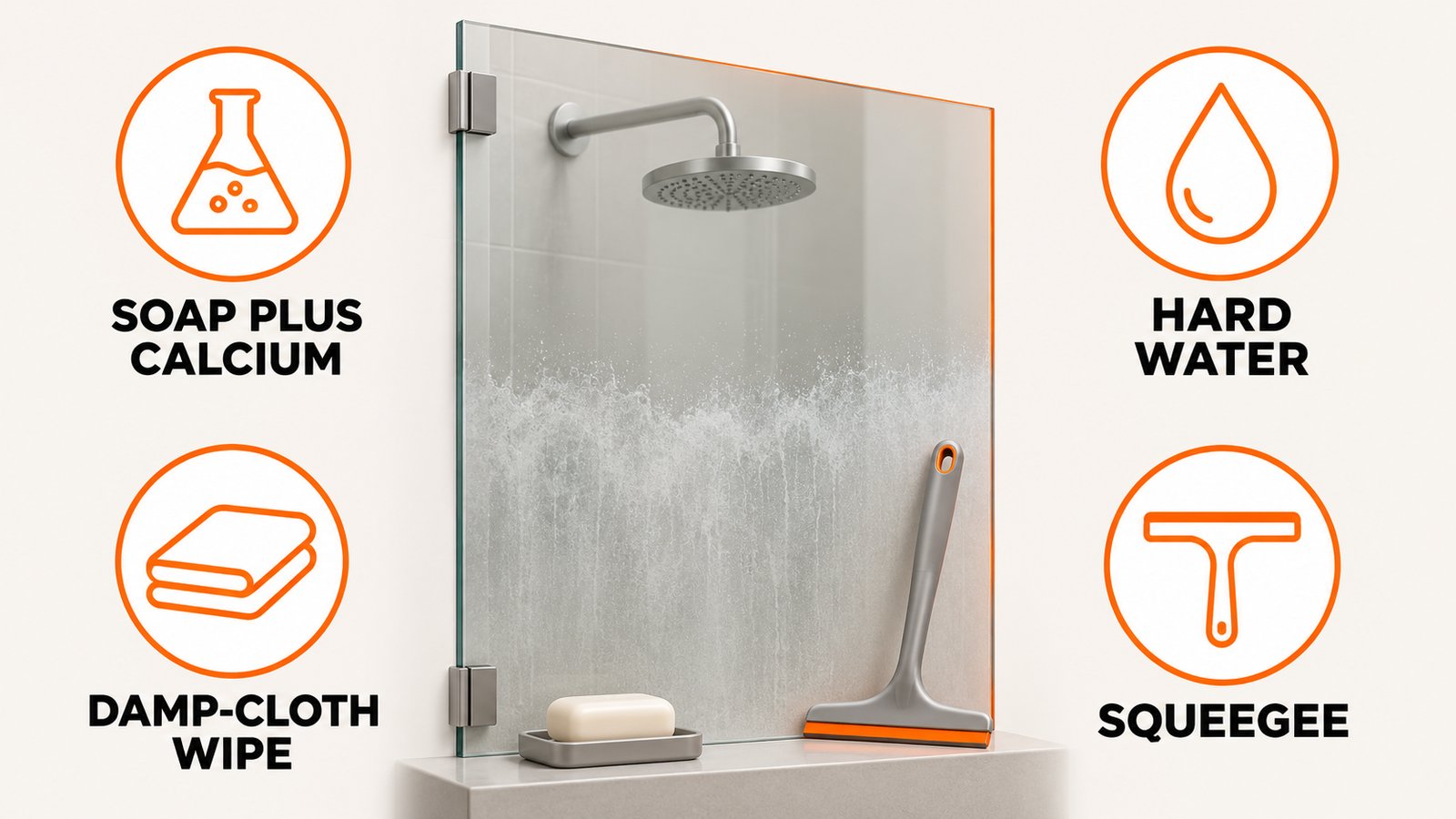
The USGS explains soap scum plainly: in hard water, soap reacts with the calcium to form it. So soap scum is a cleaning problem and a water problem, not a living thing. Our mold in shower page describes it as a whitish or light gray film that feels waxy and builds slowly on glass, tile and fixtures.
Two habits separate it from mold, and both are our own rule of thumb, not an agency test:
- Look at the spot, not just the color. A haze across a glass panel in the path of the water behaves like a film. Dark specks in caulk or one stubborn grout corner behave like growth.
- Treat a dark spot in caulk or grout as possible mold, even if soap scum is also on it. Those joints stay wet longest.
The Natural Stone Institute notes that in baths and other wet areas, soap scum can be minimized by using a squeegee after each use.
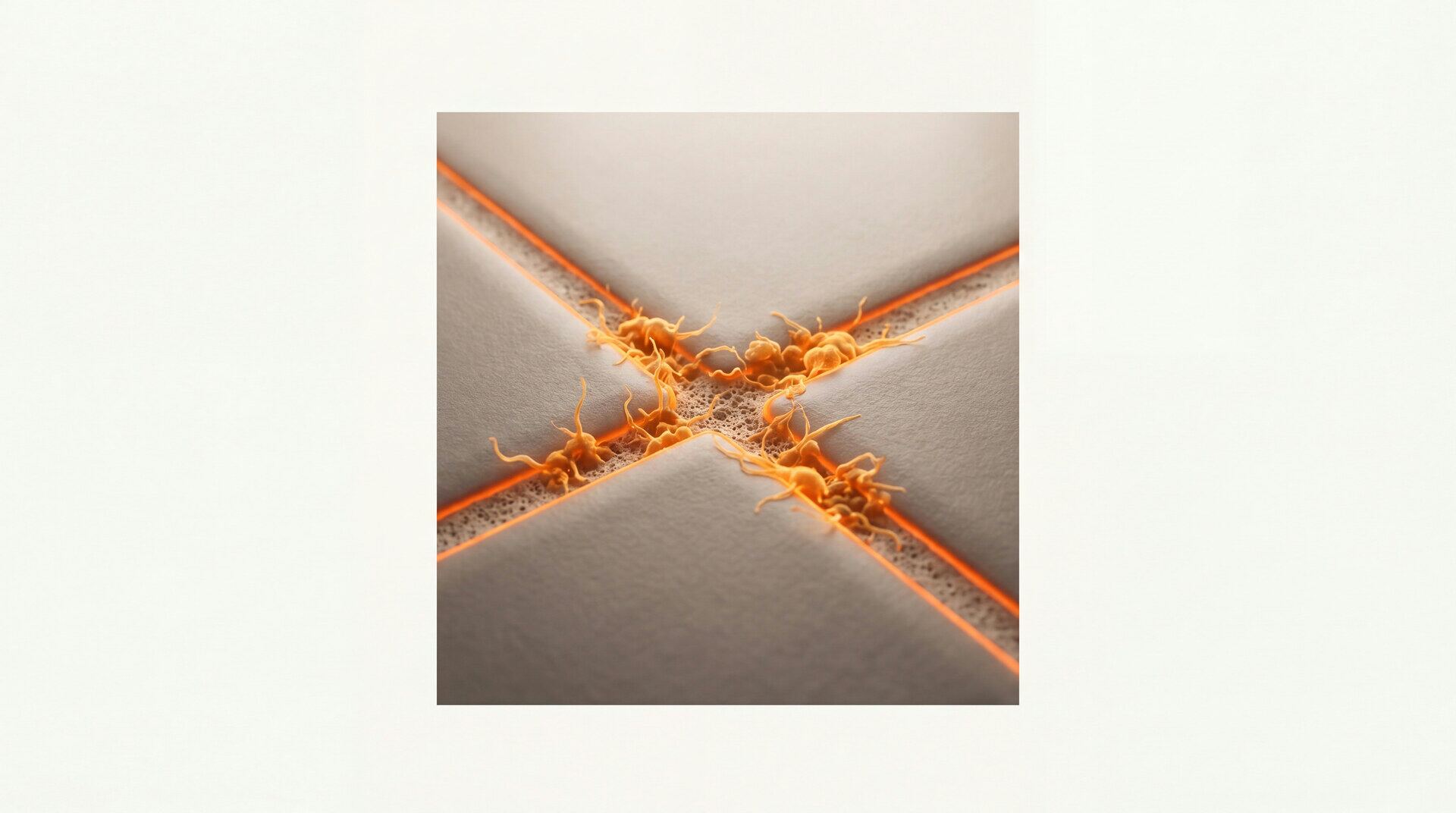
If the spot is in the joint and keeps coming back, read mold on caulk and mold on grout.
Limescale vs Mold
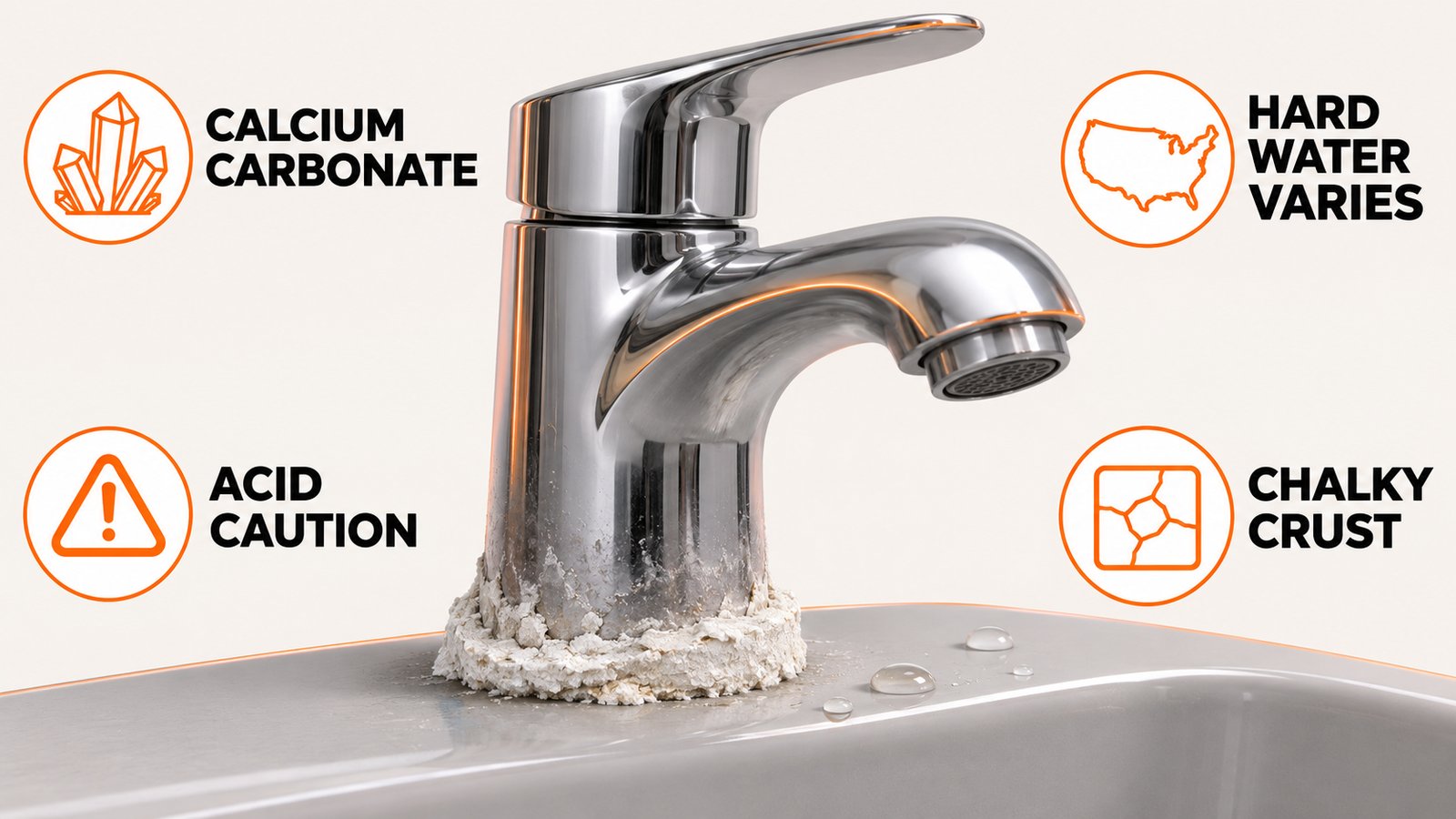
The USGS says hard water is high in dissolved calcium and magnesium, and that when hard water is heated, solid deposits of calcium carbonate can form. It calls hardness a nuisance, not a health concern, and says it varies across the United States. A hard crust at a faucet base fits that description.
A hard, chalky, dry crust that sits in rings at water lines is behaving like a mineral. White mold, by contrast, can look fuzzy or cottony, and our efflorescence vs mold page shows the water-drop check for white salts on masonry. On a fixture, the question is simpler: is the white stuff hard like a crust, or soft?
The USGS notes that vinegar, which is an acid, helps dissolve mineral particles, and gives the coffee maker as an example. Read the next part before you try it on a counter or a stone surface. The Natural Stone Institute says products with lemon, vinegar or other acids may dull or etch calcareous stones such as marble, limestone and travertine. Our vinegar page also says to skip it on natural stone.
Pink Film in the Shower: Mold or Something Else?
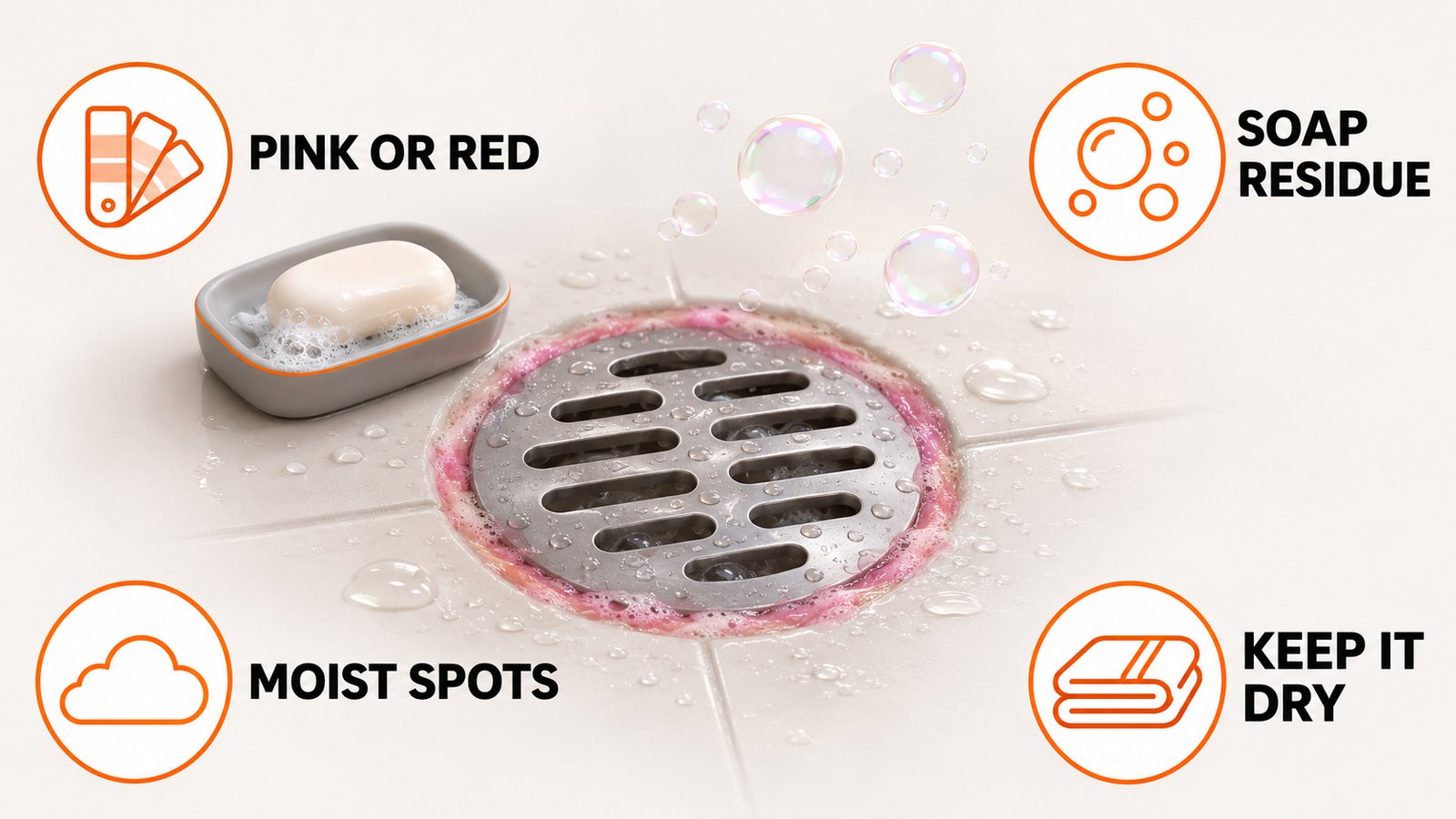
Gwinnett County's water department describes Serratia marcescens as a red or pink pigmented bacterium and the most common cause of the pink residue in sinks, showers and toilets. It says the bacterium grows in any moist place where phosphorous-containing materials or fatty substances collect, and soap residue is one of the sources it names.
That matches our shower page, which says pink residue is a bacterium and not black mold. The same utility says it usually cannot be eliminated entirely, and that keeping surfaces wiped and dry helps.
How to Clean Mold, Rust, Soap Scum and Limescale
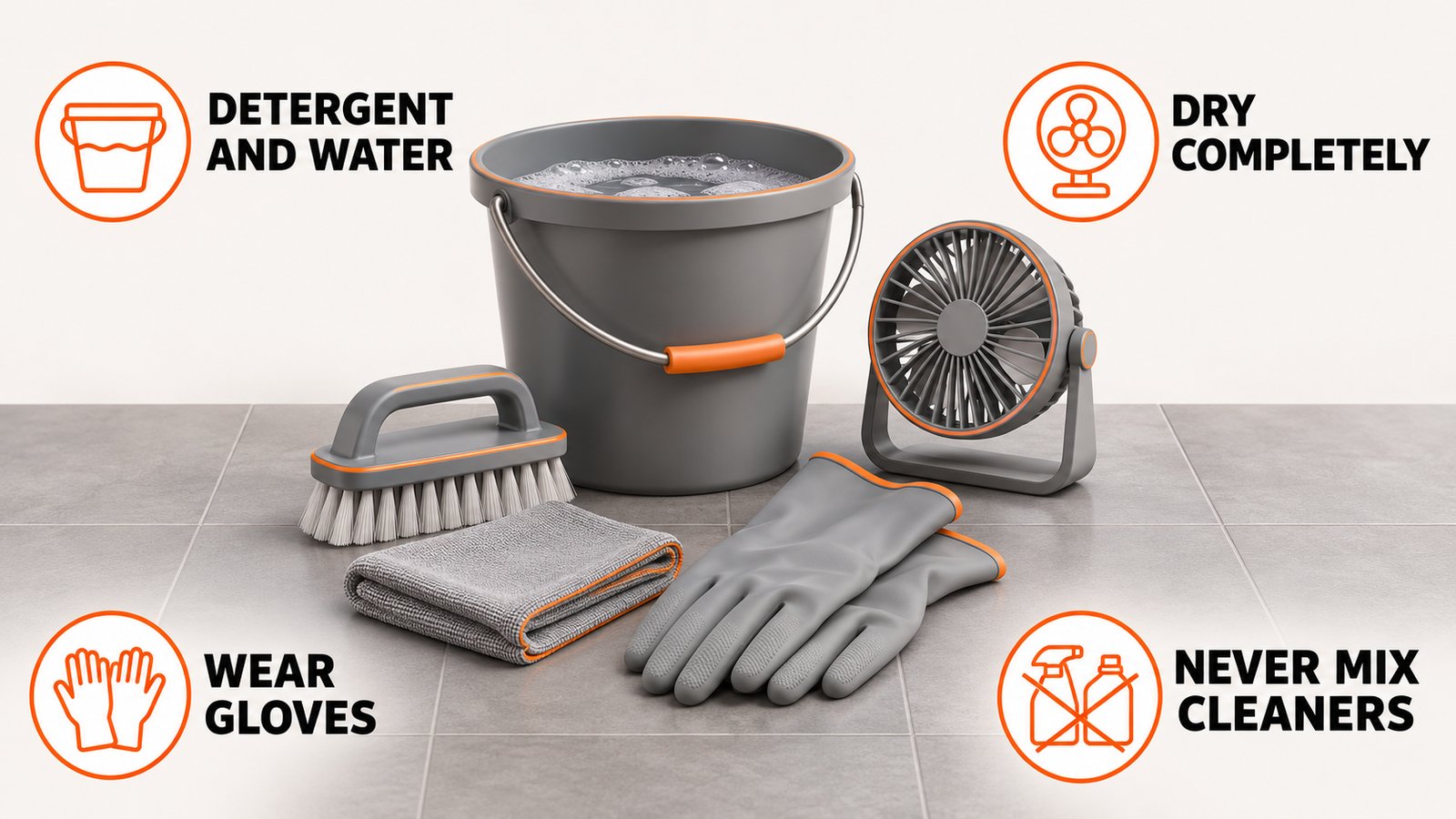
If it is mold. The EPA says to scrub mold off hard surfaces with detergent and water, and dry completely. It says dead mold may still cause allergic reactions in some people, so it must be removed, not just killed. It also says using a biocide such as chlorine bleach is not recommended as a routine practice during mold cleanup. Porous materials may have to be thrown away, and the EPA says not to paint or caulk over moldy surfaces. Wear gloves and ventilate. See mold on caulk and how to get rid of mold.
If it is soap scum or limescale. Use a cleaner made for the surface and follow its label. Keep acids off natural stone.
If it is rust. Use a rust remover only as the label allows. The Natural Stone Institute warns that many rust removers, including laundry rust stain removers and toilet bowl cleaners, contain trace levels of hydrofluoric acid, which attacks all stones, granite included.
Never mix chlorine bleach with ammonia. The EPA warns it can make toxic fumes.
If you still are not sure, clean with detergent and water, dry the spot, and watch it. If it returns where the area stays damp, treat it as growth. That is our rule of thumb, not an agency test. EPA says sampling is unnecessary in most cases when you can see growth.
How to Keep It From Coming Back

The EPA's bathroom tip fits all five deposits: if mold in the shower keeps reappearing, increasing ventilation (a fan or an open window) and cleaning more often will usually prevent it or keep it to a minimum.
- Watch humidity. The EPA says to keep indoor humidity below 60 percent, ideally between 30 and 50 percent, and says a humidity meter costs about $10 to $50. Our humidity risk calculator turns a reading into a plain picture.
- Dry fast. The EPA says wet materials dried within 24 to 48 hours help prevent mold growth.
- Stop condensation. The EPA says to insulate cold pipes and act quickly when moisture collects on windows, walls or pipes.
- Fix leaks.
- Squeegee wet surfaces after each use. The Natural Stone Institute says that keeps soap scum to a minimum in baths and other wet areas.
If the fan duct or the home's air system may be part of the moisture problem, use our HVAC moisture maintenance checklist. For the wider plan, read how to prevent mold.
When to Call a Pro
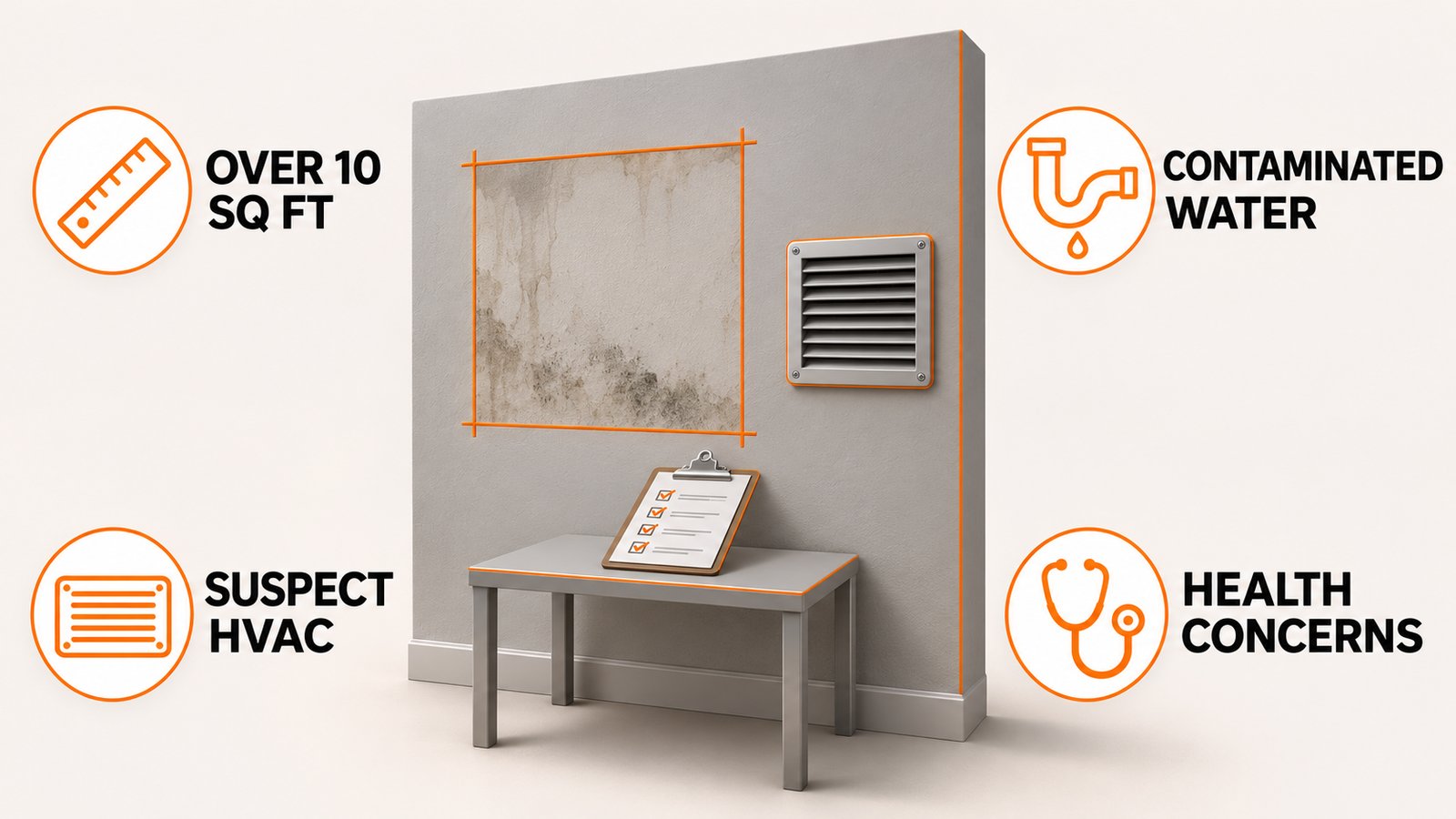
- Mold covers more than about 10 square feet, roughly a 3-foot by 3-foot patch. The EPA suggests a different cleanup approach above that size.
- Sewage or other contaminated water was involved. The EPA says to call in a professional with that experience.
- You suspect the HVAC system. The EPA says not to run it if you know or suspect it is contaminated.
- You have health concerns. The EPA says to consult a health professional before starting cleanup.
- Orange or black stains show at every faucet. The EPA suggests contacting your water supplier and asking about its monitoring. See also mold in bathroom and mold removal.
Frequently asked questions
Is rust the same as mold?
No. Rust is an iron stain, and mold is a living growth that needs moisture. The EPA lists reddish or orange staining as an effect of iron in water, and says mold will not grow without water or moisture. They can sit side by side on a damp pipe.
Can mold look orange or brown?
Yes. The EPA says molds come in many colors, so color alone cannot settle what a spot is.
How do I tell soap scum from mold?
Soap scum is a film that forms when soap reacts with the calcium in hard water, per the USGS. It tends to cover glass and tile in the path of the water. A dark spot in caulk or grout that returns is better treated as possible mold. That is our rule of thumb, not a lab test.
Is limescale mold?
No. The USGS describes limescale as calcium carbonate scale left by hard water.
Is pink slime in the shower mold?
A water utility says the most common cause of pink residue in showers, sinks and toilets is a red or pink bacterium called Serratia marcescens.
Should I use bleach to test whether a spot is mold?
No. We do not teach a bleach test as a way to identify mold. The EPA says a biocide such as chlorine bleach is not recommended as a routine practice in mold cleanup, and says never to mix bleach with ammonia-based cleaners.
Do I need a mold test to find out?
Usually not. The EPA says that in most cases, if visible mold growth is present, sampling is unnecessary.
Sources
Every claim on this page traces to one of these. Links open the primary document.