
Does Borax Kill Mold?
There is real chemistry here, and it is worth separating from the internet folklore around it.
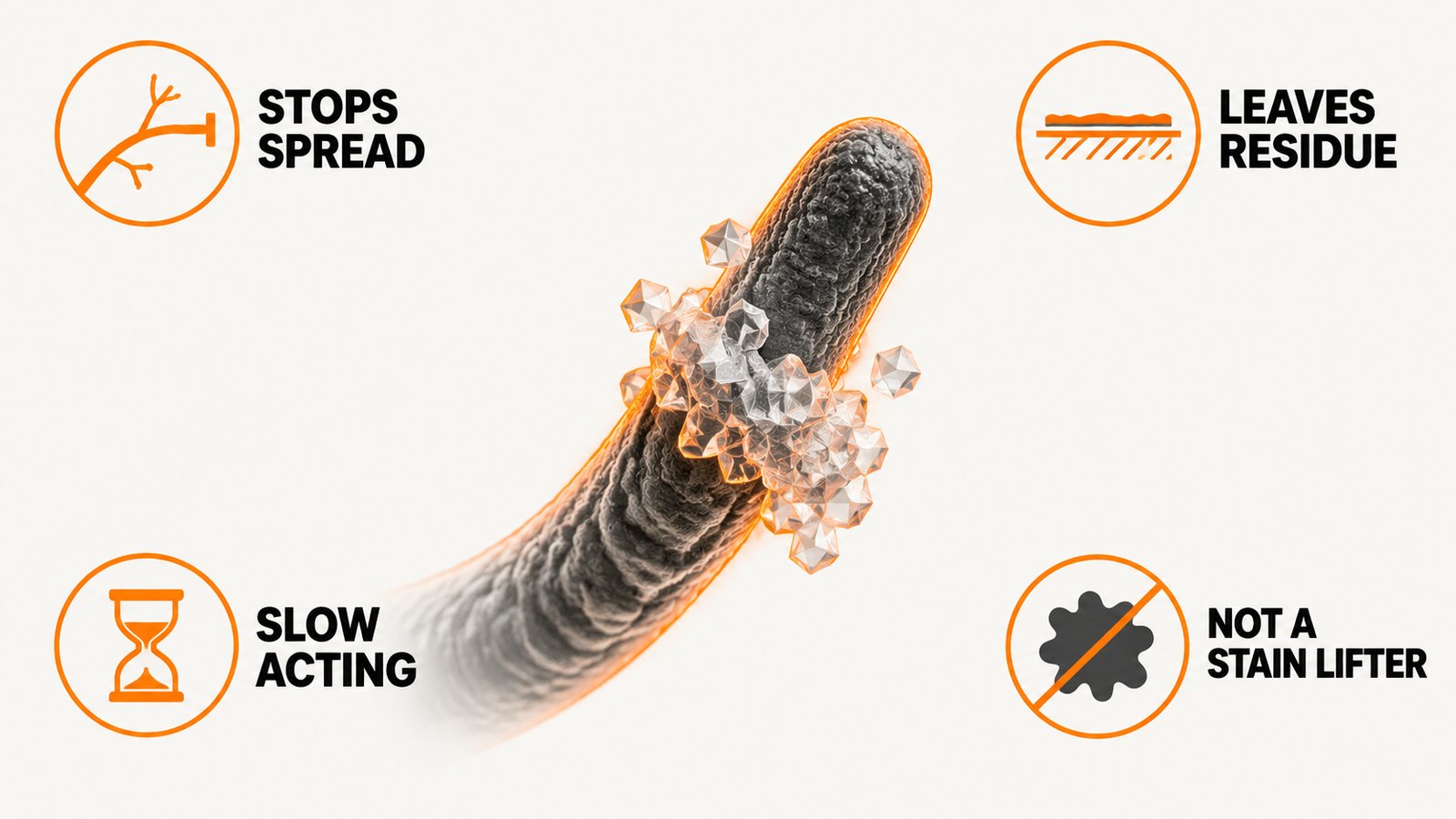
The National Pesticide Information Center, a cooperative agreement between Oregon State University and the EPA, publishes a fact sheet on boric acid and its sodium borate salts. Borax is named there as one of the most common of those products. On what they do, the fact sheet is direct: boric acid and its sodium salts can be used to control a wide variety of pests, and that list explicitly includes molds and fungi. On mechanism, it is more specific still. Boric acid can stop the growth of fungi, such as mold, and it prevents them from reproducing.
Read that mechanism sentence carefully, because it is the whole story. Stopping reproduction is not the same as killing a colony on contact. Borax is closer to a growth inhibitor than to a fast-acting fungicide, which is why it is slow, why the residue matters, and why it will not make a stain disappear the way a bleach-based product does.
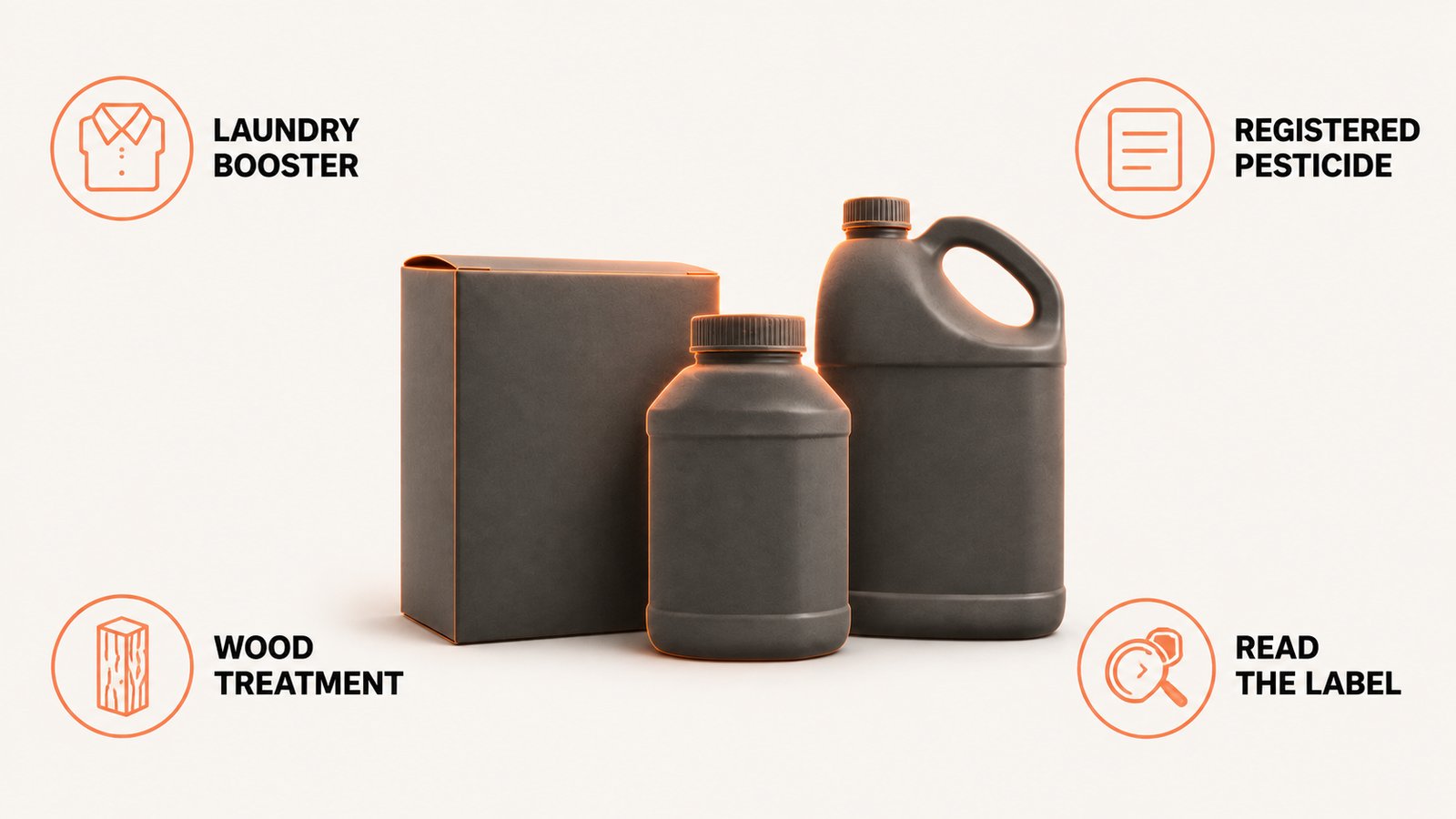
The second thing worth knowing is what your box of borax legally is. Products containing boric acid have been registered as pesticides in the United States since the late nineteen forties, and there are over five hundred of them on the market. But the same fact sheet lists a separate category of non-pesticide products that contain boric acid, and that category includes household cleaners and laundry detergents. The laundry booster on a supermarket shelf sits in that second group. It carries no EPA-registered mold-use label, which means there is no official application rate, no approved surface list, and no efficacy claim behind it.
So: the active chemistry inhibits mold, and it is well documented. The box in the laundry aisle is not sold or regulated as a mold treatment. Both things are true at once, and most articles on this subject only tell you one of them.
Borax Against Boric Acid and Borate Wood Treatments
Three related products get used interchangeably in conversation and are not interchangeable in practice.
| Product | What it is | Mold label? | Typical use |
|---|---|---|---|
| Laundry borax | A sodium borate salt sold as a laundry booster | No, it is a non-pesticide product | DIY surface cleaning, no approved rate |
| Boric acid pesticide products | Registered pesticides in many forms | Depends on the specific label | Insect and fungal control per label |
| Borate wood treatments | Concentrated borate solutions for lumber | Yes, where the label says so | Framing, crawl spaces, new construction |
The practical read: if you want a documented, labeled mold treatment for bare wood framing, buy a borate wood product and follow its label. If you want a cheap household cleaner that also inhibits regrowth on a surface you can keep dry, laundry borax is a reasonable choice with no official claim behind it. Do not confuse the two, and do not assume the laundry box carries the wood product's performance.
Against the other kitchen-cupboard options, borax lands in a specific spot. Vinegar is acidic and soaks into porous material. Bleach is a strong oxidizer that removes staining and struggles below the surface. Hydrogen peroxide is an oxidizer that bleaches less aggressively. Borax is the one that leaves a residue behind on purpose, which is its only real advantage over all three.
How to Clean Mold With Borax, Step by Step
Because there is no registered mold label on laundry borax, there is no official application rate. The ratio DIY guides repeat is one cup of borax per gallon of warm water, and it is worth saying plainly that this number comes from convention rather than from a label. Use it as a starting point, not as an instruction from an authority.
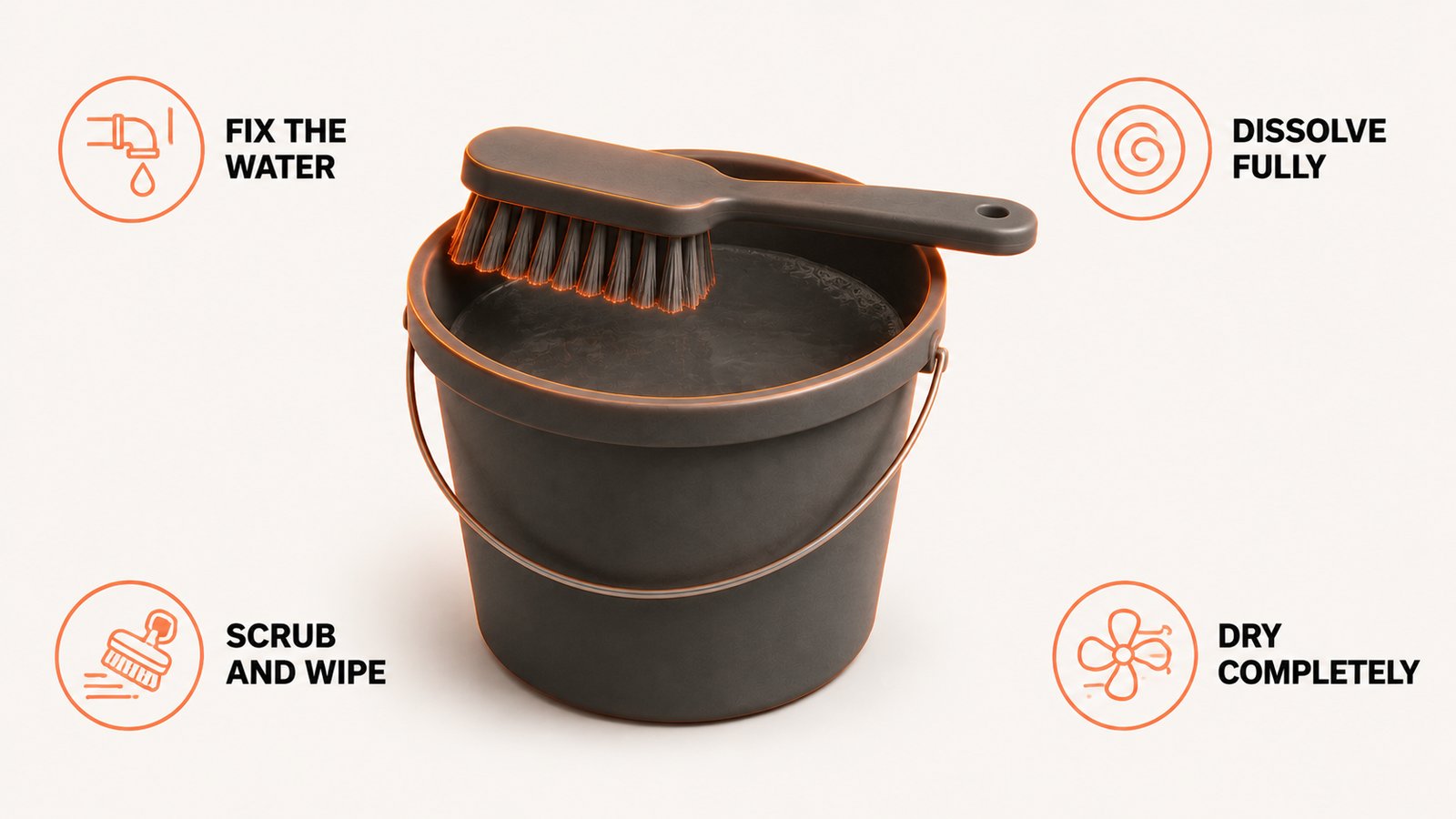
- Fix the water first. The EPA is explicit that the way to control indoor mold growth is to control moisture. Borax on a wall that is still getting wet is a wasted afternoon.
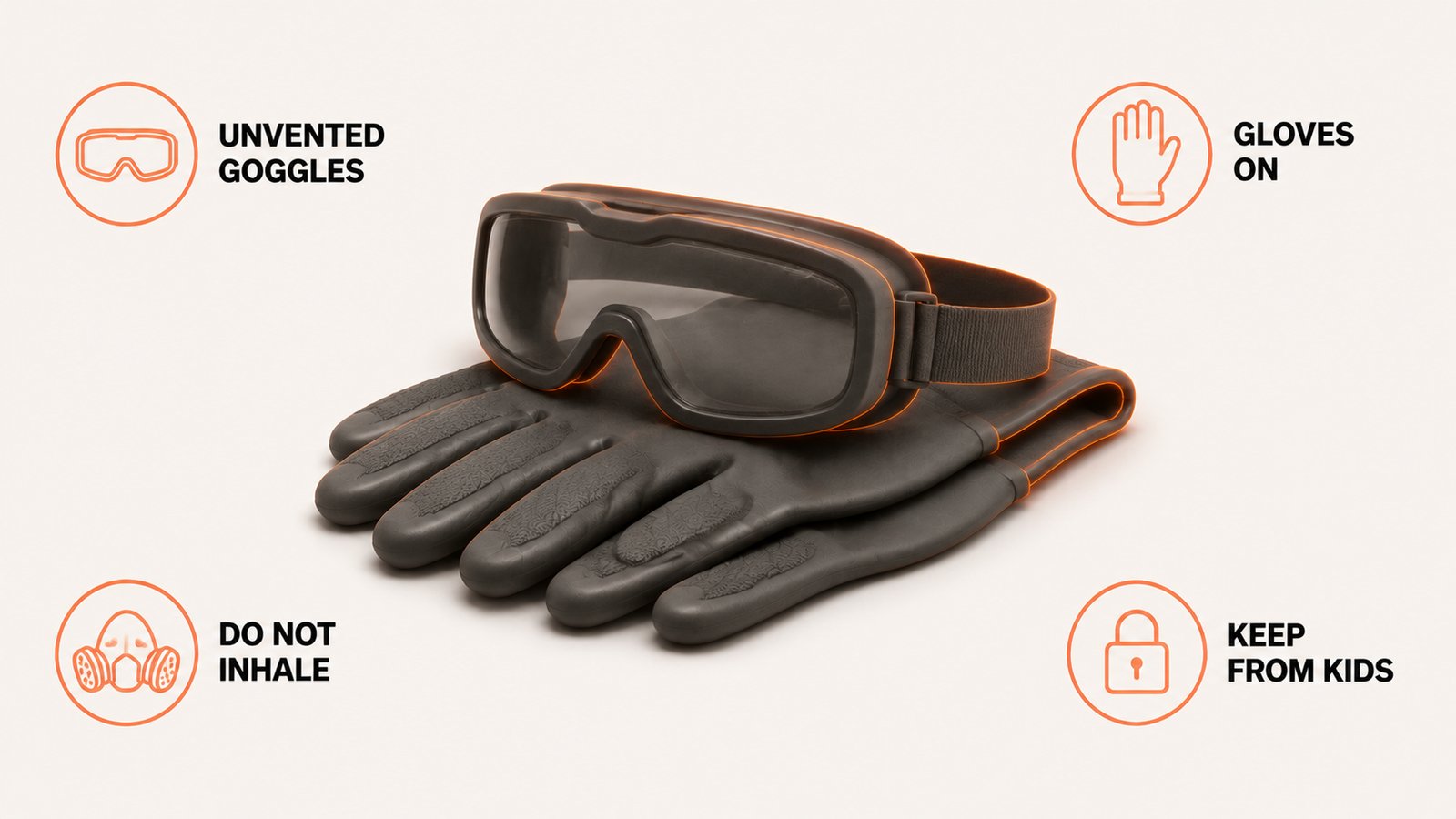
- Put protective gear on. The EPA calls for gloves, goggles without ventilation holes, and an N95 respirator for mold cleanup, and notes those respirators run roughly $12 to $25 at hardware stores. Borax adds its own reason: the NPIC fact sheet notes borax can be corrosive to the eye and irritating to skin.
- Vacuum or brush loose growth off first where you can do it without throwing spores into the room, and ventilate while you work.
- Dissolve the borax fully in warm water. Undissolved grit does nothing but leave a white film.
- Apply and scrub. A stiff brush on hard surfaces, a soft one on anything that scratches. The EPA's baseline instruction for hard surfaces is scrubbing with detergent and water, and borax is functionally a detergent booster in this step.
- Wipe the residue and material away. The EPA notes dead mold may still cause allergic reactions, so it has to come off the surface rather than just stop growing.
- Do not rinse, on surfaces where a residue is acceptable. Leaving a thin borax film behind is the entire point of using it, because the boron keeps inhibiting regrowth while it stays dry. On food-contact surfaces, children's furniture, and anywhere pets lick, rinse it off instead.
- Dry the surface completely. Fans, a dehumidifier, or an open window. Borax residue that gets wet again washes away and stops doing anything.
The whole approach only pays off on a surface that stays dry afterward. How to get rid of mold covers the full sequence, and mold on wood covers the material where borax has the strongest case.
Where Borax Fails
Four situations where reaching for borax is the wrong call.
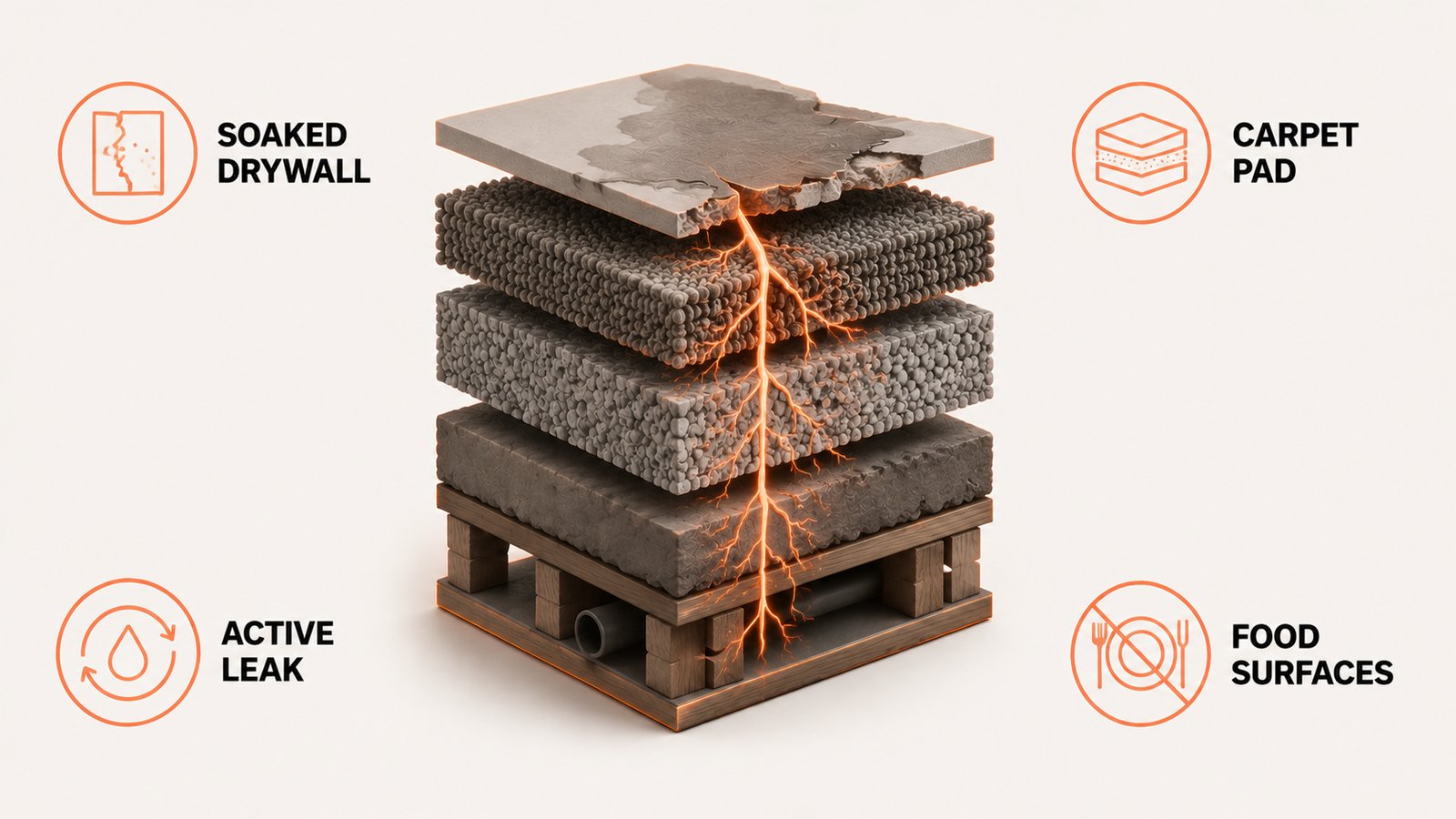
Porous material that has soaked through. The EPA states that absorbent or porous materials such as ceiling tiles and carpet may have to be thrown away if they become moldy, because mold grows into the crevices of porous material and can be difficult or impossible to remove completely. Soaked drywall paper, carpet padding, and insulation are replacement jobs. No solution changes that, and mold on drywall covers where the cut line falls.
You want the stain gone. Borax inhibits growth. It is not a strong bleaching agent, so dark staining in grout or on wood often survives the treatment and has to be handled separately. If the visual result is what you are after, that is a job for a bleach-based cleaner or a dedicated stain remover.
The moisture source is still running. A residue that keeps working while dry does nothing on a surface that keeps getting wet. Find the leak, the failed seal, or the humidity problem first. The EPA advises drying water-damaged areas and items within 24 to 48 hours and keeping indoor humidity below 60 percent, ideally between 30 and 50 percent.
Surfaces people and pets contact directly. Borax is a pesticide active ingredient in its registered forms, and the NPIC fact sheet notes exposures can occur when products are accessible to children or pets, and that infants are more sensitive to pesticide exposures. Counters, cutting boards, high chairs, and pet bedding are the wrong place to leave a deliberate chemical residue. Use detergent and water there instead.
Where borax genuinely earns its place: bare wood framing in a crawl space or attic, unfinished basement surfaces, garage walls, and storage areas. Places that stay dry after the repair, that nobody eats off, and where an invisible film is a feature rather than a hazard.
Borax Safety and When to Use Something Else
Handle borax the way you would handle any pesticide active ingredient, because in its registered forms that is what it is.
- Eyes and skin. The NPIC fact sheet states that boric acid is low in toxicity if eaten or on skin contact, but that in the form of borax it can be corrosive to the eye, and that borax can be irritating to the skin. Goggles without ventilation holes, and gloves.
- Do not breathe the powder. The same fact sheet reports that people who breathed in borax had a dry mouth, nose, and throat, with coughing, sore throat, shortness of breath, and nose bleeds also reported. Mix it into water rather than dusting it, and ventilate.
- Keep it away from children and pets. NPIC notes exposures can occur when products are accessible to children or pets, and that infants are more sensitive to pesticide exposures. Store it closed and high.
- Follow the label. Whatever product you buy, its own first aid and handling instructions override anything on a web page, including this one.
- Never mix it into a bleach solution or any cleaner containing ammonia. The EPA warns that mixing chlorine bleach with ammonia-containing cleaners can produce toxic fumes. One product at a time, rinsed and dried between.
Stop and hire a professional when the moldy area is larger than about 10 square feet, roughly a 3 foot by 3 foot patch, which is the EPA's own line for handling cleanup yourself. Also when there has been extensive water damage, when the water came from sewage or floodwater, when growth is inside the heating and cooling system, or when it keeps returning in the same spot after cleaning. If anyone in the home is immune-compromised or has chronic lung disease, the CDC notes people in those groups may get infections in their lungs from mold, which makes it a physician's question and a professional's job.
This page covers cleaning products, surfaces, and protective equipment only. It offers no medical advice. Mold remediation covers what a professional job includes, and best mold removal products covers the labeled alternatives.
Frequently asked questions
Does borax kill mold?
It inhibits it rather than killing it on contact. The National Pesticide Information Center states that boric acid can stop the growth of fungi, such as mold, and that it prevents them from reproducing. That makes borax a growth inhibitor with a useful residual effect, not a fast-acting fungicide. Boric acid and its sodium salts are listed as controlling a wide variety of pests including molds and fungi.
Is laundry borax an approved mold treatment?
No. NPIC lists laundry detergents and household cleaners among non-pesticide products that contain boric acid, separate from the registered pesticide products. The box in the laundry aisle carries no EPA-registered mold-use label, so there is no official application rate, no approved surface list, and no efficacy claim behind it.
How much borax do I mix with water for mold?
There is no label rate, because laundry borax is not sold as a mold product. The ratio DIY guides repeat is one cup of borax per gallon of warm water. Treat that as convention rather than instruction, dissolve it fully so it does not leave grit, and follow whatever the actual product label on your container says about handling.
Should I rinse borax off after cleaning mold?
It depends on the surface. Leaving a thin residue is the main reason to use borax at all, because the boron keeps inhibiting growth while it stays dry, so on bare framing, unfinished basement walls, and garage surfaces most people leave it. On food-contact surfaces, children's furniture, and anywhere pets reach, rinse it off and use detergent and water instead.
Is borax safer than bleach for mold?
Different risks, not lower risks. Borax does not produce chlorine fumes, which is a real advantage in a closed room. But NPIC notes borax can be corrosive to the eye and irritating to the skin, and that people who breathed it in reported dry mouth, nose and throat, coughing, sore throat, shortness of breath, and nose bleeds. Wear gloves and unvented goggles either way, and never mix it into bleach or an ammonia cleaner.
Will borax remove the black staining?
Usually not. Borax works by inhibiting growth, not by oxidizing pigment, so dark staining in grout, on wood, or on painted surfaces often survives the treatment. If the visual result is what you need, that is a separate step with a bleach-based cleaner or a dedicated stain remover after the growth is gone.
Can I use borax on drywall or carpet?
Only on surfaces that are lightly affected and will stay dry. The EPA states that absorbent or porous materials such as ceiling tiles and carpet may have to be thrown away if they become moldy, because mold fills the crevices of porous material and can be impossible to remove completely. Soaked drywall paper and carpet padding are replacement jobs, not cleaning jobs.
Sources
Every claim on this page traces to one of these. Links open the primary document.