What each test actually measures
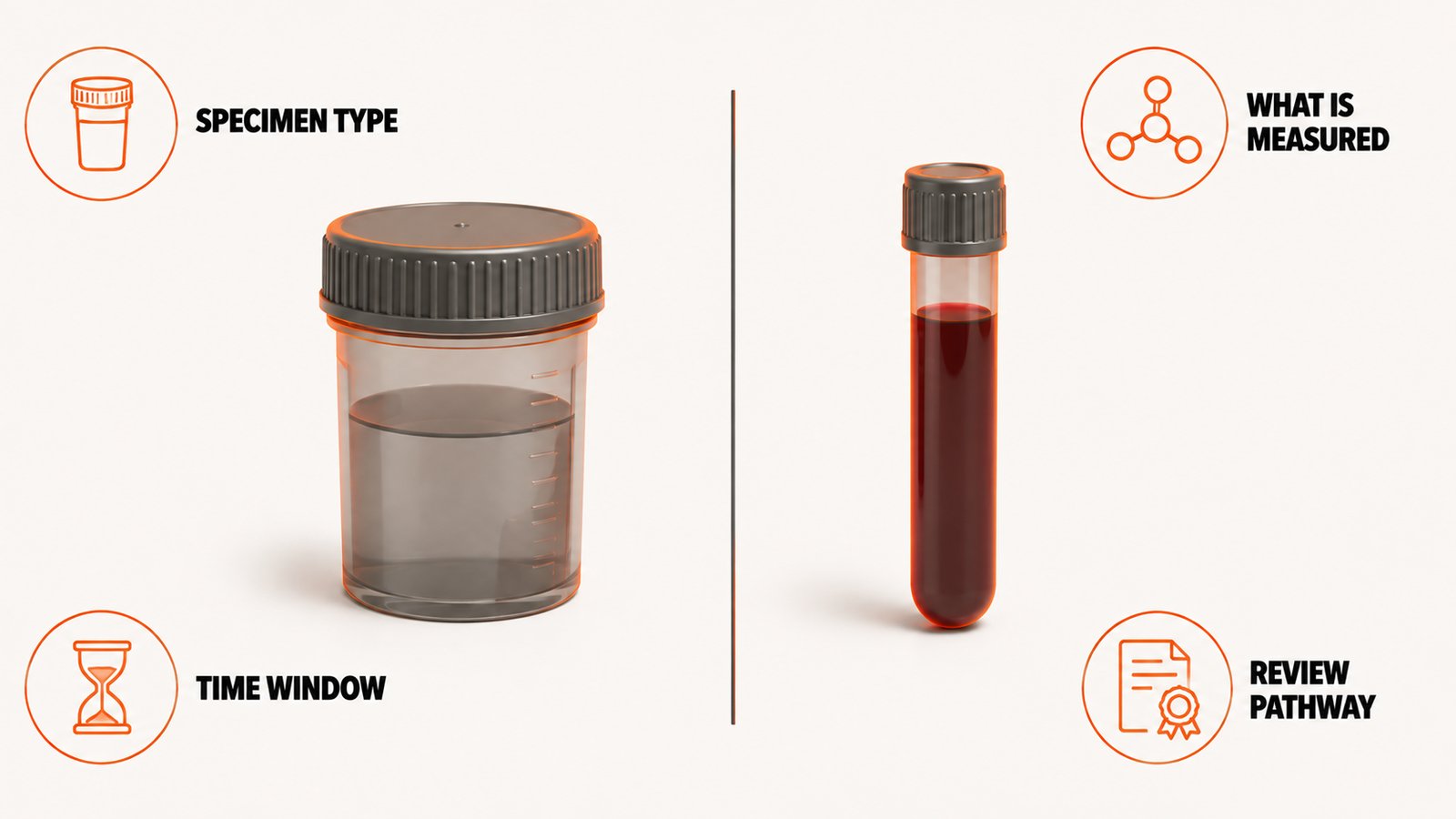
People shop these two tests as if they were competing brands of the same product. They are not. One looks for substances in a sample, the other looks for your body's reaction to a substance.
| Mycotoxin urine test | Mold blood test | |
|---|---|---|
| Specimen | Urine, usually a first-morning sample collected at home. | Blood drawn at a laboratory or a collection site. |
| What the analysis targets | Selected mold-derived compounds, or their metabolites, present in the sample. | Your immune system's response, typically antibodies to specific mold proteins. |
| What it is about | Substances that entered the body, from any source, in a recent window. | Sensitization, meaning whether your immune system reacts to that protein. |
| Where it is well established | Population research on dietary exposure. Urinary aflatoxin is a standard food-safety biomarker. | Allergy practice, where mold allergy is one of the well-defined mechanisms of mold-related disease. |
| Regulatory status | Typically a laboratory developed test. FDA's 2024 rule covering these was vacated in court in 2025. | Specific antibody assays are long-established clinical laboratory tests ordered by clinicians. |
| What neither one does | Neither test samples your building, locates a moisture source, or tells you which room a result came from. A laboratory result about a person is not a survey of a house. | |
That last row is the reason most of the confusion exists. Both tests are sold into a moment when someone suspects their home is the problem, and neither one samples the home. The site's guide to mycotoxin testing covers the environmental side of the same question, including what ERMI and HERTSMI-2 measure and do not measure.
The mycotoxin urine test, in plain terms
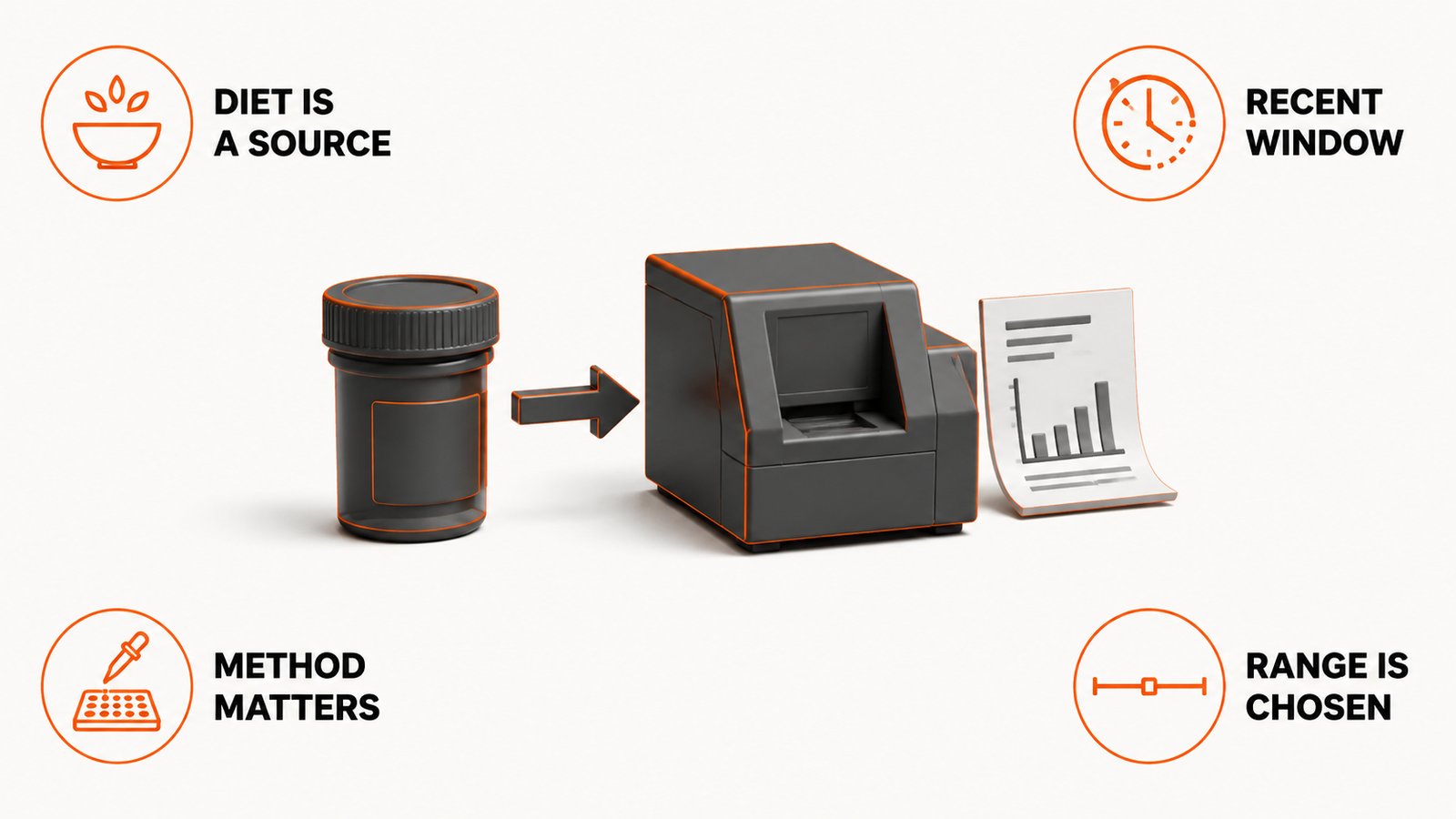
A urine panel looks for a list of mold-derived compounds, or the metabolites the body makes from them, in a sample you usually collect at home and mail in. Several laboratories sell versions of this to consumers, and the site reviews some of them, including Mosaic Diagnostics and RealTime Laboratories.
The measurement itself is real science with a well-defined use. Urinary mycotoxin biomarkers are a standard tool in food-safety research. A 2026 study nested in a population cohort of 9,462 rural adults in Chile measured urinary aflatoxin M1 in 1,000 randomly selected first-morning samples and detected it in 29.2 percent of the 905 samples analyzed. The risk factors that reached significance were fresh and dried red chilli consumption, current smoking and moderate fatty liver. In other words, the strongest published signal in a general population traces to what people ate.
That is exactly why a detection is hard to point at a room. The World Health Organization describes mycotoxins as compounds produced by molds growing on crops and foodstuffs including cereals, nuts, spices, dried fruits, apples and coffee beans, often under warm and humid conditions. A test that finds a compound in a person cannot say whether it arrived through breakfast or through a wall.
Most of these panels are laboratory developed tests. FDA issued a final rule in May 2024 that would have brought laboratory developed tests explicitly under its in vitro diagnostic definition, a federal district court vacated that rule on March 31, 2025, and FDA reverted the regulation on September 19, 2025. So the usual oversight is the CLIA program run by CMS, which regulates laboratory testing performed on humans and sets quality standards intended to make results accurate, reliable and timely. CLIA is about how the laboratory operates. It is not a finding that a particular panel means what a marketing page says it means.
The mold blood test, in plain terms
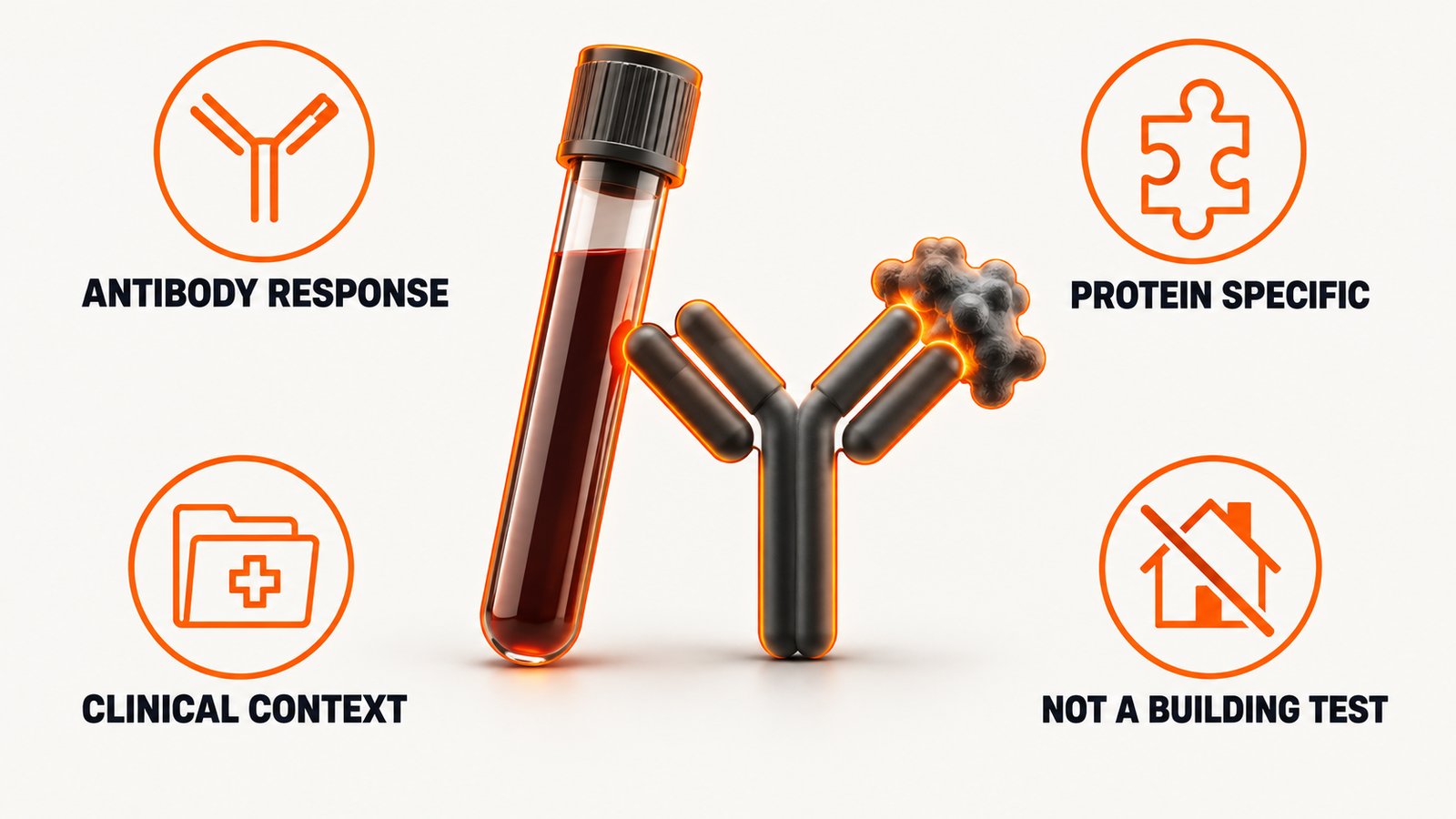
Blood testing in this space usually means a specific antibody assay: the laboratory measures antibodies against defined mold proteins to see whether your immune system recognizes them. Some consumer-facing services offer panels of their own, such as the one covered in our MyMycoLab review.
Antibody testing sits inside established allergy practice. The position paper on the medical effects of mold exposure published in the Journal of Allergy and Clinical Immunology reviews the mechanisms by which molds are known to cause human disease, naming asthma, allergic rhinitis, allergic bronchopulmonary aspergillosis, sinusitis and hypersensitivity pneumonitis. The same paper states directly that many newer mold-related illnesses hypothesized in recent years remain largely or completely unproved, and it reviews the evidence for each.
Sensitization is not the same thing as illness. A measurable antibody response tells a clinician that your immune system recognizes that protein. Whether that explains how someone feels is a clinical judgment made with a history, an examination and the rest of the record, which is precisely why this page does not attempt it. Our overview of mold allergy covers the general subject without diagnosing anyone.
Ordering matters. A clinician-ordered test comes with someone who is responsible for interpreting it against your history. A direct-to-consumer panel arrives as a number and a reference range on a page, with the interpretation left to you, which is the part that goes wrong.
What neither test says about your house
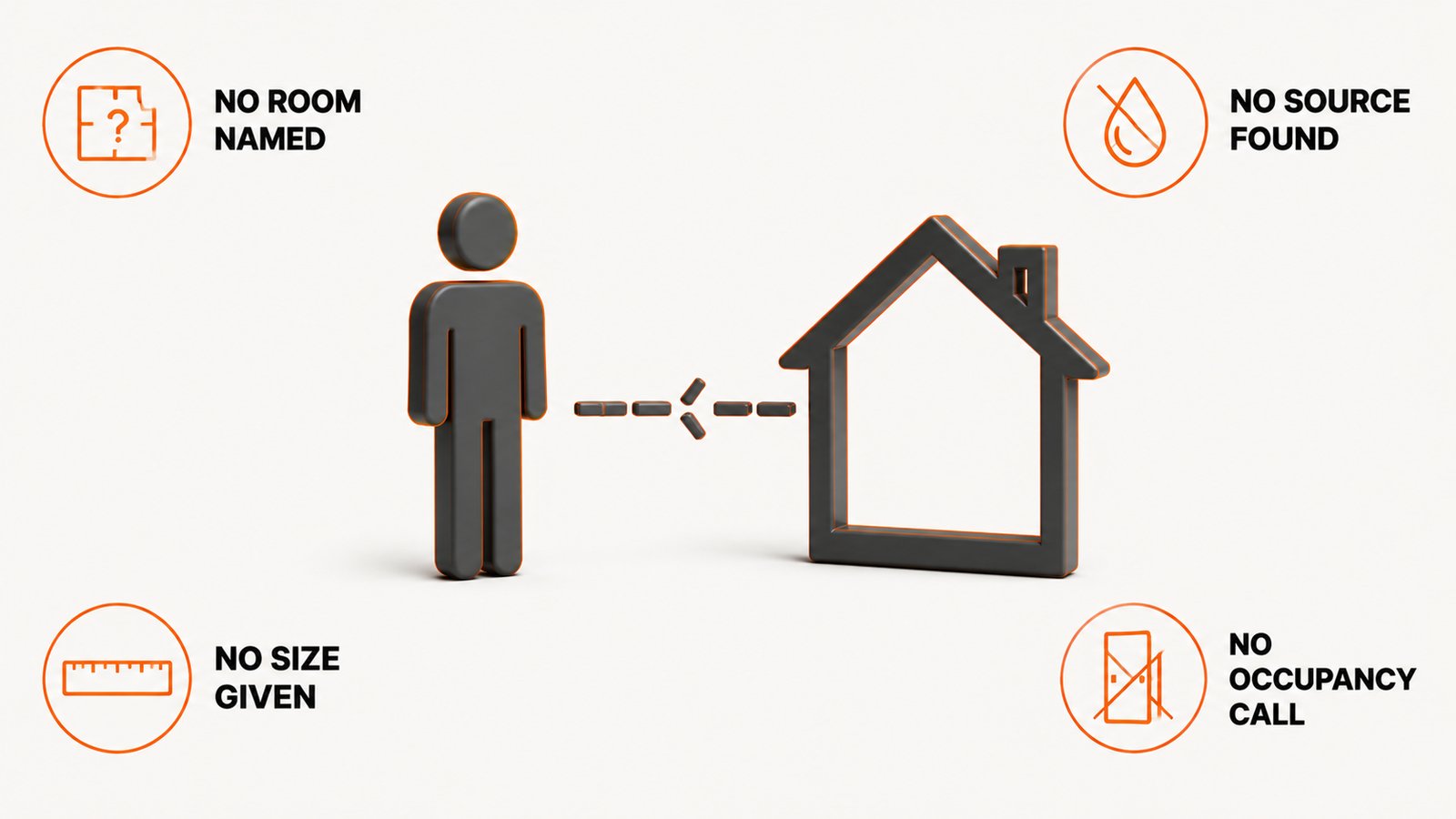
This is the honest center of the comparison, and it is the same for both tests.
Neither one samples your building. A result describes a specimen from a person. It carries no information about which room, which material, or which leak. Nothing in a laboratory report tells a contractor where to open a wall.
CDC is direct about the limits of testing here. The agency states that the health effects of mold are different for different people, so you cannot rely on sampling and culturing to know whether someone might become sick, that you do not need to know the type of mold, and that CDC does not recommend mold testing.
Exposure is not a single-source question. Because the compounds involved are common in the food supply, a result cannot be assigned to a building without evidence from that building. That evidence comes from finding water, damp materials and visible growth, which is a completely different investigation.
No result clears or condemns a home. There is no laboratory number that establishes that a house is safe or unsafe to occupy. Our page on the ERMI test covers the same limitation on the environmental side, where a dust index is often sold as if it were an occupancy standard.
What to check before you buy either one
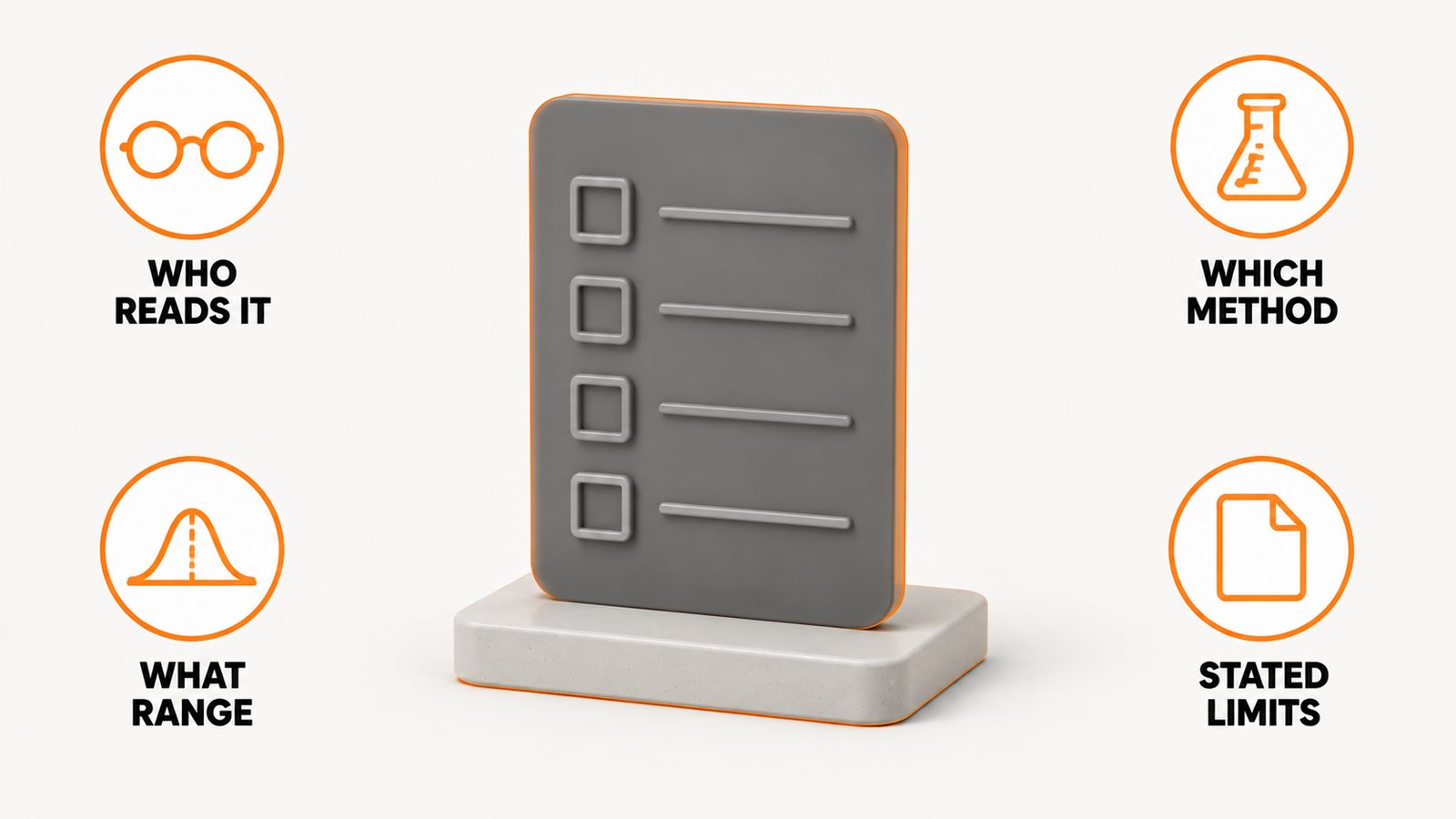
Both tests cost real money and both are sold hard. These are the questions that separate a defensible purchase from a disappointing one.
- Who is going to interpret the result? If the answer is nobody, you are buying a number. Tests that involve a person are worth ordering through a clinician who will read them with your history in front of them.
- Is it FDA cleared, or a laboratory developed test? Ask plainly. Both answers are legitimate and they mean different things about who has reviewed the test's performance claims.
- What method is used, and what is the reference range based on? A range built from the laboratory's own customer population is not the same as one built from a general population sample.
- What does the laboratory itself say the test cannot do? Read the limitations page, not the landing page. Reputable laboratories publish limits, and those limits are usually the accurate part of the site.
- Will insurance cover it? Coverage varies by plan, test and ordering route. Ask before, not after.
- What decision will the result change? If the answer is nothing, that is worth knowing before you spend.
The test that answers a building question
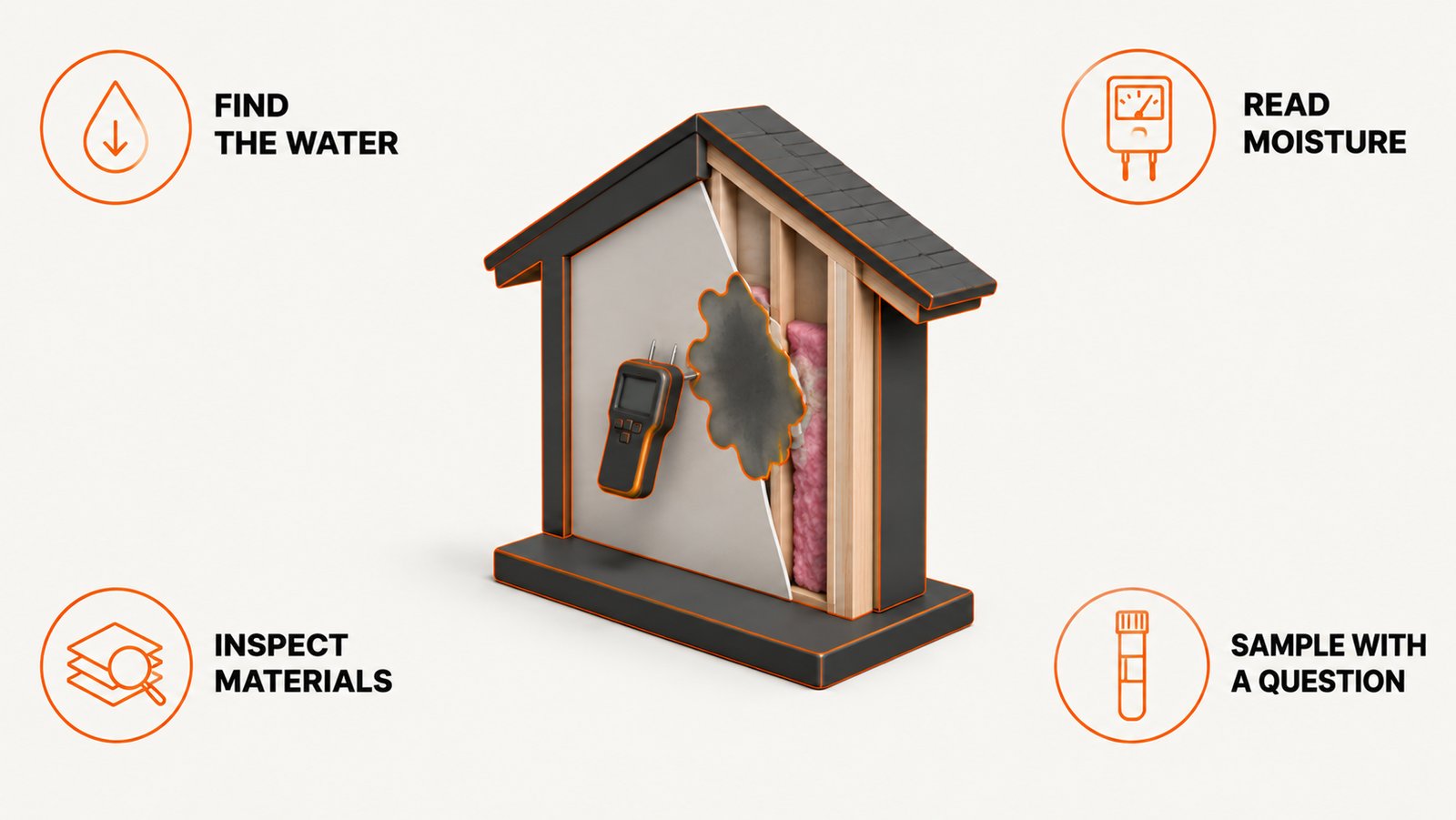
If what you want to know is whether your home has a mold problem, the useful work happens in the building.
Start with moisture, because that is what EPA does. The agency's guidance is that moisture control is the key to mold control, that wet or damp materials dried within 24 to 48 hours will in most cases not grow mold, and that indoor humidity should stay below 60 percent and ideally between 30 and 50 percent. It also notes you may suspect hidden growth if a building smells moldy but you cannot see the source.
Sampling is for a defined question, not for reassurance. A surface or air sample describes that sample under that method at that moment. Our guides on how to test for mold and professional mold testing cover what each method can support, and mold test cost covers what the work runs.
An investigation beats a number. EPA's own view of a finished job is behavioral rather than numerical: the water problem is fixed, visible growth and moldy odors are gone, a return visit shows no new damage, and people can occupy the space without complaints.
When to call a pro
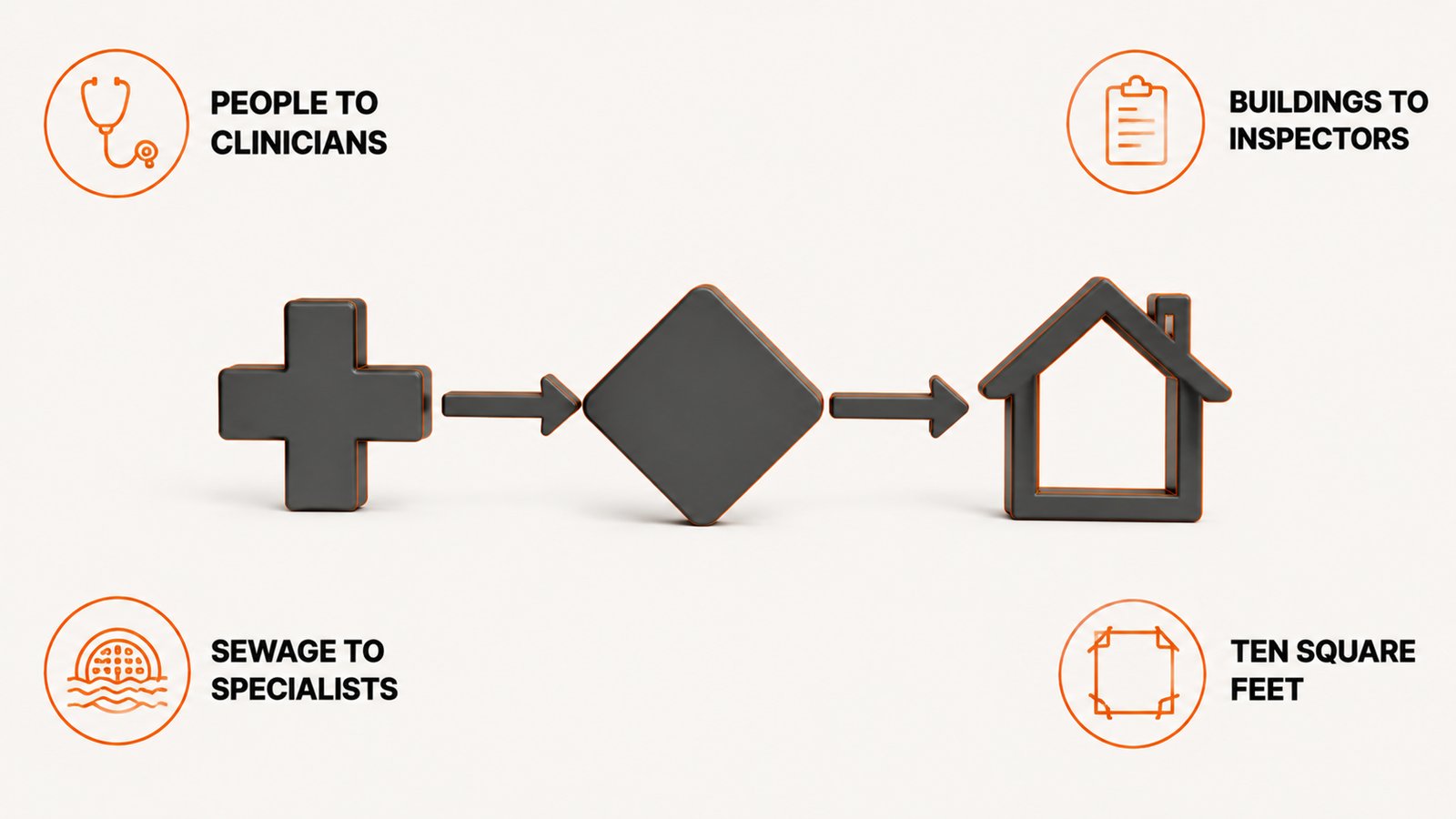
Anything about a person goes to a licensed clinician. That covers ordering a test, reading a result, and deciding what it means. CDC states that exposure to damp and moldy environments may cause a variety of health effects or none at all, that people with asthma or a mold allergy may have severe reactions, and that immune-compromised people and people with chronic lung disease may get lung infections from mold. EPA also advises consulting a health professional before starting any cleanup if you have health concerns.
Anything about the building goes to a qualified building professional. EPA's guidance is that growth over about 10 square feet, less than roughly a 3 foot by 3 foot patch, is past do-it-yourself territory, and that a contractor should follow EPA's remediation guide, the ACGIH guidelines or the IICRC standard. An industrial hygienist or a certified inspector designs a sampling plan around a specific question rather than selling a panel.
Contaminated water is its own category. EPA says that damage caused by sewage or other contaminated water calls for a professional with experience in that work.
Keep the two lanes separate. The most expensive mistake in this space is using a laboratory result about a person to justify construction work, or using a building result to explain how someone feels. Neither one supports the other.
Frequently asked questions
What is the difference between a mold blood test and a mycotoxin urine test?
The specimen and the target. A urine panel looks for selected mold-derived compounds or their metabolites in a urine sample. A blood test usually measures antibodies, meaning your immune system's response to specific mold proteins. One is about substances that entered the body from any source, the other is about how the body reacts. They are not two versions of the same measurement.
Is a mycotoxin urine test FDA approved?
Usually these panels are laboratory developed tests rather than FDA cleared products. FDA issued a rule in May 2024 that would have brought laboratory developed tests explicitly under its in vitro diagnostic definition, a federal court vacated that rule on March 31, 2025, and FDA reverted the regulation on September 19, 2025. Ask any laboratory directly which category its test falls into.
Does a CLIA certificate mean the test is validated?
It means the laboratory is regulated. CMS runs the CLIA program, which regulates laboratory testing performed on humans and sets quality standards intended to make results accurate, reliable and timely, with requirements based on the complexity of the test method. That is about laboratory operations. It is a separate question from whether a specific panel supports the conclusions a marketing page draws from it.
Does a positive urine result prove my house is the source?
No. Mycotoxins occur widely in the food supply. WHO describes them as compounds produced by molds on crops including cereals, nuts, spices, dried fruits, apples and coffee beans. A 2026 population study that measured urinary aflatoxin in a rural Chilean cohort found its significant associations with foods and smoking. Attributing a result to a building requires evidence found in the building.
Can either test tell me where the mold is in my home?
Neither can. Both describe a specimen taken from a person and carry no location information at all. Finding growth is a building investigation: look for water, read moisture in materials, inspect the places water travels, and sample only with a defined question and qualified interpretation.
Does CDC recommend mold testing?
No. CDC states that it does not recommend mold testing, that you do not need to know the type of mold, and that because health effects differ from person to person you cannot rely on sampling and culturing to know whether someone might become sick. Its guidance is to remove the mold and fix the moisture problem.
Is an ERMI or dust test a substitute for either of these?
No, it is a third category and it measures the building rather than a person. ERMI is a research index calculated from mold DNA in settled dust, it does not measure mycotoxins, and EPA developed it as a research tool rather than for routine public use. Our mycotoxin testing guide covers what a dust index can and cannot support.
Sources
Every claim on this page traces to one of these. Links open the primary document.