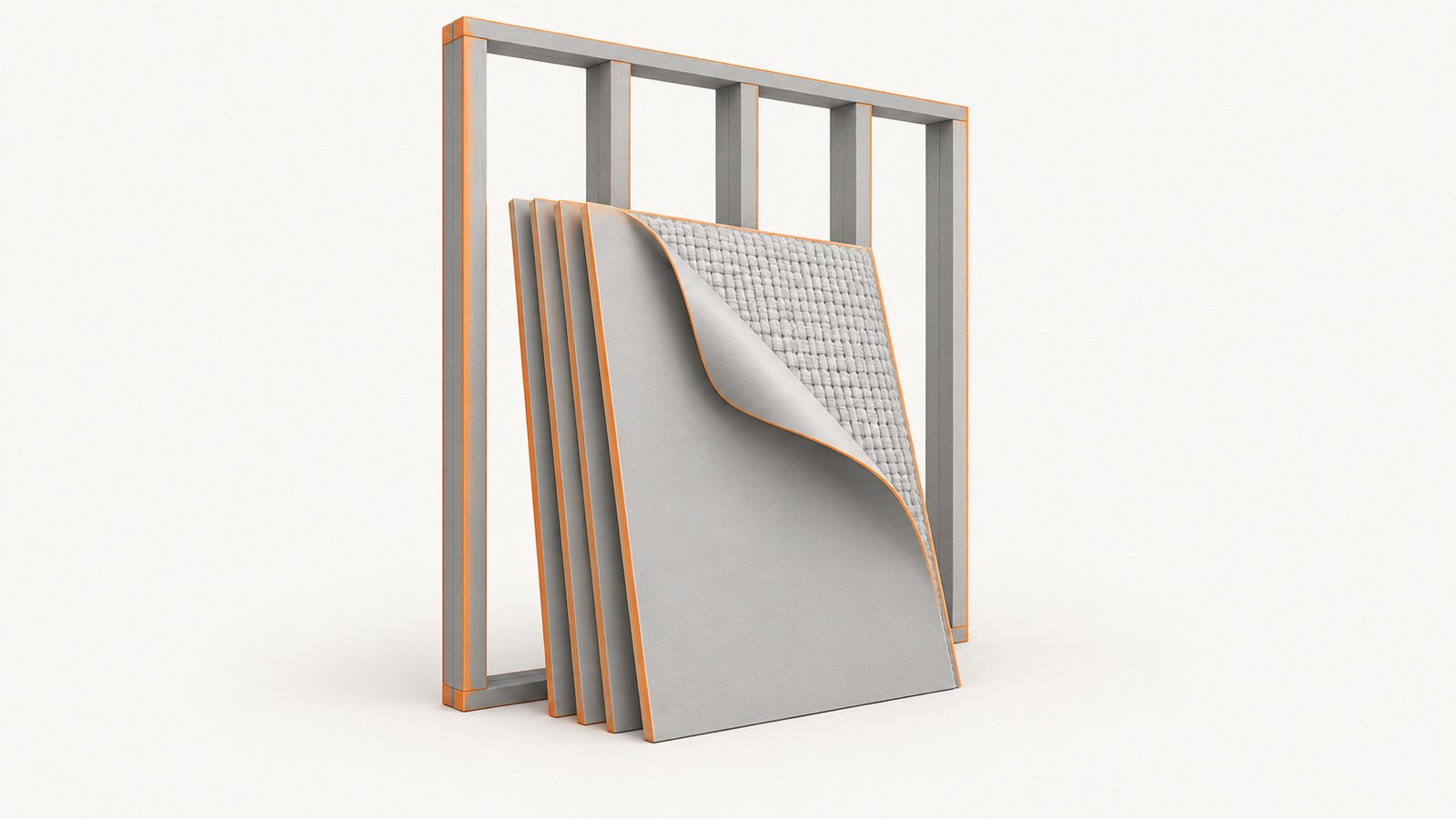
What mold resistant drywall actually is
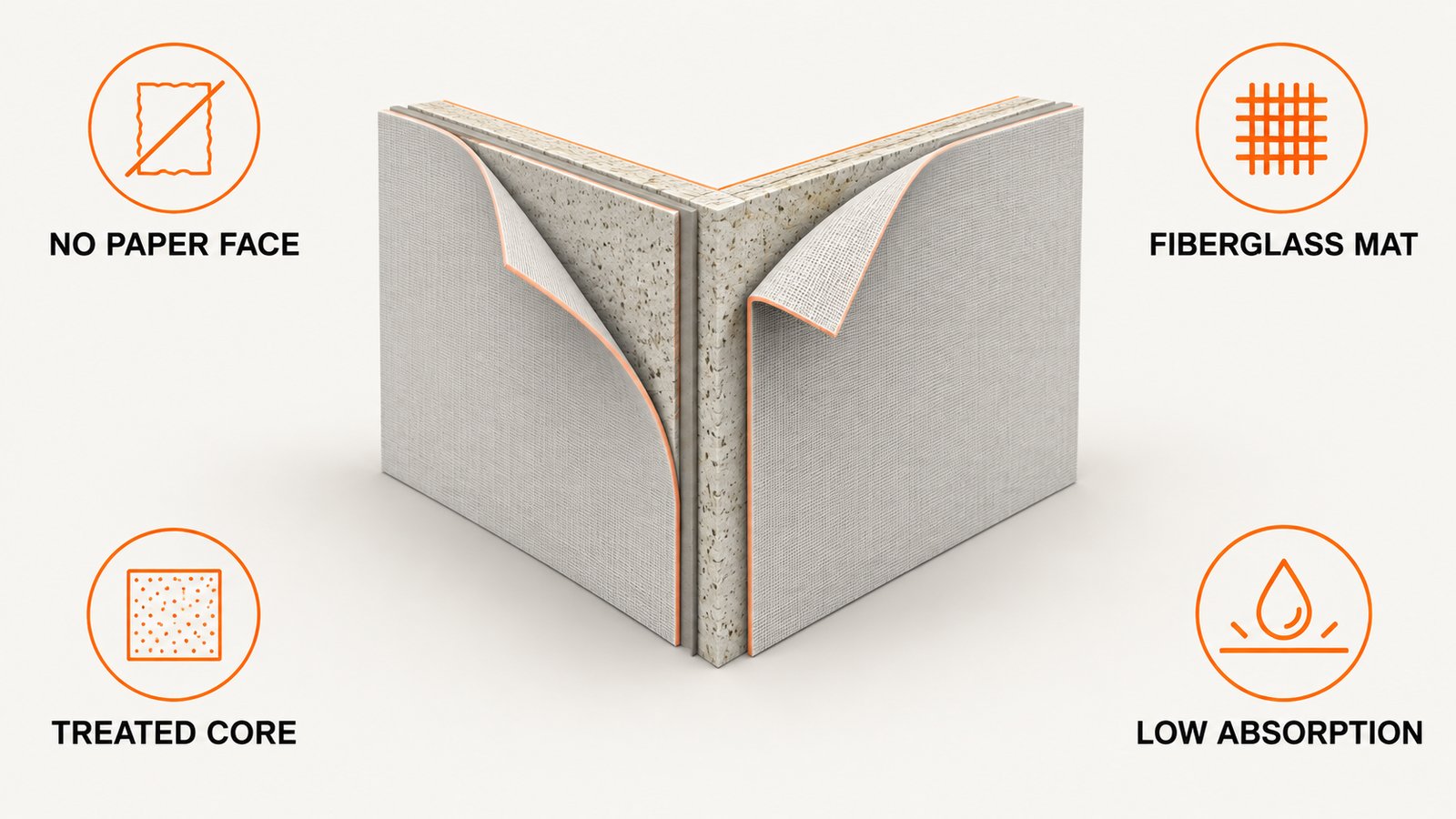
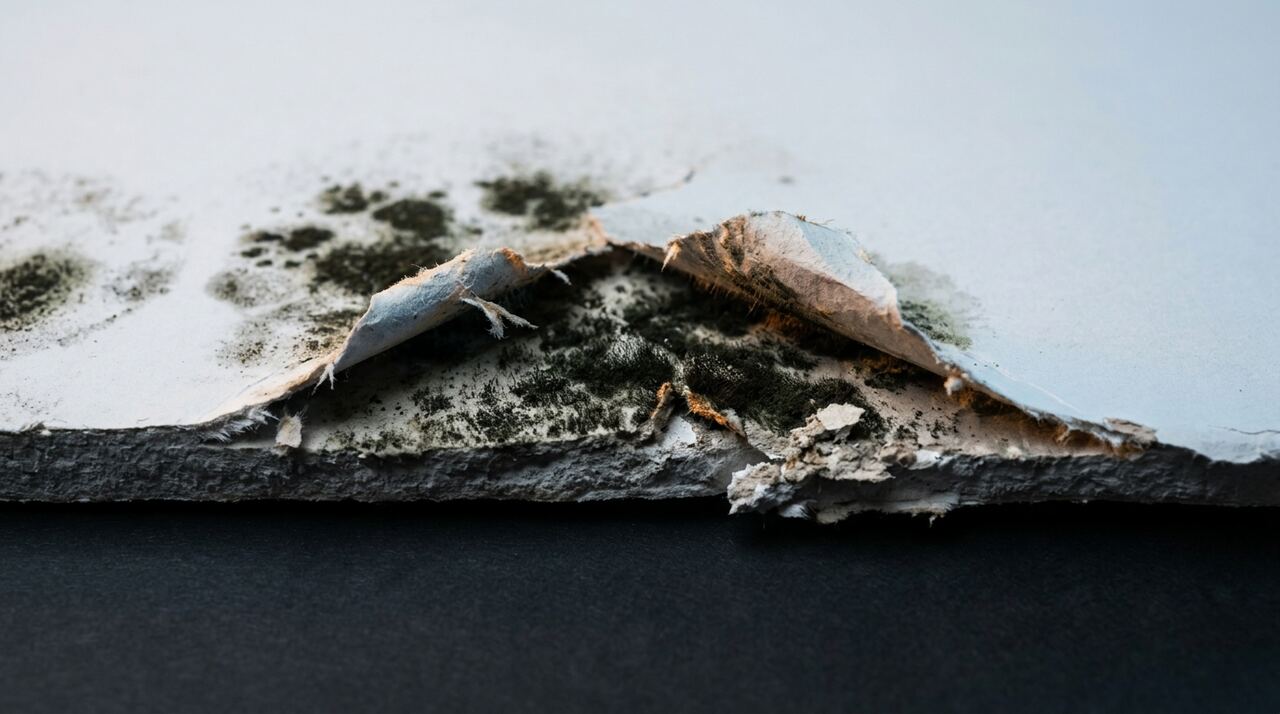
Standard drywall is a gypsum core wrapped in paper. Paper is cellulose, cellulose is food, and once it gets wet it feeds growth on schedule. Every mold resistant board on the market attacks that one problem in one of two ways.
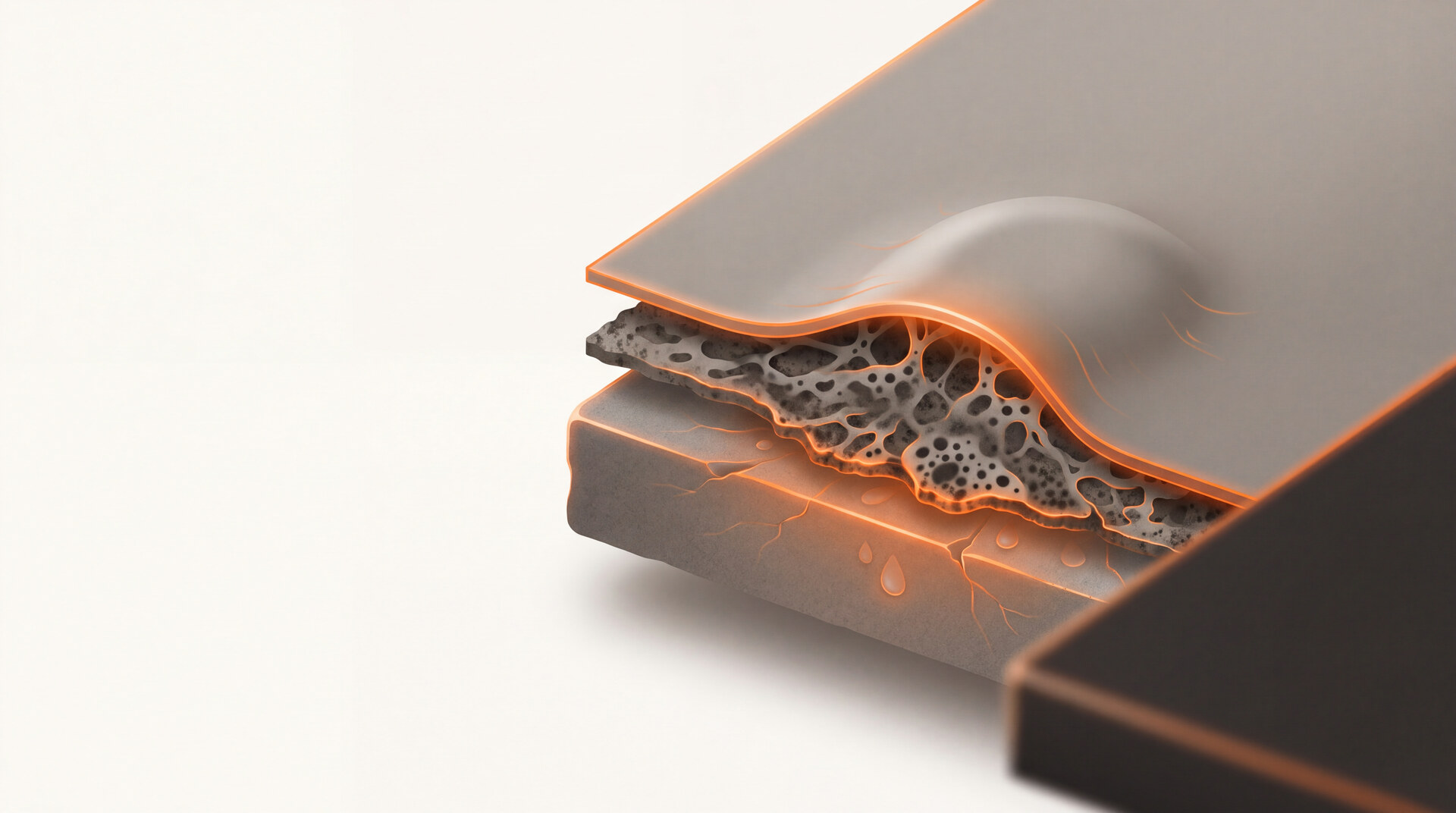
Treated paper and a treated core. This is the purple and green family. The paper facings and the gypsum core are treated so they absorb less water and support less growth. The board still has a paper face, so it still has a ceiling on how far it can go.
No paper at all. Paperless boards replace the paper with a fiberglass mat over a moisture-resistant gypsum core. Georgia-Pacific's DensArmor Plus interior panel is the common example, specified with a moisture-resistant core, fiberglass mats on both faces, water absorption under 5 percent of weight, and standard sheet sizes at 1/2 inch and 5/8 inch thickness.
There is a third variant for wet walls. A glass-mat tile backer such as DensShield adds a built-in moisture barrier to the panel, which the manufacturer says removes the need for a separate barrier behind tile. That is a different job from a wall panel and it belongs behind a shower surround rather than across a bedroom.
The batt behind the board follows a different rule again, and EPA gives it no clean-in-place option at all. See mold on insulation before you close the wall. None of the three is a coating you brush on. If you already have standard board and growth on it, no board upgrade helps until that sheet comes out. Read mold on drywall for what happens once growth reaches the paper, and can you paint over mold for the shortcut that does not work.
What the ASTM D3273 score of 10 means, and what it does not
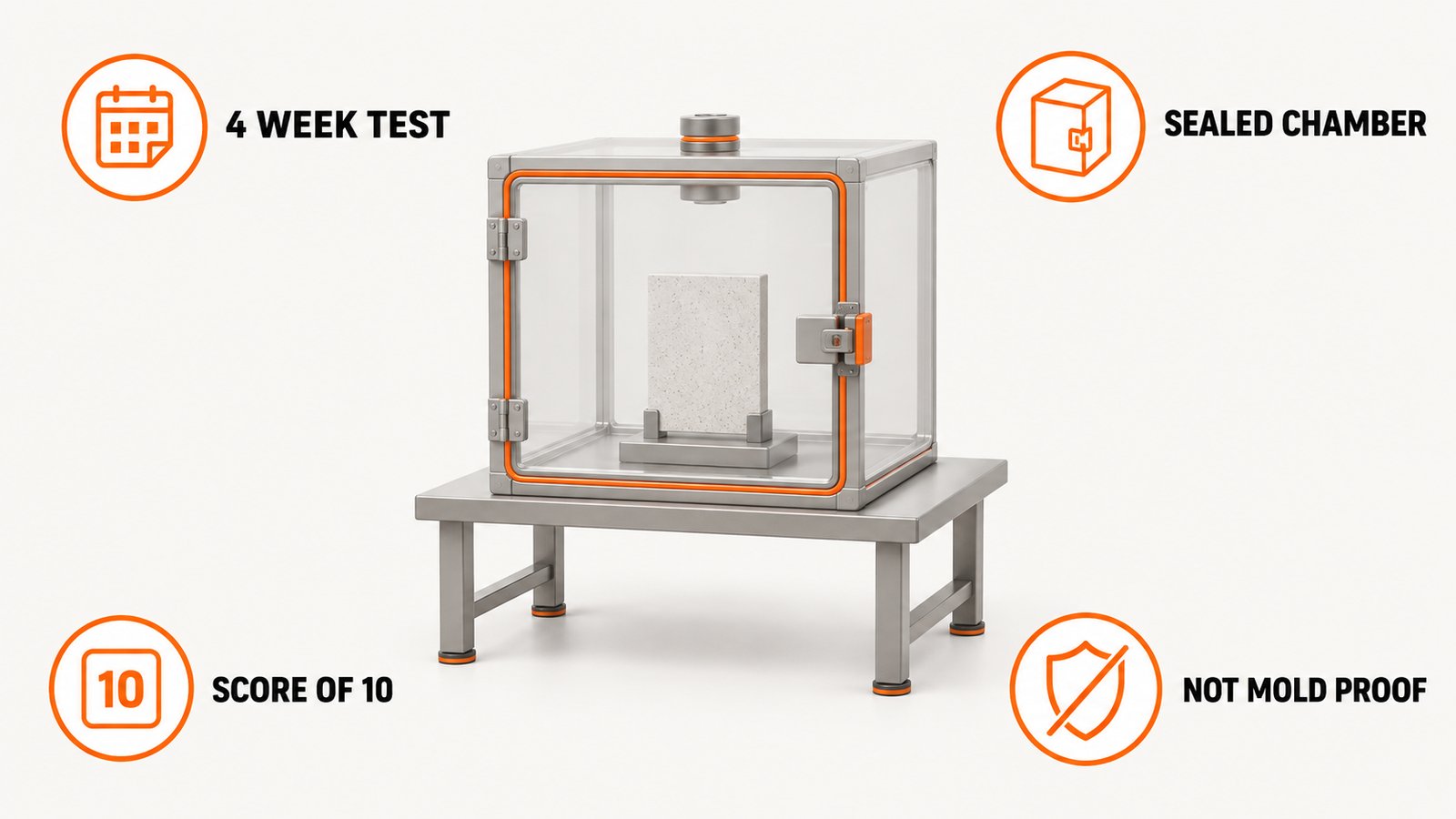
Every mold resistant board in the aisle advertises the same number. ASTM D3273 is the Standard Test Method for Resistance to Growth of Mold on the Surface of Interior Coatings in an Environmental Chamber, currently published as D3273-21. A sample sits in a controlled chamber and gets scored, and a 10 is the top of the scale.
Here is the part the shelf tag leaves off, in the manufacturer's own words. Georgia-Pacific footnotes the claim on its product pages like this: the score of 10 indicates no mold growth in a 4-week controlled laboratory test, the mold resistance of any building product in actual job site conditions may not produce the same result as the laboratory setting, and no material can be considered mold proof.
Read that back. Four weeks. A chamber. And an explicit statement from the company selling the board that mold proof is not a thing. What a 10 buys is a facing and a core that will not feed growth as readily as paper will. What it does not buy is permission to leave a leak running behind it.
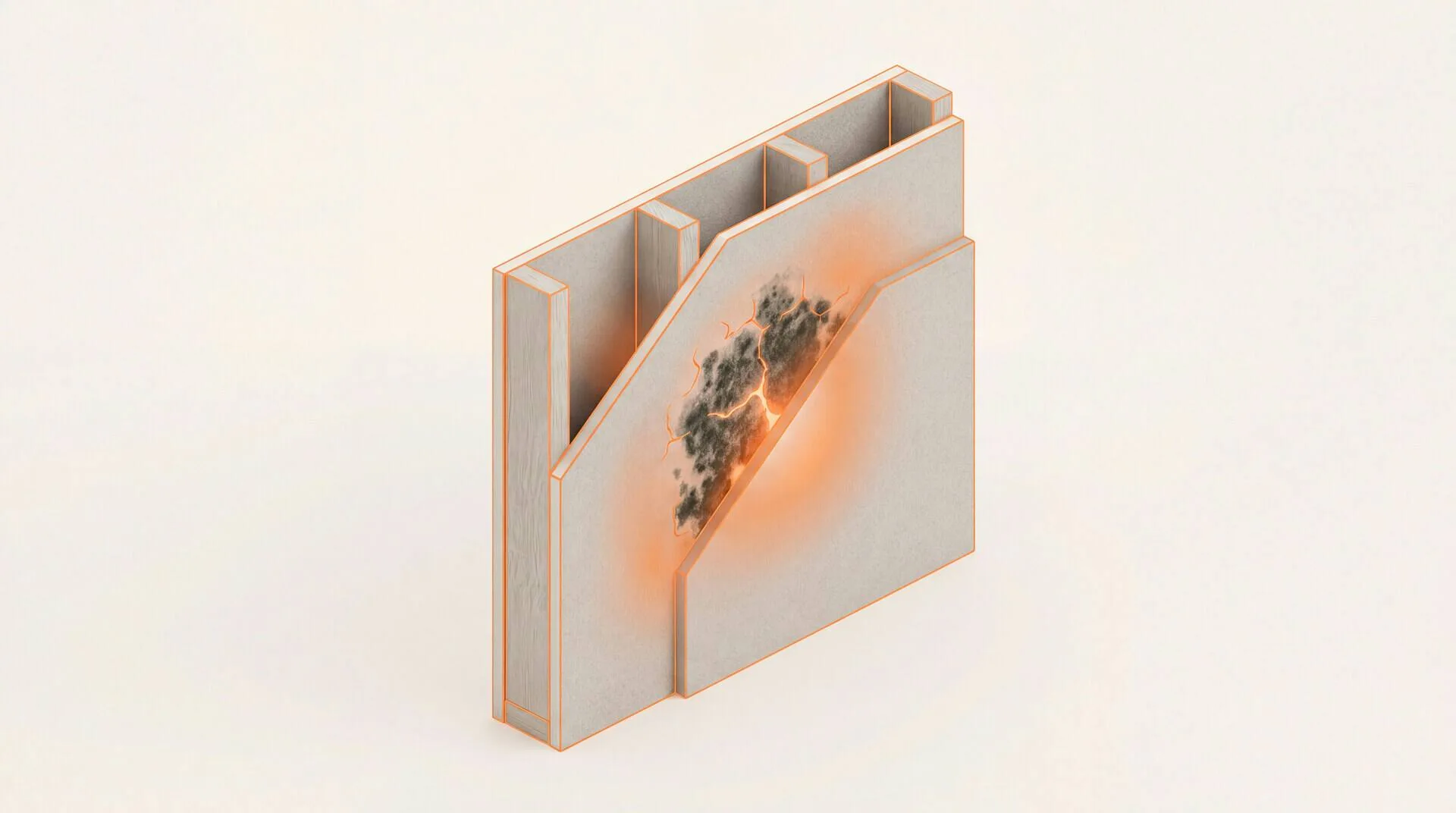
That matters for how you spend. Upgrading the board while ignoring a failed shower pan or an unvented bath fan produces a wall that resists growth on its surface and hides a wet cavity behind it. Growth inside the cavity is not something a facing score addresses. See mold behind walls for what that failure looks like when it is found six months later.
Mold resistant vs moisture resistant vs cement board
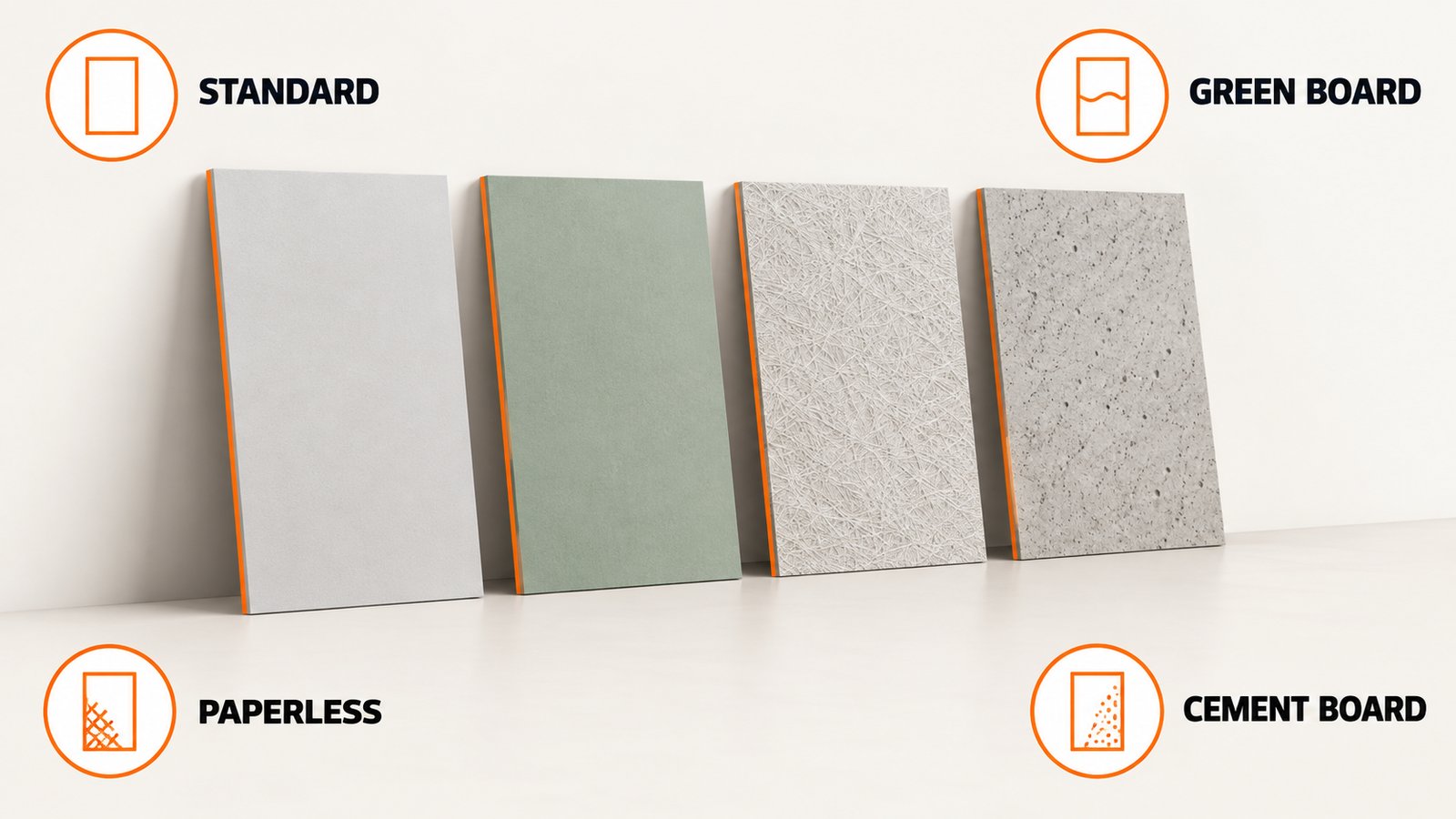
These get used interchangeably at the lumber counter and they are not the same claim. Moisture resistance is about how much water the board takes on. Mold resistance is a growth score under a named test method. A board can have one without the other.
| Board | Facing | Rated for | Use it for |
|---|---|---|---|
| Standard gypsum board | Paper both sides | Nothing beyond a normal dry interior | Ordinary walls and ceilings |
| Moisture-resistant, green board | Treated paper | Moisture, not a mold score | Damp rooms away from direct water |
| Moisture and mold resistant, purple board | Treated paper, treated core | Moisture plus mold growth | Bathrooms, laundry rooms, basements |
| Paperless, fiberglass mat faced | Fiberglass mat, no paper | A 10 out of 10 on ASTM D3273 | Basements, bathrooms, anywhere paper is the risk |
| Glass-mat tile backer | Fiberglass mat with a built-in moisture barrier | A 10 out of 10 on ASTM D3273 | Behind tile in tub and shower walls |
| Cement board | Cement and reinforcing mesh | No paper and no gypsum core to feed | Wet areas and tile substrates |
Facings and ratings taken from Georgia-Pacific product specifications and the Fixr drywall type list.
The practical rule is that direct water contact needs a backer built for it, not a wall panel. Behind tile in a tub or shower, that means a glass-mat tile backer or cement board. Everywhere else in a damp room, a treated or paperless wall panel is the right specification.
Paint is the layer people reach for instead, and it does a different job. A mold-resistant topcoat is a finish over a sound, dry surface, not a substitute for the right substrate. Our roundup of mold-resistant paints and primers covers what each product is registered to do, and none of them turn a paper-faced board into a paperless one.
Mold resistant drywall cost vs standard drywall
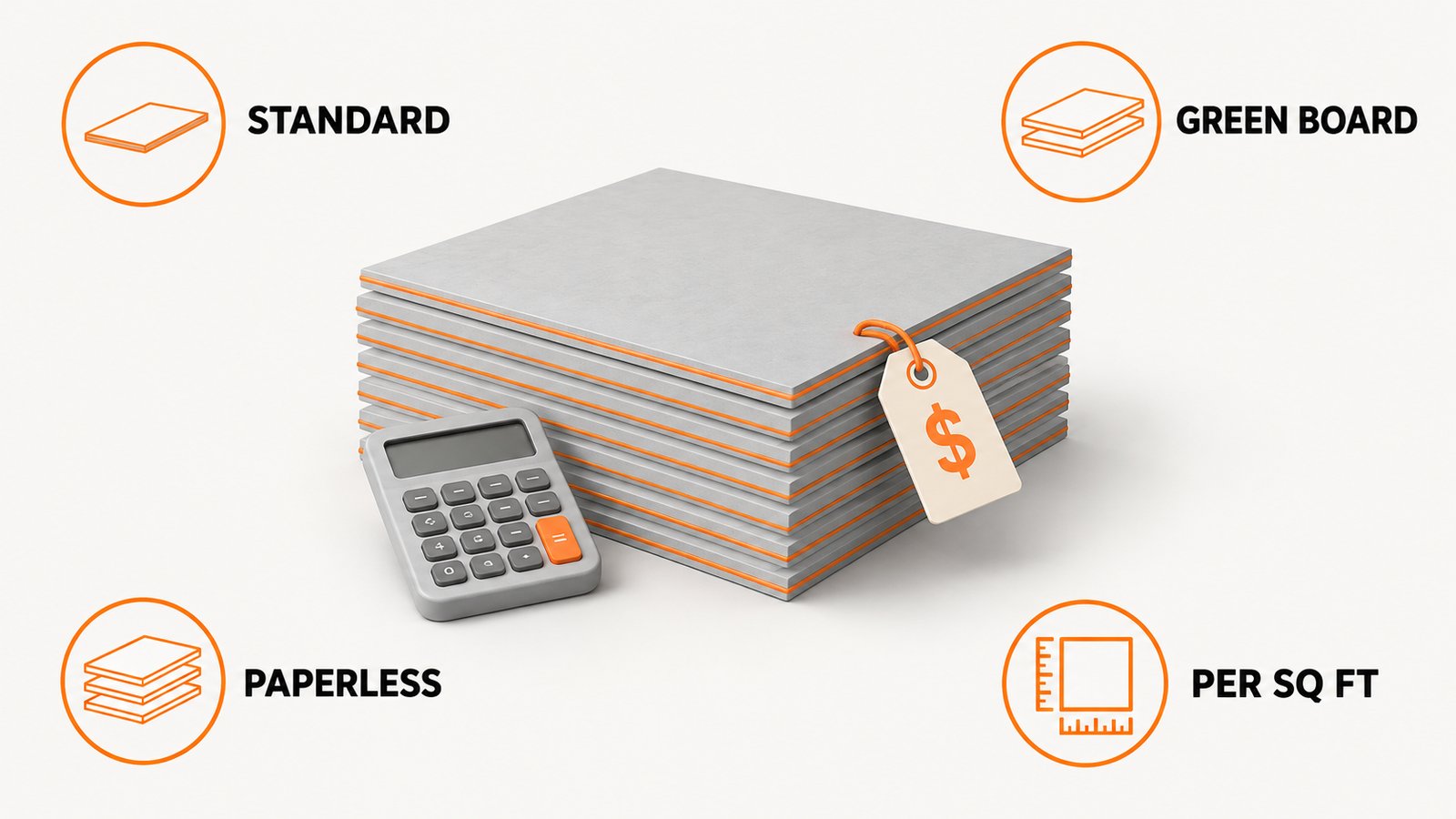
The upgrade is cheaper than most people assume, because the premium is measured in cents per square foot rather than dollars.
| Board type | Material per sq ft | Installed per sq ft |
|---|---|---|
| Traditional standard | $0.42 to $0.50 | $1.50 to $2.50 |
| Fire-rated Type X | $0.50 to $0.88 | $1.60 to $3.50 |
| Moisture-resistant green | $0.54 to $0.63 | $1.65 to $2.75 |
| Moisture and mold resistant purple | $0.54 to $0.63 | $1.65 to $2.75 |
| Paperless | $0.63 to $0.92 | $1.75 to $4.00 |
| Soundproof | $2.08 to $3.15 | $3.55 to $7.50 |
Fixr 2026 drywall installation cost guide. A standard 4 ft by 8 ft sheet runs $10 to $15 in materials and $48 to $80 installed.
Run the arithmetic on a real room. A 200 sq ft bathroom in standard board is roughly $84 to $100 in material. The same room in paperless board is roughly $126 to $184. On a job where the labor to hang and finish is already several hundred dollars, that difference is a rounding error, and it lands on the one wall assembly most likely to get wet.
The reverse is also true, and it is why blanket upgrades are a waste. Specifying paperless board through bedrooms and hallways with no moisture load buys nothing. Put the money where water actually shows up.
For context on what the alternative costs, a single-room remediation runs $1,000 to $3,000 professionally. The full 2026 tables are on mold remediation cost. A $60 board upgrade on a bathroom is not insurance against a leak, but it does remove one of the two ingredients growth needs.
Where to use mold resistant drywall, room by room
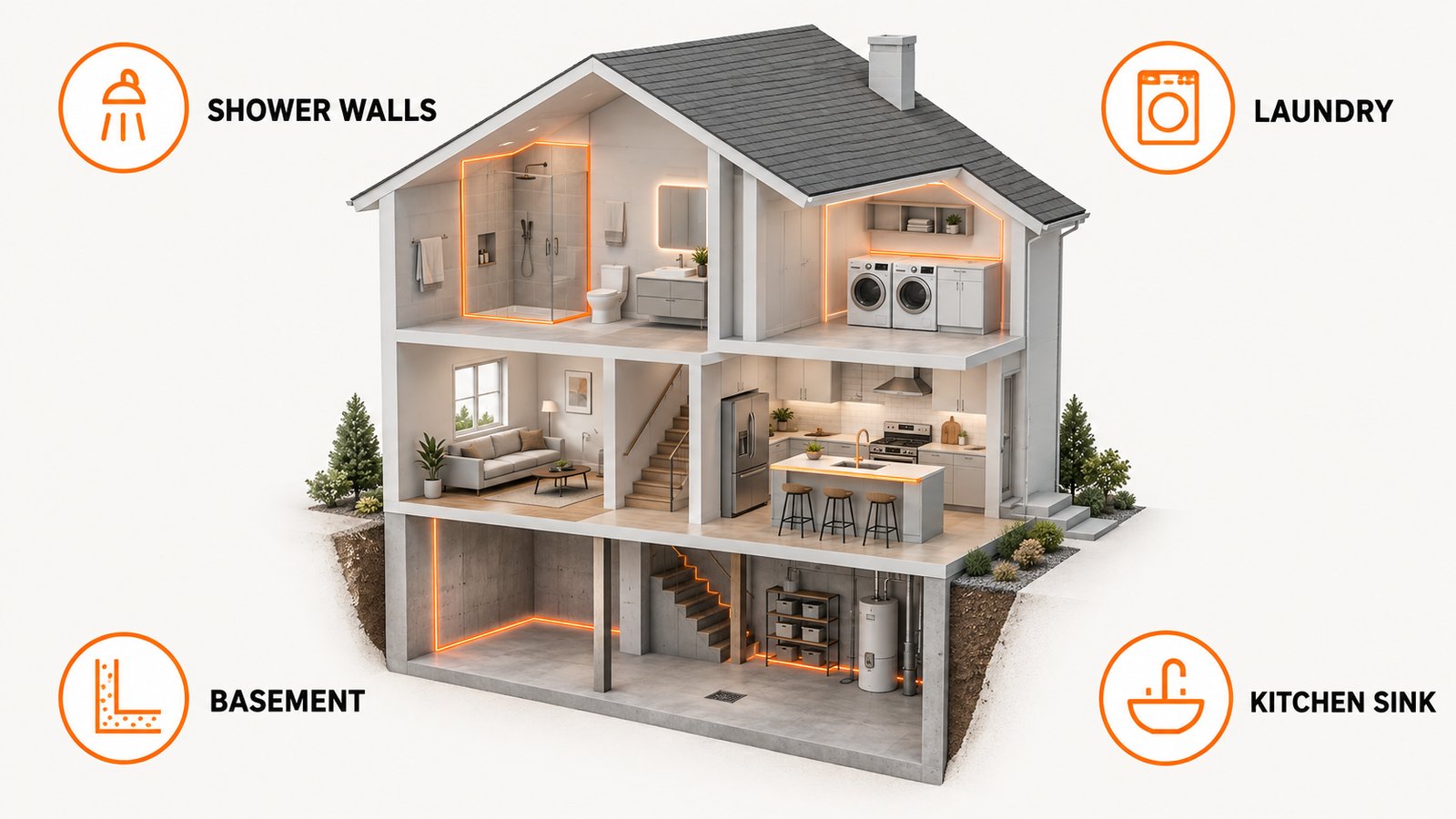
Specify by moisture load. Every room with a water supply, a drain, an appliance, or a foundation wall earns the upgrade. The rest do not.
| Room | What to specify | Why |
|---|---|---|
| Tub and shower walls behind tile | Glass-mat tile backer or cement board | Direct water contact, and the backer carries its own moisture barrier |
| Rest of the bathroom | Paperless or purple board | Steam and condensation without direct water |
| Laundry room | Purple board at minimum | Appliance leaks and humidity swings |
| Basement walls | Paperless board, held off the slab | Foundation moisture moves through concrete |
| Kitchen behind the sink and dishwasher | Purple or paperless | Slow supply and drain leaks are the usual cause |
| Garage and utility rooms | Purple board, Type X where code requires it | Slab moisture plus fire separation |
| Bedrooms, hallways, living areas | Standard board | No moisture load, no reason to pay the premium |
Two conditions beat the board every time. The first is ventilation: a bath fan that vents into an attic instead of outdoors moves the moisture problem rather than removing it. The second is humidity, and EPA's guidance is to keep indoor relative humidity between 30 and 60 percent, which in a damp basement usually means a dehumidifier sized to the space.
If you are opening walls anyway, this is the moment to do both. See how to prevent mold for the ventilation and drainage side, mold in the bathroom and mold in the basement for what fails in those rooms specifically.
When to call a pro before you hang new board
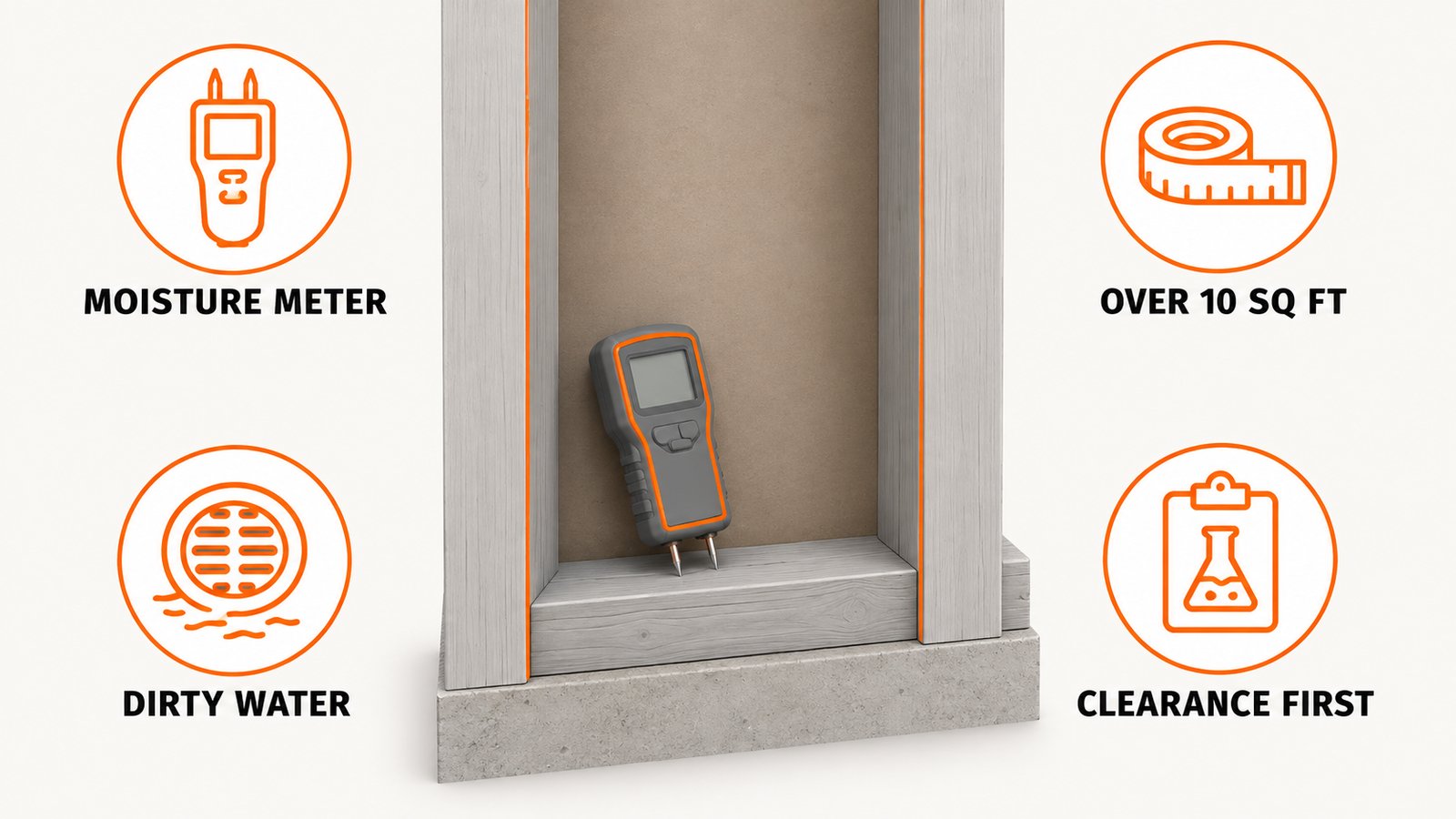
Closing a wall is the last reversible moment on the job. Four things should be settled before the first sheet goes up.
The cavity is dry, measured rather than assumed. EPA's instruction for wet material is to dry it within 24 to 48 hours, and a stud bay that has been wet for months needs a meter reading, not a look.
The affected area was under about 10 square feet. Above that line EPA points homeowners to its professional remediation guide rather than to a do-it-yourself method, which means the demolition and cleaning should have been done under containment.
The water was clean. EPA says to call a professional experienced with buildings damaged by contaminated water when sewage or other contaminated water was involved. That is a materials-disposal question as much as a cleaning one.
The source is fixed and proven. A repaired supply line, a re-flashed window, a bath fan ducted to the outside. New board over an unresolved leak is the most expensive way to hide a problem, because the next person to find it will be opening a finished wall.
If growth is already visible and you are deciding between cleaning and cutting, how to get rid of mold covers the decision, and what dark growth can and cannot tell you covers why the color on the sheet does not change the plan.
Frequently asked questions
Is mold resistant drywall worth it?
In rooms with a moisture load, yes, because the premium is small. Fixr puts moisture and mold resistant purple board at $0.54 to $0.63 per square foot in materials against $0.42 to $0.50 for standard, and paperless board at $0.63 to $0.92. On a 200 square foot bathroom that is a difference of tens of dollars against a single-room remediation that runs $1,000 to $3,000.
Does mold resistant drywall really stop mold?
It resists growth on the board itself and it is not mold proof. Georgia-Pacific states directly on its own product pages that a score of 10 under ASTM D3273 means no mold growth in a 4-week controlled laboratory test, that job site conditions may not produce the same result, and that no material can be considered mold proof.
What is the difference between green board and purple board?
Green board is moisture-resistant gypsum with treated paper facings. Purple board adds a mold resistance claim on top of the moisture treatment, covering both the facings and the core. Fixr prices the two identically at $0.54 to $0.63 per square foot in materials, which is why purple is usually the better buy of the two.
Can mold resistant drywall go behind shower tile?
Use a tile backer built for it rather than a wall panel. A glass-mat tile backer such as DensShield carries a built-in moisture barrier and is specified for tub and shower walls, and cement board is the other standard choice. A general-purpose mold resistant wall panel is not a substitute for direct water contact.
What does ASTM D3273 actually test?
It is the Standard Test Method for Resistance to Growth of Mold on the Surface of Interior Coatings in an Environmental Chamber, published as D3273-21. A sample is held in a controlled chamber and scored for surface growth, with 10 at the top of the scale. It is a surface test in a sealed box, not a test of an installed wall assembly.
Do I need mold resistant drywall in the whole house?
No. Specify by moisture load. Bathrooms, laundry rooms, basements, kitchens and garages earn it. Bedrooms, hallways and living areas have no moisture source, so the upgrade buys nothing there. Spending the same money on ventilation and humidity control does more everywhere.
Can I install mold resistant drywall over existing mold?
No. Covering growth traps it and the new sheet gives it a fresh surface once the cavity gets wet again. Remove affected material first, dry the cavity and confirm it with a meter, fix the water source, and only then close the wall. EPA sends anything over about 10 square feet to its professional remediation guide.
Is paperless drywall harder to finish?
It handles differently. A fiberglass mat face is rougher than paper, so it takes more joint compound to bring the surface to a smooth finish, and the mat is abrasive to work against. Fixr also notes that the coating on purple board is sometimes less flat than standard board, which makes finishing harder there too.
Sources
Every claim on this page traces to one of these. Links open the primary document.