What Is Ceiling Ghosting?
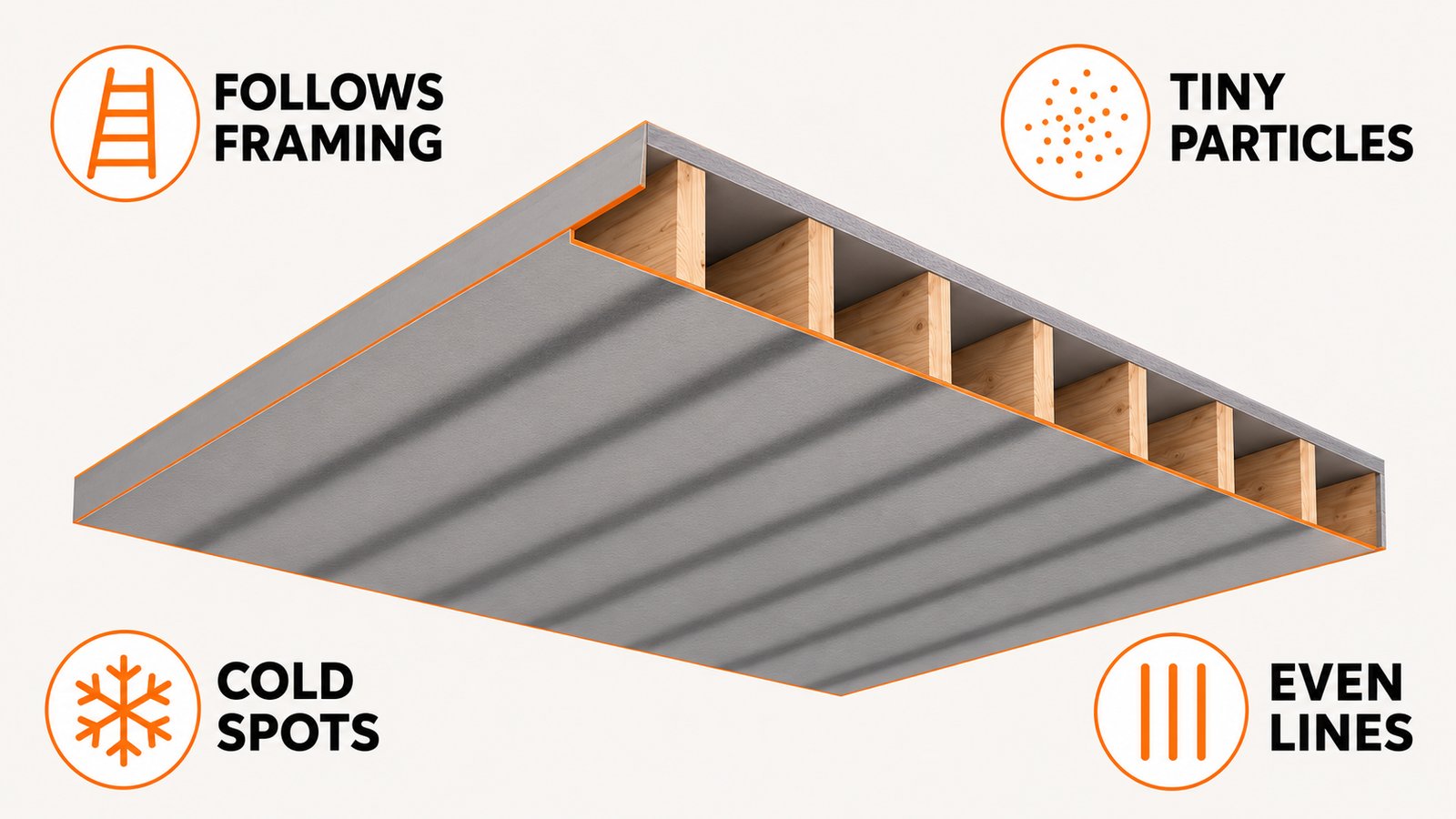
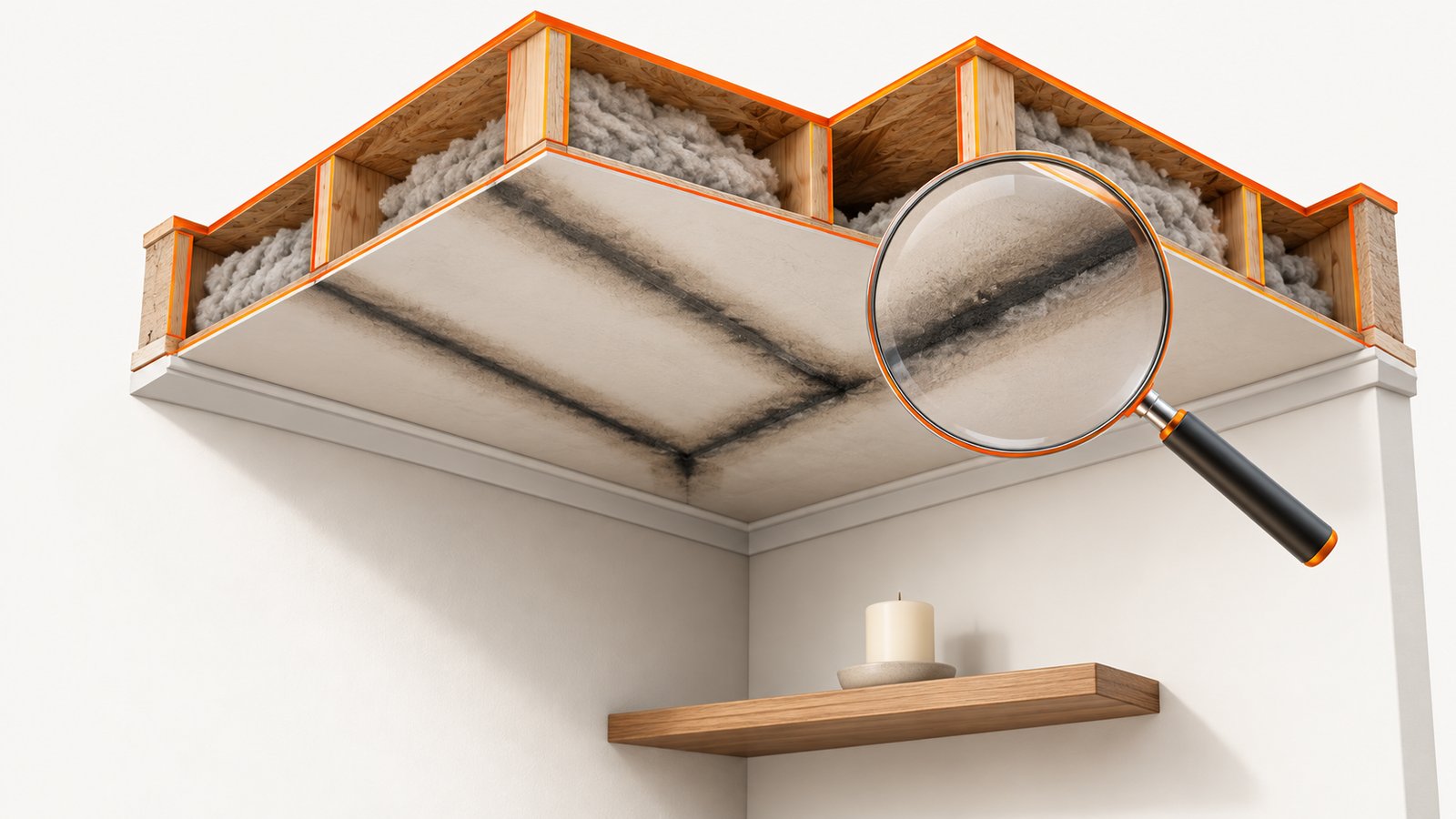
Ceiling ghosting is a pattern of dark lines on drywall that match the framing behind it. Building Science Corporation (BSC), a building-science firm, describes it in its digest Black Stains on Carpets and Ghosting of Framing. Its author, Joseph Lstiburek, writes that they "typically notice 'ghosting' of wood stud members on the interior gypsum board surfaces of exterior walls."
BSC says the cause is tiny airborne particles. Its words: "The problems are related to four deposition mechanisms: filtration, electrostatic attraction, thermal deposition due to Brownian motion and impaction." For framing, the one that matters is the cold-surface kind, where particles "plate out" on cold surfaces. BSC also says "Big particles are not related to the problems observed." Ordinary house dust is too heavy. The particles have to be small enough to float for minutes or hours.
Where do they come from? BSC lists tobacco, candle and fireplace smoke, pilot light smoke from gas fireplaces, incense, smoke from a gas water heater or furnace, lint burning in a dryer that does not vent well, and "really tiny dirt" such as clay dust from a nearby construction site. Most of the list, BSC notes, shares one thing: something got burned, cooked or fried.
BSC wrote about studs in walls. A ceiling is our extension of the same idea, and we flag it as our reading. The next section explains why it fits. If you came here wondering whether marks like these are mold, our soot vs mold page covers the wider look-alike question.
Why Do Dark Lines Form Along Ceiling Joists?
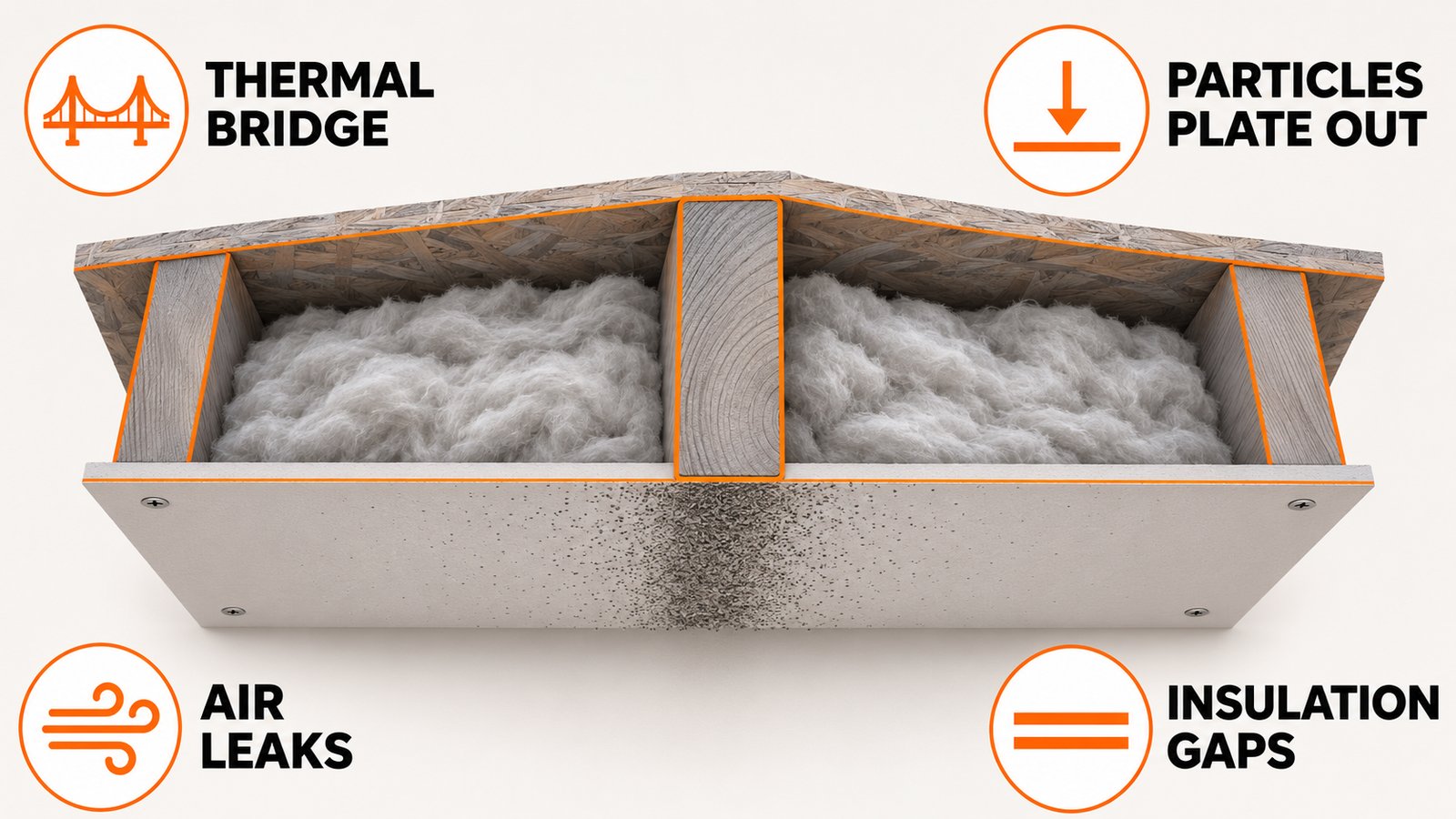
BSC's explanation: air touching the cooler wall surface is cooled, and "Where there is higher heat loss such as at a wood framing member, say a 2x4, the air in the boundary layer right at this spot is colder than the air in the boundary layer just inches away." Particles in colder air move less, so they stick more easily. "Since every stud is a 'thermal bridge' the outlines of the studs can be sometimes seen due to the accumulation of tiny particles at the cold spots."
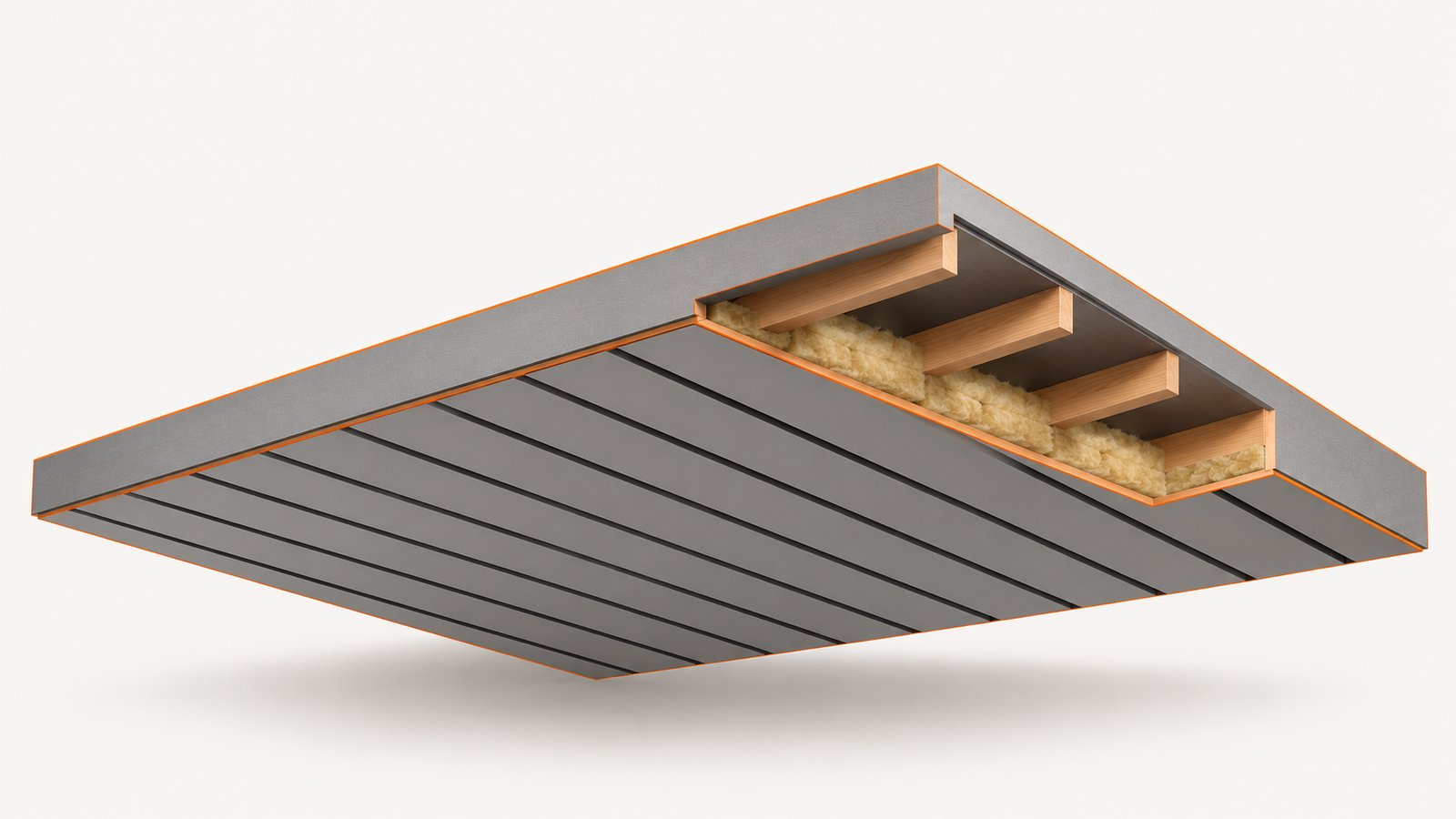
A ceiling under an attic has the same setup. Joists carry heat out faster than the insulation between them, so the drywall under each joist runs cooler. That is our reading of BSC's logic, not a quote from it. It also fits an older note from BSC: ghosting "was very common" because homes "typically had poorly insulated walls (real cold spots) and lots of people that smoked," and it happens less now because houses are better insulated and fewer people smoke indoors.
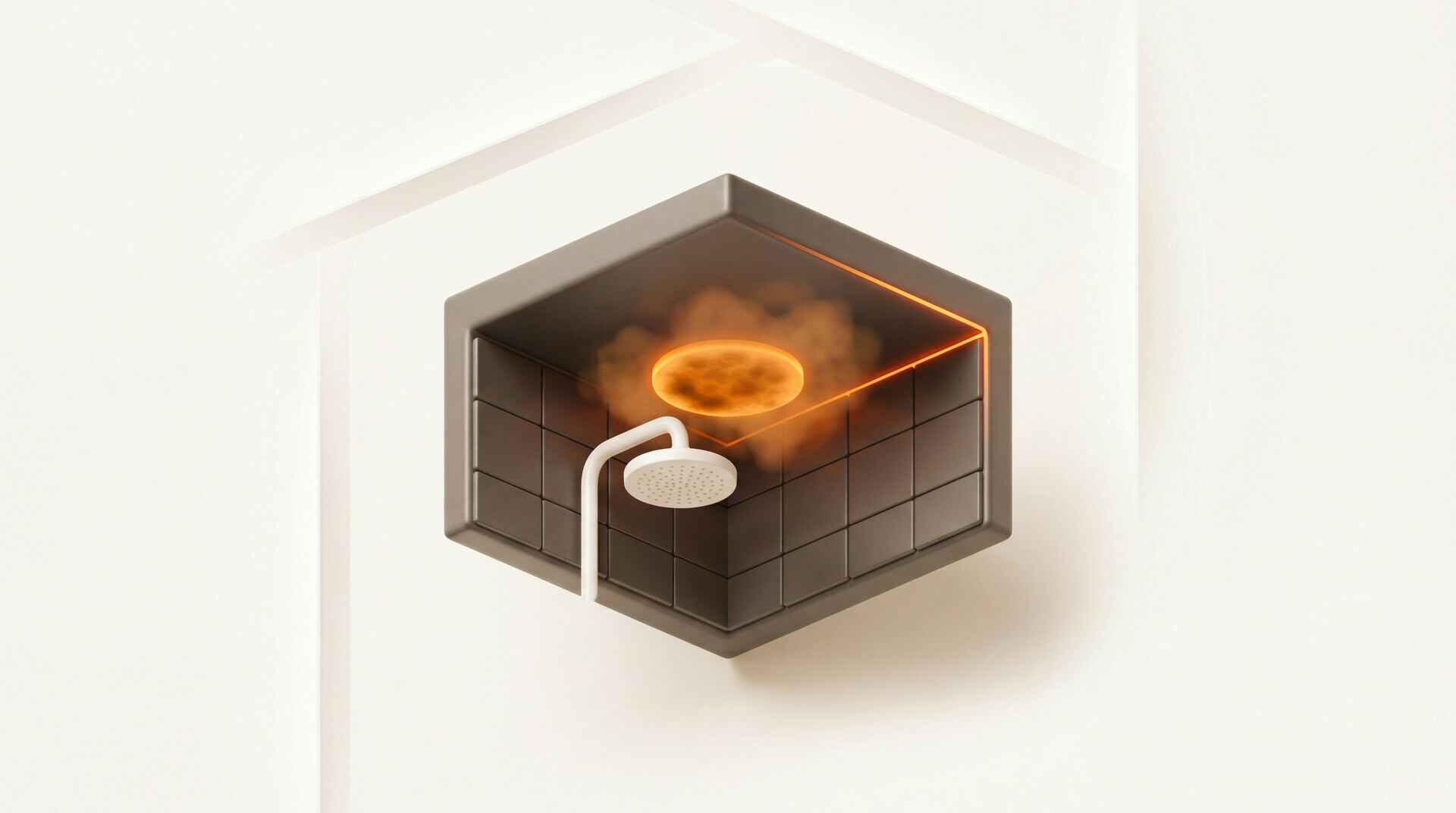
The Department of Energy adds a moisture angle. In its insulation guide for contractors to share with homeowners, written by two national labs, it says "Warm air carries more water vapor than cold air. When warm air touches a cold surface, the water vapor it carries can condense." It also says most water vapor movement in and through buildings is by air, which is why air leaks matter.
How Do You Tell Ghosting vs Mold on a Ceiling?
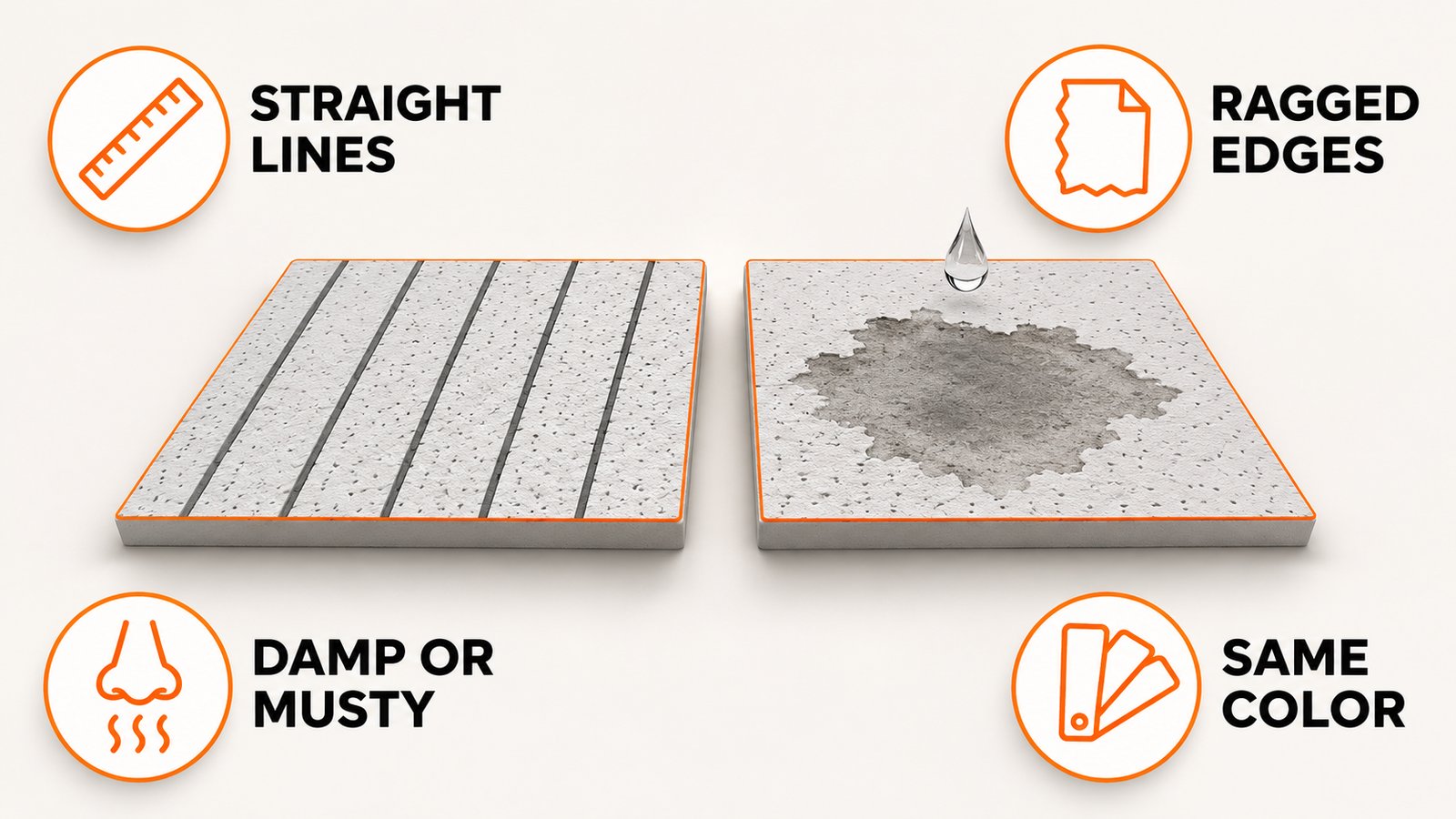
Be honest about the limits first. The CDC says "Mold can look like spots of many different colors, and it can smell musty." Soot and dust can be gray or black, so color does not settle it. These checks are rules of thumb, not agency tests. They are the same ones in our soot vs mold guide, applied to a ceiling.
| Check | Leans ghosting | Leans mold |
|---|---|---|
| Pattern | Straight, evenly spaced lines in step with the joists | Irregular blotches that spread |
| Edges | Even along the line | Soft or ragged, uneven density |
| Water | No stain, soft spot or history of leaks | Brown stain, softness, a past leak or condensation |
| Smell | None, or a faint smoke smell | Musty |
| After cleaning | Comes back while particles keep landing on a cold spot | Comes back while the moisture continues |
The last row fits both. A mark that returns means something is feeding it, not which thing.
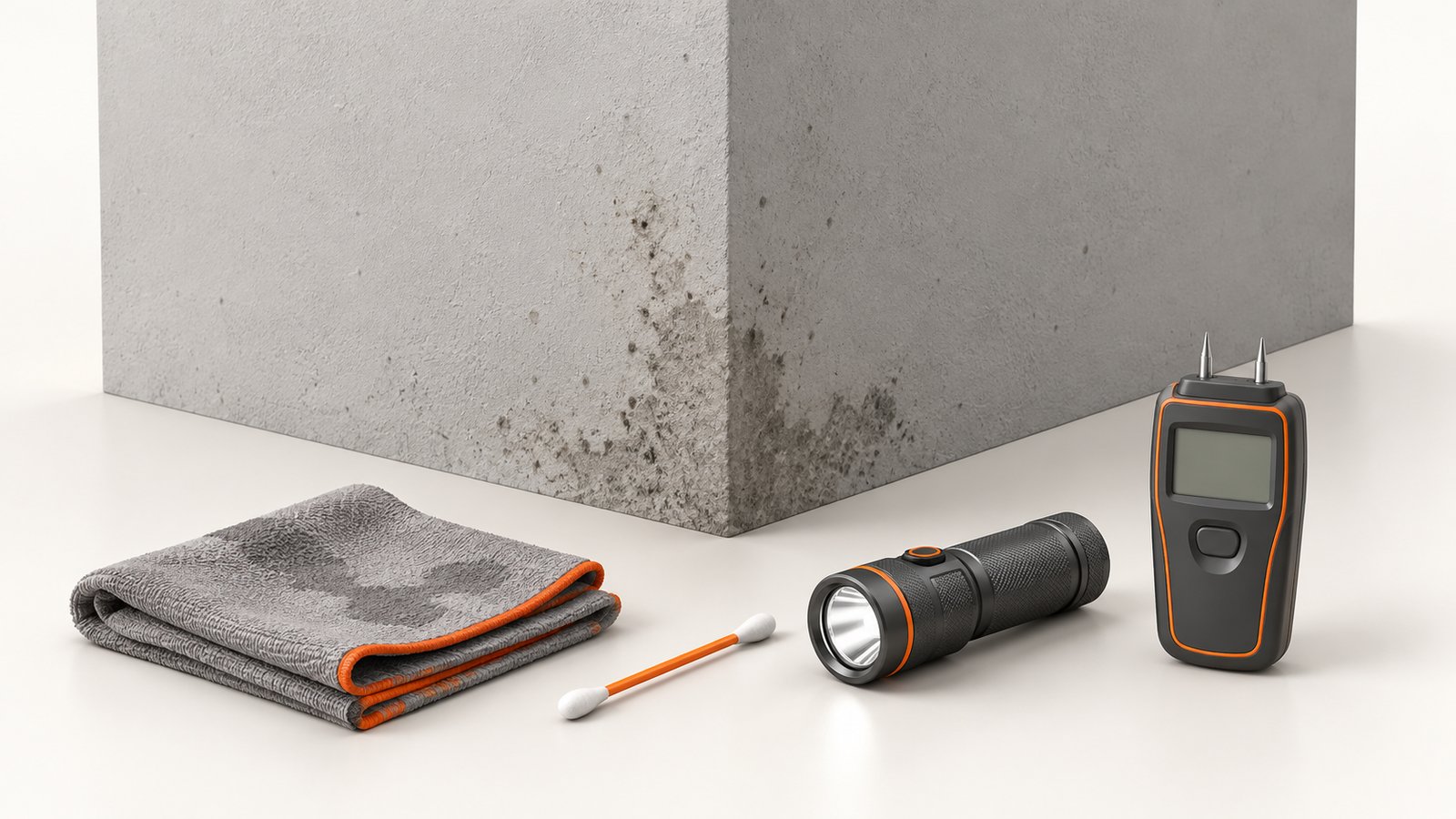
The EPA's rule helps most. It says "There are many types of mold, and none of them will grow without water or moisture." So the water question is the one to answer. A damp-cloth wipe on a low, reachable area shows only whether a mark lifts off the surface. It cannot name a substance. We do not teach a bleach swab as a test. Do not climb up and scrub a ceiling to find out. Our mold on ceiling page explains why overhead work adds fall and falling-material hazards, and mold or dirt covers the wipe check in full.
In most cases you do not need a lab. The EPA says "In most cases, if visible mold growth is present, sampling is unnecessary." If you can see growth, the next step is finding the moisture, not paying for a species name.
Can a Ceiling Have Ghosting and Mold at the Same Time?
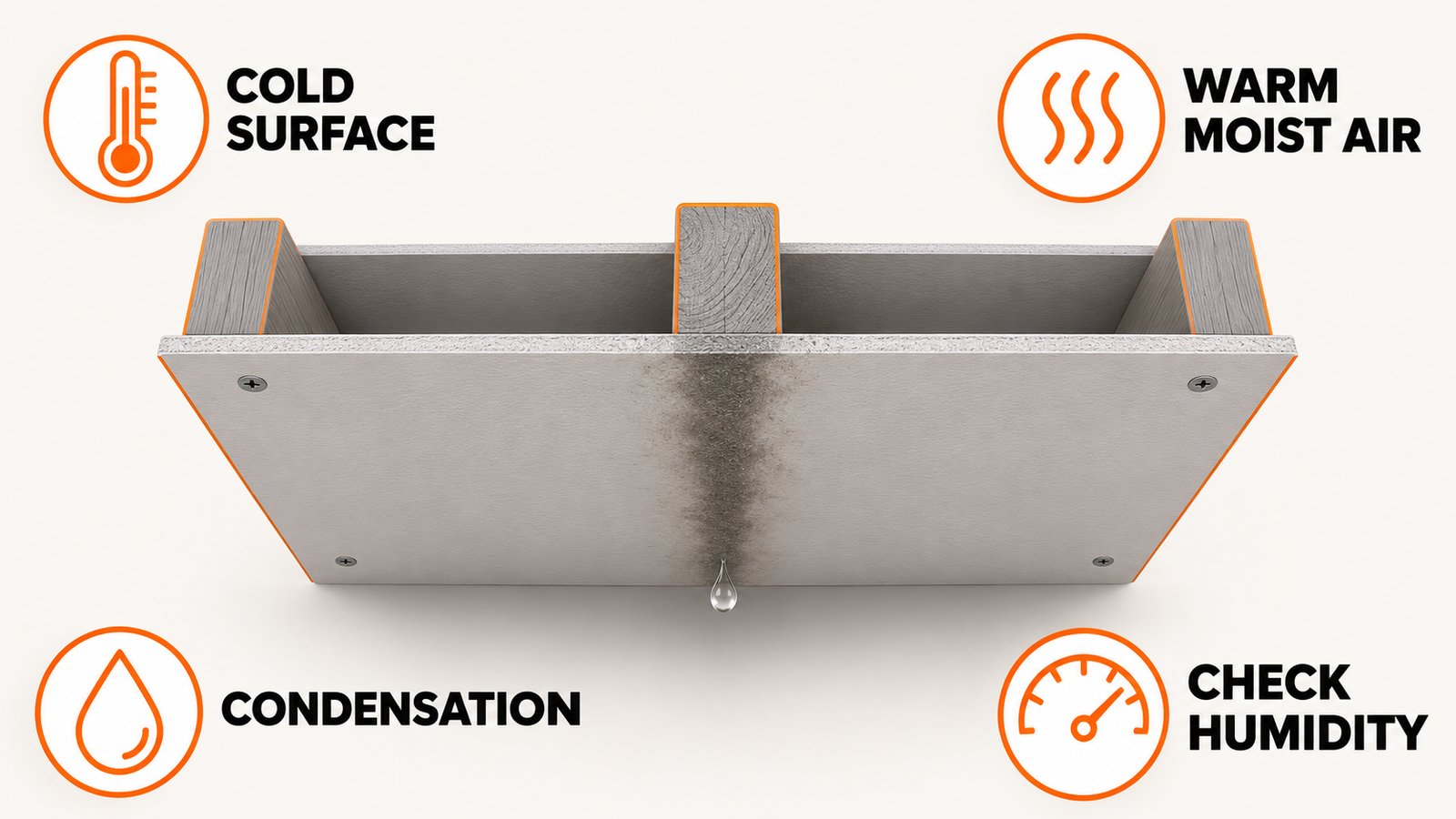
Yes. The same cold spot that collects particles can collect water. The DOE guide says warm air touching a cold surface can condense, and the EPA says "Condensation can be a sign of high humidity." Mold grows where a surface stays damp.
The EPA lists where growth can hide above a ceiling: "the top side of ceiling tiles" and "roof materials above ceiling tiles (due to roof leaks or insufficient insulation)." So thin insulation, an air leak or a roof leak above a dark line is worth ruling out. The DOE guide names another cause. It lists "kitchen, bathroom, or clothes dryer vents that exhaust moist air directly into the attic space instead of outdoors" among problems that "must be corrected before adding insulation."
Measure the room. The EPA says to keep indoor humidity below 60 percent, ideally between 30 and 50 percent, and a meter costs $10 to $50 at many hardware stores. Our humidity risk calculator turns a reading into a plain picture. If a bathroom is below the stain, see bathroom ceiling mold, and for the space above, mold in the attic.
How Do You Fix Ceiling Ghosting?

Treat the cause, in this order.
- Fix any moisture first. The DOE says visible mold or mildew growth, damaged or wet insulation, leaking pipes and vents that exhaust into the attic must be corrected before adding insulation.
- Cut the particle sources. BSC's plain advice about smoke: "Don't smoke inside and your white walls won't go brown." The same list applies to candles, incense, fireplaces and gas appliances. With gas fireplaces, BSC says the particle source is typically a backdrafting pilot light.
- Fix the cold spot. The DOE says stopping air leaks by thoroughly air sealing is "an important step in limiting damage from water vapor." Air sealing and insulating an attic is work for a qualified home performance contractor, not a weekend repair.
- Then clean or repaint. BSC's explanation suggests that if the cold spot and the particles stay, marks will keep forming at the same lines. That is our reading, and we did not find a government source on repainting ghosted ceilings. If the stain proves to be mold, the EPA says "Do not paint or caulk moldy surfaces."
Do not start with a scrubbing session. For stains that are mold, small hard-surface areas follow the EPA and CDC cleanup steps, and wet drywall or ceiling tiles may have to be removed. New York State says porous materials with extensive mold growth, such as drywall and ceiling tiles, should be discarded. Our how to get rid of mold and how to prevent mold pages cover both.
When Are Dark Ceiling Lines a Safety Warning?

Ghosting lines by themselves are a cleanliness and heat-loss sign. But BSC's list of particle sources includes "gas smoke from gas water heaters or gas furnaces," and it names a "backdrafting pilot light in a gas fireplace" as the typical source in gas fireplaces. Soot that is heavy, new, or heaviest near a furnace, vent pipe, fireplace or gas appliance should not be treated as a decorating issue. Our soot vs mold page covers when unexplained soot is a safety warning, and it points to carbon monoxide alarm guidance from the Consumer Product Safety Commission.
If you think a fuel-burning appliance is involved, or anyone feels unwell, get fresh air and call a heating professional or a physician. A photo screening or a wipe test is not the right tool for that.
When Should You Call a Pro About a Ceiling Stain?
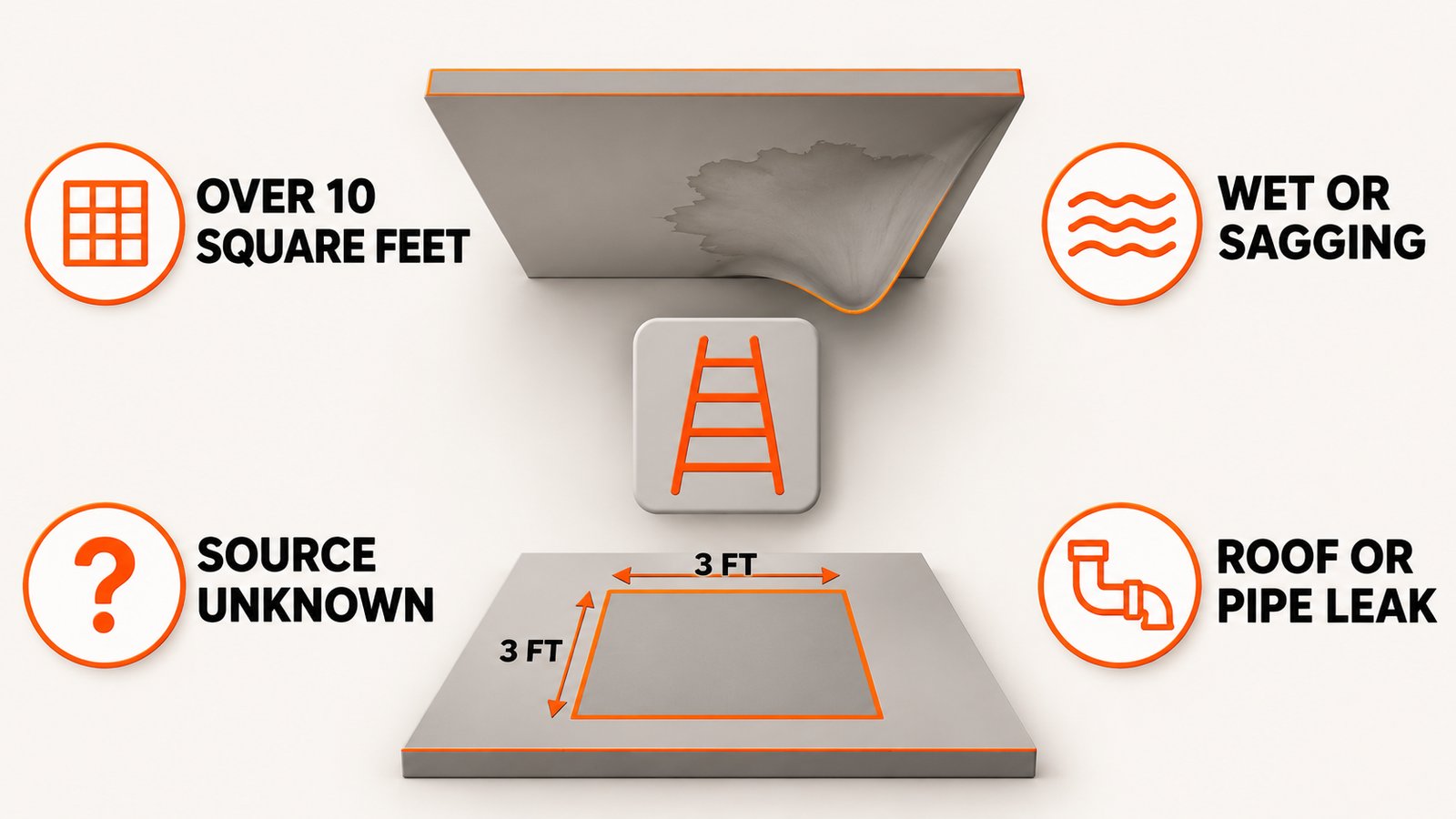
Call a professional if any of these are true:
- The area is bigger than about 10 square feet. That is roughly a 3 foot by 3 foot patch. Past that size the EPA points to its guide for larger jobs, and we suggest a professional. New York State uses the same size for a licensed contractor too.
- The drywall is wet, soft or sagging. Our mold on ceiling page says to keep clear and not press, cut or spray it.
- You suspect a leak or a hidden source. The EPA says to consider hiring an experienced professional for a hidden mold problem. See mold inspection and the mold remediation process.
- The cause may be cold spots or air leaks. A home performance contractor can find air leaks and insulation gaps.
The EPA also says "If you have health concerns, consult a health professional before starting cleanup." To look at a visible spot first, is this mold sorts it from dirt and stains. Mold Scanner AI can help tell whether a spot looks like mold and what to do next. It does not identify species or toxicity.
Frequently asked questions
What is ceiling ghosting?
Ceiling ghosting is dark dust and soot lines on drywall that match the framing behind it. Building Science Corporation says tiny airborne particles plate out on cold spots such as framing. Ghosting itself is not mold, but it can look like it and the two can happen together.
Is ceiling ghosting mold?
Ghosting itself is not. It is particles landing on a cold surface. Mold needs moisture, so a damp, soft, musty or blotchy stain points toward mold. Color alone cannot tell the two apart, so check for water and use a professional when the source is unclear.
Why does ghosting follow my ceiling joists?
BSC says framing loses heat faster, so the surface over it is colder and small particles stick there. BSC wrote about studs in walls. Joists under a cold attic are the same setup, which is our reading of its explanation.
Is ceiling ghosting dangerous?
The lines themselves are a cleanliness and heat-loss sign. Soot that is heavy or near a furnace, vent or fireplace is a different matter and needs a heating professional. For symptoms, see a licensed physician.
Can you clean or paint over ghosting?
You can clean it, but the cause is the cold spot and the particles. BSC suggests marks will keep forming while both remain. We found no government source on repainting. If the stain is mold, the EPA says not to paint over it.
Should I test a ceiling stain for mold?
Usually no. The EPA says sampling is unnecessary in most cases when growth is visible, and the CDC says you do not need to know the type of mold. Find the water source and fix it.
Sources
Every claim on this page traces to one of these. Links open the primary document.