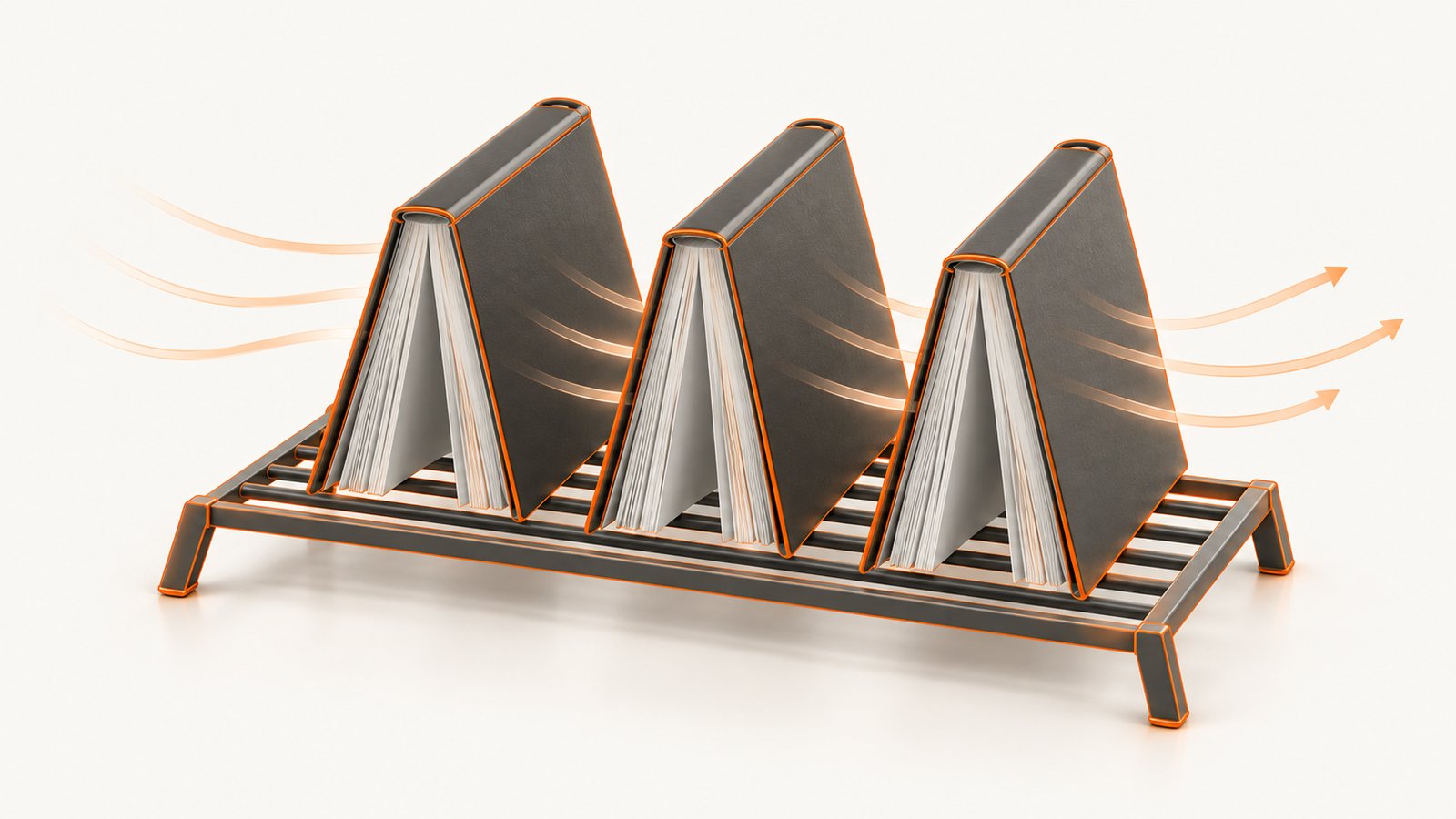
Is It Mold, Mildew, or Foxing?
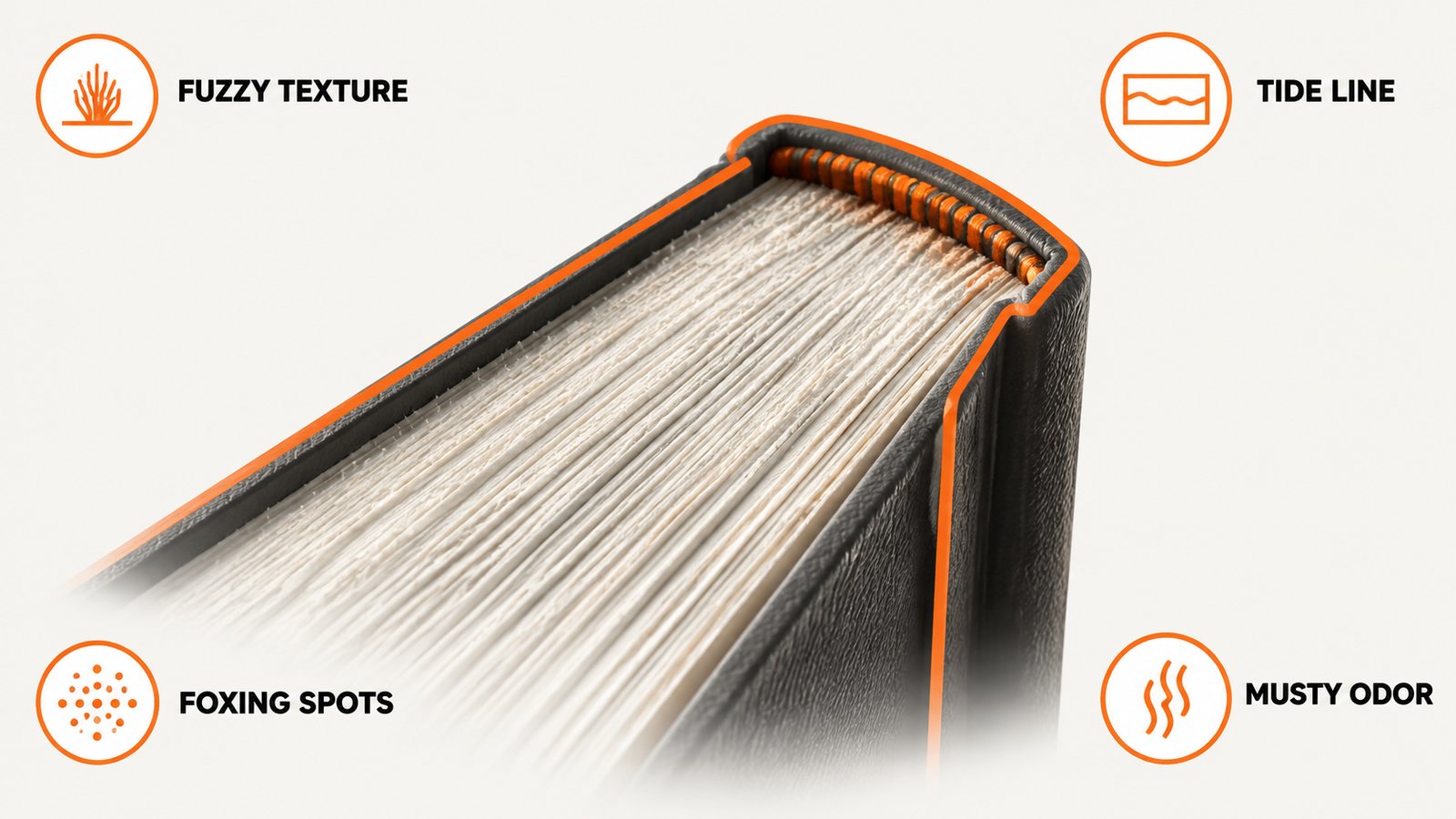
Three different things show up on old paper and they call for three different responses. Sort this out first, because two of them do not need any cleaning at all.
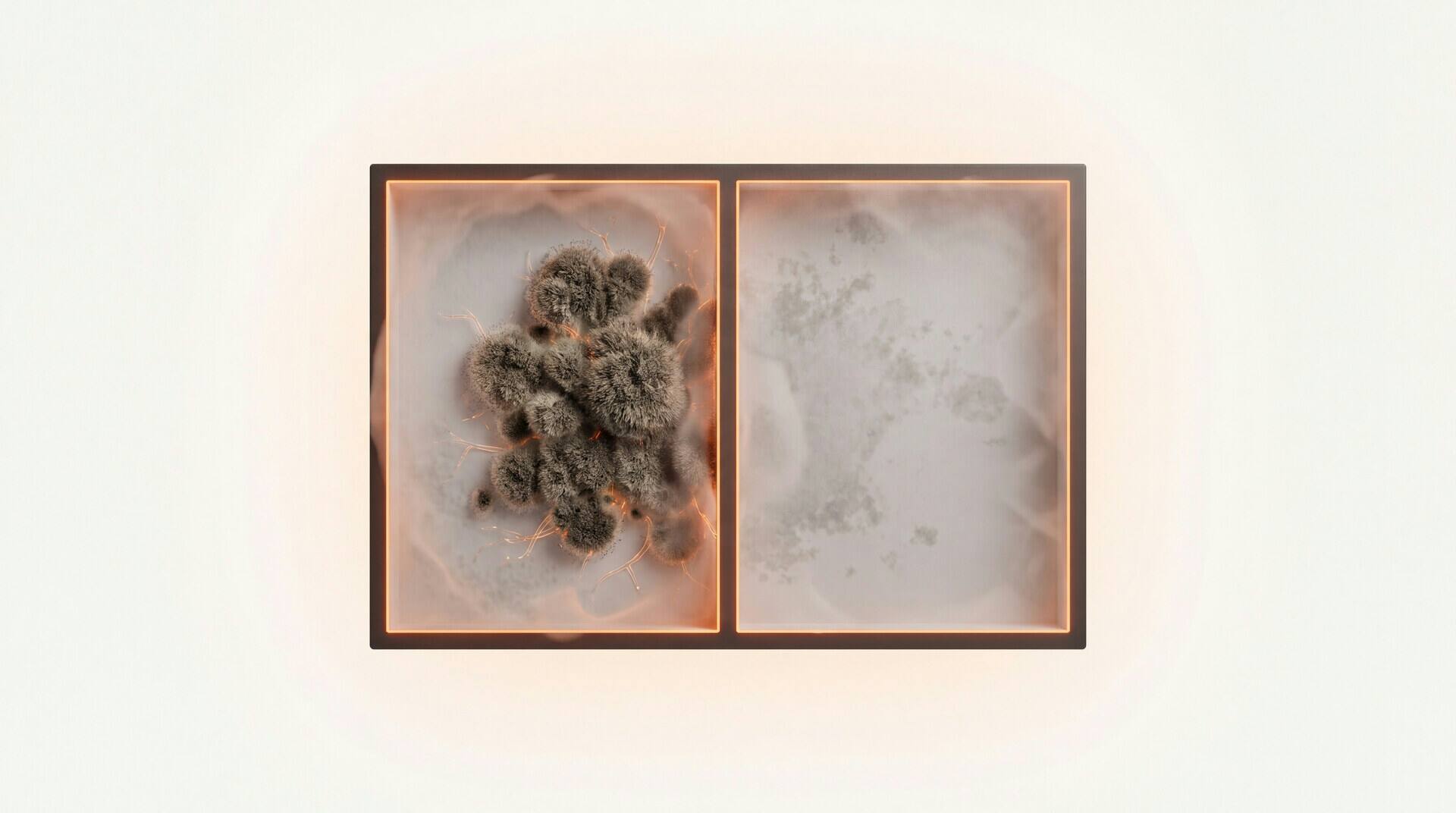
Growth has texture. It sits on top of the paper or cloth rather than in it, it looks fuzzy or webbed under a raking light, and it usually appears on the top edge, the gutter, the boards, or wherever the book touched a damp surface. It often comes with a musty smell. The New York State Department of Health describes mold generally as slightly fuzzy, discolored, or slimy patches that increase in size as they grow, and notes that most molds produce musty odors that are the first indication of a problem.
Water staining is flat. It has a hard tide line where the water stopped, it is in the paper rather than on it, and running a fingertip across it feels the same as clean paper. Staining is cosmetic damage from a past event. It does not spread and it does not need treating, though it does tell you the book was wet once and is worth checking carefully for growth along that same line.
Foxing is the scattered rust-brown speckling common in nineteenth and twentieth century paper. It is flat, evenly distributed, and does not have the fuzz of growth. Conservators debate its causes, and it is a stability and appearance question rather than a cleanup one.
If it is fuzzy and it smells, treat it as growth and follow the four steps below. If you are unsure from the photo, our mold vs mildew comparison and what mold looks like both cover the visual cues in more detail. When it comes to what you do next, the type barely matters anyway: the CDC states plainly that you do not need to know the type of mold.
Step 1: Isolate Before You Touch Anything
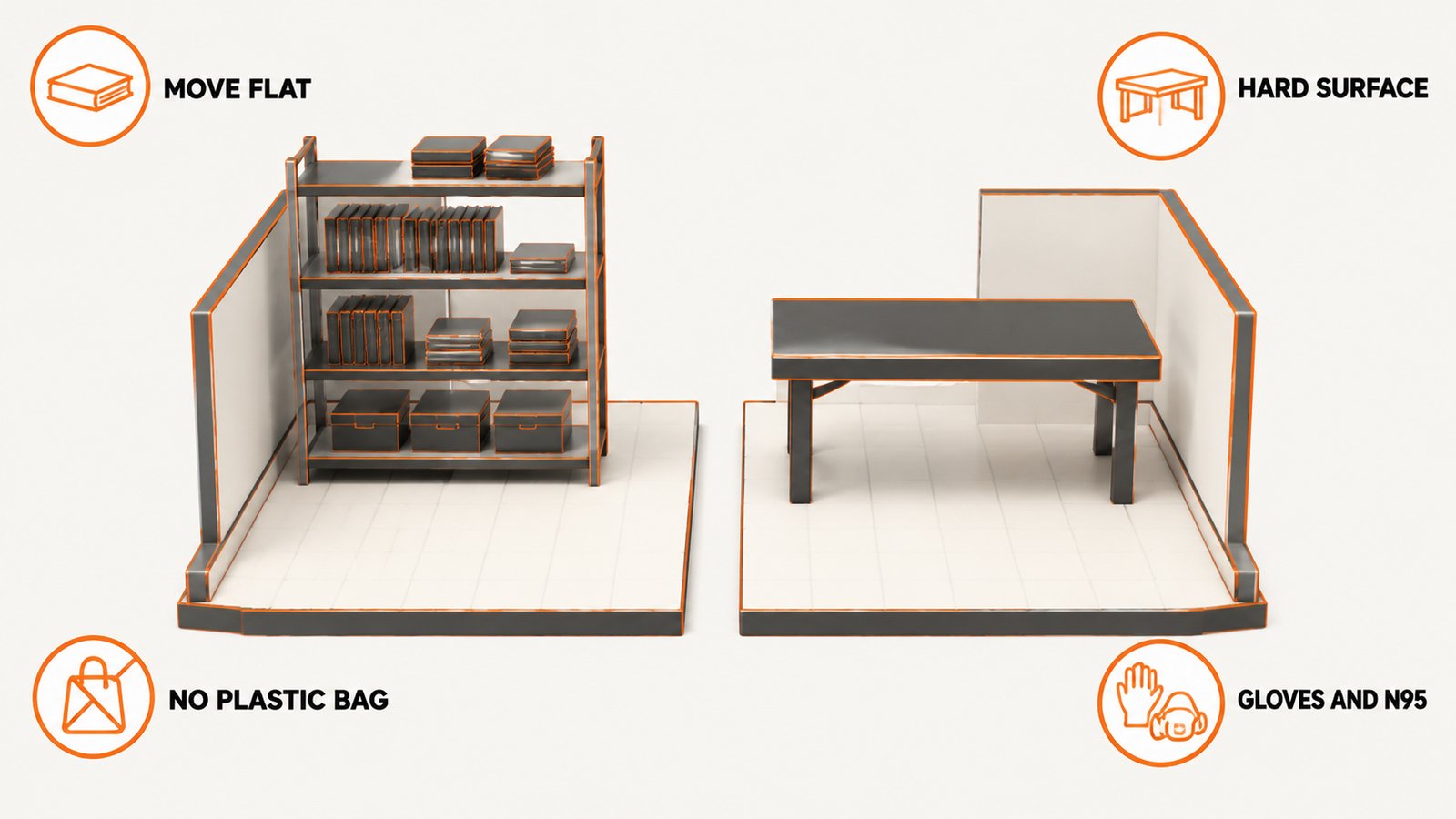
The National Archives gives the instruction directly: isolate moldy record materials in a cool, dry location, with plenty of air circulation so they will not contaminate nearby items, and do not return the records to their original location until the conditions causing the mold growth are addressed.
Every word in that sentence is doing work. Cool and dry stops growth. Air circulation speeds drying and keeps the microclimate around each book from staying humid. Isolation stops the problem spreading to the shelf beside it. And the last clause is the one people skip: the books stay out until the room is fixed, not until the books look better.
How to do it without making things worse:
- Carry them flat and closed. Do not fan a moldy book open in the room where your other books live. Moving it is the moment spores get airborne.
- Pick a hard-surfaced space you can clean afterward. A garage bench, a laundry room counter, or a folding table. Not a carpeted room, and not the room they came from.
- Do not seal damp books in plastic bags or bins. A sealed container holds moisture against the paper and turns a small problem into a wet one. Airflow is the whole point of this step.
- Note where each one came from. The shelf that produced three moldy books is telling you where the moisture problem is, which is the information Step 4 needs.
- Gear up before you handle them. The National Archives warns that many people are sensitive to mold and some mold species are toxic, so moldy items should be handled with extreme care.
New York State's health department recommends rubber gloves and an N95 mask for jobs other than routine cleaning, which this is. Work with a window open. If you are dealing with a whole basement of stored boxes rather than a few volumes, read our page on mold in the basement before you start, because the sequence changes when the room itself is the problem.
Step 2: Dry Them, at the Right Speed
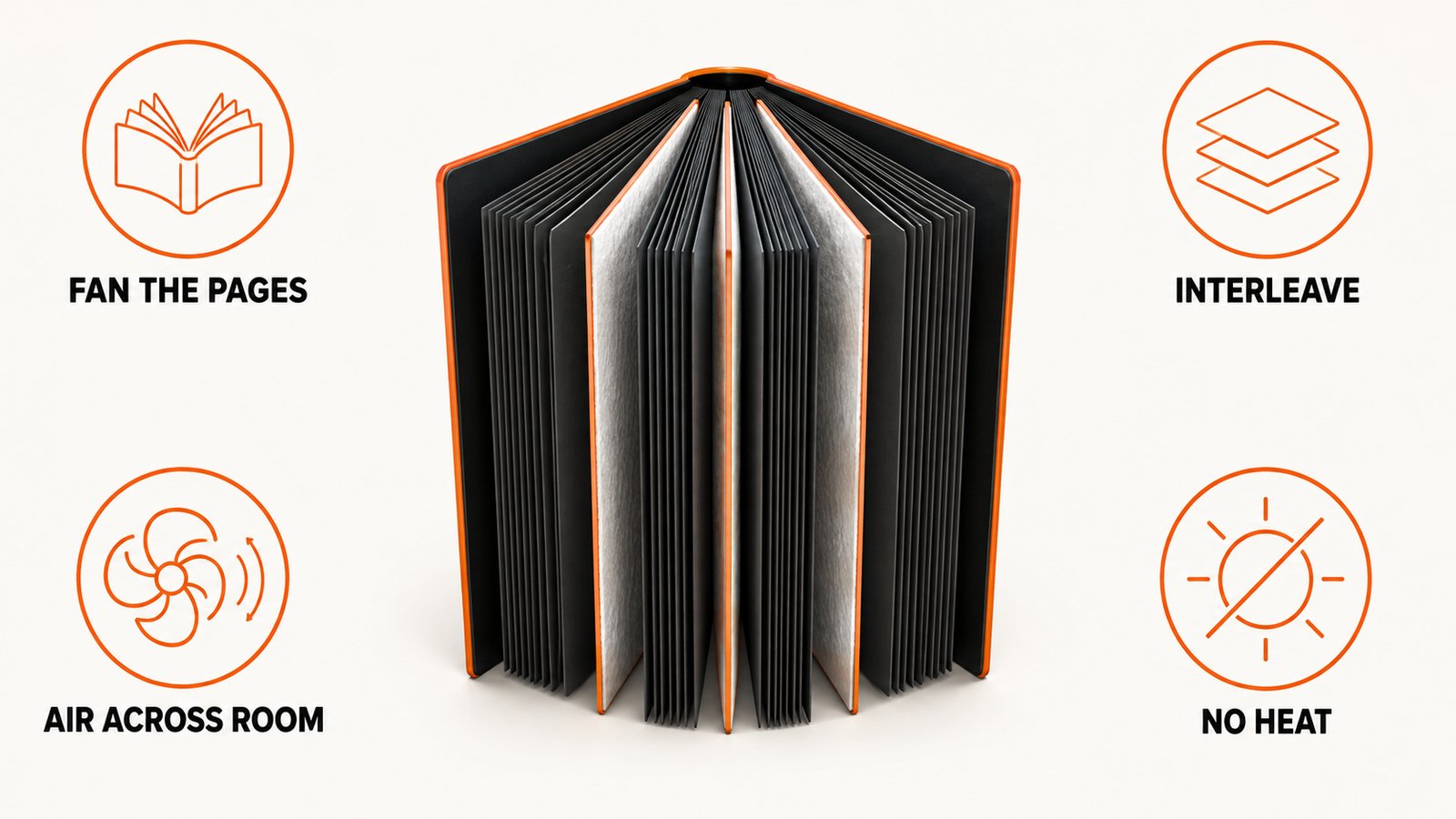
Drying is what turns the problem dormant. The National Archives describes exactly what happens: once record materials are removed to a less hospitable environment, the mold will become loose and powdery as the substrate dries and the mold turns dormant, and it may then be gently brushed off the record materials. That powdery, loose state is the condition you are creating, because that is the only condition in which brushing works.
Speed matters in both directions. The National Archives notes that ideally, the faster record materials are dried the better, but adds that some record materials may distort physically if dried too quickly. Paper cockles, boards warp, and leather cracks when it loses moisture too fast. So the target is steady airflow at room temperature, not heat.
Set them up like this. Stand each book on its tail edge with the covers open at roughly 45 degrees so air can move through the text block. If the pages are damp enough to stick, interleave every twenty or so pages with clean absorbent paper and change it as it takes up moisture. Put an absorbent sheet under each book.
Move air across the room, not at the books. Point a fan at the wall or the ceiling so the whole space turns over rather than blasting one volume. A fan aimed directly into an open book cockles the pages and can lift loose spores off the surface before you have contained them.
Run a dehumidifier if you have one. The EPA advises keeping indoor relative humidity below 60 percent, ideally between 30 and 50 percent, and the CDC says to keep it no higher than 50 percent all day long. In a closed drying room a dehumidifier holds that far more reliably than a fan alone. Our dehumidifier guide and the sizing calculator cover picking one that actually holds the setpoint.
Give it days, not hours. Paper holds moisture in the gutter and along the spine long after the surface feels dry. Check by touch at the gutter, not at the fore edge.
One caution on wet books as opposed to damp ones. A book that has been soaked, rather than gone damp in a humid room, is a different job with a much shorter clock, and the National Archives directs you to contact a preservation professional for advice on how to handle moldy record materials of high value. If the item matters to you, make that call before you improvise.
Step 3: Brush It Off, Outdoors or Into a HEPA Vacuum
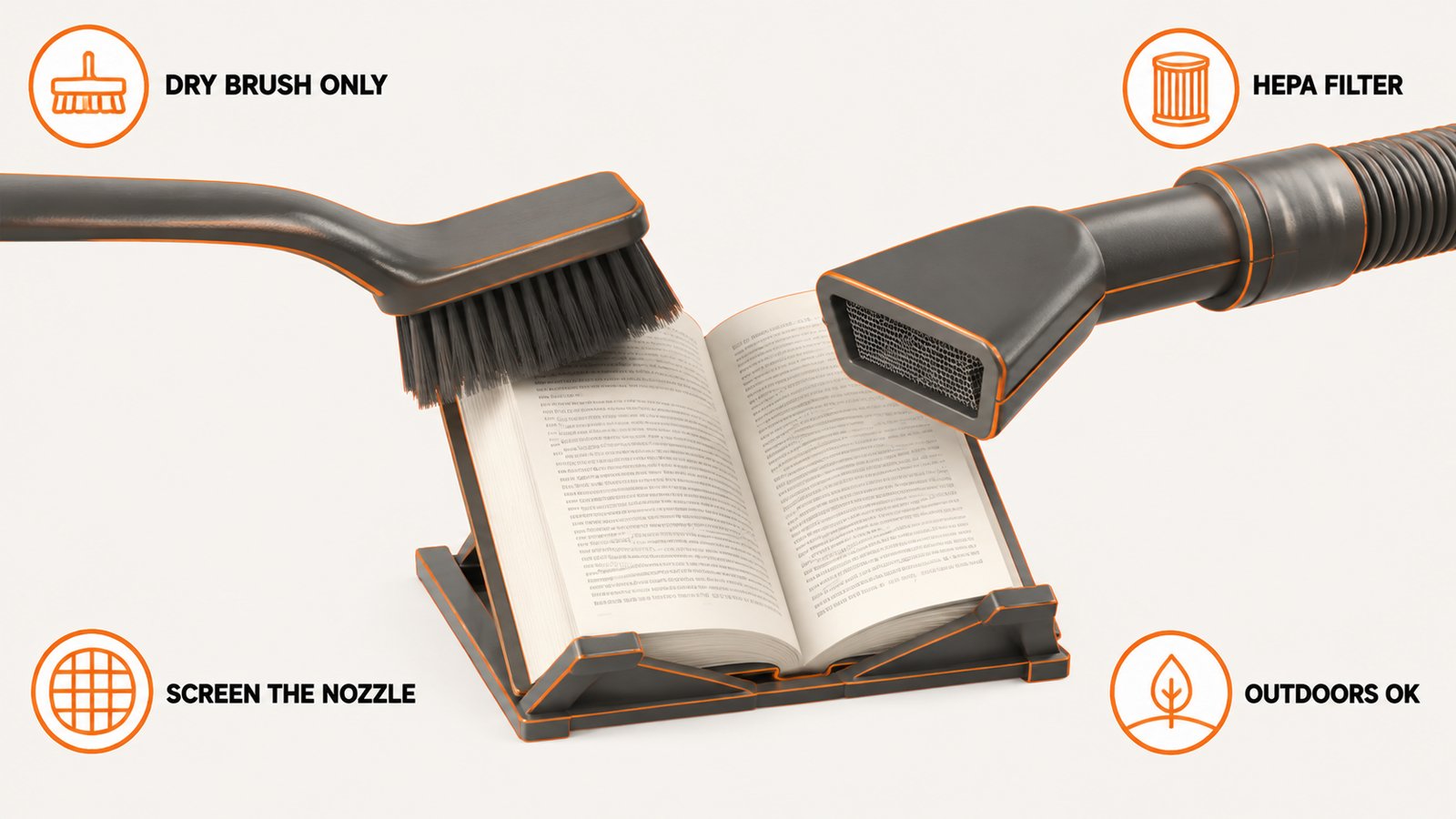
This is the step with the sharpest rule attached to it. The National Archives states that mold should be removed either outdoors or into a vacuum cleaner equipped with a HEPA filter, because regular vacuum cleaners will merely exhaust and recirculate mold back into the room. A household vacuum without HEPA filtration takes the problem off the book and puts it in the air of your house. That is worse than leaving it alone.
You have two acceptable methods:
Outdoors. Take the dried books outside, stand downwind, and brush the powdery residue off with a soft brush, working from the spine outward and from the top of the page edge downward so debris falls away rather than into the gutter. Wear gloves and an N95. Do this on a dry day, and do not leave books sitting in direct sun afterward, because heat and ultraviolet light damage paper and bindings.
Into a HEPA vacuum. Fit the soft brush attachment, hold the nozzle a short distance from the surface rather than dragging it across the paper, and brush toward the airflow with your other hand so the debris travels into the machine. Screening the nozzle with a piece of fine mesh secured over the opening protects fragile paper and catches any fragment that comes loose. Our page on the HEPA vacuum for mold removal covers what filtration rating to look for.
What this step is not: it is not wet cleaning. Do not wipe a page with a damp cloth, do not spray anything onto paper, and do not apply a cleaning solution to cloth or leather bindings. Water reactivates dormant growth, dissolves inks and sizing, cockles paper, and turns a recoverable book into a block. The dry brush is the tool.
Stop immediately if you feel unwell. The National Archives is explicit: do not proceed with any treatment once any negative health effects are observed, no matter how minor they appear. That is a federal preservation agency saying the object is not worth it, and it applies to a shelf of paperbacks just as much as to a manuscript.
Step 4: Fix the Room, or It Comes Back
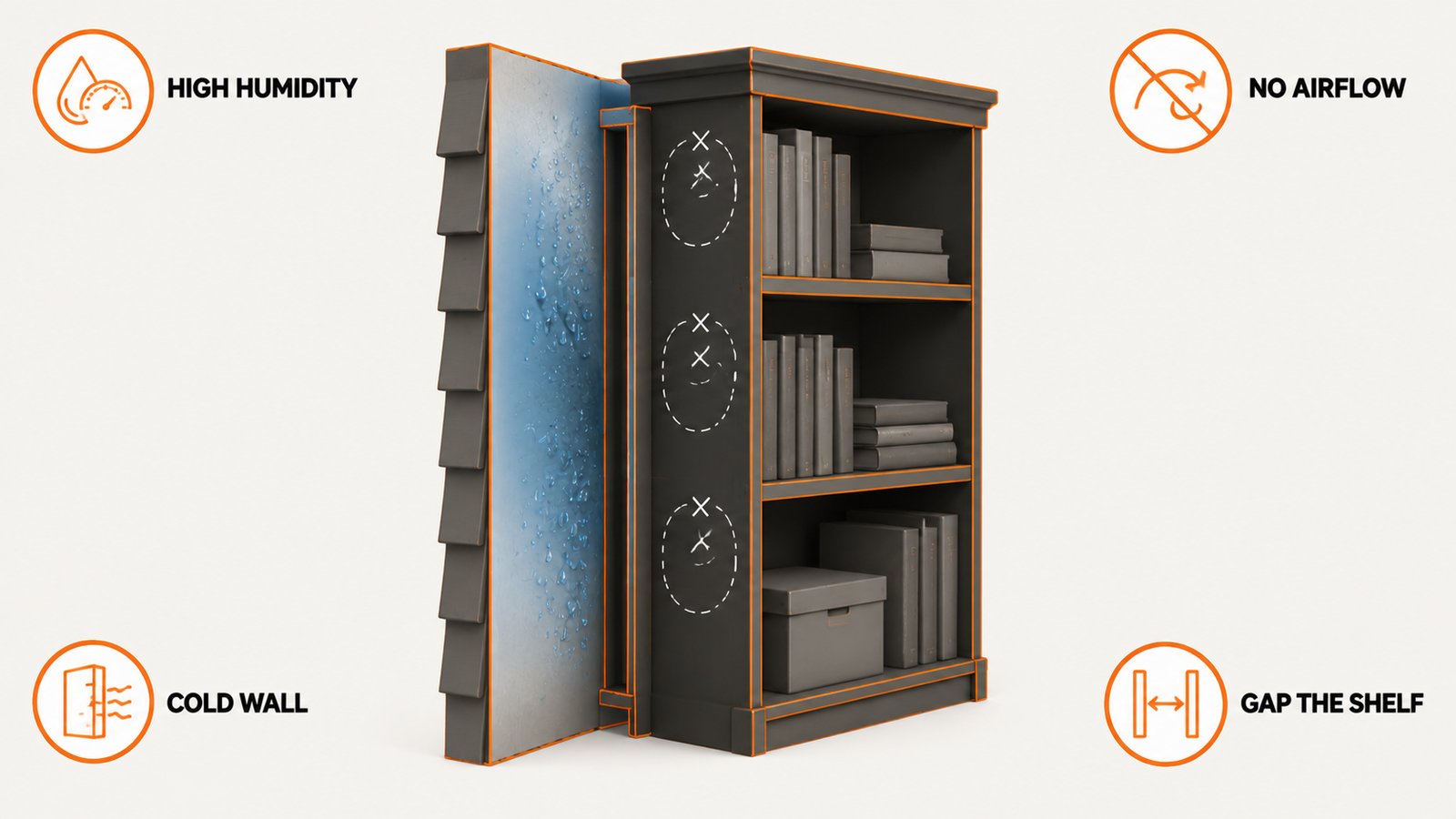
The National Archives names the conditions in one line: mold grows in areas with high temperature, high relative humidity, and low air circulation. Bookshelves collect all three, because a packed shelf against an exterior wall is a still, cool pocket with no air moving through it.
It also gives the reason this step is not optional. Because the mold is merely dormant, if it remains on the record materials or is distributed throughout the space and onto other objects, it will grow whenever environmental conditions are favorable again. You did not kill anything in Step 3. You removed it and made the rest inactive. Put those books back into the same humid corner and you will be doing this again next season.
What to change before the books go back:
- Get the humidity under control. Below 60 percent and ideally 30 to 50 percent per the EPA, or no higher than 50 percent per the CDC. Buy a meter and check the actual shelf, not the middle of the room. The EPA prices a moisture or humidity meter at $10 to $50 at many hardware stores.
- Pull the shelf off the exterior wall. A couple of inches of gap lets air move behind the case and stops the cold-wall condensation that feeds the back row of books.
- Find the water. New York State lists roof leaks, indoor plumbing leaks, outdoor drainage problems, damp basements and crawl spaces, condensation on cool surfaces, and wet clothes drying inside among the usual sources. A bookshelf that molds on one end is usually pointing at one of them.
- Stop storing paper in the worst rooms. Unconditioned basements, garages and attics swing in temperature and humidity with the weather. If that is the only space you have, a dehumidifier on a hygrostat is the price of storing books there.
- Act inside the 24 to 48 hour window on any future leak. The EPA states that if wet or damp materials are dried within 24 to 48 hours after a leak or spill, in most cases mold will not grow.
Our guide on preventing mold covers the whole-house version, and the humidity risk calculator turns a meter reading into a plain risk picture for the room you are worried about.
What Never to Do to a Moldy Book
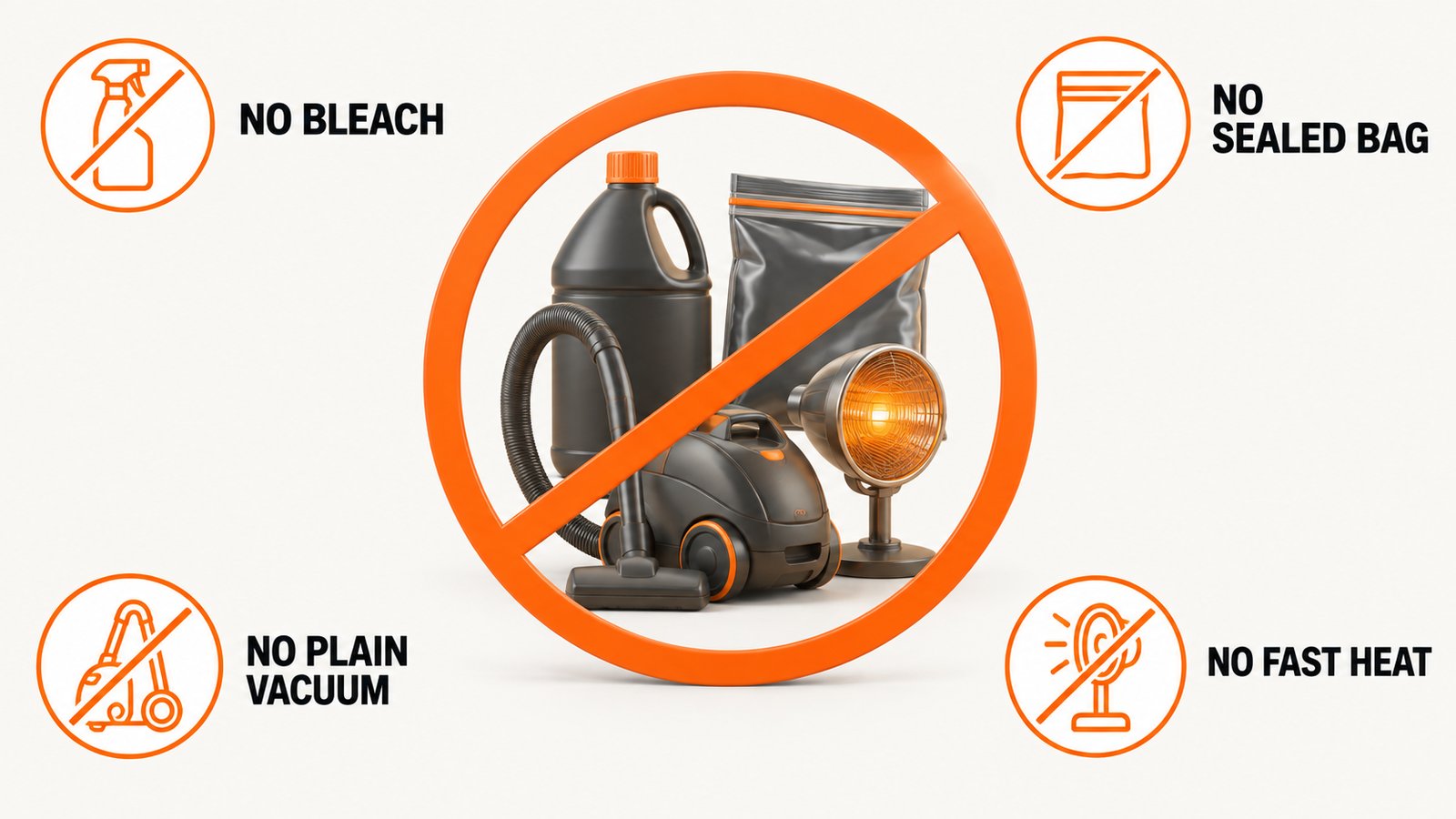
Most destroyed books are destroyed during the cleanup, not by the mold. These four come up again and again.
Do not bleach paper. Chlorine bleach is water carrying an oxidizer, and both halves of that are bad for a book. The EPA states that the use of a chemical or biocide that kills organisms such as mold, chlorine bleach for example, is not recommended as a routine practice during mold cleanup. On paper it also weakens fibers, bleeds ink, and leaves residues that keep working long after you have finished.
Do not seal damp books in plastic. A closed bag or bin traps the exact conditions the National Archives names as the cause: high humidity and low air circulation. If you must transport a moldy book, use an open box or paper wrapping and get it into the drying setup quickly.
Do not use a regular vacuum. Worth repeating because it is the most common mistake with the widest blast radius. The National Archives says regular vacuum cleaners will merely exhaust and recirculate mold back into the room. HEPA filtration or outdoors, nothing in between.
Do not bake books in the sun or with a heater. Fast drying is what distorts paper and cracks leather, which the National Archives flags directly. Ultraviolet light also fades cloth, yellows paper, and embrittles bindings. Steady airflow at room temperature is the method.
One more that is less obvious. Do not run the HVAC system to dry a room you suspect is contaminated. The EPA warns not to run the HVAC system if you know or suspect it is contaminated with mold, because it could spread mold throughout the building. Use a standalone fan and a dehumidifier in the isolated room instead.
Books You Should Not Clean Yourself
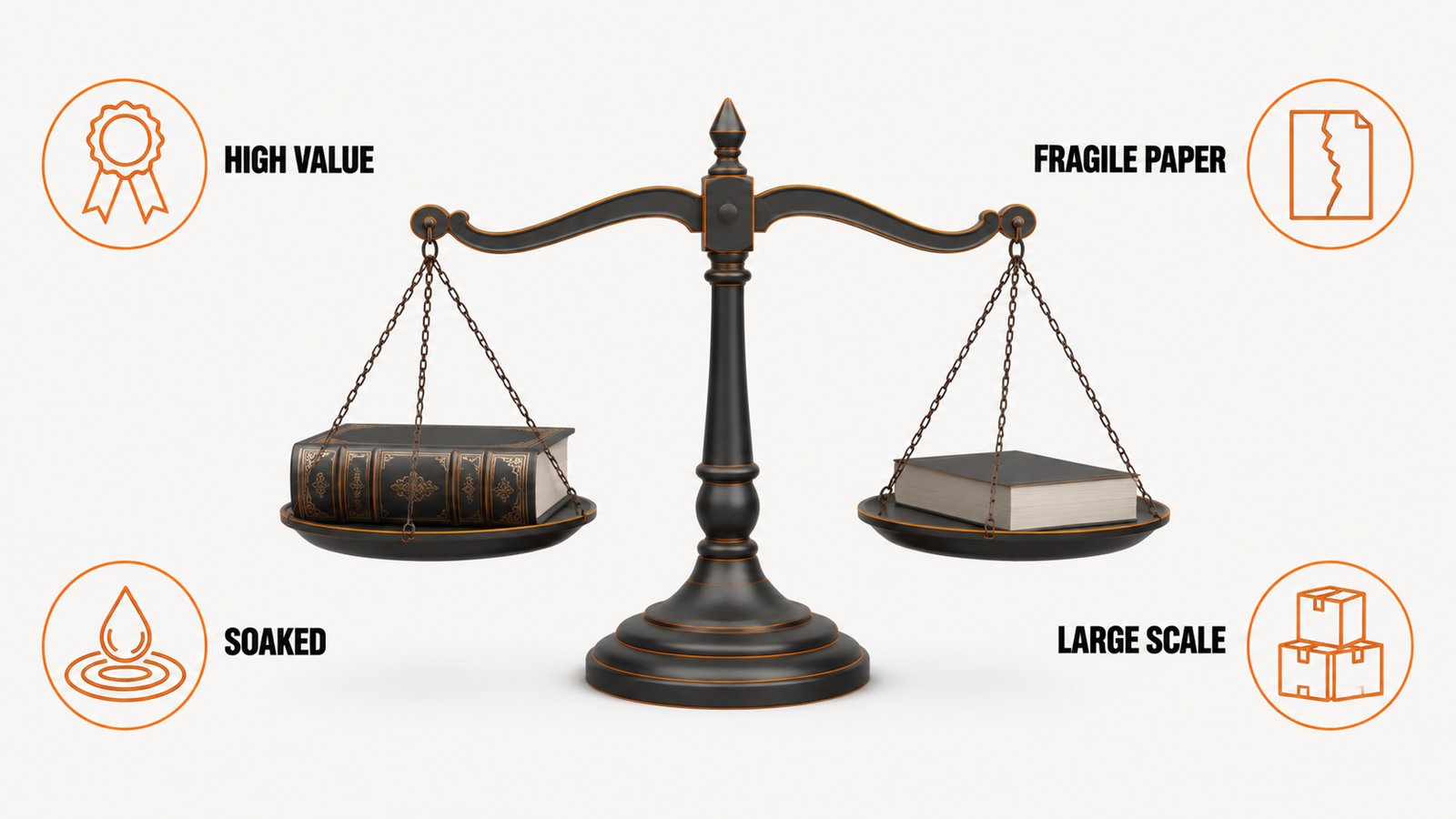
The National Archives says to contact a preservation professional for advice on how to handle moldy record materials of high value, and points to the American Institute for Conservation's guidance on selecting a conservator. You can find one through the AIC's find a professional directory.
Make that call when any of these apply:
- The item has real monetary or archival value. First editions, signed copies, family bibles, deeds, photographs, letters. A dry brush is irreversible on a fragile surface, and so is a mistake.
- The paper or binding is fragile. Brittle nineteenth century paper, flaking leather, loose plates, or a text block already breaking at the hinges. Brushing will take material with it.
- It got wet rather than damp. Soaked paper blocks together as it dries and the window to act is short. This is a conservator's problem, not a weekend one.
- There is a lot of it. A whole flooded shelf or a storage unit is a scale problem that needs containment, air handling and a plan, not a brush.
- Anyone handling it is at higher risk. The CDC notes that immune-compromised people and people with chronic lung disease may get infections in their lungs from mold, and that people with asthma or who are allergic to mold may have severe reactions.
For everything else, the four steps above are the same procedure a small archive uses, done at kitchen-table scale. The books that come back are the ones that got isolated and dried early.
When to Call a Pro
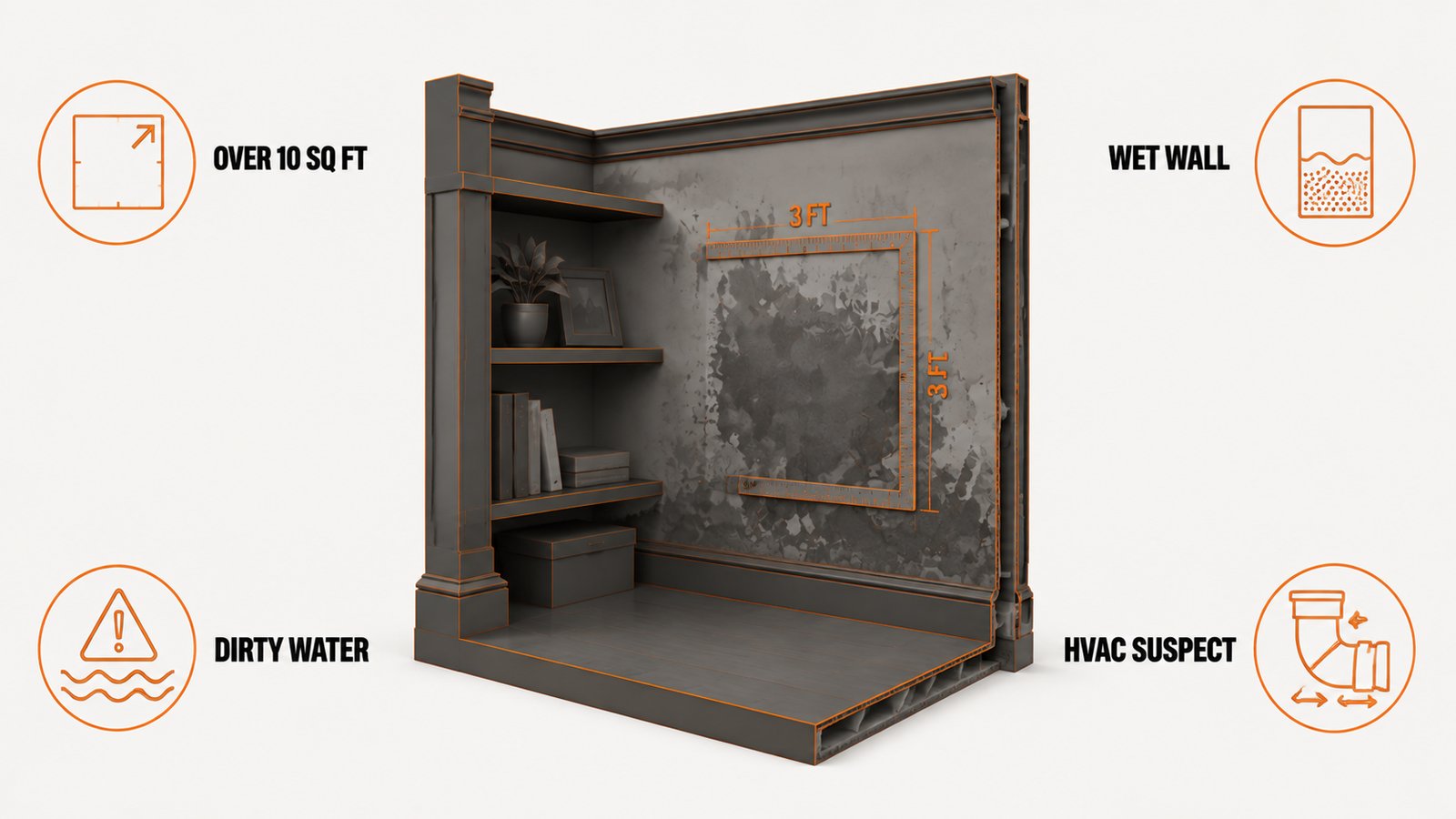
Two different professionals are relevant here and they solve different problems. A conservator saves the object. A remediation contractor fixes the building. Call the second one when any of these are true:
- Visible growth covers more than about 10 square feet. That is the EPA's threshold for handing off a cleanup, roughly a 3-foot by 3-foot patch, and New York State uses the same figure for calling a licensed contractor.
- The books are a symptom of a wet room. If the wall behind the shelf is damp, the growth on the books is the least of it. Find the water first. Our page on mold behind walls covers the signs worth acting on.
- Contaminated water was involved. The EPA says to call in a professional experienced with buildings damaged by contaminated water. Books touched by that water are usually not salvageable at home.
- You suspect the HVAC system. The EPA advises consulting its duct guidance and not running the system while contamination is suspected.
- Health concerns. The EPA advises consulting a health professional before starting cleanup if you have health concerns, and the National Archives says to stop treatment at the first sign of any negative health effect.
When you do hire, look for a contractor working to the ANSI/IICRC S520 standard for professional mold remediation, and check whether your state licenses this work. Our mold remediation certification page covers who is licensed where, and the remediation guide walks through what a proper job includes.
Frequently asked questions
Can you save a book that has mold on it?
Usually, if it is damp rather than soaked and you act early. The National Archives procedure is to isolate the book in a cool, dry place with plenty of air circulation, let it dry until the growth turns loose and powdery, then gently brush that residue off either outdoors or into a vacuum equipped with a HEPA filter. Books that got fully wet, or that carry real value, should go to a preservation professional instead.
Can I use a normal vacuum to clean mold off books?
No. The National Archives states that mold should be removed either outdoors or into a vacuum cleaner equipped with a HEPA filter, because regular vacuum cleaners will merely exhaust and recirculate mold back into the room. Using an unfiltered household vacuum moves the problem from the book into the air of your house.
Should I use bleach or vinegar on a moldy book?
No. Both are water-based, and water is what damages paper: it cockles pages, bleeds ink, dissolves sizing and can block a text block solid. The EPA also states that using a chemical or biocide such as chlorine bleach is not recommended as a routine practice during mold cleanup. The correct tool on paper is a dry soft brush used after the item has fully dried.
How do I dry damp books without warping them?
Stand each book on its tail edge with the covers open at roughly 45 degrees, interleave absorbent paper if pages are sticking, and move air across the room rather than pointing a fan into the book. The National Archives notes that faster drying is better in principle, but that some materials distort physically if dried too quickly, so use room-temperature airflow and a dehumidifier rather than heat.
Will the mold come back after I clean the books?
It will if you put them back in the same conditions. The National Archives explains that the mold is merely dormant, and if it remains on the materials or is distributed onto other objects it will grow whenever environmental conditions are favorable again. It also advises not returning the records to their original location until the conditions causing the mold growth are addressed.
What humidity should a bookshelf be kept at?
The EPA advises keeping indoor relative humidity below 60 percent, ideally between 30 and 50 percent, and the CDC advises no higher than 50 percent all day long. The National Archives names high temperature, high relative humidity and low air circulation as the conditions that let mold grow, so airflow around the shelf matters as much as the number on the meter.
Is it safe to handle moldy books myself?
For a small job with the right precautions, generally yes, but with limits. New York State's health department recommends rubber gloves and an N95 mask for jobs other than routine cleaning. The National Archives warns that many people are sensitive to mold and some mold species are toxic, so moldy items should be handled with extreme care, and says not to proceed with any treatment once any negative health effect is observed, no matter how minor it appears.
Should I throw moldy paperbacks away?
Sometimes that is the right call. The EPA notes that absorbent or porous materials such as ceiling tiles and carpet may have to be thrown away if they become moldy, because mold can grow into the empty spaces and crevices of porous materials and be difficult or impossible to remove completely. Paper is porous. For a replaceable paperback with growth through the text block, discarding it is faster, cheaper and safer than trying to recover it.
Sources
Every claim on this page traces to one of these. Links open the primary document.