What is GOT MOLD?
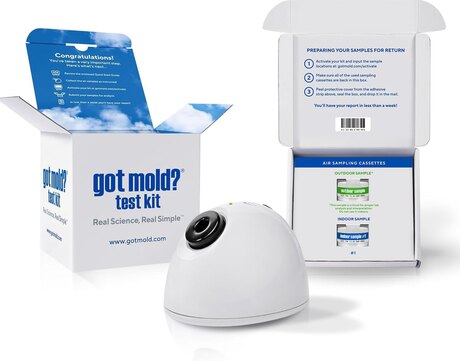
GOT MOLD? is an at-home mold test kit that borrows the professional playbook instead of the drugstore one. Rather than a petri dish you leave open on a counter, you get a small battery-powered pump called the BioVac Air Sampler, a set of air sampling cassettes, and a prepaid mailer. You pull a measured volume of your home's air through each cassette, mail the cassettes to a lab, and a microbiologist counts and classifies what got trapped.
The company behind it is 1-800-GOT-MOLD?, founded by Jason Earle, who has worked in the mold and indoor air quality business since 2002 after tracing his own severe childhood asthma back to a musty farmhouse. His pitch for the kit is straightforward: take the device professionals carry, shrink it, and sell it to homeowners at a fraction of an inspection. That's a fair description of what the product actually is.
The thing to get straight before you spend a dollar: this is a measurement tool, not a diagnosis. It tells you what was floating in the air of a given room during a five-minute window, compared against the air outside your house. That's genuinely useful information. It just isn't the same thing as "you have a mold problem" or "you don't."
How it works, step by step
GOT MOLD? breaks the process into three stages, and it really is that simple in practice.
1. Get your kit
You pick a 1, 2, or 3-room kit based on how many spaces you want tested. It ships in a few days and arrives with the BioVac Air Sampler, batteries, your indoor cassettes, one outdoor control cassette, a prepaid return mailer, and a quick start guide. Nothing else to buy.
2. Test your air
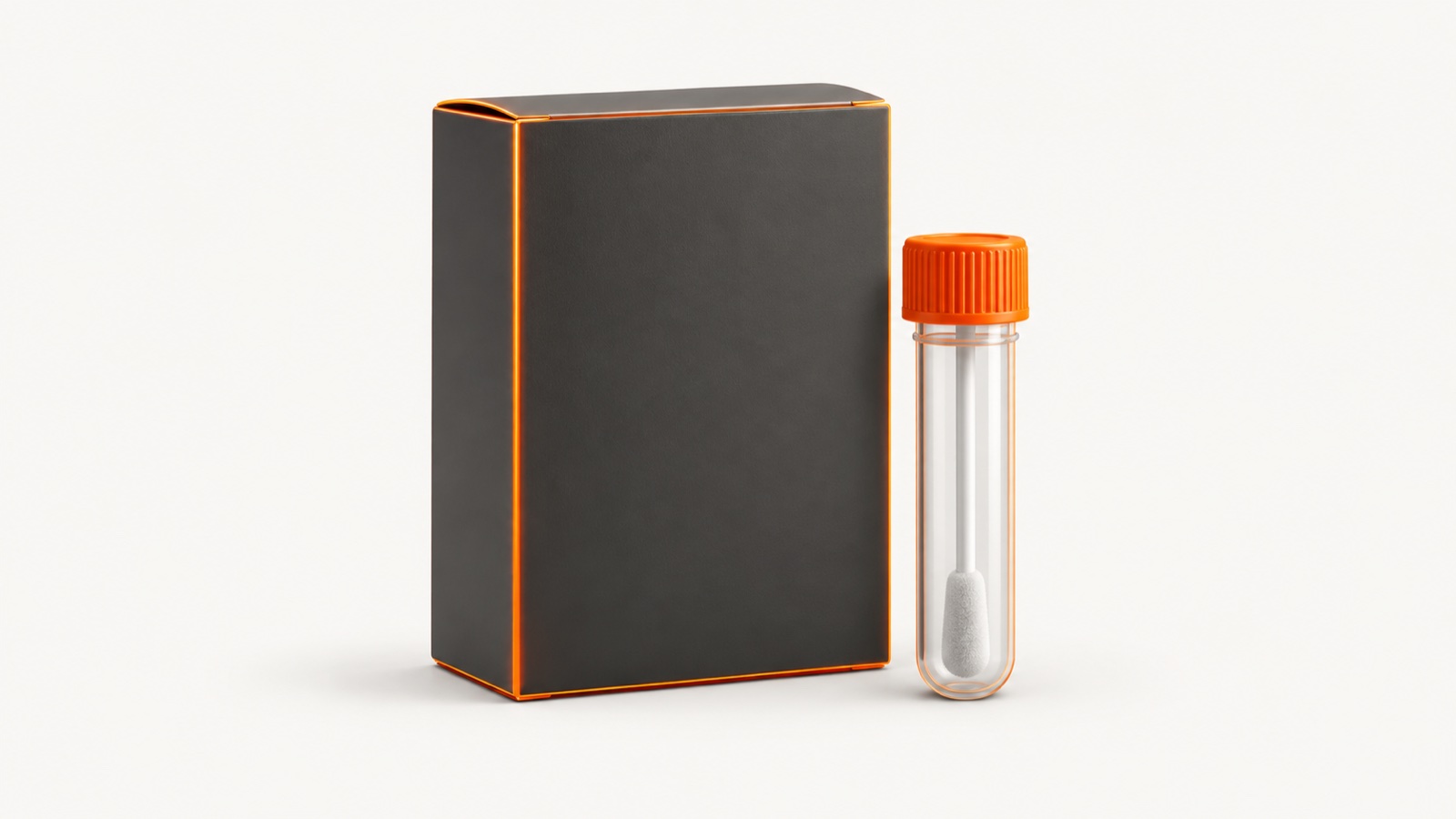
You clip a cassette onto the sampler, set it in the room, and let it run. Each sample takes about five minutes. The pump draws air through the cassette, which acts like a filter: spores and other microscopic particles stick to the collection surface inside while the air passes through. You repeat that for each room, and you take one sample outdoors near the property as your control.
3. Get your results
Everything goes back in the prepaid mailer. At the lab, a microbiologist examines each cassette directly under a microscope, counting and classifying the spores. GOT MOLD? states results are ready three business days after the lab receives your samples, and the report appears online in your account at gotmold.com. Door to door, most people are looking at roughly a week.
The outdoor control is the part that quietly makes the whole thing work. Every home on the planet has mold spores in the air, so a bare indoor number means nothing on its own. The question is whether your indoor air looks like your outdoor air or looks nothing like it. That comparison is what separates a real test from a gimmick. For the wider context on sampling methods, see our guide to how to test for mold.
What it tests for and what you get
The cassettes are spore traps, which GOT MOLD? correctly describes as the most widely used professional air sampling method. Under the microscope, the lab identifies what it finds using up to 245 different categories, which the company says covers all known spore-producing molds and fungi (roughly 100,000 species between them). Spore traps also capture non-viable spores, meaning dead spores still get counted. That matters, because dead spores are evidence a colony existed even if it isn't growing right now.
Your report includes:
- The mold types detected in each room, by category.
- The quantity of each, from the microscopic count.
- Your outdoor baseline to compare the indoor numbers against.
- A plain-language interpretation per room, so you aren't left decoding raw lab data.
- A color-coded grade per room: green (not evident), yellow (slightly evident), orange (moderately evident), red (significantly evident).
Here's what it does not test for, and this trips people up constantly. It does not measure mycotoxins, which are chemical compounds rather than spores and need a completely different lab method (see mycotoxin testing). It is not an ERMI test, which is a DNA analysis of settled dust and answers a different question about a home's history. And it does not tell you where the spores came from or what fixing the source will cost.
Pricing and what is included
These are the prices published on the GOT MOLD? shop page. Pricing moves, so confirm on the official site before buying.
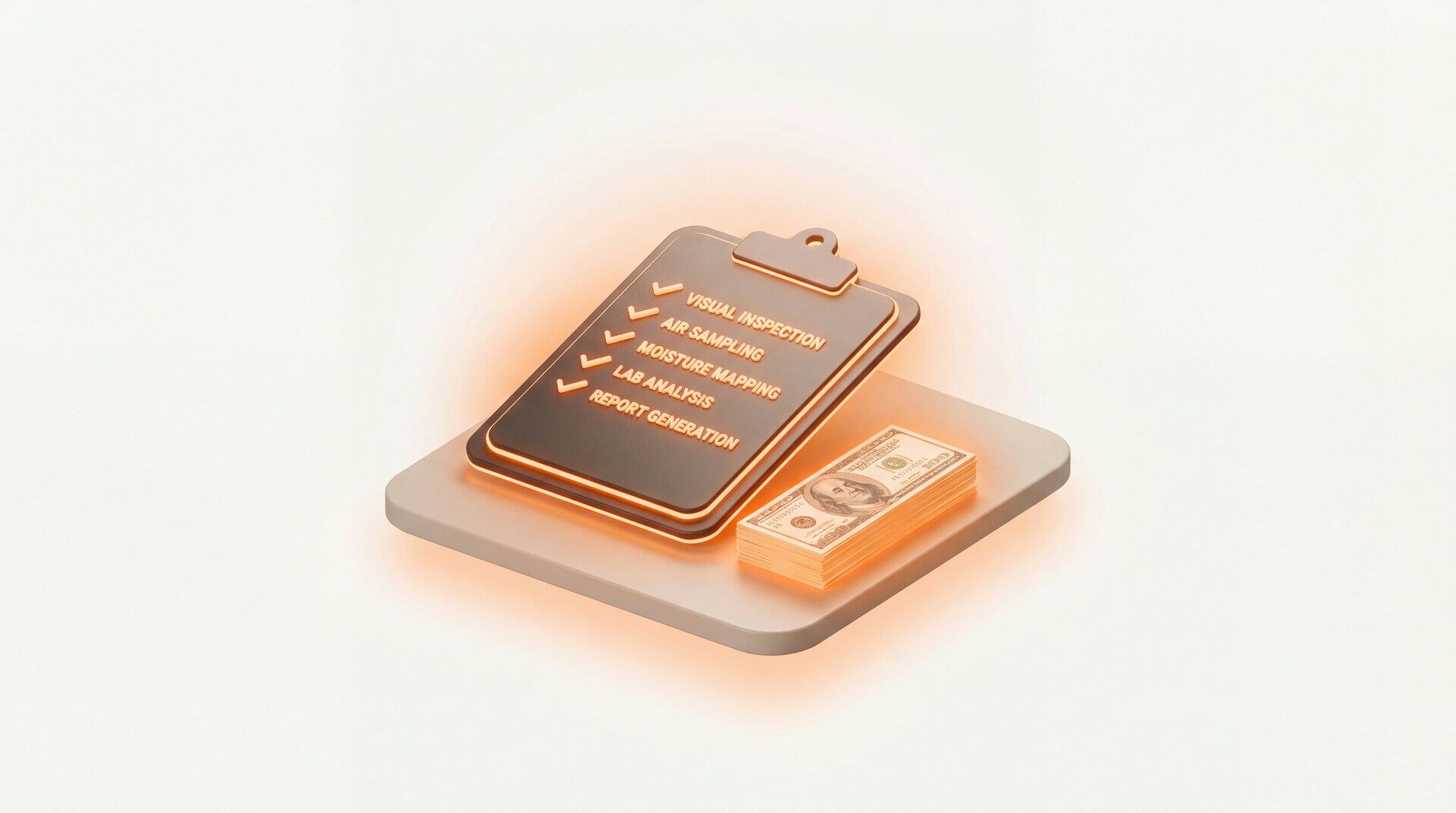
| Product | Price | Includes the BioVac pump? |
|---|---|---|
| 1-Room Kit | $199 | Yes |
| 2-Room Kit | $249 | Yes |
| 3-Room Kit | $299 | Yes |
| 1-Room Refill | $149 | No |
| 2-Room Refill | $199 | No |
| 3-Room Refill | $249 | No |
Every kit price covers all lab fees, accredited analysis, the cassettes, batteries, standard shipping in both directions, the detailed lab report with color-coded interpretation, and support. GOT MOLD? states there are no surprise charges or hidden fees, which is worth noting because plenty of cheap kits sell you a $12 dish and then charge $40 or more per sample for the lab work that actually matters.
The refill math is the underrated part. The pump is reusable and stays yours, so a second round of testing (say, after a remediation job, to confirm the numbers dropped) costs $149 rather than $199. If you expect to test twice, GOT MOLD? gets meaningfully cheaper per test than it looks on day one.
Marginal pricing note worth doing before you click buy: going from the 1-room kit to the 2-room kit costs $50, and 2-room to 3-room is another $50. If you're genuinely unsure which room is the problem, adding the second room is usually the better $50 you'll spend, because a single indoor sample from the wrong room tells you almost nothing.
Accuracy, science, and credentials
Split this into two questions, because they have different answers.
Is the lab work solid?
Yes. GOT MOLD? partners with Eurofins, which it describes as the country's leading microbiology lab, and states the analysis meets AIHA EMLAP standards. EMLAP is the American Industrial Hygiene Association's Environmental Microbiology Laboratory Accreditation Program, and it's the accreditation professional inspectors look for when choosing a lab. The method (direct microscopic examination of a spore trap by a microbiologist) is the same one used on commercial jobs. There's no consumer shortcut hiding in here.
Is the sample solid?
That depends entirely on you, and this is where honest limitations live. GOT MOLD? publishes them rather than burying them, which we respect:
- Air changes minute to minute depending on ventilation and how much people are moving around the building. Your five-minute window is one snapshot, not a trend line.
- Still air can mislead. If a room has been closed up and undisturbed, spores may have settled out of the air, so the cassette catches less than what's actually in the room.
- Hidden mold may not show up. Spore traps capture what's airborne. A colony sealed inside a wall cavity can stay invisible to the test.
- Results are not a measure of exposure or risk, and the company says explicitly they should not be used to decide whether a building is safe.
- Instructions matter. Deviating from the sampling protocol degrades the result, and the lab has no way to know you did.
There's one more limitation that isn't specific to GOT MOLD? but applies to every air test: some of the species people worry most about are poor fliers. Stachybotrys chartarum, the one most people mean when they say black mold, has spores that struggle to become airborne and typically only show up in an air sample once the material gets disturbed. A green result on an air test is not proof there's no Stachybotrys behind the drywall. That is a physics problem, not a GOT MOLD? problem, and no air-sampling kit at any price solves it.
Pros
- Real professional methodology. Spore traps and a calibrated pump, not a petri dish that grows whatever wandered by. This is the single biggest reason to pick it.
- An outdoor control is included by default. You aren't left holding a number with nothing to compare it to. Most cheap kits skip this entirely, which is exactly why their results are meaningless.
- Accredited lab, named lab. Eurofins, to AIHA EMLAP standards. The company names its partner instead of vaguely gesturing at "an independent lab."
- Genuinely all-inclusive pricing. Lab fees and shipping both ways are in the sticker price. No $45-per-cassette surprise after you've already mailed the samples.
- Fast turnaround. Three business days at the lab once samples land, with the report posted online.
- The report is readable. The green/yellow/orange/red grade plus a per-room interpretation means you don't need a background in microbiology to know whether anything stood out.
- Reusable pump, cheaper retests. Refills at $149 make before-and-after testing affordable, which is how you actually verify a cleanup worked.
- Broad identification range. Up to 245 spore categories, and non-viable spores get counted too.
- Honest marketing. The site states its own limits, including that it can't see inside walls and isn't a replacement for a professional. That's rarer than it should be in this category.
Cons and limitations
- It's expensive for a DIY kit. $199 is a lot next to a $15 hardware store box. It's cheap next to a professional inspection. Where you land depends on which one you were actually choosing between.
- One snapshot, one moment. Five minutes of air in one room on one day. Test on a still morning versus a windy afternoon with the HVAC running and you can get different pictures of the same house.
- It can miss what's hidden. Wall cavities, subfloor, and inside HVAC are where the expensive problems live, and airborne sampling is the wrong instrument for finding them.
- Poor-flying species can hide from it. As above, undisturbed Stachybotrys often doesn't reach the cassette.
- No mycotoxins, no ERMI. If those are what you came for, this is the wrong product.
- It finds nothing, it fixes nothing. The report tells you spores are present and roughly how many. It won't point at the leak, the humidity, or the wall causing it. Diagnosis is still on you or a professional.
- Room selection is a silent failure mode. Sample the wrong rooms and you get a clean report from a moldy house. The kit can't warn you about this, and it's the most common way people waste the money.
- Not a safety verdict, by the company's own words. If you want a document that says your home is safe, no air kit will give you one.
Who it is for
Buy it if
- You smell something musty and want lab-grade evidence before spending several hundred dollars on an inspector.
- You've had a water event (a leak, a flood, a slow drip under a sink) and want to know if it left spores in the air.
- You just finished a remediation job and want before-and-after numbers to confirm the counts dropped. The reusable pump makes this the kit's best use case.
- You're a renter or a buyer who needs something more credible than a phone photo to start a conversation, while understanding it isn't a legal verdict.
- You want to compare two or three specific rooms against each other and against outdoors.
Skip this product if
- You can already see the mold. If there's a visible patch on the bathroom ceiling, you don't need a lab to confirm mold exists. Spend the $199 on fixing the moisture and cleaning instead. Testing to confirm what your eyes already told you is the most common waste of money in this whole category.
- You need to prove something in a dispute. For an insurance claim, a landlord fight, or a real estate deal, get a professional whose report carries their license and their liability. Ours is not legal advice, but a self-collected sample is easier to challenge.
- You're chasing mycotoxins or want an ERMI. Wrong test. Go read mycotoxin testing and the ERMI test guide first.
- You're certain it's inside a wall. Air sampling is the wrong tool. You need moisture meters, thermal imaging, or someone opening the assembly.
- $199 is a stretch right now. Fix the humidity and the leak first. Those are the actual cure. Testing is diagnostics, and diagnostics don't dry anything out.
How it compares to the alternatives
GOT MOLD? vs petri dish kits ($10 to $30)
Not a close contest. A settling plate collects whatever happens to fall in it and then grows it. Since every building has some spores in the air, a dish will nearly always sprout something, and people read that fuzzy circle as proof of a problem when it's proof of being indoors on Earth. There's no measured air volume, no outdoor control, and usually no lab. GOT MOLD? costs roughly ten times more and is roughly infinitely more informative. If your only two options are a petri dish or nothing, pick nothing and spend the money on a dehumidifier. More on the category in our mold testing kit guide.
GOT MOLD? vs other lab-analyzed air kits
Several kits mail cassettes to a lab. The differences that matter are whether a real pump with a known flow rate is included (rather than relying on passive collection), whether the outdoor control is included or an upsell, whether lab fees are in the price or billed later, and whether the lab is named and accredited. GOT MOLD? clears all four, which is why it's near the top of the consumer category. If you're comparing, hold every rival to those same four questions and most fall over on at least one.
GOT MOLD? vs an ERMI dust test
Different questions entirely. ERMI analyzes settled dust by DNA and speaks to a home's accumulated history rather than what's airborne right now. It's not a snapshot the way air sampling is, but it's also widely debated as a consumer decision tool, and it won't tell you which room's air is loaded today. Some people run both. Read our ERMI breakdown before spending on one.
GOT MOLD? vs a professional inspection
This is the real comparison, and GOT MOLD? doesn't pretend otherwise: the company states the kit is a cost-effective first step and is not designed to replace an inspection by a qualified professional. A professional brings moisture meters, thermal cameras, the ability to open up an assembly, and twenty years of pattern recognition about where water goes in a house built like yours. They find the source. GOT MOLD? measures the air. Those aren't competing products, they're different stages. Where the kit wins is cost and speed for a first look. Where it loses is everything that requires a human standing in your basement. See what a mold inspection costs to weigh it.
Our take: use the kit when you don't yet know whether you have a problem worth paying to investigate. Use a professional the moment the money at stake exceeds their fee, or when the report comes back orange or red. If the report comes back red, don't buy another kit. Call someone who follows the IICRC S520 standard (ACAC or RIA credentials and a state license count too).
How to use it without wasting a cassette
Every cassette you burn is real money, and the failure modes are avoidable. Follow the quick start guide that ships with the kit, and mind these:
- Step 1: Pick the right rooms before the kit arrives. Sample where you smell must, see staining, or had water. Not the rooms that seem fine. A clean result from the wrong room is the most expensive $199 in this category.
- Step 2: Get the air moving normally first. GOT MOLD? warns that spores settle out of still air and can produce misleading results. Live in the room normally, run the HVAC as you usually would, and don't test a space that's been sealed shut for a month without stirring it back to its normal state.
- Step 3: Read the guide start to finish before you open anything. The company is explicit that accuracy depends on following the instructions. The cassettes don't forgive improvisation and the lab can't tell you improvised.
- Step 4: Take the outdoor control on the same visit. It has to be close to the property so the comparison is apples to apples. Don't skip it, don't take it at a different house, don't take it a week later.
- Step 5: Run each indoor sample for the full five minutes. Set the sampler at roughly breathing height, out of a direct draft from a vent or an open window.
- Step 6: Log what was happening. Write down the date, room, weather, and whether the HVAC was running. When you retest later, that context is what makes the two reports comparable.
- Step 7: Mail it back immediately in the prepaid mailer. Every extra day is a day you're not getting an answer.
- Step 8: Read the outdoor number first. When the report lands, your outdoor baseline is the ruler. Indoor counts only mean something held against it.
Wear an N95 and gloves if you're poking around a suspected growth area while you set up. Disturbing mold makes it airborne, which is bad for your lungs and, incidentally, for the honesty of your sample.
Our verdict and rating
4.5 out of 5.
GOT MOLD? earns the rating by refusing to be a gimmick. The category it competes in is full of $15 boxes that grow a spot of fuzz and call it a finding. This one uses the actual professional method, includes the outdoor control that makes numbers mean something, names an accredited lab, puts every fee in the sticker price, and returns a report a normal person can read in about three business days. The reusable pump plus $149 refills also make it the only consumer option that's practical for before-and-after testing, which is the single most valuable thing a homeowner can measure.
The half point comes off for limits that are real even though they're honestly disclosed. It's a snapshot. It can miss what's in the wall. It won't find the source. It can't tell you if you sampled the wrong room, which is the most likely way you'll waste the money. And at $199, the gap to a professional inspection is smaller than the gap to a petri dish, so for some people the right move is to skip straight to the professional.
What buyers say: on Amazon the 1-Room Kit holds 4.3 out of 5 across 20 ratings, and the spread is worth reading before you spend. Roughly 77 percent are five-star and about 16 percent are one-star, with almost nothing in between. That polarization fits the product. When the sampling is done right and the report answers the question that was asked, people are glad they bought it. When someone tests the wrong room, or expects the report to name a cause or declare the house safe, they feel they spent $199 for nothing. Which of those two outcomes you get is mostly decided before the kit ships, by which rooms you pick.
Bottom line: buy GOT MOLD? if you want lab-grade evidence about your air before you decide whether to spend on a professional, or if you want to verify a cleanup actually worked. Don't buy it to confirm mold you can already see, don't buy it expecting mycotoxin data, and don't buy it hoping for a document that says your home is safe. It doesn't claim to give you one, and no air test can.
For how this kit ranks against every other testing option, see our best mold test kits guide, and the master Best Mold Products hub for every category we cover.
Screen visible surfaces with Mold Scanner AI
Here's the thing that decides whether your $199 was well spent, and it happens before the kit ships: which rooms do you sample?
A 1-room kit gives you one indoor cassette. Point it at the guest bedroom while the problem is quietly behind the washing machine, and you'll get a green report from a house with a real issue. GOT MOLD? can't solve this for you. The pump doesn't know where your leaks are.
Mold Scanner AI provides AI-assisted visual screening for visible surfaces. It offers 266 guided photo prompts across 19 rooms, with 38 in Quick and 129 in Standard. Processing time varies, and the app does not replace physical sampling or a licensed inspection.
Then buy the kit and sample those rooms. The app finds the candidates for free. The lab tells you what's in the air of the rooms worth testing. Used in that order, the $199 is doing the job you paid for. Used in the other order, you're guessing with a microscope.
What GOT MOLD test kit reviews say
GOT MOLD test kit reviews split into two camps: buyers who sampled the right rooms and are glad they paid, and buyers who tested the wrong room or expected a verdict and feel the $199 was wasted.
On Amazon, the 1-Room Kit holds 4.3 out of 5 across 20 ratings. About 77 percent are five-star and about 16 percent are one-star, with almost nothing in between. That is a small sample, so read it as a pattern, not a precise score. Ratings change, so check the current listing before you decide.
Why the happy reviews are happy
- The buyer sampled rooms with a smell, staining, or a past water event.
- The buyer understood the report shows what was in the air during a short sample, compared against outdoors, and used the kit as a first look or to check that a cleanup worked.
Why a kit disappoints some buyers
- The room they tested was fine, and the problem was somewhere else in the house.
- They expected the report to name the source of the moisture or to say the home is safe. It does neither, and the company says so.
- They expected mycotoxin or ERMI results. This kit runs neither.
- They tested a room that had been sealed and still for weeks, and the spores had settled out of the air.
When you read GOT MOLD reviews on other sites, look for which rooms the reviewer sampled and what they expected the report to tell them. That detail explains most of the gap between the five-star and one-star ratings. Our own 4.5 out of 5 rating is in the verdict section above.
Frequently asked questions
Where can I read GOT MOLD test kit reviews?
The 1-Room Kit is listed on Amazon, where buyers leave ratings, and this page carries our own review and 4.5 out of 5 editorial rating. Whether you read GOT MOLD test kit reviews on Amazon, on gotmold.com, or anywhere else, check which rooms the buyer sampled and what they expected the report to tell them. That explains most of the difference between happy and unhappy reviews.
Are GOT MOLD reviews good?
Mostly good, with a split. On the Amazon listing, the 1-Room Kit holds 4.3 out of 5 across 20 ratings, with about 77 percent five-star and about 16 percent one-star. Buyers who sampled the right rooms tend to be glad they bought it. Buyers who tested the wrong room, or expected the report to name a cause or declare the home safe, tend to feel the money was wasted. We rate it 4.5 out of 5.
How much does the GOT MOLD? Test Kit cost?
On the company's own shop page, the 1-Room Kit is $199, the 2-Room Kit is $249, and the 3-Room Kit is $299. Refill kits, for people who already own the BioVac Air Sampler, are $149 for one room, $199 for two rooms, and $249 for three rooms. GOT MOLD? states that all lab fees and standard shipping both ways are included with no hidden charges. Check the official site for current pricing before you buy.
Is the GOT MOLD? Test Kit accurate?
It uses spore traps, the same air sampling method professional inspectors use, and the cassettes are analyzed by a microbiologist under a microscope to AIHA EMLAP accredited standards through Eurofins. That makes the lab side genuinely professional grade. The accuracy limit is not the lab, it's the sample. Air changes minute to minute, so one cassette captures one moment in one room. GOT MOLD? says outright that results are not a measure of exposure or risk and should not be used to decide whether a building is safe.
How long do GOT MOLD? results take?
GOT MOLD? states results are available three business days after the lab receives your samples, and the report is posted online at gotmold.com as soon as it is ready. Add shipping time in both directions and most people are looking at roughly a week from ordering to reading the report.
Can the GOT MOLD? kit find mold hidden inside a wall?
Often no, and the company says so. Spore traps capture what is airborne, so a colony sealed inside a wall cavity may never reach the cassette. The same page notes that if the room's air has been still for a long time, spores may have settled out of the air and produce misleading results. Hidden mold is found by tracing moisture, opening the assembly, or bringing in a professional with meters and cameras.
Does GOT MOLD? test for mycotoxins or run an ERMI test?
No. It is an air spore-trap test that counts and classifies spores, using up to 245 categories. Mycotoxins are chemical compounds, not spores, and they need a different lab method. ERMI is a DNA analysis of settled dust, which is a different sample type entirely. If you specifically want those, see our guides to mycotoxin testing and the ERMI test.
How is GOT MOLD? different from a $15 petri dish kit?
A petri dish sits open on a counter and grows whatever lands in it. Since every home on earth has some mold spores in the air, a dish will almost always grow something, which tells you close to nothing. GOT MOLD? pulls a measured volume of air through a cassette, has a microbiologist count and classify the spores, and compares your indoor result against an outdoor control from the same property. That comparison is the part that makes a number mean anything.
Do I still need a professional mold inspection?
Sometimes. GOT MOLD? describes the kit as a cost-effective first step and states plainly that it is not designed to replace an inspection performed by a qualified professional. If the report comes back orange or red, if you can smell must but see nothing, or if money is on the line in a purchase, insurance claim, or landlord dispute, bring in a professional who follows the IICRC S520 standard. ACAC or RIA credentials and a state license count too.
How many cassettes do I need and where should I sample?
GOT MOLD? says one cassette generally covers one room, with small rooms like a bathroom getting their own cassette and very large open areas such as a 2,000 square foot basement taking two or three. Every kit also includes one outdoor cassette as the control, and it has to be taken close to the property so the comparison is fair. Sample the rooms where you smell something, see staining, or had a water event, not the rooms that seem fine.
Is the BioVac Air Sampler reusable?
Yes. The pump comes with the full kit and stays yours. Once you own it, retests use the cheaper refill kits, which include the cassettes, lab fees, shipping, and report but not the pump. That is what makes GOT MOLD? cheaper than a professional visit if you plan to test more than once, such as before and after a remediation job.
What do the colors in the GOT MOLD? report mean?
The report grades each room on a four-color scale: green means not evident, yellow means slightly evident, orange means moderately evident, and red means significantly evident. Each room gets a plain-language interpretation alongside the spore types and counts, which is the main reason this report is easier to act on than a raw lab printout.
Sources
Every claim on this page traces to one of these. Links open the primary document.