
What is Immunolytics?
Immunolytics is a United States mold-testing company that has been running its own mycology lab since the mid-2000s. The core product is a do-it-yourself mold screening kit built around gravity settle plates. You take the samples at home, then mail the ones you care about to the Immunolytics lab, where technicians identify the mold genus and give you spore counts. Every kit that includes lab analysis also comes with a one-on-one consultation with a certified indoor environmental professional.
That last part is what separates Immunolytics from the $12 hardware-store plate kits. A cheap plate kit grows something fuzzy and leaves you to guess. Immunolytics pairs the plate with a real lab and a human who explains the result. In the DIY mold world, that combination of low price plus lab plus expert guidance is unusual, and it is the main reason the brand has a loyal following among people dealing with suspected mold in their homes.
It helps to be clear on what Immunolytics is not. It is not a professional inspection, it is not an air-pump study, and it is not a legal or insurance-grade exposure assessment. It is a screening tool. Used with that understanding, it does its job well. Used as a substitute for a full inspection, it will disappoint you. The rest of this review walks through exactly where that line sits.
How it works, step by step
The whole method is refreshingly low-tech. There is no pump, no battery, and nothing to calibrate. Here is the full process from box to results.
- Step 1: Pick your rooms. Decide which spaces you want to screen. Most people test the rooms where they spend the most time or where they smell something musty, plus one outdoor control sample for comparison.
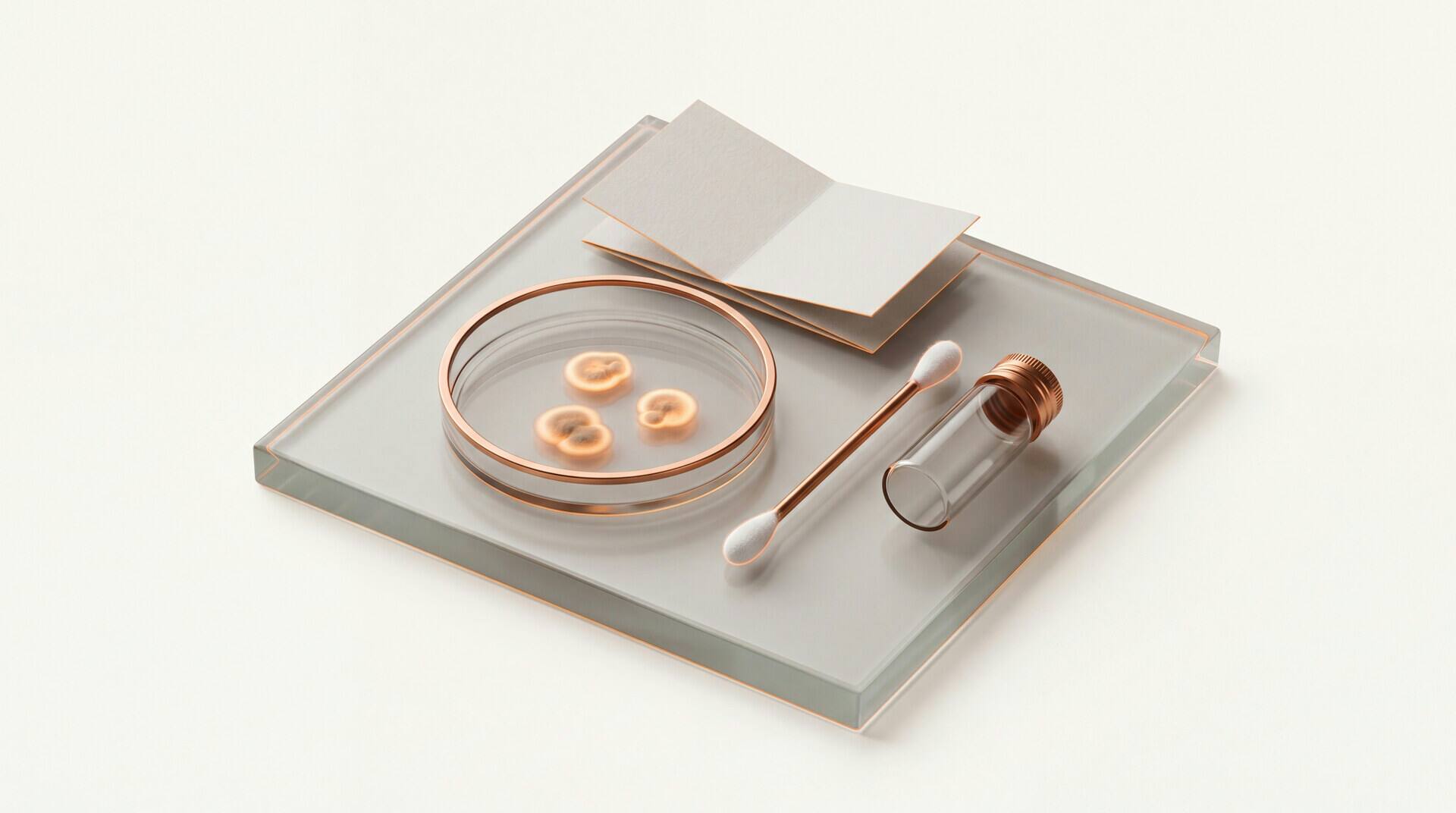
- Step 2: Expose the plate. Open a sealed agar plate and set it out, agar side up, in the middle of the room on a table or shelf. Leave it undisturbed for about one hour. During that hour, spores floating in the room settle by gravity onto the sticky agar.
- Step 3: Seal and label. Close the lid, seal it, and write the room and date on the plate. Do not open it again.
- Step 4: Incubate. Leave the plate at room temperature for three to four days. Whatever spores landed on the agar start to grow into visible colonies you can see with the naked eye.
- Step 5: Read it, then decide. A plate with heavy growth is a clear signal that something is airborne in that room. A nearly clean plate is a good sign. At this point you can stop with a rough yes or no, or move to the lab step.
- Step 6: Mail the plates for analysis. Send any plate that concerns you to the Immunolytics lab. Technicians identify the mold genus and count spores.
- Step 7: Get results and a consultation. Lab results with genus identification and counts typically come back about a week after your samples arrive. Then you get a call with a certified indoor environmental professional who explains what the numbers mean and what to do next.
The one step people get wrong is the incubation. If you crack the lid to peek during those three or four days, you contaminate the sample. Set it and forget it until the growth is done.
What it tests for and what you get
The plate captures the fungi that are actually loose in your room air and able to grow. The lab then tells you which genera showed up. In a typical home you will see names like Aspergillus, Penicillium, Cladosporium, and sometimes Stachybotrys, the group most people mean when they say black mold. You get:
- Genus identification. The lab names the mold that grew, so you know whether you are dealing with common outdoor drift or a species that points to indoor water damage.
- Spore counts. A rough measure of how much grew, which matters most when you compare an indoor room against your outdoor control sample.
- An indoor-versus-outdoor read. The useful comparison in mold screening is not the raw number, it is whether an indoor room is meaningfully higher or different in species from the outdoor baseline.
- A consultation. A certified indoor environmental professional walks you through the report and your next steps.
Immunolytics also sells add-ons beyond the standard air plate. There is a surface swab with lab analysis for testing a visible spot directly, bacteria plates, and a settled-dust history test that looks at what has accumulated in a home's dust over time rather than a single hour of air. If you already have a visible patch, a swab is often the more direct test. If you want a longer-term picture, the dust test answers a different question than the one-hour plate.
Pricing and what is included
Immunolytics prices per sample rather than as one fixed kit, which is unusual and takes a second to get used to. The upside is that you only pay for what you test. The approximate pricing at the time of this review looks like this. Prices change, so confirm current numbers on the official store before ordering.
| Item | Approximate price (verify current pricing on immunolytics.com) |
|---|---|
| Lab analysis, per sample | From about $36 per sample (genus ID and spore counts) |
| Whole-home room kit | From about $216 for five rooms, including lab analysis and consultation |
| Individual air plate | A few dollars each if you build a custom kit |
| Surface swab with analysis | Around $36 each |
| Settled-dust history test | Around $90 each |
| Consultation | Included with kits that have lab analysis |
For context, a professional mold inspection with air sampling commonly runs several hundred dollars and up, and often into four figures for a full multi-room study. Against that, a five-room Immunolytics kit at roughly $216 with the lab work and a consultation built in is a strong value if a screening is all you need right now. Retail bundles are also sold on Amazon and Walmart, though buying direct usually gives you the cleanest path to the lab analysis and the consultation, which are the whole point.
A note on numbers: the prices above are approximate and were the best figures available from public listings at the time of writing. Mold-testing prices move around. Always confirm the current price and exactly what is included on the official Immunolytics store before you buy.Accuracy, science, and credentials
This is the section that matters most, and it cuts both ways. Immunolytics runs a legitimate mycology lab staffed by people who identify mold for a living, and the consultation is delivered by certified indoor environmental professionals. That is real credibility. The plates themselves are a genuine, long-established sampling method. When the lab tells you a genus grew on your plate, you can trust that identification.
The honest catch is in the sampling method, not the lab. Gravity settle plates have well-documented limits that apply to every brand that uses them, Immunolytics included:
- They measure settling, not concentration. A settle plate captures only the spores that happen to fall onto the agar during the sample window. It does not measure the total concentration of spores in the room air the way a calibrated air pump does.
- They favor heavy spores. Big, heavy spores like Stachybotrys drop out of the air faster and are over-represented, while small, light spores like some Aspergillus species stay airborne and are under-represented. The mix on your plate is not a perfect mirror of the mix in your air.
- They only grow living spores. Culture plates grow viable spores. Dead spores, which can still trigger allergy symptoms, do not grow and are not counted.
- They are a snapshot. One hour on one day is a point in time. A window left open, a running fan, or recent cleaning can all move the result.
None of this makes the test useless. It makes it a screening tool. Federal guidance from the EPA and CDC is consistent on a bigger point: sampling is not required to decide whether to clean up mold, because if you can see or smell mold you should address the moisture and remove it regardless of what a number says. Testing is most useful for confirming a suspicion, comparing indoors to outdoors, or documenting a genus. Immunolytics does that job at a fair price. It is not, and does not claim to be, a defensible clearance test or a legal exposure assessment.
Pros and cons
Pros
- Low cost: samples start around $36, far below a full inspection
- Real mycology lab analysis with genus ID and spore counts, not just a grow-it-yourself plate
- Free one-on-one consultation with a certified indoor environmental professional
- Simple and reliable: no power, no pump, nothing to break or calibrate
- Flexible per-sample pricing, so you pay only for the rooms you test
- Add-ons for surface swabs, bacteria, and settled-dust history
- Widely available direct and through major retailers
Cons and limitations
- Gravity plates measure settling, not total airborne concentration
- Biased toward heavy spores; light spores are under-counted
- Culture plates grow only living spores and miss dead ones
- A single one-hour sample is a point-in-time snapshot
- Cannot find mold sealed inside walls if it is not shedding into the room
- Not a defensible clearance or legal exposure assessment
- Per-sample pricing can add up if you test many rooms with add-ons
Who it is for and who should skip it
Buy it if
- You suspect mold and want an affordable, credible first screen before spending on a full inspection.
- You want an actual lab result and a human to explain it, not just a mystery plate.
- You want to compare a specific room against the outdoors, or confirm what a musty smell might be.
- You are a renter or homeowner gathering information to decide your next move.
Skip it, or add a professional, if
- You need a defensible result for a real estate deal, a lawsuit, or an insurance claim. Hire a licensed or certified inspector.
- You already see or smell obvious mold. You do not need a test to justify cleanup; you need to fix the moisture and remove the growth. See our mold removal guide.
- You think mold is hidden inside a wall or under flooring. A settle plate cannot see behind surfaces; you need moisture detection.
- You have significant water damage over a large area, which calls for professional remediation from the start.
How Immunolytics compares to alternatives
Versus hardware-store plate kits
Cheap petri-plate kits use the same settle-plate idea but often bundle lab analysis as a pricey extra or leave you to interpret the plate yourself. Immunolytics wins on the lab plus consultation being part of the experience. If a kit does not include a real genus identification, you are mostly buying a science-fair project.
Versus professional air-pump testing
A certified inspector uses calibrated air pumps that pull a known volume of air through a spore trap, which gives a true concentration you can compare indoors to outdoors. That is more quantitative and more defensible than a gravity plate, and it is what you want for high-stakes decisions. It also costs several times more. Immunolytics is the budget screen; professional air sampling is the rigorous measurement.
Versus ERMI and mycotoxin testing
Dust-based tests answer different questions. An ERMI test analyzes settled dust DNA to profile many species at once, and mycotoxin testing looks for the compounds some molds produce rather than the spores themselves. These are deeper and pricier than a one-hour air plate, and each has its own debates about interpretation. Immunolytics itself offers a settled-dust history option if you want a longer-window read instead of a single hour.
Versus a visual scan first
Before any lab test, the cheapest move is to find where the moisture and growth actually are. A visual scan tells you which spots are worth sampling, so you are not paying to plate a room at random. That is exactly where the section below comes in.
Screen visible surfaces with Mold Scanner AI
Here is the practical order that saves money. A settle plate is only as smart as where you put it. If you plate a random room but the real problem is behind the bathroom vanity or along a cold basement wall, the plate can read clean while the mold keeps growing. That is not an Immunolytics flaw; it is how air sampling works everywhere.
Mold Scanner AI offers AI-assisted visual screening of visible surfaces, with 266 guided photo prompts across 19 rooms. Processing time varies. It cannot confirm growth or identify genus or species, so use physical sampling and an appropriate lab when those answers matter. Learn how the app works.
Our verdict and rating
Best-value DIY mold screen with real lab backing
Docked one point only because gravity plates are a screening method, not a total-air measurement, and per-sample pricing adds up on big jobs.
Bottom line: Immunolytics is one of the better DIY mold tests on the market because it pairs an affordable, low-tech sampling kit with a real mycology lab and a free expert consultation. For a homeowner or renter who wants a credible first read on whether a room has a mold problem, that package is hard to beat at the price. Buy it as a smart, low-cost screen. Just go in knowing the plates favor heavy spores, only grow living spores, and cannot find mold sealed inside walls. If your decision is high-stakes, use Immunolytics to screen, then bring in a certified inspector to measure. And whichever test you choose, find the moisture and growth first so you sample the right spots.
What Immunolytics reviews say and how to read them
Immunolytics reviews are most useful for judging the consultation and the price, and least useful for judging accuracy, because a star rating cannot tell you how well a gravity plate matches the air in your home.
Our own editorial rating is 4 out of 5, and the reasons are laid out in the verdict above. We did not average star ratings from customer listings, so this page does not quote a number for them. What we can do is tell you how to read the ones you find.
Start with the listing you plan to buy from. The kits are sold on immunolytics.com and as retail packages on Amazon and Walmart, and buying direct is the clearest path to the lab analysis and the consultation. Then check each review for four things:
- Did the buyer mail plates to the lab, or only read the plate at home? A home-only read gives a rough yes or no, not a genus name or a spore count.
- Did they set out an outdoor control sample? Indoor results only mean something next to the outdoor baseline.
- Did they leave the plate closed during the three to four day incubation? Peeking contaminates it.
- How old is the review? Per-sample prices move, so a price quoted in an older review may not match today's store.
A review that skips all four is a reaction to a colored plate, not an assessment of the lab or the consultation. Give it less weight than one that describes the full process from sample to call.
Complaints that come from the method, not the company
Most fair complaints about a gravity plate kit come from how settle plates work, not from the lab, so weigh each one against the limits every plate kit shares.
| The plate came back clean but the room still smells musty | A plate only catches spores loose in the room air. Mold sealed inside a wall or under flooring may not be shedding into the room. |
| The genus list does not match what I see on the wall | Heavy spores such as Stachybotrys drop out of the air faster and are over-represented, while light spores stay airborne and are under-counted. |
| Very little grew | Culture plates grow only living spores. Dead spores do not grow and are not counted. |
| A second test gave a different answer | One hour on one day is a snapshot. An open window, a running fan, or recent cleaning can all move the result. |
| It cost more than the headline price | Pricing is per sample, so testing many rooms or adding swabs and dust tests adds up. |
None of these says the lab misidentified anything. When the lab reports a genus grew on your plate, you can trust that identification. The complaint is really that a screening method was asked to do a measuring job.
If your worry is a specific patch, a surface swab tests it directly, and a photo check with Mold Scanner AI can help you decide where to sample first. For a real estate deal, a lawsuit, or an insurance claim, hire a licensed or certified inspector instead.
Frequently asked questions
Are Immunolytics reviews good?
Our editorial rating is 4 out of 5. We did not average star ratings from customer listings, so we do not quote a number for them. The strengths we found are the real mycology lab, the included consultation, and the low per-sample price. The usual reason a buyer ends up disappointed is the limits of gravity plates, which measure settling and not total airborne mold.
Where can I read Immunolytics reviews from customers?
Start with the listing you plan to buy from: immunolytics.com, Amazon, or Walmart. Weight the reviews from people who mailed plates to the lab and set out an outdoor control sample, since they describe the full product. A review from someone who only looked at a grown plate at home says little about the lab or the consultation.
Is Immunolytics legit?
It is a real company with its own mycology lab, running since the mid-2000s, and kits with lab analysis include a consultation with a certified indoor environmental professional. When the lab reports a genus grew on your plate, you can trust that identification. The catch is the method, not the company: gravity plates are a screening tool and cannot measure total airborne mold or find mold sealed inside walls.
Is the Immunolytics mold test accurate?
It is accurate at what it is designed to do: screen a room for the kinds of mold spores that settle onto an agar plate over about an hour, then identify them in a mycology lab. It is not a total-air-concentration measurement. Gravity plates capture only spores heavy enough to fall during the sample window and only spores alive enough to grow. Treat the result as a strong screening signal plus a genus list, not a courtroom-grade exposure number.
How much does an Immunolytics mold test cost?
Pricing is set per sample rather than as one flat kit. As of this review, individual lab analysis runs about $36 per sample, whole-home room kits start around $216 for five rooms with lab analysis and consultation included, and you can add items like a surface swab or a settled-dust history test. Prices change, so confirm current numbers on immunolytics.com before you order.
How does the Immunolytics gravity plate test work?
You open a sealed agar plate, set it out in the room you want to test, and leave it undisturbed for about one hour. Spores floating in the room settle onto the sticky agar. You seal the lid, label it, and incubate at room temperature for three to four days. Visible colonies grow on the plate. You then mail any plate that concerns you to the Immunolytics lab for genus identification and spore counts.
Do you have to send the plates to a lab?
No. You can incubate the plates at home and simply read whether mold grew, which gives a rough yes or no. But the real value is the lab analysis. Without it you only know something grew, not what it is or how much. The lab step turns a fuzzy patch into a genus name and a spore count that a professional or physician can work with.
What does the Immunolytics lab test for?
The mycology lab identifies the genus of the mold that grew on your plate or swab, such as Aspergillus, Penicillium, Cladosporium, or Stachybotrys, and provides spore counts. The company also offers a settled-dust history test and bacteria plates. Lab results with genus identification typically arrive about a week after your samples reach the lab.
Is Immunolytics better than a professional mold inspection?
It is cheaper and easier, not more thorough. A certified inspector uses calibrated air pumps, moisture meters, and often infrared cameras, and can find hidden moisture behind walls that no settle plate will catch. Immunolytics is a strong first screen and a good way to decide whether to pay for a full inspection. For a real estate deal, a legal dispute, or an insurance claim, hire a licensed or certified inspector.
Can Immunolytics find hidden mold inside walls?
Not directly. A gravity plate only samples spores already loose in the room air. If mold is sealed inside a wall cavity or under flooring and not shedding spores into the room, the plate can read clean. That is a limitation of all air and settle sampling, not just Immunolytics. To find hidden mold you need to find the moisture, which is where a visual scan and a moisture meter come in.
Is the Immunolytics consultation actually useful?
Reviewers consistently call the included consultation the best part of the product. After your results come back you get a one-on-one call with a certified indoor environmental professional who explains what grew, what the counts mean relative to outdoors, and what to do next. For most first-time buyers that guidance is worth more than the plates themselves.
Where can I buy the Immunolytics mold test kit?
You can buy directly from immunolytics.com, which is the best place to build a custom kit and add lab analysis. Retail packages are also sold on Amazon and Walmart. Buying direct usually gives you the clearest path to the lab analysis and consultation, which are the point of the product.
How long do results take?
Plan on three to four days to incubate the plate at home, then about a week for lab results after your samples reach Immunolytics. From taking the sample to a full consultation, budget roughly two weeks start to finish.
Sources
Every claim on this page traces to one of these. Links open the primary document.