
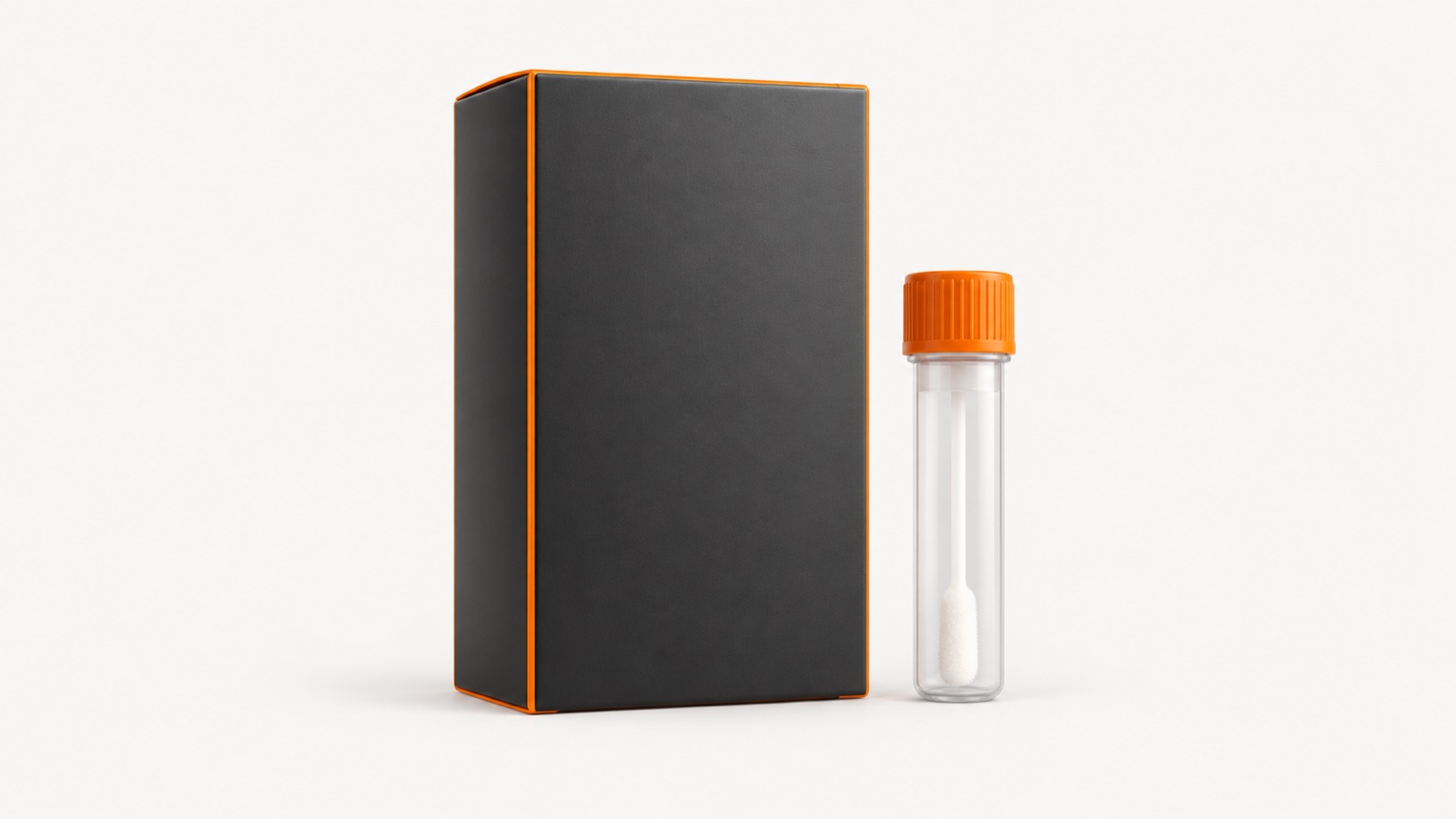
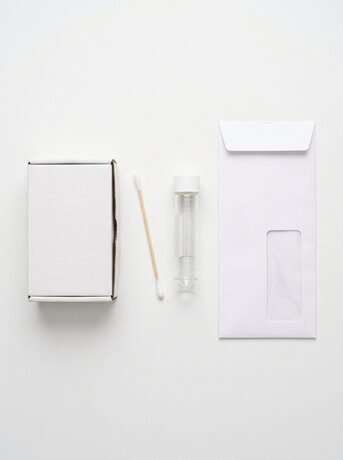
What is The Dust Test?
The Dust Test is a consumer-friendly front end for DNA-based settled-dust mold analysis. You order a kit online, collect household dust with an included Swiffer cloth or vacuum cassette, and mail it back. The sample is analyzed by the EnviroBiomics laboratory, which uses DNA-based qPCR technology to detect and count specific mold species in your dust. The output is a score: either an ERMI (Environmental Relative Moldiness Index) or a HERTSMI-2 (Health Effects Roster of Type-Specific Formers of Mycotoxins and Inflammagens, second version).
The idea is simple. Mold spores and fragments settle into the dust on your floors over weeks and months. By reading the DNA in that dust, the lab can tell you which molds have been shedding into your home, including dead mold and fragments that an air sample taken on one calm afternoon might miss. That is the real strength of dust testing: it is a longer memory than a single air grab.
It helps to be clear about the branding. "The Dust Test" is the easy retail wrapper. "EnviroBiomics" is the lab doing the science. You are buying a kit and a lab report, not a proprietary new technology.
How it works, step by step
- 1. Order a kit. Pick your panel (HERTSMI-2 or full ERMI) and a turnaround speed. The kit ships to you with collection materials and instructions.
- 2. Collect the dust. Use the Swiffer cloth on hard floors, or the vacuum cassette on carpet where mold particles collect. You typically sample settled dust from a defined area, following the instructions so the sample is comparable to how the test was designed.
- 3. Seal and mail. Package the sample and send it back to the lab. Shipping time is on top of the lab turnaround.
- 4. Lab analysis. The lab extracts mold DNA from your dust and runs qPCR to quantify each targeted species.
- 5. Get your score. The lab calculates your ERMI or HERTSMI-2 number and emails a report inside the turnaround window you paid for.
The whole loop is designed for a homeowner to do without a technician on site. That is the convenience. It is also the limitation, because your sampling technique is now part of the result.
What it tests for and what you get
The two panels answer different questions.
ERMI (36 species)
The full ERMI measures 36 mold species and sorts them into two groups. Group I is 26 molds associated with water-damaged buildings, including Stachybotrys chartarum, several Aspergillus species, and Penicillium types. Group II is 10 common indoor and outdoor molds like Alternaria alternata and Cladosporium. The ERMI score is calculated by summing the log values of the Group I molds and subtracting the sum of the log values of the Group II molds. A higher number means the water-damage indicator molds are more dominant relative to the everyday background molds.
HERTSMI-2 (the Big 5)
HERTSMI-2 is a shorter, cheaper screen that scores five listed molds in household dust:
- Aspergillus penicillioides
- Aspergillus versicolor
- Chaetomium globosum
- Stachybotrys chartarum
- Wallemia sebi
The five sub-scores are added into one number. The laboratory's score descriptions are not government safety thresholds. HERTSMI-2 cannot establish whether a building is safe for occupancy or re-entry, and this review does not endorse Shoemaker or CIRS interpretations.
Important: Neither score is a pass or fail health verdict, and neither is a medical result. A dust score describes what mold DNA is in your dust. It does not diagnose any illness, and this review makes no health or treatment claims. If you are worried about symptoms, that is a conversation for a qualified physician, not a dust kit.
Pricing and what is included
Every kit includes the collection materials (Swiffer cloth or vacuum cassette), instructions, and the lab analysis that produces your score. Price moves on two levers:
- Which panel. HERTSMI-2 is the lower-cost screen because the lab analyzes five molds. The full 36-species ERMI costs more.
- How fast. The lab offers several turnaround windows, from same-day and one-day options up to five business days. Faster processing costs more, and the same-day tier is the priciest.
As a rough guide from published lab pricing, a HERTSMI-2 screen sits in the lower range and the full ERMI panel runs higher, with same-day and one-day speeds adding a premium on top. These numbers change over time and by turnaround, so check the current pricing on the official site before you order rather than trusting any single figure you read in a review. Also budget for return shipping time, which is separate from the lab turnaround you pay for.
| Sample type | Settled household dust (Swiffer cloth on hard floors or vacuum cassette on carpet) |
| Lab method | DNA-based qPCR (MSQPCR) species quantification |
| Panels | ERMI (36 species) or HERTSMI-2 (5 molds) |
| Turnaround | Same-day, 1, 2, 3, and 5 business days (priced separately) |
| Lab accreditation | ISO/IEC 17025 (EnviroBiomics) |
| Output | Emailed report with your ERMI or HERTSMI-2 score |
Accuracy, science, and credentials
There are two separate accuracy questions here, and it matters to keep them apart.
The lab measurement
The species counts come from DNA-based qPCR at an ISO/IEC 17025 accredited lab. That is a legitimate, standardized method for detecting and quantifying mold DNA. If the question is "how much Stachybotrys DNA is in this dust sample," the lab can answer it with a validated technique. On the measurement layer, this is real science, not a gimmick.
The ERMI index itself
This is where the honesty has to come in. ERMI was developed by U.S. EPA researchers, led by Dr. Stephen Vesper, and calibrated using a national housing survey. It was built as a research tool to compare large numbers of homes at a population level, not to grade one house. The EPA's own guidance is blunt about it. In answer to whether you should test your home with ERMI, the EPA states: "No. The Environmental Relative Moldiness Index, or ERMI, developed by U.S. Environmental Protection Agency researchers, is a research tool and is not recommended for use except as a research tool." A 2013 EPA Office of Inspector General review added that because ERMI has not been validated and peer reviewed for public use, the work needed to assure that results are accurate for consumers has not been done.
This does not turn the score into a clearance tool. An ERMI or HERTSMI-2 result cannot certify that a home is safe, cleared, or ready for occupancy or re-entry.
Pros
- Real lab, real method. DNA-based qPCR at an ISO/IEC 17025 accredited facility is a credible way to detect and count mold species.
- Longer memory than air sampling. Settled dust reflects what has been shedding into the home over weeks, and it captures dead mold and fragments that a single air sample can miss.
- A cheaper screening option. HERTSMI-2 lets you run a lower-cost check on five priority molds before committing to the full 36-species panel.
- Simple collection. The Swiffer or vacuum-cassette method is doable for a homeowner without a technician on site.
- Good for tracking over time. Because you get a repeatable number, it works as a before-and-after data point, for example after remediation, as long as you sample consistently.
- Environmental measurement only. The product reports mold DNA in the sampled dust. It is not a clinical protocol input, a diagnosis, or a safe-occupancy determination.
Cons and limitations
- The EPA does not recommend ERMI for consumer home testing. The index is a research tool that was never validated for grading an individual house. This is the single biggest caveat.
- It never tells you where the mold is. A high score does not distinguish a hidden leak behind a wall from mold in the HVAC system or spores tracked in from outside. You still need eyes on the property to find the source.
- Sampling technique affects the result. Since you collect the dust yourself, how and where you sample changes the number, which hurts repeatability between people.
- Outdoor and hard-floor bias. Outdoor mold tracked indoors can inflate results, and homes with mostly hard floors hold less settled dust, which the standard method does not neatly adjust for.
- Not a pass or fail test. There is no government safety threshold. Interpretation is judgment, and different practitioners read borderline scores differently.
- Cost adds up. The full ERMI panel plus a fast turnaround gets expensive, and you can spend more on a number than on actually fixing a visible problem.
- Not a diagnosis of anything. It is an environmental dust measurement, not a health test.
Who it is best for, and who should skip it
Best for
- People with no visible mold who still suspect a hidden problem and want a data point to investigate further.
- Anyone tracking a home over time, for example comparing before-and-after numbers around remediation.
- People who understand that an environmental dust measurement is not a diagnosis, a clearance result, or a safe-occupancy decision.
- Renters or buyers who want a documented lab number to add to a bigger picture (not as the whole picture).
Should skip it
- Anyone who already sees or smells mold. You do not need a dust score to confirm what is in front of you. Find the moisture, fix it, and clean or remove the material. Start with how to test for mold and our mold testing kit guide.
- People who want to locate a source. A dust score cannot do that. A visual inspection can.
- Budget-focused homeowners who would rather spend the money fixing the leak than measuring it.
How The Dust Test compares to the alternatives
The Dust Test vs air sampling
Air sampling captures a snapshot of airborne spores at the moment you sample, which is good for catching an active airborne problem but can miss intermittent sources. Dust testing reads a longer accumulation and includes dead mold and fragments. Neither tells you the source location. Many inspectors treat them as complementary rather than as rivals.
The Dust Test vs a DIY surface swab or petri-dish kit
Cheap surface swabs and settle plates cost a fraction of a dust panel and can confirm that a visible spot is mold and roughly what type. They are far less comprehensive than a 36-species DNA panel, and settle plates are notoriously easy to misread. If you can see the mold, a swab is often enough. If you cannot see it and want breadth, the DNA dust panel is the more serious tool. See our guide to mycotoxin testing for where these kits fit alongside dust DNA.
The Dust Test vs other dust labs
Because The Dust Test is powered by EnviroBiomics, you are essentially buying the same class of DNA dust analysis other labs like Mycometrics or the EnviroBiomics direct storefront offer. Differences come down to price, turnaround, kit packaging, and how readable the report is, not a fundamentally different science.
The Dust Test vs a professional inspection
A qualified inspector walks the property, uses a moisture meter and often a camera, finds where water is getting in, and can take targeted samples. That is the difference between a number and an action plan. For a home purchase or a serious suspected problem, an inspector who follows the IICRC S520 standard (ACAC or RIA credentials and a state license also count) usually gives you more useful answers than a self-collected dust score alone. A dust test can support that inspection, but it is a weak substitute for it.
How to use it, step by step
- Step 1: Pick the right panel. Start with HERTSMI-2 if you want a cheaper screen, or go straight to ERMI if you want the full 36-species picture.
- Step 2: Do not clean first. You want the settled dust that has been accumulating. Deep-cleaning the floors right before sampling defeats the purpose.
- Step 3: Sample where the instructions say. Follow the kit's guidance on area and surface so your result is comparable to how the test was designed. Use the Swiffer cloth on hard floors and the vacuum cassette on carpet.
- Step 4: Seal cleanly and ship fast. Avoid contaminating the sample, package it per the instructions, and mail it promptly so it arrives inside your paid turnaround window.
- Step 5: Keep the limitation in view. A score cannot locate a source or establish occupancy safety. Use a qualified building investigation to assess moisture and visible damage.
- Step 6: If you retest, keep it consistent. For a valid before-and-after, sample the same way in the same areas both times.
Screen visible surfaces with Mold Scanner AI
A dust score and a visual screen answer different questions. A score does not locate a source, and a camera cannot establish what is hidden or select a valid sampling site.
Mold Scanner AI guides visible-surface photo capture and provides AI-assisted visual screening with variable processing time. It cannot locate a moisture source, confirm active or hidden growth, choose sampling sites, or determine whether a laboratory test is needed. Ask a qualified inspector or laboratory to plan sampling.
Our verdict + rating
The Dust Test provides a laboratory dust measurement, but its headline scores have strict limits. EPA does not recommend ERMI for consumer home testing, no score identifies a source, and self-collection adds variance. Do not use ERMI or HERTSMI-2 as a diagnosis, clearance, safe-occupancy, or re-entry decision. A qualified building investigation is needed for high-stakes property decisions.
Bottom line: a legitimate lab product wrapped around a caveated index. Great as a supporting data point, weak as a standalone answer.
If you searched for the dust test reviews to see what buyers say, note that this page is our own editorial review. The 3.5 out of 5 is our rating of the product and its limits, not an average of customer star ratings.
Frequently asked questions
Where can I find EnviroBiomics reviews of The Dust Test?
EnviroBiomics is the lab that analyzes the kit, so the best place to see its own description of the tests is its product pages, which are linked in the Sources section. This page is our editorial review, not a roundup of customer ratings. We did not tally buyer scores, so we do not quote a star average or a review count. When you read envirobiomics reviews elsewhere, check whether the reviewer understood that EPA says ERMI is a research tool and does not recommend it for consumer home testing.
What is The Dust Test?
The Dust Test is a mail-in dust kit that gives you an ERMI or HERTSMI-2 mold score. You collect settled dust from your home with a Swiffer cloth or a vacuum cassette, mail it to the lab, and the EnviroBiomics laboratory analyzes it with DNA-based qPCR technology. It is a consumer-friendly front end for the same lab testing that mold professionals order.
What is the difference between ERMI and HERTSMI-2?
ERMI measures 36 mold species and produces a relative moldiness index score by comparing 26 water-damage indicator molds against 10 common indoor molds. HERTSMI-2 is a shorter screen that looks at only five high-priority molds and costs less. Many people run HERTSMI-2 first as a cheaper check and reserve the full ERMI for a broader picture.
How does The Dust Test work?
You order a kit, collect settled dust from your floors with the included Swiffer cloth or vacuum cassette, seal it, and mail it back with the prepaid packaging. The lab extracts mold DNA from the dust and uses qPCR to count how much of each targeted mold species is present, then calculates your ERMI or HERTSMI-2 score. You get a report by email after the turnaround window you paid for.
Is The Dust Test accurate?
The lab analysis is done with DNA-based qPCR at an ISO/IEC 17025 accredited facility, so the species counts are measured with a validated laboratory method. The bigger question is interpretation. The ERMI index itself was built by the EPA as a research tool for comparing homes at scale, and the EPA does not recommend it for consumer home testing. Sampling technique, outdoor mold tracked indoors, and hard-floor homes can all move the score.
What does a HERTSMI-2 score mean?
HERTSMI-2 adds scores for five molds into one number. It is not a government safety threshold and cannot establish clearance, safe occupancy, or re-entry. This review does not endorse Shoemaker or CIRS interpretations. EPA says ERMI is a research tool and does not recommend it for consumer home testing.
How much does The Dust Test cost?
Pricing depends on which panel you pick and how fast you want results. A HERTSMI-2 screen is the cheaper option, and the full 36-species ERMI costs more. Faster turnaround, such as same-day or one-day processing, adds to the price. Because these numbers change, check the current pricing on the official site before you order rather than trusting an old figure.
Does The Dust Test tell me where the mold is?
No. A dust test tells you what mold DNA is present in the settled dust you sampled, but it cannot point to a location. A high score does not tell you whether the source is behind a bathroom wall, in the HVAC system, or tracked in from outside. You still need a visual inspection to find and fix the actual source.
Who should skip The Dust Test?
If you already see or smell mold, use a qualified building investigation to assess moisture and visible damage. A dust score cannot locate the source, establish illness, or certify clearance, safe occupancy, or re-entry. EPA does not recommend ERMI for consumer home testing.
Is The Dust Test better than a professional mold inspection?
They answer different questions. The Dust Test gives you a lab number from a dust sample you collect yourself. A professional inspector walks the property, uses a moisture meter and often a camera, finds where water is getting in, and can collect targeted samples. For a purchase decision or a serious suspected problem, a qualified inspector who follows the IICRC S520 standard usually gives you more actionable answers.
Can I use The Dust Test after mold remediation?
A HERTSMI-2 score must not be used as a clearance, safe-occupancy, or re-entry determination. EPA does not recommend ERMI for consumer home testing. Use a qualified building professional to assess post-remediation conditions.
Sources
Every claim on this page traces to one of these. Links open the primary document.