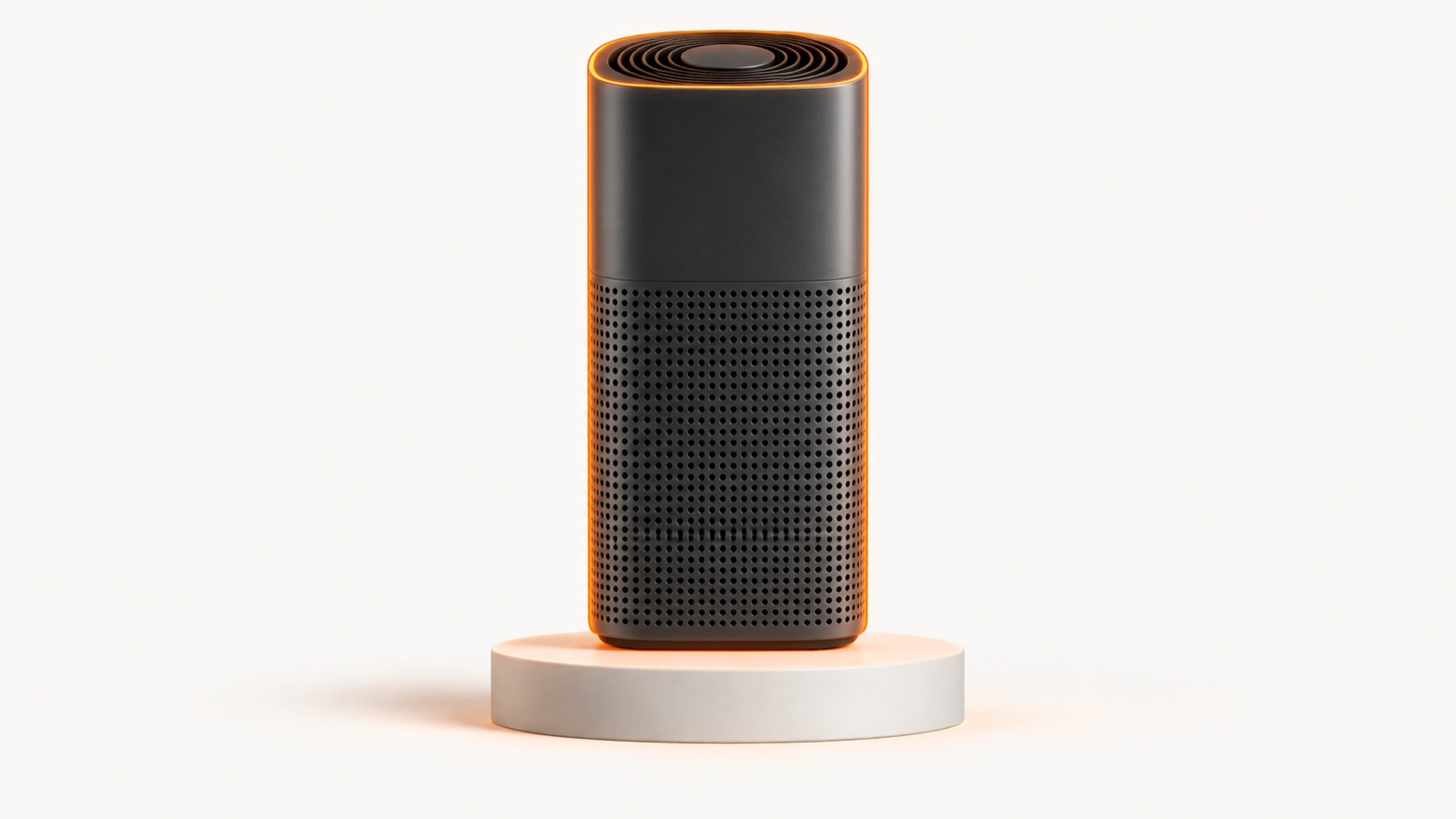
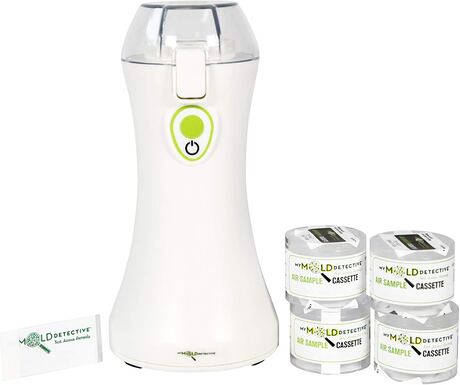
What is My Mold Detective
My Mold Detective (often shortened to MMD) is a do it yourself mold test kit built around a small, reusable air sampling pump. Instead of the passive petri dish approach that most cheap store kits use, it does active air sampling: a motor pulls a measured volume of room air through a lab cassette that traps mold spores. You then mail the cassettes to an accredited laboratory, which counts and identifies the spores under a microscope and sends back a report.
The product line is sold as room kits, commonly the 1 room (MMD100), 3 room (MMD103), and 5 room (MMD105) versions, plus accessory sample packs that reuse the same pump. That reusable pump is the core idea. Professional air sampling normally means renting or buying an expensive calibrated pump, so MMD packages a consumer friendly version you buy once and keep. You can find the kits through the official site and mainstream retailers including Amazon, Home Depot, and Walmart.
One thing to be clear about up front: this is a testing tool, not a cleaning product and not a diagnosis. It tells you what is floating in your air compared to a reference. What you do with that information is a separate step.
How it works
The kit runs on active air sampling with a spore trap cassette. Here is the mechanism in plain terms:
- The pump. A calibrated pump draws air at about 15 liters per minute for 5 minutes, so each sample pulls roughly 75 liters of air through the cassette. You press the start button, the unit runs, and it shuts off on its own when the sample is done.
- The cassette. Inside each cassette is a sticky slide. As air passes through, spores and other particles stick to it. Because the pump moves a known, fixed volume of air, the lab can turn the count into a concentration (spores per cubic meter) rather than a vague impression.
- The indoor sample. You run a cassette in the room you are worried about, with windows and doors closed so the air settles into a representative sample.
- The outdoor control. You run a second cassette outdoors on the same day. Outdoor air always carries mold spores, so this control is what your indoor result gets compared against.
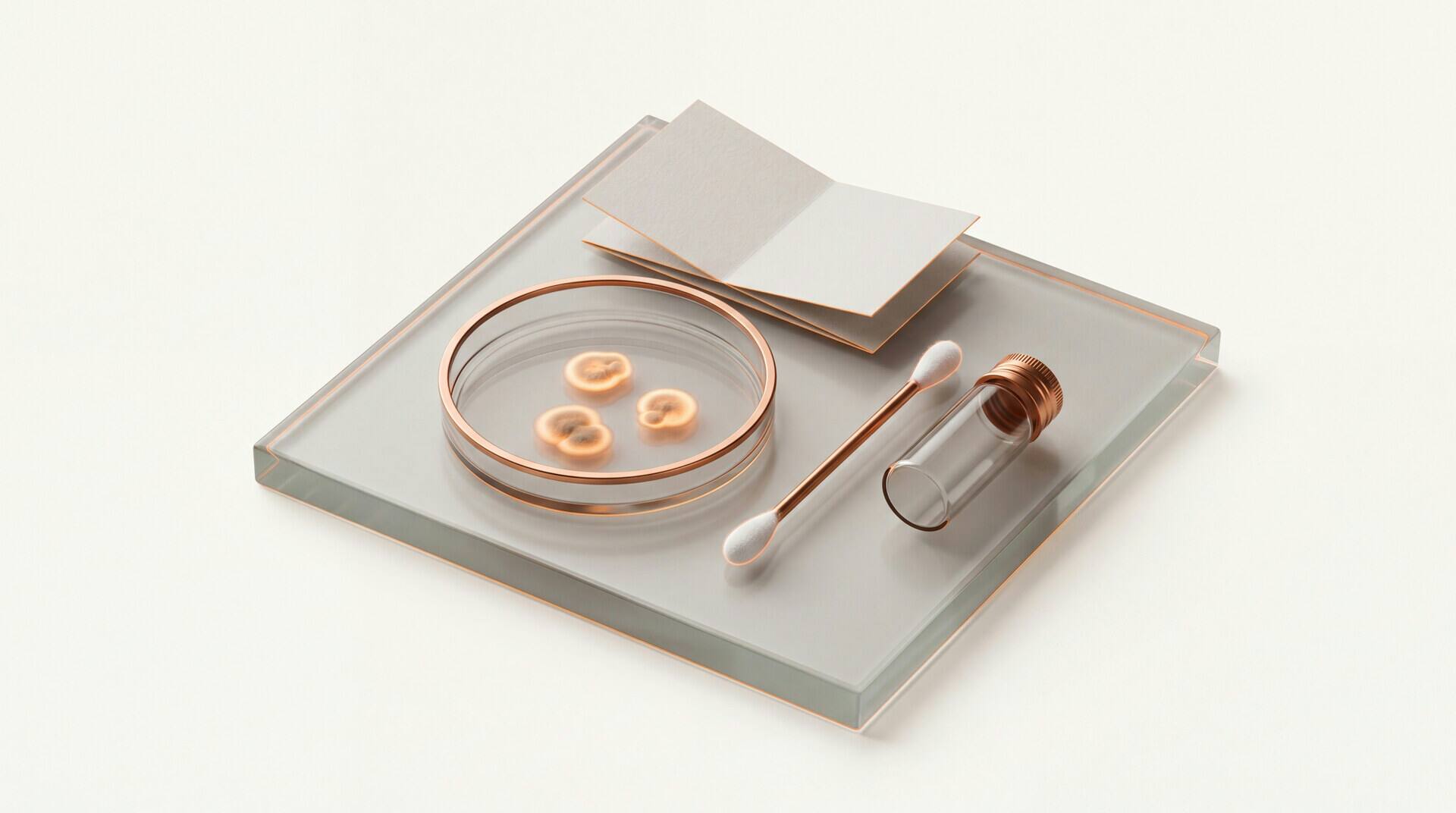
- The surface tape lift. The kit also includes a tape strip to lift a sample from a visible spot on a surface, which the lab can examine directly.
- The lab. You register your samples online, pay the per sample lab fee, and mail everything in the prepaid return envelope. The lab does the microscopy and issues a report.
Spore trap sampling like this captures both living and dead spores, which is useful because dead spores still matter for what is in your air. The tradeoff is that it is a snapshot of one moment in time in one spot, which is why the outdoor control and a careful sampling technique matter so much.
What it tests for and what you get
My Mold Detective measures airborne mold spores in a room and, through the tape lift, mold on a specific surface. It is not species specific in the way a targeted DNA test is, but the lab identifies the mold types present by their spore morphology and reports how many of each it counted.
The report you get back typically includes:
- The mold types found in your indoor sample.
- The spore counts for each type, expressed as a concentration.
- A comparison to your outdoor control, since indoor mold is only meaningful relative to what is normal outside that day.
- A plain language rating of Normal, Slightly Elevated, or Elevated.
What the report does not do is equally important. It does not tell you where the mold is, what is causing the moisture, or how to remove it. It will not confirm a leak inside a wall. And it is not a health assessment. It is a measurement of what is in the air at the moment you sampled. If you want to know whether a visible patch is mold in the first place, identifying it comes before any air test. Our guides to black mold and to how to test for mold walk through that first step.
Pricing and what is included
This is where buyers most often get surprised, so read carefully. The kit price and the lab fees are two separate charges.
| Base kit (list price) | Around $69.99. Includes the reusable pump, one indoor cassette, one outdoor control cassette, one surface tape lift, instructions, and a prepaid return shipping label. |
| Lab fee per sample | Around $39 per sample, paid online when you register your samples. This is not included in the kit price. |
| Outdoor control | Counts as its own sample, so it carries its own lab fee. |
| Faster turnaround | Some kits have offered an expedited option for an added fee per sample. Availability changes, so confirm at registration. |
| Multi room kits | MMD100 (1 room), MMD103 (3 room), and MMD105 (5 room) bundle more indoor cassettes with the same pump. Accessory packs let you buy more cassettes later. |
Here is the honest math. A single room test done properly is the indoor cassette plus the outdoor control, which means two lab fees on top of the kit. So a realistic one room test lands somewhere around the kit price plus roughly $78 in lab fees. Test more rooms and each added cassette is another lab fee. Reviewers have called out that the per sample fees are easy to underestimate, and a multi room job can climb past the total people expected when they saw the kit price alone.
The upside is the reusable pump. Once you own it, a future retest is just the cost of new cassettes plus lab fees, with no pump to rebuy. That is what makes MMD cheaper over time than kits you throw away after one use, and far cheaper than repeated professional visits if you only need the numbers. Always confirm current pricing on the official site, since kit and lab prices change.
Accuracy, science, and credentials
The method is sound. Active air sampling through a spore trap, at a calibrated flow rate, analyzed by an accredited lab, is the same basic approach that indoor air quality professionals use. My Mold Detective says its samples are analyzed by an AIHA-LAP accredited laboratory, and its materials reference recognized industry bodies including the ACGIH, ACAC, IAQA, and ASTM. Accreditation matters because it means the lab follows documented methods and quality controls for counting and identifying spores.
Now the honest limits, because accuracy of the lab is not the same as accuracy of the conclusion you draw:
- Air sampling is a screening tool. Industry guidance is blunt that air samples support an informed visual inspection rather than replace it. A number on its own cannot confirm or rule out a mold problem.
- Spore levels swing enormously. Airborne spore concentrations vary hour to hour and with activity in the room. Published guidance notes variability in detected concentrations can span orders of magnitude, so a single snapshot can mislead.
- False negatives are real. Reviewers and assessors point out you can have mold growing on a wall and still get a normal air reading, because the mold may not be actively shedding spores into the air you sampled.
- Interpretation takes judgment. Comparing indoor to outdoor counts and deciding what it means for your home is where a qualified person adds value. The Normal, Slightly Elevated, or Elevated label is a starting point, not a ruling.
None of this makes the kit bad. It makes it what it is: a legitimate way to get real lab data, with the same caveats that apply to professional air sampling too.
Pros
What we like
- Real IAQ technology. Active spore trap air sampling at a calibrated flow rate, not a passive petri dish. The data is the kind a professional would collect.
- Reusable pump. Buy it once. Retesting later only costs new cassettes plus lab fees, which is genuinely cost effective for anyone who needs to test more than once.
- Accredited lab analysis. Samples go to an AIHA-LAP accredited laboratory, so you get identified mold types and real spore counts rather than a color changing strip.
- Easy to run. One button, a 5 minute sample, auto shutoff. Most people can collect a clean sample if they follow the instructions.
- Indoor versus outdoor comparison. The kit is built around the correct method of comparing your room to an outdoor control, which is how air data should be read.
- Fast, detailed report. Roughly 3 to 5 business days after the lab receives your samples, with a clear breakdown and a plain rating.
- Cheaper than an inspection for the raw numbers. Professional assessments often run several hundred dollars. If all you need is spore data, this is a fraction of that.
Cons and limitations
Where it falls short
- Lab fees are separate and stack up. The kit price is only the start. At about $39 per sample, plus a required outdoor control, a multi room test can cost far more than the sticker suggests. Budget for it before you buy.
- Air sampling can miss visible mold. False negatives are a known weakness. A wall can be visibly moldy and still return a normal air reading.
- It is a snapshot. One 5 minute sample in one spot on one day. Spore counts move a lot, so a single test can under or over state the picture.
- No location, no cause. It tells you what is in the air, not where the mold is or what moisture is feeding it. You still have to find the source.
- Interpretation may need a pro. Deciding what your numbers mean for a purchase, a claim, or a remediation plan often calls for a qualified assessor.
- Not for hidden mold. Mold sealed inside walls, under floors, or in HVAC may not show up in a room air sample at all.
- Support can be uneven. Some buyers have reported friction getting refunds or answers, so keep your receipt and read the return terms.
Who it is best for and who should skip it
Best for
- People who already suspect a problem and want real lab spore counts to confirm or size it up.
- Anyone who needs to retest after a cleanup. The reusable pump makes repeat testing cheap, and a before and after comparison is a strong use case.
- Renters and buyers who want documented, lab backed numbers to bring to a landlord, seller, or their own records.
- DIY minded owners comparing several rooms who want data more trustworthy than a petri dish.
Who should skip it
- Anyone who just wants to know if a visible spot is mold. Identify it first with a photo based scan or a simple visual guide before paying for lab work.
- People expecting the kit to find hidden mold behind walls or under floors. Air sampling will not reliably do that.
- Anyone unwilling to also do a visual inspection. Without it, the numbers are hard to trust.
- High stakes situations such as a home purchase, an insurance claim, or a health concern, where a professional inspection and interpretation carry more weight.
How My Mold Detective compares to alternatives
Versus cheap petri dish or settle plate kits: My Mold Detective is a clear step up. Passive kits let dust drift onto a growth medium with no control over how much air is sampled, so the result is easy to misread and hard to compare to anything. MMD pulls a measured volume of air through a spore trap and sends it to an accredited lab. It costs more, but the data actually means something.
Versus a professional mold assessment: A pro does more than sample air. They do a full visual inspection, take moisture readings, look for the source, and interpret the results, and they can stand behind the findings. That is why an inspection often runs several hundred dollars. My Mold Detective gives you the lab numbers for far less, but not the eyes, the moisture meter, or the judgment. For a home purchase, a dispute, or a health concern, a qualified assessor who follows the IICRC S520 standard is the stronger call. Credentials like ACAC or RIA and a state license count too.
Versus ERMI or dust based testing: These are a different method entirely. Instead of trapping airborne spores, they analyze settled dust with DNA based techniques against a reference index. They answer a different question and have their own debates about interpretation. See our explainer on the ERMI test to understand where that fits.
Versus mycotoxin testing: Mycotoxin tests look for the compounds some molds can produce, not the spores themselves, and they are a separate category with their own limits. Our guide to mycotoxin testing covers what it can and cannot tell you.
Versus a photo based screen: Before any lab test, the cheapest move is to confirm whether what you are looking at is even mold and where the likely hotspots are. That costs nothing and can save you a round of lab fees. See our roundup of the best mold testing kits for the full landscape.
How to use it, step by step
Step 1: Close the room. Shut the windows and doors of the room you are testing for a few hours beforehand so the air is representative and not diluted by a draft. Do not run fans or the HVAC during sampling.
Step 2: Set up the pump. Place it on a stable surface at roughly breathing height, away from walls and vents. Load the indoor cassette per the instructions.
Step 3: Take the indoor sample. Press the start button. The pump runs for its fixed cycle, about 5 minutes, and shuts off on its own. Do not move or breathe directly over it during the run.
Step 4: Take the outdoor control. On the same day, run the outdoor cassette outside, away from obvious sources like trash or damp leaves. This control is what makes your indoor number readable.
Step 5: Take the surface tape lift, if needed. Press the tape strip onto a visible suspect spot, then seal it as directed. This is optional but useful when you have something specific to check.
Step 6: Register and pay online. Log the samples on the company site and pay the per sample lab fee. Label each cassette clearly so the report ties back to the right room.
Step 7: Mail it back. Use the prepaid return envelope. Remember the turnaround clock starts when the lab receives the package.
Step 8: Read the report with context. Compare indoor to outdoor, note the types and counts, and treat the Normal, Slightly Elevated, or Elevated label as a signal. If it flags elevated, the next job is finding the moisture source, not panicking about a single number.
Our verdict and rating
My Mold Detective earns its reputation as one of the few DIY mold kits worth taking seriously. The active air sampling method is legitimate, the reusable pump is a smart, cost effective design, and an accredited lab means the numbers you get back are real. For a homeowner who wants lab grade spore data, who is comparing rooms, or who needs to retest after a cleanup, it is a strong, sensible tool.
It loses a point for two honest reasons. First, the pricing is not as simple as the kit sticker suggests, because the per sample lab fees add up and the required outdoor control is easy to forget to budget. Second, air sampling has real limits: it can miss visible mold, it is a single snapshot, and the results only mean something next to a visual inspection. Go in understanding those limits and it delivers exactly what it promises. Expect it to find a hidden leak or replace an inspector, and it will disappoint you.
Bottom line: a genuine, useful kit for the right job, priced honestly only if you count the lab fees. Confirm current kit and lab pricing on the official site, and pair any air test with a visual scan of your home so the numbers have context.
Screen visible surfaces with Mold Scanner AI
Air sampling and visual screening answer different questions. Mold Scanner AI provides AI-assisted visual screening of submitted visible surfaces, with variable processing time. It cannot select sampling sites, determine whether a laboratory test is necessary, or replace a qualified inspector or laboratory.
Frequently asked questions
Is MyMoldDetective the same as My Mold Detective?
Yes. MyMoldDetective is the one word spelling of My Mold Detective, and mymolddetective.com is the official site. The MyMoldDetective reviews you find online are about the same air sampling kit this page covers: a reusable pump, spore trap cassettes, and lab analysis by an accredited lab.
What do My Mold Detective reviews say?
Our own review rates My Mold Detective 4.0 out of 5. It earns credit for real lab data and a reusable pump, and loses points for separate lab fees, a one time snapshot sample, and uneven support. When you read other My Mold Detective reviews, check whether the writer counted the lab fees and the outdoor control, and whether they tested the kit against a visible problem.
How does My Mold Detective work?
It uses a small reusable pump that pulls room air through a spore trap cassette at a calibrated 15 liters per minute for 5 minutes, so each sample captures about 75 liters of air. You press the start button, the pump runs and shuts off on its own, then you register the samples online, pay the lab fee, and mail everything back in the prepaid envelope. An accredited lab counts and identifies the spores under a microscope and sends you a report.
How much does My Mold Detective really cost?
The base kit is listed around $69.99 and includes the reusable pump, one indoor cassette, one outdoor control cassette, and one surface tape lift. The part people miss is that lab fees are separate at about $39 per sample and are paid when you register online. A single room test with an outdoor control means two lab fees, so budget the kit price plus roughly $39 for each cassette you send in. Check current prices on the official site before buying.
Is My Mold Detective accurate?
The sampling method is legitimate and the analysis is done by an AIHA-LAP accredited lab, so the spore counts it returns are real lab data. The limit is what air sampling can tell you. Spore levels swing a lot hour to hour, and a room can test normal while mold grows behind a wall. Treat the numbers as a screening signal, not a yes or no verdict, and always pair them with a visual inspection.
Do you need the outdoor control sample?
Yes. Air sampling only means something when you compare the indoor count to the outdoor air on the same day. Outdoor air always carries mold spores, so the lab looks at whether your indoor types and counts are higher than what is normal outside. Skipping the control leaves you with a number you cannot interpret, and that control is a second lab fee to budget for.
What does the report tell you?
The report lists the mold types found and their spore counts, compares your indoor sample to the outdoor control, and flags the result as Normal, Slightly Elevated, or Elevated. It does not tell you where the mold is, what is causing the moisture, or how to remove it. For that you still need to find the source, which is where a visual scan or an inspector comes in.
Can My Mold Detective find hidden mold inside walls?
Not directly. It samples airborne spores in the room, so it can only pick up mold that is releasing spores into the air you are sampling. Mold sealed inside a wall cavity, under flooring, or inside HVAC may not show up at all. If you suspect hidden mold, you need a moisture reading and a physical inspection of the suspect area, not just an air sample.
Is My Mold Detective better than a petri dish mold kit?
For most purposes, yes. Cheap settle plate or petri dish kits let dust land on a growth medium with no control over how much air is sampled, so the result is hard to interpret. My Mold Detective pulls a measured volume of air through a spore trap and sends it to an accredited lab, which is much closer to how a professional samples. It costs more, but the data is more meaningful.
Should I use My Mold Detective or hire a professional?
A DIY kit gives you lab grade spore counts for a fraction of an inspection, which is useful for a quick screen, comparing rooms, or retesting after a cleanup. A professional assessor adds a full visual inspection, moisture mapping, and someone qualified to interpret the numbers and stand behind the findings. If the stakes are high, such as a home purchase or an insurance claim, a professional who follows the IICRC S520 standard is the stronger choice.
How long do results take?
Standard turnaround is about 3 to 5 business days from the time the lab receives your samples. Some kits have offered a faster option for an extra fee per sample, though availability changes, so confirm current turnaround options at registration. The clock starts when the lab gets your package, not when you mail it.
Where can you buy My Mold Detective?
It is sold through the official My Mold Detective site and mainstream retailers including Amazon, Home Depot, and Walmart. Prices for the kit and the accessory sample packs vary by seller, and the lab fee is charged separately when you register your samples online, so compare the full cost, not just the kit price.
Sources
Every claim on this page traces to one of these. Links open the primary document.