Can Mold Grow on Granite?
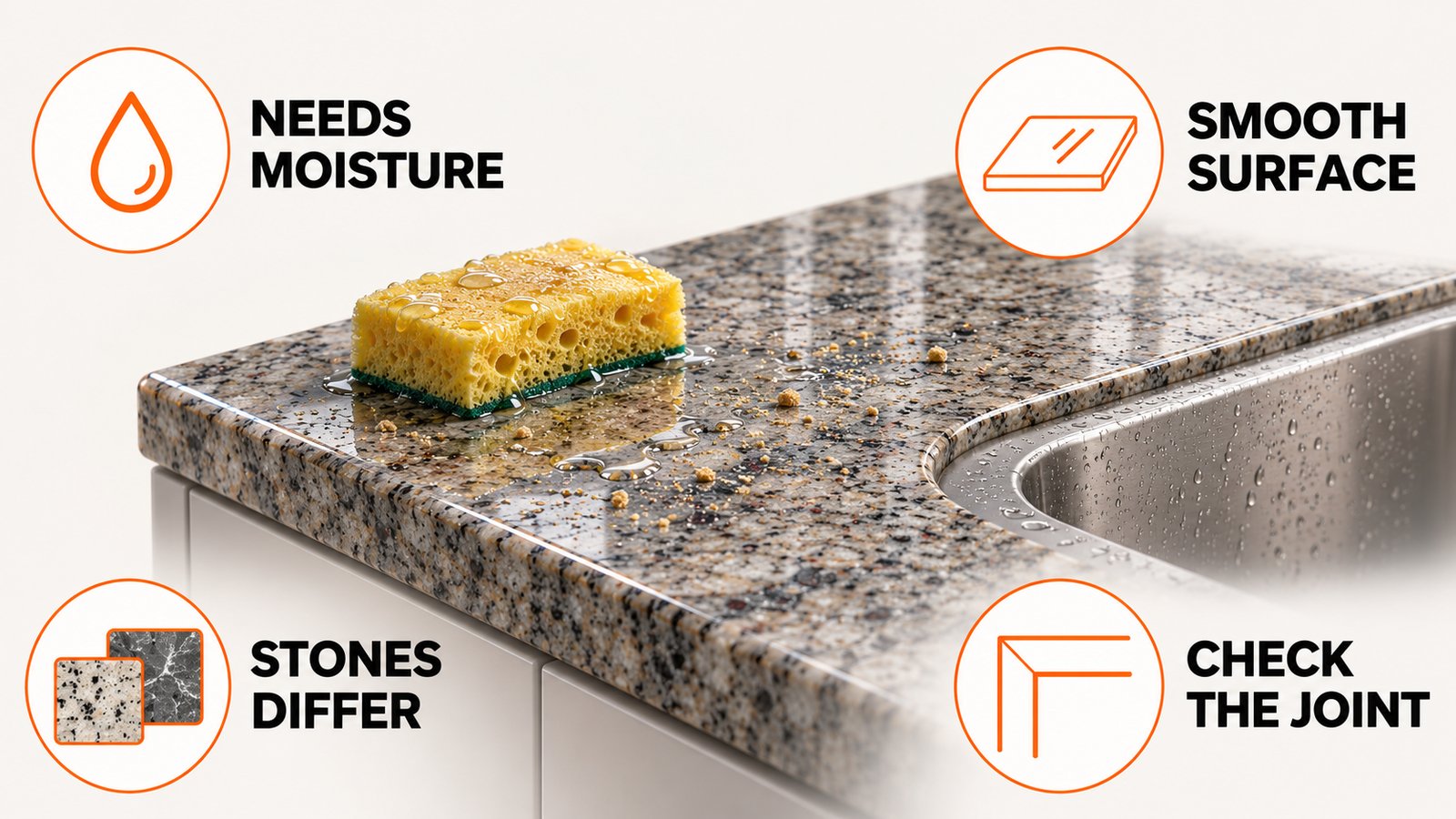
The EPA says mold may begin growing indoors when spores land on surfaces that are wet, and that none of the many types will grow without water or moisture. It also says molds break down dead organic matter in nature. So the real question on a counter is what is wet, and what organic material is sitting there.
The stone care sources add two points. A restoration owner quoted by the Natural Stone Institute's consumer site says nothing sticks to granite because it is a smooth surface. The owner of a stone-care company quoted there says not every stone is the same, and some are more porous than others. So we cannot say mold never grows in or on any granite. We can say the first places to look are the film, the joints and the damp spots.
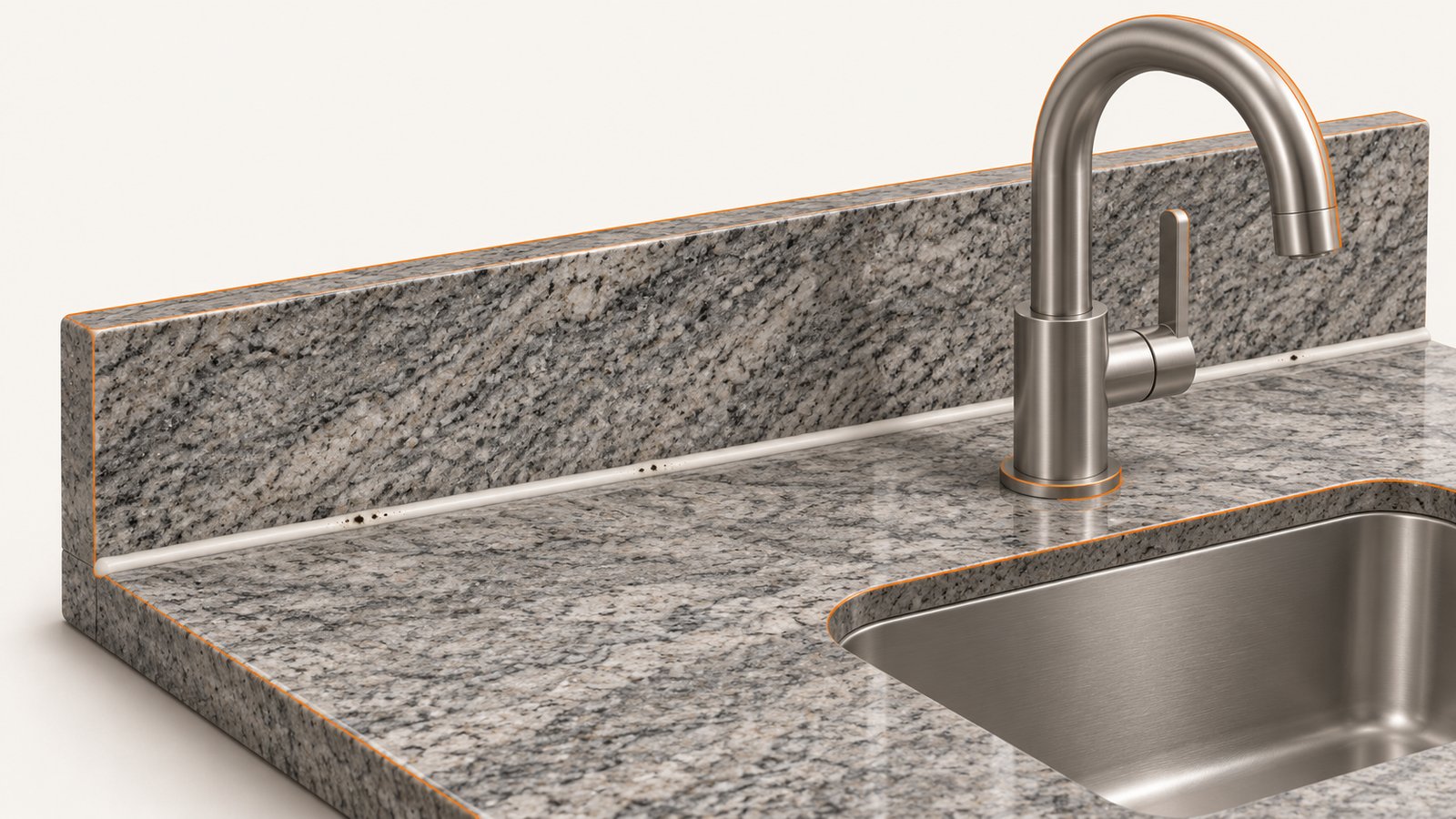
Our own rule of thumb, not an agency finding: on a kitchen or bath counter, growth is most likely where something stays wet and dirty. That means the caulk at the sink and backsplash, the seam between slabs, the edge around a faucet base, and the ring under a wet sponge or soap dispenser. Our mold in kitchen page covers the rest of the room.
Black Spots on Granite: Mold or Stain?
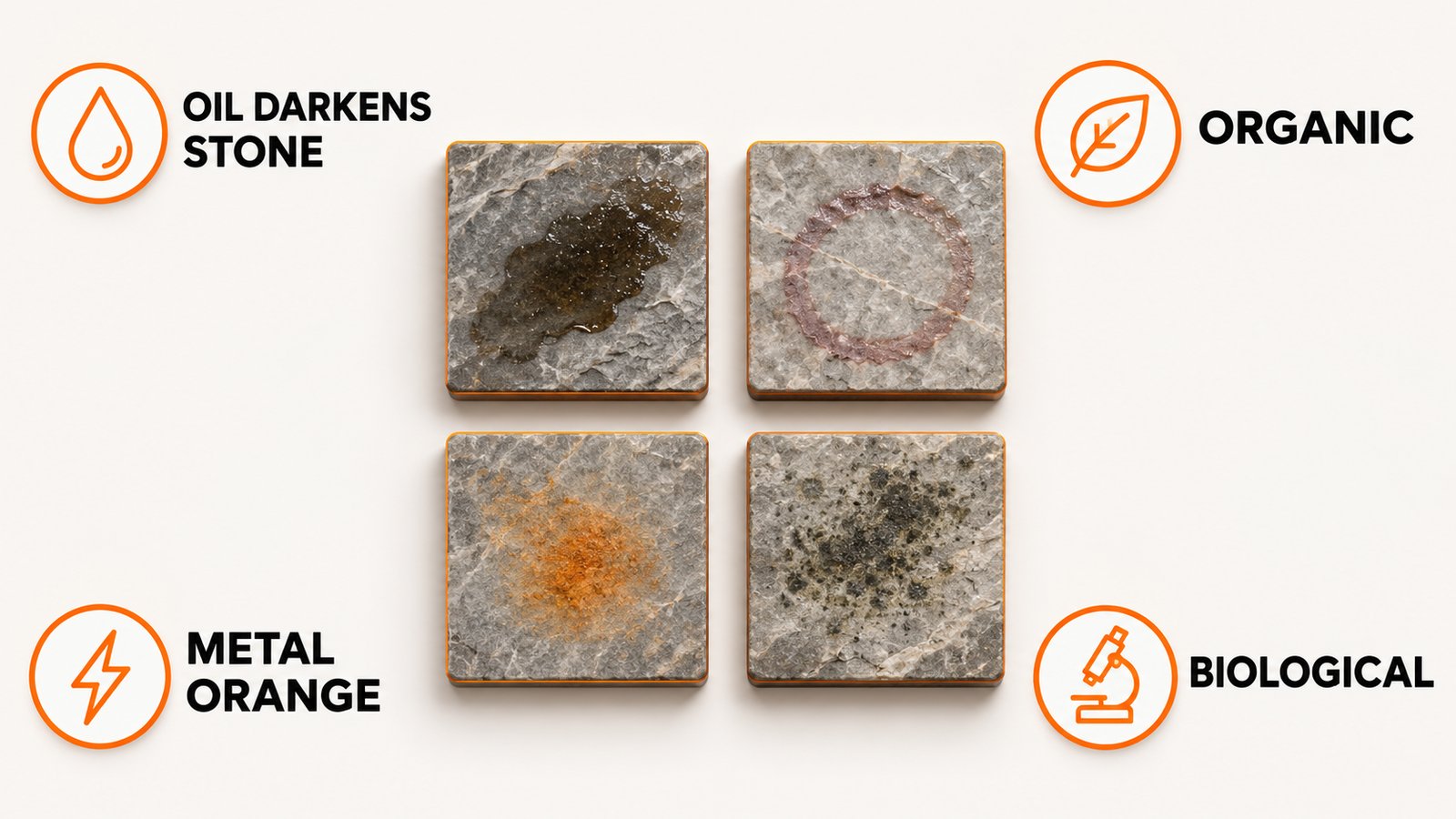
The Natural Stone Institute says identifying the type of stain is the key to removing it, and tells owners to play detective: where is it, what color is it, what shape, and what happens around it. Its list of stain types is a useful way to sort a dark spot:
| Type | What the Institute says |
|---|---|
| Oil-based | Grease, cooking oil, milk and cosmetics. An oil-based stain will darken the stone. |
| Organic | Coffee, tea, fruit, food and leaves. May cause a pinkish-brown stain and may disappear after the source is removed. |
| Metal | Iron or rust stains are orange to brown and follow the shape of the object, such as a flower pot or can. |
| Biological | Algae, mildew, lichens, moss and fungi. |
Use that as a starting point, not a verdict. Color alone never tells you what a spot is or how dangerous it is. A damp-cloth wipe is a fair first look: growth sitting on top may smear, while a stain that has soaked in will not move. Neither result names the substance.
Watch the pattern. A mark that follows the caulk line, hugs a faucet base, or returns where water pools is behaving like moisture. A ring under a pot is more likely a stain. A white crust at the faucet is not mold either: a stone company quoted on the Institute's consumer site says water around fixtures can calcify and turn white, and that it is cleanable with a neutral cleaner once a week, though left alone it can need a stone restoration. Our mold or dirt page covers other look-alikes.
Mold on Granite Seams and Caulk Lines
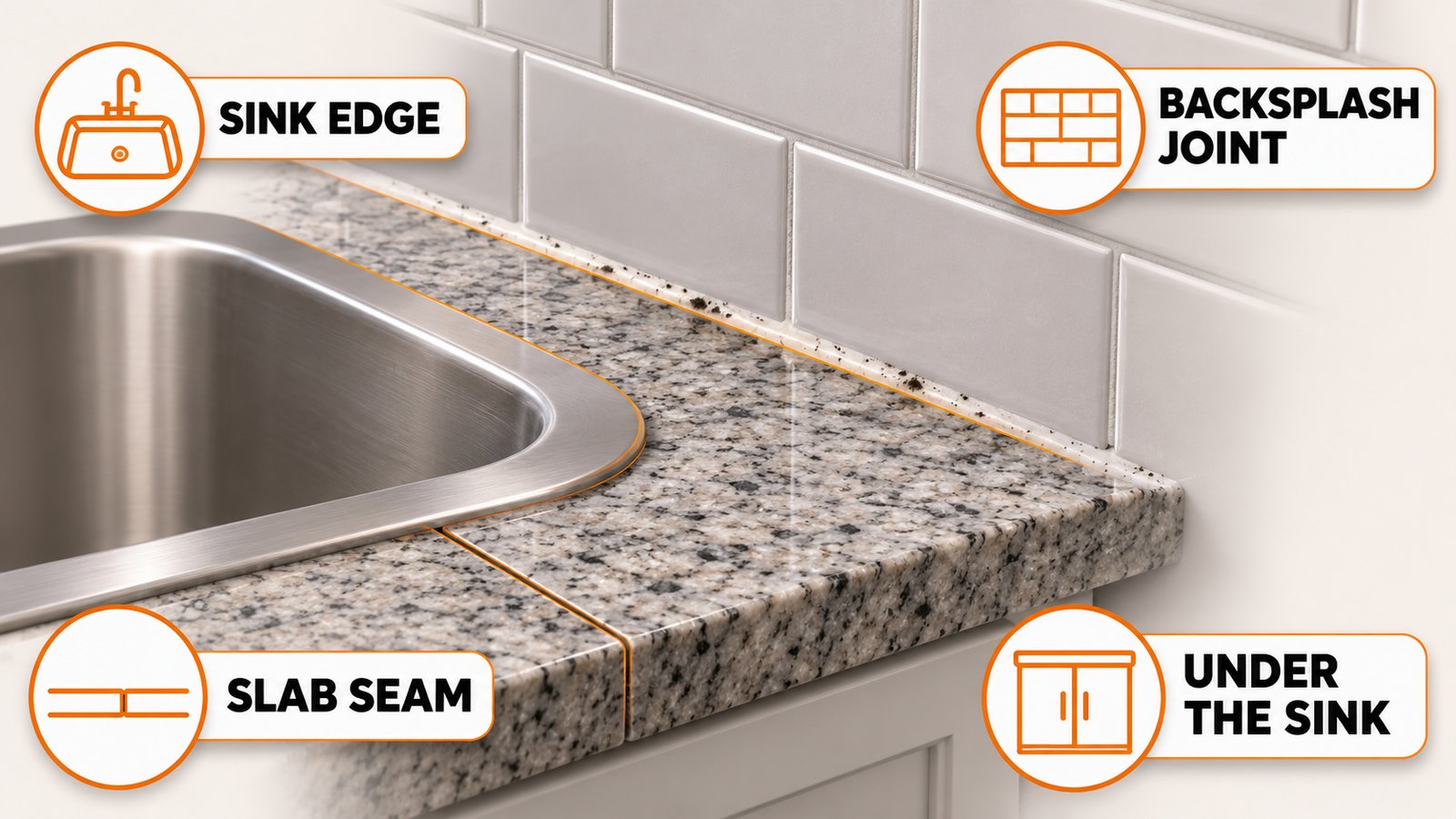
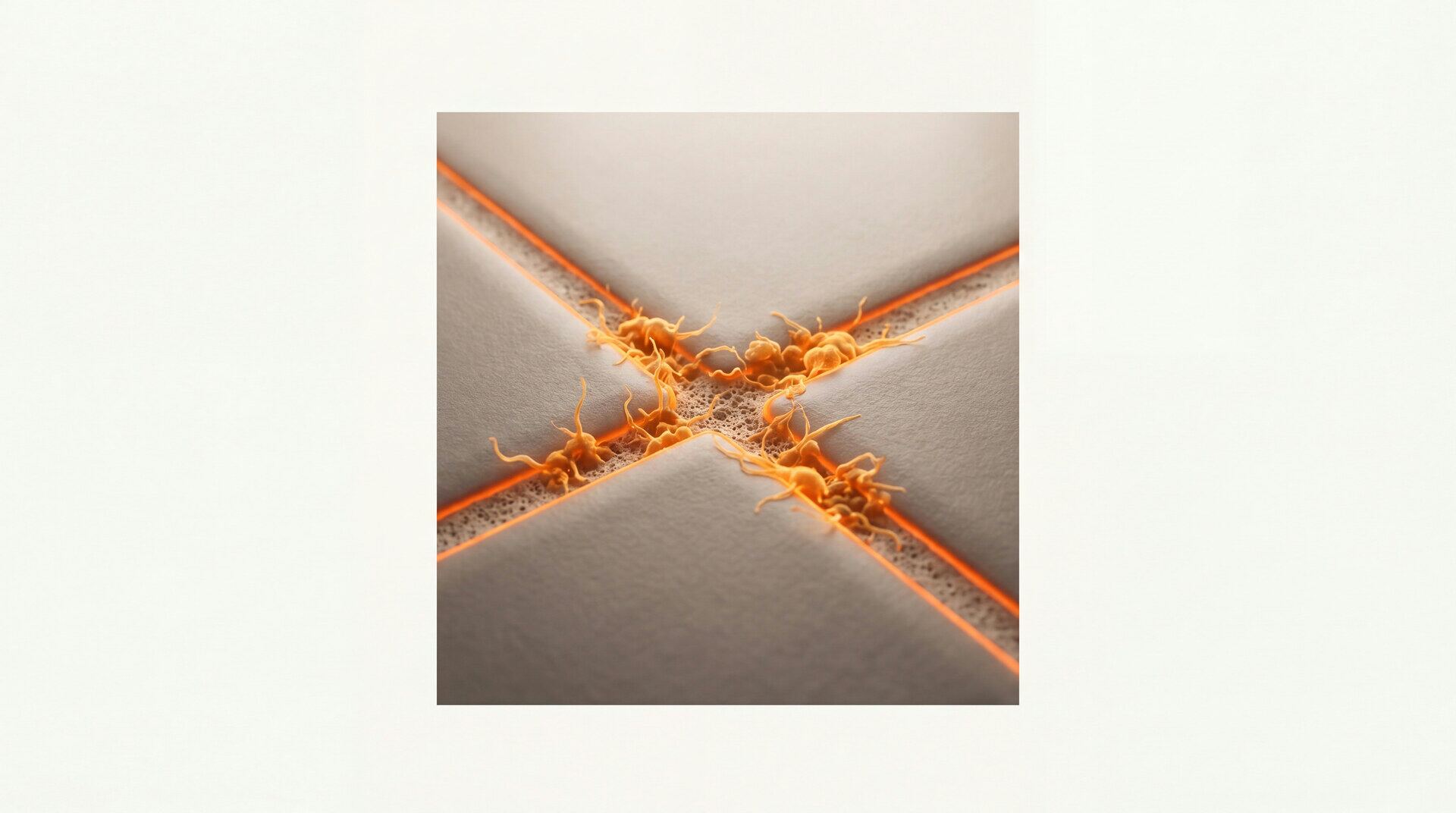
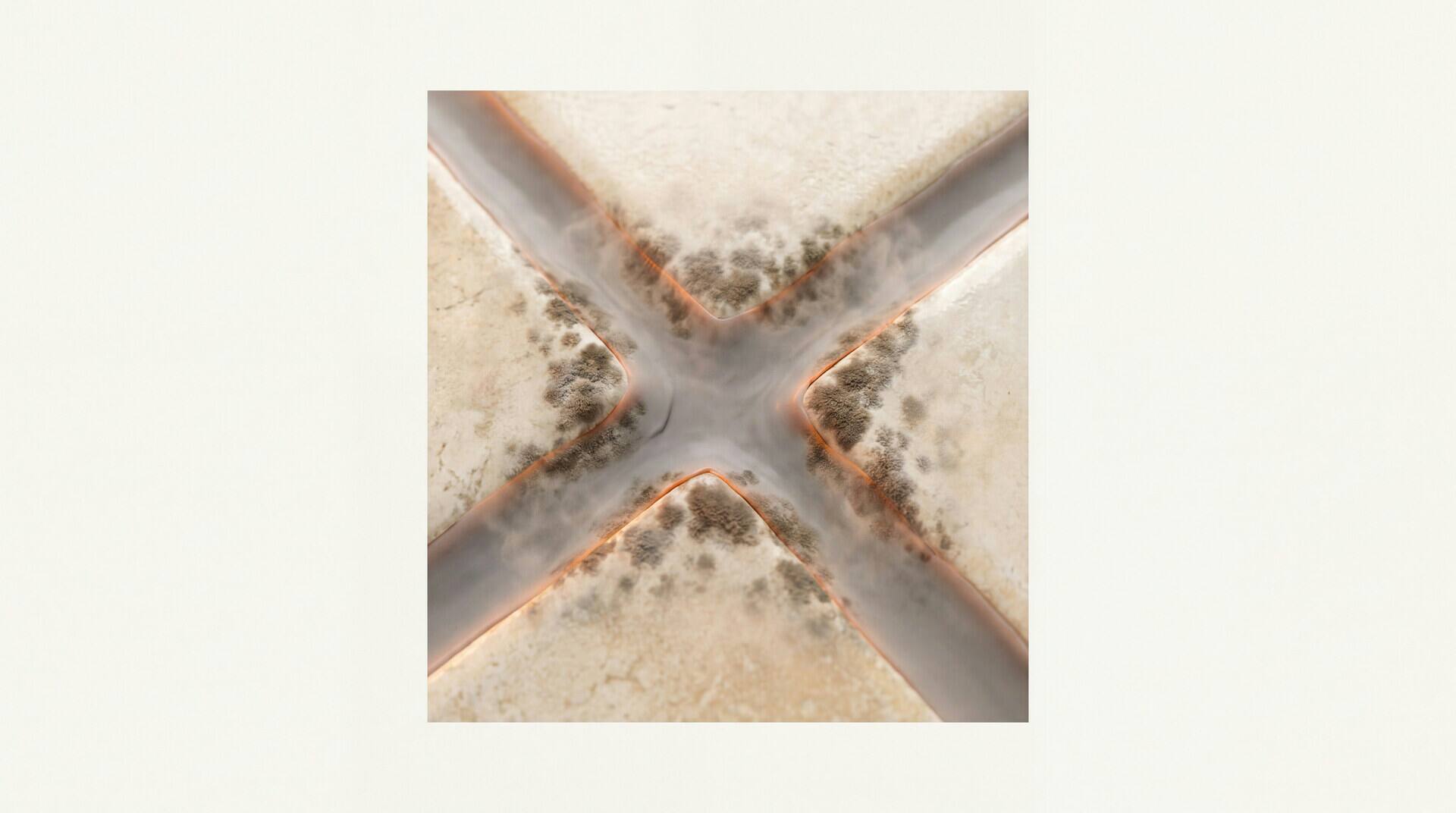
When the dark spots are in the caulk, you are not looking at a stone problem. The EPA says porous materials may have to be thrown away if mold fills their crevices, and that you should not paint or caulk over moldy surfaces. Clean up the mold and dry the surface first. Our mold on caulk page explains why growth in a caulk line can mean cutting the old bead out.
One stone-specific caution. The Natural Stone Institute notes that caulks and sealants may cause oily stains on stone. Before you re-caulk next to granite, ask your stone supplier which product to use.
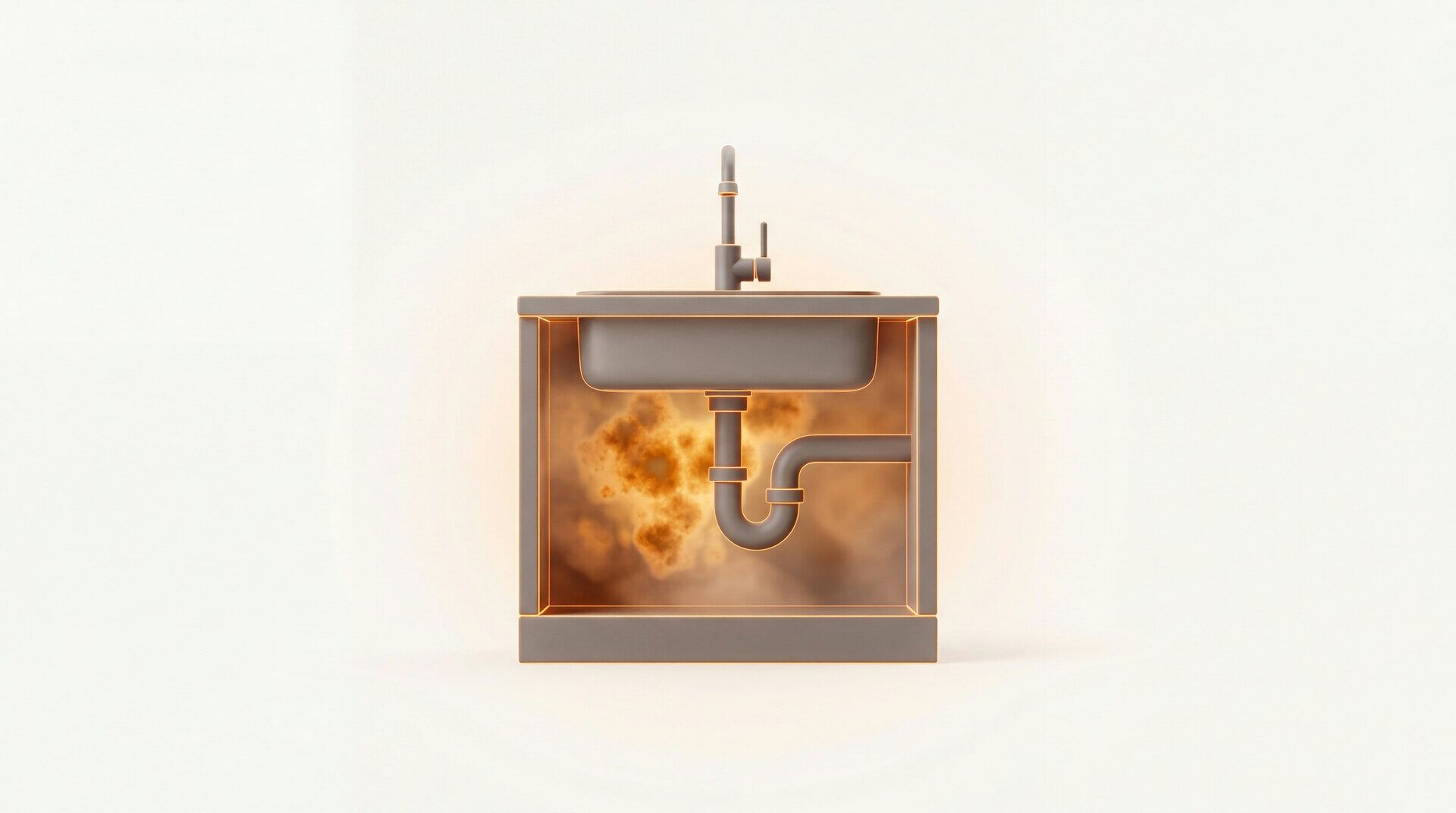
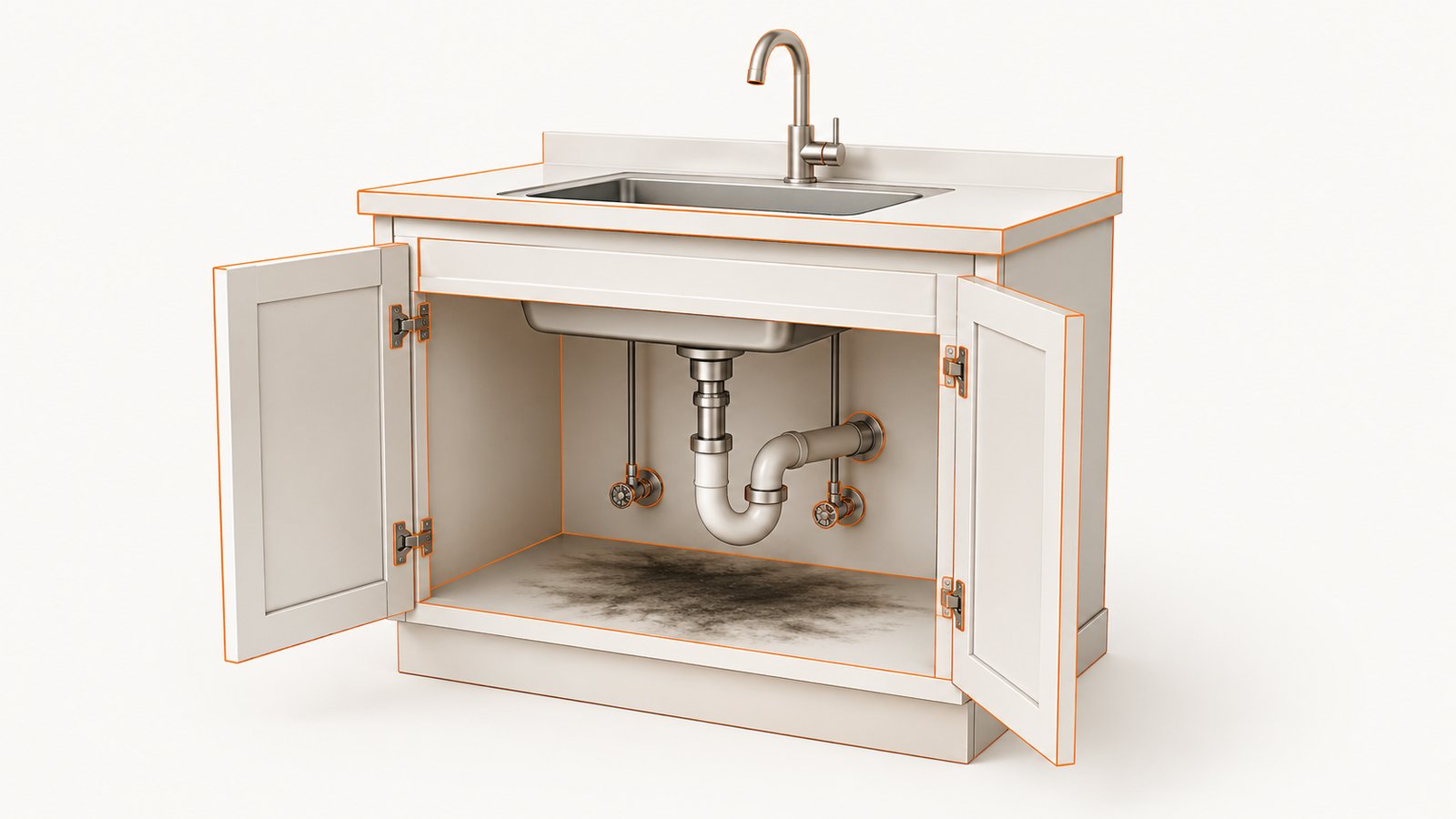
A joint that keeps going dark may have water coming from below. The EPA says to fix plumbing leaks and other water problems as soon as possible, and that mold can hide behind and under materials. Open the cabinet below the sink and look. Our mold under kitchen sink guide lists the usual leak points, and mold on grout covers tile joints on the backsplash.
How to Clean Mold Off Granite Without Harming the Stone
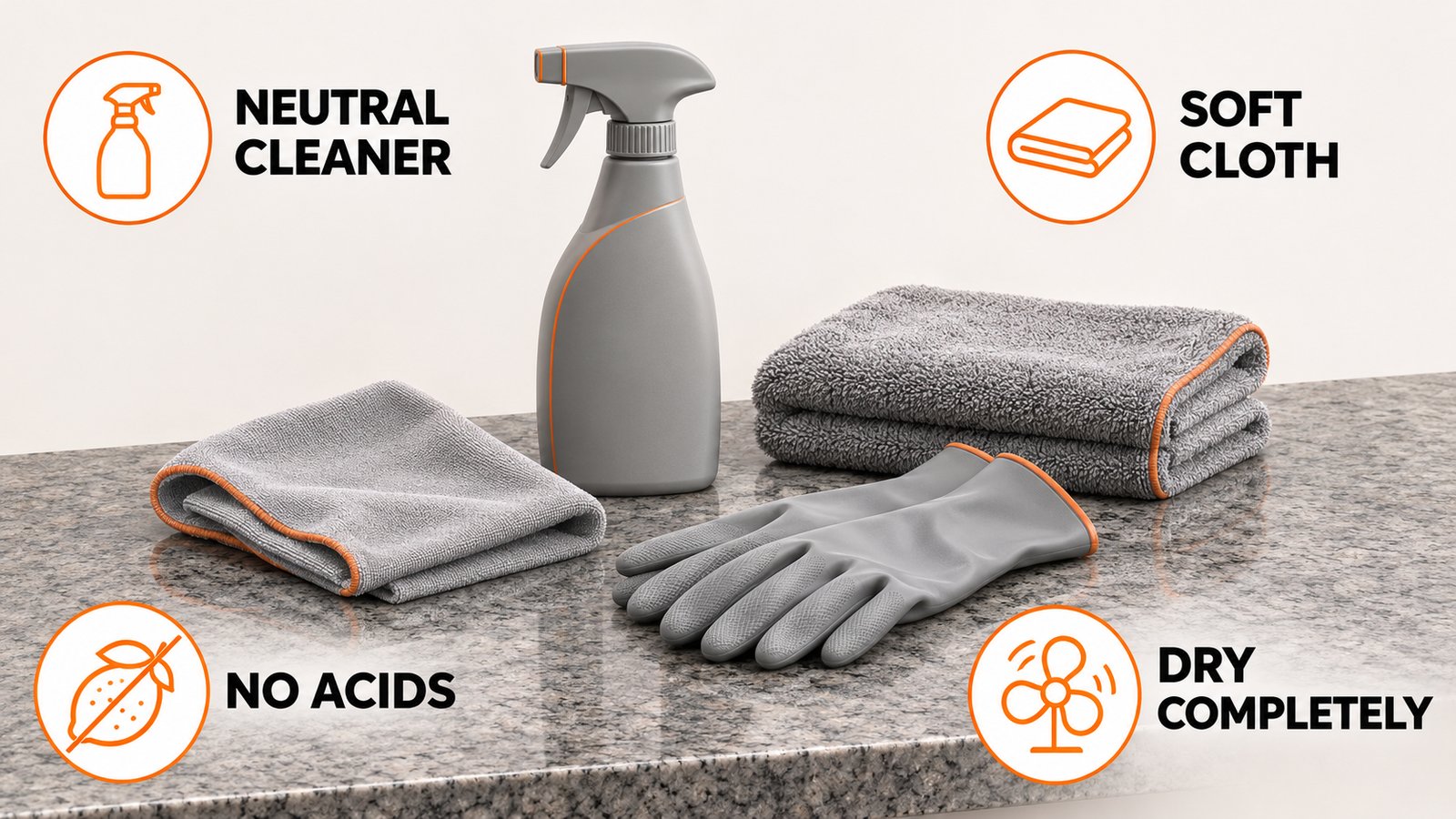
- Fix the water first. The EPA says that if you clean up mold but do not fix the water problem, it will most likely come back.
- Protect yourself. The EPA recommends gloves that extend to the middle of the forearm.
- Wash with a gentle cleaner. The Institute says to clean stone with a neutral cleaner, stone soap, or a mild liquid dishwashing detergent and warm water, then rinse thoroughly and dry with a soft cloth. It warns that too much cleaner leaves a film and streaks. The same stone-care company owner quoted there advises against dish detergent because soap can leave a greasy film, so a cleaner labeled for stone is the better pick.
- Dry the whole area. The EPA says to scrub hard surfaces with detergent and water, and dry completely.
If a dark mark stays. For biological stains the Institute lists a half cup of ammonia, bleach or hydrogen peroxide in a gallon of water, and warns never to mix bleach and ammonia. The EPA says a biocide such as chlorine bleach is not recommended as a routine practice in mold cleanup. So we treat those as a second step, after washing and drying, and only per the stone supplier's advice. We do not make safety claims for any product.
What to keep off the stone. The Institute says lemon, vinegar and other acids may dull or etch calcareous stones such as marble, limestone and travertine, and that acidic cleaners are still not recommended on silicate stones. The same page says granite and other siliceous stones are generally resistant to most acids found in kitchens. A cleaner labeled for stone is still the safer pick. It says scouring powders often contain abrasives that scratch. It also says many rust removers contain trace hydrofluoric acid that attacks all stones, granite included. Our vinegar page also says to skip vinegar on natural stone.
Deep stains. The Institute describes a poultice, a paste of absorbent material and a cleaner left on for 24 to 48 hours, and says some stains may never be completely removed. That is a job to ask a stone pro about.
What About Mold on Marble?
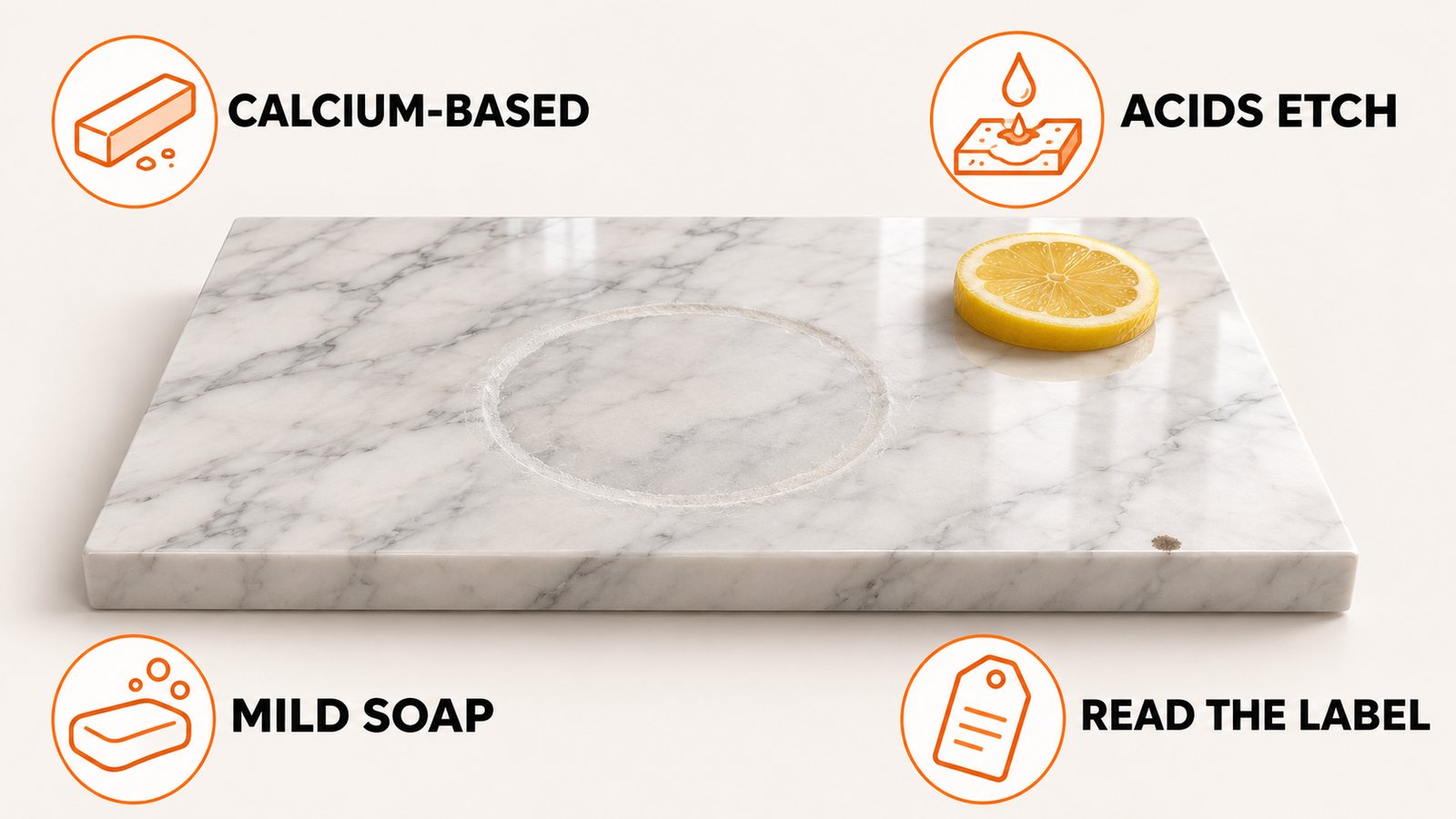
Marble needs the same fixes with more care. A restoration owner quoted on the Institute's consumer site says marble is a calcium-based stone that is softer and prone to scratches and etching. The Institute says calcium carbonate is sensitive to acidic solutions, so mild, non-acidic cleaners are recommended.
- Skip acids. Tomatoes, citrus, juices, alcohol and vinegar can etch marble, which looks like a dull spot or burn mark. That dull spot is not mold. Sealer does nothing to protect against etching, one expert says.
- Use mild soap or a stone cleaner. Read the label and make sure it is for stone. If a product suggests testing it first, the expert says stay away.
- Dry it. Same as granite: moisture control is the real fix.
For anything beyond a light dark mark, a stone restorer can refinish marble. The room-level steps are in mold in kitchen.
How to Stop Mold on Stone Countertops From Coming Back
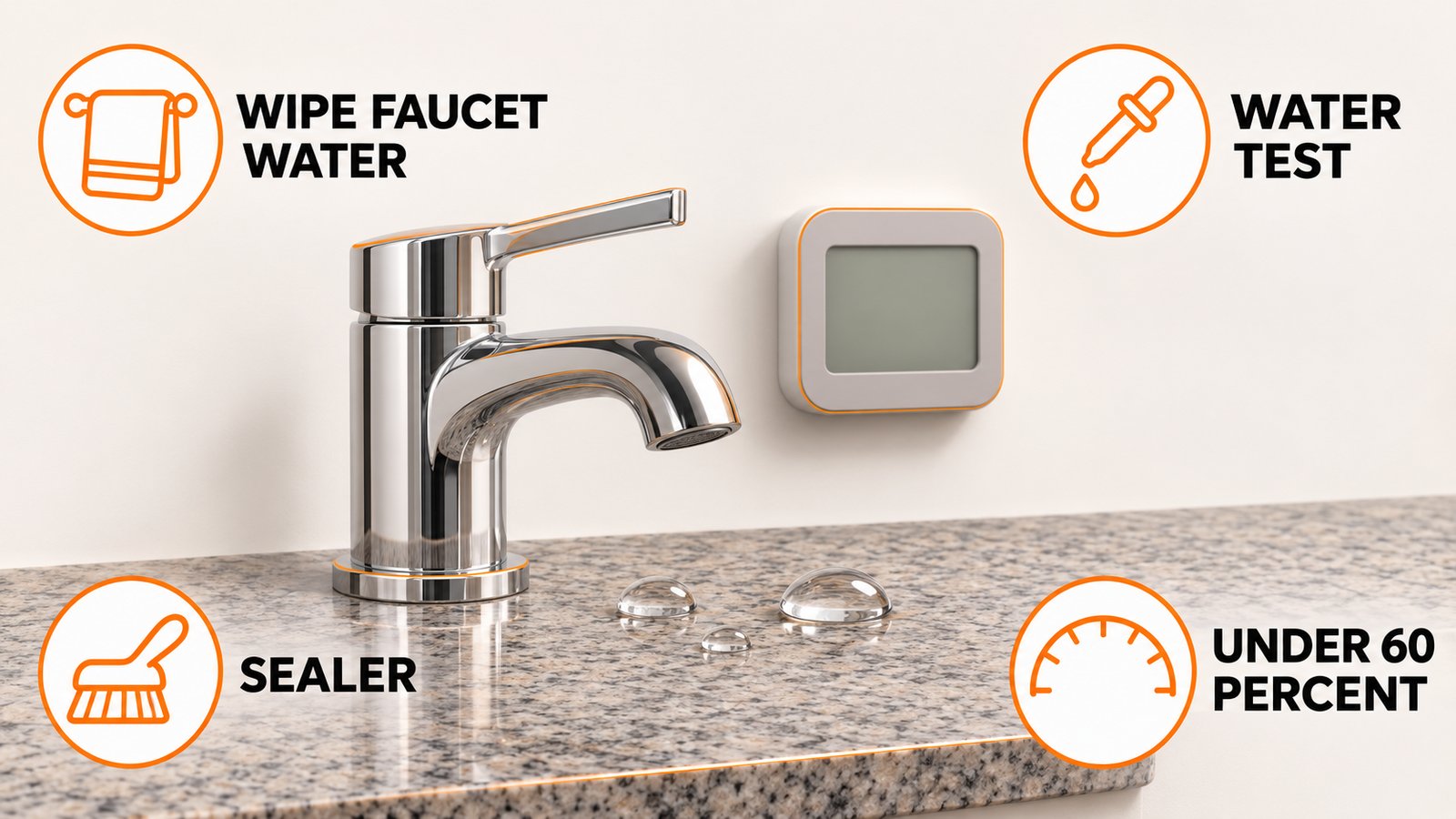
- Wipe water around the faucet daily. A stone company quoted on the Institute's consumer site says that if you do not, the water starts to calcify and turn white.
- Run the water test on granite. The owner of a stone-care company quoted there says to put a little hot water on an area for 10 to 20 minutes, then wipe it off. If the stone darkens, it is still absorbing moisture. If it does not, it is sealed.
- Know what a sealer does. The Institute says sealers act as a repellent, and sealing makes stone more stain resistant, not stain proof. None of the stone sources we read say a sealer prevents mold, so we do not claim it. Mold control is moisture control, per the EPA. Improper cleaners can break a sealer down, per the owner of a stone-care company quoted there.
- Keep humidity down. The EPA says below 60 percent, ideally 30 to 50 percent. Run the exhaust fan when cooking or running the dishwasher. Try our humidity risk calculator.
- Dry spills fast. The EPA says materials dried within 24 to 48 hours help prevent mold growth. Keep bottles in a dish so they do not leave a wet ring.
More habits are in how to prevent mold.
When to Call a Pro
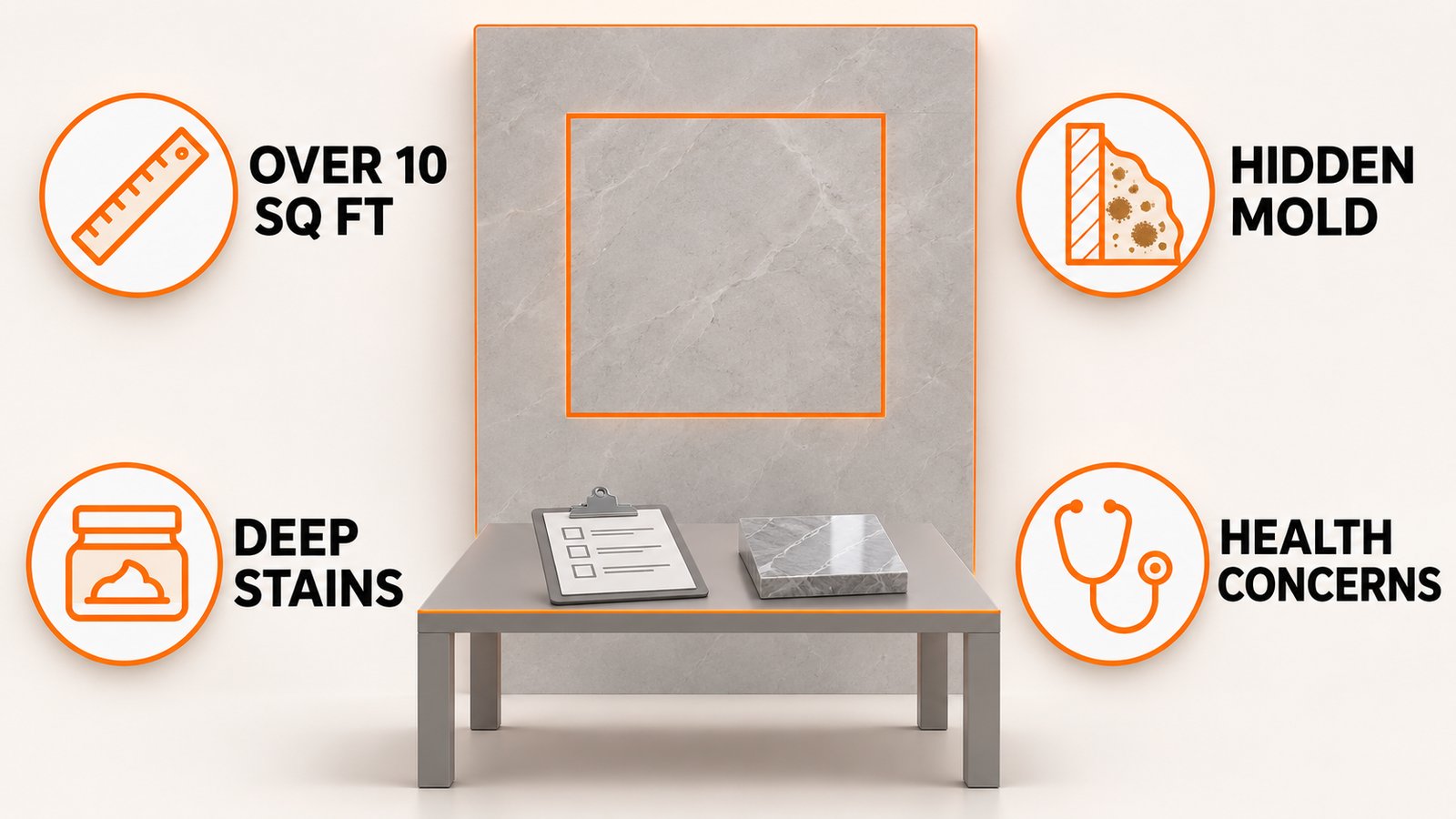
- The mold covers more than about 10 square feet, roughly a 3-foot by 3-foot patch. Past that size the EPA points to its guide for larger jobs, and we suggest a professional.
- You suspect hidden mold. The EPA says you may suspect hidden mold if a building smells moldy but you cannot see the source, or if you know there has been water damage and people in the home are reporting health problems. If you think that is the case, it suggests an experienced professional. See mold remediation.
- The stone is stained or etched. The Institute says deep-seated stains may need a poultice or a professional.
- You have health concerns. The EPA says to consult a health professional before starting cleanup.
Frequently asked questions
Can granite get mold?
Mold needs moisture, and the EPA says none of the many types grow without it. A stone-care expert says nothing sticks to granite, but another says some stones are more porous than others. On a counter, growth is more often found on a film, the caulk line or the seam. That last part is our rule of thumb.
Why does the caulk next to my granite keep going black?
Caulk joints stay wet longest. The EPA says not to caulk over mold and to clean and dry the surface first. See our mold on caulk page. Check below the sink for a slow leak.
Is the white crust at my faucet mold?
Probably not. A stone company quoted on the Natural Stone Institute's consumer site says water around fixtures can calcify and turn white. It adds that the crust is cleanable with a neutral cleaner once a week, and that left alone it can need a stone restoration. Fuzzy or cottony patches that return are different.
Can I use vinegar on granite?
Stone-care sources say to avoid it. The Natural Stone Institute says lemon, vinegar and other acids may dull or etch calcareous stones such as marble, limestone and travertine, and that acidic cleaners are still not recommended on silicate stones. It also says granite and other siliceous stones are generally resistant to most acids found in kitchens, so a cleaner labeled for stone is still the safer pick. Our vinegar page also says to skip it on natural stone.
Does sealing granite stop mold?
The sources we read say sealer makes stone more stain resistant, not stain proof. None says it prevents mold. The EPA's main message is that mold control is moisture control.
Is a dull spot on marble mold?
Often not. An expert quoted on the Institute's consumer site says acids can etch marble, which looks like a dull spot or burn mark. Mold would be a dark or fuzzy patch that returns where it stays damp.
Do I need a mold test?
Usually not. The EPA says that in most cases, if visible mold growth is present, sampling is unnecessary. Fix the moisture, clean with a gentle method and dry the area.
Sources
Every claim on this page traces to one of these. Links open the primary document.