


What is the Mosaic Diagnostics MycoTOX Profile?
Mosaic Diagnostics, formerly The Great Plains Laboratory, describes MycoTOX as a mail-in urine panel that reports 11 listed mycotoxins using LC-MS/MS. It samples urine, not air, dust, walls, or building materials. The result therefore cannot establish whether mold is present in a building, where it came from, whether it caused illness, or whether a space is safe.
Company-described collection process
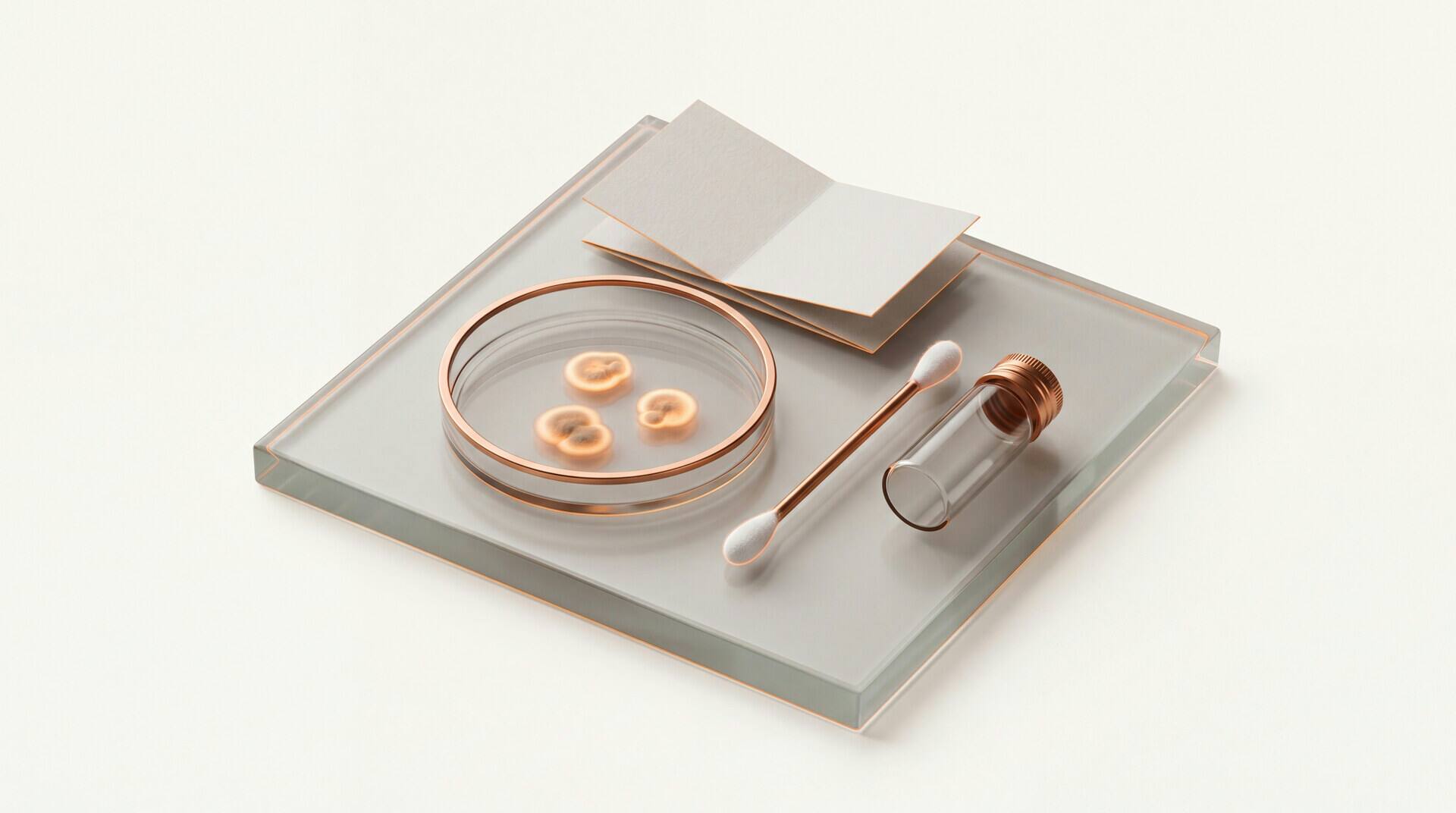
Mosaic publishes ordering, collection, freezing, packaging, and return instructions with the kit. The company describes a first-morning urine sample, LC-MS/MS measurement with creatinine correction, and a report in about 5 to 10 business days after laboratory receipt. Use only the current manufacturer directions for handling a purchased kit. This process does not establish clinical validity, and changing collection conditions does not make the result diagnostic.
What it tests for and what you get
Mosaic states that the MycoTOX Profile reports 11 mycotoxins associated with roughly 40 mold species. The company lists these compounds and associations:
- Aflatoxin M1 (AFM1) and Sterigmatocystin (STC), associated with Aspergillus species.
- Ochratoxin A (OTA), associated with Aspergillus and Penicillium.
- Gliotoxin (GTX), associated with Aspergillus.
- Mycophenolic Acid (MPA), associated with Penicillium.
- Citrinin (CTN), measured through its metabolite dihydrocitrinone, associated with Penicillium and Aspergillus.
- Chaetoglobosin A (CHA), associated with Chaetomium, a mold often found in water damaged buildings.
- Zearalenone (ZEA) and Enniatin B1 (ENB1), associated with Fusarium.
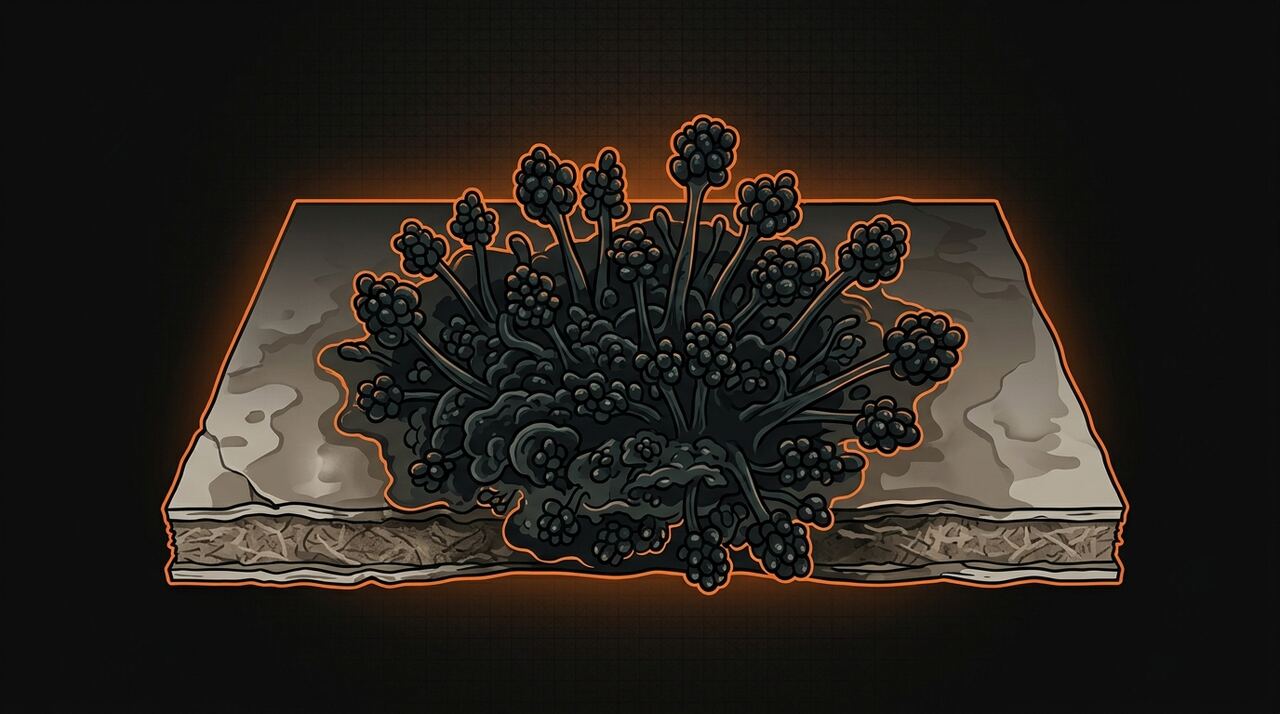
- Roridin E (ROE) and Verrucarin A (VRA), macrocyclic trichothecenes associated with molds like Stachybotrys, the group commonly called black mold.
Mosaic says its report lists the measured level for each compound, adjusted for creatinine, alongside the laboratory's own ranges. Those ranges do not establish disease-predictive thresholds. The report is not a diagnosis, treatment instruction, source investigation, clearance, or occupancy determination.
Pricing and what is included
Mosaic sells through practitioners and multiple laboratory platforms that may set different prices. Listed prices are generally in the range of roughly $275 to $330. Prices and terms can change.
| Test | MycoTOX Profile (11 mycotoxins) |
|---|---|
| Sample | One first morning urine sample, collected at home and frozen |
| Method | LC-MS/MS mass spectrometry, with creatinine correction |
| Turnaround | About 5 to 10 business days after the lab receives your sample, plus shipping time |
| Typical price | Roughly $275 to $330 depending on the seller (check current pricing) |
| Insurance | Frequently paid out of pocket; some ordering channels may provide claim paperwork |
| What is included | Collection kit, return shipping materials, lab analysis, and a results report |
The base product does not include a home inspection, environmental sampling, or independent clinical validation. Price, availability, and included materials do not make the result diagnostic or establish a building source.
Laboratory operations and clinical validity
What the company reports
Mosaic describes LC-MS/MS measurement with creatinine correction and states that its laboratory is CLIA certified and CAP accredited. Those facts address analytical measurement and laboratory operations. They do not establish that a urine result predicts disease, identifies an exposure source, or supports a treatment or occupancy decision.
What federal guidance says
Lab accreditation is not the same as clinical validity. CDC has specifically described urine mycotoxin testing as unvalidated for diagnosing illness. Its category-level findings include:
- There is no FDA-approved test for mycotoxins in human urine.
- CLIA certification does not establish clinical validity.
- Diet can contribute to urinary mycotoxins, including in healthy people.
- Levels that predict disease have not been established.
A high reading does not prove that a building caused exposure or illness, and a low reading does not clear a home. Do not use the result for diagnosis, causation, source, treatment, remediation, clearance, or occupancy decisions.
Product facts and evidence limits
Company-reported product facts
- Mosaic lists LC-MS/MS measurement for 11 analytes.
- The company states that its laboratory is CLIA certified and CAP accredited.
- Mosaic describes first-morning urine collection, freezing, and return shipping.
- The company describes creatinine correction and about 5 to 10 business days after laboratory receipt.
- The product is listed through multiple ordering channels.
None of these facts establishes clinical validity.
Evidence and decision limits
- CDC states there is no FDA-approved urine mycotoxin test for clinical use.
- Diet can contribute to urinary mycotoxins, so a positive does not prove a building problem.
- Disease-predictive levels and broadly validated population reference ranges have not been established.
- A urine panel cannot locate mold, identify a room, or determine a moisture source.
- Panels, methods, and laboratory ranges differ, so results are not directly comparable across providers.
- The product is frequently paid out of pocket.
- A result cannot support diagnosis, causation, treatment, remediation, clearance, or occupancy decisions.
What the result cannot decide
This panel is not a suitable basis for a diagnosis, exposure or causal conclusion, treatment decision, remediation scope, clearance, or occupancy decision. It does not establish whether mold is present in a building or where a moisture source is located. Building questions require a qualified building investigation, and health concerns require evaluation under established medical guidance rather than interpretation of this unvalidated panel.
How Mosaic MycoTOX compares to alternatives
Mosaic samples urine. Environmental products sample building materials, air, or dust. The sample types and decision limits are different.
Other urine mycotoxin tests (body)
Mosaic MycoTOX vs RealTime Laboratories: Mosaic describes its panel as LC-MS/MS for 11 analytes, while RealTime describes a competitive ELISA panel for 16. Different methods and laboratory ranges mean results are not directly comparable. Neither test is FDA-approved to diagnose illness, according to CDC guidance on this testing category.
Mosaic MycoTOX vs Vibrant Wellness: Vibrant describes a larger mass-spectrometry panel. A larger analyte list does not establish clinical validity. Across these products, CDC's category-level limitation remains: urine mycotoxin tests are not FDA-approved for clinical use.
Environmental testing (building)
If your question is about a building, use a qualified building investigation to locate moisture and visible damage. An ERMI or HERTSMI-2 dust result is not a clearance, occupancy, or health determination. EPA says ERMI is a research tool and does not recommend it for consumer home testing.
Professional inspection and DIY identification
A qualified inspector can investigate a building beyond camera-visible surfaces and collect appropriate samples. A phone-based visual-screening app can provide only a first-pass screen of submitted images. It cannot confirm mold, locate hidden growth, choose testing, or determine whether a health test is warranted. If you want a physical kit, see our take on mold testing kits.
Evidence-based conclusion
Mosaic publishes a defined analyte list, LC-MS/MS method, collection process, laboratory credentials, price range, and reporting timeframe. Those product facts do not establish clinical validity. CDC states that urine mycotoxin tests are not FDA-approved for clinical use and that levels predicting disease have not been established. Do not use this panel to diagnose illness, prove exposure or causation, identify a building source, choose treatment, define remediation, or establish clearance or safe occupancy.
Frequently asked questions
What is the Mosaic Diagnostics MycoTOX Profile?
Mosaic describes MycoTOX as a mail-in urine panel, formerly sold under The Great Plains Laboratory name, that reports 11 listed mycotoxins using LC-MS/MS. The company instructs customers to collect, freeze, and return a urine sample. These product facts do not make the result diagnostic.
How much does the MycoTOX Profile cost?
Prices listed by ordering channels are generally around $275 to $330, and Mosaic sells through practitioners and third-party laboratory platforms that may set different prices. The test is often paid out of pocket. Price and availability do not establish clinical validity.
Is the MycoTOX urine test accurate?
Mosaic describes LC-MS/MS measurement in a CLIA-certified and CAP-accredited laboratory. Those facts address analytical measurement and laboratory operations, not clinical validity. CDC states there is no FDA-approved test for mycotoxins in human urine and that disease-predictive levels have not been established. Do not use a result to diagnose illness, prove causation, identify a building source, or make an occupancy decision.
Does a positive result mean my house has mold?
No. The MycoTOX Profile measures compounds in urine, not a building. Food can also contribute to urinary mycotoxins, so a result does not identify a room or prove a home is the source. Use a qualified building investigation for building questions. EPA says ERMI is a research tool and does not recommend it for consumer home testing.
What collection guidance applies?
Use only Mosaic's written kit directions. This review does not endorse altering a sample. CDC states urine mycotoxin tests are not FDA-approved for clinical use, so collection changes do not make a result diagnostic.
How long do MycoTOX results take?
Mosaic lists a turnaround of about 5 to 10 business days after the laboratory receives the sample, plus shipping time. That company-reported process fact does not establish clinical validity.
How is MycoTOX different from RealTime Labs or Vibrant Wellness?
Mosaic describes an LC-MS/MS panel for 11 analytes. RealTime describes a competitive ELISA panel for 16, and Vibrant describes a larger mass-spectrometry panel. Different methods and laboratory ranges mean results are not directly comparable. CDC states urine mycotoxin tests are not FDA-approved for clinical use.
Does the MycoTOX Profile replace a mold inspection?
No. A urine measurement does not find mold in a home. Use a qualified building investigation to assess moisture and visible damage. A urine result cannot identify a source, diagnose illness, establish clearance, or determine whether a space is safe.
Is the MycoTOX Profile covered by insurance?
The test is frequently paid out of pocket, and some ordering channels may offer paperwork for an insurance claim. Coverage varies and is not guaranteed. Insurance treatment does not establish clinical validity.
Sources
Every claim on this page traces to one of these. Links open the primary document.