What KILZ Mold & Mildew Primer actually does
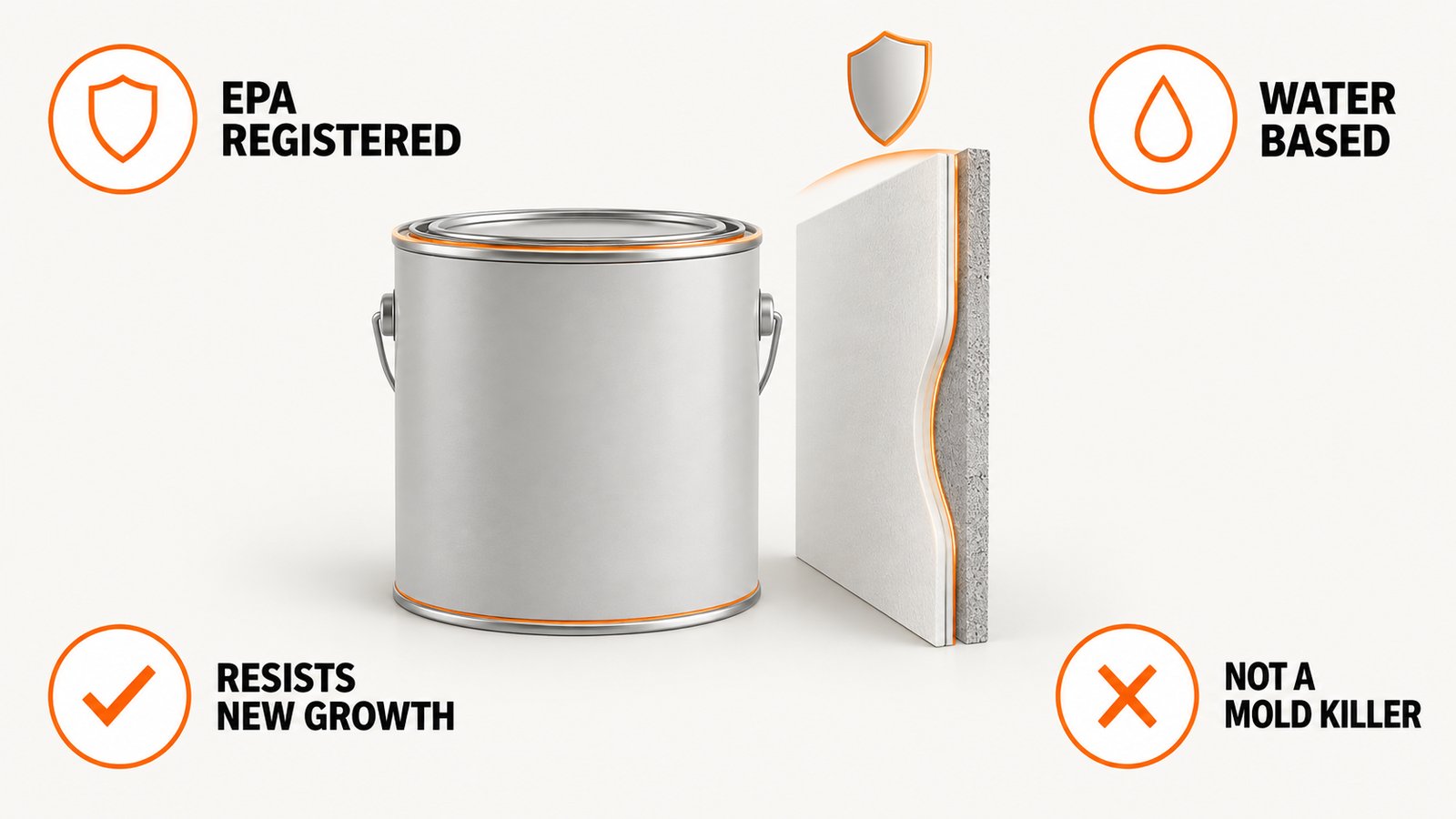
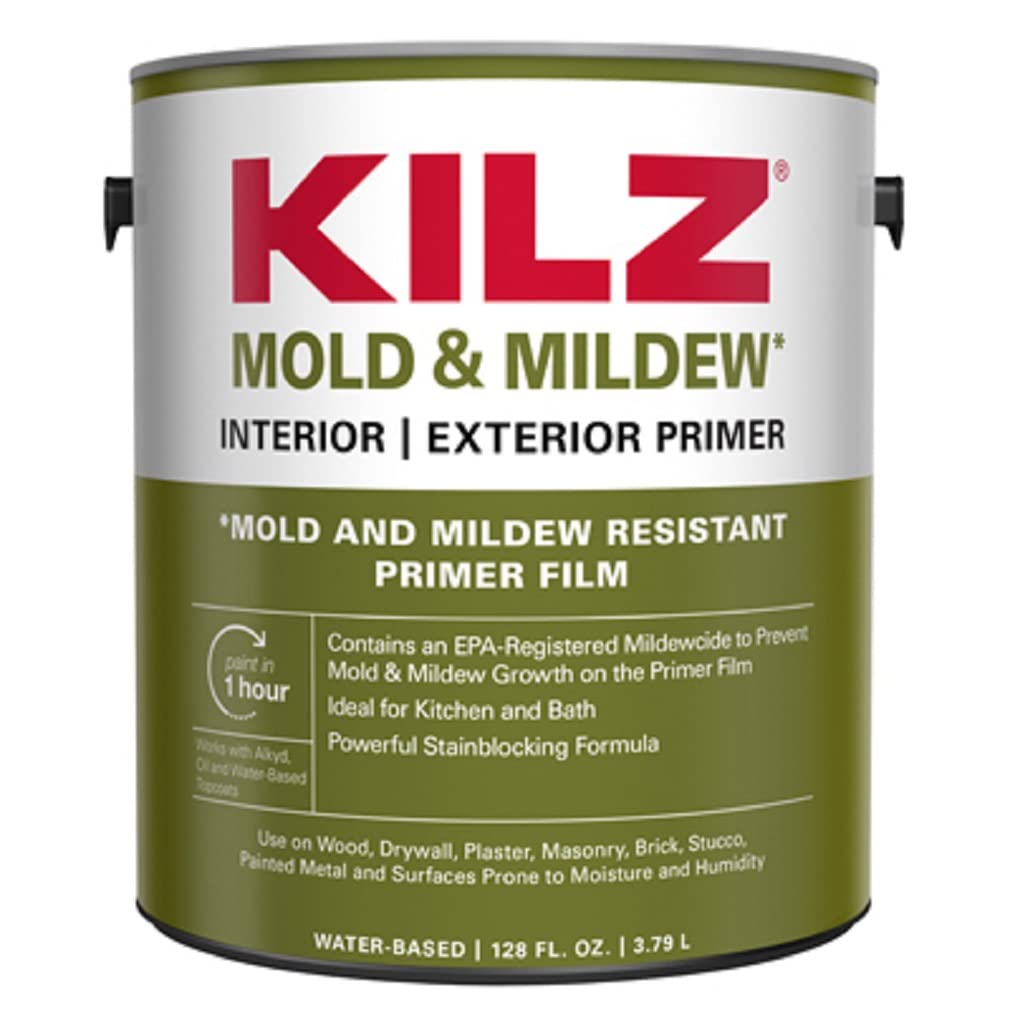
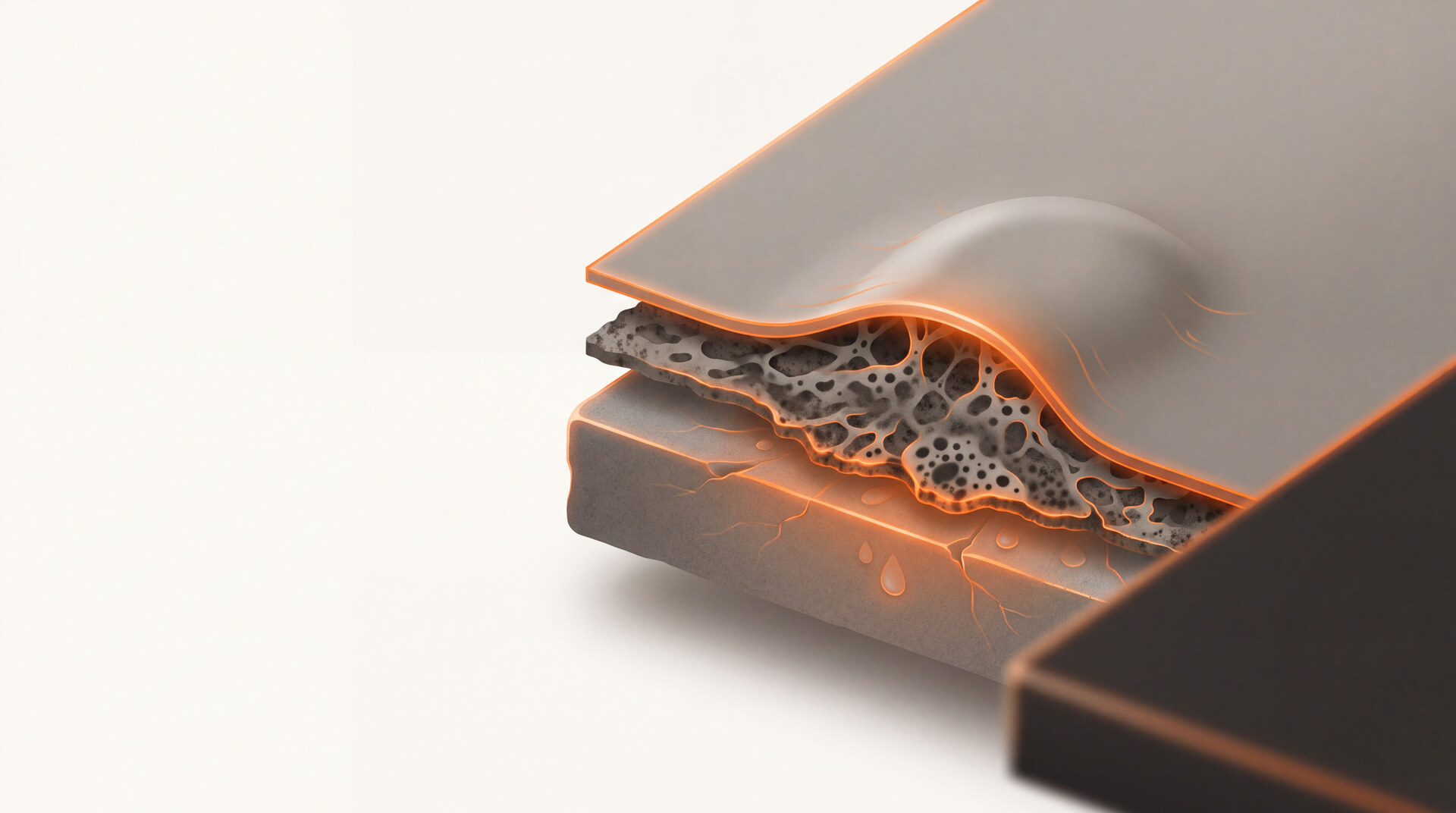
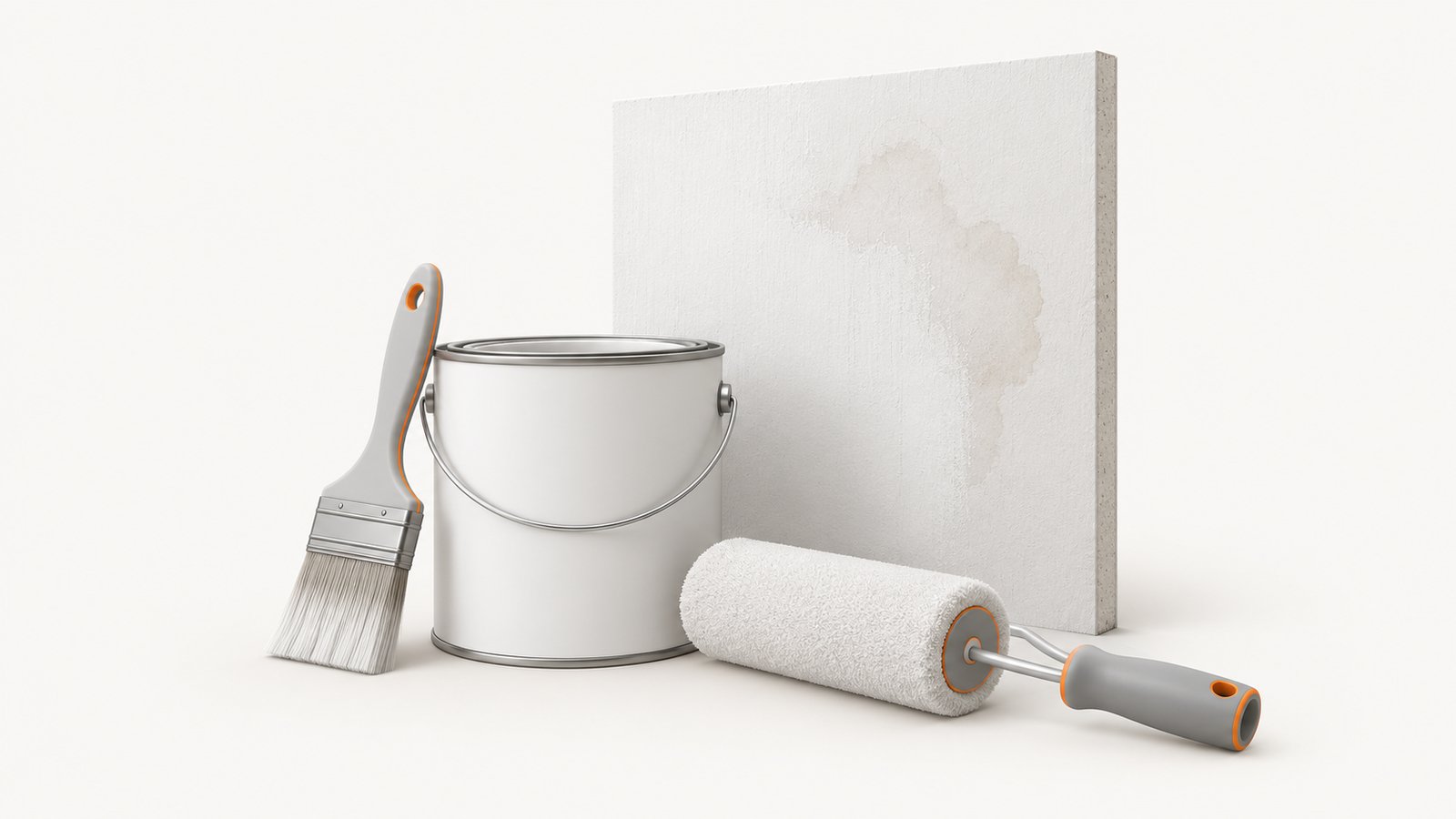
The name makes it sound like it kills mold on contact. It doesn't. KILZ Mold & Mildew Primer is a water-based primer, sealer and stainblocker built for kitchens, bathrooms, powder rooms and laundry rooms. Its own technical data sheet describes the mechanism in one sentence: "The EPA registered active ingredient creates a mold and mildew-resistant film that protects the primer film from mold and mildew growth." Read that closely and the target is the primer film, the dried coat of paint on your wall, not the mold that might already be growing on the surface underneath it.
That distinction matters for how you use the can. Once the primer dries, the mildewcide keeps new mold and mildew spores from colonizing the paint film itself, which is why it holds up in damp rooms where an ordinary primer would grow spots within a season. It was never designed to reach into a colony that is already established on drywall paper or bare wood and kill it there. For the full rundown on pricing, coverage and how it held up in our own testing, see our KILZ Mold & Mildew Primer review.
Where KILZ works, and where it does not
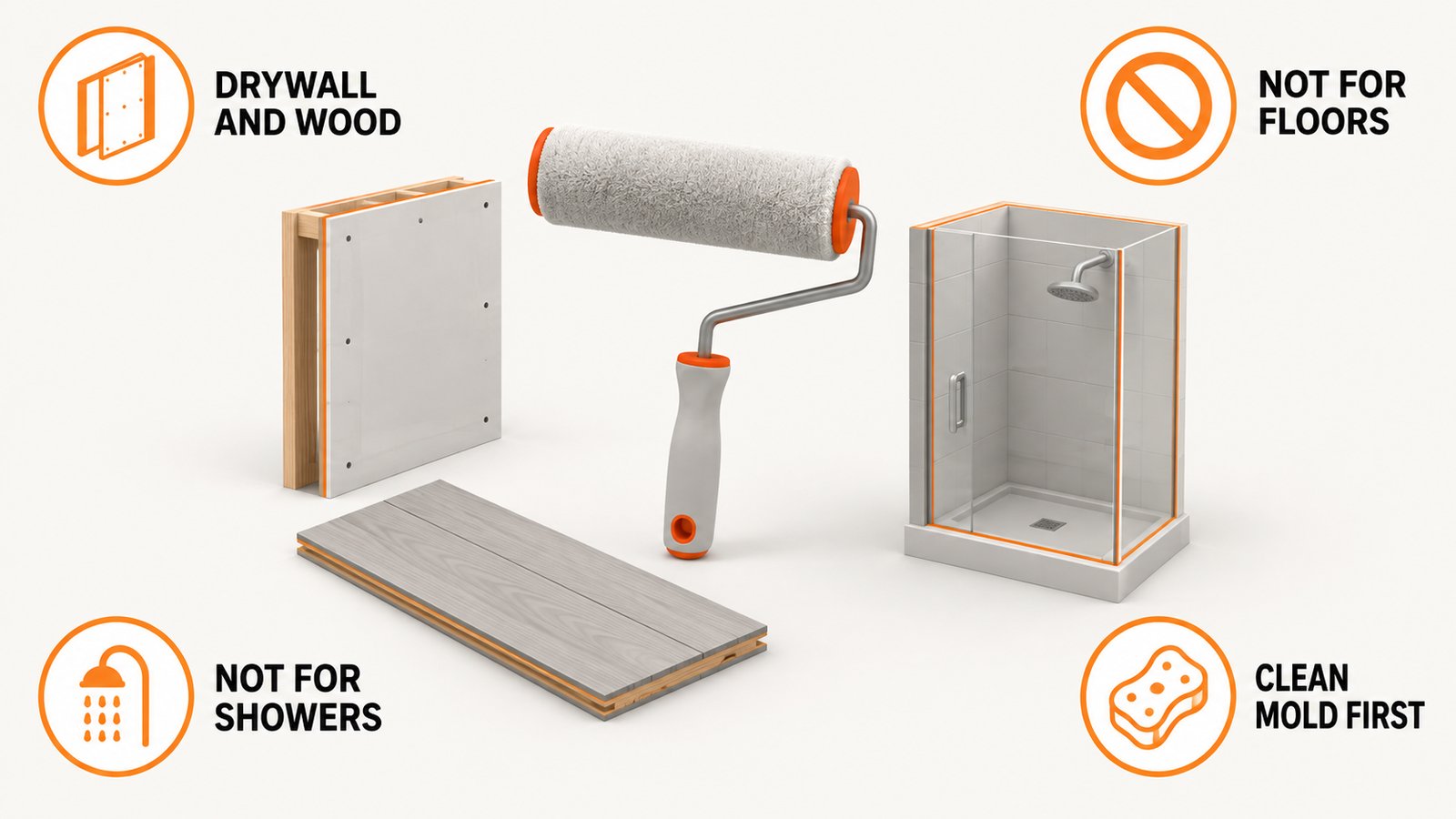
It works on: drywall, plaster, paneling, stucco, wood, brick, masonry, and painted metal, once the surface is clean and dry. It's built for residential surfaces prone to moisture and humidity, meaning the walls and ceilings around a kitchen, bath, powder room or laundry area, not the wet surfaces themselves. The label specifically excludes the insides of sinks, tubs, hot tubs, toilets, shower enclosures and pools, and any area where direct water contact happens regularly. It is also not recommended for floors, and new masonry needs 30 days to cure before you can prime it.
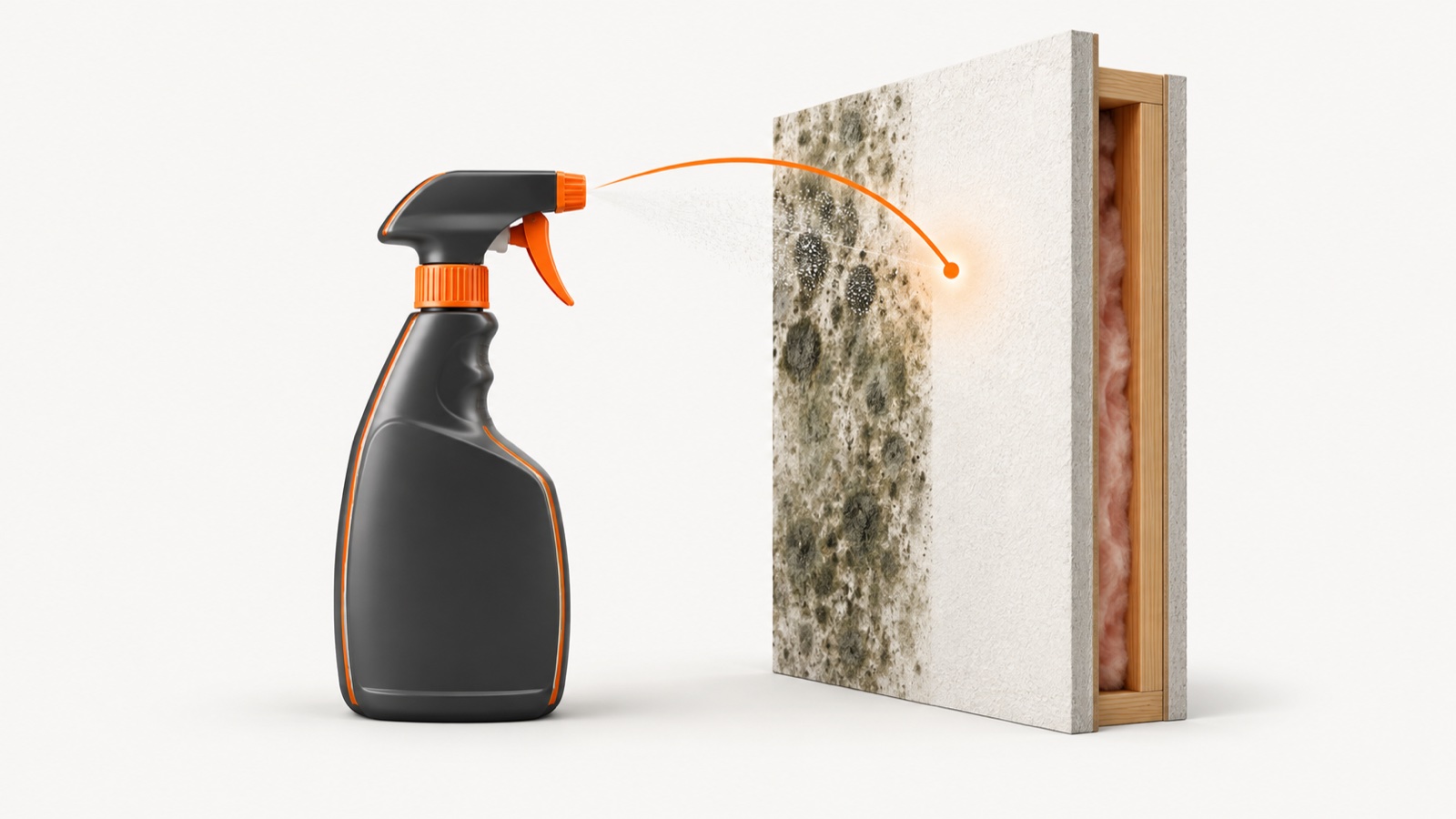
It will not save: mold that has already rooted into the surface. The technical data sheet lists "mold and mildew" right alongside dust, chalk, oil, grease and wax as contaminants the surface must be free of before you prime. Its instruction is explicit: wash the area with a mildew remover, rinse with water, and let it dry, before you touch it with a brush or roller. If the mold has pushed through paper-backed drywall or gone deep into porous wood, cleaning won't be enough either, and that material needs to be cut out and replaced rather than primed over. Our guide to whether you can paint over mold walks through that call in more detail.
KILZ is also not a fix for the moisture itself. If a leak or high humidity keeps feeding the spot, new growth comes back no matter how good the primer is. Fix the water problem first, keep humidity under 50% with a dehumidifier, and for a patch bigger than about 10 square feet, or growth you suspect is toxic black mold, bring in a professional who follows the ANSI/IICRC S520 remediation standard instead of trying to prime your way out of it.
Does KILZ paint kill mold?
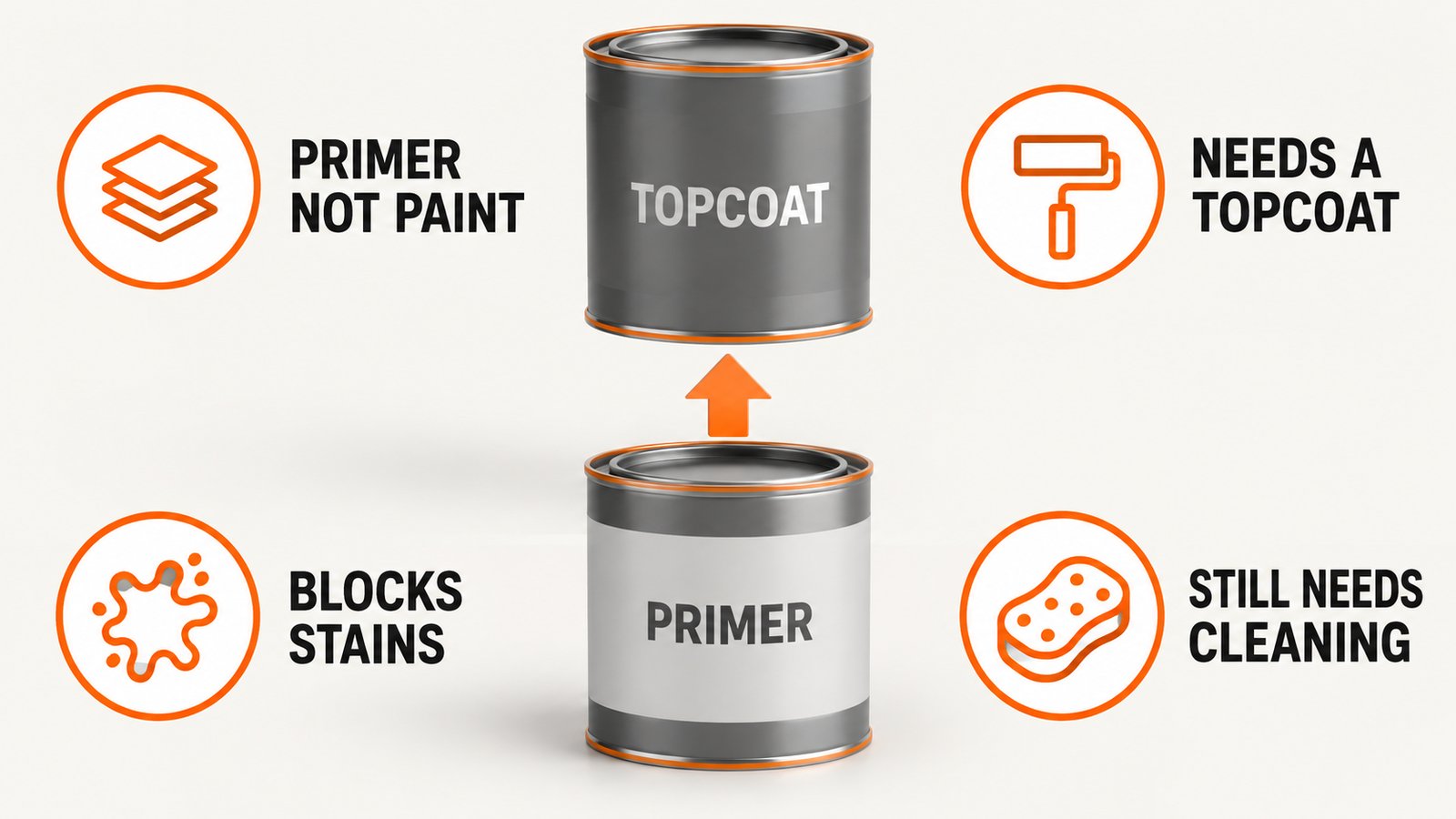
No, and part of the confusion is the word "paint." KILZ Mold & Mildew is a primer, not a finish coat. It's designed to be topcoated with a water-based, oil-based or alkyd paint, and it does the stainblocking and sealing work underneath that visible top layer. If you searched "KILZ paint for mold" expecting a single can that both covers the wall and kills what's growing on it, that product doesn't exist under this name.
What the primer does well is block medium to heavy stains, including the yellow-brown tannin stains mold and old water damage leave behind, and it dries fast: about 30 minutes to the touch and 1 hour before you can topcoat. But stainblocking and mold resistance are two different jobs. Blocking a stain means the mark doesn't bleed through the new paint. Resisting mold means the dried film doesn't grow new spots. Neither one kills the mold that's currently on the wall. Clean it, dry it, then prime and paint. For finish coats that hold up well in damp rooms once the mold problem is handled, see our guide to the best mold-resistant paints.
KILZ Mold & Mildew spray vs the primer
KILZ also sells a 13 ounce aerosol under the same Mold & Mildew name, and its own technical data sheet uses nearly identical language: "The EPA registered active ingredient creates a mold and mildew-resistant film that protects the primer film from mold and mildew growth." Same claim, same limit. The spray doesn't kill existing mold either.
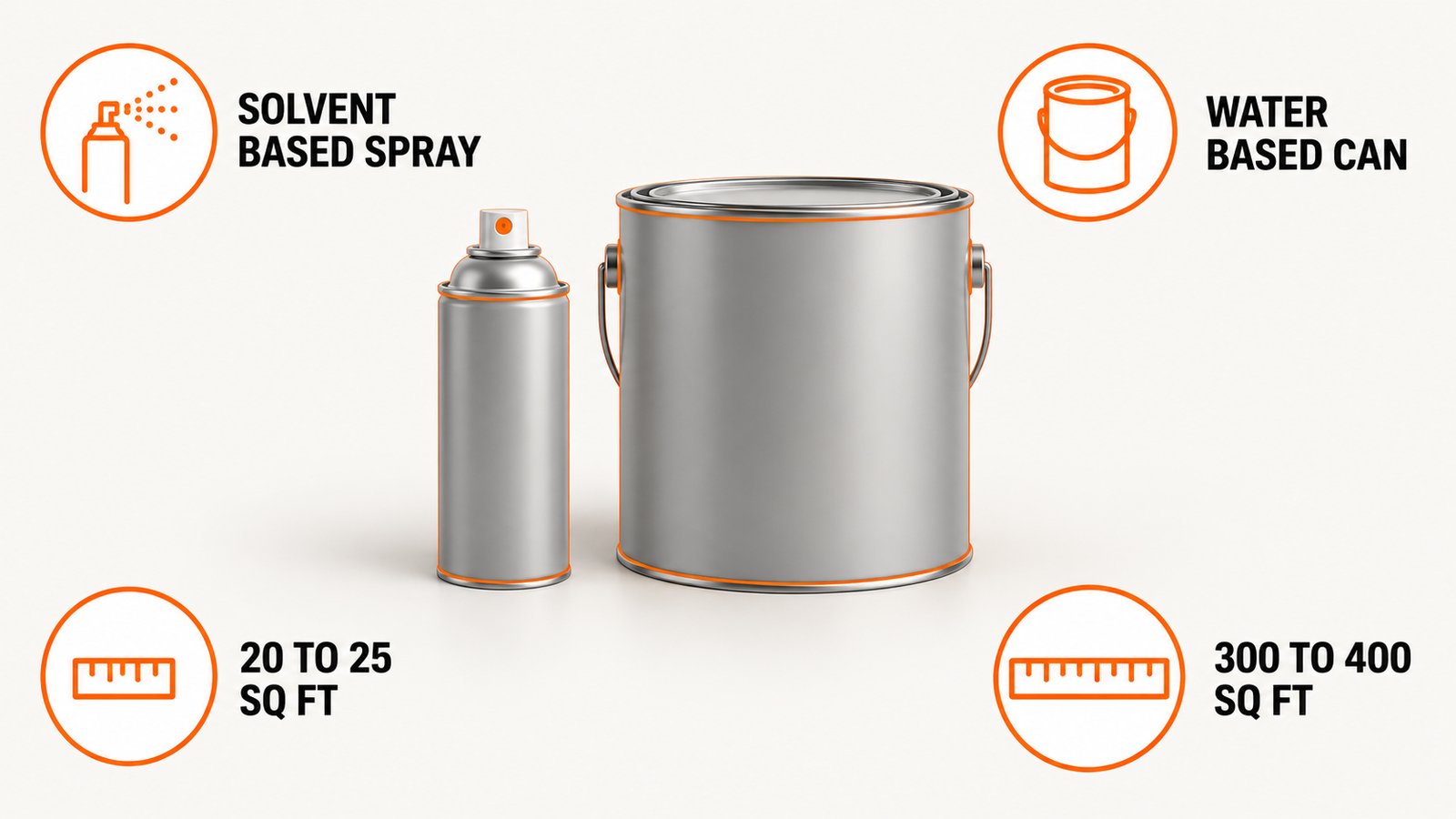
The formulas aren't identical, though. The gallon and quart cans are a water-based acrylic that cleans up with soap and water and covers 300 to 400 square feet per gallon. The aerosol is a solvent-based formula that cleans up with mineral spirits, contains petroleum distillates, and covers only about 20 to 25 square feet per can, which is why retailers list it as the oil-based option. It's meant for small touch-ups and spot priming, not for coating a whole wall. Both versions carry the same instruction on mold: any existing mold or mildew on the surface must be removed and the area rinsed and dried before you spray or brush a coat on.
How long does KILZ Mold & Mildew Primer take to dry?
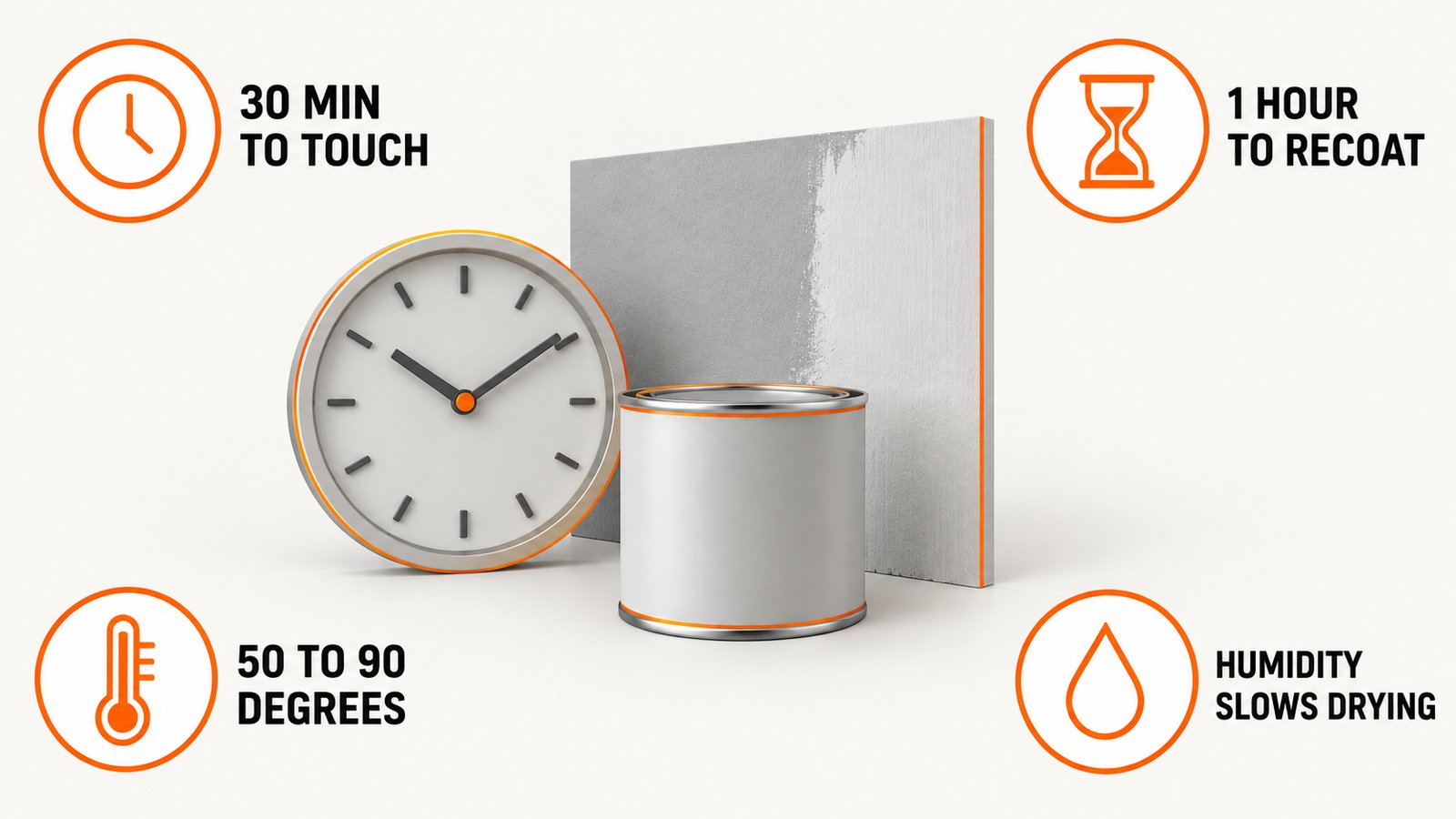
KILZ Mold & Mildew Primer dries to the touch in about 30 minutes and is ready to recoat or topcoat after 1 hour, measured at 77 degrees Fahrenheit and 50% relative humidity. Apply it when the surface, air, and product temperature are between 50 and 90 degrees Fahrenheit for a clean cure.
Those numbers move with the room. A warm, dry bathroom with good airflow will dry close to the 30-minute mark. A cool, damp basement or an unventilated laundry room will take longer on both counts, sometimes well past the hour before it's ready for a topcoat. The 13 ounce aerosol dries slightly faster to the touch, in 15 to 30 minutes, but needs the same 1 hour before you recoat or topcoat.
What to check before you topcoat
- The surface should feel fully dry, not tacky, before a second coat or a topcoat goes on.
- Temperatures above 90 degrees F can make the primer dry too fast and affect how it lays down, so avoid priming in direct sun.
- Cold or humid rooms need more time. When in doubt, wait longer rather than recoat early.
Which KILZ is best for mold?
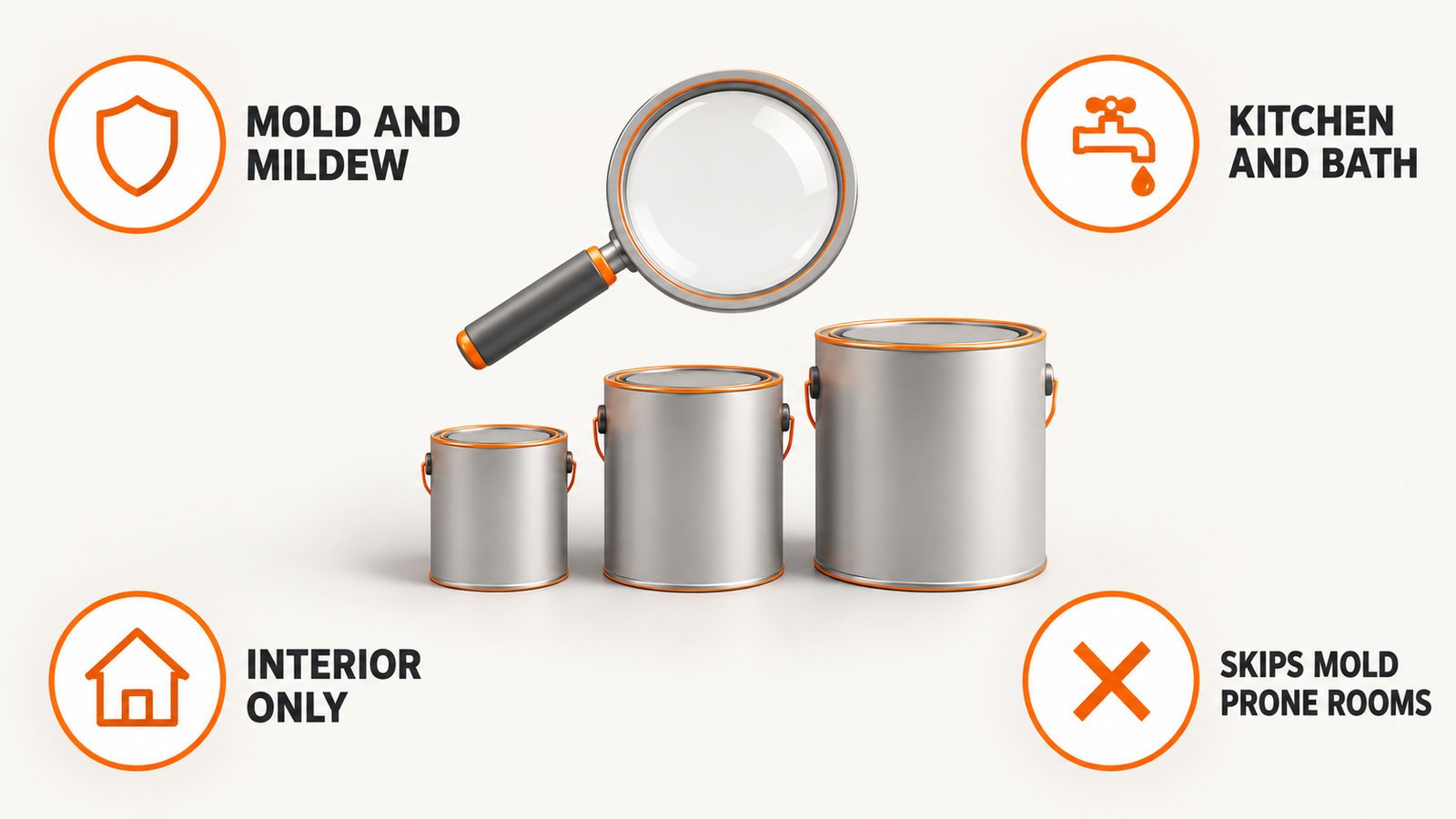
KILZ sells several primers, and only one of them is built specifically around mold and mildew resistance with an EPA-registered active ingredient. Picking the wrong one is an easy mistake, especially between the two products aimed at damp rooms.
| Product | Interior/Exterior | Mold and mildew claim |
|---|---|---|
| Mold & Mildew (No. L2046) | Both | EPA-registered active ingredient resists mold AND mildew on the dried film |
| Kitchen & Bath (No. L2045) | Interior only | Enhanced mildew-resistant film; label does not carry the same mold claim |
| Restoration | Interior | Not recommended for areas prone to mold and mildew |
If the room is genuinely damp, prone to humidity, and you want the broadest resistance claim on the label, KILZ Mold & Mildew is the one to buy, and it's also rated for exterior use and a wider surface list including masonry, brick and stucco. KILZ Kitchen & Bath is the closest substitute for an interior-only kitchen or bathroom wall and shares the same 30-minute dry time and 300 to 400 square foot coverage, but its own label markets mildew resistance rather than the combined mold and mildew claim. KILZ Restoration is a different tool entirely, built for stain and odor blocking after smoke or water damage, and the manufacturer says outright not to use it in a room prone to mold and mildew. Whichever line you pick, the surface still needs to be cleaned of existing mold before you prime, every one of these products says so on its own label.
KILZ Mold & Mildew Primer vs Zinsser Mold Killing Primer
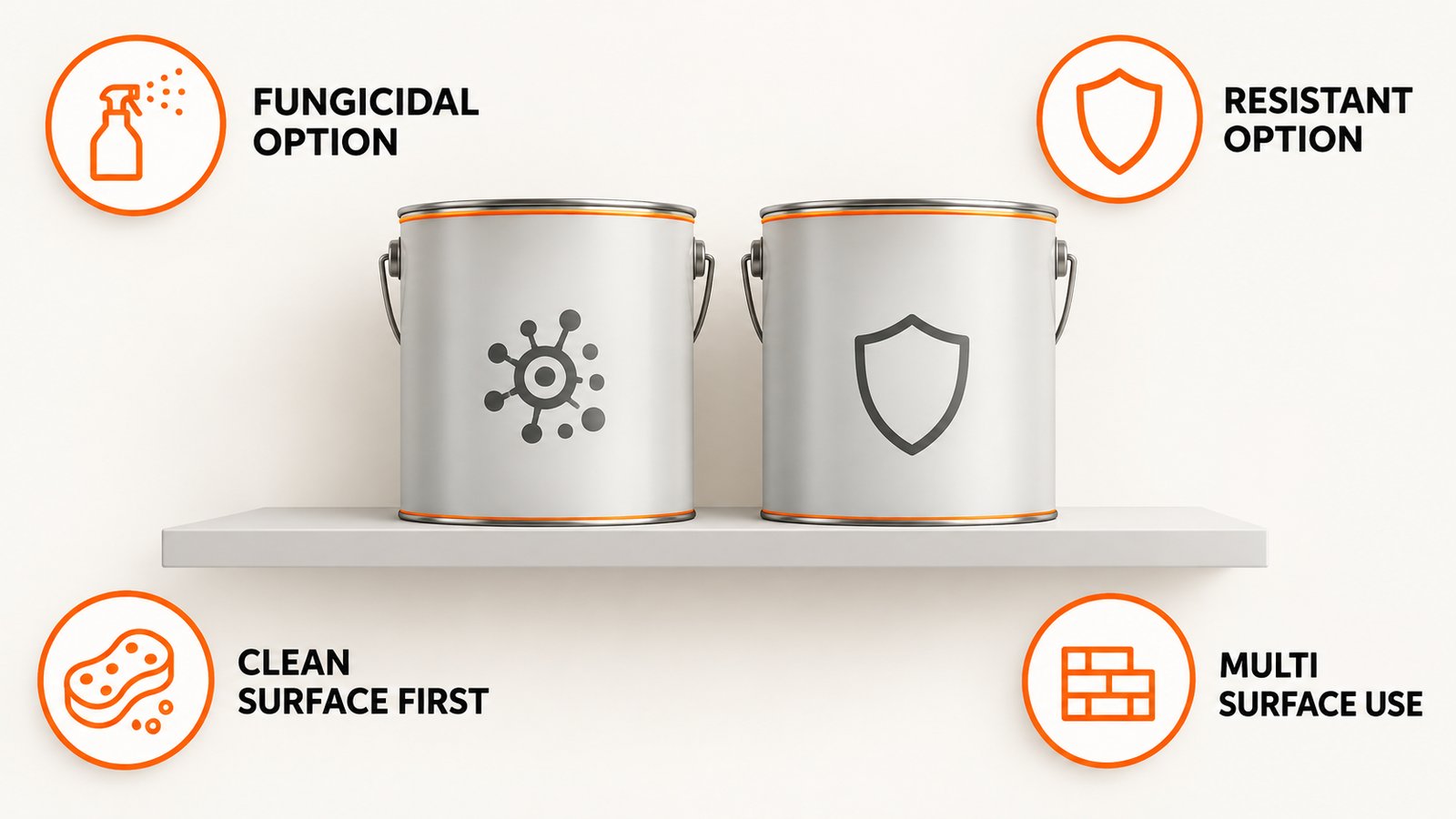
This is the comparison most people searching "does KILZ kill mold" are actually trying to resolve, because a primer with "Mold Killing" in its name does exist. It's just not this one.
Zinsser Mold Killing Primer is EPA registered as a fungicidal primer, which means its label supports painting directly over existing surface mold and mildew on a non-porous surface. KILZ Mold & Mildew is a resistant primer: its mildewcide protects the film once it's dry, and the label calls for cleaning the mold off the surface first rather than priming over it. Same general goal, a damp-prone wall that stops growing spots, but the two products get there from different starting points.
Pick Zinsser when there's visible surface mold on a hard, non-porous surface right now and you want to prime straight over it. Pick KILZ Mold & Mildew once the surface is already cleaned and you want a strong stainblocking base coat with a broader surface list, including wood, drywall, plaster, masonry and brick, that Zinsser's formula doesn't cover the same way. Neither product replaces cleaning up an active moisture problem, and neither is a substitute for a full remediation when the growth is extensive. For everything else the two primers do differently, our full KILZ review runs the side-by-side comparison in detail, including how both stack up against Concrobium Mold Control, the clear spray option for cleaning a surface without leaving a paint film behind.
Frequently asked questions
Will KILZ kill mold?
No. KILZ Mold & Mildew Primer contains an EPA-registered mildewcide that creates a mold and mildew-resistant film once the primer dries. That film resists new growth. It does not kill mold that is already on the surface, so clean and dry the area before you prime.
Does KILZ primer kill mold?
No. The primer's own technical data sheet says the EPA-registered active ingredient protects the dried primer film from mold and mildew growth. It does not describe killing existing mold, and it lists mold and mildew as a surface contaminant to remove before you prime, the same way you would remove dust or grease.
Is KILZ good for mold?
It is good for one job: a stainblocking base coat on a cleaned, dry surface in a damp-prone room, so the finished wall resists new mildew. It is not a fix for mold that is already growing. Clean the mold off, dry the surface, fix the moisture source, then prime and topcoat.
Is "KILZ Mold Killer" a real product?
Not under that name. KILZ sells KILZ Mold & Mildew Primer, and its own label calls it a mold and mildew resistant primer film, not a mold killer. If you want a primer whose EPA registration covers painting over existing surface mold, that product is Zinsser Mold Killing Primer, a different brand entirely.
Is KILZ Mold & Mildew Primer the same as a mold killing primer?
No, and the names are easy to mix up. "Mold Killing Primer" is Zinsser's product name for a fungicidal primer registered to be painted over existing surface mold. KILZ's product is named Mold & Mildew, and its EPA-registered ingredient resists new growth on the dried film rather than killing what is already there.
Is KILZ Mold & Mildew a paint or a primer?
It is a primer, not a finish coat. It is built to be topcoated with a water-based, oil-based, or alkyd paint. Some people search "KILZ paint for mold" expecting a one-step product, but the can is a stainblocking base coat, and you still need a separate topcoat.
Is KILZ Mold & Mildew Primer sold on Amazon?
Yes, along with home centers like Home Depot and Lowe's. Our full KILZ Mold & Mildew Primer review has the current buy links and pricing, plus the pros, cons, and application steps in one place.
Should I use KILZ or Zinsser for mold?
Use Zinsser Mold Killing Primer if you want to paint directly over existing surface mold on a non-porous surface. Use KILZ Mold & Mildew once the surface is already cleaned and you want a stainblocking base coat with mildew resistance on wood, drywall, plaster, masonry, or brick.
Sources
Every claim on this page traces to one of these. Links open the primary document.