
What the 5 Strands mold test actually is
Thousands of people search for "5 Strands mold test" every month, and almost all of them are asking the wrong product a question it was never built to answer. So let's clear this up in the first paragraph, because it is the whole review.
5Strands does not test your home for mold. The product people mean when they say "5 Strands mold test" is the 5Strands Environmental Sensitivity Test. You pull out a few strands of your own hair, mail them to a lab, and the lab uses something called bioresonance technology to produce a color-coded list of environmental items your body supposedly reacts to. Mold sits on that list next to dust mites, smoke, pollen, grasses, trees, animals, fabrics, and flowers. That is it. That is the entire mold component.
Your house is never involved. No air pump runs in your bedroom. No tape lift comes off the baseboard. No dust gets analyzed. Nobody looks at the black patch behind your toilet. If your bathroom is quietly growing a colony behind the drywall, a 5Strands report will say nothing about it, because the only thing the lab ever sees is your hair.
5Strands is refreshingly direct about part of this. Its own product page says, in plain language, "This is not an allergy test." It says the kit is "not designed to detect immune-based conditions such as allergies, celiac disease" and is "not intended to diagnose, treat, cure, or prevent any medical condition." The company frames the whole thing as measuring your "energetic response" to items, and describes hair as carrying an "energetic blueprint." Those are the company's words, not a critic's summary.
So the honest framing of this product is: an inexpensive, exploratory, non-medical list of items to experiment with. Reviewed as that, it has a small amount of value. Reviewed as a mold test, which is how most people find it, it fails, because it is not one.
How it works, step by step
The process is genuinely simple, and simplicity is one of the few real strengths here.
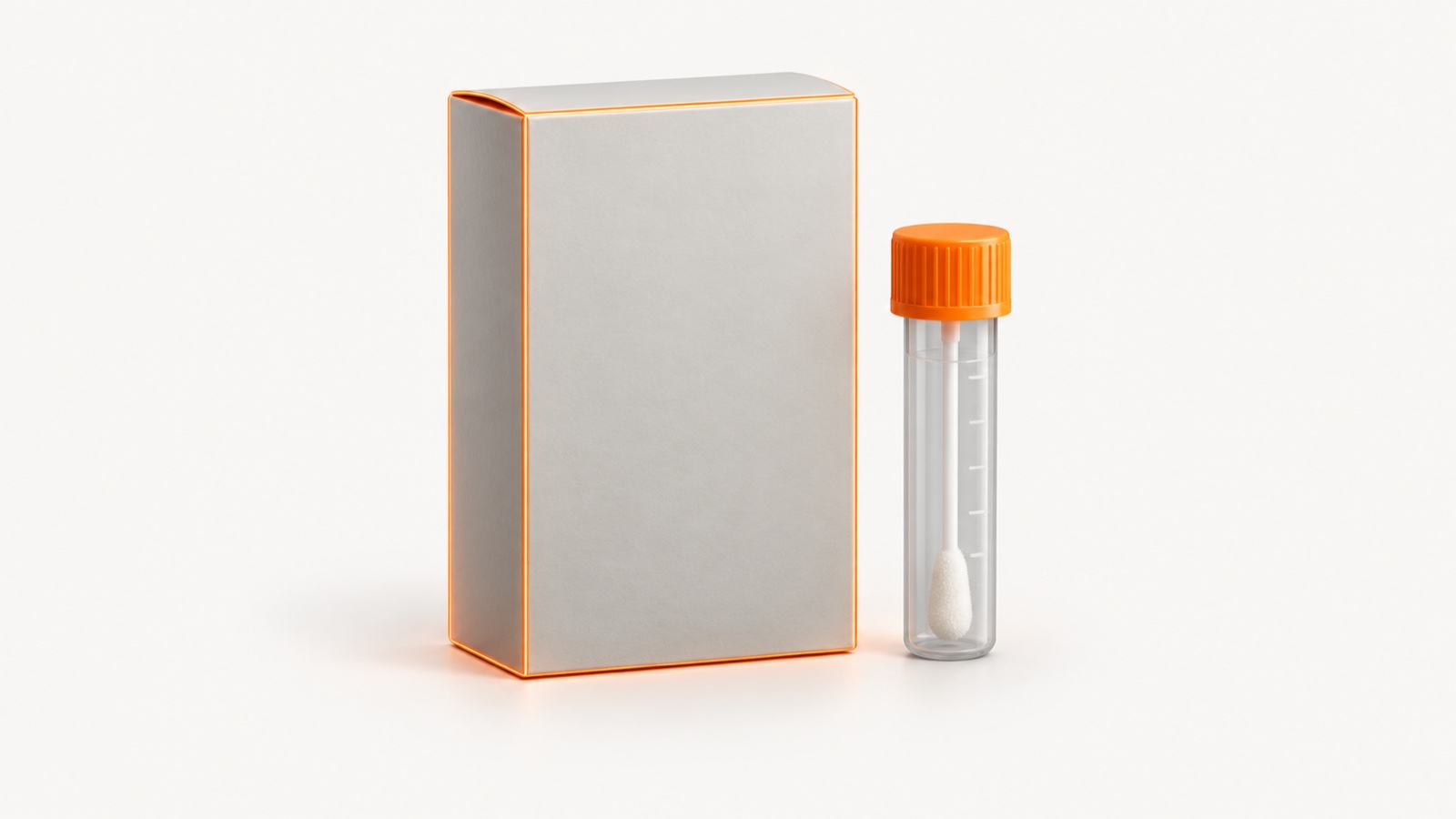
- Buy and register the kit. The box contains a unique ID code, a hair collection bag, and a prepaid return envelope. You register the ID online so the lab can match your sample to you.
- Collect the hair. 5Strands asks for roughly 10 to 15 strands. No root is required, which is why this is painless compared with a blood draw. One reviewer described pulling from the nape of the neck. Hair from the head, arm, or body is accepted per the company.
- Seal and mail. The strands go in the provided bag, the bag goes in the prepaid envelope, and you drop it in the mail. There is no appointment, no clinic, and no shipping fee to calculate.
- The lab runs bioresonance analysis. This is the step doing all the work and carrying all the controversy. The described method exposes the hair sample to electromagnetic frequencies associated with each test item and records a response pattern. There is no chemistry identifying a substance in your body and no antibody measurement.
- You get a PDF. Results arrive by email. 5Strands lists about 4 business days after the lab receives your sample, though its own FAQ elsewhere says 7 days, and independent reviewers have reported 8 to 10 business days in practice. Budget a week or two and you will not be disappointed.
- The sample is held, then destroyed. 5Strands keeps your sample roughly 60 days so you can buy digital upgrades against the same hair, then disposes of it through what it calls a "certified biohazard company."
Nowhere in those six steps does anything from your home get sampled. Worth repeating, because the product name and the search term suggest otherwise.
What it tests for and what you get
The standalone Environmental Sensitivity Test covers 310 or more environmental items, grouped into categories like fabrics, trees, animals, flowers, grasses, and what 5Strands calls environmental irritants. That last group is where mold lives, described on the product page as "Mold, dust mites, and smoke."
Read that again, because it tells you exactly how much mold detail you are buying. Mold is one category line. Not Stachybotrys chartarum, not Aspergillus versicolor, not Penicillium, not a spore count, not a location, not a concentration. One line, one color.
The report format
Results come back on a four-tier color scale, and 5Strands attaches an action to each:
- Red. Strong reported disruption. The suggestion is to avoid the item.
- Yellow. Noticeable reported stress. The suggestion is to reduce exposure.
- Green. Slight reported stress. The suggestion is to monitor.
- Gray. No stress detected.
The presentation is clean and easy to read, which is part of the problem we cover below. A red line looks like a finding. It is a bioresonance reading against an item list, and 5Strands states elsewhere that it does not diagnose anything.
What you do not get
No species identification. No spore counts. No comparison against an outdoor control sample, which is the backbone of real air testing. No room-by-room mapping. No moisture reading. No photographs. No inspector. No chain of custody that a landlord, an insurer, or a buyer's agent would accept. If you need any of those, this is not the product.
Pricing and what is included
Pricing moves around, and the numbers published by third party reviewers do not always match the numbers on the official site. Here is what we found directly on 5Strands as of July 2026, alongside what reviewers have reported. Check the official site for current pricing before buying, because kit names, item counts, and bundles change.
| Kit | Listed price on 5strands.com | Includes mold? |
|---|---|---|
| Environmental Sensitivity Test | $63.00 | Yes, as one item among 310-plus |
| Food Intolerance and Environmental Sensitivity Test | $123.00 | Yes, environmental portion included |
| Food and Beverage Intolerance Test | $89.00 | No |
| Health and Wellness Assessment | $139.00 (listed on sale from $144.00) | Bundle, confirm contents on the site |
Independent reviewers have quoted different tiers. One 2026 review cited $88 for the entry food kit, $148 for the food plus environmental bundle, and $188 for a deluxe package with nutritional and metals screening. Another put the overall range at roughly $50 to $150. The spread across sources is itself useful information: prices differ by retailer and by promotion, so treat any figure you read anywhere, including this page, as a snapshot rather than a quote.
What is in the box: the kit ID code, a hair collection bag, and a prepaid return envelope. Return shipping is covered. The PDF report is included. Consultations are sold separately, and 5Strands offers digital upgrades against your stored sample during the 60-day window.
Refunds: we could not verify a specific money-back guarantee for this kit from the sources we reviewed, and neither of the two independent reviews we checked documented one. If a refund policy matters to your decision, confirm it in writing with 5Strands before ordering rather than trusting any secondhand summary.
Accuracy, science, and credentials
This is where an honest review has to be blunt, so here is the state of the evidence.
Bioresonance is not a validated method
The American Academy of Allergy, Asthma and Immunology does not recognize bioresonance as a validated method for diagnosing allergies or intolerances. The kit has no FDA authorization. There is no body of peer-reviewed, reproducible research establishing that hair bioresonance detects sensitivities, and reviewers have repeatedly noted that results vary and are difficult to reproduce.
The mechanical objection is straightforward. Real allergy testing measures IgE antibodies, which are immune system proteins found in blood. Hair does not contain immunoglobulins. Whatever a bioresonance device is reading off a hair strand, it is not the thing conventional allergy science measures. Quackwatch has published a piece titled "Why Bioresonance Hair Testing Is Preposterous," and The Skeptic ran a 2025 piece calling hair analysis and bioresonance sensitivity tests junk science. Even a favorable review conceded the method is "highly regarded by some, and called 'pseudoscience' by others."
The credentials question
5Strands associates with holistic organizations rather than mainstream clinical or laboratory accreditation bodies. We did not find CLIA certification, ISO 17025 accreditation, or AIHA laboratory accreditation claimed for the bioresonance analysis, and those are the credentials that matter for environmental mold analysis. A real mold lab's accreditation is the reason its report means something to a third party. 5Strands references a "90-day study" on its product page without publishing accuracy percentages we could verify.
The false positive problem
One reviewer reported a false positive rate as high as 50 percent on the food side of the platform, which is close to a coin flip. We have not seen a comparable published figure for the environmental items, and we are not going to invent one. But if the food module produces results at that rate, a buyer has no reason to assume the mold line on the environmental module is more dependable.
What this means for the mold line specifically
Even if you set the entire bioresonance debate aside and grant the method every benefit of the doubt, a mold flag on your 5Strands report still would not tell you your house has mold. The test never looked at your house. That limit is structural, not a question of accuracy. It is the difference between measuring a person and measuring a building.
Pros
- Cheap. The standalone environmental kit lists at $63. Lab analysis of a single surface sample, an ERMI dust analysis, or a professional inspection all cost more, often several times more.
- Painless and non-invasive. Ten to fifteen strands of hair. No needles, no blood draw, no clinic visit, no appointment. Kids and squeamish adults can do it in a minute.
- Fast. The company lists about 4 business days after the lab receives your sample. Even at the reviewer-reported 8 to 10 business days, that is quicker than scheduling most inspectors.
- No friction. Prepaid return envelope, online registration, results by email. Nothing to schedule, nothing to ship at your own cost, nothing to install.
- Broad item list. More than 310 environmental items on the standalone kit, and bundles reach into the hundreds more on the food side. If you want a wide list to experiment against, the breadth is real.
- Honest disclaimers on the product page. 5Strands does not hide behind medical language. It states plainly that this is not an allergy test and does not diagnose. Plenty of companies in this space are far less candid, and that deserves credit.
- Structured starting point. The most defensible argument for the product, and one an independent reviewer landed on too, is that the value sits in having a structured list to run your own elimination experiments against, not in the precision of any single reading.
- Sample retention window. The roughly 60-day hold means you can add modules against the same hair without collecting again.
Cons and limitations
- It does not test your home for mold. At all. This is the headline limitation and the reason for the rating. No air sample, no surface sample, no dust sample, no spore count, no species, no location. If you bought this to answer "is there mold in my house," you bought the wrong thing.
- The method is not validated. The AAAAI does not recognize bioresonance. There is no FDA authorization. Independent critics have described hair bioresonance as junk science, and the peer-reviewed support simply is not there.
- Mold is one line. Grouped with dust mites and smoke as an "environmental irritant." No breakdown by species, and species matters enormously in the real world.
- Reports look more definitive than the method is. A red bar reads like a verdict. The underlying process is exploratory and the company itself disclaims diagnosis. That gap between presentation and substance is the most likely way a buyer gets misled.
- Reproducibility is questionable. Reviewers report results that vary, plus a reported false positive rate as high as 50 percent on the food module.
- Heavy interpretation burden. One reviewer spent five or six hours making sense of their report and described the guidance beyond the raw data as minimal. You get a list, not an answer.
- Turnaround claims are inconsistent. The product page says 4 business days, the FAQ says 7 days, reviewers report 8 to 10 business days. Not fatal, but a company should agree with itself.
- Support is thin. Reviewers describe customer support responses as scripted and referential.
- No standing with third parties. A bioresonance PDF will not persuade a landlord, an insurance adjuster, a home inspector, or a court. Anything with money or a lease attached needs an accredited lab.
- Refund terms are unclear. We could not verify a documented money-back guarantee for this kit. Confirm before you buy.
Who it is for and who should skip it
It might suit you if
You are curious, you have about $63 you are comfortable treating as exploratory spending, and you understand you are buying a list of hypotheses rather than measurements. You plan to use the report the way its most sympathetic reviewer suggested, as a structured framework for your own trial and error, checking whether reducing exposure to something on the list changes anything for you. You are not making a financial, legal, or health decision on the basis of the PDF. Under those conditions, and with clear eyes about the method, it is a low-cost curiosity.
Skip it if
- You want to know whether your home has mold. Structurally impossible with this kit. Look at your home instead.
- You need documentation. Landlord dispute, insurance claim, real estate transaction, or anything with a paper trail. You need an accredited lab and a qualified inspector.
- You would act on a health finding. The company states the kit does not diagnose. Anything touching your health belongs with a qualified physician, not a PDF from a hair sample. We do not give medical or treatment advice on this site and neither should a $63 kit.
- You need to know the species. Species drives everything about how a real remediation gets scoped. One color-coded line cannot carry that.
- You are already looking at visible growth. Skip the hair entirely. Identify what you are looking at and deal with the moisture. See our guides to black mold and how to test for mold.
- Validated method is a requirement for you. If "not recognized by the AAAAI, no FDA authorization" is a dealbreaker on principle, then it is a dealbreaker. That is a completely reasonable line to hold.
How 5 Strands compares to real mold tests
The fairest way to compare is by the question each method answers, because these products are not really competitors. They are different categories that share a search term.
| Method | What it actually measures | Names species? | Rough cost | Answers "does my house have mold?" |
|---|---|---|---|---|
| 5Strands Environmental | Bioresonance reading of your hair against 310-plus items | No | $63 listed | No |
| ERMI dust analysis | Settled house dust, analyzed with DNA methods | Yes, by species | Varies by lab, typically well above a hair kit | Yes, for the dust sampled |
| Surface sample (tape lift or swab) | The actual growth on the actual surface, read by a lab | Yes | Low per sample plus lab fee | Yes, for that spot |
| Air sampling | Airborne spores, compared against an outdoor control | Yes, by genus | Mid range, usually via a pro | Yes, for that air at that time |
| Petri dish kit | Whatever settles and grows on a plate | Only if you pay for lab ID | Cheapest option | Weakly. Something always grows |
| Professional inspection | Moisture mapping, visual assessment, targeted sampling | Yes | Highest | Yes, and it holds up with third parties |
Against ERMI
Not comparable in the way buyers assume. ERMI analyzes dust from your home with DNA methods and reports specific species that are actually present in your building. It measures the house. 5Strands measures a hair strand. ERMI has its own well-documented limitations and it is not a diagnostic tool either, but at least it is looking at the right object.
Against mycotoxin testing
Mycotoxin testing uses laboratory chemistry to look for specific mold compounds in a sample. Whatever you think of how those results get used, it is analytical chemistry performed at a specialty lab. 5Strands does not run that chemistry and does not report mycotoxin levels. The two are not substitutes.
Against a petri dish kit
The cheap hardware store plate is a weak test, because something grows on almost any plate you leave out and the result tells you little about scale or source. Even so, a petri dish at least collects material from your home's air. On the narrow question of "did anything from my house land here," a $12 plate does more than a $63 hair kit. See our mold testing kit guide for where each kit type earns its money.
Against professional testing
No contest, and no shame in it. A qualified inspector maps moisture, finds the source, samples where it matters, and produces a report a third party will accept. It costs the most because it does the most. When the area is large, when growth is hidden inside a wall or the HVAC, or when money or a lease is on the line, this is the answer. Look for someone working to the IICRC S520 standard, or holding ACAC or RIA credentials or a state license.
How to use it, step by step
If you have decided the exploratory list is worth $63 to you, here is how to get the most out of it and avoid the traps.
- Set your expectation first. Write down, before the report arrives, that this is a list of things to try, not a set of findings. This one sentence prevents most of the harm this category causes.
- Register the kit ID before you collect. An unregistered sample means an unmatched sample. Do this first.
- Collect 10 to 15 strands. No root needed. Head, arm, or body hair per the company. Reviewers pull from the nape of the neck because it is easy to reach and nobody sees it.
- Seal it properly and mail it. Strands into the provided bag, bag into the prepaid envelope, completed card included. Drop it in the mail the same day so it does not sit on your counter for a week.
- Wait a week or two. The published claim is about 4 business days after receipt. Real-world reports run 8 to 10 business days. Plan for the longer number.
- Read the report once, then put it down. Do not make ten changes at once. Reviewers who tried to act on everything simultaneously reported burning five or six hours and ending up confused.
- Pick one red item and test it yourself. Reduce exposure to a single flagged item, keep a simple note of what you notice over a couple of weeks, then move to the next. One variable at a time is the only way a list like this produces anything useful.
- If mold comes back red or yellow, go look at your house. Do not order another hair test. The flag is a prompt, not a finding. Walk the places water goes: under sinks, behind the toilet, the shower caulk, the window sills, the washing machine gasket, the basement, the attic. Photograph anything suspicious.
- Escalate to a method that measures the building. If you find something, use surface or air sampling through an accredited environmental lab, or call a qualified inspector. That is the step that actually answers your question.
Our verdict and rating
★★☆☆☆ 2.0 out of 5.
Two stars, and here is exactly how we got there. The product earns real credit for being cheap, painless, fast, frictionless, and unusually candid in its own disclaimers. 5Strands tells you on the product page that this is not an allergy test and does not diagnose anything. That honesty is worth something and it is why this is not a one-star review.
It loses the other three stars for one structural reason and one scientific one. Structurally, it does not test your home, which is the thing nearly everyone searching for a "5 Strands mold test" wants. That is not a flaw in execution, it is a category mismatch, and no amount of lab quality would fix it. Scientifically, the method underneath the whole product is not recognized by the AAAAI, carries no FDA authorization, has no reproducible peer-reviewed support, and has drawn direct criticism from Quackwatch and The Skeptic. Meanwhile the report is presented as a tidy red, yellow, green, gray verdict, which makes an exploratory reading look like a measurement.
Bottom line: if you want a $63 list of environmental items to run your own experiments against, and you genuinely understand you are buying hypotheses rather than data, 5Strands is a low-cost curiosity and its own disclaimers are fair warning. If you want to know whether mold is growing in your home, this kit cannot tell you, and no version of it ever will, because it never looks at your home. Go look at your house instead. Find the moisture, find the growth, photograph it, and if you need it confirmed on paper, use an accredited lab or a qualified inspector.
Screen visible surfaces with Mold Scanner AI
Here is the part almost every mold testing decision gets backwards. People buy a test first and go looking second. That is the expensive order.
Every sampling method worth paying for depends on one thing you have to supply yourself: knowing where to sample. A surface sample only tells you about the exact spot you swabbed. An air sample only captures the room the pump ran in, on the day it ran. ERMI only reports the dust you collected. Sample the wrong wall and you get a clean report from a house with a problem. The lab is not going to find your mold for you. It analyzes what you hand it.
A visual first pass can help you decide what deserves a closer look, but it cannot confirm mold or select a valid sampling location. Mold Scanner AI guides visible-surface photo capture and provides AI-assisted visual screening with variable processing time. Confirm important findings and sampling plans with a qualified inspector or appropriate laboratory.
Frequently asked questions
Does the 5 Strands mold test tell me if my house has mold?
No. This is the single most important thing to understand before you buy. 5Strands analyzes a sample of your hair. It never touches your home. It does not sample the air in your bedroom, it does not swab the black patch behind your toilet, and it does not count spores. Mold appears in the report as one item on a list of more than 310 environmental items, alongside dust mites, pollen, smoke, and fabrics. If your question is whether your house has mold, this kit cannot answer it.
How much does the 5 Strands environmental test cost?
5Strands lists the standalone Environmental Sensitivity Test at $63 and the Food Intolerance and Environmental Sensitivity bundle at $123 on its own site. Third party reviews have quoted other figures, and prices on Amazon and other retailers move around. Check the official 5Strands site for current pricing before you buy, because kit names and bundles change.
What is bioresonance and is it scientifically validated?
Bioresonance is an alternative practice based on the idea that a hair sample carries an energetic signature that can be compared against frequencies associated with test items. It is not a validated diagnostic method. The American Academy of Allergy, Asthma and Immunology does not recognize bioresonance for diagnosing allergies or intolerances, the kit has no FDA authorization, and independent reviewers such as Quackwatch and The Skeptic have described hair-based bioresonance testing as junk science. Hair does not carry the antibodies real allergy testing measures.
What sample does 5 Strands need and how long do results take?
You register the kit ID online, collect roughly 10 to 15 strands of hair (no root required), seal them in the provided bag, and mail them back in the prepaid envelope. 5Strands lists results in about 4 business days after the lab receives the sample, though its own FAQ says 7 days and third party reviewers have reported 8 to 10 business days. Results arrive as a PDF by email. The lab keeps the sample about 60 days, then disposes of it.
What do the colors in the 5 Strands report mean?
5Strands uses a four-tier color scale. Red means a strong reported disruption and a suggestion to avoid the item. Yellow means noticeable reported stress and a suggestion to reduce exposure. Green means slight reported stress and a suggestion to monitor. Gray means no stress detected. Mold, if it appears in red or yellow, is a flag from a bioresonance reading, not evidence of mold in your building and not a diagnosis.
If 5 Strands flags mold, does that mean I have a mold problem at home?
Not on its own. A red or yellow mold line on a bioresonance report is not a measurement of your home. The only way to learn whether mold is growing in your house is to look at your house. Check the places water goes, look for staining and growth, and if you find something, use surface or air sampling through an accredited lab, or hire a qualified inspector. Treat the 5Strands line as a prompt to go look, nothing more.
How does 5 Strands compare to an ERMI or a petri dish kit?
They answer different questions. ERMI analyzes settled house dust with DNA methods and reports specific mold species in your home, so it measures the building. A petri dish kit collects whatever lands on a growth plate, which tells you something grew but very little about scale or location. 5Strands measures neither, because it only reads a hair sample. Of the three, only ERMI and lab surface or air sampling actually look at your house.
Is 5 Strands the same as mycotoxin testing?
No. Mycotoxin testing looks for specific mold compounds in a sample using laboratory chemistry, typically at a specialty lab. 5Strands does not perform that chemistry and does not report mycotoxin levels. Its mold line is a bioresonance reading against an item list, so the two are not comparable and one cannot substitute for the other.
Who should actually buy 5 Strands?
Someone who is curious, treats the report as a starting point for their own experiments, understands the method is not validated, and is comfortable spending around $63 on an exploratory list. Anyone who wants to know whether their home has mold, anyone who needs documentation for a landlord, an insurer, or a real estate transaction, and anyone who would make a health decision based on the result should skip it and use a method built for that job.
What should I use instead if I want to find mold in my home?
Start by finding the moisture and looking at the suspect spots. Photograph what you find and identify it. If you need lab confirmation, use surface tape lift or swab sampling, or air sampling, analyzed by an accredited environmental lab. If the area is large, if the growth is hidden inside a wall or HVAC, or if the result carries legal or financial weight, hire a qualified inspector who works to the IICRC S520 standard, or who holds ACAC or RIA credentials or a state license.
Sources
Every claim on this page traces to one of these. Links open the primary document.