What does the Windex glass cleaner data sheet say about mold?
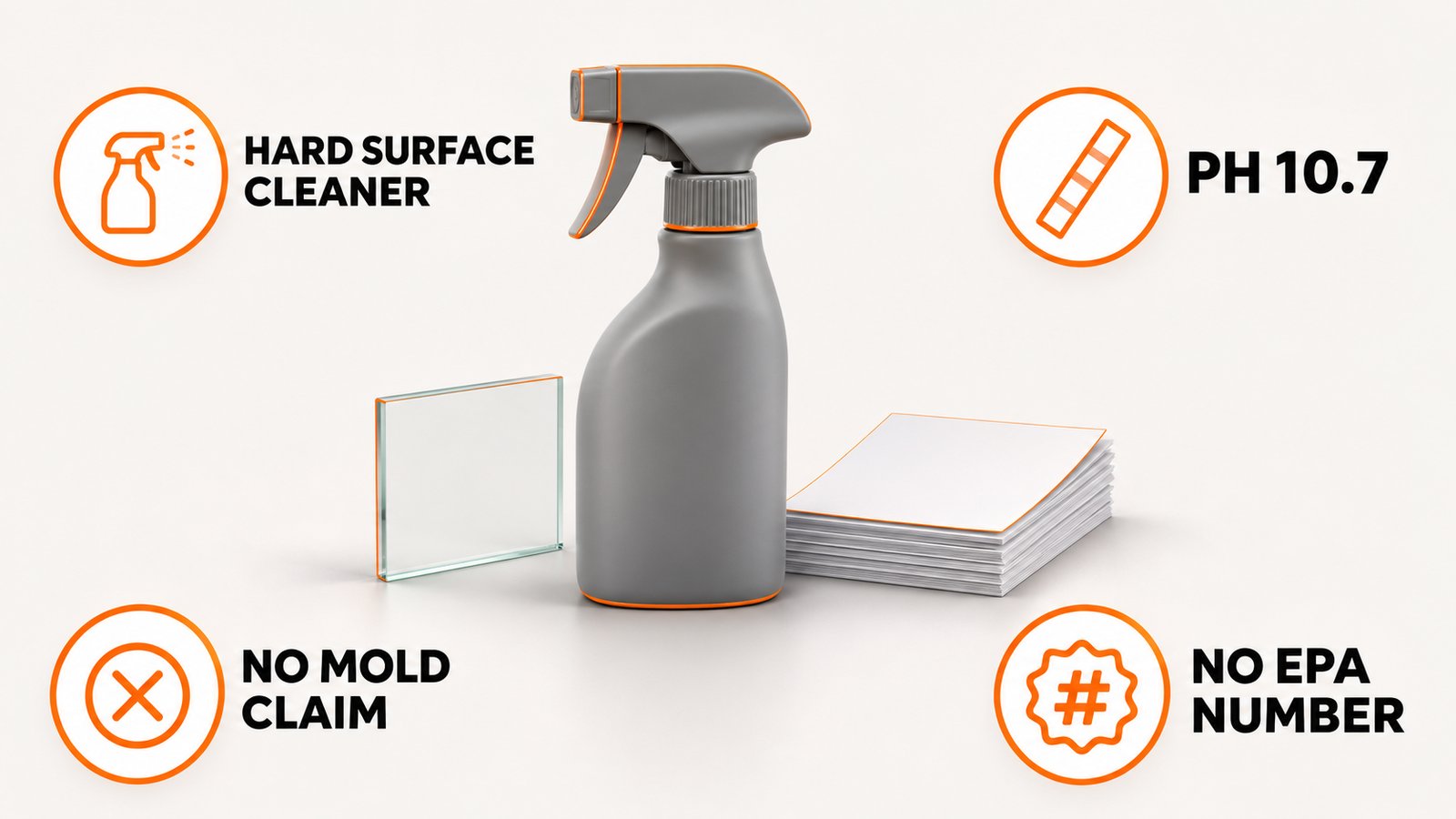
Windex is a line of products, not one. We read the safety data sheet that SC Johnson issues for Windex Original Glass Cleaner, which carries "with Ammonia-D" in its title (revised May 23, 2017). It gives the recommended use as "Hard Surface Cleaner," a pH of 10.7, and says the product does not contain hazardous chemicals at or above a reportable level as Canadian regulation defines it. The copy we could read is the Canadian sheet, issued by SC Johnson's Canadian company, so it describes the product as sold in Canada. We could not load a current US sheet. It does not mention mold, mildew, fungus or disinfecting anywhere, and it lists no EPA registration number, though a Canadian sheet would not carry a US number in any case.
Our rule of thumb: a product sold to kill something says so on its label and carries an EPA registration number. This sheet makes no such claim. The sheet points readers to SC Johnson's own ingredient page, which we could not load for this page, so we are not listing ingredients. The product name on the sheet includes Ammonia-D, but the sheet lists no ammonia ingredient.
Windex also sells other glass and multi-surface formulas. We read the Original glass cleaner sheet and the disinfectant record in the next section, not every variant, so check the label on your own bottle.
Does Windex kill mold and mildew?
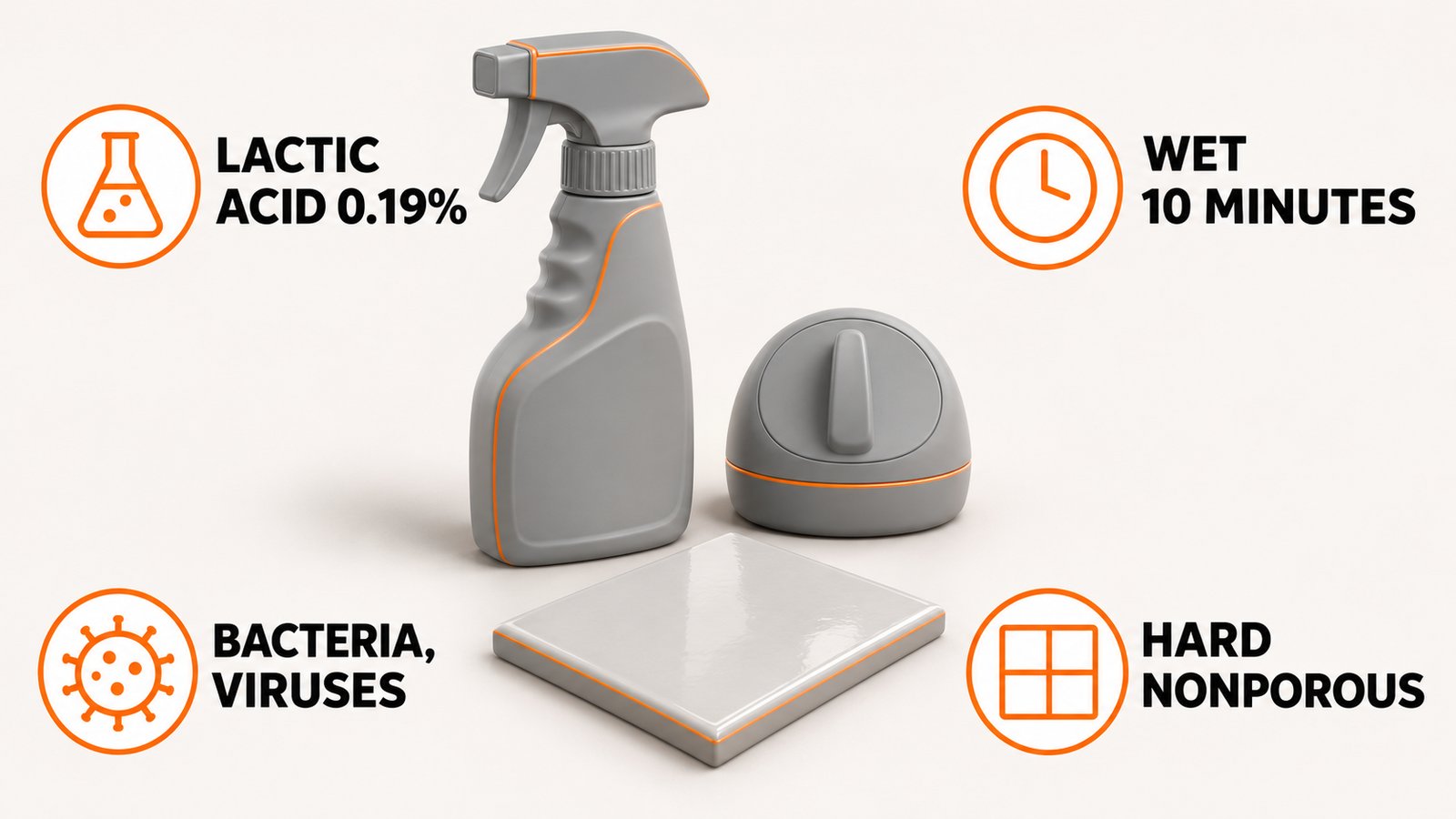
The Windex products we found with an EPA registration are disinfectants. EPA's Pesticide Product and Label System lists registration #4822-593 to S.C. Johnson and Son, with alternate names that include Windex Disinfectant Cleaner and Windex Disinfectant Multisurface Cleaner. The active ingredient is L-lactic acid, 0.19%.
On the label accepted March 11, 2022, the disinfect directions are to pre-clean visibly soiled areas, spray until the surface is thoroughly wet, and keep it visibly wet for ten minutes, on hard, nonporous surfaces. Food contact surfaces must be rinsed with water. The EPA's pest list for this registration has twelve entries, and every one is a bacterium or a virus. The label makes no mold, mildew or fungus claim.
A second EPA record under the Windex name, #70627-76 (registered to a different company, label accepted April 26, 2016), also lists L-lactic acid at 0.19% and a ten-minute disinfect step, and also makes no mold claim.
The EPA's biocide statement covers any chemical that kills organisms such as mold, not only bleach. We did not find lactic acid named in the EPA or CDC mold pages we read, so we have no agency wording to quote on it. What the EPA does say is that a mold clean-up is not finished by killing: see the last section.
Can you use Windex on mold on a window?
The data sheet's use is hard surface cleaning, and it says "Use only as directed on label." Hard surface cleaning is the use the sheet states. Removing mold is not a claim the sheet makes, so a glass cleaner that wipes a window clean is not evidence that it dealt with mold.
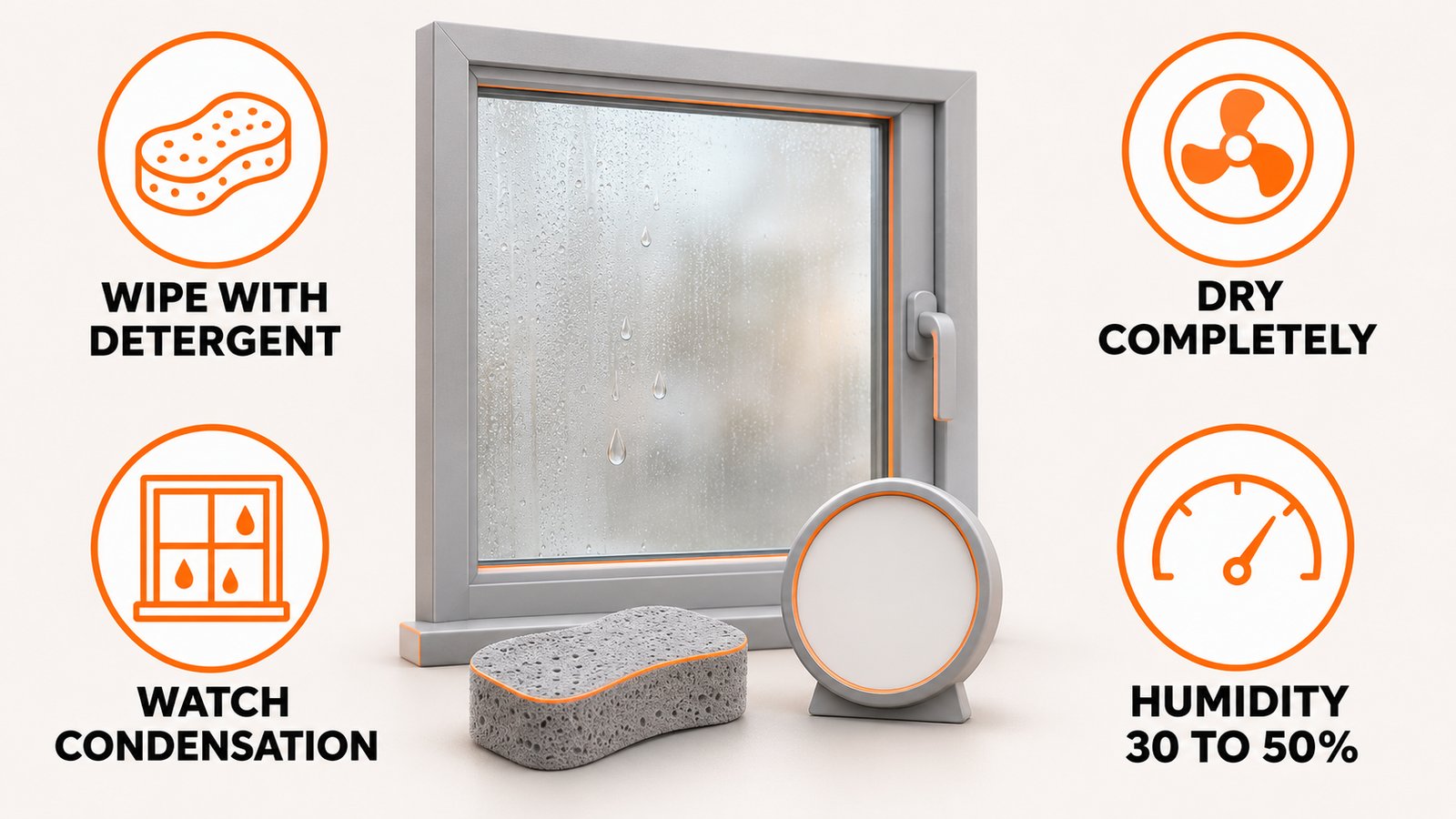
The EPA's mold course says mold can generally be removed from hard surfaces by wiping or scrubbing with water and detergent, and adds "Always follow the cleaning instructions on product labels." It says surfaces cleaned this way should be dried quickly and thoroughly to discourage further mold growth. Our guide on mold on a window sill covers the frame and the sill.
The window itself is also a clue. The EPA's guide says condensation can be a sign of high humidity, and that if you see condensation or moisture collecting on windows, walls or pipes you should act quickly to dry the wet surface and reduce the moisture source. It advises that, if possible, you keep indoor humidity below 60 percent, ideally between 30 and 50 percent. Our humidity risk calculator and the guide to how to prevent mold help you find the cause.
Can you mix Windex and bleach?
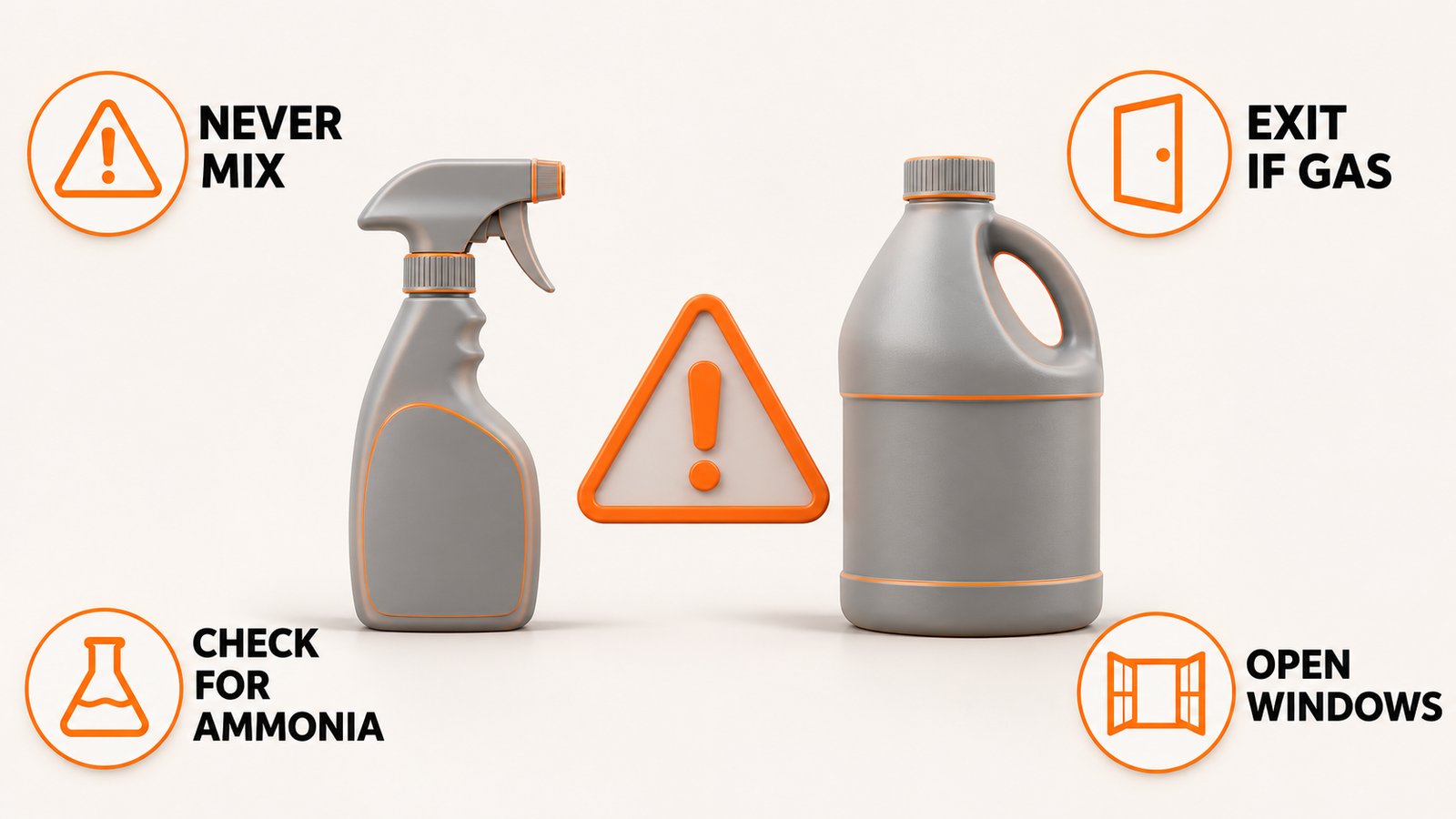
No. SC Johnson's safety data sheet lists the incompatible materials as "Do not mix with bleach or any other household cleaners." It adds that if accidental mixing occurs and toxic gas is formed, you should exit the area immediately and not return until it is well ventilated.
The EPA and CDC are specific about ammonia. The EPA: "Never mix chlorine bleach solution with other cleaning solutions or detergents that contain ammonia because toxic fumes could be produced." The CDC: "You should never mix bleach with ammonia or any other cleanser." The data sheet we read lists no ammonia ingredient, and only the product name carries Ammonia-D. We cannot tell you what your bottle contains, so read its label.
Our own caution, not an agency's: do not spray glass cleaner onto a surface you just treated with bleach, or the reverse. Our guides on whether bleach kills mold and whether ammonia kills mold cover each chemical on its own.
What does the EPA say works on mold on hard surfaces?
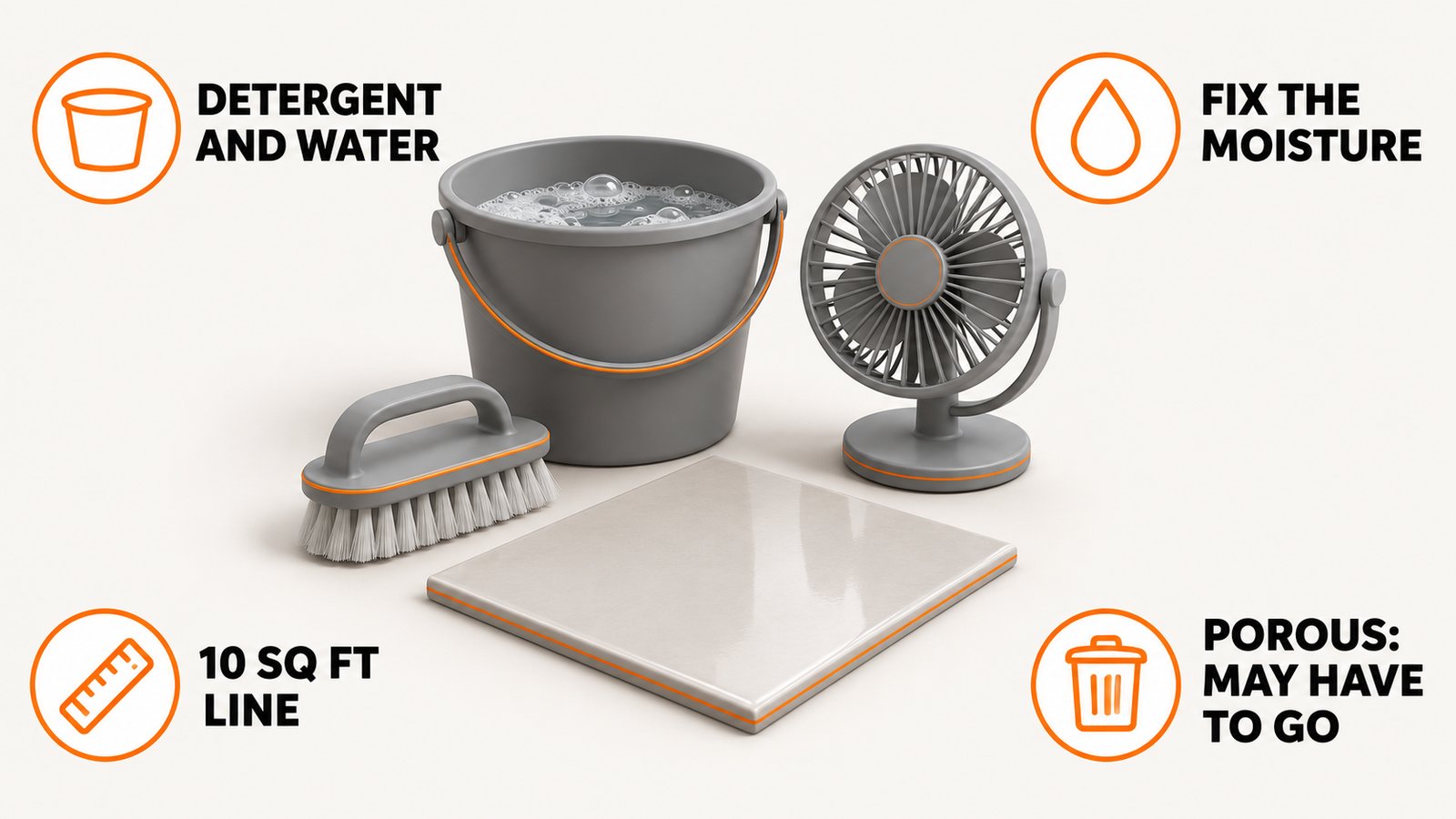
For mold on a hard surface the EPA's cleanup page says to scrub it off with detergent and water, and dry completely. It says porous material such as ceiling tiles and carpet "may have to be thrown away if they become moldy," and not to paint or caulk moldy surfaces. The brief guide adds that the key to mold control is moisture control, and that water-damaged areas and items should be dried within 24 to 48 hours.
On killing, the EPA's brief guide says: "The use of a chemical or biocide that kills organisms such as mold (chlorine bleach, for example) is not recommended as a routine practice during mold cleanup." It adds that professional judgment may indicate its use in some instances, for example when immune-compromised individuals are present. And: "Dead mold may still cause allergic reactions in some people, so it is not enough to simply kill the mold, it must also be removed." The CDC's clean-up page says bleach or dish detergent can be used to clean mold, with no more than 1 cup of bleach in 1 gallon of water, and never mixed with ammonia or any other cleanser.
On size, the EPA says a moldy area under about 10 square feet, roughly a 3-foot by 3-foot patch, is in most cases a job you can handle yourself. Past that size, or after a lot of water damage, the EPA points to its guide for larger jobs, and we suggest a professional. The EPA's own call for a professional is for sewage or other contaminated water, and for suspected hidden mold it says to consider hiring an experienced one. With health concerns, it says to consult a health professional before starting cleanup.
On protection, the EPA says you may want to wear an N-95 respirator, and that long gloves and goggles without ventilation holes are recommended. Our guides on how to get rid of mold, what kills mold and the mold remediation process go through the steps by surface.
Frequently asked questions
Does Windex kill mold?
The maker's safety data sheet for Windex Original Glass Cleaner calls it a hard surface cleaner and makes no mold claim. The Windex disinfectant records we read list lactic acid as the active ingredient, bacteria and viruses as the pests, and no mold claim. The EPA's method for mold on a hard surface is detergent and water, then complete drying.
Does Windex kill mold and mildew?
None of the Windex labels or sheets we read claims to kill mold or mildew. The Original glass cleaner sheet we read, a Canadian one, makes no such claim. The disinfectant (EPA Reg. #4822-593) lists twelve pests, all bacteria or viruses.
Will Windex kill mold on a window sill?
Nothing we read from the maker says it will. The EPA says mold can generally be removed from hard surfaces by wiping or scrubbing with water and detergent, and that the surface should then be dried quickly and thoroughly.
Is Windex a disinfectant?
The Original glass cleaner is sold as a hard surface cleaner, and the Canadian data sheet we read makes no disinfecting claim. The Windex disinfectant we read about, EPA Reg. #4822-593, uses L-lactic acid at 0.19% and asks for ten minutes of wet contact on hard, nonporous surfaces.
Can you mix Windex and bleach?
No. SC Johnson's data sheet says not to mix it with bleach or any other household cleaners. The EPA says never to mix chlorine bleach solution with cleaning solutions or detergents that contain ammonia, and the CDC says never to mix bleach with ammonia or any other cleanser.
What should I clean mold with instead of Windex?
For a hard surface, the EPA says to scrub the mold off with detergent and water and dry completely. Fix the moisture source too, because the EPA says the key to mold control is moisture control.
If the mold is dead, is the problem finished?
No. The EPA states that dead mold may still cause allergic reactions in some people, so it is not enough to simply kill the mold, it must also be removed.
Sources
Every claim on this page traces to one of these. Links open the primary document.