What renters insurance actually covers
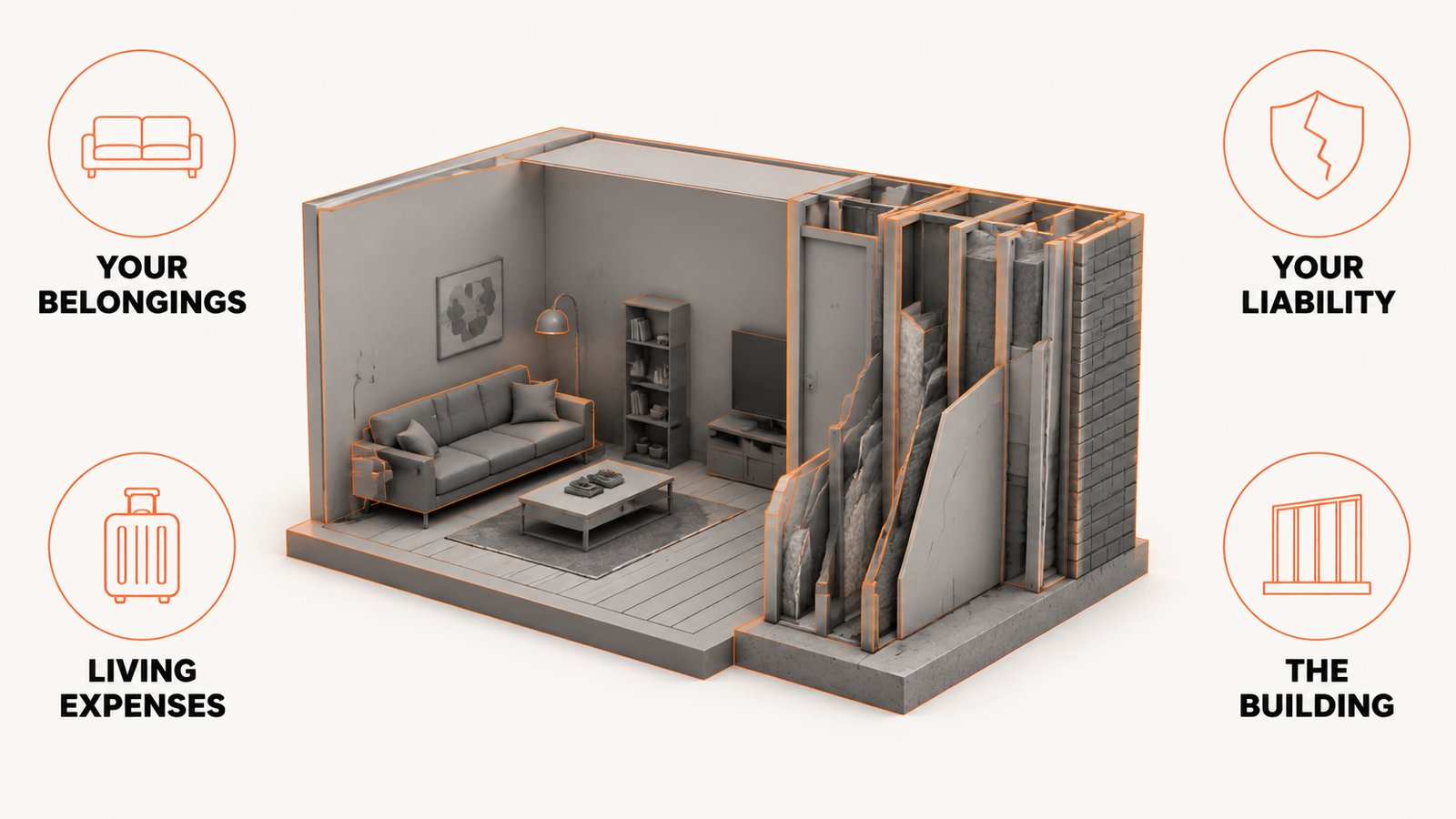
Start with what the policy is. The Insurance Information Institute describes renters insurance, sometimes called tenants insurance, as three basic types of protection: personal possessions, liability, and additional living expenses. A renters policy and a homeowners policy are almost identical, and the main difference is that a renters policy does not include coverage for the building, since the landlord owns that.
| Coverage | What it is for | How mold enters the picture |
|---|---|---|
| Personal possessions | Your belongings, protected against the specific disasters the policy lists. | A claim for ruined furniture or clothing usually turns on whether a listed peril caused the water. |
| Liability | Bodily injury or property damage you or your family cause to other people. | This is the coverage a landlord's claim against you would land on if you caused the water damage. |
| Additional living expenses | Hotel, temporary rental, meals and other extra costs when a covered disaster forces you out. | The coverage most renters forget they have when a unit becomes unlivable after a covered loss. |
| The building itself | Not yours. A renters policy is close to a homeowners policy minus the structure, because the landlord owns that. | Wall cavities, drywall, ducts and the roof are the landlord's insurance problem, not yours. |
| Flood and earthquake | Not covered by a standard renters policy at all. | Flood coverage comes separately through the National Flood Insurance Program or a private insurer. |
One more distinction decides how much a claim actually pays. Actual cash value coverage pays to replace your possessions minus depreciation for age and use. Replacement cost coverage pays what replacing them actually costs, with no deduction for depreciation, and the III notes it runs about 10 percent more. On a claim that wipes out a bedroom of furniture, that difference is the whole conversation.
When mold damage gets paid and when it does not
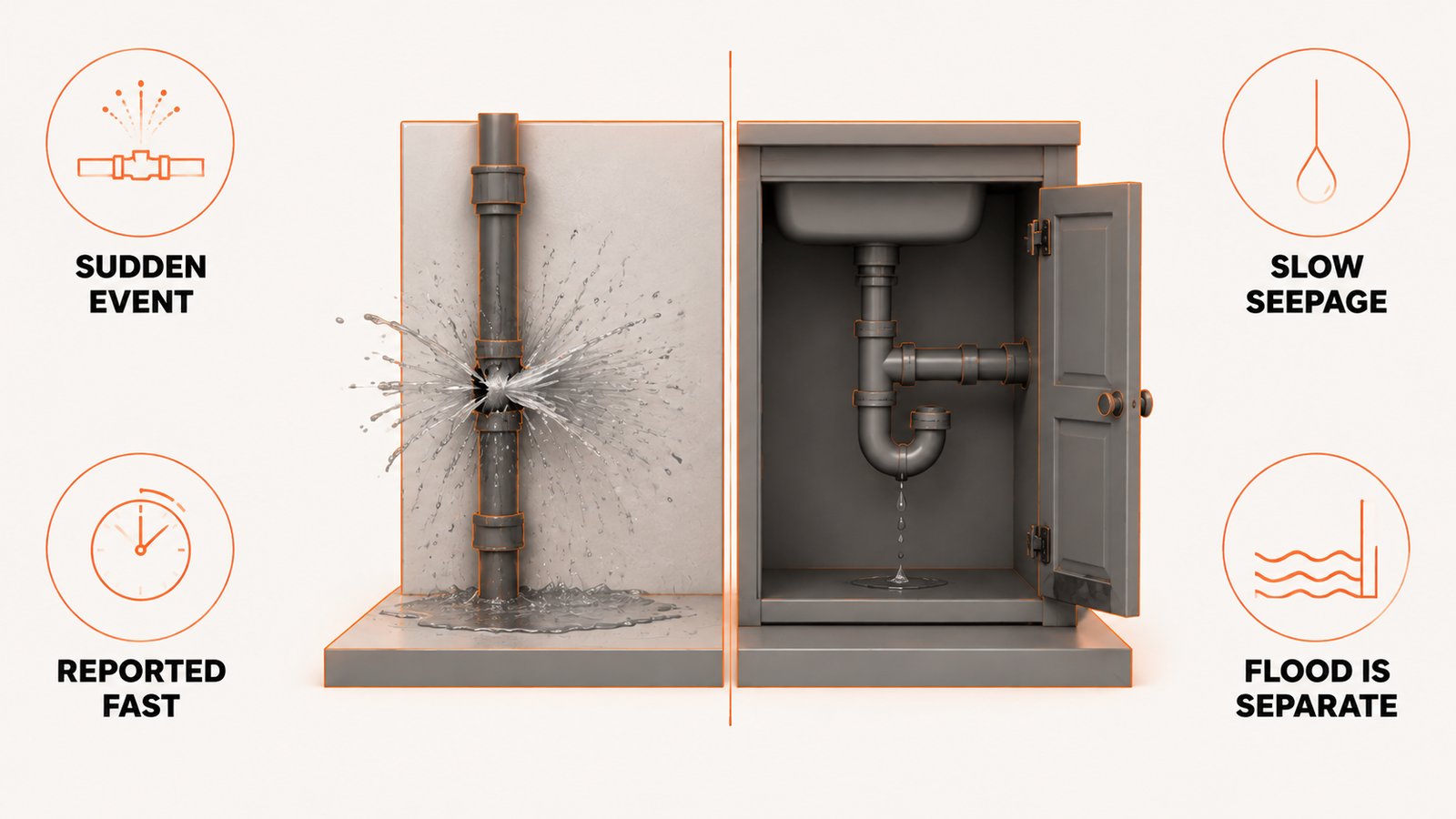
Mold is almost never treated as a peril in itself. It is treated as a consequence, and the claim turns on what caused the water.
The list is the test. The III describes standard renters coverage as protecting belongings against damage from fire, smoke, lightning, vandalism, theft, explosion, windstorm, water and other disasters listed in the policy. Mold is not on that list. What matters is whether the water that produced it came from something the policy lists.
Usually the strongest position: a sudden and accidental discharge, such as a supply line that bursts, a water heater that fails or an upstairs unit that overflows into yours. The event is abrupt, datable and documented, and the resulting damage to your belongings is what the personal property coverage is for.
Usually the weakest position: growth that developed over months from a slow leak, condensation, poor ventilation or humidity. Insurers treat that as maintenance rather than a sudden loss, and a policy's mold wording is normally written with exactly that scenario in mind.
Not covered by a standard policy at all: flood. The III is explicit that floods and earthquakes are not covered, and that flood coverage is available separately from the National Flood Insurance Program or a few private insurers. If storm water came in at ground level, the renters policy is not the document that answers it.
The gray middle: a covered event that was reported late. If a pipe failed and the damage sat for weeks before anyone said anything, an insurer can argue the growth came from the delay rather than the event. EPA's own guidance is that materials dried within 24 to 48 hours will in most cases not grow mold, which is the same clock an adjuster is thinking about. Report fast, in writing.
The mold limit hiding in your policy
After the mold claims wave of the early 2000s, insurers added specific mold language to property policies. It usually takes one of three forms: an exclusion for mold and fungus, a separate lower dollar limit for mold remediation than for the rest of the policy, or an optional endorsement you can buy back. Which one you have is written in your policy and nowhere else.
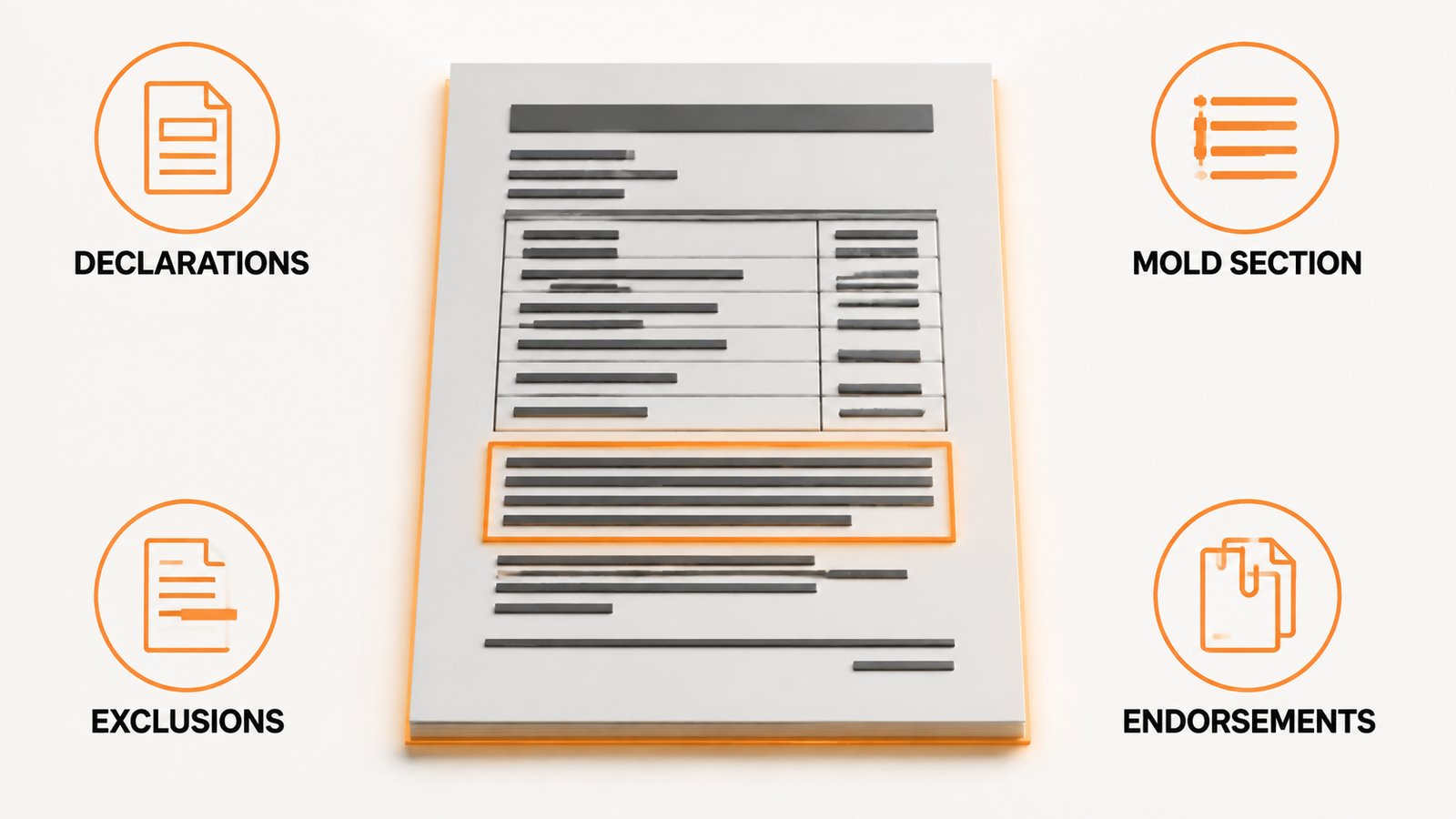
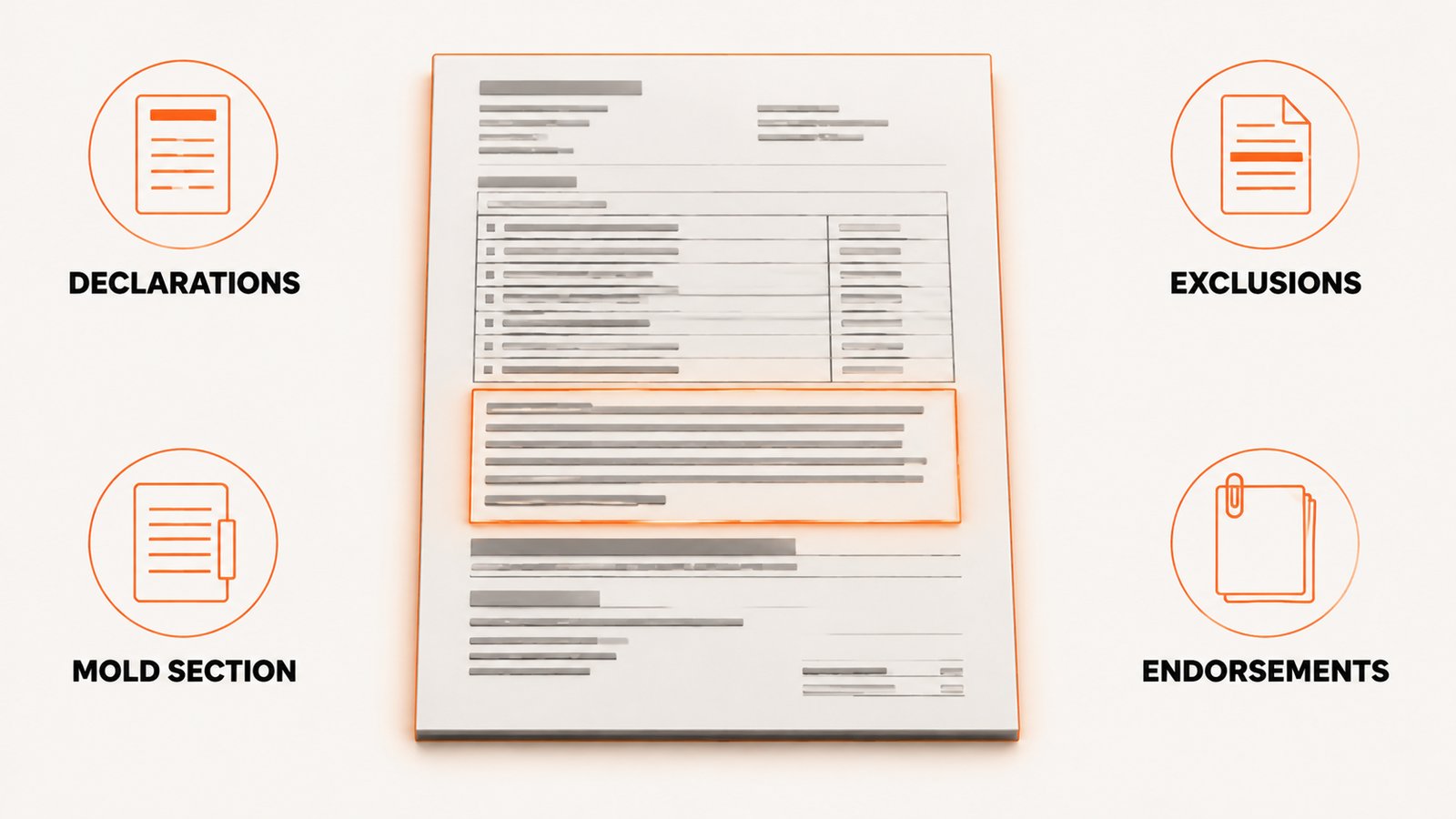
Four things to pull before you call anyone:
- The declarations page. Your limits, your deductible, and whether coverage is actual cash value or replacement cost.
- The mold, fungus or microorganism section. Search the document for the word. This is the paragraph that decides the claim.
- The exclusions. Look for continuous or repeated seepage, deferred maintenance and flood.
- Any endorsements. Optional coverage you bought or declined is listed separately and is easy to miss.
If the wording is unclear, ask your insurer to explain it in writing before you have a loss, and keep the reply. Reading a policy for the first time during a claim is how people discover a limit they could have raised for a few dollars a month.
What the landlord's insurance handles instead
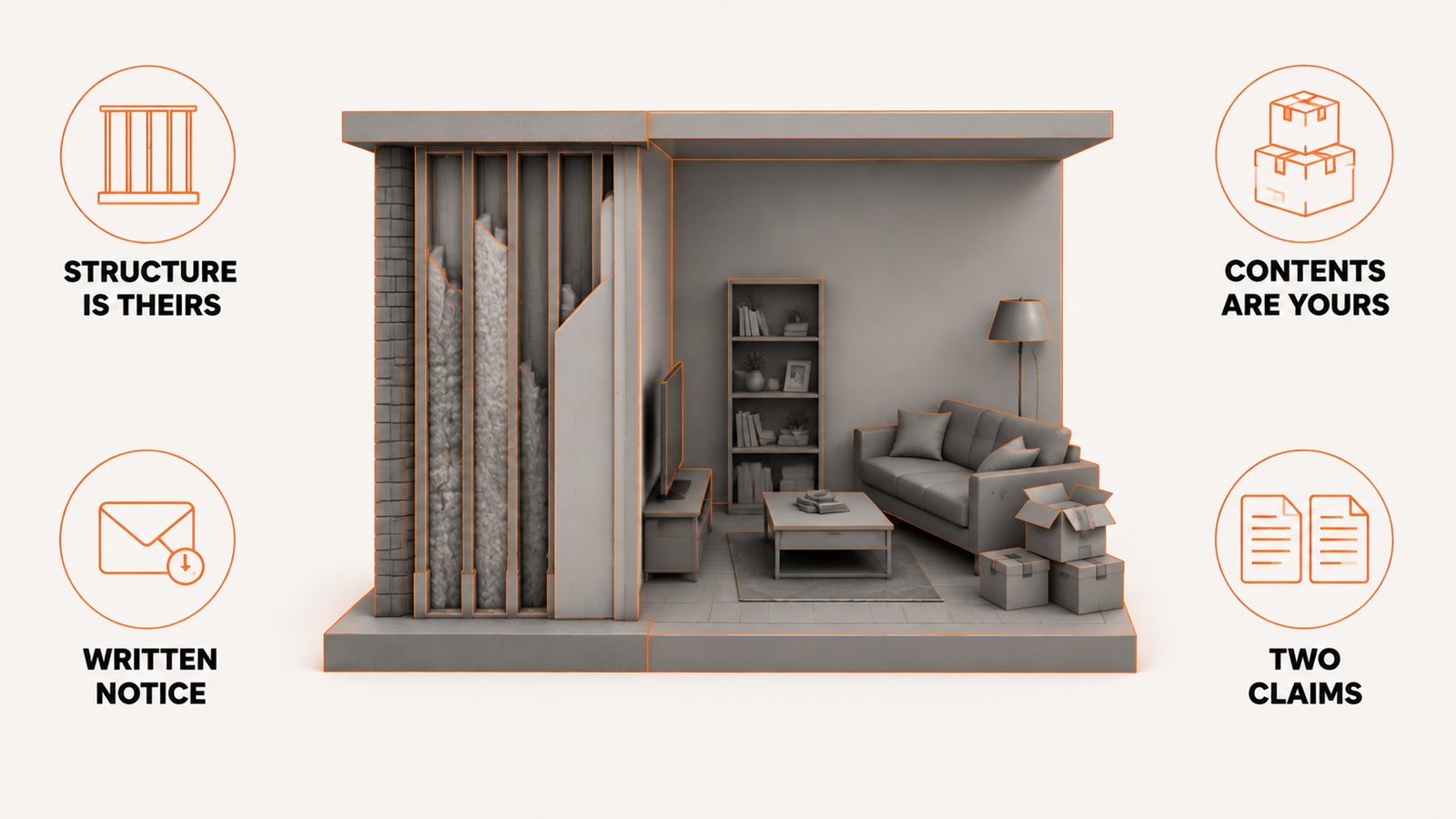
Your policy covers your things. The wall the growth is on is not your thing.
The structure is the landlord's. Drywall, insulation, ducts, plumbing, the roof and the building envelope sit on the landlord's policy and on the landlord's repair duty. HUD's healthy homes materials treat moisture and mold as a housing condition issue, and habitability obligations in most jurisdictions require the owner to maintain the unit.
Written notice comes first, always. Almost every tenant remedy in every state depends on the landlord having been told in writing and given time to act. Our guide to mold in an apartment covers documentation, notice and the escalation options, and there is a complaint letter generator that produces the notice itself.
Two claims can run at once. The landlord's insurer may handle the building repair while your insurer handles your damaged belongings. They are separate claims with separate adjusters, and neither one waits for the other.
If the water came from your side, liability matters. The liability portion of a renters policy pays for property damage you or your family cause to other people, along with the cost of defending you, up to the policy limit. That is the coverage in play if a landlord or a downstairs neighbor claims your overflowing tub caused their damage.
How to document and file the claim
Claims are won on documentation created before anything is cleaned up.
- Photograph everything before you move it. Wide shots that establish the room, then close shots of each damaged item, then the water source if you can see it. Keep the original files with their metadata rather than screenshots.
- Write the inventory. The III recommends a home inventory as a list of possessions with estimated values, and notes an up-to-date one makes filing faster. Do it item by item with purchase dates and prices where you have them.
- Notify the landlord in writing the same day. Email creates a timestamp. This protects both the habitability claim and the insurance claim.
- Open the claim promptly and ask what they need. Get the claim number, the adjuster's name and the list of required documents in writing.
- Do not throw damaged items away until the adjuster has seen them or has told you in writing to dispose of them. Photograph anything you must remove for safety.
- Keep every receipt. Hotel, meals, laundry and supplies all matter if additional living expenses apply, since the policy generally reimburses the difference between your additional and your normal living expenses.
Two things not to do. Do not sign a contractor's assignment of benefits without understanding what you are handing over. And do not let anyone rip material out before both the water source and the extent are documented, because that record is the claim.
If the claim is denied
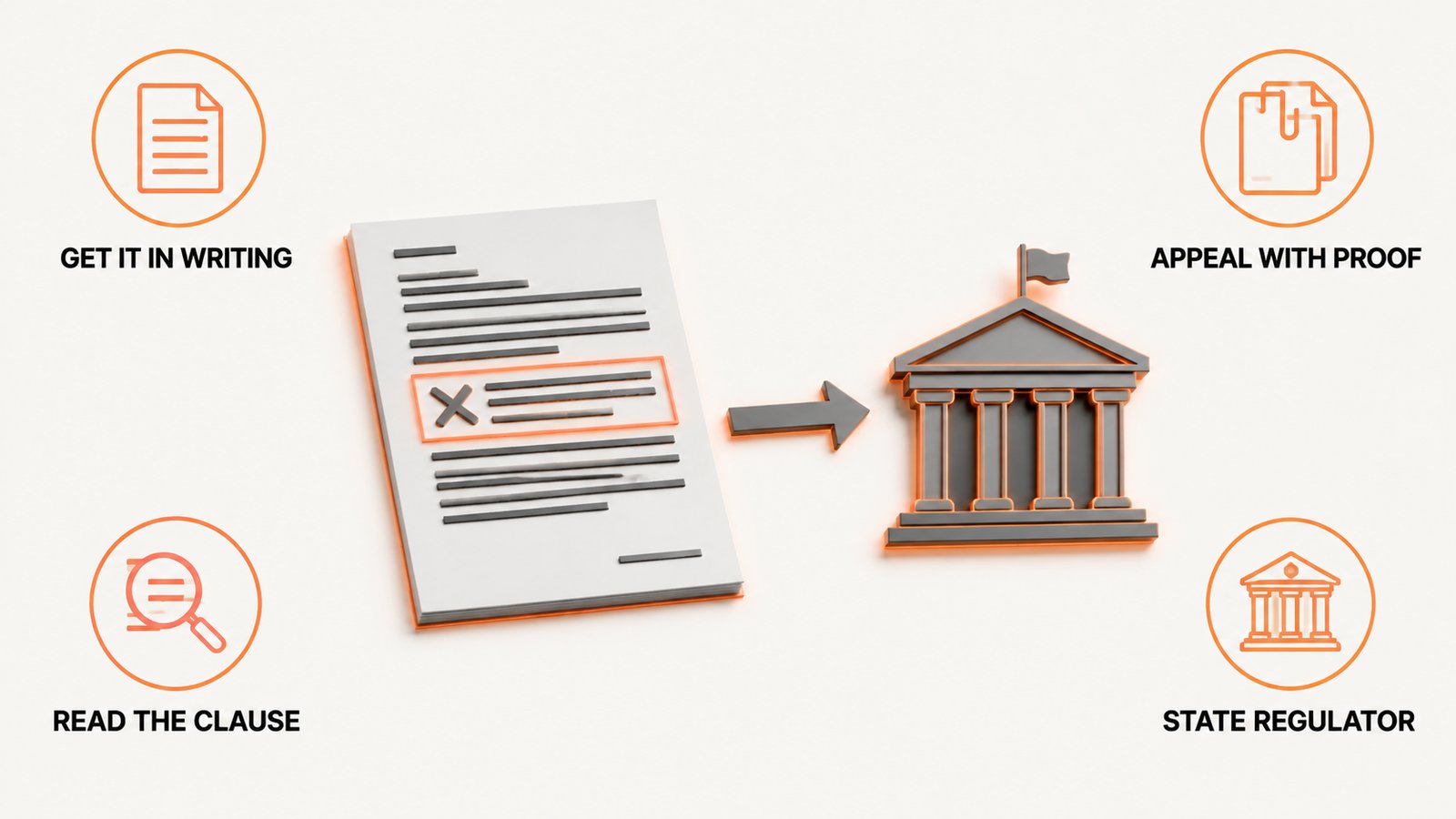
A denial is a position, not a verdict.
Get the denial in writing with the policy language cited. A verbal no is not something you can appeal. Ask which specific provision they relied on and request a complete copy of your policy.
Read the cited clause against your own facts. Denials frequently rest on the cause of the water rather than on mold wording. If a plumber's invoice, a work order or a maintenance ticket shows a sudden failure, that document is the appeal.
Appeal in writing with new evidence attached. Photos with dates, the repair invoice, the notice you sent the landlord, and any report from a qualified professional.
Escalate to your state insurance department. Every state has one, and the National Association of Insurance Commissioners maintains the directory and a complaint path. Regulators cannot rewrite your policy, and a filed complaint does force a documented response.
Consider a public adjuster on a large loss. They work for you rather than the insurer, usually for a percentage. On a small claim the fee eats the recovery, so run the arithmetic first.
When to call a pro
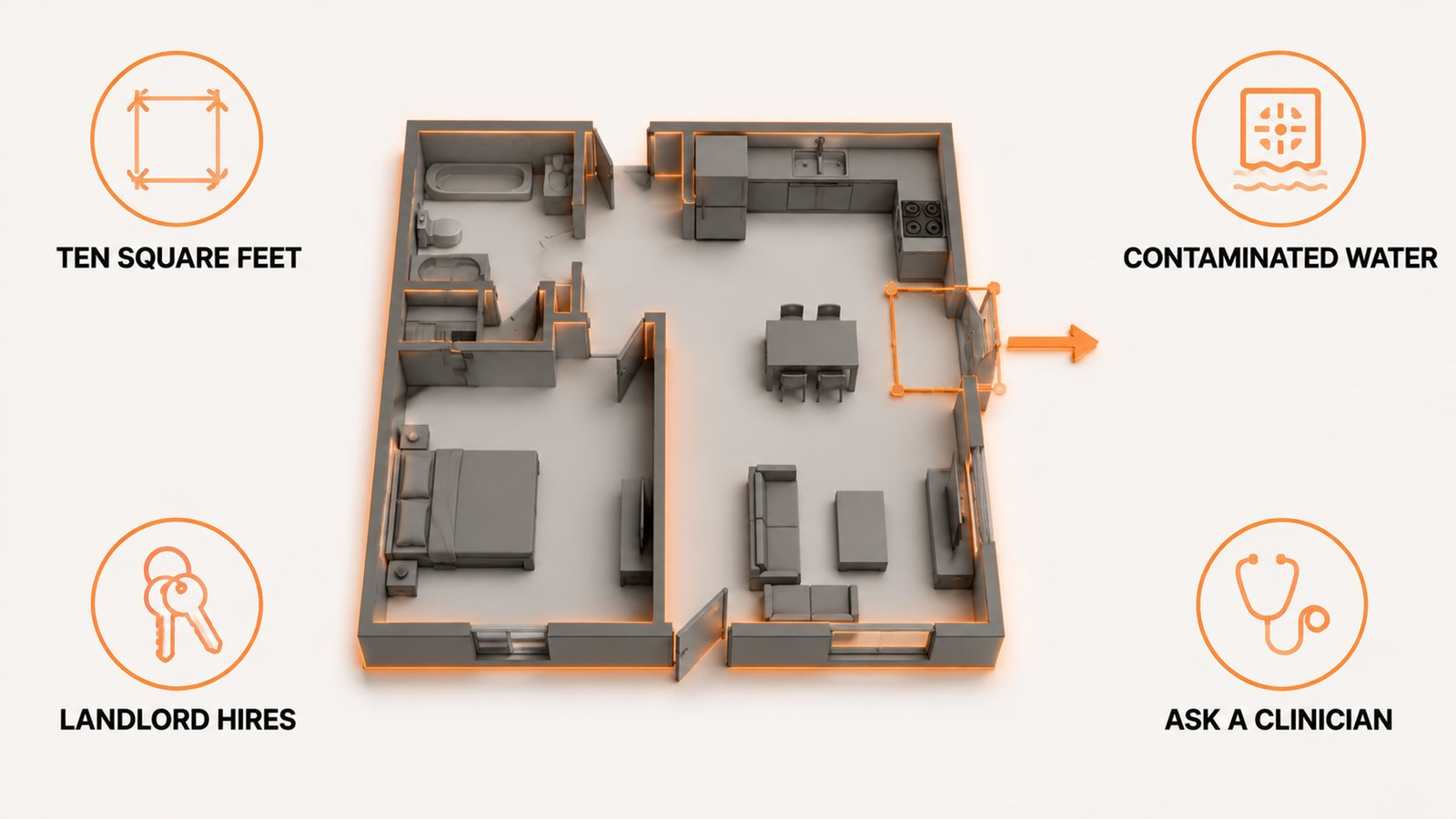
Do not take on a big cleanup in a unit you do not own. EPA's line is that growth under about 10 square feet, less than roughly a 3 foot by 3 foot patch, is usually a do-it-yourself job. Past that, or after heavy water damage, it needs a contractor with mold experience following EPA's remediation guide, the ACGIH guidelines or the IICRC standard. In a rental, that contractor is normally the landlord's to hire, and doing it yourself can complicate both the claim and the tenancy.
Sewage or contaminated water is never a tenant cleanup. EPA says damage caused by sewage or other contaminated water calls for a professional experienced in that work.
Protect yourself for anything small you do handle. EPA's cleanup guidance is gloves, goggles without ventilation holes and an N-95 respirator, detergent and water on hard surfaces, then complete drying. Absorbent materials may simply have to go.
Anything about a person goes to a clinician. CDC states that exposure to damp and moldy environments may cause a variety of health effects or none at all, that people with asthma or a mold allergy may have severe reactions, and that immune-compromised people and people with chronic lung disease may get lung infections. EPA advises consulting a health professional before starting cleanup if you have health concerns. Insurance questions and health questions are separate, and neither one is answered by the other.
Frequently asked questions
Does renters insurance cover mold damage to my belongings?
It can, when the mold resulted from a peril the policy lists. Standard renters coverage protects possessions against damage from fire, smoke, lightning, vandalism, theft, explosion, windstorm, water and other disasters named in the policy. Mold itself is not a peril on that list, so the claim turns on what caused the water and on whatever mold limitation your specific policy carries.
Will my policy pay if the mold came from a slow leak?
Usually not. Damage that developed gradually from seepage, condensation, humidity or deferred maintenance is normally treated as a maintenance issue rather than a sudden loss, and mold wording in property policies is written with that scenario in mind. A sudden and accidental water event, documented and reported quickly, is a much stronger position.
Is the mold in my apartment walls my insurance problem or the landlord's?
The landlord's. A renters policy is almost identical to a homeowners policy except that it does not cover the building, because the landlord owns it. Drywall, plumbing, ducts and the roof sit on the landlord's policy and the landlord's repair duty. Your policy is for your belongings, your liability and your additional living expenses.
Does renters insurance cover a hotel if I have to move out?
If the loss that forced you out is covered, additional living expenses coverage is designed for exactly that. It generally reimburses the difference between your additional living expenses and your normal living expenses, and can cover hotel bills, temporary rentals and restaurant meals. Keep every receipt and open the claim before you book.
What if the mold came from a flood?
A standard renters policy does not cover flood or earthquake at all. Flood coverage is available separately through the National Flood Insurance Program or a small number of private insurers, and it has to be purchased before the event. If ground water entered the unit, the renters policy is not the document that answers it.
Can my landlord's insurance pay for my ruined furniture?
Not automatically. The landlord's policy covers the building, not your possessions. A claim against the landlord is a liability question that depends on responsibility and on your state's law, which is a different process from filing on your own policy. Written notice and dated documentation matter in both.
What do I do if my mold claim is denied?
Get the denial in writing with the specific policy provision cited, request a full copy of the policy, and appeal in writing with evidence that addresses the cited clause, such as a plumbing invoice showing a sudden failure. If that fails, file a complaint with your state insurance department. The National Association of Insurance Commissioners maintains the directory of state departments and a complaint path.
Sources
Every claim on this page traces to one of these. Links open the primary document.