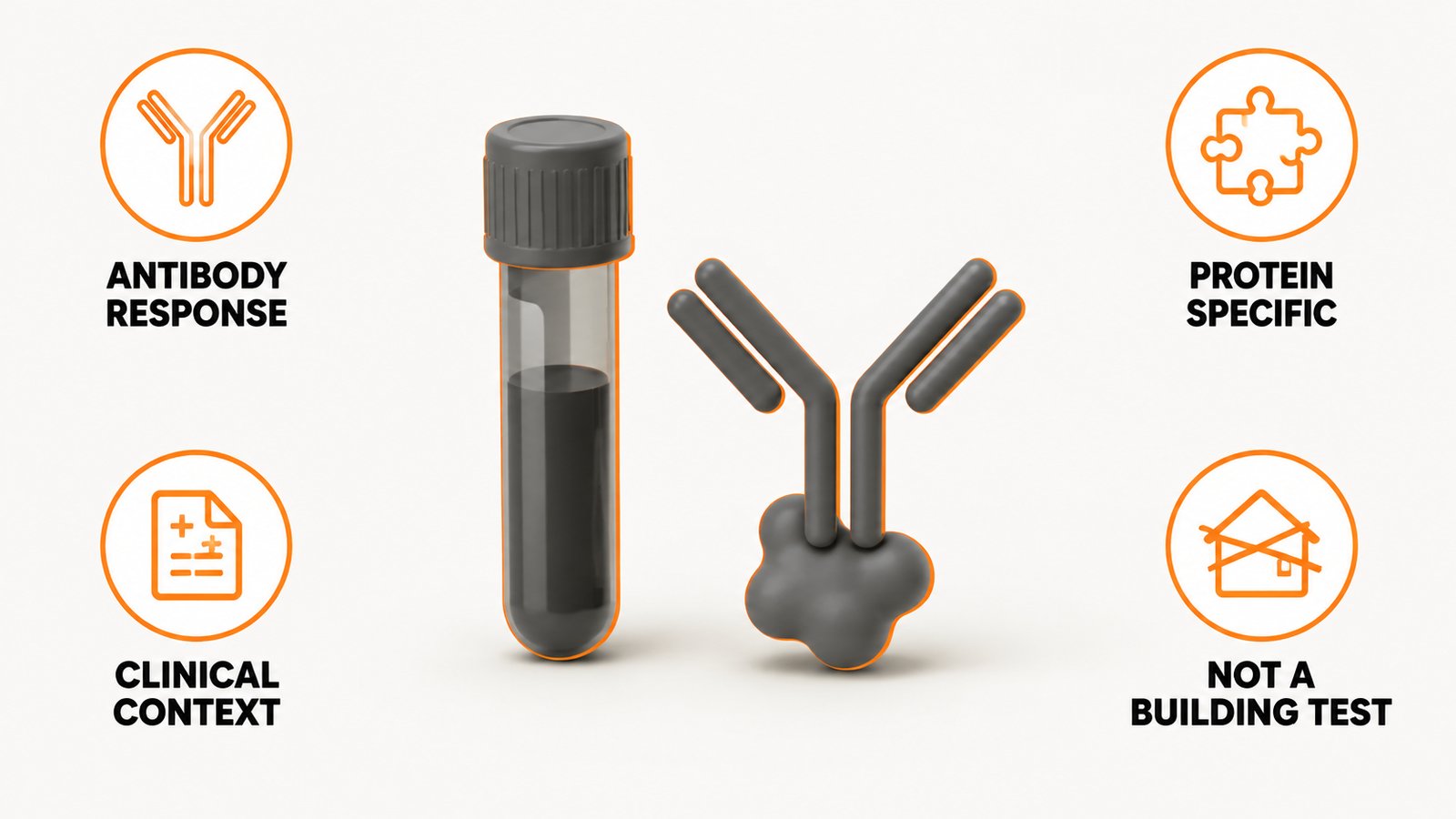
What People Mean by Mold Detox

People searching mold detox are usually asking one of three questions, and it helps to separate them, because they have very different answers.
The building question. How do I get the mold out of my house so I stop being exposed to it. This one has a clear, published, agency-backed answer, and the rest of this page is mostly about it.
The clinical question. I feel unwell and I think my home is why. That question belongs with a licensed physician who can examine you, take a history, and rule things in and out. No article can do that, this one included, and New York State's health department frames it the same way: always discuss your health concerns with your doctor, because the symptoms of mold exposure could be caused by other exposures and illnesses.
The product question. Which supplement, diet or protocol clears mold from my system. This is where the search volume and the advertising money sit, and it is where the published record is thinnest. No federal agency that publishes mold guidance publishes a treatment protocol to go with it.
That last sentence is checkable, and worth checking rather than taking on trust. Read the EPA's brief guide to mold, moisture and your home end to end. It covers cleanup, protective equipment, moisture control, hidden mold, and biocides. It contains no treatment advice, and where health comes up it says to consult a health professional. The CDC's mold pages are the same shape. The World Health Organization's dampness guidelines are the same shape. Every one of them is a document about buildings.
What the Agencies Actually Publish
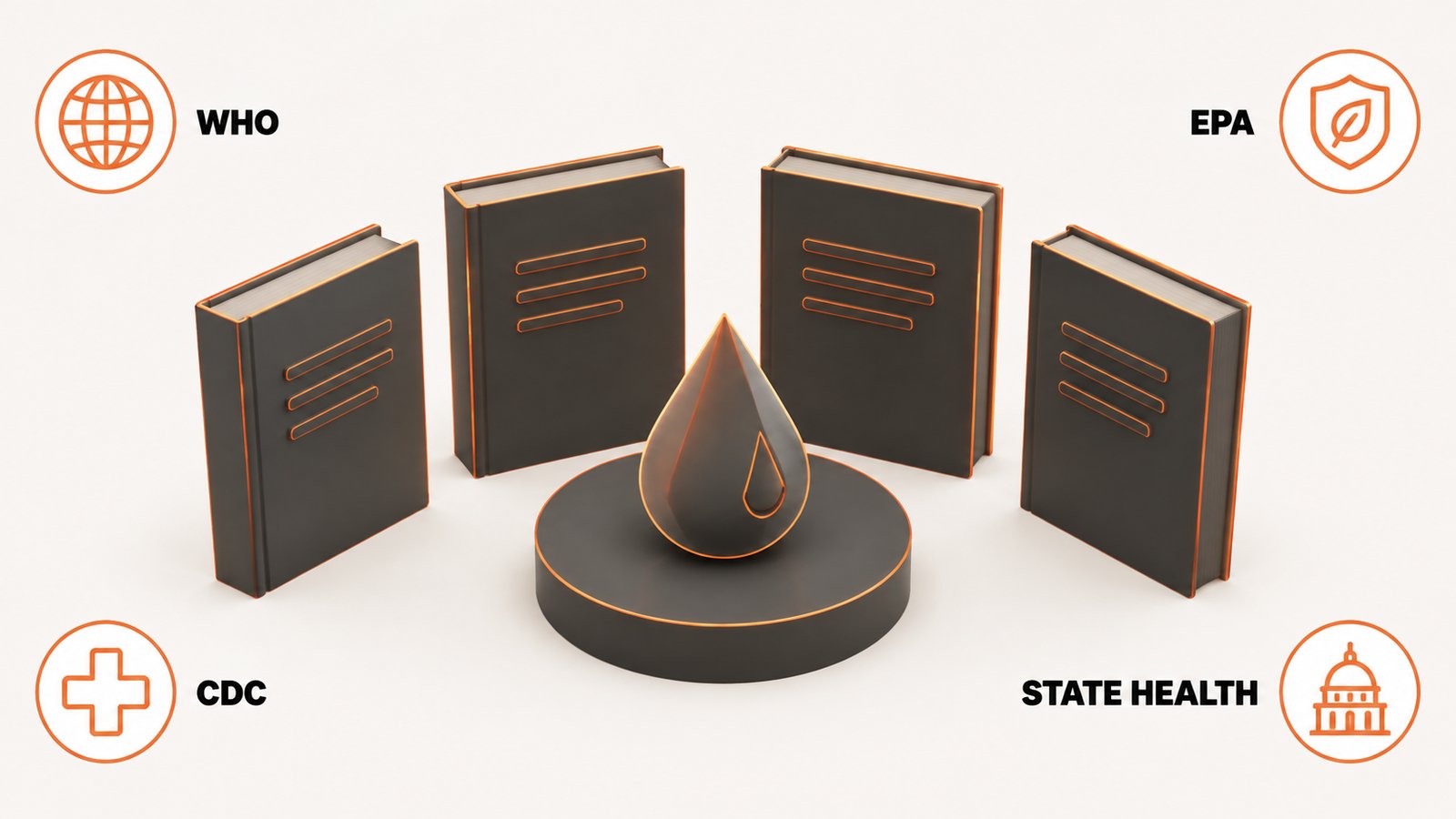
Here are the actual recommendations, in their own words, from four independent bodies.
World Health Organization, 2009. Its indoor air quality guidelines on dampness and mold state that the most important means for avoiding adverse health effects is the prevention, or minimization, of persistent dampness and microbial growth on interior surfaces and in building structures. That is the WHO naming the single most important intervention, and it is a building intervention.
EPA. The key to mold control is moisture control. If mold is a problem in your home, you should clean up the mold promptly and fix the water problem. And the corollary: if you clean up the mold but do not fix the water problem, then most likely the mold problem will come back.
CDC. Keep humidity levels in your home as low as you can, no higher than 50 percent, all day long. Mold can be removed from hard surfaces with household products, soap and water, or a bleach solution of no more than 1 cup of household laundry bleach in 1 gallon of water. You do not need to know the type of mold.
New York State Department of Health. The first step to mold cleanup is to control the moisture problem, and the source of the water or dampness must be identified and corrected.
Four bodies, no coordination between them, one shared answer. Nothing about a supplement, a diet, a sauna, or a cleanse appears in any of them. If a protocol worked well enough to be recommended, this is exactly where you would expect to see it, and it is not there.
What the Evidence Record Establishes
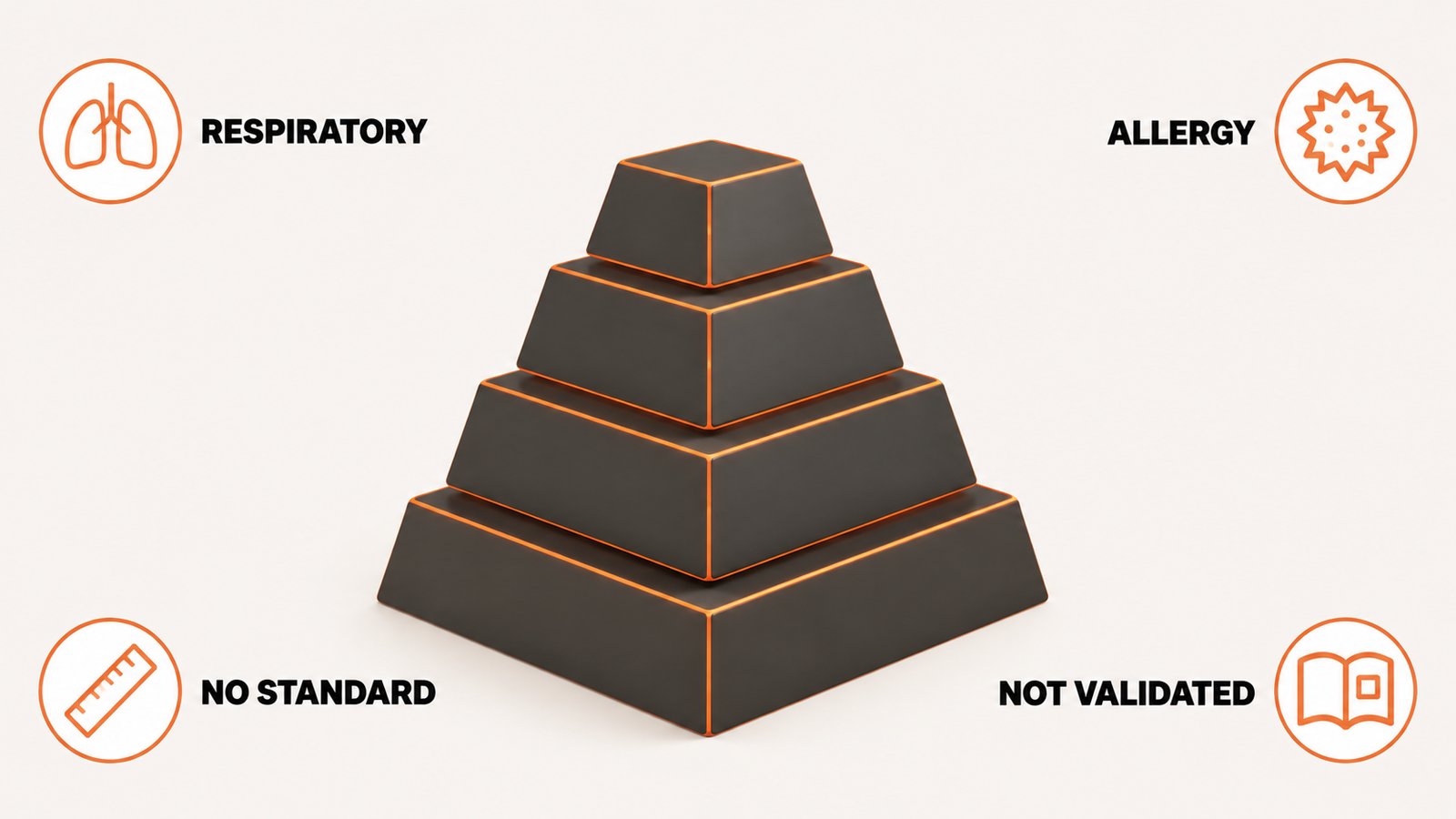
The reference review is the Institute of Medicine's Damp Indoor Spaces and Health, published by the National Academies in 2004. Its literature review found sufficient evidence of an association between damp indoor environments and some upper respiratory tract symptoms, coughing, wheezing, and asthma symptoms in sensitized persons.
The WHO reached a compatible conclusion in 2009, describing the most important effects as increased prevalences of respiratory symptoms, allergies and asthma as well as perturbation of the immunological system.
Now compare that against what the EPA is willing to say about anything beyond it: symptoms other than the allergic and irritant types are not commonly reported as a result of inhaling mold, and research on mold and health effects is ongoing. That is the agency marking the edge of its own evidence.
| Claim | Where it stands in the published record |
|---|---|
| Damp buildings are associated with respiratory symptoms and asthma | Supported. This is the sufficient-evidence tier in the 2004 Institute of Medicine review and the WHO's 2009 conclusion. |
| Removing dampness is the primary protective action | Supported and recommended by name. The WHO calls prevention or minimization of persistent dampness the most important means of avoiding adverse health effects. |
| A lab number tells you whether a building is safe | Not supported. The EPA states no federal limits for mold or mold spores have been set and that there are no EPA standards for airborne mold contaminants. |
| A dust index score settles the question | Not supported for that use. The EPA, which developed the Environmental Relative Moldiness Index, states it has been peer reviewed for research purposes but has not been validated for non-research purposes. |
| A supplement or diet clears mold from the body | Absent from the record. No EPA, CDC, WHO or state health department mold document contains a treatment protocol of any kind. |
None of this means people are imagining what they feel in a damp house. The respiratory tier is real and it is agency-endorsed. It means the honest response is the one the agencies name, and the honest place for anything about your body is a clinician's office.
Removing the Exposure, Step by Step
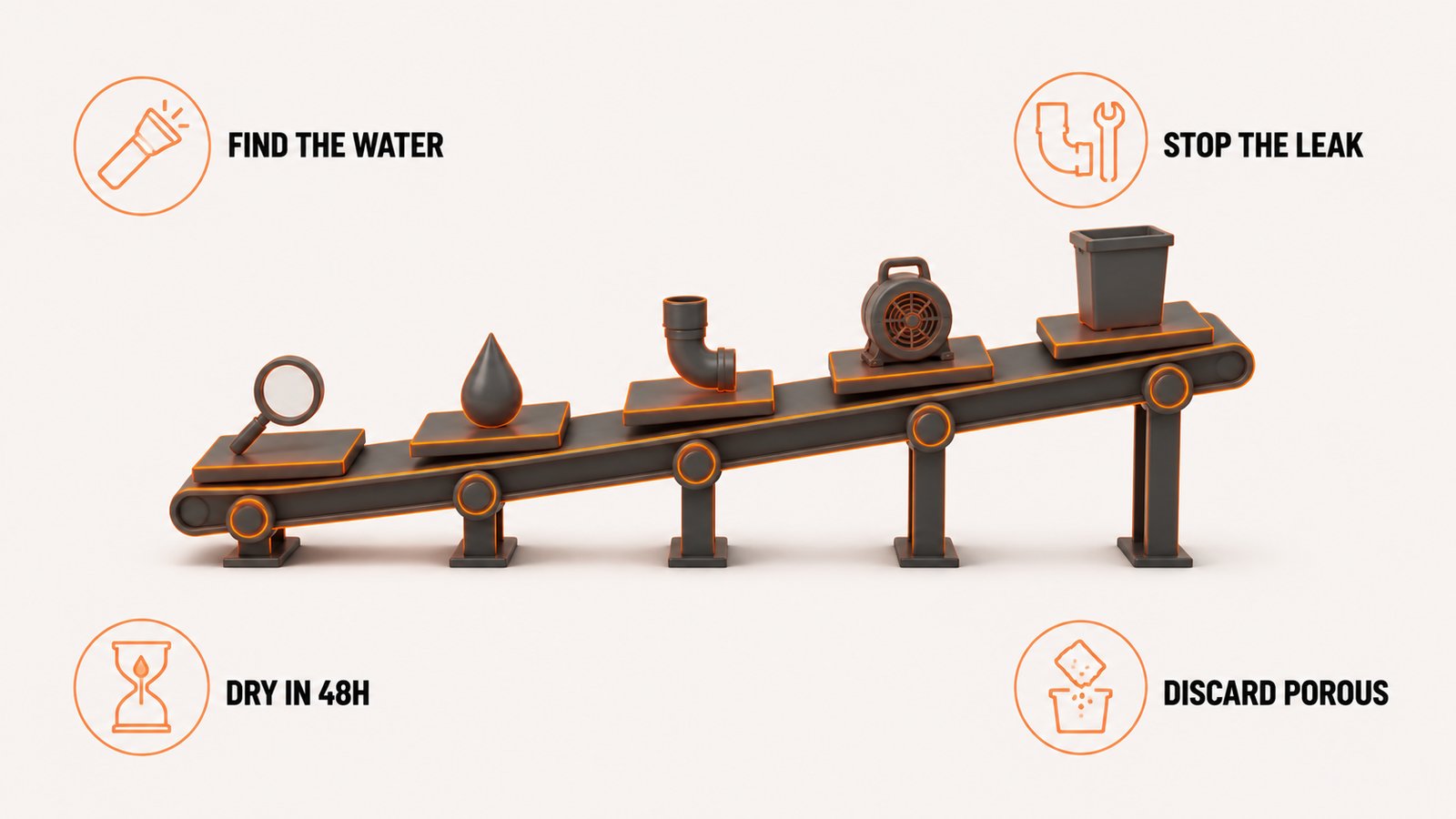
This is the part with agency backing, so it gets the most detail. Run it in order. Skipping to step four is why people clean the same spot three times.
1. Find the water. New York State lists the usual sources: roof leaks, indoor plumbing leaks, outdoor drainage problems, damp basements and crawl spaces, steam from the bathroom or kitchen, condensation on cool surfaces, humidifiers, wet clothes drying inside the home, a clothes dryer venting indoors, and poorly vented heating and cooking appliances. Walk the house with that list and a flashlight. Our page on signs of mold in a house covers what to look for room by room.
2. Stop it. A fixed leak beats every product in this article. The EPA advises fixing plumbing leaks and other water problems as soon as possible, cleaning and repairing roof gutters regularly, making sure the ground slopes away from the foundation, and keeping air conditioning drip pans clean with drain lines flowing.
3. Dry it fast. The EPA's number: if wet or damp materials or areas are dried 24 to 48 hours after a leak or spill happens, in most cases mold will not grow. That window is the most actionable fact in the entire subject.
4. Clean or discard. Scrub mold off hard surfaces with detergent and water and dry completely. New York State says porous materials with extensive mold growth should be discarded, naming drywall, carpeting, paper and ceiling tiles, and that all wet materials that cannot be cleaned and dried thoroughly should be discarded. The EPA makes the same point about porous material, because mold fills the crevices and can be difficult or impossible to remove completely. And note the EPA's warning that dead mold may still cause allergic reactions in some people, so it is not enough to simply kill the mold, it must also be removed.
5. Hold the humidity. Below 60 percent and ideally 30 to 50 percent per the EPA, no higher than 50 percent per the CDC. Vent the dryer outside, run the bathroom fan, use exhaust fans when cooking, and put a dehumidifier in any basement or crawl space that will not hold the number on its own. Our dehumidifier guide and the sizing calculator handle the capacity math.
Protect yourself while you do it. New York State recommends rubber gloves and an N95 mask for jobs other than routine cleaning, and the EPA advises ventilating the area and exhausting air outdoors if you use disinfectants. The EPA also advises consulting a health professional before starting cleanup if you have health concerns, which is the relevant line if you came to this page because you already feel unwell.
Why Products and Panels Are Not Evidence
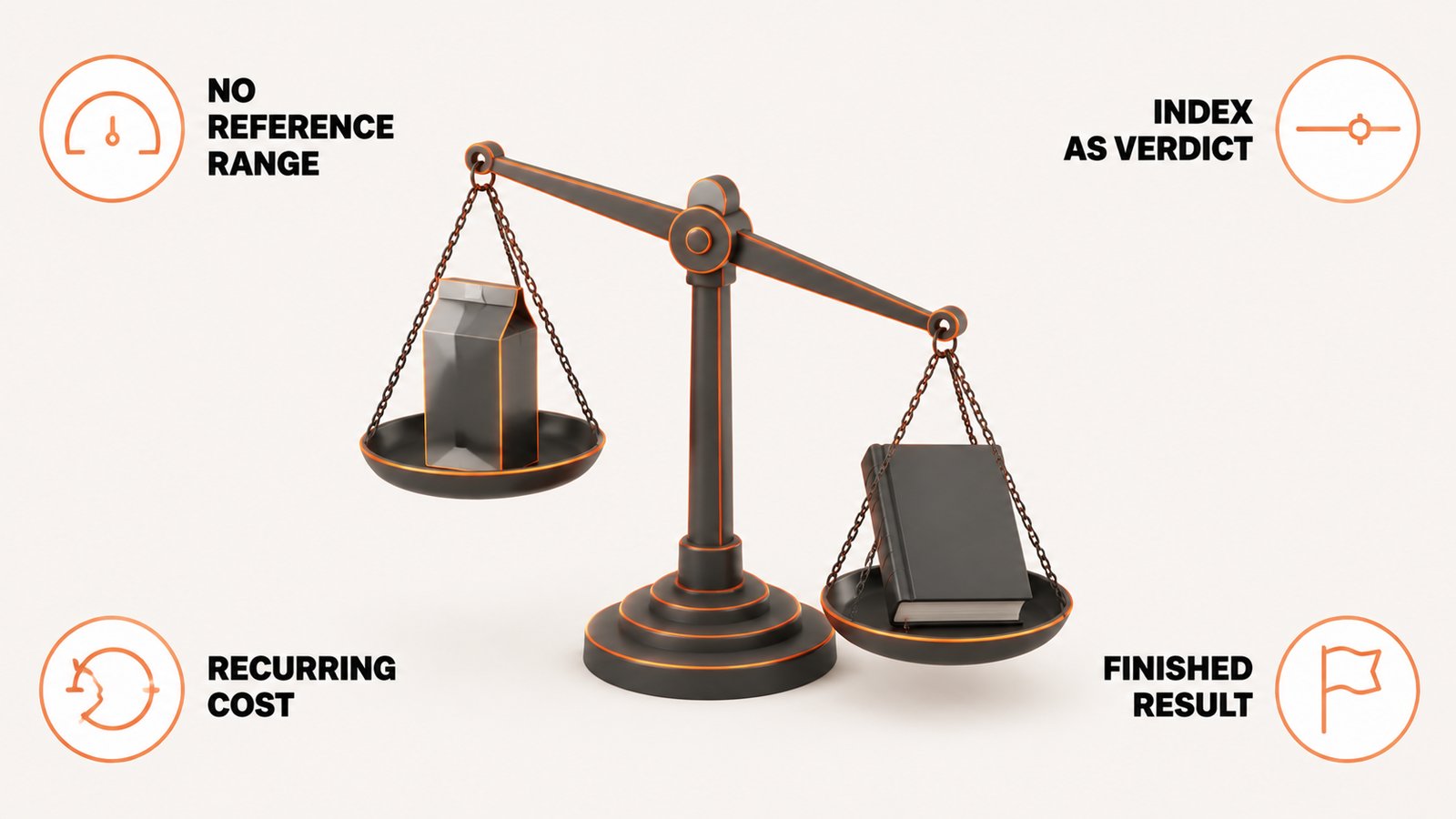
The mold detox market runs on three moves. Each one is worth recognizing on sight.
A test that produces a number, where no number has a meaning. The EPA states that standards or Threshold Limit Values for airborne concentrations of mold, or mold spores, have not been set, and that there are currently no EPA regulations or standards for airborne mold contaminants. New York State says the same about homes: there is no state or federal standard for mold in homes. A number with no reference range is not a finding, it is a prompt to buy the next thing.
An index presented as a verdict. The Environmental Relative Moldiness Index gets sold as a definitive read on a house. The EPA developed it and describes it as a research tool for estimating mold contamination that has been peer reviewed for research purposes but has not been validated for non-research purposes. Urine mycotoxin panels get sold the same way. No federal agency endorses them as a basis for the claims made around them. Our page on mycotoxin testing covers what those panels measure.
A protocol that requires ongoing purchases. Compare the shape of the offer against the shape of the agency guidance. The agency guidance ends with a dry building and no recurring cost. A protocol that never reaches a finish line is a subscription with a health story attached.
The check that cuts through all three is simple. Ask what would have to be true for this to be settled, then ask whether anything on offer would settle it. A dehumidifier holding 45 percent in a basement that used to sit at 70 is a measurable, finished result you can verify with a $10 to $50 meter. That is what a real intervention looks like.
None of this is a claim that a clinician cannot help you. It is a claim about who should be making decisions about your body, and the answer is a licensed physician with your history in front of them, not a product page and not this article.
What to Bring to a Clinician
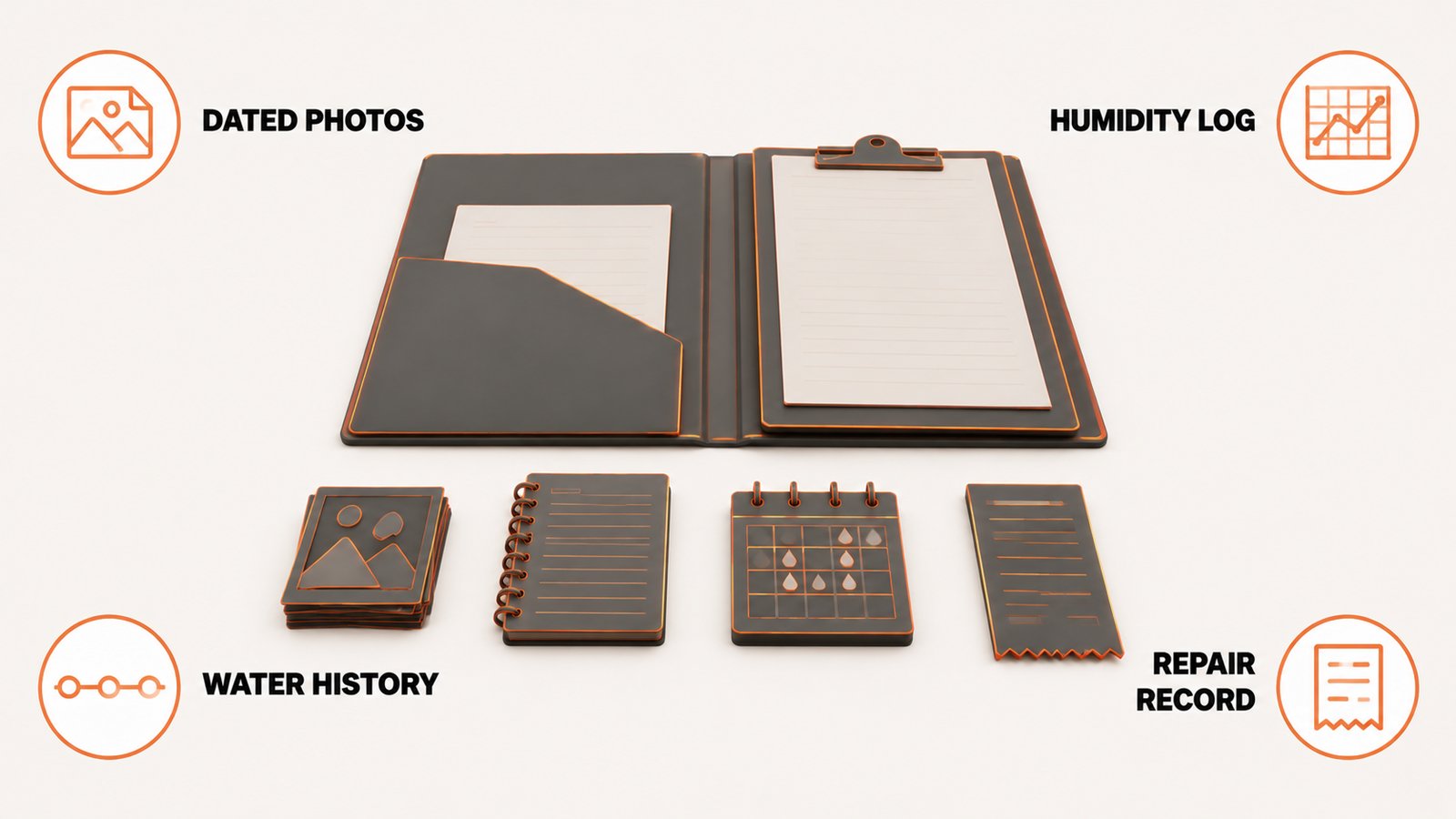
If you are going to see a doctor about a damp home, the most useful thing you can bring is not a lab report you ordered online. It is a clean record of the building, because that is the part of the picture only you have.
- Dated photographs of the affected areas. Wide shots that show location and close frames that show the surface. Keep the originals with their timestamps intact.
- Humidity readings with dates and rooms. A $10 to $50 meter, per EPA pricing, logged over a couple of weeks tells a far better story than a single reading. Include which room and what time of day.
- The water history. When the leak happened, how long it stayed wet, what was replaced, what was not. The EPA's 24 to 48 hour drying window makes the timeline meaningful.
- What you did and when. Cleaned, discarded, repaired, dehumidified. Include what changed after each step.
- Any professional reports. An inspection report or a remediation scope, if you have one.
Leave the conclusions out of it. Bring observations and let the clinician do the clinical reasoning, which is what they are trained for and what an article is not. New York State's guidance is worth repeating here: the symptoms of mold exposure could be caused by other exposures and illnesses, which is exactly why a self-assembled diagnosis narrows the search too early.
The CDC's note on higher-risk groups is also worth flagging to a clinician if it applies: people with asthma or who are allergic to mold may have severe reactions, and immune-compromised people and people with chronic lung disease may get infections in their lungs from mold. If someone in the household is in one of those groups, say so, and hand the cleanup work to someone else.
Where the Money Actually Goes Further
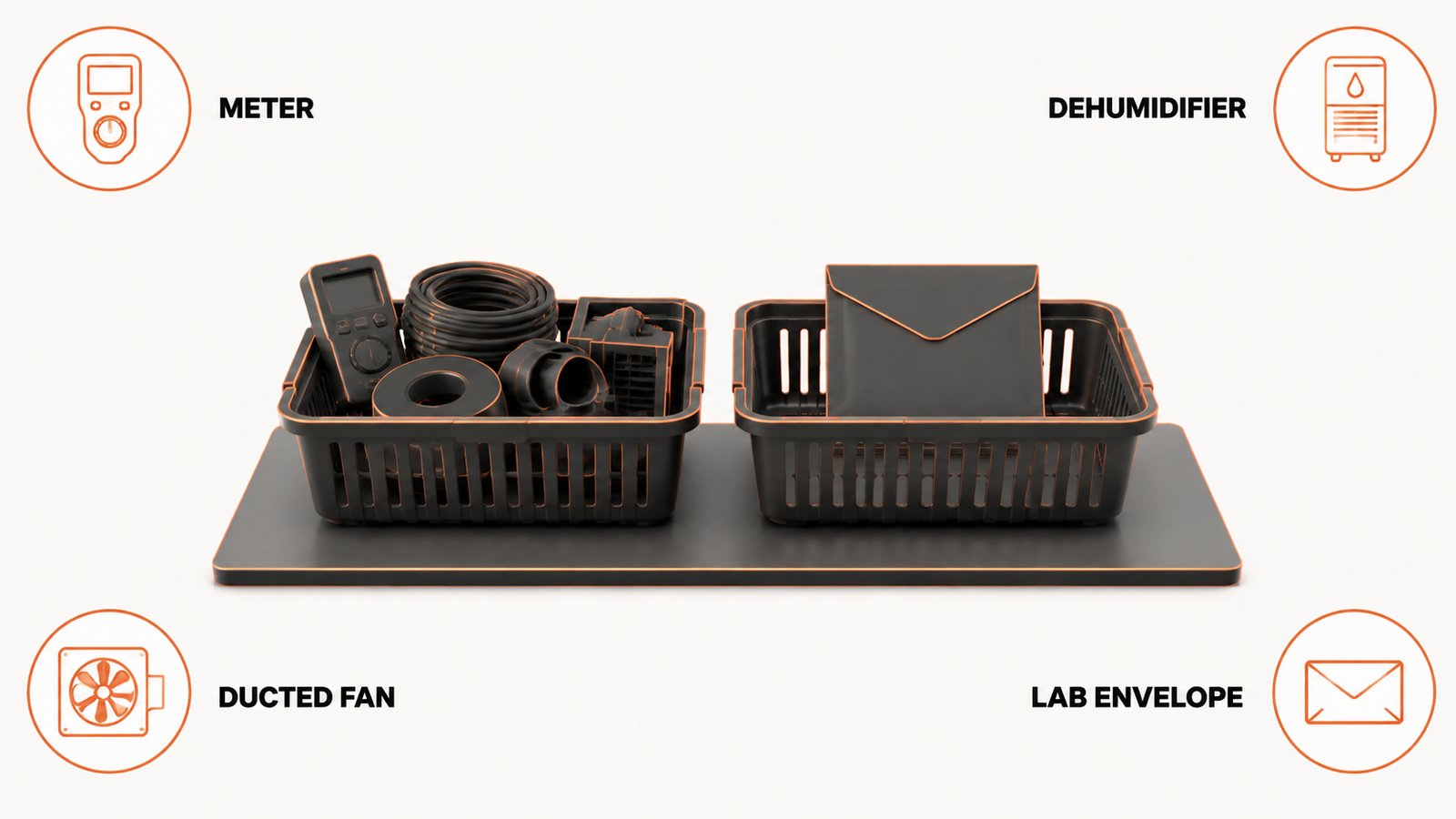
Put two shopping lists side by side. Both cost roughly the same. Only one of them changes the building.
| Spend | What you get | Does it end the exposure? |
|---|---|---|
| Humidity meter, $10 to $50 per EPA | A daily reading of the variable that actually drives growth | It tells you whether anything else worked |
| Dehumidifier for the basement or crawl space | A held setpoint in the room that keeps producing the problem | Yes, where humidity is the cause |
| Bathroom fan ducted to the outside | Moisture leaving the building instead of moving into the attic | Yes, and it is often the whole fix |
| A plumber or a roofer | The leak stopped at the source | Yes, and permanently |
| ERMI dust analysis, $240 to $435 at EnviroBiomics | A research index the EPA says is not validated for non-research use | No |
New York State makes the cost point directly: mold sampling and testing can be more expensive than simply cleaning and repairing the water problems that allow mold to grow. That is a state health department telling you the testing budget is usually better spent on the repair.
There is a case for paying for testing, and it is narrow. Use it when you cannot find the source, when you need an independent scope written before hiring a remediation contractor, or when you need a clearance check after the work is done. Our comparison of every home mold testing method covers when each one earns its price.
When to Call a Pro
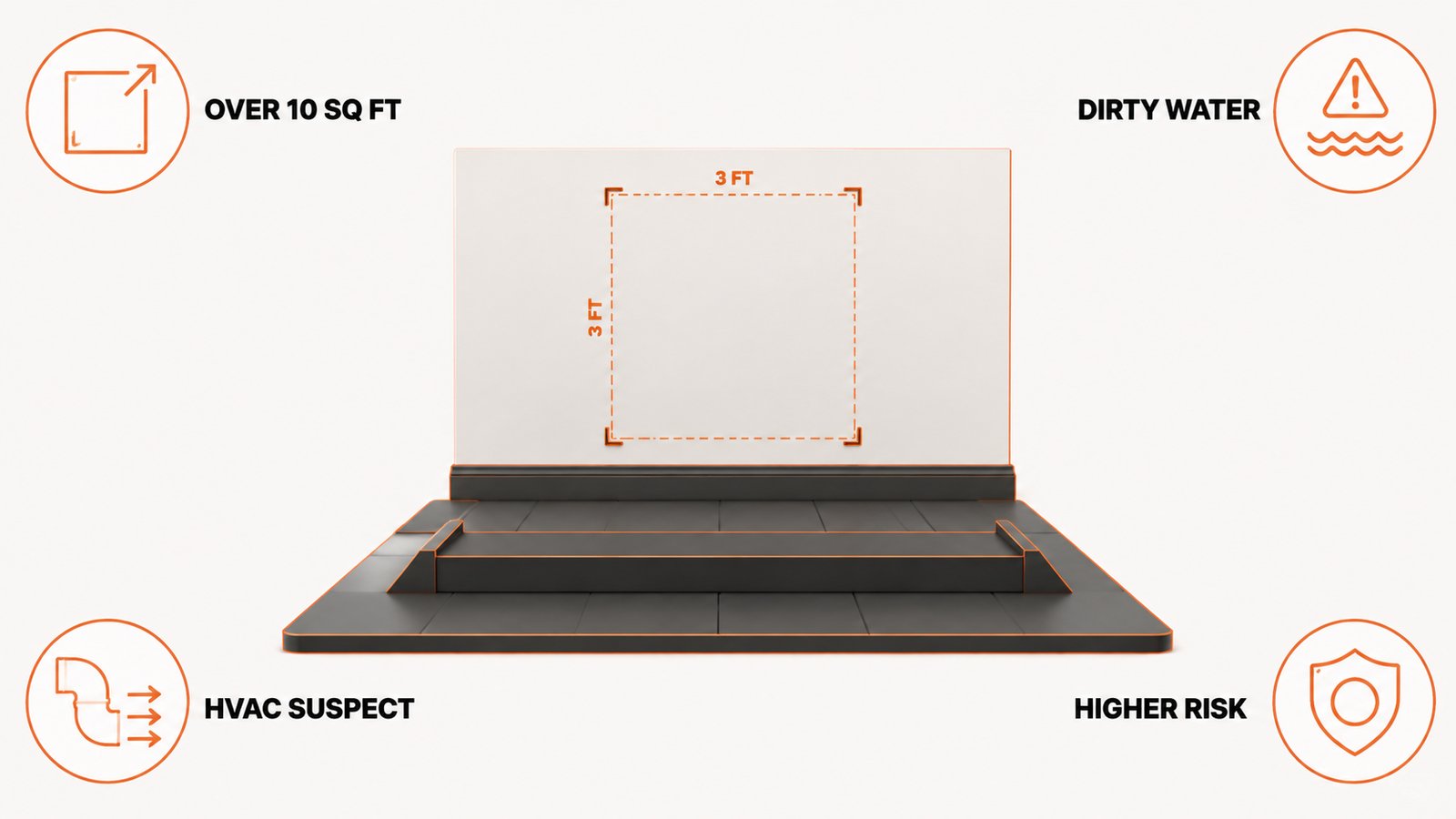
Hand the job to a remediation contractor when any of these are true:
- Growth covers more than about 10 square feet, roughly a 3-foot by 3-foot patch. That is the EPA's threshold for handing off a cleanup, and New York State uses the same figure for hiring a licensed contractor.
- Sewage or other contaminated water was involved. The EPA says to call a professional experienced with buildings damaged by contaminated water.
- You suspect the HVAC system. The EPA advises consulting its duct guidance first and warns not to run the system while you suspect contamination, because it could spread mold throughout the building.
- Anyone in the household is at higher risk, or you are highly sensitive to mold. New York State names sensitivity on its own as a reason to hire a licensed contractor, independent of the size of the job.
Hire against the ANSI/IICRC S520 standard for professional mold remediation and check whether your state licenses this work. New York licenses assessors and remediation contractors separately and prohibits the same individual from doing both on one property, which removes the conflict of interest built into a single vendor writing and then fulfilling their own scope. Texas licenses seven categories of mold professional. Our mold remediation certification page maps who is licensed where.
And keep the two lanes separate to the end. A contractor fixes the building. A physician handles anything to do with your health. Neither one should be doing the other's job.
Frequently asked questions
Is there an official mold detox protocol?
No federal or international health agency that publishes mold guidance also publishes a treatment protocol. The EPA's guide, the CDC's mold pages, the World Health Organization's dampness guidelines and state health department guidance are all documents about buildings and moisture. Where they mention health, they direct readers to a health professional rather than to a product or a regimen.
What single action do the agencies recommend?
Removing the dampness. The World Health Organization states that the most important means for avoiding adverse health effects is the prevention, or minimization, of persistent dampness and microbial growth on interior surfaces and in building structures. The EPA's version is that the key to mold control is moisture control, and that if you clean the mold but do not fix the water problem, the mold problem will most likely come back.
Does the CDC recommend mold testing?
No. The CDC states that it does not recommend mold testing, and that you do not need to know the type of mold. New York State's health department adds that mold testing is not recommended nor required by any regulatory agency, that there is no state or federal standard for mold in homes, and that knowing the kinds of mold present does not change the advice.
What does the EPA say about ERMI scores?
The EPA developed the Environmental Relative Moldiness Index and describes it as a research tool developed by EPA scientists for estimating mold contamination. It states that ERMI has been peer reviewed for research purposes but has not been validated for non-research purposes. A score is a reason to look harder at a building, not a verdict about it.
What humidity level should I hold in the house?
The EPA advises keeping indoor relative humidity below 60 percent, ideally between 30 and 50 percent. The CDC advises keeping humidity as low as you can, no higher than 50 percent, all day long. A moisture or humidity meter costs $10 to $50 at many hardware stores according to the EPA, which makes it the cheapest instrument that actually measures the driver of growth.
How fast do I have to dry a wet material?
Within 24 to 48 hours. The EPA states that if wet or damp materials or areas are dried 24 to 48 hours after a leak or spill happens, in most cases mold will not grow. That window is the single most useful number in this subject, and it is why acting on a leak the same day matters more than anything you do afterward.
If I kill the mold, is the exposure over?
Not on its own. The EPA states that dead mold may still cause allergic reactions in some people, so it is not enough to simply kill the mold, it must also be removed. It also advises that using a biocide such as chlorine bleach is not recommended as a routine practice during mold cleanup. Scrub hard surfaces with detergent and water, remove the residue, dry completely, and discard porous material that cannot be cleaned.
When should I hire a remediation contractor instead of cleaning it myself?
When growth covers more than about 10 square feet, roughly a 3-foot by 3-foot patch, which is the EPA's threshold and the same figure New York State uses. Also when sewage or other contaminated water was involved, when you suspect the HVAC system, when someone in the household is at higher risk, or when you are highly sensitive to mold. Hire against the ANSI/IICRC S520 standard and check your state's licensing.
Sources
Every claim on this page traces to one of these. Links open the primary document.