Is It Mold Between Window Panes?

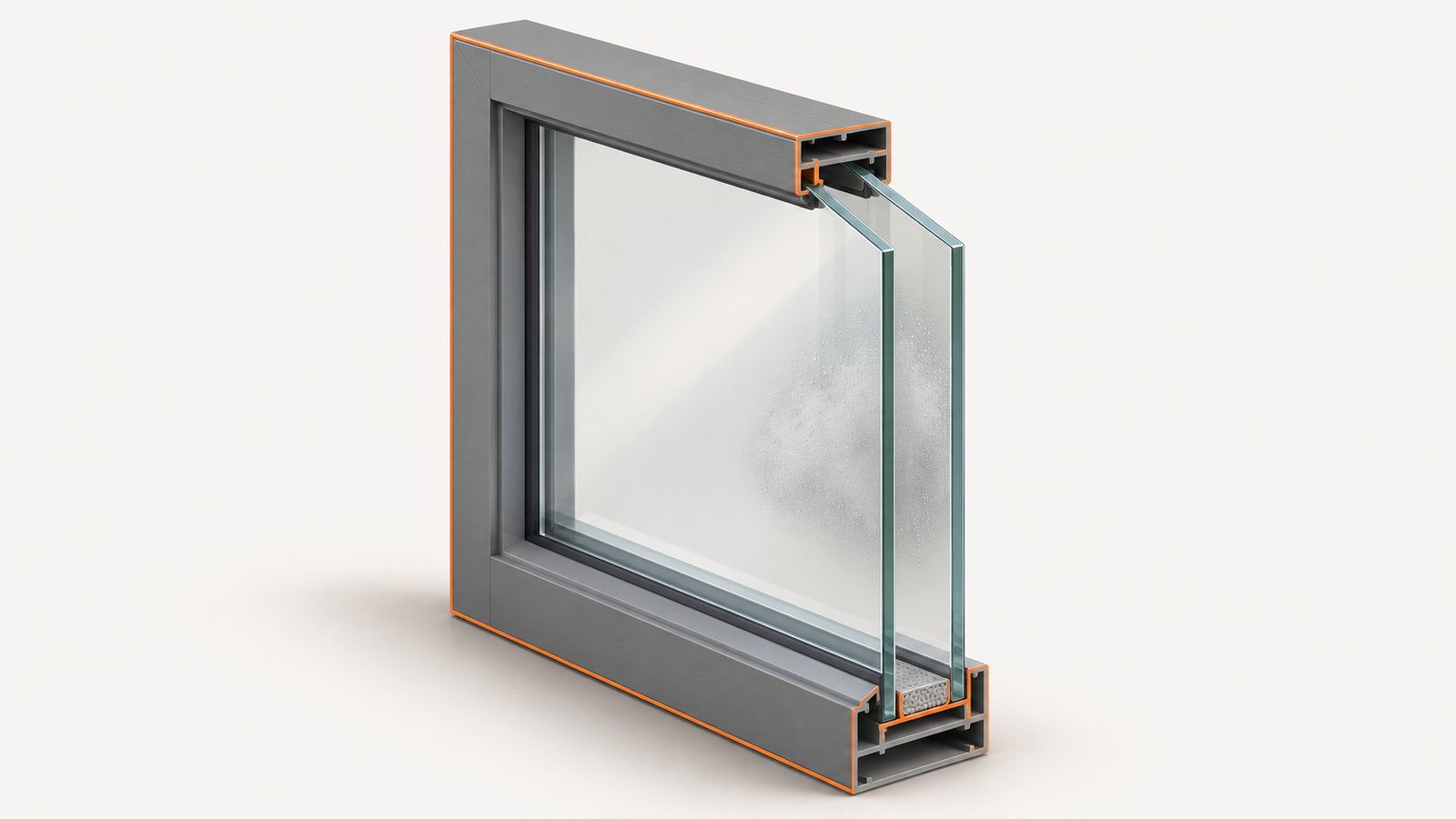
A double-pane window is two sheets of glass held apart by a spacer and sealed around the edge. A review published by Lawrence Berkeley National Laboratory says the edge seal keeps the panes an equal distance apart and acts as a barrier against water vapor getting in and the gas fill getting out. That is why the space between the sheets is out of reach. You cannot wipe it, spray it or see it from another angle.
So what are you looking at? A 2007 building-science conference paper, written by the head of a window-treatment company and a university researcher and archived by Oak Ridge National Laboratory, says a failed seal shows up as a fog, a haze or beads of water running down the inside faces of the glass. If water sits there for a long time, the paper says, it leaches parts out of the glass and leaves mineral deposits, so the glass looks cloudy even when no water is visible. It describes a third thing too, chemical fogging: a cloudy film left when solvents from the sealant or other parts of the unit give off vapor and settle on the glass. The paper says that has little to do with whether the seal has failed.
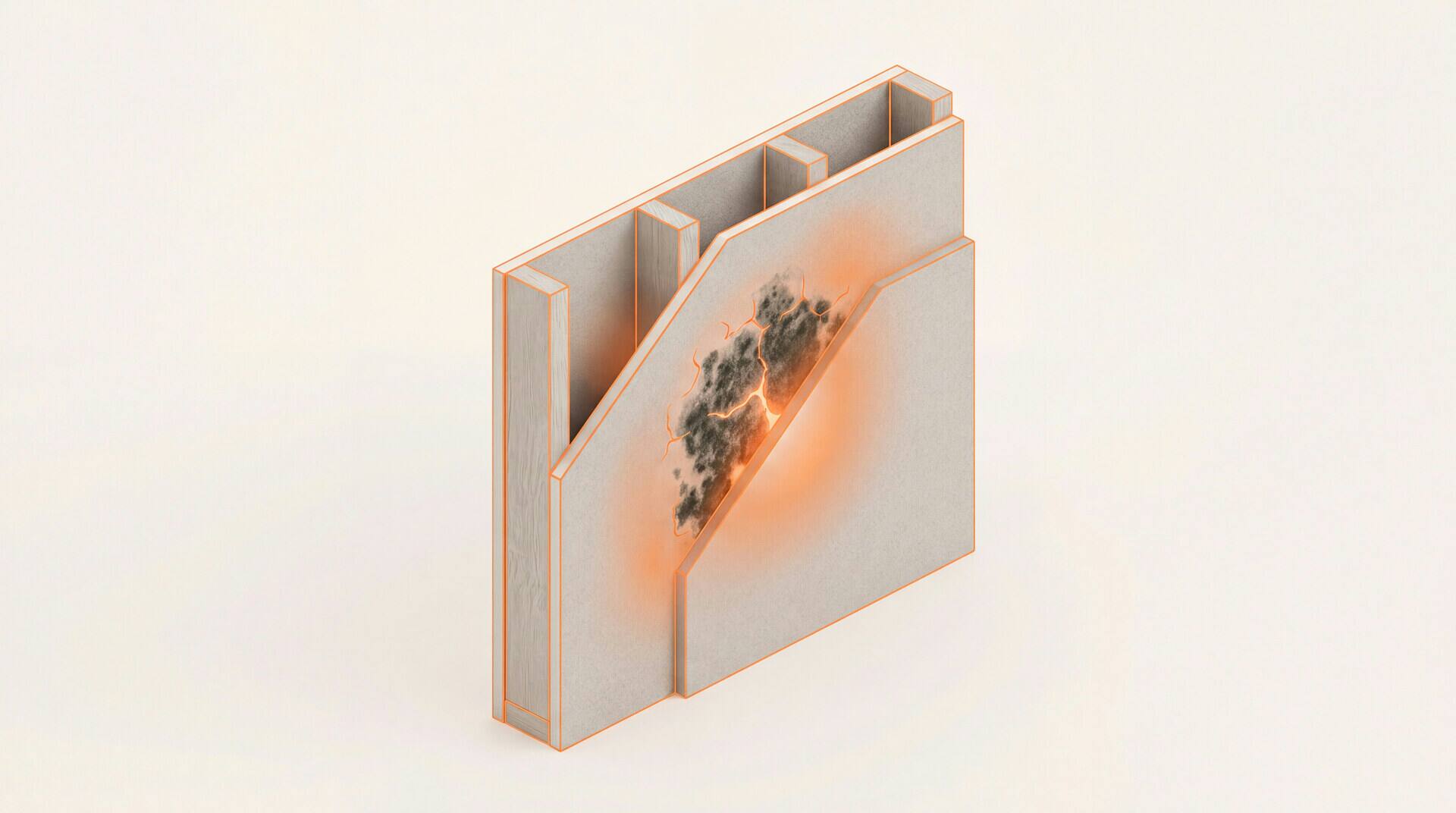
Here is what we could not find: any source that says mold grows inside a sealed unit. The EPA says mold needs moisture and food, and a failed unit has moisture in it, so we are not ruling it out and not claiming it. Dark specks in that gap could be dust, a deposit or growth, and color alone never settles which. The EPA also reminds readers that not everything that looks like mold is mold.
| What you see | What the sources say it can be |
|---|---|
| Fog, haze or water beads inside the glass | Moisture got past the edge seal after the drying material (desiccant) filled up. |
| Cloudy film that stays after the glass is dry | Mineral deposits from long-term condensation, or chemical fogging from the unit itself. |
| Dark specks you cannot wipe from either room face | We cannot name it from outside. Dust, deposit and growth all fit. A window professional can look at the unit. |
Try this check, which is our own and not an agency test. Wipe the room-side face of the glass, then the outdoor face if you can reach it. If the marks move, they are on a surface. If nothing moves, they are inside the unit.
Why Is There Moisture Between Window Panes?
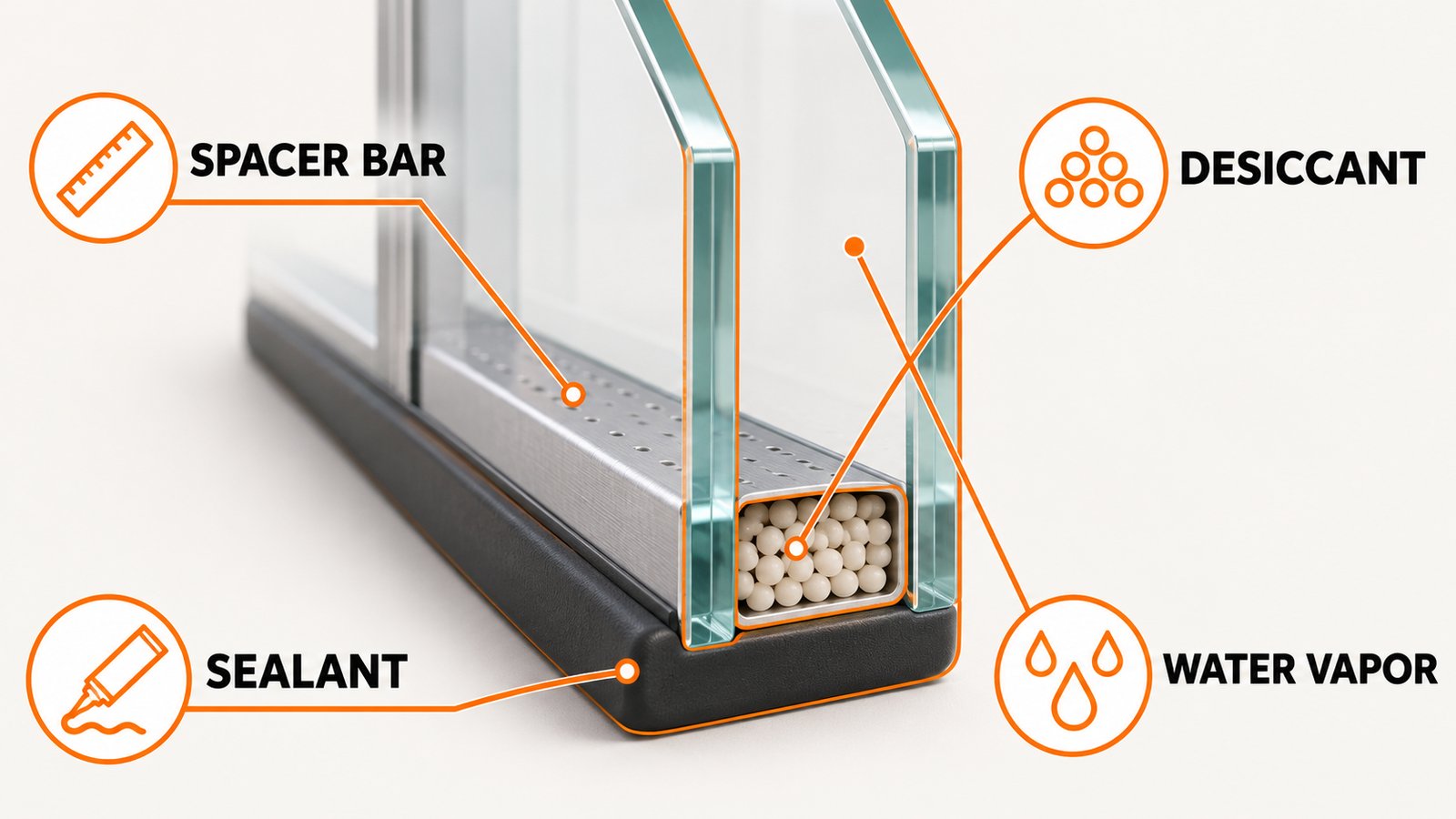
Every sealed unit has some dryness built in. The Berkeley Lab review says the unit holds a desiccant, a drying material that soaks up moisture trapped during manufacturing and moisture that slowly works through the edge seal. It also says water vapor moving through the seal is a natural process in every unit, and that a desiccant has a limited capacity. Once it is full, any more vapor that gets in can fog the inside of the glass.
The 2007 paper says moisture can seep in slowly over the years through the sealant, or enter over a short time after a break in the seal. It names water, ice and sunlight as factors that wear out a seal, along with poor handling and installation.
Heat and wet both matter. The Berkeley Lab review lists large temperature differences, repeated heating and cooling, high humidity, sunlight and wind among the stresses on the seal. It says the butyl sealant loses its grip when it gets damp, which can lead to early failure, and that a secondary sealant kept wet or overheated can stop sticking to the glass. Our reading of that: glass edges sitting in standing water are harder on a unit than edges that stay dry. A sill or track that stays wet is worth fixing for that reason alone, and our mold on window sill guide covers the sill and frame.
Can You Clean Mold Between Window Panes?

Not from the outside. The space is sealed, which is the point of the unit, and a failed seal does not turn it into a space you can reach. Wiping both faces cleans the faces. It does not change what is in the gap.
The 2007 paper states the usual industry view, that condensation from a seal failure in almost all cases means the sealed insulating unit must be replaced, and then argues for its own in-place method instead. It also says moisture inside a unit is likely to reduce how well low-E coatings work and slightly raises how easily heat moves through the glass. So a unit that looks fine after a dry spell can still be doing its job worse.
The same paper describes one other route. A specialist makes a precision hole, cleans and rinses the cavity, dries it thoroughly and installs a device that equalizes the pressure with the outdoors. The authors say they developed the process by trial and error. The first author's company sells that treatment. This is a 2007 research paper describing a specialist method, not a home project, and we would not drill into your glass. Ask a glass company whether anyone near you does it.
Should You Repair or Replace the Window?

There are three paths, and the sources we read treat them differently.
| Option | What it means | What the sources say |
|---|---|---|
| Replace the sealed glass unit | A new sealed unit goes into the existing frame. | Usual industry view, per the 2007 paper: in almost all cases a seal-failure unit must be replaced. |
| Specialist treatment in place | The cavity is cleaned, dried and fitted with a pressure device. | One 2007 paper calls it much less intrusive than removing and replacing a failed unit. We have not tested it. |
| Replace the whole window | New frame and new glass. | The U.S. Department of Energy says ENERGY STAR windows use spacers that keep the panes the right distance apart and help prevent condensation. |
Our own rule of thumb, not an agency rule: if the frame is sound and only one or two units are fogged, ask about replacing just the glass. If the frame is damaged or many units have fogged, get a whole-window quote too. Check whether a warranty covers the glass before you pay.
On installation, the Department of Energy window guide warns that even efficient windows can leave you with drafts and moisture condensation if they are not installed properly, and says to use trained installers. It also notes that most homes built before 1978 contain lead paint, a serious health hazard during renovation, so your installer should be EPA certified.
Mold on the Room Side of the Window

Moisture you can wipe off is a different problem, and one you can fix. The 2007 paper separates it from moisture inside the cavity, and says damage and mold growth may occur from condensation on the glass when it happens more often than now and then. The EPA says condensation on windows can be a sign of high humidity and tells readers to dry the wet surface quickly and cut the moisture source.
The EPA advice on numbers: keep indoor relative humidity below 60 percent, ideally between 30 and 50 percent. It prices a humidity meter at $10 to $50 at many hardware stores. Our humidity risk calculator turns a temperature and humidity reading into a dew point, which tells you how cold a surface has to be before water forms on it. The dehumidifier guide helps if the whole room stays damp, and the HVAC moisture maintenance checklist covers the heating and cooling side.
Then look at what sits below and around the glass. New York State's health department lists window moldings among the places that are always susceptible to mold growth. Check the sill, track and frame corners, and read how to prevent mold for room-by-room habits. The EPA also says hidden mold can sit on wall surfaces where condensation forms, so a musty smell near the window with nothing visible is worth a look at mold behind walls.
When to Call a Pro

Call a glass or window company for the fogged unit. They can tell you whether the glass can be replaced on its own or whether the frame is the real problem. Our mold inspection guide covers growth on the building.
Call a mold professional if growth on the frame, sill or wall covers more than about 10 square feet, roughly a 3-foot by 3-foot patch. The EPA says a patch under about 10 square feet is in most cases a job you can handle yourself, and past that, or after a lot of water damage, it points to its guide for larger jobs. That is where we suggest a professional. For sewage or other contaminated water the EPA says to call in a professional, and it says to consult a health professional before starting cleanup if you have health concerns.
Our photo scan helps tell whether a spot on a frame or sill looks like mold and what to do next. It does not identify a species or how dangerous a mold is, and it cannot see inside a sealed unit.
Frequently asked questions
Is it mold between window panes or something else?
You cannot tell from outside. The sources we read describe fog, haze, water beads, mineral deposits and a chemical film inside failed units. None of them says mold grows in the sealed space. Dark specks could be dust, a deposit or growth, and color alone never settles which. A window professional can inspect the unit.
Why is there moisture between my window panes?
The edge seal stopped keeping moisture out. Berkeley Lab says every unit has a desiccant with limited capacity, and once it is full, more vapor can fog the glass. The 2007 paper says moisture can seep in slowly through the sealant or enter after a break in the seal, and names water, ice and sunlight among the causes of wear.
Can you clean mold between window panes?
Not from the outside. The gap is sealed, so wiping the glass only cleans its faces. The usual industry view, as one 2007 conference paper puts it, is that condensation from a seal failure in almost all cases means the sealed unit must be replaced. That paper argues for a specialist method for treating a unit in place, which is not a home project.
Will the fog between my window panes go away on its own?
Nothing we read says a failed unit dries out for good. The 2007 paper describes the usual industry result as replacing the unit. If the moisture wipes off either face of the glass, it is surface condensation, a humidity matter.
Do I have to replace the whole window?
Not always. The sealed glass unit is the part that failed. Ask a window company whether the glass can be replaced in your existing frame. As our own rule of thumb, a damaged frame or many fogged units points toward a whole-window quote. Check any warranty before you pay.
Is mold between window panes a health risk?
The sources we read do not address health effects of anything inside a sealed unit. The EPA says inhaling or touching mold may cause allergic reactions in sensitive people, and that symptoms can have other causes. Take any health question to a doctor, and take the glass to a window company.
Sources
Every claim on this page traces to one of these. Links open the primary document.