
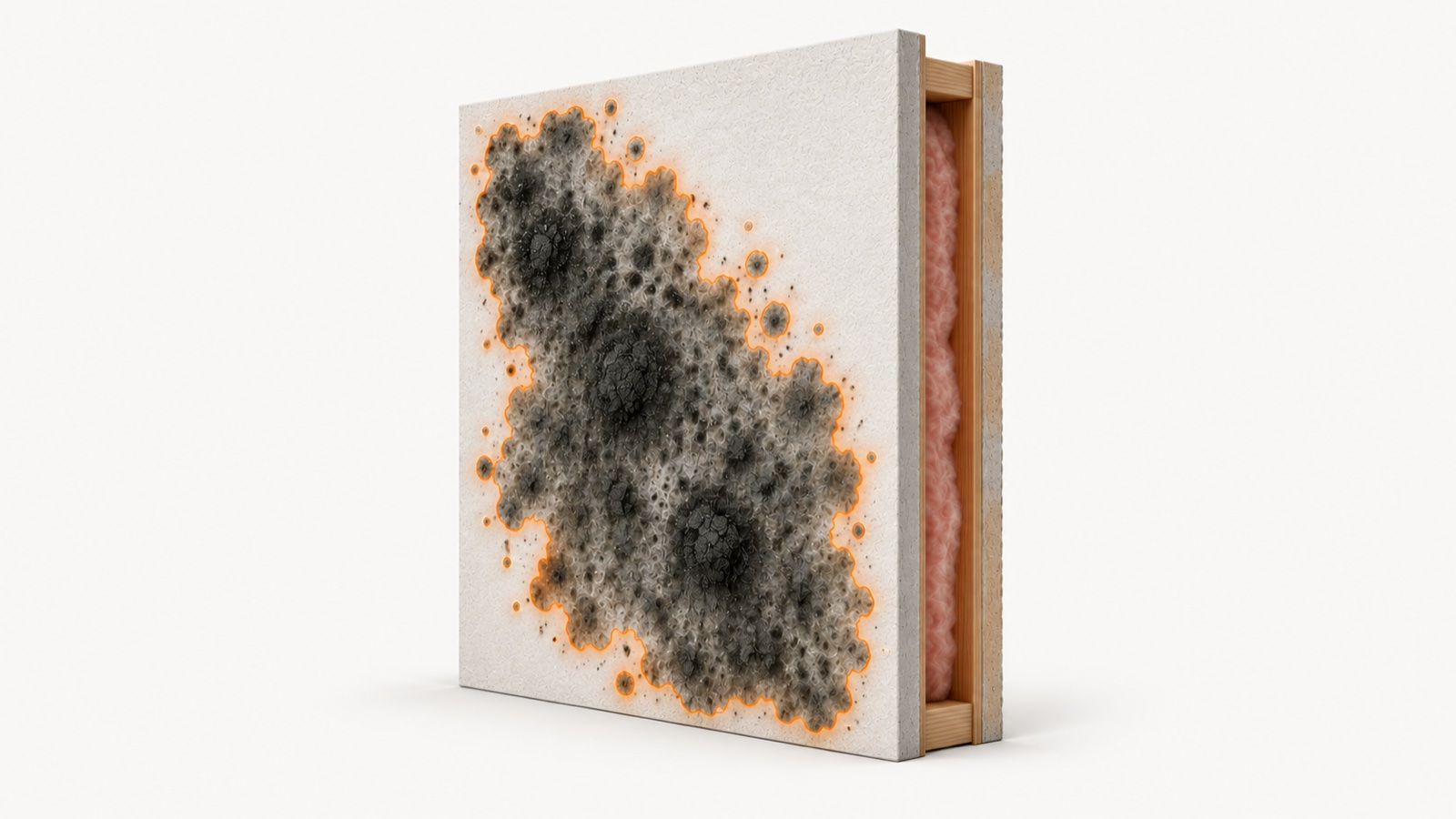
What hairy black mold actually is
Hairy black mold is not a single species. It is what people call black mold when it grows fuzzy and raised, like short black fur or velvet, instead of a flat smear. That texture comes from the mold's fruiting structures, the tiny stalks that hold spores, standing up off the surface. When you can see the hair, the colony is usually mature and actively releasing spores, so it is worth handling carefully. If you are wondering why is mold hairy, that is the answer: the fuzz is the spore-bearing stalks, not a different kind of mold.
If your growth is flat, dark, and slick instead of fuzzy, compare it against our guide to what black mold looks like and learn how to identify black mold.
Which molds look hairy and black
A few common indoor molds can appear dark and fuzzy. Here is how they compare.
| Mold | Typical look | Where it grows |
|---|---|---|
| Stachybotrys | Dark greenish-black, often slimy when wet, dry and fuzzy when old | Chronically wet drywall, ceiling tiles, wood after leaks |
| Aspergillus niger | Fuzzy black surface over a white or yellow base layer | Walls, damp basements, HVAC surfaces, food |
| Cladosporium | Dark green to black, suede or hairy texture | Bathroom corners, window frames, under sinks, textiles |
You cannot tell these apart by texture alone. Lab testing is the only way to confirm the species. Browse all types of mold if the color is not clearly black.
Is hairy black mold dangerous?
Treat any hairy black mold as growth you should remove. The fuzzy texture means it sheds spores easily, so the biggest risk is stirring them into the air by dry-brushing, wiping, or vacuuming without protection.
How much it affects you depends on the species, the size of the area, and your own sensitivity. Most healthy adults can clean a small patch safely. People with allergies, asthma, or a weak immune system react more strongly and should be extra careful or let someone else handle it. This page is general information, not medical advice. Talk to a qualified physician about any symptoms.
What causes black fuzzy mold on walls
Fuzzy black mold on walls always traces back to moisture meeting an organic surface. The most common causes are roof or plumbing leaks, condensation on cold exterior walls, high indoor humidity, and dead air in corners where nothing dries out. Fix the water source first. If you clean the mold but leave the moisture, it grows back within 24 to 48 hours. The same goes for hairy mold on wall corners, behind furniture, or under windows: find the damp spot that feeds it before you scrub.
How to clean hairy black mold safely
Step 1: Fix the moisture first. Stop the leak, add ventilation, or run a dehumidifier so the surface actually dries.
Step 2: Protect yourself. Wear an N95 mask, gloves, and eye protection. Because hairy mold sheds spores, do not dry-brush it. Mist it lightly first to keep spores down.
Step 3: Match the cleaner to the surface. On hard, non-porous surfaces, use a no-bleach mold-control product or 3% hydrogen peroxide, let it sit 10 to 15 minutes, then scrub and wipe. On soaked porous material like drywall or carpet, cut out and replace the affected section. See our picks for mold cleaning products.
Call a professional for any area larger than 10 square feet, mold that keeps returning, or mold in the HVAC system. A qualified remediation pro follows the IICRC S520 standard.
Frequently asked questions
What is hairy black mold?
Hairy black mold is a plain-English name for black mold that grows in a raised, fuzzy, or furry texture instead of a flat stain. The hairy look comes from the mold's spore-bearing structures standing up off the surface. Common culprits include Stachybotrys, Aspergillus niger, and Cladosporium. The texture alone does not confirm the species. Lab testing is the only way to be sure.
Is hairy black mold dangerous?
Treat hairy black mold as a mold you need to remove. Fuzzy, raised growth releases spores easily when disturbed, so avoid dry-brushing or vacuuming it without protection. Risk depends on the species and your sensitivity. People with allergies, asthma, or a weak immune system react more strongly. This is general information, not medical advice.
Is fuzzy black mold worse than flat black mold?
Not on texture alone. A fuzzy, raised colony is usually more mature and can shed more spores when touched, but the actual risk comes from the species, the size of the area, and how sensitive you are, not from whether it looks hairy or flat. Both should be removed and the moisture source fixed.
What causes black fuzzy mold on walls?
Black fuzzy mold on walls grows where moisture meets an organic surface. Common triggers are roof or plumbing leaks, condensation on cold exterior walls, high indoor humidity, and poor airflow in corners. Fix the water source first, because the mold returns within 24 to 48 hours if the surface stays damp.
How do you get rid of hairy black mold?
Fix the moisture first. Wear an N95 mask, gloves, and eye protection. On hard, non-porous surfaces, use a no-bleach mold-control product or 3% hydrogen peroxide, let it sit 10 to 15 minutes, then scrub and wipe. On soaked porous material like drywall or carpet, cut out and replace the affected section. For areas larger than 10 square feet, hire a qualified remediation professional.
Sources
Every claim on this page traces to one of these. Links open the primary document.