
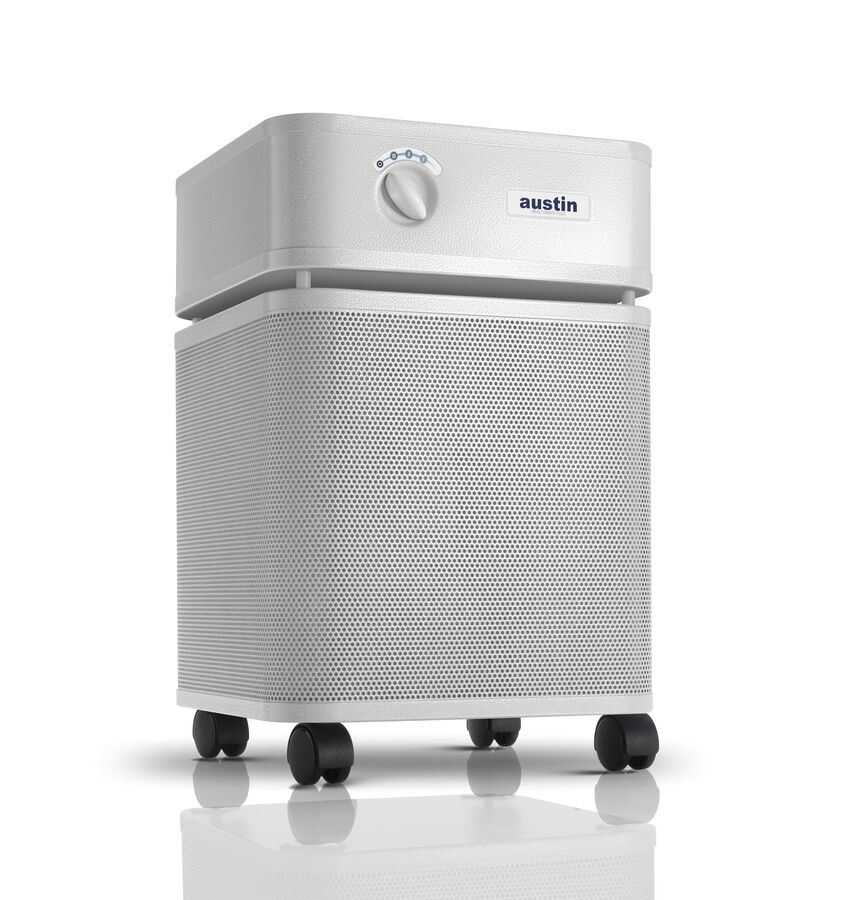
What the HealthMate Plus is
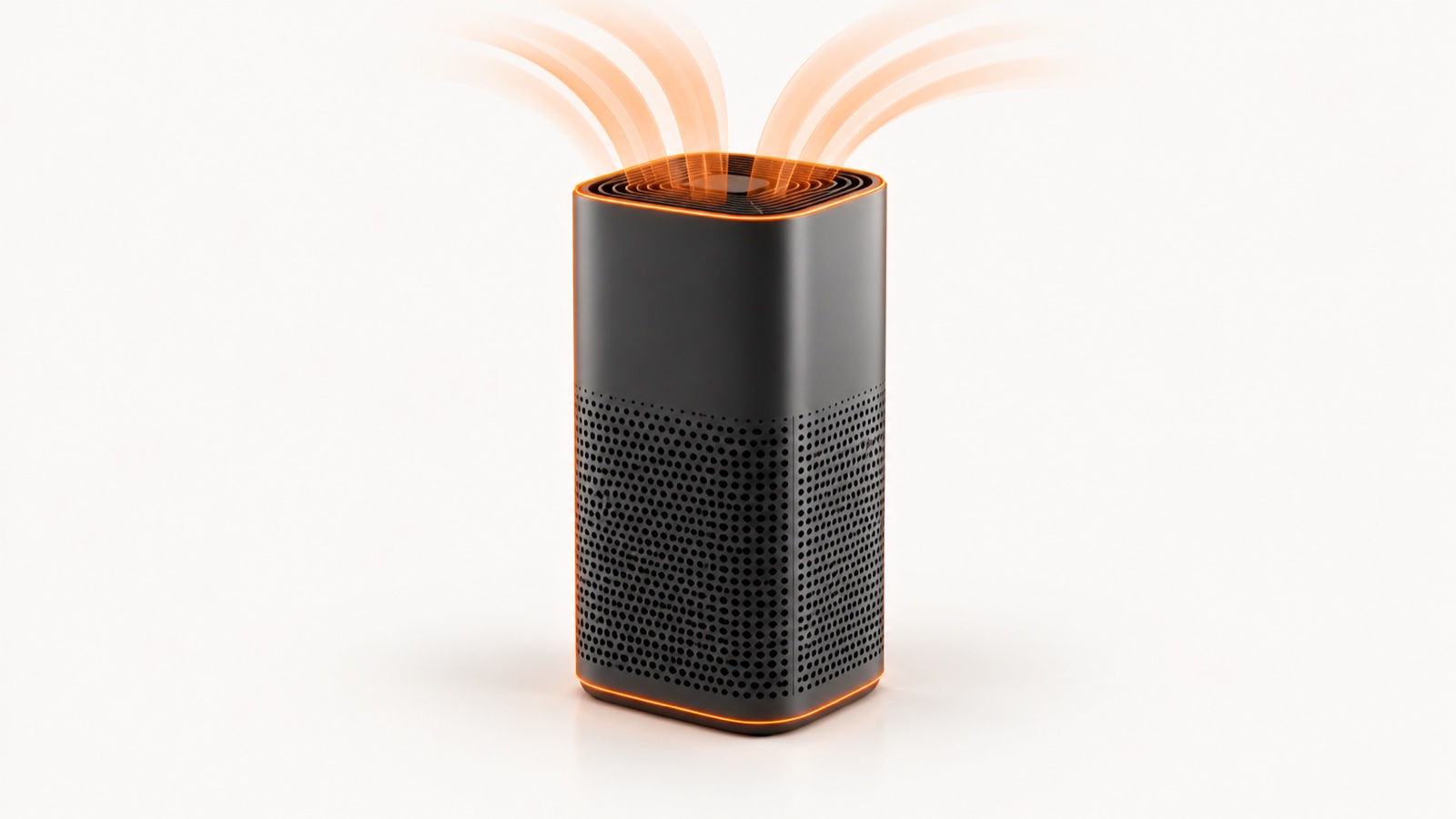
Austin Air is a family-owned manufacturer that has built medical-grade air purifiers in the United States for decades. Its machines are the plain steel boxes you see in allergy clinics and disaster-recovery settings rather than the sleek towers marketed to gadget buyers. The HealthMate Plus, model HM450, sits near the top of the lineup and is the version tuned for chemicals and gases on top of particles.
The whole design philosophy is simple and heavy-duty. A powder-coated steel shell, a big 3-speed fan, a genuine HEPA filter, and, crucially, a very large bed of adsorptive carbon and mineral media all in one sealed unit. There is no app, no sensor, and no display. You turn a dial. The tradeoff Austin Air makes on purpose is fewer features in exchange for more filter and a longer life.
The important thing to understand up front is the category. This is an air purifier. It cleans the air that passes through it. For a home dealing with mold, that means it can capture airborne mold spores and adsorb the odors and chemical gases mold and damp materials release. It is not a mold test, it does not sample your home, and it does not remove mold growing on a surface. We come back to that distinction because it is the most common point of confusion for buyers.
How the filtration works
Air is pulled through the machine in stages, and each stage handles a different job.
- Stage 1: large-particle pre-filter. The outer layers trap the big stuff, hair, dust, and lint, so the finer filters last longer.
- Stage 2: medium-particle filter. A second pass catches smaller particles like pollen and larger mold spores before they reach the HEPA.
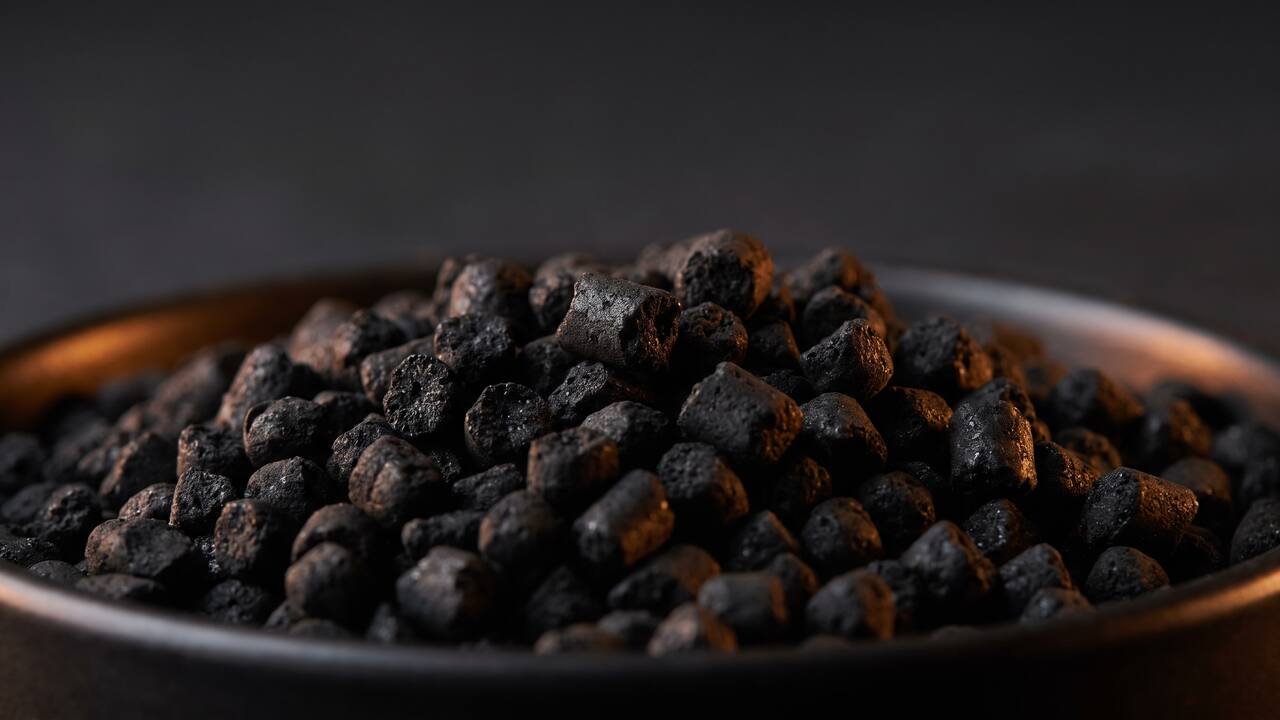
- Stage 3: the carbon and mineral bed. This is the HealthMate Plus signature. Up to 15 pounds of activated carbon, potassium iodide impregnated carbon, and a granulated mineral-based (zeolite) media. Carbon adsorbs odors and a wide range of chemical gases and VOCs. The potassium iodide treatment is designed to grab specific compounds like formaldehyde that plain carbon handles less well. This large a bed is why the machine keeps working on chemicals long after a thin carbon mat would be saturated.
- Stage 4: medical-grade HEPA. The final pass is 60 square feet of true HEPA media, certified to capture 99.97 percent of airborne particles down to 0.3 microns and 99 percent down to 0.1 microns. That 0.3 micron range is the size class that includes mold spores.
The order matters. Chemicals and gases are adsorbed by the carbon, then particles are captured by the HEPA. Because the carbon bed is so large, the Plus is one of the few consumer-priced machines that genuinely keeps pace with off-gassing, smoke, and the musty MVOC odors a damp or moldy space can produce, rather than just masking them for a few weeks.
Full specs at a glance
| Model | HealthMate Plus, HM450 |
| HEPA | 60 sq ft of medical-grade HEPA, 99.97% at 0.3 microns, 99% at 0.1 microns |
| Carbon and mineral bed | Up to 15 lbs of activated carbon, potassium iodide impregnated carbon, and granulated mineral-based (zeolite) media |
| Coverage | Up to about 1,500 sq ft at normal ceiling heights |
| Fan | 3-speed centrifugal |
| Filter life | Up to 5 years (single filter unit) |
| Warranty | 5 year mechanical, 5 year pro-rated on the filter, plus a 30 day money-back guarantee |
| Unit weight | About 47 lbs |
| Dimensions | Roughly 14.5 in L x 14.5 in W x 23 in H |
| Colors | Sandstone, Midnight Blue, White, Black |
| Made in | USA |
| Smart features | None (mechanical dial, no app, no air quality sensor) |
Figures are drawn from the official Austin Air listing and authorized dealer specs. Manufacturers do revise specs and pricing, so confirm the current numbers on the official site before you buy.
Why it fits a mold-sensitive home
People shopping for an air purifier because of mold usually have two different air problems at once, and the HealthMate Plus is one of the few units built to address both.
Airborne spores are a particle problem
Mold spores are physical particles, generally in the single-digit to low double-digit micron range, though fragments can be smaller. A true HEPA rated to 99.97 percent at 0.3 microns captures that entire size class as air passes through it. The HealthMate Plus uses exactly that grade of HEPA, so airborne spores drawn into the machine are trapped rather than recirculated. For more on how spores travel, see our guide to black mold.
The musty smell is a chemical problem
That damp, musty odor people associate with mold is largely microbial volatile organic compounds, or MVOCs, gases produced as mold grows, mixed with VOCs off-gassing from wet building materials. A HEPA filter does nothing for gases. This is where the 15 pound carbon and mineral bed earns its place: it adsorbs those odors and chemical compounds instead of just circulating them. Most consumer purifiers use a thin carbon sheet that saturates in weeks, so they stop touching odors quickly. The Austin Air's deep bed is the reason it stays effective on the chemical side far longer.
Filtration, not treatment. Capturing spores and adsorbing odors improves the air in the room. It does not cure, treat, or prevent any health condition, and it does not remove mold from a wall, ceiling, or subfloor. If you are reacting to a space, the fix is finding and correcting the moisture and growth at the source. A purifier is a companion to that work, not a substitute for it.Bottom line for a mold-sensitive or chemically-sensitive household: if you want one machine that handles both the spore-sized particles and the gases, the HealthMate Plus is purpose-built for it in a way that thin-filter purifiers are not.
Pricing and cost of ownership
Austin Air lists the HealthMate Plus HM450 at about $895 on its official site, and authorized dealers sometimes list it closer to $715, so the exact number depends on where you buy and which color you choose. Because pricing shifts, confirm the current figure on the official site rather than trusting any third-party number, including this page.
The sticker price is only half the story. The number that actually separates purifiers over time is the filter.
- One filter, up to 5 years. The HealthMate Plus uses a single combined filter designed to last up to 5 years under normal residential use. Many popular purifiers need a new HEPA every year and a new carbon filter every few months, which adds up fast.
- Warranty backs the life. A 5 year mechanical warranty and a 5 year pro-rated filter warranty sit behind that claim, plus a 30 day money-back guarantee if it is not the right fit.
- Made in the USA. The unit is manufactured domestically, which is part of why the build is heavy-duty steel rather than plastic.
Put the total cost in context. A machine that costs more up front but runs on one filter for years can end up cheaper than a mid-priced purifier that quietly bills you for filters every season. When you compare against IQAir below, the running cost is where Austin Air pulls ahead.
Pros
- Huge carbon and mineral bed. Up to 15 pounds of activated carbon, potassium iodide carbon, and mineral media. This is the standout, and it is why the Plus handles chemicals, VOCs, MVOCs, and odors far better than typical consumer purifiers.
- True medical-grade HEPA. 99.97 percent at 0.3 microns and 99 percent at 0.1 microns, which covers the mold-spore particle range.
- Very low ongoing cost. A single filter lasts up to 5 years, so you are not buying replacements every few months.
- Built to last. Powder-coated steel body, simple mechanics, made in the USA, backed by a 5 year warranty.
- Strong coverage. Rated for areas up to about 1,500 square feet, and it clears a single room quickly.
- Better value than IQAir on carbon. A much larger carbon bed and cheaper long-term filters for a similar or lower price.
- Simple to live with. A 3-speed dial and nothing to configure. Plug it in and it works.
Cons and limitations
- It filters the air, it does not find or remove mold. This is the big one. The machine cannot tell you whether mold is growing, where it is, or clean it off a surface. It is the wrong tool if your goal is to locate or eliminate a source.
- Heavy and industrial. At about 47 pounds and in a plain steel box, it is not a design piece and not easy to move room to room, even with casters.
- No smart features. No app, no Wi-Fi, no air quality sensor, no auto mode. You run it manually.
- HEPA is spec-rated to 0.3 microns. That covers mold spores, but it is not IQAir's marketed ultrafine 0.003 micron claim, so on paper IQAir advertises finer particle capture.
- Higher up-front price. It costs more than a budget purifier, even though the long filter life narrows the gap over time.
- Basic airflow readout. With only three fan speeds and no sensor, you decide when to run it harder rather than the machine deciding for you.
- No treatment or health claims from us. Cleaner air is the benefit. What that means for any symptom or condition is a conversation for a qualified professional, not a purifier spec sheet.
HealthMate Plus vs IQAir vs a budget unit
The three machines below represent the choices most mold-sensitive shoppers weigh: the Austin Air, the premium IQAir, and a popular budget smart purifier. Specs are drawn from each manufacturer and can change.
| Feature | Austin Air HealthMate Plus | IQAir HealthPro Plus | Levoit Core 600S (budget) |
|---|---|---|---|
| HEPA rating | 99.97% at 0.3 microns | HyperHEPA, marketed to 0.003 microns | 99.97% at 0.3 microns |
| Carbon bed | Up to 15 lbs carbon + mineral | Smaller V5 carbon cartridge (a few lbs) | Thin carbon layer |
| Filter life | Up to 5 years (one filter) | Staged: roughly 2 to 4 years per filter | About 12 months |
| Coverage | Up to ~1,500 sq ft | Up to ~1,125 sq ft | Up to ~1,000+ sq ft |
| Smart app / sensor | No | No app (manual timer) | Yes, app + air sensor |
| Approx price | ~$715 to $895 | ~$900 to $1,000 | ~$300 |
| Best at | Chemicals, VOCs, value | Ultrafine particle spec, looks | Price, convenience |
Versus IQAir HealthPro Plus
These are the two serious medical-grade options, and they trade blows. IQAir advertises HyperHEPA capture down to 0.003 microns and a more refined, quieter design that looks better in a living room. But IQAir uses a much smaller carbon cartridge, so it is weaker on chemicals and VOCs, and its staged replacement filters cost more to keep fresh. Austin Air counters with a 15 pound carbon and mineral bed and a single long-life filter, which makes it the stronger and cheaper choice for the chemical and odor side of a mold problem. If your priority is the finest particle spec and aesthetics, IQAir. If it is carbon volume, VOC control, and cost of ownership, Austin Air.
Versus a budget smart purifier
A unit like the Levoit Core 600S costs a fraction as much, adds a phone app and an air quality sensor, and uses the same 99.97 percent at 0.3 micron HEPA grade for particles. For pollen, dust, and general air it is genuinely good value. Where it falls short for a mold-focused buyer is the carbon: a thin layer saturates quickly and does little for sustained chemical or MVOC load, and you replace the whole filter about once a year. It is the convenient, affordable pick, not the heavy-duty chemical machine.
The short version: Austin Air competes on carbon volume and running cost, IQAir competes on ultrafine spec and design, and the budget unit competes on price and smart features. For a mold-sensitive home where odors and VOCs are part of the picture, the carbon bed is the spec that matters most.
Who it is best for
Best for
People in a mold-sensitive or chemically-sensitive household who want one durable machine that handles both spore-sized particles and the odors and VOCs a damp space produces. It suits anyone who has already found and is addressing a mold source and now wants strong ongoing air filtration, and anyone who values a long filter life and low running cost over smart features. It is also a sensible pick for homes dealing with off-gassing from new materials, smoke, or general chemical sensitivity, which is exactly what the potassium iodide carbon targets.
Who should skip it
Anyone whose real question is where is the mold. A purifier will not answer that, and buying one first is a common detour. If you are trying to locate a source or decide whether to remediate, your money goes further on testing the home first. Shoppers who mainly want app control, a sensor, and the lowest price will also be happier with a budget smart unit, and buyers focused purely on the finest advertised particle spec may prefer IQAir.
Our verdict and rating
Our rating: 4.5 / 5. The Austin Air HealthMate Plus does the hard part of a mold-focused purifier better than almost anything at its price. The medical-grade HEPA captures the spore-sized particle range, and the 15 pound carbon and mineral bed is in a different league from the thin filters in most consumer machines when it comes to chemicals, VOCs, and musty MVOC odors. A 5 year filter and a steel, made-in-USA build make it cheap to own and hard to wear out. For a mold-sensitive or chemically-sensitive home, it is the best value in medical-grade filtration.
The only things keeping it from a perfect score are about fit, not quality. It is heavy and industrial, it has no app or sensor, and its HEPA is spec-rated to 0.3 microns rather than the ultrafine number IQAir markets. And like every purifier, it cleans the air only. It cannot find mold, cannot remove it from a surface, and cannot fix the moisture feeding it.
Bottom line: if you want one machine to keep the air clean in a home where mold, odors, or chemicals are a concern, and you care more about carbon volume and running cost than smart features, the HealthMate Plus is the pick. Just find and fix the mold at the source first. The purifier is what keeps the air right afterward.
Official site · confirm the latest price yourself. We may earn a commission, at no extra cost to you.
Find the mold before you filter
An air purifier and visual screening answer different questions. Mold Scanner AI guides visible-surface photo capture and provides AI-assisted visual screening with variable processing time. It cannot locate hidden growth, trace a source, or determine what remediation is needed. Confirm important findings with a qualified professional. See how Mold Scanner AI works.
Frequently asked questions
Is the Austin Air HealthMate Plus good for mold?
For air filtration in a mold-sensitive home it is one of the strongest picks. Its medical-grade HEPA captures 99.97 percent of airborne particles down to 0.3 microns, which covers mold spores, and its large 15 pound carbon and mineral bed adsorbs the odors and chemical gases (VOCs and MVOCs) a mold problem puts in the air. It filters the air. It does not find, kill, or remove mold on a surface, and it is not a treatment for any health condition.
What is the difference between the HealthMate and the HealthMate Plus?
Both use the same medical-grade HEPA and the same 3-speed fan. The Plus (HM450) adds potassium iodide impregnated carbon to its filtration blend, designed to adsorb specific chemical gases like formaldehyde more effectively. If your concern includes chemicals, VOCs, MVOCs, off-gassing, or smoke on top of particles, the Plus is the version built for it. If you mostly want particle and basic odor control, the standard HealthMate (HM400) costs a bit less.
How much does the Austin Air HealthMate Plus cost?
The manufacturer lists the HealthMate Plus HM450 at about $895 on the official site, and authorized dealers sometimes list it closer to $715. Pricing changes, so confirm the current number on the official site. It is made in the USA and the filter is designed to last up to 5 years, which keeps the ongoing cost low compared with purifiers that need new filters every year.
How large a room does the HealthMate Plus cover?
Austin Air rates it for areas up to about 1,500 square feet at normal ceiling heights. Like any purifier, it clears the air faster in a smaller, more enclosed space, so for a single problem room you get more air changes per hour than the headline number suggests.
How much carbon is in the HealthMate Plus?
Up to 15 pounds of a blend of activated carbon, potassium iodide impregnated carbon, and a granulated mineral-based (zeolite) media. That large a bed of adsorptive media is the main reason it handles chemicals, odors, and VOCs better than most consumer purifiers, which use only a thin carbon mat.
How does it compare to IQAir HealthPro Plus?
They are the two serious medical-grade choices. IQAir advertises HyperHEPA filtration down to 0.003 microns and a more refined, quieter design, but it uses a much smaller carbon cartridge and its replacement filters cost more over time. Austin Air counters with a far larger 15 pound carbon and mineral bed and a single 5 year filter, which makes it the stronger value for chemicals and VOCs and cheaper to own. IQAir wins on ultrafine spec and looks. Austin Air wins on carbon volume and running cost.
Does the HealthMate Plus have a smart app or air quality sensor?
No. It is a deliberately simple machine with a mechanical 3-speed dial, no Wi-Fi, no app, and no built-in air quality sensor. That keeps it durable and easy to run, but if you want automatic sensing or phone control, this is not that kind of purifier.
Will an air purifier get rid of mold in my house?
No. A purifier only cleans the air passing through it. It captures airborne mold spores and adsorbs the gases and odors mold can release, which helps the air in the room, but it does not remove mold growing on a wall, ceiling, or under a sink, and it does not fix the moisture feeding it. You still have to find and address the source. A purifier is a companion to remediation, not a replacement for it.
Is the HealthMate Plus loud, and how heavy is it?
On the lowest of its three speeds it runs quietly enough for a bedroom, and on high it produces a steady white-noise level of airflow. The unit weighs about 47 pounds and measures roughly 14.5 by 14.5 by 23 inches, so it is heavy and industrial. It has caster wheels, but it is not something you will casually move from room to room every day.
Sources
Every claim on this page traces to one of these. Links open the primary document.