What Is Gray Mold?
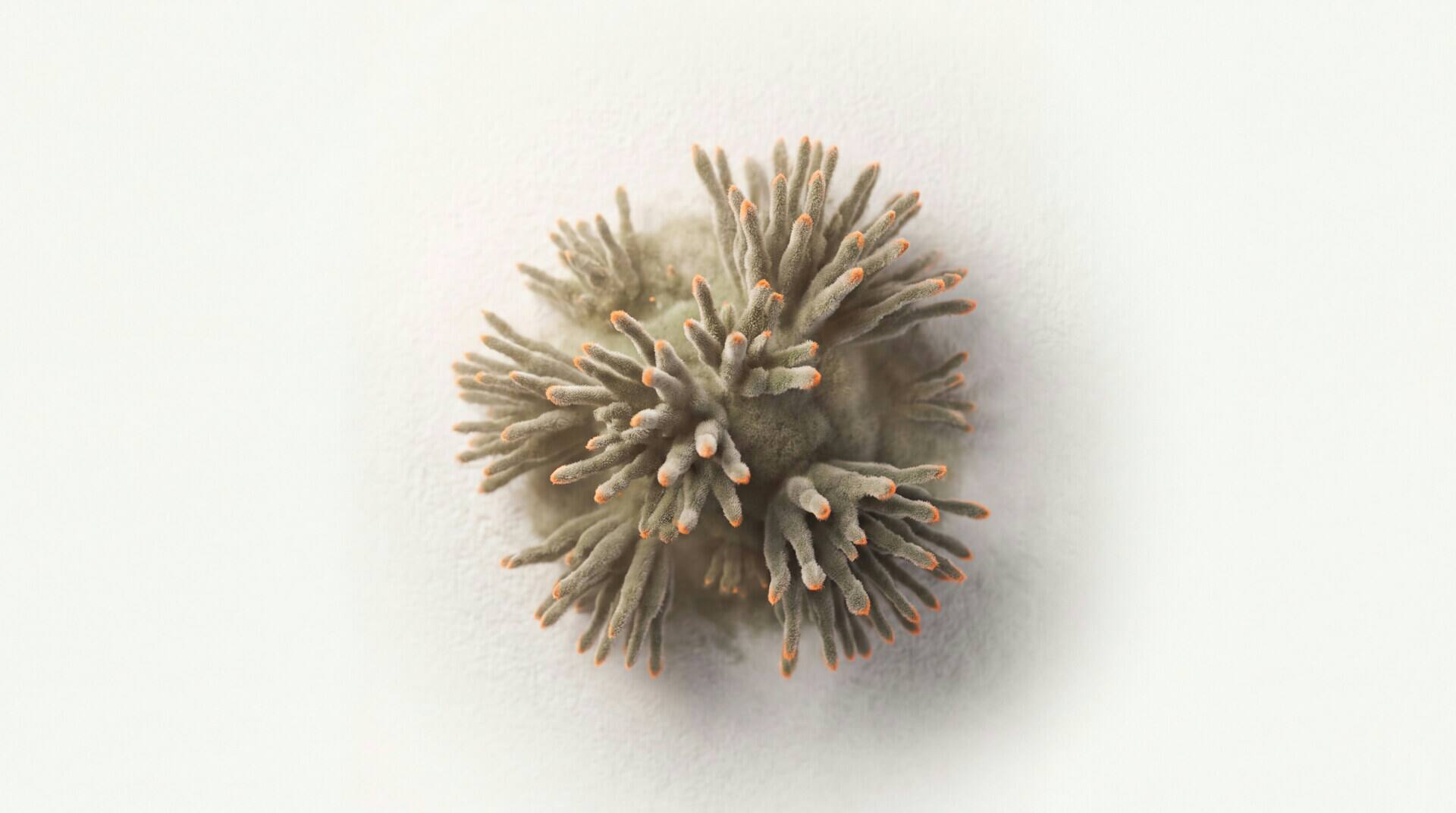
Gray mold isn't one species. The name covers several organisms that all read gray, and the right answer depends a lot on where you find it. Outdoors and on plants, it usually means one thing. Inside on building materials, it usually means another.
On plants and produce, gray mold almost always means Botrytis cinerea. Gardeners know it well as the soft gray fuzz that takes over strawberries, grapes, tomatoes, and the wilting flowers on a houseplant. It thrives in cool, damp, still air and spreads fast once it gets going.
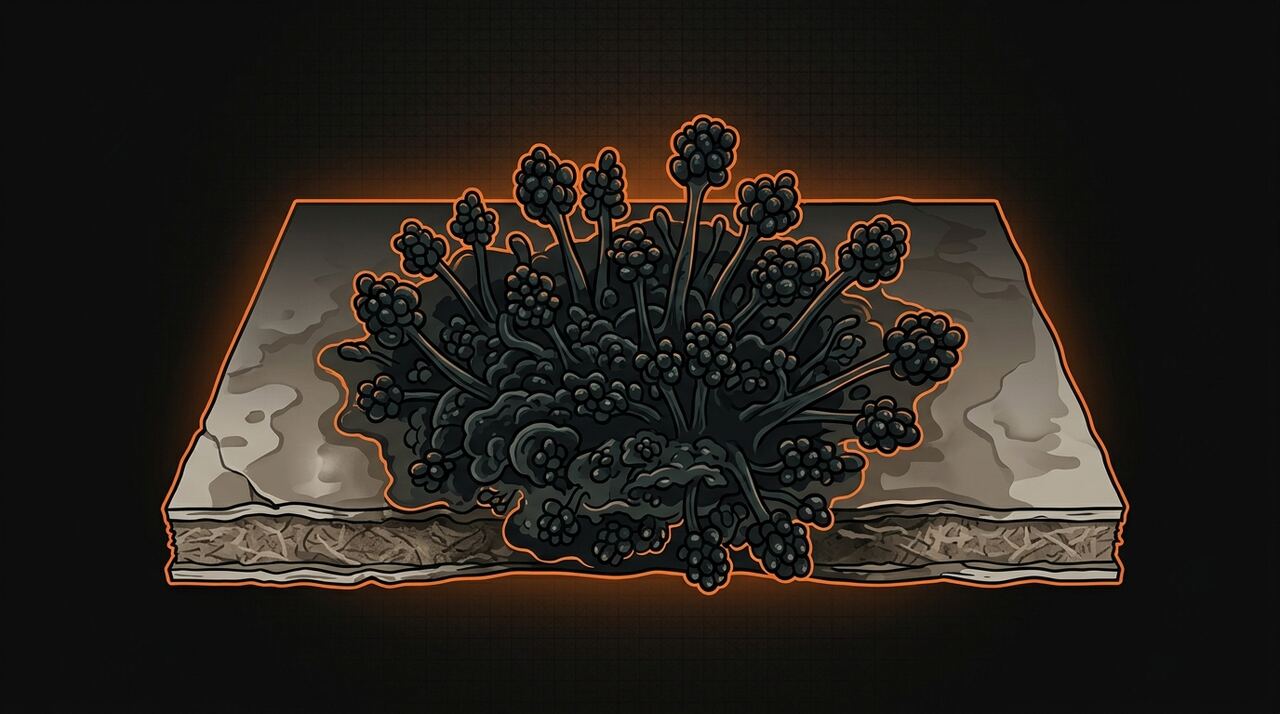
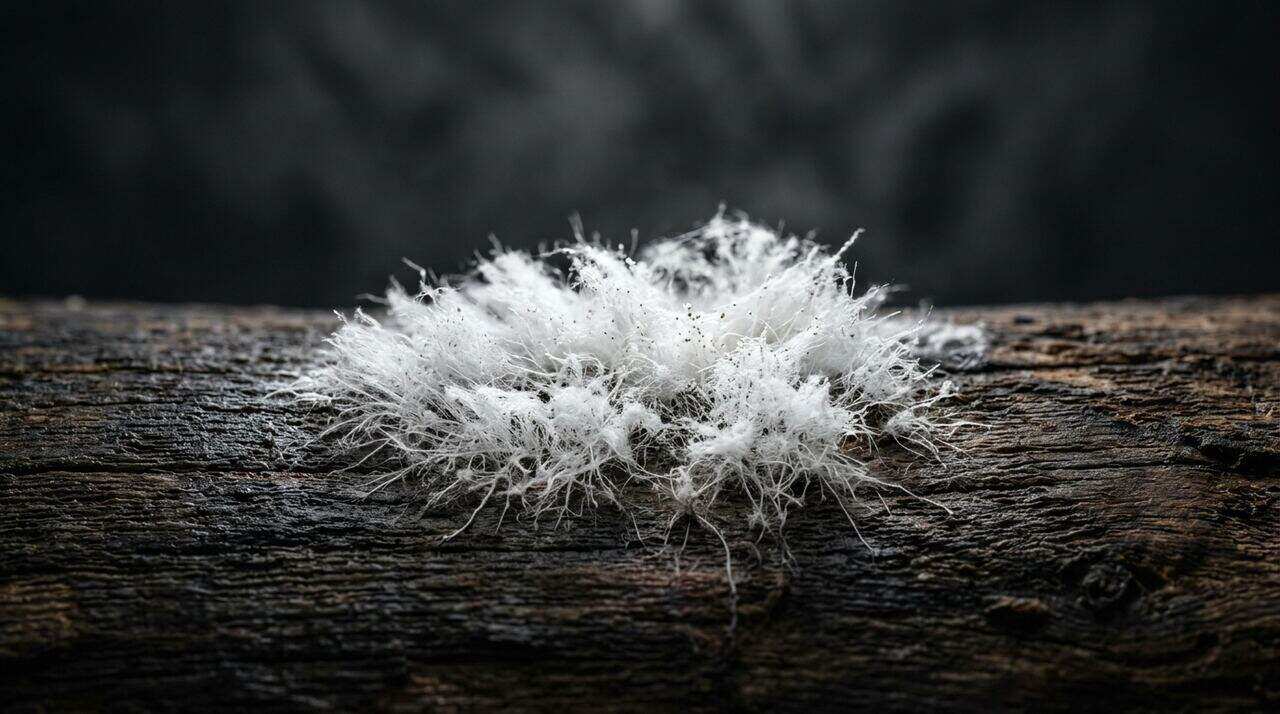
Inside the home, gray to olive growth on drywall, paint, or grout is more likely Cladosporium or an Aspergillus species, both very common indoor molds. A more concerning one is Chaetomium, which starts cottony and turns gray to olive as it ages. Chaetomium is a flag for chronic water damage, the kind that comes from a long-running leak behind a wall.
The theme that runs through every color guide applies here too: you can't read the species off the shade. Gray overlaps with green, olive, and black depending on age and lighting, and several molds share the look. If you need certainty, a lab test is the only sure answer. For the wider picture, see our guide to the types of mold.
Gray Mold on Plants vs in the Home
Because gray mold means two different things in two settings, it helps to split them.
On houseplants and produce
Botrytis shows up as a soft gray fuzz on leaves, stems, fading flowers, and ripe fruit. On houseplants it often starts on a damaged or dying leaf, then spreads to healthy tissue if the air stays damp and still. In the fridge or fruit bowl, it's the gray fuzz that overtakes berries and grapes within a day or two. It won't harm your home's structure, but it can move quickly through a plant collection or a basket of produce.
On walls, ceilings, and other surfaces
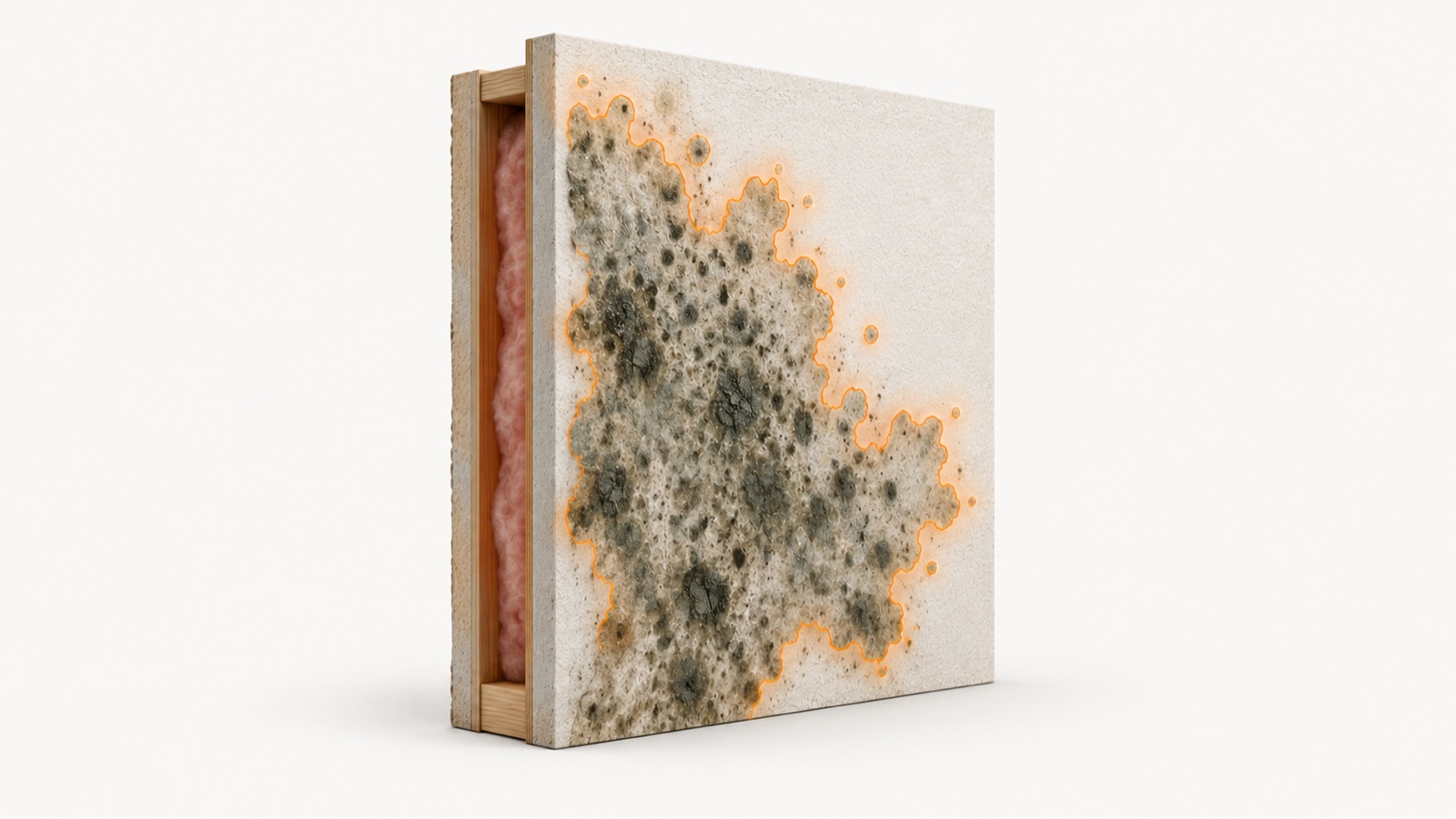
Indoor gray mold on building materials is a moisture signal. Cladosporium turns up on window sills, in bathrooms, and under sinks. Aspergillus shows on damp walls and in HVAC systems. Chaetomium, the cottony one that ages to gray-olive, tends to mean water has been sitting in a wall, ceiling, or subfloor for a while. If you see gray growth spreading on drywall or around a stain, treat it as a leak you haven't found yet. Our black mold and green mold guides cover the close relatives that share these spots.
Is Gray Mold Dangerous?
The risk depends on the organism, the amount, and your own sensitivity. For most healthy people, a little gray fuzz on a plant or in a damp corner is a cleaning task, not an emergency.
On the allergy side, the CDC links mold and damp indoor conditions to a stuffy nose, coughing, wheezing, a sore throat, and itchy eyes, with stronger reactions in people who have asthma or a mold allergy. Those effects come from breathing spores over time. Botrytis on plants is mainly a problem for the plants, though people who are sensitive can react to the spore load from a heavily infected collection.
The indoor molds carry more weight. Chaetomium in particular points to chronic water damage and produces compounds that can irritate, so its presence is worth taking seriously and tracing back to the moisture source. People with weakened immune systems can be more vulnerable to molds in general, so any visible growth in their space deserves prompt cleanup.
The honest takeaway: gray mold's danger varies, but it always tells you a surface stays wet. That moisture can feed hidden mold you can't see. If anyone in the home has ongoing symptoms, the right move is to talk to a licensed physician rather than self-diagnose from a website.
How to Remove Gray Mold
Match the method to where the gray mold is growing.
On plants and produce
- Remove and bag affected leaves, flowers, and fruit so spores don't drift to healthy growth.
- Improve airflow around plants, water at the soil instead of over the leaves, and don't leave foliage wet overnight.
- Throw out soft produce with fuzzy gray growth entirely, since the roots run through it.
On non-porous surfaces (tile, glass, sealed grout, metal)
- Spray with a no-bleach mold-control product, 3% hydrogen peroxide, or undiluted white vinegar. Let it sit about 10 minutes.
- Scrub with a stiff brush, wipe clean, and dry the surface fully. A dedicated mold cleaning product helps on stubborn spots.
On porous surfaces (drywall, insulation, ceiling tile)
- If the mold has soaked in, cleaning won't reach the roots. Cut out the affected section plus a margin and replace it.
- Gray-olive Chaetomium on drywall usually means a hidden leak, so find and fix the water before you patch.
Wear an N95 mask, gloves, and goggles for any cleanup. For anything larger than 10 square feet, hire a qualified remediation professional who follows the IICRC S520 standard. For a water event, use our free water-damage documentation helper to record accessible conditions without a risk score. If a landlord is slow to fix the leak feeding it, our tenant mold complaint letter generator builds a paper trail fast. Skip the bleach on porous surfaces, since the chlorine stays on top while the water soaks in and feeds the regrowth underneath.
Preventing Gray Mold
Whether it's Botrytis on a fern or Chaetomium behind a wall, gray mold runs on damp, still conditions. Take those away and it struggles.
- Keep humidity below 50 percent. A hygrometer costs about $10 to $20. Run a dehumidifier in basements and any room that reads high.
- Move the air. Space houseplants out, run fans in stuffy rooms, and don't crowd produce in a closed drawer.
- Fix leaks within 24 to 48 hours. Chronic moisture is what invites the indoor molds, so dry wet spots fast and repair the source.
- Water plants at the soil. Wet leaves overnight are an open invitation to Botrytis.
- Use produce before it sits. Eat or refrigerate berries and grapes promptly, and toss the first fuzzy one before it spreads.
Stay ahead of the damp and gray mold rarely takes hold. Airflow and a hygrometer cost far less than a contractor or a ruined plant collection.
Frequently asked questions
What is gray mold?
Gray mold is a catch-all for a few organisms. On plants and produce it is usually Botrytis cinerea, a fuzzy gray fungus famous for rotting strawberries, grapes, and houseplant leaves. Indoors on building materials, gray to olive growth is more often Cladosporium, some Aspergillus species, or Chaetomium, which signals serious water damage. Color alone cannot confirm the species, so lab testing is the only sure way to know what you have.
Is gray mold dangerous?
It depends on the organism, the amount, and your sensitivity. For most healthy people, a little gray mold on a houseplant or in a damp corner is a cleaning issue, not an emergency. The CDC links mold and damp exposure to a stuffy nose, coughing, wheezing, and itchy eyes, with stronger reactions in people who have asthma or weak immune systems. Chaetomium, one indoor gray-to-olive mold, points to chronic water damage and deserves prompt attention. Clean it, fix the moisture, and talk to a licensed physician about any symptoms.
How do you get rid of gray mold on plants?
Remove and bag the affected leaves, flowers, or fruit so the spores do not spread to healthy growth. Improve airflow around the plant, water at the soil rather than over the leaves, and avoid leaving foliage wet overnight. Lower the humidity in the room. For produce in the fridge, throw out soft items with fuzzy gray growth entirely, since the roots run through them.
How do you remove gray mold from walls and other surfaces?
For small areas under 10 square feet on non-porous surfaces, spray with a no-bleach mold-control product or 3% hydrogen peroxide, let it sit about 10 minutes, scrub, and dry fully. Wear an N95 mask, gloves, and goggles. On porous materials like drywall or insulation where the mold has soaked in, cut out and replace the affected section. For areas larger than 10 square feet, hire a qualified mold remediation professional who follows the IICRC S520 standard.
Is gray mold the same as black mold?
Not necessarily. Some indoor molds that look gray, such as Chaetomium, can darken toward olive or black as they age, and some dark molds can look gray in dim light. But gray growth is not automatically the toxic black mold people worry about. Color is a weak clue, and several species overlap in shade. A lab test is the only reliable way to confirm the species.
Sources
Every claim on this page traces to one of these. Links open the primary document.