

How common is mold in US homes?
Prevalence of dampness and mold
Mold, asthma, and breathing
These are population-level study findings, not a diagnosis for any one home. If you have symptoms, talk to a physician.
What mold costs the country
Economic estimates from peer-reviewed research
Mold and home insurance
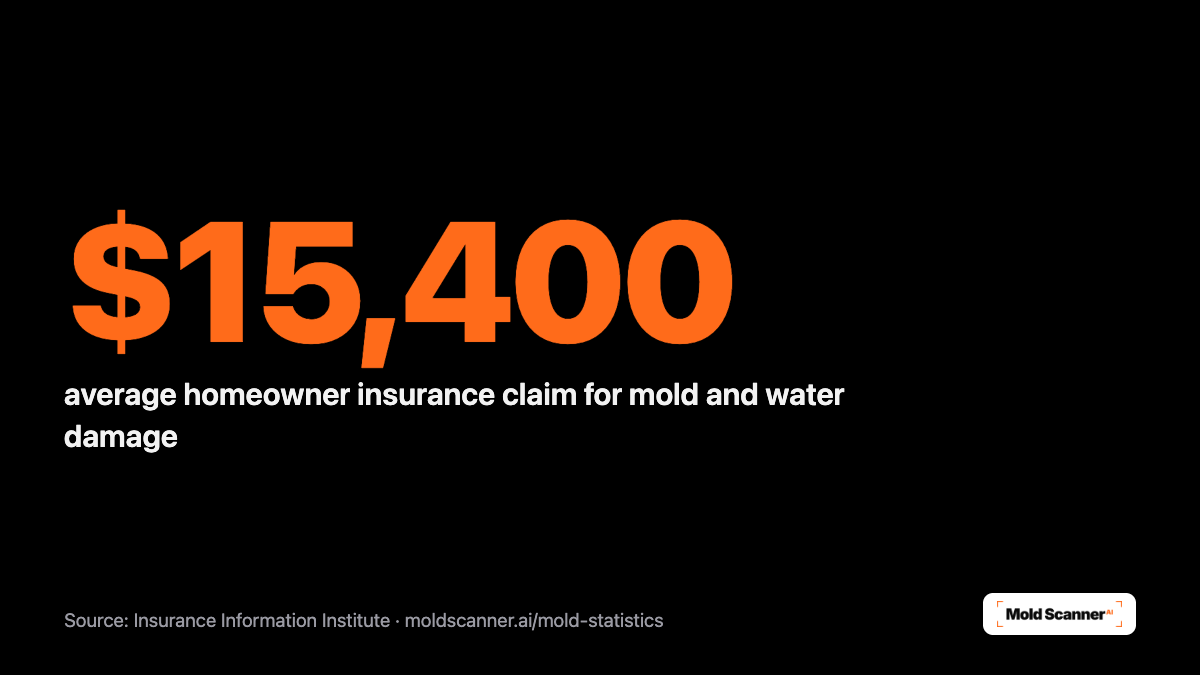
Claim data from the Insurance Information Institute
Indoor air and how mold spreads
EPA and FEMA guidance
What these numbers do and do not say
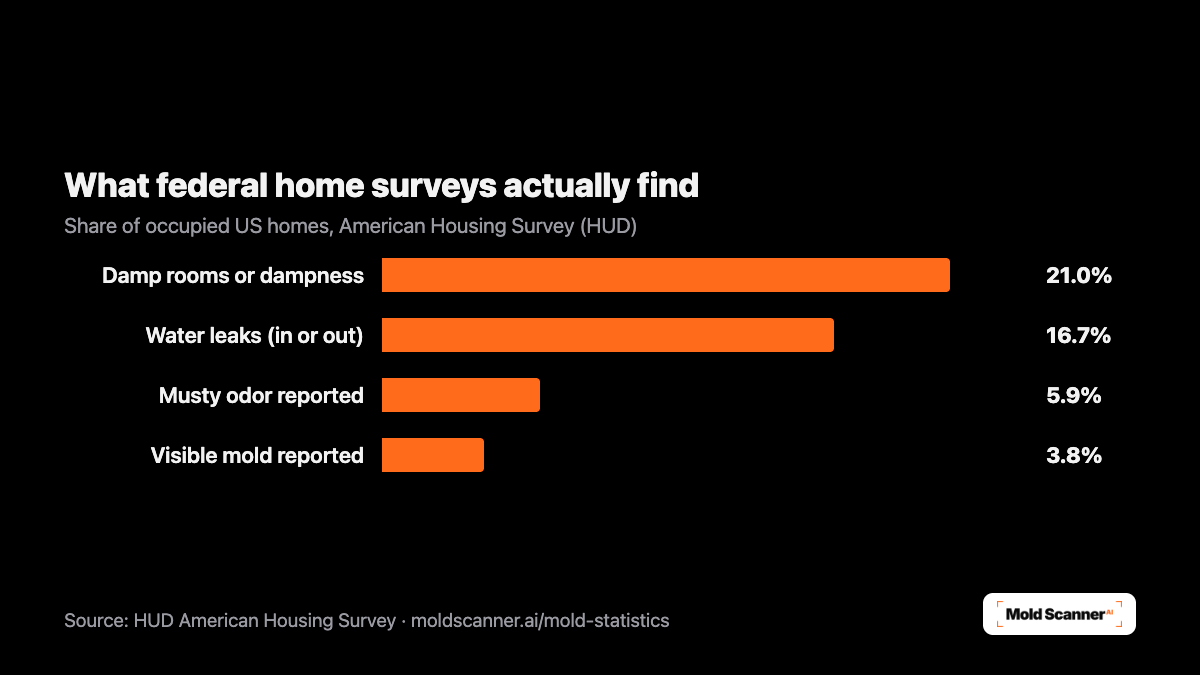
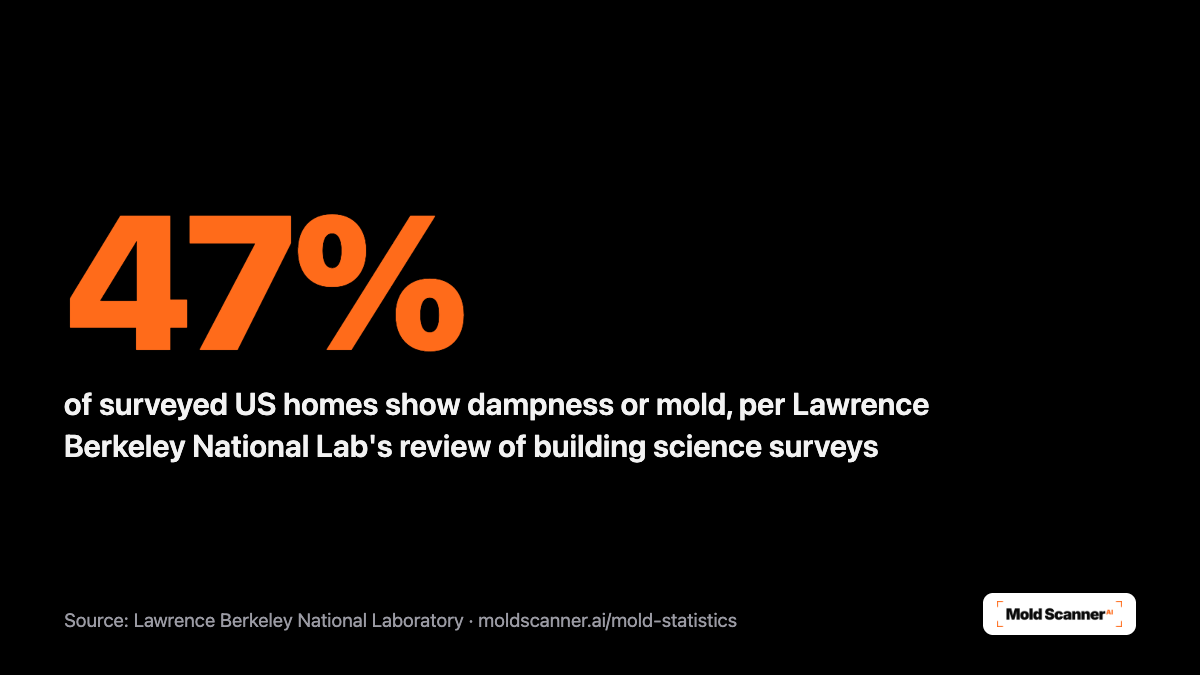
Prevalence numbers move around because surveys measure different things. A synthesis that counts any dampness or musty smell lands near 47%. A survey that counts only a large visible patch of mold lands near 3 to 4%. Both are correct. They just answer different questions.
The asthma and cost figures are population-level associations from research, not a verdict on your home or your health. They tell you mold and dampness matter at scale. They do not diagnose anyone. For symptoms, talk to a physician. For cleanup, follow EPA guidance on moisture control and PPE. If you want to see where mold hides, our guides on black mold and mycotoxin testing walk through the details.
What percentage of homes have mold?
About 47% of US homes have dampness or mold, per a Berkeley Lab synthesis of national studies, but only 3.77% of people in occupied homes reported a large patch of mold in the 2015 American Housing Survey.
The gap is not a mistake. Each source counts something different, so "what percentage of houses have mold" has no single answer. The table lines up the numbers used on this page.
| What was counted | Share | Source |
|---|---|---|
| Dampness or mold in US homes (average of national studies) | About 47% | Lawrence Berkeley National Laboratory |
| Dampness from pipes, leaks, rain, or floods in the prior 12 months | 21.0% | American Healthy Homes Survey II |
| Frequent musty smells | 5.85% | 2015 American Housing Survey |
| Large patch of mold inside, about 8.5 by 11 inches or bigger | 3.77% | 2015 American Housing Survey |
| Visible mold of any size, seen by trained technicians | 2.76% | American Healthy Homes Survey II |
Why the numbers are so far apart
The 47% figure counts moisture problems, not only mold you can see. A home with a past leak or a damp basement lands in that number even when no patch is visible. The 3.77% and 2.76% figures count visible mold only, and the two surveys use different methods: one asks residents, the other sends inspectors.
So if you are asking what percent of houses have mold, the fair answer is a range. Nearly half have some dampness or mold problem, and a few percent have mold you can plainly see. Mold spores are in every home, per the EPA, so the useful question is whether your home has the moisture that lets them grow.
These are survey results for the whole country. They do not tell you whether your own home has mold. A photo of a stain, a musty corner, or a damp wall is a better starting point, and Mold Scanner checks a photo for signs of mold growth.
Frequently asked questions
How many houses have mold?
The sources on this page give shares, not a count of houses. About 47% of US homes have dampness or mold, and about 3.77% have a large visible patch. Applying either share to the number of homes in the country would be our own math, not a published figure, so we do not offer one.
What percentage of houses have mold?
About 47% of US homes have dampness or mold, according to a Berkeley Lab synthesis of national studies. Surveys that count only visible mold give much lower numbers: 3.77% of people in occupied homes reported a large patch in the 2015 American Housing Survey, and trained technicians saw visible mold of any size in 2.76% of homes in the American Healthy Homes Survey II.
How common is mold in US homes?
It depends on how you measure it. A synthesis of studies used by Berkeley Lab puts the average prevalence of dampness or mold in US homes near 47%. Surveys that count only a large visible patch report lower numbers. In the 2015 American Housing Survey, 3.77% of occupied homes reported a mold patch about 8.5 by 11 inches or bigger. You can spot many problems yourself with our mold detection app.
What percentage of asthma is linked to mold?
A 2007 EPA-funded study by Mudarri and Fisk estimated that about 21% of current US asthma cases are associated with dampness and mold at home, with a range of 12 to 29%. That is an association across the whole population, not a diagnosis for any one home or person. If you have symptoms, talk to a physician.
How much does mold remediation cost?
It depends on the size of the job. The EPA says a mold patch under about 10 square feet can usually be cleaned by the homeowner with basic supplies and PPE, while larger jobs may need a professional. On insurance, standard HO-3 home policies exclude most mold, and insurers often cap mold payouts near $1,000 to $10,000.
How fast does mold grow after a flood?
Federal guidance from FEMA and the EPA says mold can start growing on damp materials within 24 to 48 hours. That is why the EPA recommends drying wet materials within that window. Warm, humid, poorly ventilated spaces speed it up.
Sources
Every claim on this page traces to one of these. Links open the primary document.